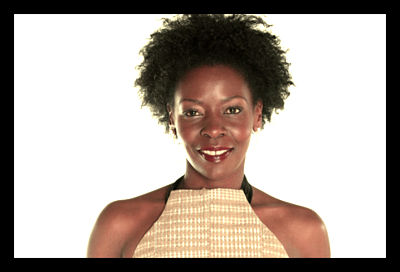
Africa produces some of the most brilliant artists, athletes, and activists worldwide. From the media industry to the political stage, these African celebrities are working to improve lives. The Borgen Project presents the top 10 African celebrities to follow.
1. Patricia Amira, Nigerian, TV Personality
Patricia Amira is a self-proclaimed “optimistic realist” and “closet artist.” She is the “Oprah” of Africa and hosts one of the continent’s most popular talk shows. The Patricia Show transcends national boundaries and identities. The show focuses on achievements across Africa and aims to create social and cultural transformation. The Pan-African talk show is broadcasted in over 45 African countries and averages over 10 million viewers. She currently serves as the Director of the Festival of African Fashion and Arts. The festival encourages collaboration among designers and emphasizes the importance of artists. Amira is also a spokesperson against human trafficking.
2. Nneka, Nigerian, Musician
Nneka is a soul musician of Nigerian-German descent. Investigative journalism and philosophy inform her music, and she often writes about poverty, war, and and social justice issues. Nneka emphasizes the importance of understanding balance and harmony. “It’s important that you recognize yourself as part of the system, too, and that the only way we can make things work is by realizing we are part of the same entity,” Nneka said.
3. Didier Drogba, Ivorian, Soccer Player
Didier Drogba was a leading striker for England’s Chelsea football club and head captain of the Cote D’Ivoire national team. His performance on the field is impressive, but he made headlines at the 2006 FIFA World Cup for something much greater. Drogba begged on live television for a cease-fire on the Ivory Coast. The warring factions subsided within one week. The Telegraph reporter Alex Hayes noted that Drogba is “the face of his country; the symbol of a new, post-civil war Ivory Coast.” He also created the Didier Drogba Foundation, a foundation “to provide financial and material support in both health and education to the African people.” The foundation recently partnered with United Against Malaria (UAM) to help fight malaria.
4. Wole Soyinka, Nigerian, Playwright
Wole Soyinka is a playwright, author, and political activist from Nigeria. Soyinka entered the political stage after lobbying for a cease-fire during Nigeria’s civil war. “The greatest threat to freedom is the absence of criticism,” Soyinka said. This led to his imprisonment for 22 months. He was released in 1969, and he began publishing again. Soyinka became the first African to win the Nobel Prize in Literature in 1986. His novel The Interpreters analyzes the experiences of six different African intellectuals.
5. Neill Blomkamp, South African, Movie Director
Neill Blomkamp is a movie director known for his documentary, handheld cinema style. He blends natural and computer-generated elements effortlessly. Blomkamp co-wrote and directed District 9. The film focused on extraterrestrial refugees in a South African slum. The title derived from real events during the apartheid era at District Six, Cape Town. The film received international fame, and box office sales totaled $200 million. Time magazine named Blomkamp one of the “100 Most Influential People of 2009.”
6. Binyavanga Wainaina, Kenyan, Author
Binyavanga Wainaina founded the first literary magazine in East Africa, entitled Kwani?. The magazine is known as “the most renown literary journal in sub-Saharan Africa.” Wainaina created the magazine after winning the 2002 Caine Prize for African Writing. The Caine Prize is an annual literary award for the best original short story by an African writer. He is known for authoring “How to Write About Africa.” The short story is known as one of the most satirical pieces ever written about Africa.
7. Genevieve Nnaji, Nigerian, Actress
Genevieve Nnaji skyrocketed from a middle class upbringing to Nollywood stardom. She is one of the most popular African celebrities. Nnaji grew up in Lagos, Nigeria as one of eight children. Nnaji began her acting career at eight years old on Ripples, a Nigerian soap opera. She is now one of Africa’s most popular actresses. At only 32 years old, she has starred in over 80 feature films. She is one of the best paid actresses in Nollywood—Nigeria’s feature film industry. “I have always maintained that when they [Hollywood directors and actors] are ready for a young African woman to take part in a project that they will come looking for us,” Nnaji said.
8. Chimamanda Ngozi Adichie, Nigerian, Writer
Chimamanda Ngozi Adichie is one of Africa’s leading contemporary authors. She is the author of the novels Purple Hibiscus and Half of a Yellow Sun. Adichie delivered a popular TED Talk after publishing The Thing around Your Neck, a collection of short stories. She warns against judging a person or country based on limited information. “The single story creates stereotypes, and the problem with stereotypes is not that they are untrue, but that they are incomplete. They make one story become the only story,” Adichie said. Nigerian history and tragedies inspire her literature. She is one of the most notable authors of disaporan literature.
9. Rokia Traoré, Malian, Musician
Rokia Traoré became famous in 1997 with the release of her first album Mouneissa. Malian singer Ali Farka Touré helped Traoré develop her sound, and she later earned “Best African Discovery” from the Radio France Internationale. Traoré’s father was a Malian Diplomat, and she traveled extensively as a child. Her travels in Algeria, Saudi Arabia, France, and Belgium influenced her music. Traoré joined the 30 Songs/30 Days campaign in September 2012. The campaign supported the Half the Sky movement, based on the book by the same name. The movement focuses on sex trafficking, sexual violence, and female education.
10. Alek Wek, Sudanese, Supermodel
Alex Wek is a supermodel, fashion designer, and political activist. Wek fled Sudan at the age of 14 to escape the civil war. She moved to London, England with her parents and eight siblings and was later discovered at an outdoor market. Ford Models, one of the world’s top modeling agencies, signed her in 1996. By 1997, she was the first African model to appear on the cover of Elle magazine. Wek continues to model but is also a member of the U.S. Committee for Refugees’ Advisory Council. Wek works with World Vision to combat AIDS. She is also an ambassador for Doctors Without Borders in Sudan. She belongs to the Dinka ethnic group
– Whitney M. Wyszynski
Source: Forbes

5 Reasons Africa May Be A Future Leader in Science and Technology
Despite the widespread struggle with governmental stability, Africa continues to make big contributions to global science and technology. Literacy and higher education development seem to be at the forefront of problems in Africa, but there are many positive developments as well which foretell an optimistic future for African scientific and technological development. Here are 5 reasons Africa may be a future leader in science and technology.
1. The Square Kilometre Array
The Square Kilometre Array is a current collaborative international radio telescope project that involves Australia as well as eight sub-Saharan African countries. Once completed in 2024, the telescope will be the largest and most sensitive on the planet allowing scientists to address the most pressing unanswered questions of the universe.
2. The Next Einstein Initiative
Since its creation in 2008, the Next Einstein initiative, created by Neil Turok, has been establishing centers of excellence in African nations with the intent of providing a nurturing environment for budding scientific minds. The goal of the organization is to help create the world’s next great scientist.
3. Previous Contributions to HIV Research
Since the 1980s when Africa became a hub for research regarding HIV, Africa has further contributed to research and breakthroughs regarding the virus. Among these breakthroughs was the understanding of mother-to-child transmission.
4. The MeerKAT Radio Telescope
Predicted to be operational in 2016, the MeerKAT radio telescope will be the largest and most powerful radio telescope until the completion of the Square Kilometer Array in 2024. The possible areas for MeerKAT research will be cosmic magnetism, galactic evolution and dark matter research.
5. Silicon Savannah
Konza City, nicknamed Africa’s ‘Silicon Savannah,’ will be an entire city in Kenya dedicated to research and technological development. The city will be roughly 5,000 acres, 64 km south of Nairobi, and is projected to create 100,000 jobs by 2030.
While these developments foreshadow a positive progression of the African contribution to science and technology, one problem still exists. Many African communities still struggle with making higher education available to students. The previous developments have occurred despite this setback and, as a higher educational infrastructure begins to come to fruition, more progress is certain to be on the way.
– Pete Grapentien
Source BBC
Scientific Breakthrough in Stressed Free Crops
Researchers from Cornell University in cooperation with the United States Department of Agriculture (USDA) and the Boyce Thompson Institute for Plant Research have been conducting fascinating studies into the high aluminum tolerance of Ethiopian Maize and Brazilian Sorghum. Why aluminum? Well to start, the aluminum present in the clay of soils with a highly acidic pH dissolves, which is toxic when absorbed by nearby root systems. Amazingly, researchers were able to break down the genome of the aluminum tolerant species of maize and identify key gene copies known as MATE1 that were linked to the unusual trait. Moreover, by isolating and identifying the genes that enable crops to thrive in lands regarded as non-arable, stress-free crops can be grown in all types of climates and soil compositions.
In regards to stressed free crops, USDA Director of the Agricultural Research Service Leon Kochian remarked that “Aluminum tolerance in Maize is associated with higher MATE1 gene copy number. This could be a key factor for other traits of agricultural importance.”
The prospect of farmers being able to grow stress-free crops in areas that were once written off as unusable gives pause for optimism in nations that have been plagued with chronic food shortages and low soil efficacy. By unlocking the amazing potential of stressed free crops, remote areas that were once dependent on foreign aid can now reach the goal of sustainable development through aluminum tolerant maize.
– Brian Turner
Source: Science Daily
Photo:Nation Sydication
Author Chinua Achebe Dies at 82
Living in London in the late 1950s, Achebe struggled to find a publisher for his first work. “Things Fall Apart” was finally published in 1958, and its influence cannot be overstated. It has been described as “among the most important books of the 20th century, [and] a universally acknowledged starting point for postcolonial, indigenous African fiction.” A story about a tribal Nigerian man’s troubles with British colonialists, Achebe’s novel influenced famous authors like Toni Morrison and Junot Diaz.
After catapulting into the center of the debate over Nigerian democracy, Achebe had found himself at times being labeled an enemy of the state, and at other times refusing prestigious literary awards from what he considered to be an illegitimate government. A tireless critic of authoritarianism, he claimed that it stifles individuals and creates mediocrity, which “destroys the very fabric of a country as surely as a war.” He urged Nigerians and all Africans to be passionate about the future and to use that passion to work to bring their visions into reality. Achebe lived much of his life in the United States, mostly for his own safety. He had taught at Brown University since 2009, previously working at Bard College. He leaves behind a legacy that will undoubtedly stand the test of time and inspire millions more.
– Jake Simon
Source: Washington Post
UN’s Conversation on Millennium Development Goals
The Millennium Development Goals have served as an overarching global framework for improving the lives of the billions who do not benefit from (and sometimes are actively harmed by) today’s globalized economy. Several categories have benchmarks designed to measure and improve the factors which contribute to poverty and development traps, like poor maternal health, a lack of education, and preventable diseases. Projects all over the world are ongoing every day to help bring everyone forward, even if it is only a little bit at a time.
“The Global Conversation Begins” report will be distributed to over 100 Member States, which take part in the negotiations which cover the creation and implementation of these goals. Major findings called for an acceleration of progress, while also pointing to the desire of people all around the world to help oversee and implement programs that work towards the MDGs. John Hendra, Co-Chair of the MDG Taskforce, explains that he sees “huge energy and appetite to engage in these global consultations,” and for that reason, many at the UN are optimistic about humanity’s ability to coalesce around development goals for the benefit of our common future.
– Jake Simon
Source: UNDP
2 Seeds Network: An Innovative Partnership to Fight Poverty
2Seeds Network pairs recent university graduates with African village communities in order to develop and implement small, sustainable, and efficient agricultural projects designed to meet the needs of each village. The projects aim to support and enhance food and income security by training rural farmers in effective agricultural practices. 2Seeds trains its young project coordinators in leadership, accountability, and cooperation for the betterment of local African communities.
2Seeds Network seeks a partnership between Africa and America for the improvement of both continents. It fosters globally engaged and empathetic leadership on the American side, while improving basic living conditions for those on the African side. African community leaders and farmers benefit from the energy, passion, and creativity of young Americans, who in turn will engage others in global, humanitarian action.
The ultimate goals of the 2Seeds Network are to:
2Seeds Network uses the metrics of food security and income security to measure its programs’ effectiveness Though each project is tailored to the needs of its partner community, Project Coordinators work to achieve two primary goals: that every family grows enough food to eat throughout the year, and that each family increases its income to more than $1 per day.
Stay tuned for an interview with a 2Seeds Network Project Coordinator working on the Lutindi Project in Tanzania. For more information about the organization, visit the 2Seeds Network website.
– Kat Henrichs
Source: 2Seeds Nework
Photo:Agra Soils Research Group
Contaminated Water in China Enters Spotlight on World Water Day
As the UN marks another annual World Water Day, all eyes were focused on Shanghai as the number of dead pigs dragged from rivers that supply the city with water was upped to nearly 16,000 within the last two weeks. Although Chinese officials claim that the incident is not related to water toxicity, the international community has become increasingly concerned as new reports claim that water contamination is the leading cause of illness in the country.
Last week, UNICEF released an alarming study that claims 90 percent of child deaths throughout China were related to bad hygiene and sanitation, and diarrheal disease through polluted water sources. An additional study done by Greenpeace East Asia corroborates these figures and also states that nearly 25 percent of the population has no source of safe drinking water, and an additional 190 million people who are forced to drink from contaminated sources.
Adding to concern is the annual water outlook study by OECD that states demand for water will rise by 55 percent within the next 37 years, while depletion of groundwater sources continues to occur, which the study says will become a major issue for certain regions within the next 10 to 20 years.
Although water access and contamination is slated to reach crisis levels throughout much of the developing world within the next few decades, governments have done relatively little to tackle this issue, with more focusing heavily on energy development and putting water sanitation to the side.
– Christina Kindlon
Source: Guardian
NGOs Make Emergency Appeal for Aid to Syria
A group of 14 UK-based NGOs, The Disasters Emergency Committee (DEC), has made an “emergency appeal” to provide aid to Syria, which is struggling under the duress of a civil war. With recent news of chemical warfare being used against civilians and a death toll that has reached nearly 70,000, aid groups are struggling to keep up with the deteriorating humanitarian situation.
Recent estimates place at least 8,000 refugees fleeing the country per day, compared to 1,000 per day a few months ago. Because of mass displacement and intense fighting, NGOs and other aid groups are finding it extremely difficult to reach civilians who are in need. Members of the DEC have been able to extend aid to refugees who have fled to other surrounding countries, and a number of other groups have had success reaching people throughout Aleppo, Damascus, Homs, and other areas throughout northern Syria.
The UN asserted that although they have requested $1.5 billion in emergency aid, only a small portion of that need has been met. The DEC’s Chief Executive, Saleh Saeed, said that even though a number of agencies are attempting to work together in the region, there remain a high number of civilians in urgent need, and that “the greatest challenge to meeting those needs remains the barriers to delivering aid which are faced by impartial humanitarian agencies such as our members,” as well as financial pressures.
The total number of people who are in need of aid directly stemming from the situation in Syria has reached 5 million, as the DEC plans to appeal to public and government officials for additional help.
– Christina Kindlon
Source: Guardian
Top 10 African Celebrities to Follow
Africa produces some of the most brilliant artists, athletes, and activists worldwide. From the media industry to the political stage, these African celebrities are working to improve lives. The Borgen Project presents the top 10 African celebrities to follow.
1. Patricia Amira, Nigerian, TV Personality
Patricia Amira is a self-proclaimed “optimistic realist” and “closet artist.” She is the “Oprah” of Africa and hosts one of the continent’s most popular talk shows. The Patricia Show transcends national boundaries and identities. The show focuses on achievements across Africa and aims to create social and cultural transformation. The Pan-African talk show is broadcasted in over 45 African countries and averages over 10 million viewers. She currently serves as the Director of the Festival of African Fashion and Arts. The festival encourages collaboration among designers and emphasizes the importance of artists. Amira is also a spokesperson against human trafficking.
2. Nneka, Nigerian, Musician
Nneka is a soul musician of Nigerian-German descent. Investigative journalism and philosophy inform her music, and she often writes about poverty, war, and and social justice issues. Nneka emphasizes the importance of understanding balance and harmony. “It’s important that you recognize yourself as part of the system, too, and that the only way we can make things work is by realizing we are part of the same entity,” Nneka said.
3. Didier Drogba, Ivorian, Soccer Player
Didier Drogba was a leading striker for England’s Chelsea football club and head captain of the Cote D’Ivoire national team. His performance on the field is impressive, but he made headlines at the 2006 FIFA World Cup for something much greater. Drogba begged on live television for a cease-fire on the Ivory Coast. The warring factions subsided within one week. The Telegraph reporter Alex Hayes noted that Drogba is “the face of his country; the symbol of a new, post-civil war Ivory Coast.” He also created the Didier Drogba Foundation, a foundation “to provide financial and material support in both health and education to the African people.” The foundation recently partnered with United Against Malaria (UAM) to help fight malaria.
4. Wole Soyinka, Nigerian, Playwright
Wole Soyinka is a playwright, author, and political activist from Nigeria. Soyinka entered the political stage after lobbying for a cease-fire during Nigeria’s civil war. “The greatest threat to freedom is the absence of criticism,” Soyinka said. This led to his imprisonment for 22 months. He was released in 1969, and he began publishing again. Soyinka became the first African to win the Nobel Prize in Literature in 1986. His novel The Interpreters analyzes the experiences of six different African intellectuals.
5. Neill Blomkamp, South African, Movie Director
Neill Blomkamp is a movie director known for his documentary, handheld cinema style. He blends natural and computer-generated elements effortlessly. Blomkamp co-wrote and directed District 9. The film focused on extraterrestrial refugees in a South African slum. The title derived from real events during the apartheid era at District Six, Cape Town. The film received international fame, and box office sales totaled $200 million. Time magazine named Blomkamp one of the “100 Most Influential People of 2009.”
6. Binyavanga Wainaina, Kenyan, Author
Binyavanga Wainaina founded the first literary magazine in East Africa, entitled Kwani?. The magazine is known as “the most renown literary journal in sub-Saharan Africa.” Wainaina created the magazine after winning the 2002 Caine Prize for African Writing. The Caine Prize is an annual literary award for the best original short story by an African writer. He is known for authoring “How to Write About Africa.” The short story is known as one of the most satirical pieces ever written about Africa.
7. Genevieve Nnaji, Nigerian, Actress
Genevieve Nnaji skyrocketed from a middle class upbringing to Nollywood stardom. She is one of the most popular African celebrities. Nnaji grew up in Lagos, Nigeria as one of eight children. Nnaji began her acting career at eight years old on Ripples, a Nigerian soap opera. She is now one of Africa’s most popular actresses. At only 32 years old, she has starred in over 80 feature films. She is one of the best paid actresses in Nollywood—Nigeria’s feature film industry. “I have always maintained that when they [Hollywood directors and actors] are ready for a young African woman to take part in a project that they will come looking for us,” Nnaji said.
8. Chimamanda Ngozi Adichie, Nigerian, Writer
Chimamanda Ngozi Adichie is one of Africa’s leading contemporary authors. She is the author of the novels Purple Hibiscus and Half of a Yellow Sun. Adichie delivered a popular TED Talk after publishing The Thing around Your Neck, a collection of short stories. She warns against judging a person or country based on limited information. “The single story creates stereotypes, and the problem with stereotypes is not that they are untrue, but that they are incomplete. They make one story become the only story,” Adichie said. Nigerian history and tragedies inspire her literature. She is one of the most notable authors of disaporan literature.
9. Rokia Traoré, Malian, Musician
Rokia Traoré became famous in 1997 with the release of her first album Mouneissa. Malian singer Ali Farka Touré helped Traoré develop her sound, and she later earned “Best African Discovery” from the Radio France Internationale. Traoré’s father was a Malian Diplomat, and she traveled extensively as a child. Her travels in Algeria, Saudi Arabia, France, and Belgium influenced her music. Traoré joined the 30 Songs/30 Days campaign in September 2012. The campaign supported the Half the Sky movement, based on the book by the same name. The movement focuses on sex trafficking, sexual violence, and female education.
10. Alek Wek, Sudanese, Supermodel
Alex Wek is a supermodel, fashion designer, and political activist. Wek fled Sudan at the age of 14 to escape the civil war. She moved to London, England with her parents and eight siblings and was later discovered at an outdoor market. Ford Models, one of the world’s top modeling agencies, signed her in 1996. By 1997, she was the first African model to appear on the cover of Elle magazine. Wek continues to model but is also a member of the U.S. Committee for Refugees’ Advisory Council. Wek works with World Vision to combat AIDS. She is also an ambassador for Doctors Without Borders in Sudan. She belongs to the Dinka ethnic group
– Whitney M. Wyszynski
Source: Forbes
Export Impact For Good
The International Trade Center (ITC) is a joint agency of the World Trade Organization and the United Nations. Its mission is to build and promote businesses in developing countries, assist in becoming more competitive in global markets, speed economic development, and further the achievements of the UN’s Millennium Development Goals (MDGs). It now has more than 40 years of hands-on trade and business experience in the developing world, and a very focused approach to export-led poverty reduction. Their slogan, “Export Impact for Good.”
Source: ITC
Photo: Independent.co.uk
Wealth Gap Growing in the United States
Amidst the joy over the DOW reaching an all-time high, as well as the numerous other positive signals that the American economy is in recovery mode, it can be easy to miss the nuanceshidden in the statistics. While Americans on the whole are getting rich again, these gains are not being seen by everyone. When the data is parsed carefully, it is evident that the poorest in our society have failed to see many benefits from the so-called economic recovery. As a result, the wealth gap in the United States continues to grow.
Impoverished people rarely, if ever, have any forms of investment. So when huge gains are seen in financial markets, these benefits do not actually bring any kind of respite from the day-to-day hardships of poverty. The recent gains in American wealth have been largely concentrated among the richest members of society, raising “the bar for success while leaving fewer haves and more have-nots.”
The economy as a whole has managed to get back to its pre-recession figures without bringing back the same levels of employment, home ownership, home value, or income inequality. Companies have been unwilling to hire for a variety of reasons, not the least of which is uncertainty about which way Washington’s budget struggles will play out. Without knowing what tax rates will be, it can be hard for a business to make any kind of large expenditure determinations. At a time when calls have been renewed to raise the minimum wage to be in line with inflation, these new figures from the Federal Reserve should work to galvanize support for policies which work to reduce poverty using the powerful engine of capitalism—an approach which is as American as baseball and apple pie.
– Jake Simon
Source: US News