Mercy Corps is a non-profit organization that was started in 1979 and based in Portland, Oregon. Their mission is to alleviate suffering, poverty, and oppression by helping people build secure, productive, and just communities. They aim to help people grappling with hardships survive by turning crisis into opportunity.
Mercy Corps is structured on a set of core values, which include belief in the intrinsic value and dignity of human life, and the belief of all people to thrive. Additionally, they believe that all people have the right to live in peaceful communities and participate in decisions that affect their lives. Mercy Corps members strive to be stewards of the Earth’s health, as well as stewards of the financial resources entrusted to them. Mercy Corps strives to use its resources to achieve peaceful change.
Mercy Corps is staffed by individuals who speak the local languages, know the culture, and understand the challenges of each community. Most of the time, their representatives are from the countries where they work. This enhances the sense of community and allows community members to help lift their neighbors from poverty.
The type of work Mercy Corps is involved in focuses on places in transition where conflict, disaster, political upheaval and economic collapse are present. The organization strives to provide emergency relief and to move quickly to help communities recover and build resilience to future shocks. They work to support community-based initiatives that are community-led and market-driven. And finally, Mercy Corps seeks to use innovation to fight against poverty in the places they work.
Mercy Corps has established programs in forty-six countries. Their programs have many different themes including agriculture and food, children and youth, conflict and governance, disaster preparedness, economic opportunity, education, emergency response, environment, health, innovations, water, and women and gender.
An example of an agriculture and food initiative Mercy Corps works with is in Timor Leste, one of the newest, poorest, and most poverty-stricken countries in the world. Mercy Corps is working with 4,500 subsistence farmers to improve their crop production, increase their income and diversify their diets. The goal of this project is to create a solid foundation for sustainable development in the country.
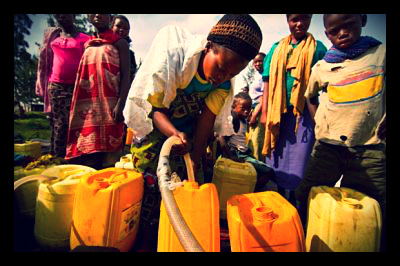
Access to freshwater is a serious problem for many communities in the developing world. In Yemen, Mercy Corps is working with local water vendors to accept vouchers to provide families with 20 liters of drinking water a day. Additionally, they have trained community members on the importance of hygiene practices such as hand washing, and they have installed a 5,000-liter plastic tank to store washing and general use water closer to people’s homes. This initiative has given over 1,000 people better access to water, greatly improving health in the communities.
Mercy Corps relies on donations and fundraising to sustain its programs. They encourage people to attend their events, donate, and volunteer with their organization. For more information, visit their website here.
– Caitlin Zusy
Source: Mercy Corps

Who Is Mercy Corps?
Mercy Corps is a non-profit organization that was started in 1979 and based in Portland, Oregon. Their mission is to alleviate suffering, poverty, and oppression by helping people build secure, productive, and just communities. They aim to help people grappling with hardships survive by turning crisis into opportunity.
Mercy Corps is structured on a set of core values, which include belief in the intrinsic value and dignity of human life, and the belief of all people to thrive. Additionally, they believe that all people have the right to live in peaceful communities and participate in decisions that affect their lives. Mercy Corps members strive to be stewards of the Earth’s health, as well as stewards of the financial resources entrusted to them. Mercy Corps strives to use its resources to achieve peaceful change.
Mercy Corps is staffed by individuals who speak the local languages, know the culture, and understand the challenges of each community. Most of the time, their representatives are from the countries where they work. This enhances the sense of community and allows community members to help lift their neighbors from poverty.
The type of work Mercy Corps is involved in focuses on places in transition where conflict, disaster, political upheaval and economic collapse are present. The organization strives to provide emergency relief and to move quickly to help communities recover and build resilience to future shocks. They work to support community-based initiatives that are community-led and market-driven. And finally, Mercy Corps seeks to use innovation to fight against poverty in the places they work.
Mercy Corps has established programs in forty-six countries. Their programs have many different themes including agriculture and food, children and youth, conflict and governance, disaster preparedness, economic opportunity, education, emergency response, environment, health, innovations, water, and women and gender.
An example of an agriculture and food initiative Mercy Corps works with is in Timor Leste, one of the newest, poorest, and most poverty-stricken countries in the world. Mercy Corps is working with 4,500 subsistence farmers to improve their crop production, increase their income and diversify their diets. The goal of this project is to create a solid foundation for sustainable development in the country.
Access to freshwater is a serious problem for many communities in the developing world. In Yemen, Mercy Corps is working with local water vendors to accept vouchers to provide families with 20 liters of drinking water a day. Additionally, they have trained community members on the importance of hygiene practices such as hand washing, and they have installed a 5,000-liter plastic tank to store washing and general use water closer to people’s homes. This initiative has given over 1,000 people better access to water, greatly improving health in the communities.
Mercy Corps relies on donations and fundraising to sustain its programs. They encourage people to attend their events, donate, and volunteer with their organization. For more information, visit their website here.
– Caitlin Zusy
Source: Mercy Corps
How to Make Poverty History
Last month, Australian national Matt Napier, the Ambassador of Make Poverty History, had set out to walk 5 million steps to raise global poverty awareness. He is walking from Perth to Sydney, a journey that is approximately 4,400 km and will span along 3 to 4 months; Matt will be walking around 35km a day while bouncing an AFL football! Along the journey, Matt is stopping at schools, community groups, and churches to talk to them about how global poverty can end through foreign aid success.
He is hoping to get as many people as he can to sign the Movement to End Poverty petition, which is a petition to Australian leaders that the Australian people have voiced the need for their country to play a bigger role in the fight to eradicate poverty. Last year, Matt rode his bike from Perth to Canberra while supporting the Make Poverty History campaign. The journey lasted him 6 weeks and during it, he successfully talked with 250,000 people.
– Leen Abdallah
Source: World Vision Campaign
Iqbal Quadir’s TED Talk: Mobiles Fight Poverty
Iqbal Quadir is an advocate of business as a humanitarian tool. With GrameenPhone, he brought the first commercial telecom services to poor areas of Bangladesh. Partnering with microcredit pioneer GrameenBank in 1997, Quadir established GrameenPhone, a wireless operator that provides phone services to 80 million rural Bangladeshi. The company has become the standard for a bottom-up, tech-empowered approach to development.
In his TED Talk, he first questioned the way that rich counties sent aid to poor countries to fight poverty. And also, even though he did not find much evidence to support the idea that connectivity can really increase productivity, he presented research done by the International Telecommunication Union showing the positive effects it has. The impact of one new telephone to richer countries’ GDP is very little, however, one new telephone has a huge impact on the GDP of poorer countries.
“Mobiles have a triple impact,” Quadir says. “They provide business opportunities; connect the village to the world; and generate over time a culture of entrepreneurship, which is crucial for any economic development.”
– Caiqing Jin(Kelly)
Source: TED Talk
Elizabeth Pisani’s TED Talk: Sex, Drugs and HIV — Let’s Get Rational
Elizabeth Pisani is an assumption-busting independent researcher and analyst, who has worked in the field of HIV for 15 years in four countries. She believes that the world is failing to understand and manage the realities of HIV. She also shows how politics and “morality” have hogtied funding, and advocates for putting dollars where they can actually make a difference.
In Pisani’s TED Talk, she firstly points out an idea that people get HIV not just because they do stupid things. For most of them, when they are doing stupid things, they have perfectly rational reasons. We both know there are two major ways to spread HIV; sex and drugs. Pisani leads us to see problems behind the sex and drugs. Most of the people in Africa know sex and blood can transfer HIV. They also knowwhere to buy clean needles, but because of gender inequality and poverty, sometimes people choose to “rationalize” things even though they know there is a great chance that they may get HIV. At the end of her speech, she tells us a story about a transgender hooker on the street of Jakarta named lnes. She quotes Ines saying “why is prevalence still rising? It’s all politics. When you get to politics, nothing makes sense”. She believes that everyone has a duty to demand our politicians to make policy based on scientific evidence and on common sense.
-Caiqing Jin(Kelly)
Source: TED Talk
Universal Primary Education
Since 1999, when 106 million children were not in school, much progress has been made. Today, approximately 61 million are out of school, and yet more progress is needed. In the past five years, due to the economic crisis, many nations decreased their foreign aid spending and thus progress was hindered. According to the World Bank and the U.N., the majority of children not attending schools live in sub-Saharan Africa and South Asia, with at least half living in areas that are politically unstable.
Despite some progress, it is crucial to note that there is a percentage of people/areas that is not accounted for in the statistics of progress and primary education. For example, according to the U.N., 90% of primary aged children living in developing countries are now in school as opposed to that percentage being 82% in 1999. While the rise in percentage sounds great, “broad figures [have the tendency to] mask localized problems,” and thus, in actuality some countries barely have any primary aged children attending school. The children who are most unaffected by the progress and recent advancement are the extremely poor and the minorities. Nigeria, Yemen, Ethiopia, South Sudan, India, Haiti, the Democratic Republic of Congo, and Bangladesh account for half of the world’s children not going to school.
There is a demand for new donors or ‘funders,’ now that many nations have cut back on their foreign aid, from the private sector and through public fundraising. Part of the U.N. 2015 Millennium Goals was to ensure that all children have equal access to primary education and to increase females’ enrollment in schools. However, experts are claiming that education goals are difficult to reach due to issues such as child labor, cultural values, and other reasons. For example, in some cultures, it is valued more that daughters stay home while the sons receive an education. The women assume the housewife role while the men are valued to be the knowledgeable providers.
In addition to child labor and cultural values, there are many concerns regarding harassment and safety of the children attending schools. For example, some female students in Sierra Leone reported being sexually harassed by teachers in exchange for good grades. And it is almost impossible to forget the story of Malala Yousafzai, the Pakistani girl, who was shot by the Taliban for her advocacy of education for girls. Despite the unfortunates, where instituting education does work, it makes an incredible difference. Rebeca Winthrop, the director of the Center of Universal Education at the Brookings Institution in Washington, expressed that there are children who continue to learn even in refugee camps. Where there is desire, willingness, and determination, there is much hope for universal primary education and even further schooling.
– Leen Abdallah
Source: New York Times
Photo: Globalization 101
Modern Philanthropy Depends On Innovation
One of the most significant charity foundations of the past century is the Rockefeller Foundation, which is celebrating its 100th anniversary this month. The Foundation has set the bar high for other philanthropic organizations throughout the 20th century, and it will continue to do so throughout the 21st century by means of innovation.
The Rockefeller Foundation has promoted innovation as the key to doing good through the “Next Century Innovator Awards,” which look at projects that do more than just help society but transform it. The projects find or create new ways to approach huge societal issues including education, sanitation, marketplace literacy, and cancer, for example.
One project that was awarded the “Next Century Innovator Award” was Innovate Salone in Sierra Leone. The organization transformed the education system of the country to help more children attend school. The project did more than just build a school or donate money for education. It gave the young people in the community an opportunity to solve their own problems according to their individual needs. Those with the best workable solutions were given financial support to build on their ideas to create real results while receiving support and feedback from mentors and peers in their community.
Other organizations, particularly universities, have taken note of this new form of innovative modern philanthropy and are joining the effort to transform the world of charity. More people are beginning to realize that donating money can help to an extent, but the best way to achieve long-lasting benefits is to transform the way people think of the art of giving through innovation.
– Katie Brockman
Source: Forbes
Photo: EmpowerOU
Capitol Hill: A Glimpse of Prince Harry
In his first visit to the United States since the infamous Las Vegas scandal, Prince Harry and other members of the Royal Family visited Washington D.C. The Prince’s first stop was Capitol Hill to view an anti-landmine photography exhibition in honor of the HALO Trust’s 25th Anniversary. HALO is an organization that works to remove explosives left behind in war-torn countries. The exhibit took place at the Russell Senate Rotunda and long-time HALO patrons, such as the Prince, and HALO board members were not the only exhibit attendees.
Filling the balconies and lingering in hallways, the women of Capitol Hill were out with a mission in order to welcome the Prince. The Rotunda was filled with women, presumed Capitol Hill staffers, intent on getting iPhone documentation and a glimpse of Prince Harry’s visit. Later that evening, he was scheduled to give a speech regarding HALO’s work at the home of British Ambassador Peter Westmacott.
The Prince’s trip did not stop at the Capitol. Prince Harry was scheduled to tour Arlington National Cemetery, then the Walter Reed National Military Medical Center. Later, he was scheduled to visit Colorado to be followed by visiting parts of New Jersey that were hit by Hurricane Sandy. His last stop on the stateside tour was a polo fundraising event in Greenwich Village in Manhattan.
– Kira Maixner
Source: Huffington Post
Extreme Poverty or Higher Aggregate Happiness
In a recent research analysis regarding the after-effects of eradicating extreme poverty, researchers found that the world’s well-being as a whole is much more important to focus on. During the past decade, the main focus of the U.N. and developed nations has been to eradicate extreme poverty, but now researchers are asking: what comes after the end of poverty? The argument is that many people will still be considered poor in comparison to those who are rich. Daniel Altman of Foreign Policy asserts that even if people move up from extreme poverty (living on less than 2 dollars a day), the more they are exposed to ads and a TV showing them how the “other half lives,” the more the income gap will yet remain.
Altman writes, “the link between income and happiness is strong in countries around the globe.” Thus, rising income maintains constant happiness which means that focusing on non-extreme poverty is just as important as focusing on eradicating extreme poverty. Basically, even if poor farmers and sweatshop workers’ lives were advanced “beyond the level of mere subsistence,” there needs to be a constant advancement of their lives in order to maintain consistent and constant well-being and happiness.
Although the aid industry has been successful in lifting small numbers of people out of poverty for a given time, there is a need for “big changes in living standards,” and that calls for the growth of the private sector and a change of political institutions. By following up on the Bill and Melinda Gates Foundation’s slogan that every human life has equal value, perhaps there is a need for a new slogan for the aid industry, argues Altman. Rather than it being the eradication of extreme poverty, perhaps it should be the building of higher aggregate happiness.
– Leen Abdallah
Source: SBS News
Photo: Google
Business Process Outsourcing & Global Poverty
Business Process Outsourcing (BPO) has long been regarded by Americans solely as a process that takes away internal jobs and substitutes them for jobs overseas. However, the process could be doing a lot more to combat global poverty as well as boost the US economy than can be seen on the surface.
While working for Global Catalyst Partners, a man named Michael Chertok was able to see the results of BPO firsthand. He was given the task of creating jobs for the poor in Phnom Penh, Cambodia, and throughout the years, has given the opportunity of experience and greater education to more than 500 youth from the area. Many have been able to obtain university degrees and go on to professional jobs, earning “over five times more than the average high school graduate in Cambodia”.
BPO has also had an effect in other places, like the Philippines, which posted a 6.6% GDP growth in 2012. The Philippines look to remain one of the fastest-growing countries, facilitated in the most part by investments and economic aid from other countries. This economic development not only benefits the countries themselves but also those that invested in them.
Providing aid in order to lift regions out of poverty feeds back into the cycle by providing new consumer markets for investors to take advantage of. So, the more aid invested in other developing countries and impoverished areas, the greater the return in terms of new markets and a dramatic decrease in global poverty.
– Sarah Rybak
Sources: Huffington Post
Photo: Donny Brook
USAID Launches Infrastructure Fund for Africa
The Administrator of the U.S. Agency for International Development (USAID), Rajiv Shah, the President of the African Development Bank (AfDB), Donald Kaberuka, and the Swedish Minister for International Development Cooperation, Gunilla Carlsson, recently announced a new fund called the Agriculture Fast Track. The Agriculture Fast Track is a $25 million fund that will spur greater private investment in agricultural infrastructure projects in sub-Saharan Africa. The Agriculture Fast Track fund is the first of its kind.
The announcement was made at the Grow Africa Forum in South Africa. Grow Africa is a partnership of the African Union, the New Partnership for Africa’s Development, and the World Economic Forum. It works with eight African countries to engage governments, civil society, and the private sector to advance sustainable agricultural growth.
The Agriculture Fast Track will spur agriculture infrastructure development in countries that are members of the New Alliance for Food Security and Nutrition, strengthening the links from farmers to markets to tables. It will also finance upstream work of project design, including feasibility studies, market analyses, site surveys, business plans, financial modeling, and other activities necessary to ensure project quality and bank-ability by supporting each project with up to $1.5 million. These project preparation grants will ultimately facilitate access to more funding for agriculture infrastructure because banks and other investors require this documentation to issue commercial loans.
The New Alliance for Food Security and Nutrition was launched last year by President Obama at the G-8 summit and includes six member countries: Burkina Faso, Côte d’Ivoire, Ethiopia, Ghana, Mozambique, and Tanzania. The New Alliance matches market-oriented regulatory reforms in these six countries with $3.7 billion in commitments from the private sector in agriculture.
The fund will be managed by the African Development Bank with the USAID pledging $15 million and the Government of Sweden, pledging $10 million, respectively.
Shah said, “Since the New Alliance for Food Security and Nutrition was founded last year, we’ve seen member countries make serious reforms that have led to real progress. The launch of the Agriculture Fast Track allows African farmers to take advantage of these reforms through fast-tracked infrastructure projects that will better deliver their products to markets.”
Carlsson noted, “By targeting the project preparation stage of projects, the Agriculture Fast Track will advance infrastructure projects when funding is most acutely needed to pivot from planning to construction. This targeted approach allows us to catalyze significantly more private sector investments and ensure the highest standards in terms of social and environmental sustainability.”
– Essee Oruma
Source: USAID
Photo:NEPAD