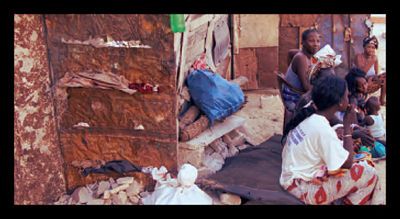
Senegal is a geographically and culturally diverse country with 5 languages, a desert in the north and a tropical climate in the south. This all exists within a country about the size of South Dakota. Praised as one of the most successful democracies in Africa, Senegal is making progress on many of the World Bank indicators of decreasing poverty. Yet, poverty in Senegal persists.
Challenges
Senegal still faces many of the challenges that are commonplace on the continent. Extreme weather causes crop failures, impacting the strategic economic sector of groundnuts. A ban on street beggars has taken the only source of income from many families, essentially hurting those the ban was supposed to help. Former dictator Chad Hissène Habré awaits trial, accused of ordering thousands of political killings in the 1980s. Additionally, a “long-running, low-level separatist war in the southern Casamance region” impacts the residents and detracts from the political cohesion needed to tackle a wide range of health and education problems. These are just a few of the high-level political and economic challenges facing this country.
Improvements
Despite the difficult political, economic, social and geographic terrain facing this country, there has been steady progress over the last few years. According to World Bank data, primary school enrollment has been steadily increasing to 86%. CO2 emissions are slowly but steadily decreasing. Also, the percentage of the national population living below the national poverty line is at a 10 year low.
Poverty facts and figures
A segment of the Senegalese population suffers from chronic poverty. Chronic poverty is defined by the Chronic Poverty Research Center as poverty lasting many years and possibly over multiple generations. The chronically poor are “often multi-dimensionally deprived and may experience preventable deaths early (and so are not even counted).” In Senegal, chronic poverty has marred the last 80 years of progress. There are more chronically poor than transitional poor (people who move in and out of poverty) or the non-poor. A report by the Chronic Poverty Research Center found that not only are 60% of households “poor or vulnerable” but that there is a possibility that the poverty will be passed on to the next generation.
Events such as “loss of harvest, conflict, theft, flooding, divorce, loss of spouse, and/or loss of capital” drastically increase vulnerability. While there is little mobility between life-stages, the youth are more likely to escape poverty. Additionally, “older women [are] less likely to live in chronic poverty than their male counterparts.”
There are several other strongly correlated factors. First is an ethnic correlation. The minority ethnic groups Pulaar and Sereer are at an 83% risk of poverty, with the Dolar face an 80% risk of becoming chronically impoverished. The results on the geographic correlation to poverty yield that rural households are more likely to suffer from chronic impoverishment. Lack of education and child-labor is also strongly linked to poverty, particularly chronic poverty in Senegal.
Strategies
Social networks are an important social safety net in Senegal. Households often include multiple families who share resources and risks. The Chronic Poverty report suggests that the social network must play a key role in “developing human capital, agricultural investments, and improving food security, particularly in rural areas.” Entrepreneurship needs to be enabled via “endogenous development” in order to link development from villages to the national level. A multi-sector inclusive approach is necessary because of the currently limited economic base.
Despite the uphill battle Senegal faces in reducing poverty, progress is being made and the momentum is being put to good use. Strategies for reducing poverty are being implemented by the World Bank and the United States Peace Corps with measurable results.
– Katherine Zobre
Sources: CIA World Factbook , BBC, Huffington Post, World Bank, NPR, Human Rights Watch, Chronic Poverty Research Center, Chronic Poverty Research Center
Photo: Chronic Poverty in Senegal

Poverty in Senegal
Senegal is a geographically and culturally diverse country with 5 languages, a desert in the north and a tropical climate in the south. This all exists within a country about the size of South Dakota. Praised as one of the most successful democracies in Africa, Senegal is making progress on many of the World Bank indicators of decreasing poverty. Yet, poverty in Senegal persists.
Challenges
Senegal still faces many of the challenges that are commonplace on the continent. Extreme weather causes crop failures, impacting the strategic economic sector of groundnuts. A ban on street beggars has taken the only source of income from many families, essentially hurting those the ban was supposed to help. Former dictator Chad Hissène Habré awaits trial, accused of ordering thousands of political killings in the 1980s. Additionally, a “long-running, low-level separatist war in the southern Casamance region” impacts the residents and detracts from the political cohesion needed to tackle a wide range of health and education problems. These are just a few of the high-level political and economic challenges facing this country.
Improvements
Despite the difficult political, economic, social and geographic terrain facing this country, there has been steady progress over the last few years. According to World Bank data, primary school enrollment has been steadily increasing to 86%. CO2 emissions are slowly but steadily decreasing. Also, the percentage of the national population living below the national poverty line is at a 10 year low.
Poverty facts and figures
A segment of the Senegalese population suffers from chronic poverty. Chronic poverty is defined by the Chronic Poverty Research Center as poverty lasting many years and possibly over multiple generations. The chronically poor are “often multi-dimensionally deprived and may experience preventable deaths early (and so are not even counted).” In Senegal, chronic poverty has marred the last 80 years of progress. There are more chronically poor than transitional poor (people who move in and out of poverty) or the non-poor. A report by the Chronic Poverty Research Center found that not only are 60% of households “poor or vulnerable” but that there is a possibility that the poverty will be passed on to the next generation.
Events such as “loss of harvest, conflict, theft, flooding, divorce, loss of spouse, and/or loss of capital” drastically increase vulnerability. While there is little mobility between life-stages, the youth are more likely to escape poverty. Additionally, “older women [are] less likely to live in chronic poverty than their male counterparts.”
There are several other strongly correlated factors. First is an ethnic correlation. The minority ethnic groups Pulaar and Sereer are at an 83% risk of poverty, with the Dolar face an 80% risk of becoming chronically impoverished. The results on the geographic correlation to poverty yield that rural households are more likely to suffer from chronic impoverishment. Lack of education and child-labor is also strongly linked to poverty, particularly chronic poverty in Senegal.
Strategies
Social networks are an important social safety net in Senegal. Households often include multiple families who share resources and risks. The Chronic Poverty report suggests that the social network must play a key role in “developing human capital, agricultural investments, and improving food security, particularly in rural areas.” Entrepreneurship needs to be enabled via “endogenous development” in order to link development from villages to the national level. A multi-sector inclusive approach is necessary because of the currently limited economic base.
Despite the uphill battle Senegal faces in reducing poverty, progress is being made and the momentum is being put to good use. Strategies for reducing poverty are being implemented by the World Bank and the United States Peace Corps with measurable results.
– Katherine Zobre
Sources: CIA World Factbook , BBC, Huffington Post, World Bank, NPR, Human Rights Watch, Chronic Poverty Research Center, Chronic Poverty Research Center
Photo: Chronic Poverty in Senegal
$24 Million Invested in Flexenclosure to Reduce Poverty
Flexenclosure received $24 million from investors such as the International Finance Corporation (IFC) to help in their efforts to reduce poverty. Based in Sweden, the company manufactures modular data centers and corresponding power infrastructure for rural communities where construction is often difficult. The data centers give telecommunication companies the ability to expand into emerging markets previously unavailable to them. The expansion provides individuals in rural areas of Asia and Africa access to communication via cell phone.
The unit Flexenclosure produces houses all the telecom data and equipment is a low cost and is energy efficient. The on-site power system that runs the unity supports wireless towers with the wind, solar, and battery power. When those sources are unavailable, the unit can also run on diesel power. The power site also provides power for mobile phones, water pumps, and schools. The software manages the power for various uses and applications.
Currently, the majority of cellular base stations in emerging markets run on diesel generators for power supply which raises costs associated with the stations. Flexenclosure’s innovation power sources will help to reduce the costs and spread mobile technology further. IFC is the private equity arm of the World Bank and is supportive of Flexenclosure’s growth strategy and production methods.
A recent report on sustainable energy further supported Flexenclosure’s product. The report, Sustainable Energy for All, monitors universal access to modern energy as well as energy efficiency and renewable energy. The report finds only modest progress is being made since the report first started in 1990. Demand continues to outpace the supply of electricity and new supplies need to be affordable, sustainable, and efficient. Flexenclosure is working to create energy that follows those three standards and reduces the information gap between the rich and the poor.
– Amanda Kloeppel
Source: Sustainable Business News
7,000 Miles Saved with Food Aid Reform
Food Aid Reform is a big topic as lawmakers are working hard to get the bill passed through Congress. The reform will modernize policy that is outdated in the current global marketplace. The food aid reform will enable USAID to purchase more locally grown food in emergency situations rather than shipping food from US suppliers. This change will save time, money, and improve local economies and the livelihoods of local farmers.
The Food Aid Reform Act would eliminate requirements that food must be purchased from the US and sent on US ships. It would enable food to be delivered quicker and reach an estimated 2 to 4 million more people. The increased flexibility would allow on the ground organizations more freedom to make decisions and meet needs quicker. In addition to increased efficiency, the reform would lower shipping costs significantly.
Right now, USAID spends 50% of it’s food aid budget on shipping. If food is purchased in the mid-west of US, it is transported to a US port, put on a ship, and sailed 7,000 miles around the world where it is unload and transported by land to the emergency area. This does not seem like the most profitable use of government funds when food is available in many of these economies for purchase. This will allow USAID to save the 7,000 mile trek it must send food on currently. The food aid reform would also help to stimulate local economies.
Now is an excellent time to call your Congressional Representative and ask them to support the Food Aid Reform Act. Find their information here.
– Amanda Kloeppel
Source: Independent Daily European Express
Photo: House Committee on Foreign Affairs
Agit8 Concert Promotes Anti-Poverty Campaign
Musicians from around the world performed in London this past Wednesday to support Agit8, a music-based campaign focused on raising awareness for extreme poverty. The group was launched by the One Campaign, a group co-founded by Bono and Bob Geldof. The idea was to get modern groups to record newer versions of famous protest songs.
The Agit8 concert hoped to put pressure on leaders attending the G8 summit in Northern Ireland next week. Musicians that participated included Angelique Kidjo, Paloma Faith, U2, Will. i. am, Elvis Costello, and Green Day among others. Artists appeared to live and online to participate in the event.
One of the artists at the event remarked that Agit8 is a movement to push leaders to fulfill their promises and to be held accountable. Ending poverty will grow economies around the world and result in a healthier and more educated global workforce. The artists involved in the campaign want to motivate a new generation to fight against extreme poverty and hunger.
The One Campaign gathered the extraordinary group of musicians together to show the world that protest often leads to progress. History has shown that and British filmmaker Richard Curtis produced a film showing this that will also be shown in conjunction with the event.
– Amanda Kloeppel
Sources:The Irish Sun, NTD Television
Photo: Yahoo Finance
Economic Freedom Essential to Reduce Poverty
Poverty is a global issue affecting every nation on earth. Over the past hundred years, life expectancy ranged from 30 to 40 years for many people. And if they made it that far, often they did so without adequate food, clothing, and shelter. The past decade has seen massive reductions in the numbers of the global poor, but there is still much work to be done. Today, the number of people in the world living on less than $1 a day is down to around 20% and dropping.
Essential to reducing poverty is economic freedom. China and India have become leaders in economic enterprise and in improving the economic freedoms within their nations. As a result, they have seen millions of people lifted out of poverty. To back up the numbers, the Cato Institute and Canada’s Frazier Institute put out a report called the Economic Freedom of the World report. The study annually looks at five major indicators of economic freedom. Those indicators are size of government, legal system and property rights, sound money, freedom to trade internationally, and regulation. From the indicators, the report lists 141 countries in terms of economic freedom.
The report has found that countries with higher levels of economic freedom grow more rapidly, have higher per capita incomes, and greater longevity than countries with lower levels of economic freedom. The top fifth of countries had per capita incomes seven times higher than the the bottom fifth and the results among the poor are significant. The poor in the bottom tenth in terms of economic freedom had incomes of $1,061 versus poor in the top tenth who had incomes around $8,735.
The report also pointed out that income inequality does not seem to be a factor in economic freedom. As a country becomes more free, the rich do not grow richer at the expense of the poor. Rather the poor also gain an advantage. Economic freedom improves wealth which also improves health and mortality rates especially among women and children.
People are the solution to poverty and equal distribution of economic freedom will have a greater impact on reducing poverty than redistribution of wealth.
– Amanda Kloeppel
Source: The York Daily Record
Photo: The Guardian
Arab International Women’s Forum Holds Conference
On May 22nd, a conference for the Arab International Women’s Forum titled “Young Arab Women Leaders — The Voice of the Future” was held at Birzeit University, the first university to be established in Palestine. The Forum was a particularly momentous occasion because it marked the first time the annual forum had taken place in Palestine in the organization’s 11-year history.
In an opening address, the Forum’s founder Haifa Al Kaylani, discussed the opportunity that this year’s forum had to empower women and youth in Palestine to ensure sustainable development in the region.
The Forum, which began as an idea in London, has flourished throughout the world. Its Board of Directors is composed of names representing companies such as PepsiCo, PriceWaterhouseCooper, and the Arab British Chamber of Commerce.
Addressing these influential people, Al Kaylani noted the wealth of Palestinian expertise and talent at the conference, citing again that the education and training of the youth is a necessary investment. She also commented that such important leaderships ethics would help women “take roles as leaders and job creators working towards the social and economic recovery in their communities and the region.”
Recently, AIWF made strides to expand digitally with the launch of its online forum, co-sponsored by PepsiCo. The topic of the most recent online forum was: “What impact has the rapid growth of technology in the last decade made on gender boundaries – societally, in the home and in the workplace?” Interested parties were allowed to enter the debate from the convenience of their laptops.
– Samantha Mauney
Sources: Wafa, Birzeit
Photo: AIWF
Malaria 101
For developed world travelers, malaria is an exotic hazard, and easily preventable. Yet for many underdeveloped communities, malaria is an epidemic. 90% of all deaths from malaria in 2010 were in Africa, with the majority of victims being under five years old. Spread by a mosquito bite, symptoms of malaria can show up 10-15 days after being bitten and include fever, vomiting, sweating, weakness, and muscle pain. Once diagnosed, malaria is treatable with artemisinin-based combination therapy. But left untreated, the disease can be fatal. Because it takes only a single bite to be infected, and mosquito populations are booming, it is very difficult to prevent the spread of the disease.
Many international health organizations have been working on ways to help control the disease with one of the most effective being the use of insecticide treated mosquito nets over beds because the species of mosquito which spreads malaria bites mainly at dusk and dawn. Vector control (i.e. the control of animals carrying pathogens) is another method used, as mosquitos have specific breeding preferences, mainly in residual puddles of water. The World Health Organization also encourages the use of insecticide around homes to protect families and communities.
Using the current strategies there is hope that the spread of malaria may be one day halted. Recently, four countries have been declared as malaria free – the UAE in 2007, Morocco and Turkmenistan in 2010, and Armenia in 2011. The greatest challenges, however, remain in sub-Saharan Africa.
– Farahnaz Mohammed
Source: WHO
Photo: Life Saver
30 Best Places To Be A Mother
Not all countries are created equally when it comes to raising children. While some countries have better opportunities for their mothers and children, including education, day care services, and early childhood development programs, others do not have proper healthcare or other resources to help keep mothers and babies healthy.
Each year, Save the Children releases the Mothers’ Index as part of their State of the World’s Mothers report. To determine the best places to be a mother, the study examines nations to judge how well their mothers and babies are cared for based on five areas: maternal health, children’s well-being, educational status, economic status, and political status.
Here are the organization’s results of the top 30 countries to be a mother:
30. United States
29. Luxembourg
28. Poland
27. Lithuania
26. Belarus
25. Israel
24. Czech Republic
23. United Kingdom
22. Canada
21. Estonia
20. Ireland
19. Greece
18. New Zealand
17. Italy
16. France
15. Singapore
14. Slovenia
13. Portugal
12. Switzerland
11. Austria
10. Australia
9. Germany
8. Belgium
7. Spain
6. Denmark
5. Netherlands
4. Iceland
3. Norway
2. Sweden
1. Finland
Many of these countries met all five standards set by Save the Children, with high expectations for the children’s school career, outstanding medical and health care for new and expecting mothers, a high per capita income level, and many job opportunities for mothers and women, particularly in leadership roles and in the government.
– Katie Brockman
Source: Huffington Post
Anti-Hunger Rally in London Precedes G8 Summit
Over the weekend, a rally in London attended by thousands sought to raise awareness around the issue of global hunger and encourage leaders, before the G8 summit later this month, to make ending hunger a top priority. The rally was in London’s famous Hyde Park. It was hosted by the “Enough Food for Everyone – IF” campaign and boasted the likes of Bill Gates and “Slumdog Millionaire” director Danny Boyle.
Prime Minister David Cameron hosted talks on malnutrition and led the discussion around the fight against global hunger. Boyle believes we can end hunger and that is necessary to do so. Boyle hopes in a day when no countries which participate in the Olympics will have children dying of hunger. It’s a high goal, but a realistic one according to supporters at the rally.
The G8 summit is set to be held in Northern Ireland on June 17-18 and the rally hoped to put malnutrition on the radar of governments, NGOs, businesses, and nonprofits attending the summit. Cameron discussed the topic with Vice President of Brazil Michel Temer and received a pledge of $4.15 billion by 2020 and a renewed commitment to fight against hunger and malnutrition. Also in attendance were representatives from 19 African countries, numerous donor countries such at the US and Japan, the EU, the World Bank, the World Health Organisation, and UNICEF.
A rally bringing together some of the global leaders in the fight against poverty and hunger is sure to make waves and spread awareness, which is what the Prime Minister hoped to do. Leaders are encouraging those at the G8 summit to focus priorities on hunger and malnutrition. Such action is another important step in the creation of the next generation of development goals.
– Amanda Kloeppel
Source: The News
Photo: The Guardian
Russell Building 101
The Russell Building is the Senate Office building, scaled to conform to, but not detract from, its more famous neighbor: the US Capitol building in Washington, D.C. Rising only three stories above ground, Russell faces Constitution Avenue and features long lines of classic Doric columns, white marble, and limestone. At its southwest entrance, twin marble staircases leading down to the Caucus Room complement a three-story rotunda surrounded by Corinthian columns.
Russell housed its first occupants on March 15, 1909, each senator receiving a two-room suite (one for the senator, and the other for the senator’s personal staff). Each office came equipped with a fireplace and a huge window facing either the street or the inner courtyard. In 1912 the first electric subway was installed in place of its preceding bus shuttles.
The famous Caucus Room became the setting for several high-profile investigations, including investigations of the sinking of the Titanic in 1912, the Teapot Dome scandal in 1923, the Army-McCarthy hearings in 1954, and the infamous Watergate investigation in 1973. Because of its association with these kinds of cases, the building quickly became recognizable to the public, almost as iconic as the neighboring Capitol building.
The Russell building is named in honor of Senator Richard B. Russell, a Democrat from Georgia who occupied the seat from from 1933 to 1971. Russell was often referred to as a “Senator’s Senator”, chairing the Senate Armed Services Committee and the Appropriations Committee, and served as president pro tempore. A statue of Senator Russell adorns the building’s rotunda.
-Kali Faulwetter
Sources: Senate.gov, aoc.gov
Photo: Natlfire