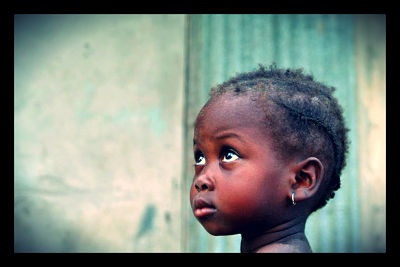
The Republic of Seychelles (pronounced say-shells) is a small island nation located in the Western Indian Ocean. The country consists of a whopping 115 tropical islands, although only 10 are inhabited. Most of the populated dwell on the largest island, Mahé, located 1,800 km east of the African coast.
With a population of 86,000 and an upper-middle-income socioeconomic status, the country gains most of its capital through fisheries and tourism.
Unpredictable weather patterns due to climate change have adversely affected the country’s ability to sustain small-scale farms and farming productivity. Given the tropical nature of the islands, agricultural land is scarce, resulting in the need to outsource for most of Seychelles’ basic commodities.
Being so heavily reliant on imports for basic goods and services, Seychelles is particularly vulnerable to global financial crashes and increases in food and fuel prices. Having to pay high freight and insurance fees to receive these goods from far-away Asia, it isn’t hard to see why Seychelles is one of the poorest island nations.
High shipping fees are not only a result of distance traveled but also the danger ships encounter along the way. Seychelles is at heightened risk for piracy in the Indian Ocean, resulting in the loss of many fisheries and popular tourism sectors.
20% of the population is estimated to be living in poverty, with 7% living in extreme poverty. With a highly unequal distribution of income, consumer patterns show that the poor devote a much larger percentage of their wealth to basic needs like food than wealthier citizens.
The government has made relatively excellent strides in improving basic health and educational needs. Infant mortality is under 5% per 20,000 births and child malnutrition rates at 6%. The primary educational enrollment is at 107%.
Seychelles’ poverty reduction strategy is described as follows:
“Sustained labor-intensive growth would help to reduce poverty to less than 8 percent and propel the country to higher social and economic development levels, provided that economic and social programs are re-oriented. The government has already accepted the need to increase the role of the private sector in the economy and to make basic policy changes that would free up the economy. The growth strategy could be built on the following elements: (i) reducing the role of the state, which presently dominates all productive sectors; (ii) increasing competitiveness in terms of labor cost and labor quality and (iii) developing human resources, particularly marketable skills. Government regulations on economic activity should focus on preserving public safety and the country’s pristine natural environment. The government should increase investment in productivity-enhancing areas such as infrastructure and human resources development.”
There is still work to be done, though, in the beautiful land of Seychelles. Over the past 20 years, employment has dropped for people in rural parts of the country due to the conversion of farmlands into other uses.
Recognizing this, the government is promoting farming and the raising of livestock as a national pastime and considering it the most important part of its economic development strategy.
– Kali Faulwetter
Sources: World Bank, Rural Poverty Portal, iFad, Every Culture
Photo: Banff Centre

Donate Blood to Save Lives
June 1st was World Organ Donor Day. Unfortunately, like many international holidays such as World Ocean Day, World Refugee Day, and World Blood Donor Day (all of which also take place in June) it was not widely celebrated. However, because as many as 15,000 kidneys are trafficked illegally each year according to traffickingproject.org, more people should be paying attention.
But, there are vital ways to help without giving up a kidney (right now).
Around the world, millions are stuck in a cycle of chronic sickness and inadequate healthcare. By following these simple steps, everyone can set an example of how to meet these urgent needs in an efficient and ethical manner that will potentially spread throughout the world.
– Samantha Mauney
Source: DW,USA Today,Red Cross
Photo: Jewish Voice
Harvard Grads Rewarded for Taking Nonprofit Jobs
This week, as some of the best and brightest students in the country graduated from Harvard, a select few received an additional bonus: $50,000 to use their degree to make the world a better place.
The 19 graduates who received the bonus have been part of the Harvard Business Leadership Fellow Program, which sets students up with one-year fellowships in nonprofit and public-sector organizations. Harvard subsidizes the fellowships, with each student receiving $50,000 in addition to the $45,000 paid by the organizations.
Since its inception in 2001, 106 students have been recipients of the grant and, after successful completion of the one-year programs, 90% of the students have been asked to stay on. According to the university, one-third of these students still work at the organization that hired them, and one-third have moved to a different job within the same sector.
This year, graduates will work at a variety of organizations including Oxfam America and Endeavor Global, a non-profit that helps emerging countries through its High-Impact Entrepreneurs program.
Since 1993, the Harvard Business School Social Enterprise Initiative has worked with students to create sustainable, high-impact social change. Thanks to Harvard Business School, these graduates will have the financial stability to work in the nonprofit industry, a sector that on average pays 30% less than for-profit organizations. “This program is a great opportunity for our graduating students to work in the nonprofit and public sectors,” said Harvard Business School professor Allen Grossman. “The program continues to grow as our students continue to give overwhelmingly positive feedback about working with partner organizations.”
– Chloe Isacke
Source: Impact,Harvard Business School
Photo: Bloomberg
Protecting Our Future: Save the Children
The dedicated workers of Save the Children have been affecting positive, lasting change in children’s lives for the past 81 years with no signs of slowing down. They partner with local governments and organizations in vulnerable communities to offer children support and protection from neglect, exploitation, violence, poverty, malnutrition, inferior medical care and education, and much more.
With offices spread across 120 countries, the organization has helped millions of children in Africa, Asia, America, the Middle East, Europe, Latin America, and the Caribbean. In 2012 alone, they helped more than 125 million children overcome obstacles including poverty, illiteracy, obesity, and abuse.
Save the Children focuses on the following key areas:
The organization is recognized by regulatory services as a leader among nonprofit organizations; The American Institute of Philanthropy (AIP) awarded it an A+ rating. The BBB Wise Giving Alliance has determined that Save the Children meets all of the standards for charity accountability. Charity Navigator awarded Save the Children their 11th consecutive overall 4 out of 4 stars rating in 2012. The Forbes 200 Largest U.S. Charities List rated the organization’s fundraising efficiency at 92%, and their charitable commitment at 91%. Great Nonprofits named them the recipient of a 2012 Top-Rated Award. And America’s Greatest Brands featured Save the Children as one of the strongest and most trusted humanitarian relief and development philanthropies.
The amazing work being done by Save the Children can be multiplied even further by charitable contributions to their Global Action Fund. To make a donation, please visit the Global Action Fund webpage.
– Dana Johnson
Source: Save the Children, Global Action Fund
Adopt an ECD
Early childhood development (ECD) is an aspect of life that kids in Africa can’t afford to take for granted. Only 43% of children under five in South Africa have access to these crucial programs either at home or in a specialized center. Exposing children to ECD programs is an important factor in their ability to grow into intelligent adults, and also plays a crucial role in lifting them out of poverty.
To change the vicious cycle of poverty, the National Development Agency is launching the Adopt an ECD campaign to allow more kids the chance to participate in early childhood development programs. The most prevalent reason children do not have access to these programs is because their families simply cannot afford them. And without early childhood development programs, most kids will grow up without the education and skills necessary to raise themselves out of poverty, thus continuing the cycle.
The Adopt an ECD campaign allows individuals and organizations to donate money, supplies, or work hours to help create more accessible programs for kids. The donations will go toward building new schools and daycare centers, buying school supplies, or renovating buildings to be more child-friendly. When individuals and businesses help contribute to the campaign, they are not only helping educate children, they’re also helping end global poverty.
– Katie Brockman
Source: Mail & Guardian
Photo: World Vision
Seychelles Poverty
The Republic of Seychelles (pronounced say-shells) is a small island nation located in the Western Indian Ocean. The country consists of a whopping 115 tropical islands, although only 10 are inhabited. Most of the populated dwell on the largest island, Mahé, located 1,800 km east of the African coast.
With a population of 86,000 and an upper-middle-income socioeconomic status, the country gains most of its capital through fisheries and tourism.
Unpredictable weather patterns due to climate change have adversely affected the country’s ability to sustain small-scale farms and farming productivity. Given the tropical nature of the islands, agricultural land is scarce, resulting in the need to outsource for most of Seychelles’ basic commodities.
Being so heavily reliant on imports for basic goods and services, Seychelles is particularly vulnerable to global financial crashes and increases in food and fuel prices. Having to pay high freight and insurance fees to receive these goods from far-away Asia, it isn’t hard to see why Seychelles is one of the poorest island nations.
High shipping fees are not only a result of distance traveled but also the danger ships encounter along the way. Seychelles is at heightened risk for piracy in the Indian Ocean, resulting in the loss of many fisheries and popular tourism sectors.
20% of the population is estimated to be living in poverty, with 7% living in extreme poverty. With a highly unequal distribution of income, consumer patterns show that the poor devote a much larger percentage of their wealth to basic needs like food than wealthier citizens.
The government has made relatively excellent strides in improving basic health and educational needs. Infant mortality is under 5% per 20,000 births and child malnutrition rates at 6%. The primary educational enrollment is at 107%.
Seychelles’ poverty reduction strategy is described as follows:
There is still work to be done, though, in the beautiful land of Seychelles. Over the past 20 years, employment has dropped for people in rural parts of the country due to the conversion of farmlands into other uses.
Recognizing this, the government is promoting farming and the raising of livestock as a national pastime and considering it the most important part of its economic development strategy.
– Kali Faulwetter
Sources: World Bank, Rural Poverty Portal, iFad, Every Culture
Photo: Banff Centre
UN Honors Victories in Combating Poverty
In 1990, Thailand had a poverty rate of 27 percent. That means more than one of every four citizens suffered from hunger and oppression.
Thailand is now one of 38 countries honored by the United Nations at a ceremony in Rome Wednesday. The celebration? All 38 of these countries have cut their nation’s hunger in half.
This is a significant improvement in meeting the United Nations Millennium Development goals, which plan to eradicate global poverty by 2015. The 8 major goals are listed below:
1. Eradicate extreme hunger
2. Universal Education
3. Gender Equality
4. Reduction of Child Mortality
5. Maternal health improvement
6. HIV/ AIDS/ Disease reduction
7. Environment sustainability
8. Global Development
The United Nations set deadlines countries must meet as they work to achieve these eight goals. Halving national hunger is an approaching deadline.
Countries shared different goals of having either the proportion of their hunger levels cut in half or the exact hunger levels cut in half. Notable nations that achieved set goals include Brazil, Chile, Vietnam and Nigeria.
UN Food and Agriculture Organization Director-General Graziano da Silva said that this success stems from the commitment of each nation to ending world hunger and poverty. This commitment has resulted in many achievements in combating poverty.
“FAO is proud to work with all our member nations, developed and developing, to reach our common vision of a hunger-free and sustainable world,” Graziano da Silva said.
– William Norris
Sources: Ecumenical News, United Nations Development Programme
Photo: Ecumenical News
The Future for South Sudan
A year ago, Sudan and South Sudan were on the brink of war, but this month a deal between the two countries was finally implemented, allowing production in South Sudan’s main oil field to resume. This region, the Palouge oil field, accounts for 80% of the country’s oil production and has not been operational for 16 months due to disputes regarding the export of the oil.
This resumption of operations marks a significant moment in South Sudan’s brief history. Since its independence two years ago, the nation has suffered dramatic setbacks to its economy. The fledgling nation’s GDP contracted by 52% last year alone, while government revenues from oil-backed loans were cut by 98%. Now, however, with a pipeline deal in place with the north, South Sudan will be able to ramp up production to pre-independence levels.
After the drastic cuts in expenditure necessitated by the cessation of oil production during the last two years, this influx of revenue should significantly boost the country’s economy. South Sudan will have to diversify away from oil as the primary revenue generator over the next few years as reserves disappear, however, for now, the hope remains that oil profits will allow this nascent economy to establish itself. A stable economic platform marks the first steps in allowing the country and its people to grow.
– David Wilson
Sources: The Economist
Photo: Royal African Society
Fashion Fights for Rights
Fashion fights for rights. In April, a factory in Bangladesh collapsed, killing over one thousand female seamstresses. The event brought women’s rights to the surface of many discussions. To raise awareness, the women’s empowerment initiative Chime for Change organized an event sponsored by Gucci called Sound of Change Live, focusing on fashion, music, women, and how they can intertwine. The concert featured many women’s rights advocates including Jennifer Lopez, Madonna and Beyonce, to promote women’s rights to education, health, and justice.
About 50,000 fans attended the concert in person, and an estimated one billion more watched online to see how fashion fights for rights. The concert featured an interactive Twitter feed asking viewers’ opinions throughout the performance, which helped the event go viral. Sound of Change Live raised awareness of important women’s issues like domestic violence and education and was also able to raise $4 million for Chime for Change.
Sometimes the support of celebrities is necessary for action in places like Pakistan, where the voices and opinions of pop icons can grab the attention of the nation’s youth. Ultimately, more good is done once celebrity advocates for change because more people become aware of and get involved in the world’s most pressing issues.
– Katie Brockman
Source New York Times
Food Aid Reform Act Faces Fight in Congress
Initial support for reforms to food aid came from both parties. It turns out everyone believes money for food aid in emergency situations should go to feed people. The problem comes when determining how that aid should work and where it should be spent. President Obama has introduced reforms to policy dating back to the Eisenhower era, but the food aid reforms have hit trouble in Congress.
The discussion is focused on whom the US should buy food in emergency situations. Currently, the US purchases food from US farmers and ships it overseas. Reforms to food aid include using money allocated to purchase food from overseas farmers. The US is currently one of the only major food-producing nations that still ships its food overseas rather than purchasing food directly from poorer farmers.
The money involved is around $2 billion; US agriculture is expected to bring in $128 billion of profits this year, making this a small amount in comparison. For poor farmers around the world, it is life-changing. It allows farmers in developing nations to improve their crops and continue to produce and sell their goods. This amount also would help prevent food insecurity, a source of unrest in many nations. Food insecurity is often accompanied by other insecurities as well.
Nigeria’s Minister of Agricultural and Rural Development, Akinwnumi Adesina, is a major supporter of the reforms. The money would help Nigeria continue to promote national security and help farmers grow economically. The Obama plan would shift the $2 billion spent on food aid to the USAID and allow them to use it to purchase food overseas. Farmers would get a subsidy for at least the first year to replace some of the lost profit. In addition, 55% of food aid dollars will still go to American farmers.
Food aid reforms are long overdue and a key to promoting global development worldwide. They are also a key step in helping the US keep nations secure and conflict at a minimum. The reforms will help countries like Nigeria shift away from food dependence to food independence and become growing, thriving economies.
Call your Congressional leaders today and request they support the Food Aid Reform Act (H.R. 1983).
– Amanda Kloeppel
Source: Bloomberg
Hunger in Rwanda: The Good and the Bad
In Rwanda, poverty and hunger continue to pose a major challenge for the rapidly developing country. Based on the UNDP Human Development Index for 2011, the country ranks 166 out of 187 while maintaining one of the highest population densities in Africa. The large population puts a strain on proper healthcare as well as the already limited natural resources of the country. Although the government of Rwanda, together with the World Food Program, has found that nutrition levels and food security have been improving over the last seven years, the situation is still far from optimal.
Some of the major challenges Rwanda faces with regard to poverty and hunger could be solved by foreign aid investments or direct cash donors from developed nations and foreign aid organizations. 83.7% of the population survives on $2 a day or less, and without proper disposable income, it is impossible to support families with proper food, water, and nutrition.
Up to 90% of the population engages in subsistence agriculture. This, combined with the extreme crowding and limited access to land, makes subsistence farming inefficient.
WFP’s country director for Rwanda, Jan Delbaere, weighs in on the topic, explaining that “during 2012, WFP bought 23,000 metric tons of food in Rwanda, mostly for operations in neighboring countries. This is a clear sign that Rwanda is more than self-sufficient for its staple crops. However, households with only a small area of land for cultivation simply cannot afford to access enough nutritious food to live healthy, active lives or to provide for their basic needs from their land alone.”
The WFP remains committed to supporting the government in Rwanda to increase food security and food production programs, and the country itself has chosen to sign the “Comprehensive Africa Agriculture Development Program (CAADP) compact and to secure funding, thus confirming malnutrition and food insecurity as one of the government’s key priorities.” In spite of its food insecurity, Rwanda’s GDP has been growing by 7.2% annually since 2010. With proper investment and aid, these issues can be solved, and the country set further on the right track to stability.
– Sarah Rybak
Source: WFP,Hope in Action
Photo: ESB Blog