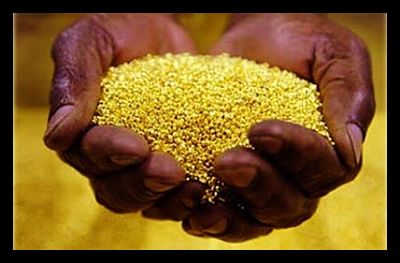
The foothills of the Moroto Mountains in northeastern Uganda are marked by hundreds of holes dug by eager villagers in search of gold. Close by, mining machinery installed by the private mining company, Jan Mangle Company Ltd., crank noisily in search of the same.
The relatively recent discovery of gold in the Karamoja region holds the potential to change the fate of the region’s pastoral communities. But whether this change will be negative or positive remains to be seen. The poorest region of Uganda, Karamoja, has been damaged by decades of violent conflict, and many in the region feel they have been neglected by the central government.
In 1980, a fifth of the Karamojong population, including 60% of infants, perished in a widespread famine that resulted in the fall of dictator Idi Amin. Conflict ensued once Karamoja’s clans looted the Moroto armory and used the weapons to ransack cattle from villages in neighboring Kenya and what is now South Sudan.
Cattle are considered among most Karamojong people to be a person’s main representation of wealth. For this reason, many of those unfortunate enough to have their cattle stolen from them during the years of conflict were prompted to begin digging and panning for gold.
Today, the region is relatively free from conflict and has returned to a state of peace and security. This is mostly due to the controversial government disarmament programs in which villages were surrounded and searched for hidden weapons by troops in the Ugandan People’s Defense Force.
The return to security has opened the door for many corporations to poke their noses into Uganda’s mineral-rich lands. In Karamoja, the foreign presence of Jan Mangle Limited has prompted mistrust among locals. It is popularly assumed that the benefits will flow toward the wealthy, leaving the poor even poorer.
“We don’t know where the gold is going to,” said one young villager. “We hear the land is sold to investors and we are afraid we will not see any benefits from the gold. They have not told us anything.”
The government of Uganda has a strong history of forcibly displacing indigenous people in order to buy up land to sell to corporations. An example is the eviction of 392 families to make way for a German coffee company in 2001 or the nearly 20,000 people evicted in 2012 to clear land for a British forestry company. In various regions of northern and central Ugandan, hundreds of families are being paid peanuts for their land that is then sold to corporations such as the AUC Mining Company and Jan Mangle Company Ltd.
Years of manipulation and neglect from the central government have lead Karamojong residents to believe the worst, and it is nearly impossible to get information on government contracts from private corporations.
But government officials such as Moroto District Commissioner Nahaman Ojwe insist that the indigenous of Karamaja will actually see two benefits from the mineral extraction. First, current landowners will receive royalties from the mining companies. Second, the wealth collected from the gold by the central government could be redistributed to the indigenous of the region.
Whether these benefits will actually be felt by the people of Karamoja will be revealed in the coming years. But for now, the villagers keep digging while the machines keep drilling in Uganda’s poorest region.
– Kathryn Cassibry
Source: The Guardian, The Daily Monitor, The Observer
Photo: Foundation of Life

Nelson Mandela’s Childhood
Nelson Mandela’s life has been exemplary in many ways. Through his patience, his perseverance, his strength and his courage, he managed to lead South Africa through troubled social and economic times to become one of the world’s largest emerging economies and bring an end to apartheid to establish a new “Rainbow Nation” in honor of its racial diversity.
Nelson Mandela’s childhood is no less remarkable than his career. From a family that was traditionally powerful – his father was in line to be chief until a dispute robbed him of the title – Mandela came from humble beginnings. After his father was dispossessed of his status, his family was forced to move to a small village, where he was raised in a hut and lived a very simple life, eating what they could grow and playing with the other village boys. His first name was Rohlilahla, meaning “troublemaker” (an apt name for the man who would later become the leader of the African National Congress). He adopted Nelson when he began formal schooling and was given an English name.
After his father died, he was sent to live with Jongintaba Dalindyebo, a regent of the Thembu people, who began raising Mandela to assume a position of leadership when he grew older.
Mandela’s interest in African history is said to have started during his lessons next to the palace, where he studied English, Xhosa, geography, and history. He became interested in the effect of the arrival of the Europeans on the nation and the people. Later, in a coming-of-age ritual in the village, Chief Meligqili, a speaker, uttered words that would greatly influence Mandela.
“He went on to lament that the promise of the young men would be squandered as they struggled to make a living and perform mindless chores for white men. Mandela would later say that while the chief’s words didn’t make total sense to him at the time, they would eventually formulate his resolve for an independent South Africa.”
From the village, Mandela would go to boarding school and later university, which would feed the fire of his emerging interest in the rights of South Africans.
Mandela disproves the common conception that one needs to come from an established background in order to be successful; what made the difference in Mandela’s case was the education afforded to him by Dalindyebo, and later through boarding school and university. Mandela’s understanding of his own country’s history and his exposure to multiple facets of life gave him insight into the lives of many of the different citizens of the country.
Much of Mandela’s strength stemmed from a humble background and the early lessons of hardship and the value of each opportunity.
– Farahnaz Mohammed
Sources: Biography.com, History.com
Photo: The Guardian
Arco do Futuro
São Paulo’s visionary new mayor, Fernando Haddad, plans to elevate the city’s sprawling and overcrowded slums out of abject poverty by 2020. His goal is to improve the horrible living conditions of the favelas while also halting their insurgent growth.
The favela slums of São Paulo remain a brazen example of the poverty and income inequality that still lingers in Brazil despite its recent (and remarkable) economic growth. They serve as hotbeds for violence and crime as well as uncontained waste and rampant pollution.
In a campaign promise during last year’s election, Haddad created what will become the city’s main development plan named “Arco do Futuro.” This plan promises to provide more housing and jobs for the favela’s cramped and unemployed populations. He maintains that the improvements will occur as a result of economic growth, government funding, and demographic changes.
Previously, the government’s efforts to develop a 100-acre area around Luz, which is notorious for drug activity and known as Cracolândia, sparked intense protests within the community. According to Haddad, this was because the public did not trust the private companies in charge of the housing programs.
The mayor plans to allow members of the community to have a greater voice in order for the development plan to not be seen as a threat. He emphasized that giving individuals a greater sense of ownership would negate the negative feelings toward the project.
This mentality fits well with the message of the New Cities Summit, which was hosted by São Paulo this year. The message is this: “The Human City, placing the individual and the community at the heart of discussions on our urban future.”
The New Cities Summit, held in São Paulo this year echoed this idea as a way of developing solutions to the challenges of rapid urbanization. São Paulo was chosen to host last week’s New Cities summit because it faces many of the same problems as other metropolises across the developing world. If São Paulo can find ways to alleviate their problems of crime, pollution, overcrowding and waste, then the hope is that other cities can too.
By 2030, it is estimated that 60% of the world’s total population will be living in urban areas. Each year, a million people are added to this figure in China, India and the Middle East. Latin American countries have the highest percentage of urban populations with 87% of the population of Brazil living in cities.
“We need more just cities. Not just playgrounds for the wealthy, but cities where all people can thrive,” said John Rossant of the New Cities Foundation, “This is a global summit to look at problems facing cities in the 21st century, but also opportunities. There are lots of interesting solutions.”
– Kathryn Cassibry
Source: The Guardian,New Cities Foundation,Estado Sao Paulo
Photo: Mind Map-SA
Good News for the Meningitis Belt
Meningitis is an infectious disease that causes the swelling of the protective membranes that surround the brain and spinal cord. The symptoms involve severe headache, stiffness of the neck and sensitivity to light. In 2009, 88,000 people in Sub-Saharan African were infected with meningitis and more than 5,000 died. To alleviate this problem, the Bill and Melinda Gates Foundation has helped develop MenAfriVac.
Paired with the Meningitis Vaccine Project, a nonprofit organization, the Bill and Melinda Gates Foundation has assisted in developing this new vaccine which costs less than 50 cents per dose. The vaccine is manufactured by the Serum Institute of India and has dramatically reduced deaths from the disease in many countries in the “meningitis belt” – a region of Sub-Saharan African where cases of meningitis are very high.
The most significant development in the MenAfriVac vaccine is the ability to store the drug. MenAfriVac can be stored at a temperature of 40 degrees Celsius for up to four days before use. This, paired with its low cost, has made the vaccine extremely effective in treating meningitis in the parts of the world that suffer the most from the disease.
In addition, the vaccine can be used to immunize infants. Immunizing children with MenAfriVac represents a huge development against the spread and contraction of meningitis in Sub-Saharan Africa.
– Pete Grapentien
Sources: News24, WHO
Photo: Meningitis Vaccine Project
What is the Multi-Dimensional Poverty Index?
Measuring poverty can be tricky. Income is a good place to start, but it does not tell the whole story. A recent graduate can live comfortably on the same amount on which a family of four would struggle.
Researchers have begun to search for more comprehensive measures of poverty. One such measure is the Multi-Dimensional Poverty Index (MPI), created by Sabina Alkire at the Oxford Poverty and Human Development Initiative. This index takes the answers to ten questions – two on education, two on health, and six on living standards – and combines them into a single index. Different questions are weighted differently. Whether your children are enrolled in primary education, for instance, counts three times more than whether you have electricity. Higher scores indicate higher levels of poverty. Households with composite scores over 33% are considered to be in poverty.
One problem with the MPI is that its weightings are arbitrary. Whether access to clean water or access to education matters more is up for debate. Yet despite its shortcomings, the Multi-Dimensional Poverty Index has drawn attention to specifics of poverty that income does not address.
– David Wilson
Source: The Economist
Photo: Inquirer Business
The Role of Rice in the Fight Against Poverty
The USDA plans to address this by researching different strands and genes of rice in order to breed a new strand of white rice that would “hold high concentrations of 14 essential minerals (including zinc, iron and calcium) in the grains instead of in the husk”. Their research is focused on the use of “molecular marker data for use in quickly identifying the high-mineral plants without having to grow them to maturity.”
Up to 1,643 types of rice from around the world have been tested, and “127 gene locations in 40 chromosome regions that indicate high concentrations of minerals” have been identified. The first method for creating this new strain of rice that comes to mind would be genetic engineering. However, it is simpler and more accessible to farmers around the world if the rice is created through reproducing plants with the genes they find desirable.
Helping breeders grow this rice could decrease malnutrition around the world, and refraining from genetic modification would allow the rice to be distributed (exported or imported) without fear of rejection from those who are against GMO foods. This new strain of rice could solve all kinds of food-related issues surrounding poverty and hunger globally, as well as introduce a healthier option for those in Western countries.
– Sarah Rybak
Source: PopSci.com,DVice.com
Photo: Prevention
Profile: the Better World Fund
The Better World Fund was founded in 1998 by media mogul, philanthropist, and humanitarian Ted Turner. The man who brought us the cable station CNN started the Fund as an umbrella organization to facilitate public-private partnerships to address a range of global concerns, including health crises and environmental problems. The fund also serves as an advocacy and outreach organization to support the work of the United Nations and to lobby for the US Government to provide political, financial and sometimes military support for UN humanitarian and peacekeeping efforts.
The major initiative of the Better World Fund is the Better World Campaign, whose publicity and advocacy work currently focuses on what the organization calls its “key issues.” The top three of those issues are climate change, global health, and international security.
In each of these areas, the Better World Fund and the Better World Campaign work to build support for UN initiatives. On climate change, they advocate for the adoption of the Copenhagen Accord, which establishes a registry to keep track of the ways that different nations are responding to climate change. The Accord also commits developed countries to provide up to $100 billion per year by 2020 to reduce emissions and take other measures to address climate change.
In the area of global health, the Better World Fund supports UN education and treatment efforts to combat HIV/AIDS and malaria, and it supports vaccination efforts to eradicate polio. In the area of international security, the Fund advocates for UN efforts to end nuclear proliferation, to combat international terrorism, and to enforce maritime laws governing the activities of governments and businesses, and the management of marine natural resources.
The Fund’s Board of Directors includes former UN Secretary-General Kofi Annan, civil rights leader Andrew Young, and Her Majesty Queen Rania Al-Abdullah of Jordan.
– Délice Williams
Source: Better World Campaign, Charity Navigator
Source: Glogster
How Will Uganda’s Gold Rush Affect Its Poorest Region?
The foothills of the Moroto Mountains in northeastern Uganda are marked by hundreds of holes dug by eager villagers in search of gold. Close by, mining machinery installed by the private mining company, Jan Mangle Company Ltd., crank noisily in search of the same.
The relatively recent discovery of gold in the Karamoja region holds the potential to change the fate of the region’s pastoral communities. But whether this change will be negative or positive remains to be seen. The poorest region of Uganda, Karamoja, has been damaged by decades of violent conflict, and many in the region feel they have been neglected by the central government.
In 1980, a fifth of the Karamojong population, including 60% of infants, perished in a widespread famine that resulted in the fall of dictator Idi Amin. Conflict ensued once Karamoja’s clans looted the Moroto armory and used the weapons to ransack cattle from villages in neighboring Kenya and what is now South Sudan.
Cattle are considered among most Karamojong people to be a person’s main representation of wealth. For this reason, many of those unfortunate enough to have their cattle stolen from them during the years of conflict were prompted to begin digging and panning for gold.
Today, the region is relatively free from conflict and has returned to a state of peace and security. This is mostly due to the controversial government disarmament programs in which villages were surrounded and searched for hidden weapons by troops in the Ugandan People’s Defense Force.
The return to security has opened the door for many corporations to poke their noses into Uganda’s mineral-rich lands. In Karamoja, the foreign presence of Jan Mangle Limited has prompted mistrust among locals. It is popularly assumed that the benefits will flow toward the wealthy, leaving the poor even poorer.
“We don’t know where the gold is going to,” said one young villager. “We hear the land is sold to investors and we are afraid we will not see any benefits from the gold. They have not told us anything.”
The government of Uganda has a strong history of forcibly displacing indigenous people in order to buy up land to sell to corporations. An example is the eviction of 392 families to make way for a German coffee company in 2001 or the nearly 20,000 people evicted in 2012 to clear land for a British forestry company. In various regions of northern and central Ugandan, hundreds of families are being paid peanuts for their land that is then sold to corporations such as the AUC Mining Company and Jan Mangle Company Ltd.
Years of manipulation and neglect from the central government have lead Karamojong residents to believe the worst, and it is nearly impossible to get information on government contracts from private corporations.
But government officials such as Moroto District Commissioner Nahaman Ojwe insist that the indigenous of Karamaja will actually see two benefits from the mineral extraction. First, current landowners will receive royalties from the mining companies. Second, the wealth collected from the gold by the central government could be redistributed to the indigenous of the region.
Whether these benefits will actually be felt by the people of Karamoja will be revealed in the coming years. But for now, the villagers keep digging while the machines keep drilling in Uganda’s poorest region.
– Kathryn Cassibry
Source: The Guardian, The Daily Monitor, The Observer
Photo: Foundation of Life
Rural Poverty in Armenia
When the Soviet Union collapsed in 1991, Armenia descended into poverty. Industries that were previously operated by the Soviet state, including agriculture, were discontinued, creating massive unemployment in this region of the Southern Caucasus. Today, nearly 50% of the population lives below the poverty line. Many of those affected by poverty either reside in rural areas along the nation’s borders or in isolated mountain villages.
In a 2012 article written for the Guardian, reporter Sigrid Rausing portrays a bleak portrait of Armenia. Rausing describes a polluted mountain landscape devastated by the fall of the communist regime. She says, “Every village we drove through was half abandoned – the falling-down houses haphazardly mended with metal sheets or planks of wood. Whole families move if they can, otherwise, women and children remain while the men join the migrant labor force in Russia, sending meagre remittances home.”
Over 30% of households in Armenia are headed by single women whose partners have traveled to other countries for work. The end of collectivized agriculture destroyed efficient food production because Armenian farmers were ill-equipped and undereducated in the business of farming. In addition to this, the rocky Armenian soil was a thorn in the side of former Soviet agricultural laborers who were not used to dealing with such challenges without the help of Soviet officials. It was this combination of factors that forced agricultural workers into migrant labor, leaving the women of rural Armenia to fend for themselves.
The situation in Armenia requires international attention. Armenia was assisted by several Western powers in the early 1990s when the threat of famine loomed over the fledgling nation, however, development in Armenia could be the chance to improve food production, reduce migration, and lift this struggling country out of poverty permanently.
– Josh Forgét
Source: Rural Poverty Portal,The Guardian
Photo: Care Armenia
US Military Leaders Want Congress Helping Poor
Foreign aid has long been a very small piece of the United States’ federal budget, coming in at less than 1%. But this does not reflect the important significance of that aid, diplomacy, and development strategies have in the world. The National Security Council is now joining the fight for increased foreign policy funding lead by its leaders Admiral James M. Loy and General Michael W. Hagee.
In a letter to the Appropriations Committee, the two co-chairs explain their position saying, “Our nation’s military strength is not sufficient on its own to defend America’s security, protect our most vital national interests, sustain and bolster economic growth and, in particular, address the deep-rooted causes of violence and instability around the world. To deal with these challenges, the U.S. must balance strategically all three aspects of national power and international influence—defense, diplomacy, and development.”
These military leaders have first-hand seen the need for assistance overseas and encourage the greater focus of foreign aid because it will be able to achieve goals at a far lower cost “in lives and dollars” than the military can. Condoleezza Rice, former Secretary of State, also spoke on the necessity of supporting international development saying, “It is a vital investment in the free, prosperous, and peaceful international order that fundamentally serves our national interest.”
Promoting national and international security is vital to the U.S.’s strength as a nation, and can be better attained if proper funding is allotted. The National Security Council knows firsthand the international efforts taken for civilian assistance, and the co-chairs saw their resources for assistance often insufficiently funded and staffed. This lack of funding puts a serious damper on any efforts we may undertake in terms of diplomacy and development, where proper funding and investment could cause a dramatic decrease in poverty and hunger levels around the world.
– Sarah Rybak
Source: USGLC,The Foreign Policy Initiative
Photo: Elevation Networks
Five Myths About Global Slums
The word “slum” usually evokes images of filth, crime, chaos, and deprivation. People typically perceive slums as places to avoid or escape from, places where nothing good ever happens. As many people who live and work in slums know, however, the stereotypes fail to tell the whole story. A publication by the United Nations Settlements Programme, U.N. Habitat, helps to separate myth from fact.
Myth: “Slums serve no purpose.”
Fact: Slums often provide low-cost housing and services to urban populations. They also offer networks of much-needed social support to people migrating from rural to urban areas.
Myth: “All slum dwellers are poor.”
Fact: While it is true that poverty in slums is extremely visible, many people who are not the poorest of society choose to live in or near slums because they run businesses located in the same area.
Myth: “Slum dwellers are a burden on the economy.”
Fact: In many global cities, as much as 60% of employment lies in the ‘informal’ sector of the economy. Research in developed and developing countries proves that by providing opportunities for small-scale entrepreneurship, slums often serve as vital “incubators” for upward social and economic mobility.
Myth: “Slums are the fault of slum dwellers who do not want to help themselves.”
Fact: Failed, inadequate, or non-existent housing policies and laws are more to blame for the presence of slums than the people who inhabit them. In fact, most people move to slums from rural villages because they wish to find work and improve their lives.
Myth: “The poor contribute nothing to society and nothing good ever came out of slums.”
Fact: The largest producers of shelter in today’s global cities are poor people. Slums have also been vital contributors to culture by providing spaces to nurture art including music genres reggae, jazz, hip-hop, and funk.
– Délice Williams
Source: UN-Habitat