Africa faces the world’s most dramatic public health crisis. Although polio is close to eradication, and more than half of African children have received the measles immunization, key public health issues continue throughout Africa.
Malaria is preventable and curable, yet it kills about 655,000 people worldwide every year. Malaria is transmitted through mosquitos infected with parasites, and it can also be passed to a growing fetus from an infected mother. Malaria causes fever, chills, muscle pain, and if not treated can result in death.
According to the Center for Disease Control (CDC), 91 percent of malaria-caused deaths occur in Africa. Moreover, 86 percent of malaria deaths globally are children. Malaria is a disease of poverty. The most vulnerable are children under five and pregnant women living in rural areas.
Malaria deaths decreased by 25 percent globally from 2000 to 2010. How was this achieved?
1. World Health Organization (WHO)
According to the WHO, 33 African countries have adopted artemisinin-based combination therapy as malaria treatment, which is the most effective antimalarial medicine. Other treatments include insecticide-treated nets, indoor residual spraying, and intermittent preventive treatment during pregnancy. In the WHO African region, malaria cases decreased by 50 percent between 2000 and 2008 due to these measures.
2. United Nations Children’s Fund (UNICEF)
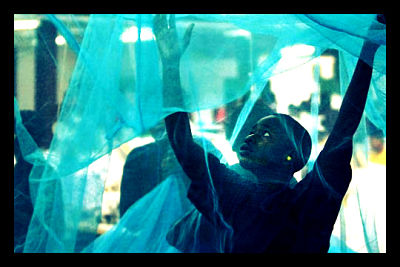
From 2000 to 2012, UNICEF provided over 120 million Insecticide-Treated Nets (ITNs). During this time, children sleeping under ITNs increased from 2 percent to 39 percent. As malaria-infected mosquitos bite at night, the regular use of ITNs can reduce child mortality by 20 percent.
3. The Global Fund
Through funding from the Global Fund, 310 million mosquito nets and 181 million cutting-edge antimalarial treatments have been distributed.
4. The President’s Malaria Initiative (PMI)
PMI is led by USAID under a U.S. Global Malaria Coordinator and jointly implemented with the Centers for Disease Control (CDC). PMI is one of the largest donors for malaria. Its goal is to half malaria for 70 percent of the at risk sub-Saharan population. PMI has chosen 19 focus countries. In Tanzania, PMI efforts, through the malaria control scale-up, have reduced all-cause child mortality (ACCM) by 10 deaths per 1,000 live births.
Through all these efforts over a million lives have been saved. Still a child dies every minute from malaria.
Widespread malaria is an obstacle to the development and growth of affected African countries and communities. For every $1 invested in malaria commodities, a $40 return can be expected in the form of productivity from healthier, better educated more productive working communities.
– Caressa Kruth
Sources: WHO, CDC About, WebMD, UNICEF, Forbes John Lechleiter, Forbes, CDC Resources
Photo:

Malala’s Weapon of Choice Revealed on The Daily Show
With a comprehension of human nature typically not seen in someone of only 16 years of age, Malala Yousafzai
In an interview with Jon Stewart of Comedy Central’s The Daily Show, well-known educational activist Malala Yousafzai once again stunned the world through the embodiment of such pure compassion and altruism that left her usually quick-witted host speechless.
The empowerment and liberation these young girls felt in school was too great for their community to surrender to the Taliban. Schools went underground, removed school signs and tried to continue educating children even under the possibility of being attacked by the Taliban.
When asked what motivated her to stand up for education, she spoke of the inspiration her father gave her who was also an activist for women’s rights and education. His example gave her the courage to take the fight for her rights into her own hands rather than wait for the government to intervene.
After a friend told her that the Taliban were targeting her, she described what she planned to do if a member of the Taliban was about to kill her. With her steel resolve, she stated to Jon Stewart and everyone around the world watching that she would never retaliate against the Taliban, because doing so would make her no different than a terrorist.
Dialogue and compassion would be her weapons of choice, and she would tell the Taliban she fights not for her education, but for the education of all – including the Taliban’s children. Such blunt advocacy for peace and pacifism momentarily left Jon Stewart in silence until he comically asked if Malala’s father would be mad if he adopted her.
Other great leaders in history have came to similar conclusions when faced with the idea of violent suppression. Martin Luther King Jr., Mahatma Gandhi, Mother Theresa, and now Malala Yousafzai have displayed a similar capacity for compassion and peace that great change often necessitates.
It requires a certain level of vision and passion to make people gravitate towards the leaders of grand social movements and it is evident in the actions and resolve of Malala Yousafzai that she poses such qualities. It is now up to the people across the world to pick up their pens and raise their voices as Malala has done and join the fight for equality she has risked her life for.
Sources: The Daily Show, USA Today
Photo: Jezebel
Malaria Deaths are Decreasing in Africa
Africa faces the world’s most dramatic public health crisis. Although polio is close to eradication, and more than half of African children have received the measles immunization, key public health issues continue throughout Africa.
Malaria is preventable and curable, yet it kills about 655,000 people worldwide every year. Malaria is transmitted through mosquitos infected with parasites, and it can also be passed to a growing fetus from an infected mother. Malaria causes fever, chills, muscle pain, and if not treated can result in death.
According to the Center for Disease Control (CDC), 91 percent of malaria-caused deaths occur in Africa. Moreover, 86 percent of malaria deaths globally are children. Malaria is a disease of poverty. The most vulnerable are children under five and pregnant women living in rural areas.
Malaria deaths decreased by 25 percent globally from 2000 to 2010. How was this achieved?
1. World Health Organization (WHO)
According to the WHO, 33 African countries have adopted artemisinin-based combination therapy as malaria treatment, which is the most effective antimalarial medicine. Other treatments include insecticide-treated nets, indoor residual spraying, and intermittent preventive treatment during pregnancy. In the WHO African region, malaria cases decreased by 50 percent between 2000 and 2008 due to these measures.
2. United Nations Children’s Fund (UNICEF)
From 2000 to 2012, UNICEF provided over 120 million Insecticide-Treated Nets (ITNs). During this time, children sleeping under ITNs increased from 2 percent to 39 percent. As malaria-infected mosquitos bite at night, the regular use of ITNs can reduce child mortality by 20 percent.
3. The Global Fund
Through funding from the Global Fund, 310 million mosquito nets and 181 million cutting-edge antimalarial treatments have been distributed.
4. The President’s Malaria Initiative (PMI)
PMI is led by USAID under a U.S. Global Malaria Coordinator and jointly implemented with the Centers for Disease Control (CDC). PMI is one of the largest donors for malaria. Its goal is to half malaria for 70 percent of the at risk sub-Saharan population. PMI has chosen 19 focus countries. In Tanzania, PMI efforts, through the malaria control scale-up, have reduced all-cause child mortality (ACCM) by 10 deaths per 1,000 live births.
Through all these efforts over a million lives have been saved. Still a child dies every minute from malaria.
Widespread malaria is an obstacle to the development and growth of affected African countries and communities. For every $1 invested in malaria commodities, a $40 return can be expected in the form of productivity from healthier, better educated more productive working communities.
– Caressa Kruth
Sources: WHO, CDC About, WebMD, UNICEF, Forbes John Lechleiter, Forbes, CDC Resources
Photo:
Pepper Boy: Young Rapper Brings Fight against Poverty to Mainstream
Most entertainers shirk social responsibility until they have struck commercial gold and attained stardom. In general, it is only then that they suddenly claim to be steadfast supporters of children in Africa or staunch opponents of animal abuse.
Up-and-coming rapper, Pepper Boy, defies this trend. Hailing from Little Rock, Arkansas, Pepper Boy is the definition of “real.” With a no-frills lyrical style, he is perhaps best known for the sincerity in his tone and the intensely personal nature of his music.
Although his latest mixtape, “Days of Grace,” has garnered critical acclaim–and though hip-hop heavyweight, Lil B, has recognized his music by rapping over his 2010 song, “Tha Parts”–Pepper Boy has yet to score a major label deal or perform at well-known venues. His relative lack of recognition by the masses, however, has not deterred the young rapper from making his activist voice heard–as both a musician and a philanthropist.
On his mixtape track, “Child Soulja,” Pepper Boy tells the story of a young child fighting in Joseph Kony’s Lord’s Resistance Army through a first person perspective. The track, which features a sped up loop of Cutting Crew’s 1986 hit, “(I Just) Died in Your Arms,” opens with the emotionally rousing lines, “Civil war changed everything … Joseph Kony—that’s the man. As a child, he put a gun in my hand. AK-47, almost tall as me. They burned the whole village; then, they took me.”
Similarly, despite lacking a million-dollar recording contract, Pepper Boy has made much of his music available for download via ReverbNation, through which 50 percent of proceeds for sales of select songs will go toward Keep a Child Alive–a non-profit supporting the welfare of families and children infected with or affected by HIV/AIDS. The organization currently works with individuals in Kenya, India, Uganda, Rwanda, and South Africa.
Pepper Boy’s openness to releasing unorthodox songs pertaining to international affairs is refreshing. Conversely, his selflessness in relinquishing potential profit in the name of charity is admirable. Few independent artists have taken such great strides in distancing themselves from material culture and raising awareness for the side effects of global poverty.
One can only imagine the impact Pepper Boy could make if he had a greater audience and more resources at his disposal.
– Melrose Huang
Sources: SPIN, Mishka NYC, Reverb Nation, Keep a Child Alive
AMK Cambodia
Angkor Mikroheranhvatho (Kampuchea) Co. Ltd. (AMK) began as a part of Concern Worldwide; their initial work was with savings and credit in Cambodia. From the years of 1997 – 1998, this area of work was separated from their broad-spectrum focus in regards to community development programs.
The vision of this branch of the organization was long-term, a Cambodian society in which citizens would have “equal and sufficient economic and social opportunities to improve their standard of living, and where they could positively contribute to the overall development of the country.”
The section had grown significantly by the year 1999, having accumulated a value of about KHR 1,000 million (US $250,000). With this success in mind, Concern Worldwide began the process of making this division an independent legal entity.
In 2001, the name of the organization was set to Thaneakea Ponleu Thmey (TPT) and became an officially recognized Cambodian Microfinance Institution (MFI). As things progressed from 2002 to 2003, the organization finally gained its current title – AMK. It was now independent from Concern Worldwide.
Over the years, AMK has built itself up to be a highly successful organization with a large amount of growth and stability. AMK even weathered the global financial crisis of 2008. It is currently regarded as one of the leading financial institutions in Cambodia.
The staff of AMK keeps ethics high on the priority list. Their Code of Practice includes the following: inclusion of the poor, transparency and honesty in transactions, ethical and respectful behavior, avoidance of over-indebtedness, freedom of choice, reasonable and collaborative collection practices, accessible complaint and problem resolutions, and privacy of client data.
At this moment, AMK provides credit to over 250,000 Cambodian customers (over 2 percent of the entire population and 9 percent of the households in Cambodia). This large number gives AMK Cambodia the ability to exercise great influence over financial inclusion in the country.
Other information regarding the organization’s successes and current assets can be found at AMK Cambodia’s Highlights.
– Samantha Davis
Sources: AMK Cambodia, Britannica
Photo: Oiko Credit
Russell Crowe Movie Fights for the Underdog
Cinderella Man, in which Russell Crowe plays the role of James Braddock, is an endearing film that anybody can get behind. This is a classic story of the underdog who sees his fate turn for the worst but then becomes a conquering hero. The film is based on the incredible life of James Braddock who, as middle-weight boxer before the great depression showed promise of becoming the next great fighter but, fell on a string of bad luck. After breaking his hand in a boxing match, he kept on losing his bouts. Being older in age, his skills in decline, and a mounting losing record, his boxing license was revoked, prohibiting him from boxing professionally. James Braddock was stripped of his profession prematurely, because of factors that he could not control.
James faced the same experiences that the majority of Americans faced during the Great Depression. Like many, it was difficult for him to find work, which caused him to be unable to provide for his family. Not only was boxing his livelihood, but it was his passion. Losing the ability to compete created a huge void in his life. Jim’s personal demons and the emotional, physical, and psychiatric state of his family would cause many to give up, but Jim was resilient in keeping his family together and overcoming all the obstacles in life. Just when we think that James Braddock would succumb to all the pressures of his situation, he goes out and fights his way out of poverty.
Finally James gets a golden opportunity to return to the ring. After being away from the ring for many months, without any training, and only two days notice, James is able to defeat his opponent. The surprise victory provided James with additional opportunities to continue his career as a boxer. He continued to excel in the ring, eventually gaining the title of world champion.
Cinderella Man teaches us to confront all our problems, no matter how big or small, using grit, determination, and poise. James Braddock and Russel Crowe teach us that no problem is so big that it cannot be fixed. He defied all the odds to overcome the obstacles of poverty, rapid depression, family struggles, and superior competition, to come out as the champion of the world.
– Travis Whinery
Sources: IMDB, James J Braddock.com, Universal Studios
Photo: El Cinefilo
Imongo: The Next Facebook?
Terkura Unongo, a ninth grade student at Nigeria’s Hillcrest Secondary School, is the creator of Imongo, a social network that facilitates communication among people all over the globe. Imongo, which means “gathering” in the language of Nigeria’s Tiv tribe, allows its members to create profiles, chat with others, catch up with the latest news, and share pictures, videos and music.
Since its conception in February of 2012, Imongo has attained over 3,900 members from Nigeria, Ghana, South Africa, Algeria, Egypt and other areas in the Middle East, China and the United States.
Terkura’s interest in the Internet and programming stemmed from his use of Facebook. As he interacted with friends and played games online, he began to wonder what was “fueling this thing from behind”. His curiosity inspired him to learn HTML and other programming languages, eventually giving birth to Imongo. The process of designing Imongo demanded 10 to 16 hours of writing code per day, months of publicizing and over 500,000 Nigerian Naira ($3,120.13 USD) in costs.
In the future, Tekura hopes that Imongo will become a household name and expand. Plans are already in place for Imongo to develop interactive chat rooms, a marketplace, a gaming platform and more.
In today’s world where social media and websites have the ability to rapidly mobilize thousands of people, Imongo has the potential to become a source of political and social organization in Africa.
– Lienna Feleke-Eshete
Sources: allAfrica, The Nation
Photo: Greenbiro
How Basket Weaving Has Helped Rwanda Recover
Since its devastating 1994 genocide, Rwanda has been in a state of recovery. Nearly 20 years ago, Hutus killed approximately 800,000 Tutsis over the course of 100 days. In addition to numerous social, political and economic changes, the mass murders shifted the country’s gender ratio drastically, leaving women to outnumber men 70 to 30 percent. As a result, Rwandan women have taken center stage in the country’s recovery – by weaving baskets.
The practice of basket weaving has been a part of Rwandan culture for centuries. Women weaved baskets to help carry and contain food, to decorate ceremonies and to transport goods. Following the genocide, however, basket weaving took on a new meaning.
In the past two decades, basket weaving has become a way for Rwandan women to come together, pushing past the “Hutu-Tutsi” barrier that had once divided them. Working next to women whose husbands had been killed and women whose husbands had committed the killings, women all over Rwanda have chosen peace over hatred.
But healing isn’t the only positive effect of basket weaving. Rwandan women have also gained economic independence and improved their local communities by selling their baskets in Western markets.
For example, Gahaya Links started off as a small company with only 27 basket weavers. Today, it is a business with more than 4,500 artisans that is continuing to help impoverished areas of Rwanda. The company has done so well that their products are being sold by stores across the U.S., including big department stores like Macy’s.
While Gahaya Links is the foremost basket weaving company, a number of other basket weaving businesses have been started. The profits of these companies go toward providing Rwandan families with food and medicine.
It’s been 19 years since the genocide and the country is still recovering. But sometimes recovery can begin with something as small as a handcrafted basket.
– Chante Owens
Sources: Beauty of Rwanda, CBS, CNN
Photo: World Designs
TOMS Builds Shoe Industry in Haiti
Founded in 2006, TOMS Shoes quickly gained mainstream popularity largely because of its socially responsible, feel-good, “one for one” model of operation. Under this model, TOMS gives away a pair of shoes to someone in a developing country for every sale of their retail shoes. However, TOMS has also come under fire over this same model that has fueled its popularity. Critics argue that donating shoes to people in developing countries can hinder economic growth by undercutting local producers.
At the 2013 Clinton Global Initiative (CGI), TOMS founder Blake Mycoskie announced his plans to begin manufacturing some of the company’s shoes in Haiti, starting early next year. This five-year investment will initially employ 50 local workers, with a goal of doubling this amount by the end of the year. This initiative comes in addition to TOMS’ existing Haiti Artist Collective program, which partners with 31 local Haitian artisans to design and hand-paint custom shoes for sale on the company’s website.
In addition to creating living wage jobs for people in Haiti, TOMS aims to provide healthcare, education and early childhood support to its factory employees by partnering with local organizations. Throughout the process, TOMS vows to oversee working conditions in Haiti and ensure that fair wages are being paid.
TOMS currently produces its shoes in China, Argentina and Ethiopia, and exports them to impoverished places. According to Public Radio International, Mycoskie has pledged that TOMS will produce at least one-third of its shoes in the countries where they are being donated to by the end of 2015. This will help build a more a sustainable, locally minded shoe industry in the countries the company serves.
After donating more than 10 million pairs of shoes to people in need, Toms is shifting its focus to targeting the causes of poverty, rather than providing temporary solutions to its complex effects.
– Tara Young
Sources: Toms Shoes, Miami Herald, Slate
Photo: HaitiLuxe Blog
Bridging the Gap by Giving: Pedaling for Clean Water
There are many ways to raise awareness about clean water. Fundraisers, educational programs, non-governmental organizations are all great ways to expose the issue on a global scale. However, 70-year old Chico, California native, Shirley Adams, created an innovative way to raise awareness. She decided to pedal cross-country for her organization, Bridging the Gap by Giving, which provides clean water to African countries.
Adams’s interest in water stemmed from her work as a swimming instructor. Today, she works year round to provide her organization with enough funds for new clean water projects in developing nations. Today, Shirley and her husband raise awareness and money through long distance cycling.
According to World Mag, her project began in 2005. Over the past seven years she has raised over $500,000 for her cause. As a result, around 14,000 have gained access to clean water in developing countries.
According to Adams, the project took off after she rode her bike cross-country wearing a shirt that read “everyone needs clean water.” The shirt included a link to the organization’s website. Amazingly, on that trip alone she raised more than $30,000. Her trip was so successful that even big corporations such as the Hilton foundation “matched it dollar for dollar.”
Most recently, Adams and her husband have set out on another cross-country venture. They rode on the 2,300 mile stretch that covers every state from Maine to Florida. In their time off, they focus on their family and church.
Adams has stated that they hope to beat their $30,000 mark, which was the highest amount the organization has ever raised via cross-country biking. The Adams family also hopes to publicize the cause by selling shirts, jackets, and caps along the way. They also plan to wear their shirts throughout the trip.
– Stephanie Olaya
Sources: World Mag, Bridging The Gap By Giving
Photo: NH Outdoors
Five Celebrity Partners of the World Food Program
The World Food Program has been using food donations to improve the lives of the world’s poorest people since 1961. As the food aid arm of the United Nations, WFP has been consistent in giving food to support the social and economic development of those most in need. In more recent years, a large number of celebrities have stood up in support of the WFP’s cause. Here are five of the brightest stars that are dedicated to helping WFP end world hunger:
5. Christina Aguilera
The singer-songwriter sensation found success in 1999, and ten years later, decided to give back in a big way. In 2009, she became the spokesperson for World Hunger Relief and helped generate over $148 million in funding for WFP. In 2010, she visited Haiti where WFP set up school lunch programs.
4. Penelope Cruz
After achieving fame in Spanish cinema, Cruz spent two months in Nicaragua volunteering before becoming an international success. She joined WFP in 2005 and recorded a PSA, speaking out for over 800 million living on the edge of starvation daily.
3. Rachel Weisz
While working on her Oscar-winning role in “The Constant Gardner” in Kenya, Weisz witnessed WFP aid in action. She visited the slums where thousands of children go hungry every day and shortly after agreed to appear in a short trailer that ran in cinemas prior to screenings of the film. In 2007, she made a special Mothers Day appeal on behalf of WFP, asking that no child “inherit hunger.”
2. Drew Barrymore
Actress, director, producer, this one-woman powerhouse has been an Ambassador Against Hunger for WFP since 2007. In 2005 she made a trip to Kenya, where WFP fed nearly 500 children living in Nairobi’s Kibera Slum and returned in 2007 before being named an official Ambassador. “Feeding a child at school is such a simple thing,” Barrymore said, “but you can tell it works miracles.” In 2008, she personally donated $1 million to support WFP’s efforts in Kenya.
1. Sir Sean Connery
Legendary actor, the original James Bond, and constant contender for the title of “Most Interesting Man in the World,” Connery added WFP Partner to his long list of accolades in 2003, becoming the first film star to do so. Connery also advocates for a number of other causes, including wildlife conservation and HIV/AIDS awareness and prevention.
– David Smith
Sources: World Food Program, Look to the Stars
Photo: Theiapolis