• Link to X
  • Link to Facebook
  • Link to Instagram
  • Link to TikTok
  • Link to Youtube
  • About
    • About Us
      • President
      • Board of Directors
      • Board of Advisors
      • Financials
      • Our Methodology
      • Success Tracker
      • Contact
  • Act Now
    • 30 Ways to Help
      • Email Congress
      • Call Congress
      • Volunteer
      • Courses & Certificates
      • Be a Donor
    • Internships
      • In-Office Internships
      • Remote Internships
    • Legislation
      • Politics 101
  • The Blog
  • The Podcast
  • Magazine
  • Donate
  • Click to open the search input field Click to open the search input field Search
  • Menu Menu
Blog - Latest News
Global Poverty, Women and Female Empowerment

How Basket Weaving Has Helped Rwanda Recover
rwanda_basket_weaving
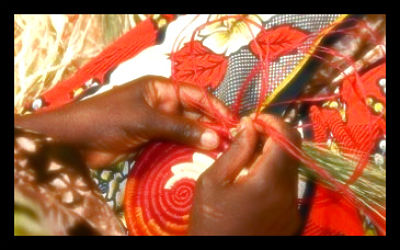
Since its devastating 1994 genocide, Rwanda has been in a state of recovery. Nearly 20 years ago, Hutus killed approximately 800,000 Tutsis over the course of 100 days. In addition to numerous social, political and economic changes, the mass murders shifted the country’s gender ratio drastically, leaving women to outnumber men 70 to 30 percent. As a result, Rwandan women have taken center stage in the country’s recovery – by weaving baskets.

The practice of basket weaving has been a part of Rwandan culture for centuries. Women weaved baskets to help carry and contain food, to decorate ceremonies and to transport goods. Following the genocide, however, basket weaving took on a new meaning.

In the past two decades, basket weaving has become a way for Rwandan women to come together, pushing past the “Hutu-Tutsi” barrier that had once divided them. Working next to women whose husbands had been killed and women whose husbands had committed the killings, women all over Rwanda have chosen peace over hatred.

But healing isn’t the only positive effect of basket weaving. Rwandan women have also gained economic independence and improved their local communities by selling their baskets in Western markets.

For example, Gahaya Links started off as a small company with only 27 basket weavers. Today, it is a business with more than 4,500 artisans that is continuing to help impoverished areas of Rwanda. The company has done so well that their products are being sold by stores across the U.S., including big department stores like Macy’s.

While Gahaya Links is the foremost basket weaving company, a number of other basket weaving businesses have been started. The profits of these companies go toward providing Rwandan families with food and medicine.

It’s been 19 years since the genocide and the country is still recovering. But sometimes recovery can begin with something as small as a handcrafted basket.

– Chante Owens

Sources: Beauty of Rwanda, CBS, CNN
Photo: World Designs

October 19, 2013
Share this entry
  • Share on Facebook
  • Share on X
  • Share on WhatsApp
  • Share on Pinterest
  • Share on LinkedIn
  • Share on Tumblr
  • Share on Vk
  • Share on Reddit
  • Share by Mail
https://borgenproject.org/wp-content/uploads/borgen-project-logo.svg 0 0 Borgen Project https://borgenproject.org/wp-content/uploads/borgen-project-logo.svg Borgen Project2013-10-19 08:00:112024-12-13 17:49:43How Basket Weaving Has Helped Rwanda Recover

Get Smarter

  • Global Poverty 101
  • Global Poverty… The Good News
  • Global Poverty & U.S. Jobs
  • Global Poverty and National Security
  • Innovative Solutions to Poverty
  • Global Poverty & Aid FAQ’s
Search Search

Take Action

  • Call Congress
  • Email Congress
  • Donate
  • 30 Ways to Help
  • Volunteer Ops
  • Internships
  • Courses & Certificates
  • The Podcast
Borgen Project

“The Borgen Project is an incredible nonprofit organization that is addressing poverty and hunger and working towards ending them.”

-The Huffington Post

Inside The Borgen Project

  • Contact
  • About
  • Financials
  • President
  • Board of Directors
  • Board of Advisors

International Links

  • UK Email Parliament
  • UK Donate
  • Canada Email Parliament

Get Smarter

  • Global Poverty 101
  • Global Poverty… The Good News
  • Global Poverty & U.S. Jobs
  • Global Poverty and National Security
  • Innovative Solutions to Poverty
  • Global Poverty & Aid FAQ’s

Ways to Help

  • Call Congress
  • Email Congress
  • Donate
  • 30 Ways to Help
  • Volunteer Ops
  • Internships
  • Courses & Certificates
  • The Podcast
Link to: TOMS Builds Shoe Industry in Haiti Link to: TOMS Builds Shoe Industry in Haiti TOMS Builds Shoe Industry in Haiti Link to: Imongo: The Next Facebook? Link to: Imongo: The Next Facebook? Imongo: The Next Facebook?
Scroll to top Scroll to top Scroll to top