There are a variety of ways in which giving back to the community, both local and global, are beneficial:
1. Giving back can foster growth in a company or for an entrepreneur by providing an opportunity to listen and learn from the community (what it wants, and what it needs, and what it means to give). The act of giving back doesn’t have to proceed without thought of what the company needs or even what the company desires to give. Developing a standard policy about the causes you’re willing to donate to and support will allow the charities and organizations that approach you to be in support of your commitment.
The conversation can grow beyond guilt and into one of support. When it comes to listening to the community your business or organization might serve (be it a specific location or a certain demographic) you become more informed by the goals and needs of the community you’re attempting to serve and can tailor future projects towards these goals and needs.
2. An obvious benefit of giving back is that it helps the community, whether the help is on a global scale (foreign aid donations, clothing/food/etc. donations in the wake of natural disasters, or volunteer work) or a local one (donating food to a food bank, volunteering to help students after school, or aiding in cleaning up local waterways), the community improves.
Especially when aid involves helping others make progress beyond the limits of economic, educational, or social blockades. While the changes may be more difficult to grasp on a global level, at the local level the progress made is also visible. Which leads to…
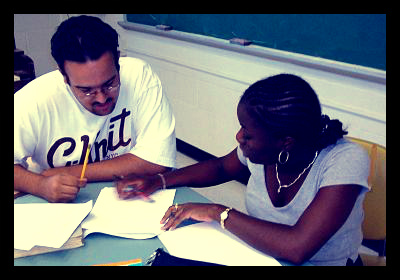
3. Giving back, especially on an individual level (such as tutoring, mentoring a child or volunteering in a soup kitchen), is good for your health. Depending on the work one is doing: physical health can be improved by increased activity, regulated sleep schedules, and better sleep in general, stress relief, and can help reduce the risk of certain health problems, like heart attacks and strokes.
There are studies that show volunteer work can make people happier by boosting not only physical health but also by promoting social interactions and of course the good vibes that come from contributing to the community. This potentially happier and healthier mindset promotes a desire to give back more.
4. Maybe you’re looking for a career change or a career boost, a volunteer opportunity would be a great and beneficial way to begin. Whether you’re writing grants in your spare time or building houses, volunteering is work.
It takes and builds skills and understanding and provides the professional or someone just starting out with a network of people just as invested as they are in the progress of whatever project is in the works. In similar fashion, volunteer work provides a foothold into and gives one a stake in the community
5. Having a stake in the community means coming in contact with community members who may often be overlooked, ignored, or outright scorned depending on their situations. This works both on a local and global scale.
It’s easier to see why more needs to be done on a legislative level if one can see that even with aid programs there are still limits to what someone working full-time or someone on disability or someone without running water, electricity, the list goes on, is capable of doing when the law ignores, fails to protect, or actively works against them.
Meeting other members of your community may also be as simple as visiting a retirement community with your dog or helping out in the community garden. Whatever you end up doing you’re getting a better understanding of the community of which you are a part and its needs.
– The Borgen Project
Sources: Huffington Post, Southern Alpha
Photo: NCHS

3 Steps to Finding Your Perfect (Charity) Match
Christmas decorations line the shelves of stores nationwide and carols aren’t far behind. With each day leading closer to the holiday season, everyone is (somewhat) feeling the giving spirit. But how does one chose to whom to give? What places one charity organization above another? Here are three steps to finding your perfect charity match.
1. Know Yourself
With any great relationship, compatibility is essential. Not an early riser? Then Saturday morning marathons are not for you. Races like 5Ks are common around this time of year and each program raises funds for an important cause. But if you are not ready to make the 6:00 am commitment, feel free to find another way to give. Many participants match funds. For each mile completed, a donor promises a certain amount to give. If the neighbor’s kid is expecting $1 per mile and runs 5 miles, you have given $5 to a good cause (but feel free to give more).
2. Find Common Interests
Stick to things in which you are interested. Love to shop? Many stores and online retailers offer free donation programs. Even if you only have the funds for the basic necessities, there are still ways to give. Check out the Borgen Project’s Amazon portal. Shop as you normally do and up to 4 percent of your purchase goes toward ending global poverty without costing you a single penny!
It’s important to find an organization that shares your interests. Otherwise, you are more likely to stop participating. If you have a life-long love of any activity, look for programs that incorporate it into their cause. For example, basketball lovers may be interested in Ball For All, a program sponsored by Peace Corps, that uses sports teams to encourage leadership among female youth in Africa.
3. Communicate
Feel free to ask questions to determine if a potential organization shares your values. Honesty and loyalty are highly valued in today’s society. Many non-profits are aware of this and strive to maintain a level of transparency. Education advocates may be interested in organizations that deliver books to poverty-ridden areas like the World Literacy Foundation which sponsors programs that encourage literacy through digital reading and tutoring in developing countries.
Want to find out where your money is going? Ask. Many organizations provide financial statements or summaries for their donors on their websites. Also, feel free to ask about program follow up. It has become common for organizations to have a Newsletter or Press Release section on their websites. So feel free to research programs and track their accomplishments.
Most importantly, remember that choosing a charity is a lot like choosing a partner. Know the qualities for which you are looking in a charity and don’t be afraid to question a potential organization. As a donor, you owe it to yourself to know all the facts.
– Jasmine D. Smith
Sources: The Borgen Project, Ball for All, My Perfect Match, World Literacy Foundation
Photo: Sadlier
The Legacy of Margaret A. Cargill
When Margaret A. Cargill, a low-profile philanthropist in California, died in 2006, she left behind a fortune that she hoped would help alleviate some of the world’s greatest problems. Thus was born the Margaret A. Cargill Philanthropies, which houses three grant-making entities: the Margaret A. Cargill Foundation (MACF), the Anne Ray Charitable Trust, and the Akaloa Resource Foundation.
Ms. Cargill envisioned her money helping the environment, the arts, families, children, and the elderly, as well as promoting tolerance and conflict resolution.
Before she died, Ms. Cargill asked her trustees “to support programs that address unmet needs; that give individuals and communities the tools to become self-sufficient; that will be sustainable after our support ends; and that build on and strengthen strong relationships within communities.” Ms. Cargill hoped to create lasting results through direct programs and continued financial support.
To this end, in its first full year of operation, the MACF awarded $136 million in grants, some of which went to environmental projects. In 2011, the Foundation awarded grants to assist flood victims in Pakistan, as well as children affected by a tornado in north Minneapolis. The Foundation’s future plans include launching additional programs to aid aging services and support Native arts in the Pacific Northwest.
– Yuliya Shokh
Sources: Margaret A. Cargill Philanthropies, Minnesota Council on Foundations, Philanthropy News Digest, Star Tribune
Photo: List 25
Paper Art Company “People Too” Depicts Human Rights Abuses
Russian artists Aleksey Lyapunov and Lena Erlikh are the talent behind the paper-craft agency, People Too, which has quickly become known for its intricate and miniaturized portrayals of lifelike scenes. The dynamic duo produce three-dimensional images entirely out of paper, depicting scenes of office spaces, factory work, holiday parties, rock concerts and, most recently, human rights violations.
In coordination with human rights organization Amnesty International, People Too has created an advertising campaign called Fan the Flame, which highlights several major, well-known abuses. These images show the harshness of human rights violations, by depicting police brutality, stoning, water-boarding and military executions, all in unsettling detail.
Each image in the campaign depicts a violent scene of aggressors attacking their victim. The sculptures and backgrounds are all white, with the exception of a small orange flame on the bottom of each image. The flames are lit by Amnesty’s iconic candle logo, metaphorically linking Amnesty’s burning of the paper oppressors to their work in combating real-life human rights violations.
Using a range of knives, scissors, tweezers and wire cutters, People Too spent a total of four weeks crafting their intricate sculptures for Amnesty’s Fan the Flame campaign. Well worth the effort, this campaign brings to life the cruelty that afflicts many around the world and the work that Amnesty does to end it.
– Tara Young
Sources: Digital Journal, Design Boom, Behance
Photo: Design You Trust
Patrick and Anna M. Cudahy Fund: What You Should Know
The Patrick and Anna M. Cudahy Fund is a foundation that grants money to nonprofit organizations involved in social and youth services, education, art and culture.
The premise of the fund dates back to the early 1920s, when Articles of Association were drawn to break ground on the Alice Dickson Cudahy Clinic. This clinic was created to provide free services to dependent family members of employees at the Cudahy Brothers Company. Some of these free services included medical attention, and education on matters such as child welfare, domestic science and social hygiene. The clinic was able to open on August 1, 1923, thanks to a $19,270.77 donation made by Michael F. Cudahy.
On August 22, 1935, the name of the organization was changed to the Michael F. Cudahy Fund. Upon this change, the association broadened its spectrum of philanthropy efforts to include the severely poverty-stricken and ill. On September 29, 1943, the name of the organization was once again changed, this time to the Patrick and Anna M. Cudahy Fund, in honor of Michael’s parents.
Today, the Fund primarily assists youth organizations located in Wisconsin and Chicago, though some money is granted to charities involving public interest and environmental conflicts. The Fund also accepts international requests affiliated with U.S. nonprofits.
– Meagan Hurley
Sources: Business Journal, Cudahy Fund
Centipede Venom: The New Morphine
According to Medicaldaily.com, centipedes are now known to treat medical pain more effectively than morphine. Although the number of opioid painkillers has increased during recent decades, doctors have been trying to find a less complicated alternative to treat pain.
Recently, doctors have discovered that centipedes might provide that alternative. Researchers have found that some components of centipedes’ venom can act as a potent painkiller. Although it is not classified as an opiate, the centipede’s venom is just as potent as morphine but has no side effects.
The morphine used in this type of alternative medicine comes from the Chinese redheaded centipede. The Chinese redheaded centipede “paralyzes its prey by injecting venom that blocks a voltage-gated sodium channel protein.” These proteins are responsible for having an imperative role in pain transmission. The venom thus blocks pain from the body.
During the testing process, researchers injected mice with massive amounts of the centipede’s venom. After the mice were infected with the venom, they were subjected to a series of tests. The tests touched upon different areas such as thermal, chemical, and acid testing.
The results showed that the venom was most similar during the thermal and acid testing, it acted better than morphine during chemical tests. In addition, the mice showed no side effects.
As a result, the venom is undergoing a series of trials with humans. These subjects either suffer from chronic ailments or pain. According to Medicaldaily.com venom immunotherapy was better at treating a person allergic to stings than EpiPens.
Other research has shown that this type of venom can help block the proteins responsible for inflammation, thus reducing pain for sufferers of arthritis. Conclusively, centipede venom can soon be considered an alternative to morphine or other opiates.
– Stephanie Olaya
Sources: Medical Daily, Medical News Today
Photo: Open Cage
China and Senegal Grow an Economy
A growing number of Chinese migrants are working in Africa due to economic growth in recent times. While many world officials claim China’s relations with African nations are heavily linked to exploitation of resources, such as Africa’s gold, diamonds, timber and oil, China has since the 2000s began migrating to nations without these resources.
Notably, Chinese have migrated into Senegal. Senegal has good economic stability and attractive location in West Africa.
These factors are suitable for China’s workers to invest in Senegal. The motivations behind the Chinese workers as a whole are business-rooted. Senegal’s compliance to work with the Chinese is based on a desire to seek diverse investment opportunities and trade partners, as well as an improved position in international affairs.
With the large Chinese presence in African nations, Chinese traders have created competition among the migrants. This competition has forced many workers to expand into other business sectors, thus supporting the economic growth.
Historically, China and Senegal have had international relations with each other since 1971, (with a gap between 1996 and 2005, where Senegal acknowledged Taiwan) the growth of Chinese migrants traveling to the nation increased greatly in 2005. Today, most Chinese in Senegal are completing state work in infrastructure, communication, mining, and oil.
The business relationship still remains unbalanced, however. The Senegalese imports are very small compared to the Chinese exports to the West African nation. However, officials know this is common for Chinese relationships with African nations, and this is just another example of how China’s economy wields strength and influence.
To visualize, in 2010, China and Senegal reached $549 million, where China invested $45 million in Senegal, primarily within the infrastructure sector.
In late September of this year, the Chinese ambassador to Senegal, Xia Huang said China is looking for ways to share its developmental experience and knowledge with the Senegalese to boost further their emerging economy. The ambassador explained how the relations between Senegal and China are still growing in a positive way.
At the celebration of China’s National Day on October 1st, he said Sino-Senegal relations had, “remained fruitful, tangible and has continued to give concrete results to the Chinese and Senegalese people.”
In addition, Xia mentioned that even though China is the second largest economy in the world, 100 million Chinese people are living below the poverty line. Concluding, Xia said by the year 2021 Chinese officials will double the nation’s GDP.
– Laura Reinacher
Sources: All Africa, Migration Information
Photo: Forum on China-Africa Cooperation
Tujijenge Tanzania Helps ‘Build Africa’ through Microfinance
Tujijenge Tanzania is a microfinance company based in Dar es Salaam, Tanzania. Founded in 2006, the organization is both the largest and fastest growing microfinance institution (MFI) in Tanzania. Broadly speaking, MFIs are companies that provide financial services to low-income individuals, or that provide services in areas without access to “typical” banking. They operate off of the idea that poverty-stricken individuals can remedy their own situation if given access to financial services.
Today, Tujijenge Tanzania is part of the larger, not-for-profit company Tujijenge Afrika, a Swahili name that roughly translates to mean “let’s build ourselves, Africa.” The company was founded by six microfinance practitioners, who now serve on its board of directors. The founders sought to remedy a problem that they observed in African society by employing their own skills. That is, 90 percent of the country does not have access to financial services. They saw that few MFIs existed, forcing residents to rely on expensive banking alternatives that perpetuated a lifestyle of poverty.
Tujijenge Tanzania aims to provide financial help to individuals, both men and women, who are engaged in all manner of small businesses, ranging from stationery shops to restaurants. The company operates by sending Loan Officers into local communities to give presentations about their services. Interested individuals then form groups of up to 35 members and receive four weeks of training from the Loan Officers. This includes instruction on lending methodology and creating viable business plans. During this period, the group must satisfy several requirements, including electing leaders and opening an account with a commercial bank (the company partners with both Bank of America and Kenya Commercial Bank).
Furthermore, every member is required to save 20 percent of the expected amount of the loan during this training period. This serves the dual purpose of teaching the discipline of making weekly payments, as well as demonstrating that the individual is engaged in a serious, capital-generating business. Upon completion of the training period, if all requirements have been met, the group can make a formal application for a loan. After receiving the money, the group will continue to meet every week, both to make repayments and to discuss general business issues and practices.
Beyond making loans to small business owners, the company is also engaged in a wide variety of product development. Currently, Tujijenge Tanzania is in the process of developing a mobile banking solution for their clients to help serve those in less accessible areas.
In the past, they have developed both solar loan and agricultural loan models in collaboration with organizations such as Oxfam. They have also engaged in market research in the promotion of medical and life insurance all around Africa.
– Rebecca Beyer
Feature Writer
Sources: Tujijenge Afrika, KIVA
Jamii Bora Bank and its Fight Against Poverty
What is the Jamii Bora Bank? Originally known as the Jamii Bora Trust, the Jamii Bora Bank (JBB) was founded in 1999 by a group of Kenyan families in order to serve the needs of citizens looking to escape poverty.
Beginning as a charitable trust, the organization currently specializes in micro finance services for an estimated 300,000 Kenyans with 150,000 new customers acquired in 2013 alone. JBB is not simply a bank; the institution has become an established resource in fighting Kenya’s poverty level over the last decade. The poverty gap around the world has grown dramatically worldwide and Kenya is no exception.
In the past 2 years, JBB has raised its capital by over 1 billion Kenyan shillings and shifted the focus on poverty aid. Initiatives include affordable housing, vast infrastructure improvement, and increased employment. Available banking methods have evolved to provide individuals with the financial tools necessary to gain middle income living through personal, mortgage, small and medium enterprise and agricultural banking.
Bank members are allowed to borrow over twice the amount of funds within their saving accounts which can then be applied to a variety of debts including school bills, healthcare costs, housing payments, and business startups.
Technology has played an important role in the bank’s growth within the last year. Newly implemented programs suggest that lack of access to technology directly correlates to poverty levels, as well. In response, the first ATM debit cards were released to customers by JBB earlier this year. Mobile banking has also become available within the last few months and the addition of Western Union services have enabled Kenyans to connect to the outside world with ease.
The institution has designed an innovative reward program for its citizens. Similar to referral programs favored by U.S. banks, employees, and customers are financially rewarded for successfully referring a friend to enroll in banking services. However, JBB offers rewards for the duration of the new account. In theory, if Customer A convinces Customer B to enroll in services, and Customer B maintains an account for 10 years, Customer A will receive monetary rewards for 10 years.
Jamii Bora also contains a component solely devoted to public health with special focus on issues such as HIV/AIDS, maternal health, child and newborn wellness, and primary/secondary care. Health insurance is available to members and includes maternal care, HIV/AIDS patient inclusion, and inpatient care without any form of co-payment.
The plan is needed in a country where nearly 34,000 children die from malaria annually and an estimated 360,000 are prescribed antiretroviral medications for HIV/AIDS treatment, according to USAID.
The bank continues to strive to reach its goal of 6 million members by 2018. It hopes to expand its current network across the continent, essentially allowing many developing African nations to gain a foothold in the current technology-centric world. Its innovative programs may one day allow millions of Kenyans and their neighbors to escape their current state of poverty.
– Jasmine D. Smith
Sources: Jamii Bora Bank, Health Market Innovations, USAID
Photo: West fm
5 Benefits to Giving Back to the Community
There are a variety of ways in which giving back to the community, both local and global, are beneficial:
1. Giving back can foster growth in a company or for an entrepreneur by providing an opportunity to listen and learn from the community (what it wants, and what it needs, and what it means to give). The act of giving back doesn’t have to proceed without thought of what the company needs or even what the company desires to give. Developing a standard policy about the causes you’re willing to donate to and support will allow the charities and organizations that approach you to be in support of your commitment.
The conversation can grow beyond guilt and into one of support. When it comes to listening to the community your business or organization might serve (be it a specific location or a certain demographic) you become more informed by the goals and needs of the community you’re attempting to serve and can tailor future projects towards these goals and needs.
2. An obvious benefit of giving back is that it helps the community, whether the help is on a global scale (foreign aid donations, clothing/food/etc. donations in the wake of natural disasters, or volunteer work) or a local one (donating food to a food bank, volunteering to help students after school, or aiding in cleaning up local waterways), the community improves.
Especially when aid involves helping others make progress beyond the limits of economic, educational, or social blockades. While the changes may be more difficult to grasp on a global level, at the local level the progress made is also visible. Which leads to…
3. Giving back, especially on an individual level (such as tutoring, mentoring a child or volunteering in a soup kitchen), is good for your health. Depending on the work one is doing: physical health can be improved by increased activity, regulated sleep schedules, and better sleep in general, stress relief, and can help reduce the risk of certain health problems, like heart attacks and strokes.
There are studies that show volunteer work can make people happier by boosting not only physical health but also by promoting social interactions and of course the good vibes that come from contributing to the community. This potentially happier and healthier mindset promotes a desire to give back more.
4. Maybe you’re looking for a career change or a career boost, a volunteer opportunity would be a great and beneficial way to begin. Whether you’re writing grants in your spare time or building houses, volunteering is work.
It takes and builds skills and understanding and provides the professional or someone just starting out with a network of people just as invested as they are in the progress of whatever project is in the works. In similar fashion, volunteer work provides a foothold into and gives one a stake in the community
5. Having a stake in the community means coming in contact with community members who may often be overlooked, ignored, or outright scorned depending on their situations. This works both on a local and global scale.
It’s easier to see why more needs to be done on a legislative level if one can see that even with aid programs there are still limits to what someone working full-time or someone on disability or someone without running water, electricity, the list goes on, is capable of doing when the law ignores, fails to protect, or actively works against them.
Meeting other members of your community may also be as simple as visiting a retirement community with your dog or helping out in the community garden. Whatever you end up doing you’re getting a better understanding of the community of which you are a part and its needs.
– The Borgen Project
Sources: Huffington Post, Southern Alpha
Photo: NCHS
The Earthquake and Poverty Situation in the Philippines
The earthquake’s ramifications will be felt throughout the Philippines. Power was reported to be out across Cebu City (the fifth largest city in the country), Masbate, and the Bohol province. Part of Cebu Doctor’s University in Mandaue City collapsed, and Cebu City also suffered two collapsed buildings and a ruined fish port. The death toll was first reported to be 28 people, but by the end of the day it had risen to 82. An additional 159 people were injured.
The child poverty situation was atrocious before the earthquake, following the effects of it the situation can only be expected to worsen as restoration projects expect to take a majority of the aid’s attention.
Child poverty is defined in two separate ways: child income, which is based on family income, and child deprivation, which is examined through availability of shelter, food, and water. An expected 47 percent (12.8 million) of Filipino children are suffering in poverty. One of the elements where this poverty is most evident is the malnutrition shown on full display in the bodies of Filipino children.
In the 0-5 age group, the percentage of underweight children rose 1.6 percent from 2003 to 2006. With the malnutrition factor settling in at a young age, the children are growing up underfed, and being forced to live the majority of their lives in this state of unhealthiness.
Not only are children suffering from a lack of access to food and water, education rates remain low in the Philippines. The number of children aged 6-16, who are currently out of school, rose from 1.8 million in 2002 to 2.2 million in 2007. Many of these children are being forced to scavenge for a living, rummaging for street scraps and thrown out food.
Now, it is estimated that the well-being of Filipino children has never been worse. The almost 13 million children residing in poverty are struggling to survive, and issues such as malnutrition from lack of suitable source of food and water and an utter drop in education rates has the Philippines moving backwards. The earthquake repair costs will not help these rates. The damage caused by the earthquake will be repaired in time, but the true issue in the island country lies in the hardships faced by the youth for the last several years.
– Zachary Wright
Sources: Global Issues, NBC, PIDS, UNICEF
Photo: MSNBC