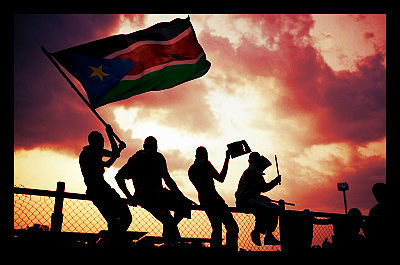
At the height of conflict, South Sudanese men and women proudly tweet about the local culture, food and businesses. This online praise parallels the devastation in the youngest nation. In a crisis, this reminds world of the vitality and worth of South Sudanese culture.
The United Nations reports 413,000 Sudanese displaced during a month of conflict. The refugee agency U.N. High Commissioner for Refugees (UNHCR) estimates approximately 78,000 fled to neighboring nations such as Uganda and Kenya. South Sudanese men often delivered their families safely to the Ugandan border and returned to fight.
Though government and rebel representatives met in Ethiopia, the conflict surges on. Medecins Sans Frontieres (Doctors Without Borders) reports treating 116 people suffering from gun shot wounds.
“From the refugees we have spoken to, we are hearing eyewitness accounts of killings, houses being burnt and shooting,” said UNHCR spokesman Adrian Edwards.
Yet in three days, more than 100 Tweets with the hashtag #ThingsILoveAboutSouthSudan appeared. The hashtag #MyTribeIsSouthSudan also began trending the first few days of the conflict. This hashtag defended the nation from claims of ethnic conflict. Twitter users posted this hashtag more than 2,000 times.
15 Uplifting Tweets About South Sudan
Climbing the jebel. That view. Still have dried branches I collected there in a vase. – Omar Daair, @omarwdc
Habibi the monkey and her friends at Confident Children out of Conflict – John Fenning, @berniefenning
This girl who greets me with “Morning! Morning!” no matter the time of day – Ryan Musser, @gringo_loco
The SBBL brewery, employing more than 700 South Sudanese – Erin Polich, @E_Poli
As Africa’s youngest nation we want peace/prosperity despite the “gloom predictions” – Aguil Lual Blunt, @AguilB
Ingenuity (these dance costumes are made out of torn up tarps) – Nina McMurry, @nmcmurry
The colors. – Erol Yayboke, @ErolYayboke
Extreme ingenuity to fix a flat tire + help from everyone (including parks service) – James Turitto, @Sunday_Jimmy
Never seen people smiling their eyes the way some of my Dinka and Nuer friends do – Reluctant Realist, @reluct_realist
Church weddings are colourful events – Edward Luka, @eremugo
Young people enthusiastically immunizing 100k children in Juba against polio – Sarah Will, @willowwistful
The traditional dances – Seme Nelson, @SemeNelson
The Nile, the culture and the tall, dark and most beautiful girls in the world – johnayom, @johnayom
Fireflies landing on mosquito netting at night. My own private living constellation – Sugar Cane, @jahmericangal
Fiery sunsets, some of the most loving, brave & giving people I know. Photo: Yei 2012 – michele perry, @micheleperry
Visit mytribeissouthsudan.org for more information on the movement to for peace and unity in this young nation.
– Ellery Spahr
Sources: BBC, My Tribe is South Sudan
Photo: Desi Club

Small Islands and Environmental Refugees
For a long time, human civilization has seen refugees from all kinds of nations, due primarily to political or militaristic reasons. However, there is set to be an occurrence of some of the first mass cases of “environmental refugees,” who will be forced to leave their homes as a result of climate change.
For example, small island nations with extensive low-lying coastal areas are placed in a difficult position because of rising seas. While for most developed countries the issue of climate change does not implicate intensive and readily apparent consequences, the same does not apply for many developing island nations—whose very existence is threatened by the projected rising seas of the near future.
The necessity for adaption is an especially prominent issue that these island nations face. This is particularly true since many of them are small and still developing, making it difficult for them to counter rising seas on their own. Moreover, public money that may be spent towards healthcare or education is often required to be reallocated towards protecting their shores. This ends up putting a drain on the economies of various island nations, making the situation for their people looks quite bleak.
The United Nations have identified 52 small island developing states that will face the brunt of climate change effects. All of them—very unique with their own lasting culture—may see their way of life come to an end, as communities will eventually become heavily displaced. However, the issue extends to a plethora of other people on a global scale as well. For instance, the majority of the global population is situated among coastal areas, while many others, over 600 million people worldwide to be exact, may also face the possibility of displacement since they are living within low-lying coastal areas less than 10 meters above sea level.
To address some of the issues presented, the United Nations General Assembly convened late in 2013. Speaking on behalf of small island developing states, the Prime Minister of Antigua and Barbuda—Winston Baldwin Spencer—spoke about the rising greenhouse gas concentrations stemming almost exclusively from a number of nations within the developed world. Pleading his case, Spencer stated that, “Developed countries should shoulder their moral, ethical and historical responsibilities for emitting the levels of anthropogenic greenhouse gases into the atmosphere. It is those actions which have now put the planet in jeopardy and compromised the well-being of present and future generations.”
Following the Kyoto Protocol, which unsuccessfully attempted to put a cap on the atmospheric carbon concentration, the United Nations has established the 2014 Climate Summit. World leaders from across the globe are expected to congregate in order to address climate issues and push for innovative solutions that span across areas including government, business, finance, industry and civil society. The Summit is planned to take place in New York during September of 2014 and will attempt to accomplish a global climate agreement. This will be of monumental significance for small island developing states as they are already doing as much as they can to limit the number of environmental refugees, but find that they still need the help and cooperation of the entire international community.
– Jugal Patel
Sources: World Issues 360, Inter-Research, United Nations, United Nations
Photo: The Age
Poverty Advocacy, ONE Way
With a staggering amount of global poverty, ONE.org was established as a nonpartisan, nonprofit organization striving to help lend a strong hand in the battle against destitution. Co-founded by U2 front-man Bono in May 16, 2004, the ONE Campaign strives to end extreme poverty and reduce the prevalence of preventable diseases, especially in Africa.
The roots of the ONE campaign lie in a previous organization created by Bono called DATA (Debt, Aids, Trade, Africa), which also strove to raise awareness about AIDS and other social issues in Africa. However, in 2008, DATA and ONE united simply as the ONE Campaign. Since its engenderment, ONE has already garnered the support of 3.5 million advocates.
The methods that ONE employs to fulfill its mission of eradicating global poverty and disease involve educating the public about such issues, raising awareness among politicians to push global poverty to the top of political agendas and collaborating with African policymakers rather than simply directing them. By raising awareness about global poverty among the general public and among politicians and policymakers, ONE makes global poverty more relevant and urgent in the eyes of individuals who may not have previously been concerned with such global issues.
Although ONE headquarters are currently located in Washington, D.C., London, Johannesburg, Brussels, Berlin and Paris, the message of the campaign permeates through any global boundaries, bringing the organization closer and closer to fulfilling their goal of assuaging poverty. Due to support of volunteers, ONE has been able to help reduce extreme poverty and preventable diseases.
For instance, over 7.5 million African residents today are able to gain access to AIDS medication whereas in 2005, only a paltry 50,000 Africans were able to access such life-saving treatments. Additionally, malaria has also been reduced by a staggering 75% within the past decade – no doubt with lobbying and contributions from the ONE Campaign.
– Phoebe Pradhan
Sources: ONE, Look to the Stars
Kalashnikov Regrets Destruction Caused by AK-47
Last month Mikhail Kalashnikov passed away at the age of 94. The legacy he leaves behind centers around the Avtomat Kalashnikov 1947, better known by its abbreviation, AK-47.
On multiple occasions, Kalashnikov has been asked whether he lamented the destruction his weapon has caused throughout the decades. Time and time again he stated that he is not to blame for the death and destruction surrounding the AK-47, but rather it is the failure of politicians to reach peaceful solutions that should be held as culpable.
But, recently, a letter, Kalashnikov wrote shortly before his death, shows that he felt partly responsible for the millions of people killed by the AK-47. The letter was addressed to the head of the Russian Orthodox Church, Patriarch Kirill, asking if blood was on his hands.
“If my assault rifle took people’s lives, it means that I, Mikhail Kalashnikov,…am responsible for people’s deaths,” he wrote.
The Church responded, telling him that if the purpose behind the weapon’s creation was to protect the Motherland then it praises its creator and the soldiers that wield it.
The AK-47 has become more than just a weapon; it has reached cult-like status across the world. From child soldiers living in conflict ridden Africa to American action moviegoers, millions of individuals recognize the weapon but few have stopped to contemplate its destructive legacy.
Part of the reason for its prevalence among rebels and insurgents is the gun’s uncanny ability to function in almost any environment; from desert sands to humid jungles. The gun’s minimalist design seems to be its biggest strength, allowing for durability and ease of use.
Its price also allows it to reach the hands of millions in poorer nations. In many cases it can be purchased for less than the price of a live chicken. Some estimates place the death toll caused by the AK-47 to be 250,000 per year — and rising.
If there’s a nation in conflict one would not have to look far to see AK’s being wielded by rebel factions and terrorist groups.
Part of the reason for its ubiquity has been linked to the former Soviet Union’s push to mass produce the weapon. It gave free licenses for production to “fraternal countries” such as Bulgaria, China, East Germany, Hungary, North Korea, Poland and Yugoslavia.
Unfortunately, once the Soviet Union collapsed many former bloc countries auctioned off their stockpiles. Many African countries jumped at the opportunity and purchased thousands of AKs. For the Middle East, many AK-47s were brought into the country by the invading Soviet forces in 1979. To counteract the Soviets, the CIA funneled hundreds of thousands of Chinese AKs to the mujaheddin rebels.
Finally, when the Soviets left Afghanistan, the arms stockpiles built up during the war did not. Furthermore, It did not take long for the “Kalashnikov culture” developed during the war to spill over into other neighboring nations.
Now, the weapon seems synonymous with western ideas concerning the Middle East. As such, Osama Bin Laden or Saddam Hussein wielding their AKs in front of supporters is the likely image many conjure.
Whether or not Mikhail Kalashnikov is responsible for the millions of deaths caused by his invention is a question that will linger for many. Created by a young engineer desiring to develop an efficient weapon to protect the men he served with, the destruction caused by the AK-47 can be typified by an old proverb: the path to hell is paved with good intentions.
– Zack Lindberg
Sources: Los Angeles Times, The Washington Post
Photo: School of Public Health
Global Warning to the Dangers of Acetaminophen
The FDA has just released a statement warning consumers of the dangers of acetaminophen. The drug, which is prescribed and taken with nearly the same frequency as candy by North American consumers, can pose serious health risks in dosages as small as 325 mg.
The statement, which was released January 14, points to ignorance on the part of the consumer as a main culprit in inadvertent acetaminophen overdose. Patients frequently find themselves taking too much acetaminophen via over- the-counter drugs or prescription drugs.
Post-operative pains, pains from acute injuries or pains following dental procedures are usually treated with high doses of Vicodin (hydrocodone) and Percocet (oxycodone.) Unaware these pain pills already contain up to 325 to 500 mgs of acetaminophen, consumers will frequently take supplemental Tylenol, whose active ingredient is acetaminophen-causing dangerous results.
These inadvertent acetaminophen overdoses are a leading cause of acute liver failure. Unfortunately, initial symptoms of liver toxicity from acetaminophen are vague and hard to catch. They include fatigue and sometimes nausea, which can be easily mistaken for other illnesses such as the flu.
This frequently happens because when acetaminophen breaks down, its byproduct, NAPQI, can build up and cause serious damage to the liver’s cells. While acetaminophen in low dosages is an effective pain-killer, overwhelming evidence points to the fact that there are no additional benefits to taking more than 325 mg of acetaminophen that would outweigh the added risks for liver injury.
According to the National Institute of Health, acetaminophen poisoning is one of the most common forms of drug toxicity in the world.
Severe injury to the liver has occurred in patients who took more than the prescribed 24-hour period dose of a product that contains acetaminophen, took more than one acetaminophen-containing product at the same time, or, even worse, drank alcohol while taking acetaminophen products.
Drinking is closely linked with liver problems, and trouble really starts when regular heavy drinkers take a lot of acetaminophen over long periods of time.
If one occasionally drinks a lot of alcohol and takes a normal dose of acetaminophen the next day, they most likely will not suffer liver damage. However, multiple high doses of acetaminophen tend to be dangerous for heavy drinkers because they usually have poor diets and low levels of glutathione. This shunts acetaminophen metabolic pathway and results in higher levels of NAPQI.
Acetaminophen, even in doses close to 4,000 milligrams per day, the current daily limit can still be quite toxic to the liver in a small number of people. Anything over 7,000 mg/day is enough to cause a serious overdose.
Acetaminophen gained popularity because COX-2 inhibitors, acetaminophen’s class of drug, are easy on the stomach. Nonsteroidal anti-inflammatory drugs (NSAIDs) such as ibuprofen, were hard on the gut, Aspirin has been linked to Reye’s syndrome in children; thus, Tylenol became a panacea.
In 2009, a group of experts called the Acetaminophen Hepatotoxicity Working Group pushed for reform to the FDA and tightening up the rules for acetaminophen.
The Food and Drug Administration advises people always to follow dosing directions, never to take more than the dose indicated and not to take acetaminophen for longer than directed or mix multiple acetaminophen-containing medicines at one time.
– Chloe Nevitt
Sources: Harvard Family Health Guide, Forbes, NPR, FDA
Photo: Addicthelp.org
#ThingsILoveAboutSouthSudan
At the height of conflict, South Sudanese men and women proudly tweet about the local culture, food and businesses. This online praise parallels the devastation in the youngest nation. In a crisis, this reminds world of the vitality and worth of South Sudanese culture.
The United Nations reports 413,000 Sudanese displaced during a month of conflict. The refugee agency U.N. High Commissioner for Refugees (UNHCR) estimates approximately 78,000 fled to neighboring nations such as Uganda and Kenya. South Sudanese men often delivered their families safely to the Ugandan border and returned to fight.
Though government and rebel representatives met in Ethiopia, the conflict surges on. Medecins Sans Frontieres (Doctors Without Borders) reports treating 116 people suffering from gun shot wounds.
“From the refugees we have spoken to, we are hearing eyewitness accounts of killings, houses being burnt and shooting,” said UNHCR spokesman Adrian Edwards.
Yet in three days, more than 100 Tweets with the hashtag #ThingsILoveAboutSouthSudan appeared. The hashtag #MyTribeIsSouthSudan also began trending the first few days of the conflict. This hashtag defended the nation from claims of ethnic conflict. Twitter users posted this hashtag more than 2,000 times.
15 Uplifting Tweets About South Sudan
Climbing the jebel. That view. Still have dried branches I collected there in a vase. – Omar Daair, @omarwdc
Habibi the monkey and her friends at Confident Children out of Conflict – John Fenning, @berniefenning
This girl who greets me with “Morning! Morning!” no matter the time of day – Ryan Musser, @gringo_loco
The SBBL brewery, employing more than 700 South Sudanese – Erin Polich, @E_Poli
As Africa’s youngest nation we want peace/prosperity despite the “gloom predictions” – Aguil Lual Blunt, @AguilB
Ingenuity (these dance costumes are made out of torn up tarps) – Nina McMurry, @nmcmurry
The colors. – Erol Yayboke, @ErolYayboke
Extreme ingenuity to fix a flat tire + help from everyone (including parks service) – James Turitto, @Sunday_Jimmy
Never seen people smiling their eyes the way some of my Dinka and Nuer friends do – Reluctant Realist, @reluct_realist
Church weddings are colourful events – Edward Luka, @eremugo
Young people enthusiastically immunizing 100k children in Juba against polio – Sarah Will, @willowwistful
The traditional dances – Seme Nelson, @SemeNelson
The Nile, the culture and the tall, dark and most beautiful girls in the world – johnayom, @johnayom
Fireflies landing on mosquito netting at night. My own private living constellation – Sugar Cane, @jahmericangal
Fiery sunsets, some of the most loving, brave & giving people I know. Photo: Yei 2012 – michele perry, @micheleperry
Visit mytribeissouthsudan.org for more information on the movement to for peace and unity in this young nation.
– Ellery Spahr
Sources: BBC, My Tribe is South Sudan
Photo: Desi Club
Sochi, Brazil and a Global Health Nightmare
The passing of four years signifies the completion of an important unit of time for the sporting world, a marker that brings the World Cup and the Olympic Games back, blissfully, to the forefront of the global stage with 2014 being no exception. This year, Brazil will host the FIFA World Cup and Sochi will host the Winter Olympics, to begin June 12 and February 6, respectively.
Headlines anticipate security concerns for both events, which include the threat of terror attacks, widespread protests and general mayhem.
In Sochi, officials have mobilized thousands of security cameras, instituted new security checks and passport screenings, deployed scores of military personnel and amped up surveillance to ensure that “everyone in the city… feel[s] at home and safe.”
Authorities in Brazil are making similar arrangements in hopes that extensive precautionary measures will entice tourists despite the nation’s — particularly, Rio de Janeiro — volatile and violent history. Furthermore, Colonel Alexandre Augusto Aragon, head of the Brazilian National Security Force, recently revealed that 10,000 hand-selected riot troops would police the 12 cities hosting soccer matches this summer.
These reports serve as reminders that mass gatherings, even of sportsmen, can spell danger for participants and fans alike. These events are, moreover, virtual breeding grounds for another invisible threat: pathogens.
The less-publicized public health risks inherent in occasions similar to the Olympic Games are familiar to virtually every global health organization. The World Health Organization (WHO) maintains a Global Alert and Response page dedicated to mitigating risks associated with mass gatherings, which top officials consider “a stress test for public health.”
Even nations with well-established health services and fully-briefed support staff can be overwhelmed by the burden associated with an unexpected outbreak in a mass gathering situation. Not only do gatherings draw visitors from a variety of geographic areas (read: different regions of germs) but they are also, by nature, densely packed and fraught with opportunities for transmission.
WHO officials employ the International Health Regulations to govern disease surveillance programs in the 196 countries that have agreed to certain legal rights and obligations described in the regulations in applicable circumstances. Should unexpected cases of influenza, polio or respiratory illness surface, Russia and Brazil will undertake highly targeted, pre-mediated actions to prevent a public health nightmare.
Unfortunately, very real risks to traveler and fan health go generally unmentioned by the press, whose stories generally touch on political and public interest stories associated with the Olympic Games and the World Cup. Any participant in 2014’s festivities should ensure that they are up-to-date with annual and seasonal vaccines, including the flu and measles.
Appropriate action and active awareness will spell gold for Russia and Brazil, nations hoping to leave a positive public health legacy on the landscape of sports history.
– Casey Ernstes
Sources: CBS News, The Huffington Post, The New York Time, The World Health Organization
Photo: The Age
Educating Women: An Efficient Angle Towards Solving Global Poverty
It has been said, to fight poverty start with educating women. Sounds simplistic, but by no means can it be argued as a holistic or the only solution to global poverty. What has been proven without a shadow of a doubt, however, is that from the shadows of our patriarchic cultural past, women still do not enjoy full equality.
In the U.S. This manifests in lower pay and lower rates of CEOs, high executives or public officials, a travesty for sure. Yet in many countries around the world this inequity in rights manifests in much more horrific ways. One does not need to look any further than Malala Yousafzai, and her recently well publicized campaign. What’s disturbing is that what happened to her is a daily occurrence around the world.
So again, while it may not be a silver bullet, attacking poverty by starting with women is an argument that is well founded and arguably proved by social science academia as an extremely effective way to start.
Coupled with the longstanding stance that education is the way out of poverty — i.e. an ability to be self-reliant — to have the knowledge and understanding to progress yourself into a better situation. And, perhaps even more importantly, is the aspect of early childhood education as it is a crucial role of programming the roots of individuals.
Therefore, it could be naturally deduced that women’s education, or even more specifically girls’ education, is one of the areas where more focus and understanding should be applied.
With research institutions and think tanks like OXFAM and UNICEF providing information, and micro-finance or hands on organizations like CARE.org or NURU international, everyone with an internet access and 2 bucks to spare can make a huge impact on moving this planet towards a better more equitable place for all.
Here are some organizations working directly in this arena that you can look into for more answers, or to become an active participant in the solutions:
1 – The Borgen Project
2 – Nuru International
3 – Care.org
4 – Kiva.com
5 – UNICEF
6 – UNESCO
7 – Global Fund for Women
– Tyler Shafsky
Sources: Huffington Post, CNN
Photo: Huffington Post
Prison and Poverty
Researchers attribute some of the large increases in prison populations to longer mandatory sentencing. Going hand in hand with longer sentencing is the fact that the incarcerated population is disproportionately concentrated among young minority men with very low levels of education. For instance, black men experience 20% longer prison sentences than white men for similar crimes.
When people are in their twenties and are locked up for 10 to 15 years, they not only adapt to the extreme culture of prison, but when they exit, they will find it hard to assimilate into normal society. Moreover, the slim job prospects many people faced before going into jail are worsened upon release.
Sociologists have found that once one takes into account the various socioeconomic factors, incarceration typically reduces annual earnings by 40% for the former average male prisoner. This does not include wages lost while behind bars or the burdens endured by the prisoner’s family and community during the stint.
Prison has such a debilitating impact on the U.S. that taxpayers end up spending over $50 billion annually on maintaining the system of incarceration. Without the significant incarceration efforts made by the U.S. government, researchers calculate that the nation’s poverty rate would be 20% below the current level, equaling to roughly 9 million people who would be less reliant on subsidies and assistance programs. These same people would add to the tax base and make up potential consumers of American products.
Furthermore, slightly under half of federal prisoners are in jail for drug crimes and nearly half of all prisoners in state prisons are there for non-violent offenses. As a result, the Obama administration has recognized the moral and economic need to curb prison populations. In 2013, Attorney General Eric Holder Jr. announced policies that would increase the use of drug-treatment programs as alternatives to incarceration while expanding another program which releases inmates who committed non-violent crimes and have served significant portions of their sentences.
The experiment of mass incarceration in the name of public safety has been a clear detriment to American society. Rather than throw away money and effort to a system that perpetuates unemployment, poor health, family instability and other conditions of poverty, the U.S. must focus on social policies that improve opportunities for those on the lower pegs of the socioeconomic ladder.
– Sunny Bhatt
Sources: New York Times, National Public Radio, Bureau of Justice Statistics
Photo: Barnard.edu
World Bank Criticized for its 2009 Honduran Loan
Violence in the Bajo Aguán Valley threatens the lives and economic security of Honduran farmers. Corporación Dinant faces accusations of murder, kidnapping and forced eviction of farmers in this previous epicenter of local agriculture. The palm oil and food company reportedly forces farmers from the land to expand its plantations.
The International Finance Corporation (IFC) functions as a private lending arm of the World Bank. It granted a corporate loan to Corporación Dinant. An ombudsman for the World Bank released a inflammatory review of the private-sector loan.
The IFC reportedly failed to comply with its loan requirements when it approved the 2009 loan to Corporación Dinant. This loan intended to build on its current production capacity and distribution network. Though this business venture totaled an estimated $75 million, the IFC proposed investing a $30 million loan.
The World Bank ombudsman alleged the following in his review of this IFC loan:
As of 2009, nearly 100 people had died from the escalating violence in Bajo Aguán. Juan Almendarez, director of Friends of the Earth Honduras, requested an audit of Dinant. The company released a statement this Friday, refuted the “unfounded comments” in the World Bank report.
This battle for land occurs worldwide. To the farmers and activists of this region, this conflict should force the World Bank to revaluate its ability to practice ethically in politically unstable and corrupt nations.
– Ellery Spahr
Sources: Boise Weekly, New York Times
Photo: New York Times
Corruption Stifles Aid in Malawi
In the wake of the recent corruption scandal known as “Cashgate,” the British Department for International Development (DfID) has frozen aid to Malawi. Experts on foreign aid are concerned the freeze might prove catastrophic for both the health and education sectors in the small country.
In November 2013, it was discovered that governmental officials in Malawi had taken aid dollars for themselves to the tune of $250 million. After the failed assassination, Budget Director Paul Mphwiyo—who was thought to be a whistle blower—and the region’s police force found money stashed in the homes of several members of the government.
Nations responsible for supplying Malawi with foreign aid promptly suspended all funds that had gone to support the Malawian government directly. Additionally, The Guardian reports “the DfID went a step further” by freezing funds that affect healthcare and education.
Malawi receives nearly half of its budget from foreign sources, meaning that its people will soon be without essential services, experts warn. To make matters worse, the United Kingdom is the largest donor to Malawi.
The breakdown, however, illustrates a difficult challenge for all donor nations, not just the U.K. For example, amid rampant and violent corruption it is difficult to rationalize making contributions to a developing nation. Likewise, pulling the plug on necessary programs creates internal instability and hardship for the people who rely on those donations.
Most Malawians survive through subsistence farming, and nearly three-quarters live on $1.25 per day or less.
Malawi is now making attempts to be more transparent with donor money, and is trying, yet again, to inspire donor confidence. However, this latest breach of trust was, for the DflD, a point of no return.
The head of the Malawi branch of the DflD, Sarah Sanyahumbi, was quoted as saying, “This is not business as usual. As far as we are concerned, the line has been crossed, so once the line has been crossed you cannot go back to what you had before.”
For many of Malawi’s most vulnerable, this is unfortunate news. The future for the young and ill in Malawi remains unclear as of yet. However, it seems unlikely it will be good without a new agreement between nations.
– Chase Colton
Sources: The Guardian, International Business Times, The Borgen Project
Photo: Mideast Posts