Below is a list of four impassioned humanitarian leaders who are fighting to make the world a better place.
1. George Soros
George Soros has given billions of dollars over the years to humanitarian organizations. He is the financier and founder of the Open Society Foundation, an international foundation that promotes the expansion of human rights and democracy throughout the third world.
Founded in 1998, the group funds and has helped institute health and educational programs while also being driven to provide “greater fairness in political, legal and economic systems” throughout the world. The program touts initiatives such as the Burma Project, which promotes freedom of expression, as well as helping suppressed minority and political groups communicate their human right grievances in the political repressive nation of Burma.
The foundations has various programs throughout countless countries promoting freedom of expression and basic human rights.
2. Jon Hunstman
Jon Hunstman Sr. began his humanitarian activities after being diagnosed with prostate cancer in 1993. Founder of the successful Huntsman Corporation, his donations have accounted for billions of dollars. He founded the Hunstman Cancer institute, a non-profit research company that builds hospitals and develops new cancer fighting techniques.
The Hunstman Corporation regularly donates money to education institutions as well.
For example, the foundation donated 26 million dollars to Utah State University to help expand the Jon M. Huntsman School of Business. They donated another 2 million dollars to enact the Hunstman Awards for Excellence in Education that reward exceptional school teachers and volunteers.
The foundation believes a strong domestic educational system will help enact significant positive change in America.
3. Tegla Laroupe
Female Kenyan runner Tegla Laroupe came to prominence in 2003 after winning 2 interntional half-marathons, attaining multiple world marathon records, and countless other titles. After retiring from marathon running, she devoted all her time to affect change in devastated communities throughout the world.
In 2003, she established the Tegla Lorupe Peace Foundation, an organization based around helping housing projects and educating children orphaned by political violence. The foundation has built schools throughout Ethiopia, Kenya, Uganda and Southern Sudan.
The organization raises money through various programs, such as the Peace Races. The Moroto-Uganda Peace Race was held in the Moroto district of Uganda and helped raise money for orphaned children in the volatile region plagued by an unstable political situation and “banditry.”
4. Bill Gates
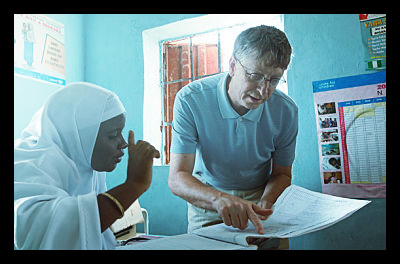
Bill Gates, founder of computer software powerhouse Microsoft, has spent his days of retirement giving back. He founded the Bill and Melinda Gates Foundation, which spends most of their efforts fighting poverty and health risks such as malaria. The organization tackles grave crises through 4 major program initiatives.
The Global Development Division deals with food insecurity throughout impoverished communities, as well as sanitation and housing. The Global Health Division, furthermore, promotes technological and scientific studies such as vaccines and medical treatments throughout the developing world.
Their foundation also tackles domestic issues through the United States Division through supporting higher level education and high school.
The Global Policy & Advocacy Division is, in fact, the strategic portion of the Bill and Melinda Gates Foundation, which works to help advance their policies through national and international frameworks.
– Joseph Abay
Sources: Open Society Foundations (OSF), Huntsman Corporation, Tegla Loroupe Peace Foundation, Bill and Melinda Gates Foundation
Photo: Channels

Why the GHIC Should be on Your Calendar
On April 12, students, professionals and policy makers will come together for the Global Health and Innovation Conference (GHIC). Taking place on campus at Yale University in New Haven, Connecticut, the conference will discuss methods and means of global healthcare development.
Topics to be addressed at GHIC range from the Key Note Address “Reducing Toxins to Protect Health: A Global Concern” to business innovations in healthcare delivery to student-researched projects about environmental sustainability. By casting such a wide net of current and prospective advocates and leaders, the conference truly offers a diverse range of perspectives and solutions.
The conference is, furthermore, sponsored annually by Unite for Sight. Unite for Sight is a nonprofit organization dedicated to providing quality eye care for those who are prevented access to such care. The organization has helped over 1.7 million patients and performed 66,000 sight-restoring operations worldwide. As such a dynamic agency for global healthcare, Unite for Sight has hosted the GHIC for the past 11 years.
Past reviews of the conference are overwhelmingly positive. CNN has called the Global Health and Innovation Conference a “Meeting of Minds,” and as speakers vary from CEOs to undergraduate students, such a convergence seems apt. The Consortium of Universities for Global Health has even dubbed the conference a “must attend” event. With such strong praise, it is no wonder the conference is now officially the largest global health conference in the world.
There is something intriguing and engaging for all global health advocates at the conference. Exhibitions by graduate programs in Public Health and International Affairs, such as Brandeis University’s Keller School of Social Policy and Management, offer wonderful opportunities to learn more about making global development into a professional goal. Interactive workshops in sustainable architecture and global health writing are also sure to be great draws.
– Taylor Diamond
Sources: Unite for Sight, Consortium of Universities for Global Health
Photo: Pragzter
4 Impassioned Humanitarian Leaders
Below is a list of four impassioned humanitarian leaders who are fighting to make the world a better place.
1. George Soros
George Soros has given billions of dollars over the years to humanitarian organizations. He is the financier and founder of the Open Society Foundation, an international foundation that promotes the expansion of human rights and democracy throughout the third world.
Founded in 1998, the group funds and has helped institute health and educational programs while also being driven to provide “greater fairness in political, legal and economic systems” throughout the world. The program touts initiatives such as the Burma Project, which promotes freedom of expression, as well as helping suppressed minority and political groups communicate their human right grievances in the political repressive nation of Burma.
The foundations has various programs throughout countless countries promoting freedom of expression and basic human rights.
2. Jon Hunstman
Jon Hunstman Sr. began his humanitarian activities after being diagnosed with prostate cancer in 1993. Founder of the successful Huntsman Corporation, his donations have accounted for billions of dollars. He founded the Hunstman Cancer institute, a non-profit research company that builds hospitals and develops new cancer fighting techniques.
The Hunstman Corporation regularly donates money to education institutions as well.
For example, the foundation donated 26 million dollars to Utah State University to help expand the Jon M. Huntsman School of Business. They donated another 2 million dollars to enact the Hunstman Awards for Excellence in Education that reward exceptional school teachers and volunteers.
The foundation believes a strong domestic educational system will help enact significant positive change in America.
3. Tegla Laroupe
Female Kenyan runner Tegla Laroupe came to prominence in 2003 after winning 2 interntional half-marathons, attaining multiple world marathon records, and countless other titles. After retiring from marathon running, she devoted all her time to affect change in devastated communities throughout the world.
In 2003, she established the Tegla Lorupe Peace Foundation, an organization based around helping housing projects and educating children orphaned by political violence. The foundation has built schools throughout Ethiopia, Kenya, Uganda and Southern Sudan.
The organization raises money through various programs, such as the Peace Races. The Moroto-Uganda Peace Race was held in the Moroto district of Uganda and helped raise money for orphaned children in the volatile region plagued by an unstable political situation and “banditry.”
4. Bill Gates
Bill Gates, founder of computer software powerhouse Microsoft, has spent his days of retirement giving back. He founded the Bill and Melinda Gates Foundation, which spends most of their efforts fighting poverty and health risks such as malaria. The organization tackles grave crises through 4 major program initiatives.
The Global Development Division deals with food insecurity throughout impoverished communities, as well as sanitation and housing. The Global Health Division, furthermore, promotes technological and scientific studies such as vaccines and medical treatments throughout the developing world.
Their foundation also tackles domestic issues through the United States Division through supporting higher level education and high school.
The Global Policy & Advocacy Division is, in fact, the strategic portion of the Bill and Melinda Gates Foundation, which works to help advance their policies through national and international frameworks.
– Joseph Abay
Sources: Open Society Foundations (OSF), Huntsman Corporation, Tegla Loroupe Peace Foundation, Bill and Melinda Gates Foundation
Photo: Channels
Seattle Nonprofit Internships at The Borgen Project
Are you looking for an internship that will give meaning to your life? Do you want to contribute to the reduction of poverty on a global scale? There are 9 different nonprofit internships in Seattle at The Borgen Project, each with its own set of responsibilities and functions. Let us begin by briefly reviewing the available positions:
Web Developer Internship
This position serves as the “go-to” for implementing new features for the Borgen Project website. Responsibilities will include trouble-shooting website issues as they arise, developing and implementing tools for improving the website, working with plugins, develop and implement SEO tools and taking on various challenges as needed.
Political Internship
This position requires that one recruits political volunteers in targeted United States congressional districts and post volunteer openings to key groups and sites, represents The Borgen Project at events and takes on various tasks as needed.
Graphic Design Internship
The graphic designer will create visuals for the website, create infographics that communicate key stats and factoids, update and assist with design of internal and external sites, and create signs, T-Shirts, and posters.
Public Relations/Marketing Internship
This position requires that one edits content for the blog and magazine site, manages PR and media campaigns, utilizes and coordinates social media strategy and takes on assignments as they arise.
Human Resources Internship
This intern will review resumes and schedule interviews with top candidates, interview and screen applicants, and post volunteer openings on various sites.
Development and Fundraising Internship
This position focuses on identifying potential donors and seeking their support. Intern will search and research potential donars and foundations to indentify and evaluate potential funding sources, generate new ideas and business opportunities to increase fundraising and fund development to meet and exceed revenue goals, and represent The Borgen Project at community meetings, outreach events and other community settings.
Donor Relations & Communications Internship
This position focuses on processing donors and communicating with donors. Intern will track and process donations, manage all communications with donors including Thank you letters and solicitations and represent The Borgen Project at community meetings, outreach events and other community settings.
Recruiter Internship
This intern is responsible for increasing the number of volunteer applicants the organization receives nationally by positing volunteer openings on key sites, research groups and organizations to reach out to, email job descriptions to potential partners, and interview and screen applicants.
Editor
The Editor is responsible for reviewing and editing articles submitted by The Borgen Project’s national team of writers while working with the writers to improve their articles and coordinating with the Content Team Manager to address any issues.
All nonprofit internships in Seattle at The Borgen Project require 360-hours.
– Sunny Bhatt
Why the U.S. Doesn’t Pull All Troops from Afghanistan
By the end of 2014, the United States is expected to have all of its troops withdrawn from Afghanistan after 13 years of occupation. Public opinion in the U.S. heavily favors troops leaving Afghanistan before the proposed deadline. A majority of Americans now believe that the initial occupation of Afghanistan in 2001 was a mistake.
U.S. President Barack Obama’s administration has stressed the importance of pulling out of Afghanistan for years, but now Obama is trying to land a deal with the Afghan Government that will allow several thousand military personnel, Special Forces troops, and CIA members to stay in the country through 2024. Why would the U.S. effectively ‘end the occupation of Afghanistan’ while leaving behind thousands of workers for the next 10 years? There are two possible explanations that could explain why the U.S. is opting to remain in the region and not just let the Afghan government completely take over.
First, the U.S. government fears that if they leave Afghanistan in the same way they left Iraq, the country could lose ground to al-Qaeda. The Iraqi government has already lost two cities that were considered major wins for the U.S. troops during the fighting in 2004, Fallujah and Ramadi. The U.S. pulled out of Iraq before reaching an agreement between both governments that was similar to what they are working on in Afghanistan. Not securing an agreement meant the U.S. had no control over the political development in Iraq. Al-Qaeda and groups affiliated with al-Qaeda have since begun gaining more ground in the western Anbar province.
Another reason that could be compelling the U.S. to maintain a presence in the region is because the only Middle Eastern Pentagon base is in Afghanistan. Afghanistan is a strategic geopolitical asset for the U.S. It borders Iran, China and Pakistan, so it sits in the center of an area of the world that the U.S has many vested interests. Maintaining top officials in the country can help influence U.S. interests throughout the region.
If the U.S. does not pull all of their officials from the region, there is a possibility of continuing a smaller scale occupation until 2024. On the other hand, if the U.S. completely leaves and al-Qaeda and other military groups regain control of the region, more problems could be created for the U.S. and for citizens of Afghanistan.
– Colleen Eckvahl
Sources: The Telegraph, Global Research
Photo: The Telegraph
13 Quick Facts about the UN
“We the Peoples of the United Nations determined to reaffirm faith in fundamental human rights, in the dignity and worth of the human person, in the equal rights of the men and women and of nations large and small,” the UN Charter.
Over 60 years ago an organization with a mission to bring peace to the world was born. Rightfully called the United Nations, this organization started with just a handful of nations, though now well over one hundred countries have signed up to accept the pledge of peace.
Here are some quick facts about the UN, present and past:
– Amy Robinson
Sources: Wikipedia, Fun Trivia, United Nations, UNFPA
Photo: Flickr
U.S. Launches Internal Investigation into Drone Strike
The United States government is launching an internal investigation into a December 12 drone strike in Yemen. The drone strike was meant for an al-Qaeda militant, but ended up hitting a wedding party, killing 12 civilians and leaving more injured. A local journalist soon after took images of the strike and turned them over to a human rights organization working in Yemen called Reprieve. That group then turned it over to NBC News, the resulting actions allowed many to say that the U.S. ‘turned a wedding into a funeral.’
The U.S. released a statement acknowledging the attack while also stating that officials are now reviewing what happened. This is one of the few times the U.S. government has mentioned or confirmed that a drone strike is being questioned. A U.S. official, after declining to give any sort of identification, stated that, “Given the claims of civilian causalities, we are reviewing it.”
Some are calling this a ‘wake up call’ that highlights the problems with the U.S. drone campaign. There are even reports that the target of the strike Shawqui Ali Ahmed al Badani, a mid-level militant, ended up escaping the attack. Others on the ground in Yemen said that Badani wasn’t even present at the time. Baraa Shiban, a human rights activist who was in the area at the time, said that he had not heard any reports that Badani was in the area. He explained that, “Badani was from a different region so he would have been a stranger in the region.” He, furthermore, added that he believes that the US acted on incorrect intelligence.
This drone strike has, moreover, garnered a strong reaction against the U.S. within Yemen. To illustrate this, the Yemen parliament passed a resolution that called for an end for all drone strikes in Yemen shortly after the wedding day drone strike. Official numbers provided by the U.S. government claim that they have carried out 59-69 drone strikes in Yemen, resulting in between 287-423 deaths, both civilian and militant. Though more strikes are suspected to have been carried out by the U.S., they have not been officially confirmed.
– Colleen Eckvahl
Sources: NBC, RT
Sources: Reprieve
Why Do We Ignore Global Poverty?
“Poverty in Africa,” “more than 500 million people live on less than $2 per day,” and “ every three seconds a child dies.” These messages appear every day across the globe on television and social media but they attract little to no attention from the viewers.
One common excuse that might make this so, is that viewers may assume they cannot make a difference because of their social status or income levels. Even when people do not have a high social status, there are opportunities where they are still able to make a difference by influencing Congress.
Money is a major factor in reducing global poverty but it is not everything.
Others can even save their unused clothes or contribute a tiny portion of their income. With the exchange rate between United States currency and developing currency, every dollar helps.
Another common reason may not consider global poverty to be their problem. This concept is known as “Not In My Backyard” thinking. Since it may seem that global poverty does not affect people in developed countries directly, they are more likely to ignore the problem. However, global poverty indirectly affects people in developed countries.
When people are living in poverty, they have less access to education and limited livelihood options lending them to be prone to and easily convinced to join threatening groups such as terrorism, which is an international issue-a concern for developed countries.
In addition, farmers in developing countries lack proper knowledge or access to advanced farming equipment. The food supply has a high risk of being unhealthy and contains many toxic chemicals. The lack of health care in poverty regions can increase the risk of dangerous diseases spreading through other parts of the world.
Another possible excuse is that global poverty will disappear on its own. This perception is extremely misdirected. Global poverty, just like any other problem, will not disappear if nobody takes action to eradicate it. If no action is taken, global poverty will only going to get bigger and eventually reach its hand to developed countries.
The last and biggest problem is people assume global poverty is not a current issue because it would take a long time to erase global poverty. Even though it is true that global poverty is not going to disappear overnight, to speed up the process, help is always needed. The more help global poverty gets, the faster the world will eradicate it.
– Phong Pham
Sources: Productive Flourishing, Dear Bono, Global Issues
Photo: Tandem Post
Revolutionize Healthcare, Revolutionize the World
In order to improve and manage community health, health advocates help organize a plethora of services ranging from health events to educational experiences. Advocates come in many different forms and settings. For instance, health advocates are generally doctors and nurses though other health advocates may come from a different professional background, such as social work. However, health advocates can also come from a background unrelated to medicine, so long as the individual is burgeoning with a passion that centers on raising awareness of health-related issues.
Individuals who work as health advocates will typically aid clients in improving their health care experience by ensuring that clients not only learn about but also have an opportunity to access available programs and resources. According to SoCal Health Advocates, individuals in this field often endeavor to improve the lives of clients by breaking down barriers that prevent people from access to quality healthcare in order to prevent serious illness or prevent relapses.
However, health advocacy is not limited to only physical health. Due to its nature of stigmatization, great effort has been expended into improving mental health advocacy as well. According to the World Health Organization, it is crucial for advocacy efforts to continue educating the public about mental illness in order to truly revolutionize not only the manner in which mental health is perceived but also improve access to mental health treatments.
As part of its mental health advocacy efforts, the WHO has created MiNDbank, an online resource that has pooled together information regarding global policies and services regarding mental health. One of the goals of MiNDbank is to facilitate open debate and discussion about mental health topics in order to promote human rights for mental health patients as well as improving the mental healthcare system as a whole.
It is imperative for advocates to work towards eliminating the stigma and ignorance regarding mental illness, particularly since individuals with mental disabilities are subject to maltreatment and discrimination on a daily basis. Unfortunately, in many parts of the world, legal institutions have been unable to protect the basic human rights of these individuals.
Although the United States struggles with the burden of a stigmatized and under-funded mental healthcare system, many countries, lack adequate mental health facilities due to even greater stigma and a general lack of awareness. Therefore, mental health advocates strive to inform society about mental illness in order to reverse the disagreeable image of mental health patients, and ultimately, construct a more efficient, more understanding and more accessible global mental healthcare system.
– Phoebe Pradhan
Sources: SoCal Health Advocates, World Health Organization
Photo: IIR Healthcare
Bayan Mahmoud Al-Zahran the First Saudi Female Law Firm
The first all-female law practice has opened in Saudi Arabia, marking progress for women in a nation that has historically not afforded even many basic rights to women.
Bayan Mahmoud Al-Zahran, the first woman in Saudi Arabia to be issued a law license, along with Jihan Qurban, Sarra al-Omari and Ameera Quqani, opened the firm on January 1, 2014. While they will provide services for both genders, the stated objective of the new law firm is to advocate for the rights of Saudi women and to bring cases centered on women to court.
Al-Zahran officially became Saudi Arabia’s first female lawyer on November 2013 when she defended a client at the General Court in Jeddah. She had worked for many years as a legal consultant, the only legal position previously open to women, and had represented clients in dozens of court cases.
In a strictly sex-segregated society such as Saudi Arabia, it can be hard for men and women to speak openly and understand the issues put forth by an opposite-sex client, she says.
With more female lawyers in Saudi Arabia, this hurdle for women could be alleviated.
Al-Zahran asserts, “I believe women lawyers can contribute a lot to the legal system. This law firm will make a difference in the history of court cases and female disputes in the Kingdom. I am very hopeful…”
She also states her desire for the number of female lawyers to rise in the future.
At the opening of the firm, the vice president of the Jeddah Chamber of Commerce, Mazen Batterjee, congratulated the new lawyers, but cautioned them to remain true to Sharia law in their practice and in their personal lives. He reiterated that the women should always wear their hijabs to court.
Batterjee’s tentative praise and caution are outshined by the enthusiasm of Al-Zahran’s father, Sheikh Mahmoud.
He calls the move an important step for women’s rights and affirmed his complete support his daughter. “We are very proud of our daughter who stands firm for [the] protection of women’s rights,” he states.
The issue of women’s rights in Saudi Arabia has long been a contentious one.
Women living in the Kingdom still must have a male guardian who can decide if a woman can travel, work, marry or go to school—for their entire lives.
Women are also expected to fully cover themselves in public spaces and are forbidden from driving.
In October 2013, over 60 women drove cars in protest of the law, a move that earned global attention and praise while pointing to a growing, though still small, movement in Saudi Arabia toward increased rights for women.
If it is up to her and her firm’s lawyers, Al-Zahran plans to see the dream of women rights in Saudi Arabia fully realized.
– Kaylie Cordingley
Sources: Arab News, Feminist, International Business Times
Photo: The Art of 12
Universal Health Coverage a Possible Post 2015 Goal
What is Universal Health Coverage?
Universal Health Coverage (UHC) pools resources and finances to provide health care services to the world’s entire population by focusing on improving health care for citizens and reducing poverty caused by health care costs. Universal Health Coverage can improve the health and economic well being of individuals and communities — especially those that are socially disadvantaged or vulnerable.
Universal Health Coverage is sometimes also referred to as “Universal Coverage” or “Social Health Protection.” Different countries may make different policy changes when implementing Universal Health Coverage, but it generally consists of three main principles:
Moving Towards Universal Health Coverage (UHC)
Universal Health Coverage, as a goal of many countries, may become part of the post-2015 Millennial Goals sustainable development agenda. Universal Health Coverage, for the most part, means that all people who need health services will receive them when needed without undue financial hardship — this includes prevention, treatment, rehabilitation and palliative care.
The United Nations, World Bank Group and World Health Organization are all in favor of UHC and are pushing that it become part of the new development plan.
Moreover, the World Bank Group has a new goal of eliminating global poverty by 2030 which can only be met if all people have fair and accessible health care. People should not have to live in poverty in order to pay for health care.
In December of 2013, the World Bank Group and World Health Organization released a report that outlined their findings on the Universal Health Coverage. They suggest that those receiving both health coverage and financial protection should be covered.
The World Bank Group further supports Universal Health Coverage because it will ultimately improve health outcomes, reduce financial risk and improve equity. However, they point out that each country will have it’s own unique path to achieving this goal.
The World Bank recently studied all 22 countries that provide Universal Health Coverage in addition to the state of Massachusetts, who has had health coverage for six years. These studies provide tools and implementation plans that can be adopted by other countries and states.
To find more information on the World Bank study series go to: https://www.worldbank.org/en/topic/health/publication/universal-health-coverage-study-series
– Lisa Toole
Sources: UHC Forward, World Health Organization (WHO), World Bank Group, CNN
Photo: MSH