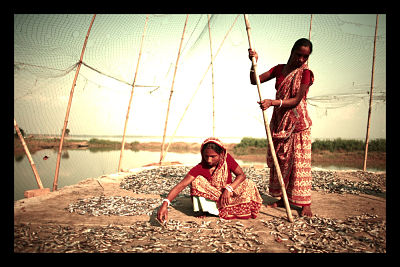
When economic crises, military conflict and general mayhem plague the continents, few people consider the impact such events may have on the communities located in the South Pacific. Over 10 million people populate the 3,500 islands scattered across the Pacific Ocean, an extremely large number of whom suffer from debilitating disease and poverty.
Save for the extreme natural catastrophes that seem to constantly plague the Philippines, the high rates of poverty, poor education and abysmal health of Pacific islanders fails to gander consistent international attention.
To illustrate the severity of the problem, here are nine facts to learn about poverty in the South Pacific.
1. 38 percent of Papua New Guineans live below the National Basic Needs Poverty Line, which means 2.7 million people are unable to buy sufficient food and meet basic requirements for housing, clothing, transport and school fees. Even more alarmingly, 61 percent of the populace does not have access to safe drinking water.
2. Pacific islands are disproportionately affected by global disasters. A 2012 World Bank study revealed that of the 20 countries in the world with the highest average annual disaster losses scaled by gross domestic product, eight are Pacific island countries: Vanuatu, Niue, Tonga, the Federated States of Micronesia, the Solomon Islands, Fiji, Marshall Islands and the Cook Islands.
3. Literacy rates are a persistent concern, especially on the Solomon Islands, where only 65 percent of the adult population (330,000 people) can read.
4. Pacific Islanders may be notorious for their love of canned meats like spam and corned beef, but what is not widely discussed is the debilitating effects such imported goods have on their health. As of 2007, eight of the 10 heaviest countries were located in the South Pacific. Nauru, the world’s smallest republic with just over 9,000 inhabitants, earned the number one spot with over 90 percent of their adult population considered obese.
5. Human rights violations also remain high in the pacific. Amnesty International recently reprimanded Papua New Guinea for burning a woman alive amid allegations of sorcery. Although the 1971 Sorcery Law has been repealed, which criminalized sorcery and could be used as a defense in murder trials, the United Nations Special Rapporteur on Violence Against Women in 2012 found that sorcery allegations are often made to mask the abuse of women.
6. Domestic abuse and gendered violence is also a concern but inconsistent reporting makes it difficult to pinpoint exact levels of abuse. In the first National Study on Domestic Violence in Tonga, conducted in 2009, results found that 45 percent of Tongan woman reported having experienced physical, sexual or emotional abuse in their lifetime.
7. Pacific Islanders are at high risk for Neglected Tropical Diseases, which commonly affect the world’s poor, women and disabled. Hookworm, leprosy, scabies and Japanese encephalitis are among the most prevalent; these adversely affect worker productivity, pregnancy outcomes and child cognition and development.
8. In 2010, Oceania unemployment rates reached 14 percent, while the United States average in the same period came in at 9 percent.
9. Since the mid 20th century, approximately 9.2 million people in the Pacific region have been affected by extreme events, resulting in 9,811 deaths and $3.2 billion in damages.
Pacific island nations’ small size, limited natural resources and great distances to major markets makes them particularly vulnerable to external crises and thus results in extremely volatile economies. Greater commitment to development initiatives will enable Oceanic nations to handle stresses caused by external forces and eventually strengthen the autonomy of the respective nations.
– Emily Bajet
Sources: University of Hawaii, Asian American For Equality, Oxfam, The World Bank, The World Bank News, Poodwaddle, Australia Network News, Australia Network, The New York Times, PLOS, Samoaobserver, Matangitonga, Labour
Photo: IFAD

President Rouhani Donates $400K to Jewish Hospital in Iran
The President of Iran, Hassan Rouhani, has donated $400,000 to the Dr. Sapir Hospital, which is the only Jewish hospital located in Iran.
The act itself was performed by the president’s brother, Hossein Fereydoon, but sent from the Rouhani administration. Fereydoon has said of the offer, “Our government intends to unite all ethnic groups and religions, so we decided to assist you.”
This is undoubtedly light years from the previous administration as former president, Mahmooud Ahmadinejad, was not quiet about his discontent towards the Jewish community. This is not an exclusive view for some Arab countries, as the ongoing Israeli/Palestinian conflict has generated negative sentiments towards Israelis.
President Rouhani took office in August of 2013, and ever since has put thoughtful efforts into separating himself from his predecessor. Former President Ahmadinejad had denied that the Holocaust ever occurred, and formally slandered the Jewish society on multiple occasions. Rouhani’s administration is detached from this sort of behavior, as they also took to social media to wish the Jewish community a happy Rosh Hashanah last September.
Iran is home to the most Jews in the Middle Eastern region besides Israel itself. Census reports usually record about 20,000-25,000 Jews in Iran, although certain government census reports from 2011 have cited the number has dropped to 9,000.
This diminishing tally can mainly be attributed to the Khomeini Revolution of 1979, which was heavily influenced by Islam, along with unwelcoming regimes after that. Prior to the revolution, there were about 100,000 Iranian Jews, but many chose to flee from their homes as they felt threatened by the new leadership.
Rouhani’s actions not only benefit the Jewish community, as the Dr. Sapir Hospital actually employs and cares for more Muslims than Jews. For over 50 years the hospital has been open and accepting people of all religions. It is also situated across from the Imam Reza Seminary School in Tehran, which is a prominent Shiite Muslim academy, adding to the intermingling of both religions.
In fact, about 96% of the hospital’s patients are Muslim. The hospital appears to genuinely focus on the medicine, rather than the politics, with an ambiance that is inclusive of all identities. President Rouhani’s recognition and support of this hospital is imperative for the future of these two religions, in hopes that they will coexist peacefully, especially in Iran.
One of the doctors at the Dr. Sapir Hospital, Dr. Mosadegh, was not as shocked about President Rouhani’s kind actions as outsiders, as he proclaimed, “We Jews are a part of Iran’s history. What is important is that Mr. Rouhani makes big news out of supporting us. He is showing that we, as a religious minority, are part of this country, too.”
The implications from this sort of action are tremendous; not only for the sake of humanity, but also for the relationships that Iran has with other countries. Rouhani’s caring approach may undo some of the damage caused by Ahmadinejad, which could lead to lesser sanctions and the possibility of new allies.
Rouhani’s acceptance of the Jewish community may also attract more Israelis to return to Iran, thus reaffirming the importance of Persian Jews to the history of Iran, and its future as well.
– Danielle Warren
Sources: National Geographic, New York Times Middle East, New York Times
Photo: Asia Society
Presidential Elections in Costa Rica
Read more
Iraqi Prisons Illegally Detain Women
Thousands of women in Iraq are being illegally detained and abused, according to a report by Human Rights Watch (HRW). Many of these women, held by Iraqi security forces for months or sometimes even years without access to a judge, are often questioned about the crimes and activities of their male relatives and not about the crimes they are supposed to have committed.
Violence in Iraq is presently at its highest level since 2008, with more than 1,000 people dead in Iraq just in January. Human rights groups and diplomats are increasingly vocalizing the various cases of mistreatment within the country, yet to little avail. As stated by the HRW report, over 4,500 women are currently being detained in Iraqi prisons. While a majority of these women are Sunni, people of all sects and classes are affected, causing dire unrest among the masses.
One woman interviewed by HRW had suffered beatings, electric shocks and rape, abuses not uncommon among Iraq’s female prisoners. She was later executed, regardless of the medical report that had been filed in her favor. An employee at a women’s prison facility contributed to concern for sexual abuse, stating that employees assume police rape prisoners en route to the prison.
This tragic situation has indubitably angered Iraqis, adding to the frustrations long protested by Sunni Arabs. Breaches in civil and human rights of this sort only serve to exacerbate the sectarian divide within Iraq. Although most Sunnis are not thought to support militant jihadist organizations such as the Islamic State of Iraq and Syria (ISIS,) the abuses make them far less likely to support the efforts of the authorities working to rid the country of those groups.
A lack of trust between the groups and communities living within Iraq’s borders is cause for concern both regionally and globally. If Iraqi authorities desire cooperation, perhaps it would benefit to treat all members of the country’s makeup with the equal and adequate rights necessary to maintain a sustained peace.
– Jaclyn Stutz
Sources: Al Arabiya, Al Jazeera, BBC
Photo: The Brussells Tribunal
Major Child Labor Risk Factors
Child labor is defined as labor that children are unqualified to perform primarily because they are either young or too vulnerable for the nature of the work. As such, not all labor that children engage in can or should be regarded as child labor. For instance, labor that does not negatively impact the child’s physical or mental health generally does not qualify as child labor.
Worldwide, there are multiple forms of child labor ranging from agricultural work to mining, manufacturing and domestic service. Other children are trapped in even more malicious forms of labor such as debt bondage, prostitution, drug trafficking, and armed conflicts. Oftentimes, children who are subjected to child labor do not receive monetary compensation but rather informal payment in the form of food and a home.
Today, approximately 168 million children are victims of child labor, with the rates of underage labor highest in Asia and Sub-Saharan Africa. Half of these minors work in hazardous conditions. Furthermore, the United Nations has provided a set of risk factors that impact whether children are vulnerable to forced or underpaid labor. Oftentimes, poverty is the primary reason that children are subjected to labor. These children live in states of such extreme poverty that they are generally willing to endure abuse in order to secure even the paltriest sum of money.
Poverty, however, is not the only risk factor for child labor. Additional major risk factors include barriers to education, culture and tradition, market demand and poor legislation. For example, not all areas of the world have access to adequate education. Oftentimes, the quality of schooling in less developed countries is inadequate. In these situations, children generally opt to work rather than attend a school that they either cannot afford or do not view as useful. To these children, the idea of an immediate monetary reward outweighs schooling, especially when the welfare of their family is at stake.
Furthermore, in less developed countries, parents often reinforce the notion that children should enter the labor force, creating a cycle in which children of each generation successively enter the labor force early.
Due to market demand children are preferred workers because they are less costly to hire than adults. Employers perceive children as easier to abuse and more willing to endure maltreatment.
Lastly, child labor thrives in areas of the world that either do not have sufficient child labor laws or do not effectively enforce these laws.
Since children are developmentally vulnerable in more than just physical ways, exploitations of labor affect them cognitively, emotionally and behaviorally. These disturbances in development may help perpetuate the cycle of poverty – a malicious cycle that can only be broken once the risk factors of child labor are amended and principles of human rights are internalized, thus giving children the opportunity to just be children.
– Phoebe Pradhan
Sources: International Labor Organization, United Nations
Photo: Curly Girl Chronicles
GiveWell Evidence-Based Research Assists Donors
The game of giving is changing. Charity funds and philanthropic organizations are no longer just donating money blindly, but rather are investigating the core causes of poverty and trying to support solutions that make the biggest social impact.
Charities are trying to donate money where it will do the most for the people receiving it rather than filtering it into numerous other accounts that trickle down to the beneficiaries in smaller and smaller amounts.
Foundations are looking beyond block grant funding and coming up with innovative specifications for how their money should be used to maximize its positive effect.
The Chronicle of Philanthropy issued a report stating that the fifty largest donators have given almost eight billion dollars in the past year towards global aid.
GiveWell is an organization that focuses entirely on analyzing data to determine just how useful giving is per dollar amount.
Who does the donation really help? Where does the money go? Who decides what to do with it? What are the tangible benefits of giving? Questions like this and the answers that accompany them are becoming a large part of the solution to global poverty.
Knowing who to give aid to, where the funding goes and how it actually makes a difference in the lives of the people receiving it gives charities and philanthropists a clear direction for their efforts.
GiveWell researches and evaluates different charitable foundations and shares their results with the public to help potential donators choose the best use of their giving power.
They provide links on their website to evidence that backs up their evaluations. Categories like distribution efficiency, funding, pros and cons, track record, and impact studies are all part of GiveWell’s investigations.
The financial situation in the past decade has generated a need to be as financially responsible as possible with funding, and governments in various nations have cut foreign aid spending.
Solving the problem of global poverty requires serious funding, especially when so much money is spent on other, less drastic goals. Creating mutually profitable businesses that cater to those struggling with lack of basic needs as well as giving money to communities that can use it to lift themselves out of financial devastation is key to saving the world’s poor.
Philanthropic practices and analytical giving techniques such as those provided at GiveWell can help make a huge difference in eradication of poverty in countries all over the world.
– Kaitlin Sutherby
Sources: Givewell, The New Yorker, The Guardian
Photo:
TOMS Shoe Company: Buy a Pair, Give a Pair
Most people have heard of TOMS shoe company, or even own a pair of TOMS themselves. The shoes are comfortable and casual as well as fashionably cute for everyday wear. In addition, for every pair of shoes purchased from TOMS, another pair is given away to someone in need.
The company has recently been criticized for hurting economies struggling against poverty by taking away business with their shoe give-aways.
A for-profit company, TOMS’s mission is to help societies that are lacking in basic supplies such as shoes. They have announced their plan to produce one third of shoes in the countries in which they donate the extra pair.
Blake Mycoskie, the founder of TOMS shoe company, has stated that the company is looking forward to helping solve more global issues such as clean water, nutrition and education. The company is examining ways to expand their product lines and business model to help further improving the quality of lives of those suffering from poverty around the world.
TOMS website shares how providing shoes to children helps give them the ability to go to school, to work and to participate in their communities without fear of injury and illness that can easily happen with bare feet.
Shoes are a basic need for everyone, and having kids in school, working and being healthy is a huge factor in breaking societies out of poverty.
The TOMS team calculates how many pairs of shoes they sell and match that number in pairs that they will give away.
Partners that operate community health programs in foreign countries work with TOMS to figure out sizes, quantities, and delivery costs. TOMS covers all of the shipping and distribution, and corrects their methods based on feedback from their ‘giving partners’ that are actually working in the societies TOMS donates to.
More and more companies are beginning to realize that making a positive difference in the lives of others is actually a very profitable venture. More than a billion people are living on less than two dollars per day, and that is a huge customer base for a company to cater to.
Viewing the world’s poor as a market share is an innovative and successful way to start a business and simultaneously free people from the cycle of poverty.
The cycle is often perpetuated by illness, malnutrition, unemployment and lack of medical care; these are problems that businesses can solve with new products and services. TOMS is only one of the companies that is thriving in the business world and helping people who really need it every step of the way. Additionally, TOMS personalizes their shoe donations for the different countries they assist. In January 2014, members of the company visited Tanzania and learned that almost half of the residents are under the age of fourteen years old.
This helps them decide types and quantities of shoes to distribute to Tanzania versus another country with alternative statistics. The more successful TOMS becomes, the more people across the globe are receiving shoes and the ability to walk to a better future on their own.
– Kaitlin Sutherby
Sources: The Huffington Post, Toms, Toms Stories
Photo: Forbes
India Rag Pickers Live in Landfill Slums
The United Nations estimates that the world wastes more than a billion tons of garbage annually. The vast majority of this garbage ends up in landfills, and human scavengers attempt to live off what the rest of the world has thrown away.
In the New Delhi 70-acre Ghazipur landfill alone there are an estimated 350,000 scavengers, or ‘rag pickers’. Living in filth, people spend their days sorting the endless trash into towering mountains, searching for items they can sell.
Plastic bags go for 5¢ a pound, and human hair fetches $18 a pound.
Sheikh Habibullah, has built a dirt-floor hut for his family of six by hanging rice-bags for walls, palm-leafs as a roof, and a Bollywood poster board for the door. The family collectively earns $60 a month, half of which pays a local boss for rent and the electricity to power a single light bulb.
For most, a doctor is out of the question and with boundless toxins leaking into the landfill from local dairies, slaughterhouses and a crematorium, cancer and birth defects are common.
Nevertheless 60-year-old Sheikh Abdul Kashid claims he’s “much freer here…I’ve given four children some education. I could never do that back home.”
At a landfill outside Karuvadikuppam in India, rag pickers celebrate when someone finds a chicken bone in the newest truck delivery. Scavengers also sometimes find onions, tomatoes, or garlic. A woman calls out to a passing reporter, “Don’t take the garbage away. We get everything from it. We survive because of it.”
In La Chureca landfill beside Lake Nicaragua a shelter has been set up for landfill workers. At Los Quinchos Centre people can receive lunch and, if they can afford the time off, relax with puzzles or practice their writing by copying down sentences and numbers. Maggie Barclay, a reporter for ‘Guardian Weekly’ asked a little boy about the birds in his drawing. He told her they were vultures – the only birds he’d ever seen.
The Huléne garbage dump in Maputo, Mozambique is home to an estimated 700 people. The sight of a garbage truck causes many to give chase, hoping to be the first to look through the new trash delivery. According to Jose Ferriera’s research these deliveries procure “everything from food, recyclable material, dead animals and fetuses of newly born.”
Ferriera spent time among the landfill community in Mozambique, and found that “[d]espite all the circumstances of how they live, they keep on showing their kindness and happiness and hospitality. We don’t find these human qualities in many places in the world.” He explains that living in the landfill was never a choice for many of them, and how “[m]any of them have seen the other side and dream of it themselves and every day they hope for a better life.”
– Lydia Caswell
Sources: Los Angeles Times, The New York Times, The Guardian, CNN
Photo: Sulekha
Hunger in the Congo: Turning the “Red Zone” Green
Democratic Republic of the Congo is still attempting to find steady ground after the 2005 end of their five-year war. The U.N.’s most substantial unit of 20,000 soldiers is based in the Congo to oversee and keep the peace.
Unfortunately, a recent breakout of violence in Goma has amplified Democratic Republic of Congo’s hunger crisis and halted the progress that was being made.
The fight, between the Congo and neighboring Rwanda this past November, involved the Rwandan rebels crossing the Congo border and seizing the recent crop from fields and food from the homes of many residents. Numerous homeowners fled and multiplied the already large number of people relocated due to preceding conflicts.
Congo refugees often try to find shelter in areas close to their fields, but are usually forced to leave because of the lack of food and protection. Some find refuge with host families, but those families are usually under pressure to find sources of food as well.
An estimated 130,000 people in Goma are said to have escaped from their homes and farms following November’s attack.
Sarah Carrie, manager at Goma’s World Vision stated, “The lost harvest has increased chronic vulnerability in terms of access to food.”
Since 1998, 5.4 million people have died due to hunger in the Congo, war-violence, and disease; approximately 45,000 continually die each month from starvation. War is one of the leading causes of hunger in the Congo, pushing many susceptible populations into even worse conditions. Many “ethnic rivalries” fight for ownership of natural resources and innocent civilians typically endure the backlash.
Due to the large amounts of gold, minerals and diamonds it contains , the Congo should be a wealthy country, but disease, hunger and displacement from wars have caused millions of people to struggle.
Currently 30% of children five and under are suffering from undernutrition and malnourishment, which takes a toll on their immune systems, making them more susceptible to disease, infections and death.
A care group called Food for the Hungry (FH) is using armbands called MUACs to establish if a child is underweight; if the red colored section of the band shows, then the child is considered underweight. This method allows doctors to quickly determine the child’s health condition for the parents, as well as supply the parents with information on how to plan nutrient rich meals, or in some severe instances, recommend hospitalization for children who are dangerously malnourished.
Food for the Hungry trains mothers from communities to be care group leaders so that they are able to continue to educate other women on how to make nutrient rich meals from natural resources and form healthy lifestyles involving increased hygiene and sanitation.
One care group, consisting of 10 care leaders, is able to teach 600 women, which cuts costs without jeopardizing the massive benefits. Multiple women are seeing the rewards of the FH care groups and the impact it has made on the health of their children. Information is quickly passing through villages and transforming the health of hundreds of children and slowly pulling the children suffering from hunger in the Congo out of the red zone.
– Rebecca Felcon
Sources: The Guardian, Jewish World Watch, Relief Web, Trust
Photo: Flickr
READ Global Removes ‘Foreign’ from Aid
The organization READ Global has turned the concept of ‘foreign’ aid on its head. What once began as a rural library outreach program in Nepal has grown into a massive network of educational centers spanning three countries and reaching 2 million rural villagers.
Founded by Dr. Antonia Neubauer in 1991, the Rural Education and Development (READ) organization creates self-sustaining library and resource centers in rural areas owned and operated by the communities they serve.
Foreign aid programs are commonly criticized for being invasive and generally ineffective in the long run. Some of the problems originate from U.S. foreign aid regulations, which stipulate that at least 80% of funds destined for foreign countries must originate from U.S. sources.
A recent example of this restriction occurred after Hurricane Haiyan, when U.S. aid organizers were forced to ship American rice to the Philippines instead of buying it from neighboring countries like Thailand, an arguably cheaper and faster option.
Such actions flood local markets with foreign goods, making it extremely difficult for merchants to rebuild their businesses and creating a cycle of dependence on foreign aid.
The READ Global program aims to change that. Operating out of Nepal, Bhutan and India, the organization has established community centers in rural areas that establish both standard library services as well as life-changing educational classes.
“They provide the literacy classes, they provide the livelihood trainings, like mushroom farming, organic farming [and] we provide basic health training,” states READ Global’s website. “The opportunities are not only for women but children, [the] elderly population.”
The organization focuses on four main areas: education, economic empowerment, technology and women’s empowerment. It selects regions with particularly high rates of illiteracy and poverty and then creates for-profit enterprises that sustain the centers and educate villagers on financial self-sufficiency.
“All of our centers are owned and managed by the local communities,” said Shrestha. “For example one of the centers…has raised 70,000 USD and that money will go to the sustaining enterprise of that center.”
Since its inception in 1991, READ Global has established 69 centers in the three countries where it operates and hopes to open 30 more in the next five years. Their enterprises include tractor rental businesses, community radio stations and agricultural cooperatives.
“We envision a world where individual family and societies have equitable access to knowledge, information and resources,” Sanjana Shrestha, the READ Nepal Country Director. “We work in Asia to create the vibrant place where community can live and thrive.”
– Emily Bajet
Sources: Christian Science Monitor, READ Global, NPR
Photo: New Global Citizen
9 Facts About Poverty in the South Pacific
When economic crises, military conflict and general mayhem plague the continents, few people consider the impact such events may have on the communities located in the South Pacific. Over 10 million people populate the 3,500 islands scattered across the Pacific Ocean, an extremely large number of whom suffer from debilitating disease and poverty.
Save for the extreme natural catastrophes that seem to constantly plague the Philippines, the high rates of poverty, poor education and abysmal health of Pacific islanders fails to gander consistent international attention.
To illustrate the severity of the problem, here are nine facts to learn about poverty in the South Pacific.
1. 38 percent of Papua New Guineans live below the National Basic Needs Poverty Line, which means 2.7 million people are unable to buy sufficient food and meet basic requirements for housing, clothing, transport and school fees. Even more alarmingly, 61 percent of the populace does not have access to safe drinking water. Tweet this fact
2. Pacific islands are disproportionately affected by global disasters. A 2012 World Bank study revealed that of the 20 countries in the world with the highest average annual disaster losses scaled by gross domestic product, eight are Pacific island countries: Vanuatu, Niue, Tonga, the Federated States of Micronesia, the Solomon Islands, Fiji, Marshall Islands and the Cook Islands.
3. Literacy rates are a persistent concern, especially on the Solomon Islands, where only 65 percent of the adult population (330,000 people) can read.
4. Pacific Islanders may be notorious for their love of canned meats like spam and corned beef, but what is not widely discussed is the debilitating effects such imported goods have on their health. As of 2007, eight of the 10 heaviest countries were located in the South Pacific. Nauru, the world’s smallest republic with just over 9,000 inhabitants, earned the number one spot with over 90 percent of their adult population considered obese.
5. Human rights violations also remain high in the pacific. Amnesty International recently reprimanded Papua New Guinea for burning a woman alive amid allegations of sorcery. Although the 1971 Sorcery Law has been repealed, which criminalized sorcery and could be used as a defense in murder trials, the United Nations Special Rapporteur on Violence Against Women in 2012 found that sorcery allegations are often made to mask the abuse of women.
6. Domestic abuse and gendered violence is also a concern but inconsistent reporting makes it difficult to pinpoint exact levels of abuse. In the first National Study on Domestic Violence in Tonga, conducted in 2009, results found that 45 percent of Tongan woman reported having experienced physical, sexual or emotional abuse in their lifetime.
7. Pacific Islanders are at high risk for Neglected Tropical Diseases, which commonly affect the world’s poor, women and disabled. Hookworm, leprosy, scabies and Japanese encephalitis are among the most prevalent; these adversely affect worker productivity, pregnancy outcomes and child cognition and development.
8. In 2010, Oceania unemployment rates reached 14 percent, while the United States average in the same period came in at 9 percent.
9. Since the mid 20th century, approximately 9.2 million people in the Pacific region have been affected by extreme events, resulting in 9,811 deaths and $3.2 billion in damages.
Pacific island nations’ small size, limited natural resources and great distances to major markets makes them particularly vulnerable to external crises and thus results in extremely volatile economies. Greater commitment to development initiatives will enable Oceanic nations to handle stresses caused by external forces and eventually strengthen the autonomy of the respective nations.
– Emily Bajet
Sources: University of Hawaii, Asian American For Equality, Oxfam, The World Bank, The World Bank News, Poodwaddle, Australia Network News, Australia Network, The New York Times, PLOS, Samoaobserver, Matangitonga, Labour
Photo: IFAD