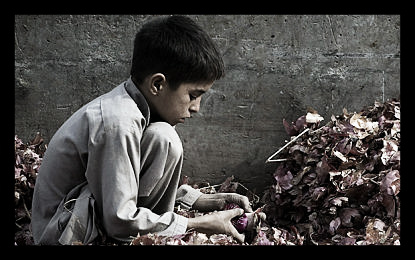
Political and religious extremism is the backbone of the violent terrorist action throughout the world. A devout follower of a religious sect finds justification in their violent actions based on the misunderstood teachings of their religion, be it Christianity or Islam.
American Christian fundamentalists detonate explosions in abortion clinics, claiming they are saving the lives of unborn children. Islamic extremists use suicide bombers to attack soldiers, believing they are doing their duty for Allah.
A conceptual argument based on a person’s own beliefs to fight against something they find unjust. But what necessarily creates a mind-state where a human being develops extremist beliefs? Upbringing? Social norms? Poverty? An argument can made for a variety of reasons.
Poverty is rampant throughout the known world, with billions of people living in unsafe and sickening conditions. The lack of adequate healthcare and schooling create a cycle where people are unable to remain healthy or lift themselves out of such horrid conditions.
Does Poverty Cause Extremism?
To truly identify if poverty causes extremism, one must look at the bare minimum facts of religiosity. A 2012 Gallup poll called the 2012 WIN-Gallup International Religiosity and Atheism Index found that out of all countries on earth, the most religious 10 nations had 85 percent of their citizens respond as “a religious person.” These 10 nations were also increasingly impoverished with the average “per capita income” around $14,100.
While correlation does not necessarily equate with causation in explaining extremism, it gives credence to the ideal that religious attitudes develop greater in harsh conditions. The same Gallup poll also argued that religious virtues are declining in the first world, particularly in Europe and the United States.
In 2012, the Fata Research Centre (CRC) published a report called “Extremism and Radicalization: An Overview of the Social, Political, Cultural and Economic Landscape of (Federally Administered Tribal Areas)” detailing the factors behind poverty that result in radicalization of youths.
The report showed a stunning correlation between poverty, lack of educational opportunities, lack of employment and growing up in a violent society that leads to youths to become religiously extremist. 89 percent of those surveyed emphasized the essential “importance of youth role in bringing prosperity to the region.”
Poverty is a main factor, leading to greater social problems that drive many into extremism. But other reports have argued against this idea. Statistics have shown that most terrorists come from wealthier backgrounds. Palestinian suicide bombers were typically middle-class and received higher education. A recent report out of Pakistan has argued poverty and extremism do not affect one another.
Pakistan instituted a billion dollar policy which has pushed to aid less fortunate Pakistani residents in keeping them from aligning with terrorist groups. The Social Science Research Network argued that spending money would not truly affect the issue.
Georgetown University’s Christine Fair, an expert on South Asia, argued in a report that there is “no evidence” that impoverished Pakistanis were at risk at becoming radicalized and joining extremist groups. The study also showed that more “affluent, educated” Pakistanis were more like to be radicalized. 6,000 people suggested that poorer Pakistanis were actually less likely to support extremist groups than more affluent, better educated people. The answers are not always so clear when trying to find why a person decides to violently fight for their beliefs.
– Joseph Abay
Sources: Telegraph, Tribune, The News

Temporary Ceasefire in Besieged Syrian City of Homs
A temporary pause in the fighting between the Syrian government and rebels allowed emergency personnel to evacuate 83 civilians from the embattled city of Homs on February 7, according to the United Nations.
The evacuation of the civilians comes a day after the U.N. brokered a three day ceasefire, under which women, children, the elderly and injured people will be allowed to leave Homs. That day, buses were allowed to enter Homs’ Old City, where as many as 2,500 people are believed to be trapped. The trapped residents have been unable to leave because they are caught in the fighting between the government and the insurgents battling Syrian President Bashar al-Assad’s regime.
The departing residents will be greeted at a U.N. welcome center and will then give the authorities the names of people who want to stay behind. The provision of the names of citizens who do not want to leave was a key demand of Syria’s government, which wants to learn the identities of the men who reside there, the Washington Post reported.
In addition to the evacuation of these noncombatants, aid will be allowed to enter Homs’ Old City, parts of which have besieged by government forces since June 2012. Under the temporary ceasefire between the government and the rebels, medical aid and food should reach Homs on Saturday.
The three-day ceasefire covering Homs, which was one of the first cities to take up arms against Assad’s regime, comes nearly two weeks after United States and Russian-sponsored peace talks on ending Syria’s civil war opened in Switzerland. The talks, which began in the Swiss city of Montreux on January 22 before moving to Geneva on January 24, paused last Friday. The negotiations between Syria’s government and a western-backed opposition alliance known as National Coalition of Syrian Revolutionary and Opposition Forces are set to resume Monday in Geneva.
Assad’s government and the opposition had been expected to reach agreement early in the talks on localized ceasefires and on allowing humanitarian aid to be delivered to besieged areas, but the two sides were unable to even reach a deal on these issues.
The official agenda for the negotiations, known officially as Geneva II, is to reach agreement on the composition of a temporary government with full executive powers that would oversee Syria’s transition to democracy. Syria’s government rejects the idea that goal of the talks is the establishment of a government that doesn’t include Assad, whose family has ruled Syria since 1971, while the opposition has insisted that any transitional government exclude the Syrian president and leading members of his regime.
Syria’s nearly three-year long civil war, which pits rebels largely drawn from Syria’s Sunni majority against a government controlled by the country’s minority Alawite sect and supported by Shia Iran, has stoked Sunni-Shia tensions across the Middle East, particularly in the sectarian tinder boxes of Iraq and Lebanon.
Shia Iran and its Lebanese proxy force Hezbollah have backed Assad, a longtime ally of both Tehran and Hezbollah, while Sunni gulf states and Turkey have supported the Sunni insurgents, buttressing the rebels through the provision of light weapons and cash. Both sides seem to view the Syrian conflict as a proxy war between the Sunni and Shia branches of Islam.
– Eric Erdahl
Sources: BBC, BBC, Washington Post, New York Times
Sources: Elephant Journal
Deaton’s “Great Escape” Maps Origins of Inequality
“Life is better now than at almost any time in history. More people are richer and fewer people live in dire poverty. Lives are longer and parents no longer routinely watch a quarter of their children die.”
So reads the first paragraph in “The Great Escape: Health, Wealth and the Origins of Inequity” by Angus Deaton, the Dwight D. Eisenhower Professor of Economics and International Affairs at Princeton University. Deaton’s “Great Escape” focuses on how sustained progress in the world opened up gaps, setting the stage for today’s inequality among people and nations.
Deaton accounts for both innovations and disasters in his book, examining the successes of antibiotics, pest control, vaccinations and clean water on one hand, and the disastrous famines and the HIV/AIDS epidemic on the other hand.
According to the World Bank, the number of people living in poverty fell by about 750 million between 1981 and 2008. But while many people make the “great escape” from poverty, others are left behind. Countries like China and India have proved to be success stories in the fight to end global poverty. On the other hand, countries in Sub-Saharan Africa have fallen behind.
Deaton notes that inequality is not always a bad thing, as long as it is not too acute. Inequality can inspire progress, such as when children realize the benefits of education and fight to attend school. It can also promote healthy competition.
Inequalities exist on a global scale and within countries. The wealth gap within countries can be seen in China, India and Brazil, where the rich are getting richer and the countrymen are falling behind.
– Haley Sklut
Sources: The New Yorker, Princeton University Press
Photo: Instablog
Photographers Capture Climate Change in Ghana
In developed nations, climate change becomes a reality when hybrids peak in sales. But to photographers Nyani Quarmyne and Nii Obodai, climate change poses an immediate and tangible threat.
In “We Were Once Three Miles From the Sea,” the photographers engage with the people of Totope, Ghana. As waves engulf the coastal village, these men convey the urgency of climate change in Ghana.
High waters forced residents to retreat to land unfit for farming. The sea continues to advance on the village, displacing more than a thousand people. Garbage from the cities of Accra and Tema cover the beach each morning, as the rising tide threatens to bury homes in sand and waste.
Within three years, the sea will encroach an additional twelve to eighteen meters. This threatens the safety and economy of Totope. Yet Quarmyne and Obodai challenge the conventional portrayal of Africans as victims.
Quarmyne has encountered both Western and African culture in his life. Born in India, he lived a rather nomadic lifestyle with his Ghanaian father and Filipino mother. His upbringing helps him blur the lines between cultures. Though hehas lived in regions across the globe – from Canada to Australia – Quarmyne considers Ghana home.
Obodai also feels cultural ties to Ghana. He builds on this relationship through photography, featuring portraits of men and women across Ghana.
“Where are we at the moment?” Obodai said. “How can I translate through photography without being too literal?”
Africans documenting Africans has the potential to counter conventional depictions, according to Quarmyne. Though wary of generalizing, he expresses concern that Western photography appears paternalistic. Mass media disseminates these images and as a result, reinforces paternalistic policy and perceptions.
The photographers add complexity to African image. In the past, the Western world simplified issues in the continent, asserts Quarmyne.
He and Obodai sought to personalize African life. The men tread carefully between raising awareness and soliciting charity, and between treating the subjects as survivors rather than victims. Though Obodai tends to speak in more poetic terms, both stress the political message behind these images.
Treating climate change as an immeasurable, amorphous challenge cannot continue. The Totope people give a face to climate change, reminding the world that climate change is an undeniable reality.
– Ellery Spahr
Photo: Global Communities
Sources: New York Times, Al Jazeera
A Dangerous Place for Pregnant Women
Dozens of pregnant Iraqi women are being admitted to the hospital with life threatening conditions every month. According to UNICEF, maternal mortality rates in the war torn country have increased by 65% since 1989, a number that is much higher than neighboring countries. Until political conditions improve and citizens gain better access to healthcare and basic necessities in Iraq, doctors in the region fear the problem will get worse.
Dr. Mayada Youssif, a gynecologist in Baghdad, attributes “insecurity and poverty that Iraqis live with due to conflict” to the increasing mortality rate. “Insecurity has forced women to stay at home during their whole period of pregnancy,” Youssif says, “and they look for a doctor only when they are feeling really ill or feel, near delivery time, that conditions have become too dangerous.”
UNICEF recommends three basic needs that should be available for pregnant women and their babies: good nutrition, access to antenatal care and access to emergency care if a problem were to arise. All of these services are impeded in Iraq because of issues such as curfews and fear of violence, meaning that sometimes help isn’t sought out until it is too late.
That is exactly the situation Salah Hussein found himself in when his wife died during childbirth. The doctors attributed her death to a combination of malnutrition and the effects of constant stress from living in a war torn country. Now Hussein faces having to raise his child alone. Malnutrition is still a problem, as he cannot afford formula for his child.
Even if women can get to a doctor, many hospitals are ill equipped to deal with common pregnancy issues, such as anemia. The UN is currently looking into fortifying flour with iron and folic acid to help combat anemia, but presently the issue remains.
There is a rising call to increase investment in the health department to combat rising mortality rates. The main issue is the lack of specialized care that is available to all pregnant women. Some live in areas where they cannot get to a doctor, or worse, there is not a doctor in the area at all.
– Colleen Eckvahl
Sources: Global Research, IRIN News
Photo: Global Research
World Cup Meets Poverty in Brazil
Brazil is set to play host to one of the biggest international sporting events in the world. The World Cup brings in billions of dollars of revenue and puts Brazil on the forefront of the global stage. Brazil is also playing host to the 2016 Summer Olympic Games, which will again place both Brazil’s successes and struggles in the eyes of the world.
Brazil is one of the more developed countries in South America, but it also has a high rate of poverty. According to the CIA World Factbook, as of 2013, Brazil’s poverty rate stood at 21.4 percent, which is one of the highest in South America. According to ESPN, the Brazilian government is reported to be spending over $13 billion on the various stadiums, airport renovations and other sites, while an additional $3.5 billion being spent on venue sites. According to the International Business Times, Brazil’s Institute of Tourism project that international visitors to the World Cup will spend $2.6 billion, while Brazilian residents will spend almost $8 billion, these estimates still fall short of what Brazil’s government is spending.
There have also been reports of forced evictions of hundreds of family’s homes in order to make way for stadiums for the World Cup and the Olympics in 2016. The Huffington Post reported the story of a family who were given no notice or warnings of any kind before several men turned up at their door and proceeded to reduce their home to rubble and ash. The Global Post reports that upwards of 15,000 families have been removed from Rio de Janeiro as well.
However, according to many reports, the potential overall economic impact of the World Cup in Brazil will be about $24 billion, according to Bloomberg, while Forbes reports that Brazil’s Ministry of Sports calculates that Brazil’s economy will receive a $70 billion injection from the games. The International Business Times points out, however, that there can sometimes be a “World Cup effect” on countries where there is a promise of a large injection of capital to boost the country’s economy as a result of the games being hosted there, but in the end, it falls short.
South Africa is a prime example of this “World Cup effect.” South Africa invested nearly $5 billion in various renovations and restorations of buildings and has only made 11 percent of it back as of 2010. Brazil can only wait and see if it will incur a similar fate.
The World Cup and other international sporting events are superb testament to international cooperation and the ability of countries to set aside common goals to celebrate the universal languages of sports. However, a worrying trend in recent years of developing countries pushing aside and marginalizing those who are already marginalized by poverty and inequality is emerging. The responsibility to ensure that these peoples are not forgotten or pushed to the way side for the sake a country’s bottom line and international news coverage rests with those who attend these events as well concerned and socially active citizens around the world.
– Arthur Fuller
Sources: International Business Times, Bloomberg, Forbes, Index Mundi, ESPN, CIA World Factbook, Global Post, Huffington Post
Photo: Open Knowledge
Economic Impact of Poor Maternal and Child Nutrition
Nutrition during pregnancy and the first 24 months of life is essential for survival and long-term health. Nearly one-third of all child deaths are caused by malnutrition. However, nutrition is often a neglected aspect of maternal and child health.
It is very important that women eat sufficient calories and nutrients during pregnancy and breast feeding; it is also recommended that women take vitamin C, vitamin D and folic acid.
Malnourished mothers often have malnourished babies. Consequences of poor maternal nutrition include stillbirths and low weight babies. Each year, 30 million low-weight babies are born; this figure accounts for almost one-fourth of all births. An infant is considered to have a low birth weight if it weigh less than 5.5 pounds.
Low birth weight is a determinant of health in infancy, childhood and adulthood. Low birth weight is also strongly related to mortality, morbidity and disability. Poor nutrition during pregnancy has a lasting affect on the health and development throughout life.
There is said to be a critical thousand days from when a mother becomes pregnant until a child reaches the age of 2. If a child does not receive proper nutrition during this period there are long-term consequences. When children do not receive adequate nutrition, their brains do not develop properly, they learn slowly and their physical growth is stunted.
In high-income countries and increasingly in middle-income and low-income countries, obesity and diabetes in pregnant mothers is a concern. Having children be overweight or obese is also becoming a serious health concern. New research shows that a mother’s diet, weight and health status during pregnancy has an impact on whether her child will develop diabetes or obesity in adulthood.
In 2012, the World Health Organization proposed global targets for maternal, infant, and young child nutrition:
Poor maternal and child nutrition also has a significant impact on economic outcomes. The World Bank reports that poor maternal and child nutrition impacts a countries economic output by 2 percent to 3 percent. Poor nutrition in early life also puts an increased risk on the healthcare system as children with poor nutrition have an increased risk of obesity and chronic health conditions in adulthood.
The Global Alliance for Improved Nutrition is supporting a program to improve maternal and child nutrition, funded in part by the Bill and Melinda Gates Foundation.
The program uses private-public sector partnerships to improve the health and nutrition of 10 million children aged six months to 2 years old. The program combines both market and public health solutions to early life nutrition. The provided incentives and support to the private sector in the development and distribution of food products are for at-risk children and the marketing of breastfeeding.
– Elizabeth Brown
Sources: World Health Organization, World Health Organization Programmes, World Health Organization Global Targets, UN
Photo: Borgen
Does Poverty Cause Extremism?
Political and religious extremism is the backbone of the violent terrorist action throughout the world. A devout follower of a religious sect finds justification in their violent actions based on the misunderstood teachings of their religion, be it Christianity or Islam.
American Christian fundamentalists detonate explosions in abortion clinics, claiming they are saving the lives of unborn children. Islamic extremists use suicide bombers to attack soldiers, believing they are doing their duty for Allah.
A conceptual argument based on a person’s own beliefs to fight against something they find unjust. But what necessarily creates a mind-state where a human being develops extremist beliefs? Upbringing? Social norms? Poverty? An argument can made for a variety of reasons.
Poverty is rampant throughout the known world, with billions of people living in unsafe and sickening conditions. The lack of adequate healthcare and schooling create a cycle where people are unable to remain healthy or lift themselves out of such horrid conditions.
Does Poverty Cause Extremism?
To truly identify if poverty causes extremism, one must look at the bare minimum facts of religiosity. A 2012 Gallup poll called the 2012 WIN-Gallup International Religiosity and Atheism Index found that out of all countries on earth, the most religious 10 nations had 85 percent of their citizens respond as “a religious person.” These 10 nations were also increasingly impoverished with the average “per capita income” around $14,100.
While correlation does not necessarily equate with causation in explaining extremism, it gives credence to the ideal that religious attitudes develop greater in harsh conditions. The same Gallup poll also argued that religious virtues are declining in the first world, particularly in Europe and the United States.
In 2012, the Fata Research Centre (CRC) published a report called “Extremism and Radicalization: An Overview of the Social, Political, Cultural and Economic Landscape of (Federally Administered Tribal Areas)” detailing the factors behind poverty that result in radicalization of youths.
The report showed a stunning correlation between poverty, lack of educational opportunities, lack of employment and growing up in a violent society that leads to youths to become religiously extremist. 89 percent of those surveyed emphasized the essential “importance of youth role in bringing prosperity to the region.”
Poverty is a main factor, leading to greater social problems that drive many into extremism. But other reports have argued against this idea. Statistics have shown that most terrorists come from wealthier backgrounds. Palestinian suicide bombers were typically middle-class and received higher education. A recent report out of Pakistan has argued poverty and extremism do not affect one another.
Pakistan instituted a billion dollar policy which has pushed to aid less fortunate Pakistani residents in keeping them from aligning with terrorist groups. The Social Science Research Network argued that spending money would not truly affect the issue.
Georgetown University’s Christine Fair, an expert on South Asia, argued in a report that there is “no evidence” that impoverished Pakistanis were at risk at becoming radicalized and joining extremist groups. The study also showed that more “affluent, educated” Pakistanis were more like to be radicalized. 6,000 people suggested that poorer Pakistanis were actually less likely to support extremist groups than more affluent, better educated people. The answers are not always so clear when trying to find why a person decides to violently fight for their beliefs.
– Joseph Abay
Sources: Telegraph, Tribune, The News
Bolivia: Advocacy Against Child Labor
Human Rights Watch (HRW) has recently emphasized that the Bolivian government should reject proposals to lower its minimum age of employment below 14 years old. President Evo Morales has expressed support for proposals to abolish a minimum age for “independent work” and to lower the minimum age to 12 years old for all other jobs.
Jo Becker, children’s rights advocacy director at Human Rights Watch (HRW,) stated that, “Child labor perpetuates the cycle of poverty. Lowering minimum age of employment is counterproductive and out of step with the rest of the world.”
Reductions in child labor are attributed to increasing access to education, strengthening national legislation and monitoring and bolstering social protection plans such as Bolivia’s Juancito Pinto cash transfer program.
The International Labor Convention stipulates a minimum employment age of 15 years old. Bolivia, along with 166 other countries, is a part of this. The only stipulation is countries whose economy and educational facilities are insufficiently developed may under certain conditions have a minimum age of 14 years old. Bolivia has a reported 850,000 child laborers.
“Poor families often send their children to work out of desperation, but these children miss out on schooling and are more likely to end up in a lifetime of low-wage work,” Becker said. “The Bolivian government should invest in policies and programs to end child labor, not support it.”
Human rights across Latin America are struggling with a seemingly intractable dilemma, according to The Guardian. Countries such as Bolivia, Colombia, Argentina, Ecuador and Brazil hope to benefit from the commodity boom in global markets that are fueled by demand in China and other areas of the world.
Social movements across Latin America are helping to remold politics and political discourse. These countries democratization depend on the support of increasingly active social movements in both rural and urban areas.
Along with the protesting and movements transpiring in Latin America, HRW joined the Global March against Child Labor and Anti-Slavery International on January 24. The group sent a letter to Morales completely opposing any sort of movement to lower the minimum age of employment. HRW explained that it would be extremely counterproductive to the Bolivian economy.
– Lindsey Lerner
Sources: Human Rights Watch, The Guardian
Photo: Bicultural Mom
Define Congress… Defining Can be Difficult
Politics can be very confusing to follow, especially if one is unaware of the basics, but a quick description of the functions and structure of Congress can help advocates of poverty reduction get a brief overview of the complex size and scope of the United States Congress.
Let’s define Congress. The U.S. Congress makes up the legislative branch of the U.S. government, meaning it has the power to write and make laws. Additionally, it has the ability to approve all government spending, collect taxes, declare war, regulate commerce and provide for the general welfare. Under the American democratic system of checks and balances, it shares governing authority with the executive and judicial branches of the government.
Structure
Congress is made up of two parts, or chambers. The lower chamber, the House of Representatives, has 435 members. The amount of members per state varies by the state’s population, but currently each representative typically represents approximately 700,000 constituents. Each state must have at least one representative who serves two-year terms.
The upper chamber, the Senate, has 100 total members. Each state has two senators, regardless of its population. Senators face re-election every six years; however, elections are rotated so that no more than one senator per state is up for re-election in a single election cycle.
Making Laws
A “Congress” lasts two years and begins on January 3 of odd-numbered years. Each year is considered a “session” of Congress. As of 2014, the 113th Congress is serving its second session. At the end of this year, elections will be held to decide the 114th Congress, which will meet from 2015 to 2017. Unapproved bills remain alive between sessions of Congress but do not carry over into the next two-year congressional term.
After a bill’s introduction in either house, it goes for review to the legislative committee that covers the subject of the bill. The committee may refer the bill to a subcommittee, which may hold hearings on the bill and amend it before recommending it for approval in a new form to the greater committee. Once the bill clears the committee process, it goes to the House or Senate floor for debate.
The House and Senate must each approve the bill in identical form before the President has an opportunity to sign it into law. Therefore, should differences exist between the House and Senate versions, the two chambers of Congress will form a conference committee to hash out any discrepancies. The president then has ten days to sign or veto the bill.
Shared Authority
The Senate and the House of Representatives share identical legislative authority with a couple of exceptions. First, the House of Representatives originates all revenue-raising bills, initiates impeachment proceedings against federal officials and has the final authority to choose the president if no candidate wins in the electoral college.
The Senate has the authority to confirm federal and judicial branch appointments and also the authority to ratify treaties. The senate also conducts impeachment trials after the House of Representatives has initiated them.
– Martin Levy
Sources: About, Congress Link, Census Data
Photo: OSG’s AP Gov. and Politics
10 Dalai Lama Quotes
The 14th Dalai Lama is a man with great wisdom and high morality. He is looked at in times of great need, times of compassion and times of guidance. He has given hundreds of words of advice, through speeches, books and interviews that people are able to reference for inspiration. Below are ten wise quotes from the Dali Lama that will bring clarity to the world around us.
10 Inspirational Quotes by the Dalai Lama
Hopefully, these ten inspiring quotes will bring peace and guidance to the world around. The eradication of global poverty, world, suffering, and senseless destruction of humanity is the core vision of the 14th Dali Lama.
– Amy Robinson
Sources: DalaiLama.com (1), DalaiLama.com (2), DalaiLama.com (3), DalaiLama.com (4), DalaiLama.com (5), Dalai Lama Quotes (1), Dalai Lama Quotes (2), Dalai Lama Quotes (3)
Photo: Oregon Herald