Many believe that gentrification is a purely American and European phenomenon in which large numbers of college graduates move to cheap, urban areas and open yoga studios, green markets and “hipster” coffee shops. However, gentrification is not only a global occurrence but also an established urban renewal and regeneration strategy in all corners of the world.
The Oxford Dictionaries define “gentrification” as the “renovation or improvement (of a house or district) so that it conforms to middle-class tastes.” Middle-class tastes in American cities like Portland, Seattle or New York City usually relate to the rise of what sociologists term the “creative class”—a group of young people entering the workforce concerned with personal expression and technological advances more than monetary progress. Professor and urban studies theorist Richard Florida found that one-third of Americans belong in the creative class.
“I define the Creative Class to include people in science and engineering, architecture and design, education, arts, music and entertainment whose economic function is to create new ideas, new technology, and new creative content,” said Florida.
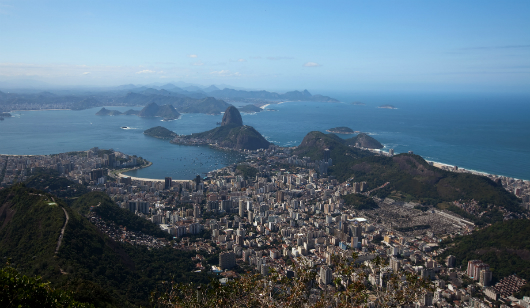
Although developing countries have not necessarily experienced as significant a rise of a distinct creative class, middle-class residents of the community as well as significant tourist populations have completely redesigned global cities. Specifically, some poor shantytowns—favelas—in Rio de Janeiro, Brazil have experienced a complete upheaval of population and culture to cater to new, wealthier residents.
“Pacification programs” that officials applied in the past fifteen years, especially those immediately before Rio’s hosting of the 2014 World Cup and leading up to the 2016 Olympics, have done as much harm as good.
Favela residents report that areas that were once slums, full of rampant drug gangs, violence and poverty, are now safe places to live, policed by a permanent security presence. Increased security in favelas has attracted a population with a sense for business and entrepreneurship, which keeps the economic interests growing.
Foreigners have recently entered the housing market in favelas in Rio and are buying property more frequently than locals. As tourists no longer have to pay taxes to drug gangs, many foreign and native residents advertised their property for temporary stay on the Airbnb website during the World Cup and Olympics.
As the value and popularity of the city increases with new construction and business opportunities, property prices have risen dramatically. Houses that cost $2,500 in 2006 cost $75,000 in 2014. As a result, whole socioeconomic groups no longer have the ability to live in the favelas that they once called home. Current residents are also struggling with rent increases and displacement, and are being forced to move to more dangerous favelas.
Ebilene Rodriguez Periera, a 54-year-old resident of a favela in Vidigal, an area in Rio, said that the new hotels and restaurants are being built for foreigners, “not for us.” Veronica Mora, another resident of a favela in Santa Marta, detailed community resistance against rent increases, demolitions and evictions.
“For years, the authorities did nothing when it was so dangerous to live here. Now that the area is finally safe, they want us to move out,” said Mora.
American researcher and former resident of Santa Marta, Charles Heck, finds that pacification programs—essentially government-sponsored gentrification programs—have changed urbanization and urban regeneration policies. Many new urbanization policies now deny current residents basic trash, water and electrical services in what some urban theorist experts call an attempt to force residents out. Gentrification in Rio de Janeiro has resulted in Rio’s strategic plan to provide for a 5% reduction in favelas from 2013 to 2016.
“Post-UPP, urbanization has focused primarily on land titles and new businesses rather than health, sanitation, education and other infrastructure,” said Heck.
The U.N. has critiqued Rio’s implementation of gentrification policies in the past, as an organized governmental effort to include residents of favelas in urban plans is essential to a thriving city. Inclusion of large social and socioeconomic groups encourages citizen participation and increases the viability of solutions to social justice issues in Portland and Rio de Janeiro alike.
– Paulina Menichiello
Sources: Business Insider, NPR, Oxford Dictionary, The Guardian
Photo: Flickr

Financing Global Health
With the closing of the Millennium Development Goals window and various summits regarding foreign policy, international development and global health reform, the way that we fund many projects and initiatives is changing. The introduction of the Sustainable Development Goals, expected this fall, will redirect funds and call for new investment strategies.
The Development Goals outline specific targets for improving health worldwide, which facilitates investment for major donors. With the anticipated adoption of the lengthier Sustainable Development Goals, there is concern over whether or not the lack of a very specific, short list of aims could complicate and subsequently stall funding. The broader targets group things like communicable diseases together, where as in the past diseases had been separate goals. However, the past focus on specific individual diseases did give way for some unpredictability. For example, with such focus individual countries would oftentimes focus on specific diseases, so when a primary benefactor experienced some political or economic instability, so did the projects that they were funding. The introduction of the Sustainable Development Goals will shift funds from aims such as HIV/AIDS prevention, maternal mortality and child mortality, which typically receive the most aid, to new aims more focused on sustainability.
As we transition into more of a sustainability mindset, consideration of where the funds are coming from is increasingly important. In the past, the majority of funds in developing countries for development projects have come from foreign actors. If the aim of these goals, in the long-run, is sustainability, it would make sense that we would focus on helping these countries finance the projects domestically. This would involve continuing some financial aid, but also providing additional and extensive educational aid, to give people both the means and the tools to make sustainable changes to improve the health of their nations.
We will continue to see more collaboration on how to come at the new set of goals in terms of financing. One topic to be frequently discussed is how to use existing funds in more useful ways to minimize the additional capital needed to combat the updated list of health and development problems. Ways that can help include developing and disseminating tools, creating policies that minimize corruption and streamlining fund allocation specifically to targeted development projects. The new set of goals calls for in-depth analysis of past development financing and projects as well as development of new strategies and policies, so that the international development community can ease into the transition of alleviating the newly designated most pressing matters in the international community. Financing global health is truly a dynamic issue.
– Emma Dowd
Sources: Devex, Devex, Forbes, Humanosphere
Photo: World Affairs Council
Gentrification in Rio de Janeiro
Many believe that gentrification is a purely American and European phenomenon in which large numbers of college graduates move to cheap, urban areas and open yoga studios, green markets and “hipster” coffee shops. However, gentrification is not only a global occurrence but also an established urban renewal and regeneration strategy in all corners of the world.
The Oxford Dictionaries define “gentrification” as the “renovation or improvement (of a house or district) so that it conforms to middle-class tastes.” Middle-class tastes in American cities like Portland, Seattle or New York City usually relate to the rise of what sociologists term the “creative class”—a group of young people entering the workforce concerned with personal expression and technological advances more than monetary progress. Professor and urban studies theorist Richard Florida found that one-third of Americans belong in the creative class.
“I define the Creative Class to include people in science and engineering, architecture and design, education, arts, music and entertainment whose economic function is to create new ideas, new technology, and new creative content,” said Florida.
Although developing countries have not necessarily experienced as significant a rise of a distinct creative class, middle-class residents of the community as well as significant tourist populations have completely redesigned global cities. Specifically, some poor shantytowns—favelas—in Rio de Janeiro, Brazil have experienced a complete upheaval of population and culture to cater to new, wealthier residents.
“Pacification programs” that officials applied in the past fifteen years, especially those immediately before Rio’s hosting of the 2014 World Cup and leading up to the 2016 Olympics, have done as much harm as good.
Favela residents report that areas that were once slums, full of rampant drug gangs, violence and poverty, are now safe places to live, policed by a permanent security presence. Increased security in favelas has attracted a population with a sense for business and entrepreneurship, which keeps the economic interests growing.
Foreigners have recently entered the housing market in favelas in Rio and are buying property more frequently than locals. As tourists no longer have to pay taxes to drug gangs, many foreign and native residents advertised their property for temporary stay on the Airbnb website during the World Cup and Olympics.
As the value and popularity of the city increases with new construction and business opportunities, property prices have risen dramatically. Houses that cost $2,500 in 2006 cost $75,000 in 2014. As a result, whole socioeconomic groups no longer have the ability to live in the favelas that they once called home. Current residents are also struggling with rent increases and displacement, and are being forced to move to more dangerous favelas.
Ebilene Rodriguez Periera, a 54-year-old resident of a favela in Vidigal, an area in Rio, said that the new hotels and restaurants are being built for foreigners, “not for us.” Veronica Mora, another resident of a favela in Santa Marta, detailed community resistance against rent increases, demolitions and evictions.
“For years, the authorities did nothing when it was so dangerous to live here. Now that the area is finally safe, they want us to move out,” said Mora.
American researcher and former resident of Santa Marta, Charles Heck, finds that pacification programs—essentially government-sponsored gentrification programs—have changed urbanization and urban regeneration policies. Many new urbanization policies now deny current residents basic trash, water and electrical services in what some urban theorist experts call an attempt to force residents out. Gentrification in Rio de Janeiro has resulted in Rio’s strategic plan to provide for a 5% reduction in favelas from 2013 to 2016.
“Post-UPP, urbanization has focused primarily on land titles and new businesses rather than health, sanitation, education and other infrastructure,” said Heck.
The U.N. has critiqued Rio’s implementation of gentrification policies in the past, as an organized governmental effort to include residents of favelas in urban plans is essential to a thriving city. Inclusion of large social and socioeconomic groups encourages citizen participation and increases the viability of solutions to social justice issues in Portland and Rio de Janeiro alike.
– Paulina Menichiello
Sources: Business Insider, NPR, Oxford Dictionary, The Guardian
Photo: Flickr
Madrasas Alleviating Poverty in India
Walk into a Dar-al Uloom (a house of knowledge) in India, and you will hear what sounds like the buzzing of bees. It is the sound of hundreds of students reciting The Holy Qur’an, the Muslim holy book, as part of their daily studies. But you may be surprised to know that many students reciting the Qur’an are Hindu.
The madrasa is one of the most important institutions for millions of Muslims and Hindus in India. For the millions of children that attend them, they are a means to alleviate poverty in India.
Madrasa is an Arabic term meaning place of study and specifically refers to schools that teach an Islamic curriculum. Institutions vary greatly from the countries they are in, the subjects they teach and the ideologies they adhere to. The only common denominator are that they are administered by Muslims and incorporate some form of Islamic coursework.
Many madrasas receive their bad wrap from the small fraction of institutions that spread Wahhabism and are associated with terrorism and global threats. These institutions are catapulted to the spotlight and used to paint a broad picture of all madrasas as breeding grounds of fanaticism, but this is not true.
Madrasas in India are established Islamic seminaries that provide many children with the opportunity to receive basic education and life skills. These are opportunities that they would otherwise be unable to receive on their own due to living in extreme poverty.
In India, madrasas are also a strong pillar of community services. They offer boarding for many orphaned students and provide young women with access to basic education and skills such as cooking and sewing opportunities they would not have access to if madrasas did not exist in their villages.
For years, madrasas have worked to incorporate modern education alongside their religious curriculum. In West Bengal, nearly 600 government recognized madrasas are teaching mainstream curriculum and have a healthy non-Muslim population of students.
Anwar Hossain, the headmaster of the Orgram madrasa in India located 125 kilometers north of the state capital, Kolkata, says that it is mostly the madrasa’s modern curriculum that has made the institution increasingly popular in the Hindu-majority society.
The benefits of such madrasas in India are numerous in fighting poverty in a country with an enormous population of impoverished citizens. Student’s fees are very cheap or free for all students who cannot afford them. This is because many madrasas are funded privately by donors and are occasionally state sponsored. The madrasas also offer free uniforms for their students and a free meal every day, helping low income families provide food for their children.
Graduates of such madrasas are accepted into universities to study a variety of subjects. Madrasa graduates are going on to become scientists, doctors, engineers and other professionals, which is attracting more and more youth who feel they have a chance at a better life.
The madrasas are also working to bridge understanding and cooperation between Hindus and Muslims in India. University of North Eastern Hill professor and social activist Prasenjit Baswas says, “madrasas based on strong intellectual traditions that draw from other cultures and religions can help overturn the historical divide between Hindus and Muslims.”
With the help of proper funding and aid, many madrasas are reforming their curriculums in an attempt to empower graduates with the tools to combat poverty in India. However, this month the Indian government has de-recognized certain madrasas stating they are not teaching proper modern curriculums.
Instead of de-recognizing madrasas, more support and aid is needed to make sure that such institutions are given the tools necessary to reform, which will in turn help prevent youth from becoming radicalized. This process is not only beneficial to India, but the world as well.
– Adnan Khalid
Sources: Al Jazeera 1, Al Jazeera 2, New York Times
Photo: FT
Portable Sinks Offer Solution in Cambodia
Hand washing, WaterSHED asserts, is key to preventing diarrhea. However, in a country like Cambodia, where 80 percent of the population lives in impoverished rural areas, hand washing often gets left by the wayside.
Enter the LaBobo, a portable, inexpensive sink whose bright colors are designed to engage children in the hygiene process. Each unit costs $15 and is capable of dispensing up to 15 liters of water.
The LaBobo, which was designed with input from Vietnamese families in the Mekong Delta, is built with a low-flow spout that acts as a means to conserve water. The sinks are designed to be child-accessible and are also outfitted with a soap dish, which promotes the full hygiene routine.
WaterSHED asserted in a recent press release: “If we consistently wash our hands at critical times, especially after using a toilet or before preparing food, we can prevent nearly half the cases of diarrheal disease and one third of the cases of other potentially fatal infections, according to the World Bank.”
According to Om Prasad Gautam, technical support manager with charity WaterAid, improved hand washing habits also help to promote the impact of other health initiatives.
However, in a study conducted of 79 households throughout Cambodia, researchers from the University of North Carolina, Chapel Hill and University of California, Davis found that a mere five percent of these homes were outfitted with “dedicated hand-washing equipment.”
This is a shortage that WaterSHED regional program manager Geoff Revell understands.
“If you give people a bucket and a piece of soap, more often than not you will find the bucket ends up being used for something else,” Revell said. “But if they spend some money on a product they like and actually want to own, it’s much more likely that they will keep using it and form a healthy habit of washing their hands regularly.”
The LaBobo is designed to meet the need for dedicated hand-washing equipment by virtue of its clear function as a sink and its appealing design, which has already engaged the households serviced by the 10,000 LaBobo units sold in Vietnam.
In Cambodia, where proper sanitation is still a challenge and a mere 44 percent of the population has access to both soap and water, small steps toward improving hand washing practices represent enormous progress. Cambodia has one of the greatest under-age-five mortality rates in the world, but with tools like the LaBobo on their side Cambodia’s children are cleaning up their hygiene act.
– Emma-Claire LaSaine
Sources: WaterSHED, Huffington Post, Trust.org
Photo: WaterSHED
6 Reasons Cob Houses Could Shelter the Poor
6 Reasons Cob Houses Could Shelter the Poor
1. Cob is one of the world’s most common building materials. It is similar to clay, but is a mixture of lumps of earth, sand, and straw. These materials are not difficult to obtain and are often incredibly cheap.
2. Because it does not use bricks, wooden structures, or particular forms, it is easy to shape. Historically, cob houses were shaped and mixed by people through shoveling and stomping, or by large animals, such as horses and oxen. There are many natural builders who consult and help train people to build with cob.
3. Cob houses are perfect for extreme conditions; they are cool in the summer and warm in the winter. They are ideal for places of either cold climates or desert conditions. They can absorb substantial amounts of rain without softening. Only when it is completely submerged with water will it become more likely that the home with erode with time. However, with a sturdy roof and thick walls, it will be nearly impossible to drench and destroy the house.
4. Using cob as a building material does not contribute to deforestation and pollution. By building homes out of cob, builders conserve and protect the environment.
5. Everyone appreciates the opportunity to add personal touches to their home. Cob houses can be easily and quickly painted with clays and natural dyes.
6. Cob houses stand the test of time. Some of the oldest enduring cob homes are in Devon, England and New Zealand. However, Africa, India, and the Middle East also have a long history of cob construction. One of the most notable is the Emara Palace in Najran, Saudi Arabia. In south Yemen, there is a cob city called Shibam. Near the border of Ghana, Africa, there are many towns filled with cob homes. If these buildings have lasted 100 plus years, cob houses are proof that we can shelter the poor in sturdy, protective, and lasting homes.
– Kelsey Parrotte
Sources: Barefoot Builder, Cob Cottage Company, Devon Earth Buildings, Inspiration Green, Network Earth
Photo: Inspiration Green
India Aims to Eradicate Lymphatic Filariasis
LF, like other NTDs, is preventable. In many cases across the world NTDs infect millions in extremely poor regions because there is no treatment available.
In India this is not the case; treatment is being made widely available. The Indian government has recently launched an ambitious goal of eradicating LF, providing treatment to around 460 million people in 17 different Indian states.
The reason LF remains present in India today is due to lack of disease awareness and education surrounding the disease. There is also a general suspicion towards pharmaceuticals distributed by the government or by large organizations. For these reasons, people simply do not consume the pills they receive.
Almost half the population of India is at risk of contracting LF. LF takes around eight to ten years to begin visibly showing its damage; and this delay often makes people forget about the danger of this NTD. Prevention of LF, despite the public’s hesitancy toward it, is extremely easy. It requires only the consumption of pills.
To raise awareness about LF and prevention and to try to persuade Indians to take the pills they receive, The Indian Ministry of Health and Welfare along with the Global Network for Neglected Tropical Diseases has created a public service campaign called “Hathipaon Mukt Bharat” or Filaria Free India in the hopes of eradicating LF through education on the disease and the importance of pill consumption.
The creative campaign includes three TV and cinema videos in 10 languages; radio, newspaper and print, cellphone, and online advertisements are also a part of the campaign. The goal is to create awareness and a shared sense of nationalistic determination to unite all and help eradicate the disease.
Research indicates that in advertisements, audiences react much more strongly to positive messages. And the campaign is simple and uplifting, that LF pills are safe and free, and together India can overcome LF. Powerful imagery also captures the audience’s attention; a man in late stages of LF stands disfigured at a small hospital clinic. He explains to children how he “never thought it would happen to me.”
India is a diverse country, celebrating over 780 languages. The background music of the campaign is in Sanskrit,the language of ancient India that many religious texts are written in. It is not spoken today and only a few scholars and religious people know how to read it. It unites the country with its rich history. The lyrics translate to “Every sign or indication leads us to the path of knowledge. And the journey across that path of knowledge leads us to absolute truth.”
Over 200,000 health workers in 14 Indian states were involved in the initial campaign drive. They helped expose over 300 million people in India to information on LF.
“India has made great strides over the last decade to eliminate lymphatic filariasis in endemic states and we are now on the verge of reaching elimination targets nationally. However, the last mile of the journey is often the most difficult. We are employing a wide range of new communications tactics and partnerships that will help us encourage all people at risk from this disease to consume their free dose of medicine during our annual mass drug administrations” explained Mr. C.K. Mishra, Additional Secretary and Mission Director of the National Health Mission at the Ministry of Health & Family Welfare.
– Margaret Anderson
Sources: WHO, Impatient Optimists, Sabin
Photo: National Geographic
Fighting Corruption 101
One key strategy used to fight institutional corruption, is to keep governments accountable. Accountability is only achievable by watching the government. Watching the government and people in office requires transparency. Too many secrets in government can keep corrupt practices under the covers and away from the eyes of the fourth estate – journalists.
Journalists are a critical to keeping governments and officials accountable to the people they preside over. Without transparency of government affairs, journalists’ ability to do proper reporting is often compromised, and this system of checks-and-balances becomes weakened. Corruption can be held back by vocal journalists with access to government documents and news, so that they may raise concerns and questions to the general population.
Corruption is also made easier when the bureaucracy grows too large and unwieldy. The farther the public is from the top levels of government, the easier it is for someone in between to take advantage of his or her own position. Minimizing red tape means there is less of an opportunity for someone to be corrupted. There is a correlation between high levels of pointless and unhelpful regulation, and corrupt practices in government.
A third method to reducing corruption, and one of the most effective – but difficult to quantify and implement – is to simply create stronger institutions of governance and regulation. A strong institution is one that has loyal employees and is immune to most corruption because of its own internal integrity. Paying good wages and benefits to government workers is highly effective in working against corruption because the monetary incentives for corruption would be severely weakened by good wages.
Introducing technology to handle tasks is also an effective way to reduce corruption. It’s much harder to cook the books or do other similar elicit activity when software takes care of the work on its own and can spot irregularities.
Fighting corruption is imperative to creating conditions in which poverty can be systematically eliminated. Corruption often manifests itself through rent-seeking behaviors where regulators are “captured” (corrupted by the people that would have been regulated), and these behaviors are often very regressive against the poor because of their lack of political voice in most cases. Reducing corruption is also beneficial to local economies because it allows outside investors to have greater interest in the region, due to less risk of higher sunk costs.
Corruption is detrimental to the economy and bad for the poor. Using these aforementioned strategies can help eliminate the culture of corruption in many developing nations, as well as already developed ones.
– Martin Yim
Sources: World Bank, European Commission, IMF
Photo: World Bank
Angonix is Connecting Angola to the World Wide Web
Angonix will change the connection performance. Content delivered by outside sources had provided minimal performance and high latency. The main goal of Angonix is to ensure every member connected to the platform will have low latency and improved content.
Angonix is operated by Angola Cables, who also oversee the connectivity of Angola with the world’s undersea fibre-optic cables. With Angonix, quality service to content will enable the progression of African Internet outreach and global connection. Places in Africa, such as Zambia, still rely on satellite Internet connectivity, which is ultimately unreliable.
Launched March 16, 2015, the expected traffic has enhanced quality content especially in exchanging information between clients and providers. In the past, local clients had to travel some distance to interconnect. This was thanks to configuration problems of network providers.
Working to minimize that distance, providers will have easy access in communicating with clients and vice versa. This development is meant to dramatically change the African Internet landscape. It’s been designed to reach beyond Angola and to help provide low latency between Africa, East Asia and the Americas.
iHub is an online and offline community that hosts a place for 50 companies to connect to clients and has held 500 events. It is a space for online developers working with technology software and is a very well known site in Africa.
Sites like this need to be able to connect elsewhere on the continent. Governments are currently struggling with net neutrality debates and whether or not laws should be in place to support investments that connect rural Africa to enabled environments.
Fibre-optic cables are still needed in South Africa to improve Internet access and link those citizens to the world. The problem is that homes and businesses cannot connect.
Rural Africa is the untapped market. Lesser-developed regions such as Somalia had 200 users in 2000, but 163,185 users in 2014 with a population of 10 million. The Congo Democratic Republic had 500 users in 2000, but 1.7 million users in 2014 with a population of 77 million.
The Communication Commission of Kenya reported 330 thousand mobile users in 2001, and 30 million in 2013. The Angola population had 30 thousand people using the Internet in the year 2000, and 4 million in 2014 with a population of 19 million. Kenya had 200 thousand Internet users in 2000, but 21 million users in 2014 with a population of 45 million.
In sub-Saharan Africa there are over 754 million connections and over 35 mobile networks operators. An SMS-based banking system called M-Pesa in Kenya transfers $24 million daily. Zimbabwe’s EcoCash signed up 2.3 million people in more than a year, after starting in 2011. More than a million accounts push $200 million through EcoCash monthly.
Yet, the continent produces less than one Terabits per second. Angola produces 20 gigabits per second. The demand of improved, constant Internet access is supposed to raise Terabit per second to 10 by 2020, according to TeleGeography.
Projects like West African Cables Systems and South Africa Cable Systems improve connectivity as Angonix improves capacity services. With this, better quality increases capacity of performance, communication and outreach.
The Southern African Development Community has advanced its Internet market. The opportunity for expansion and innovation comes from this improvement. Angola Cables is working to better the growth of Africa with its new technologies in providing services. By improving outreach to the World Wide Web Africa’s communication and business, practices will continue to enhance and expand to rural areas.
– Katie Groe
Sources: IT News Africa, Angola Cables, Angonix 1, Angonix 2, UN, Internet Word Stats
Photo: Africa 21
In Brazil, Breastfeeding Positively Correlates with Education Level
What do breastfeeding, IQ range, education, and income all have to do with each other?
In Pelotas, Brazil, a recent study reveals the long-term benefits of breastfeeding. While the short term health and nutrition benefits have been widely acknowledged, this study has discovered new and exciting benefits to breastfeeding.
Here are the two key findings:
1. Duration and predominance of breastfeeding are positively associated with IQ, educational attainment, and income.
2. There is a dose-response association with breastfeeding duration for IQ and educational attainment.
The study was implemented with a population-based birth cohort from 1982. Information about breastfeeding patterns was recorded in early childhood. 30 years later, information related to IQ, levels of education, and income was collected.
Participants who were breastfed for at least 12 months had higher IQ scores, more years of education, and even higher monthly incomes compared to those participants who were breastfed for less than one month.
These results could have important implications for developing countries and the reduction of poverty. It is critical that mothers are supported in breastfeeding. It is recognized that there is not a direct causal link. However, the long-term results from this study could imply that children who are breastfed are more likely to achieve the education that will help them provide for their families. This offers them the opportunity to draw their communities out of poverty.
While breastfeeding is not the only factor related to potential education attainment and income, this study demonstrates that it is an important one. Further evaluation is needed to understand how programs can disseminate information about the long-term benefits of breastfeeding and support parents in this decision.
– Iliana Lang
Sources: The Lancet
Child Poverty Indicators and What They Mean
On September 2000 at the Millennium Summit, world UN leaders decided to enact the UN Millennium Declaration, a document which asked the world community to meet 8 goals by 2015. As 2015 is upon us, many countries are struggling to meet every goal, but there is no denying that this commitment was a good benchmark for development. Due to the goal’s relative success and the apparent need for more time, many in the international community have begun to developed a new set of goals called sustainable development goals (SDGs), which will allow countries to progress in a mildly regimented fashion. In order to assure world leaders that these goals are being met, the committee has developed a set of indicators which will track different contries’ progression as it rises from poverty.
The first sustainable development goal aims to eradicate extreme poverty—indicated by families who live on less than $1.25 per day—for all people, everywhere, by the year 2030. The proposed indicator for families living in extreme poverty is the percentage of the population living on less than $1.25 a day, disaggregated by the age of the population. This allows the committee and the global community to effectively measure how many children are affected by extreme poverty, and thus take action against it.
Another sustainable development goal will work toward reducing the number of men, women and children living in poverty by any and all of its definitions throughout the world by at least half by 2030. The committee has proposed to indicate this poverty by monitoring the percentage of children (ages 0-17) living below the poverty line and the percentage of children living under multidimensional poverty. This is a lofty goal but there are several task forces and global initiatives that have been enacted to combat this type of poverty.
The global community is finally realizing the importance role children play in world progress. Poverty affects families throughout the world, even in developed countries such as the U.S., where 1 in 8 children go hungry every day. By focusing on children, society is creating a much stronger future; children are the future leaders and decision makers of our world, and by improving their standard of living and providing them with better educations, we can create a world of well-educated, caring individuals.
By introducing child poverty indicators, the global community has created a definitive line, which marks the division between poverty and extreme poverty. In enacting these methods of measurement, it will soon become easier to identify which nations require more assistance and what exactly needs to be done. The sheer existence of such indicators shows the international communities’ heightened awareness of the impact children will have on our societies and the importance of a healthy childhood.
The Millennium Development Goals were the first step in a long path led by the United Nations, and they have helped the global community progress immensely. If we focus on sustainable development and allow society to progress in a ways that benefit everyone, including the environment, we can create a much happier, healthier and caring world.
– Sumita Tellakat
Sources: UNICEF, UN Millennium Project
Photo: Poverties.org