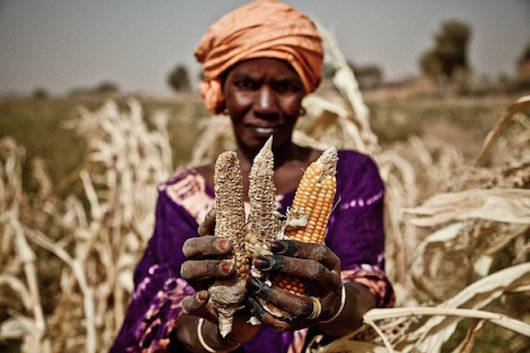
 Technology and partnerships are crucial when it comes to poverty eradication. According to the Global Resilience Partnership, investing in innovation and cooperation is not only a game-changer but also the key to building resilience and prosperity for the poor.
Using its network to bring the public and private sectors together to work toward resilience and high impact innovations, the Global Resilience Partnership intends to put an end to vulnerability creating community issues through multi-sectoral collaboration.
With cooperation between the organization’s partners – the Rockefeller Foundation, USAID and the Swedish International Development Cooperation Agency (Sida) – the organization is currently engaged in eight projects to build long-term resilience in the Horn of Africa, the Sahel and Southeast Asia.
Global Resilience Partnership is hoping to foster the capacity to recover quickly from issues such as climate change, food insecurity and population growth in impoverished communities through technological innovation and multi-sectoral resource sharing.
Countless aid organizations have observed the devastating impact on development that communities face after a disruptive event. It has also been seen that the ability of a community to bounce back from a disaster or crisis is time-sensitive. The longer that a community remains disrupted, the more difficult it is to get back on track.
The theory behind this drive for partnership is that each sector holds a piece of the puzzle to creating resilience and prosperity for the poor. Individually, efforts are only a fraction of the solution. It’s when the pieces are put together that the bigger picture of a lasting solution is achieved.
Executive Director Dr. Luca Alinovi stressed the importance of this theory even more in a letter calling for continued investment in resilience in 2016: “We will only make progress when we start to ‘join the dots’ and activate different stakeholders to talk to each [other], work together and make each other stronger.”
Connecting the dots must be done on three levels: global, regional, local.
Globally, the Rockefeller Foundation, USAID and Sida have collectively invested $150 million to increase global resilience and establish regional collaborations.
Regionally, partnerships are developed, utilizing and supporting collaboration between local level connections. Currently, the organization is still focusing heavily on this phase of regional partnership development, which is arguably the most critical phase in establishing a lasting and impactful local level solution.
Once at a local level, the organization will mobilize and encourage local and regional institutions, the private sector, governmental development agencies, nongovernmental organizations and humanitarian organizations to work together on the behalf of local communities to help increase prosperity for the poor.
“When we foster resilient livelihoods, men, women and families are better able to cope with chronic stresses and acute disasters,” wrote Alinovi. “A resilience mindset is proactive, focused on root causes, systematic changes and long-term impacts. Resilience is critical to achieving all of our ambitious global goals from eradicating hunger to ending extreme poverty.”
But the establishment of resilience solutions and multi-sectoral cooperation is easier said than done and requires a strategic plan to accomplish its goals. As Henry Ford, founder of the Ford Motor Company, said, “Coming together is a beginning; keeping together is progress; working together is success.”
The Global Resilience Partnership clearly agrees with this sentiment. The organization’s formula for success hinges on “programs that help surface innovation and long-term collaboration amongst the region-wide ecosystem of diverse local actors.”
Starting with a foundation of analytic diagnosis of a region’s problems, followed by the mobilization of a collaborative team to address the identified problems, solutions are developed to meet the unique circumstances. These solutions are then shared with the network and beyond to inspire free and radical change.
Through Global Resilience Partnership’s commitment to creating resilience and prosperity for the poor and vulnerable, the organization is paving the way for a new way of thinking about aid and development. As Alinovi put it, “Technology is a problem-solver, and the acceleration it provides is giving us the chance to make the difference.”
– Claire Colby
Sources: Global Resilience Partnership, The Guardian
Photo: CGIAR

5 Global Poverty Infographics Show 2015 Progress
Global poverty is not “too big” to fix but it won’t be solved overnight. Progress is attainable and 2015 was a landmark year in many ways. New data revealed historical progress was achieved, innovative development strategies were pursued and the fight against global poverty continued.
While global poverty persists in 2016, these five global poverty infographics show what the fight looked like last year, how far the global community has come and the importance of continuing the fight this year.
Infographic #1: For the first time, fewer than 10 percent of people in the world were living in extreme poverty.
Making headlines, the World Bank measured extreme poverty at its lowest level ever. Rising prosperity in countries such as China and India contributed to the reduction. The decrease is also considered a success for the U.N.’s Millennium Development Goals (MDGs), the first of which aimed to cut poverty rates in half between 1990 and 2015.
Infographic #2: What are the SDGs about?
While 2015 was the target year for the MDGs, it also kicked off the Sustainable Development Goals (SDGs). Taking stock, the international community assessed, applauded and reconsidered what the MDGs accomplished and didn’t. Now, the SDGs aim to carry that momentum forward.
Infographic #3: The 2015 Data Report: Putting the Poorest First.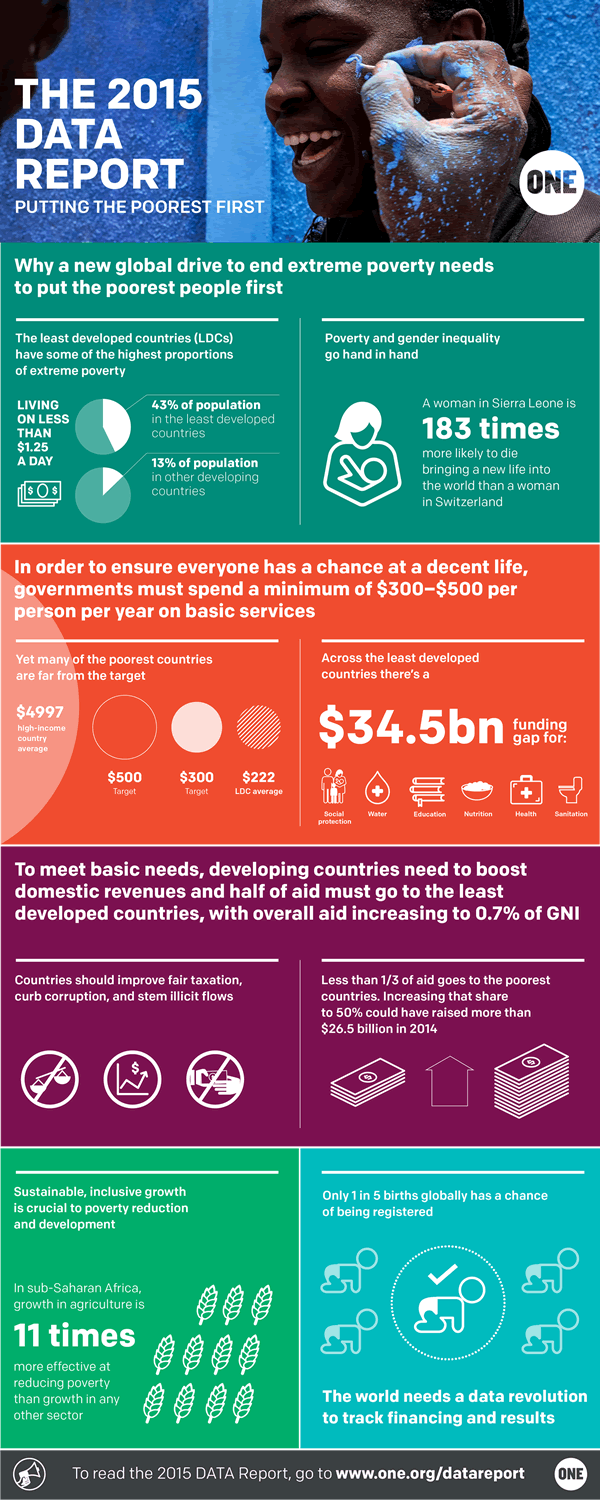
Data was center stage in 2015 and will continue to be this year. Increased access to data throughout the world has helped aid organizations better understand the dynamics of global poverty. The ONE campaign compiled their data into the 2015 report and advocated for providing aid to the least developed countries first.
Infographic #4: Why invest in women?
USAID is targeting female populations to maximize the impact of aid and investment. In addition to advocating for gender equality, numerous governments and NGOs have observed women multiplying the benefits they receive and uplifting the greater community.
Infographic #5: Managing the impacts of climate change on global poverty.
These global poverty infographics show that despite success in reducing global poverty rates, the future holds more challenges and uncertainties, such as climate change. In the lead-up to the UN Climate Change Conference, the World Bank raised awareness that climate change may ultimately increase poverty rates. To mitigate this, the World Bank and other organizations began calling for sustainable, “climate-smart” development to ensure poverty reduction continues.
– Cara Kuhlman
Sources: The New Yorker, EurActiv, ONE, USAID, World Bank
SOS Children’s Villages
SOS Children’s Villages is a nonprofit group whose mission is to provide every child with the opportunity to grow up in a loving home to secure their futures as successful adults.
This international organization was founded in 1949 by Hermann Gmeiner to help orphaned children in Europe rebuild their lives after World War II. Now, SOS Children’s Villages sponsors vulnerable children and fragmented families in 125 countries, across 12 different continents, with headquarters in Cambridge, United Kingdom.
SOS Children’s Villages aims to help families stay together by offering community outreach programs that provide each family with a development plan designed specifically for their needs.
The nonprofit offers aid to children who have lost their parents, those living in an orphaned household and those whose parents suffer from a life-threatening disease. Funding for these villages comes from donations, volunteer workers, corporate partnerships, fundraising and sponsorships that offer donors the chance to support an orphaned child.
Each child that lives in an SOS village receives guaranteed education and health care. Nearly 100,000 children are enrolled in 187 SOS primary and secondary schools. Tens of thousands of people attend the 51 SOS vocational training centers created to enhance employment opportunities.
“If SOS Children was not here, our children would have become street children, with all the risks this may cause. Today, we are proud of ourselves, and many of us have found dignity. We can now stand on our own feet,” said a mother in Dakar, Senegal, now able to find financial independence thanks to an SOS outreach program.
With 150 SOS villages in 45 African countries, more educational projects are run in Africa than in any other continent. According to UNICEF, educating young people can support economic resilience and stability, as children learn to address family vulnerabilities and gain skills for future employment.
A total of 79 SOS medical centers have been built by the organization, primarily in Africa and the Middle East. In more remote areas that lack clinic access, SOS children train local people in the medical field, passing on first-aid skills and health advice garnered from SOS family health awareness campaigns.
Because vulnerable children often live in non-democratic societies, SOS prides itself on strong communication with central and local governments that hold legal responsibility for the welfare of these children. According to SOS, this has allowed them to bring aid to children in Zimbabwe, where other organizations have been asked to leave.
“As a result of the various economic opportunities that were created for many vulnerable families since the inception of the project [SOS Children’s Villages Ghana], more than 78 percent of caregivers have become more self-reliant and are capable of accessing social services like health, education, water and sanitation without external support,” said Alexander Mar Kekula, National Director of SOS Children’s Villages Ghana.
– Kelsey Lay
Sources: Ghana Web, SOS Children’s Villages 1, SOS Children’s Villages 2, SOS Children’s Villages 3, SOS Children’s Villages 4, SOS Children’s Villages 5, UNICEF,
Photo: Flickr
Digital Tech Saving People from Natural Disasters
According to “Digital Dividends,” an annual development report put out by the World Bank, greater strides must be made to connect more individuals to the Internet and to create a space that unchains the benefits of digital technologies for all.
Access to the Internet is crucial in vulnerable regions before, during and after a disaster occurs. Organizations like the Global Facility for Disaster Reduction and Recovery (GFDRR) have begun to create a wide range of tools that will deal with disaster risk management — but the tools rely heavily on the Internet’s unlimited potential.
Natural disasters can cause terrible damage, especially to the poorest parts of the world. As efforts step up to improve the Internet’s reach across the world, the GFDRR has helped over 160 million people in 60 countries gain improved access to risk information. Using its Open Data for Resilience Initiative (OpenDRI), the GFDRR also helps countries to establish open disaster information platforms.
Innovative approaches to disaster risk, such as crowdsourcing and social data mining, also expand the information base quickly and cheaply. OpenDRI’s community mapping projects deploy local citizens to collect and maintain data about the environment and how it changes during the different stages of a disaster.
By allowing more people to have access to digital tech, not only will they have access to better jobs and opportunities, they will have first-hand knowledge and awareness of impending disasters heading their way. Digital technology also encourages tighter-knit collaboration with the different parts of a region’s government and the private sector.
A prime example of using crowdsourcing to save lives, the FloodTags project is developing a tool to utilize data via Twitter for eye-witness flood observations. Concepts like this provide a constantly updated understanding of the situation, hopefully saving lives that would otherwise be lost in disasters.
After floods hit Jakarta, Indonesia in February 2015, tweets peaked at about 900 per minute, with a major number including information about location and water depth. FloodTags then utilized this information to devise a method for creating real-time maps based on the messages and regional statistics.
While digital tech like FloodTags and GFDRR’s OpenDRI system have steadily improved and saved lives over the last few years, they fall short in areas that do not have access to the Internet. For digital tech to aid everyone everywhere in the world, the remaining countries need to eventually close the gap in Internet access.
– John Gilmore
Sources: GFDRR, Reuters, WE Forum
Picture: Google Images
Facts About the Reach Every Mother and Child Act
Every day, approximately 800 women, almost entirely from developing countries, die from preventable causes related to pregnancy and childbirth. The risk of a woman dying in childbirth is 47 times higher in Africa than in the United States. More than 17,000 children under five years old will die daily from treatable conditions.
Aiding women during pregnancy, childbirth and post delivery, newborns in their first 28 days and children under the age of five is of utmost importance.
Countries that experience the greatest need and highest burden of maternal and child deaths around the world will be primary targets. This strategy focuses on evidence-based interventions, country ownership, monitoring and evaluating programs, transparency and accountability, sustainability and public-private financing mechanisms.
The U.S. government will work with target countries and donors to implement a five-year plan established by the president to achieve the goal of ending preventable maternal and newborn deaths within a generation.
A Child and Maternal Survival Coordinator role will be created to oversee the strategy and ensure all U.S. government funds appropriated are used for international maternal and child health and nutrition programs.
USAID grants, contracts and cooperative agreements designated for the strategy will include targets for increased implementation of high-impact, evidence-based interventions and baseline measurements to quantify progress.
The president will publicly report on the U.S. government’s progress in implementing the strategy annually. Maternal and child health and nutrition initiatives will be detailed in the report along with descriptions of interventions or program designs, reporting on grants, contracts and cooperative agreements awarded and any innovative public-private financing tools that could be used to fund the strategy.
USAID is authorized to grant loans, set aside funds for the implementation of financing tools and make equity investments to carry out provisions of this act.
As of Jan. 29, 2016, the act has received bipartisan support from 37 Democrats and 28 Republicans in the House of Representatives and six Democrats and five Republicans in the Senate.
– Summer Jackson
Sources: Borgen Project, Senate, Thomas – Library of Congress
Photo: Art Connect International
Innovation Building Resilience and Prosperity for the Poor
Using its network to bring the public and private sectors together to work toward resilience and high impact innovations, the Global Resilience Partnership intends to put an end to vulnerability creating community issues through multi-sectoral collaboration.
With cooperation between the organization’s partners – the Rockefeller Foundation, USAID and the Swedish International Development Cooperation Agency (Sida) – the organization is currently engaged in eight projects to build long-term resilience in the Horn of Africa, the Sahel and Southeast Asia.
Global Resilience Partnership is hoping to foster the capacity to recover quickly from issues such as climate change, food insecurity and population growth in impoverished communities through technological innovation and multi-sectoral resource sharing.
Countless aid organizations have observed the devastating impact on development that communities face after a disruptive event. It has also been seen that the ability of a community to bounce back from a disaster or crisis is time-sensitive. The longer that a community remains disrupted, the more difficult it is to get back on track.
The theory behind this drive for partnership is that each sector holds a piece of the puzzle to creating resilience and prosperity for the poor. Individually, efforts are only a fraction of the solution. It’s when the pieces are put together that the bigger picture of a lasting solution is achieved.
Executive Director Dr. Luca Alinovi stressed the importance of this theory even more in a letter calling for continued investment in resilience in 2016: “We will only make progress when we start to ‘join the dots’ and activate different stakeholders to talk to each [other], work together and make each other stronger.”
Connecting the dots must be done on three levels: global, regional, local.
Globally, the Rockefeller Foundation, USAID and Sida have collectively invested $150 million to increase global resilience and establish regional collaborations.
Regionally, partnerships are developed, utilizing and supporting collaboration between local level connections. Currently, the organization is still focusing heavily on this phase of regional partnership development, which is arguably the most critical phase in establishing a lasting and impactful local level solution.
Once at a local level, the organization will mobilize and encourage local and regional institutions, the private sector, governmental development agencies, nongovernmental organizations and humanitarian organizations to work together on the behalf of local communities to help increase prosperity for the poor.
“When we foster resilient livelihoods, men, women and families are better able to cope with chronic stresses and acute disasters,” wrote Alinovi. “A resilience mindset is proactive, focused on root causes, systematic changes and long-term impacts. Resilience is critical to achieving all of our ambitious global goals from eradicating hunger to ending extreme poverty.”
But the establishment of resilience solutions and multi-sectoral cooperation is easier said than done and requires a strategic plan to accomplish its goals. As Henry Ford, founder of the Ford Motor Company, said, “Coming together is a beginning; keeping together is progress; working together is success.”
The Global Resilience Partnership clearly agrees with this sentiment. The organization’s formula for success hinges on “programs that help surface innovation and long-term collaboration amongst the region-wide ecosystem of diverse local actors.”
Starting with a foundation of analytic diagnosis of a region’s problems, followed by the mobilization of a collaborative team to address the identified problems, solutions are developed to meet the unique circumstances. These solutions are then shared with the network and beyond to inspire free and radical change.
Through Global Resilience Partnership’s commitment to creating resilience and prosperity for the poor and vulnerable, the organization is paving the way for a new way of thinking about aid and development. As Alinovi put it, “Technology is a problem-solver, and the acceleration it provides is giving us the chance to make the difference.”
– Claire Colby
Sources: Global Resilience Partnership, The Guardian
Photo: CGIAR
Major Programs That Lilly Endowment Supports
Lilly Endowment focuses its activities on education, religion and community development. The founders of the endowment had a burning desire to help the people of Indiana; thus, the bulk of charitable initiatives and grants offered by the organization are geared towards activities in Indiana.
Since its inception, various programs have been developed under each of the endowment’s principal focus areas. These are programs that the organization funds on a regular basis.
Lilly Endowment recognizes the importance of education as an instrument of change and development. The organization gives grants to educational institutions and programs that seek to improve the quality of education across Indiana. Emphasis is placed on supporting higher learning institutions in order to increase the number of people with a bachelor’s degree. This is in response to Indiana’s ranking as one of the states with the highest number of people over 25 without a bachelor’s degree.
The three major programs in the education division are the Community Scholarship Program, the Teacher Creativity Fellowship Program and the Summer Youth Program Fund.
Established in 1987, the Teacher Creativity Fellowship Program was developed with the aim of renewing the commitment of educators across Indiana to delivering quality education. During the program, school media specialists, teachers, guidance counselors and principals are given financial backing and time to tend to their personal development and growth.
The Community Scholarship Program was founded in 1998 and seeks to improve the level of higher education attainment in Indiana. The program offers four-year, full tuition scholarships with an additional 900 dollars per year for educational materials. Community foundations in Indiana play an integral role in the administration of the scholarships.
The most recent program that was added to the education section is the Summer Youth Program Fund. Through this program, Lilly Endowment provides grants to organizations that provide constructive and safe activities for children from 4-19 years of age to engage in during the summer. Organizations that receive funding include tutoring centers, churches, community and sports centers, art centers, overnight camps, parks and theaters.
Eli Lilly once mentioned in Madison Magazine that the cause closest to his heart was character education. In order to bring about the development of individuals with moral fibre and upright character, Eli Lilly supported numerous religious causes leading to the establishment of the religious arm of the endowment.
The religious branch of Lilly Endowment seeks to enrich the lives of Christians and congregations across America by improving the capacity of pastors already engaged in the work of ministry and educating a new crop of pastors. They do this through supporting theological institutions and providing opportunities for established ministers to renew their commitment to ministry.
The Indiana and National clergy renewal programs are long-standing initiatives that Lilly Endowment supports as part of its religion arm. Founded in the years 1999 and 2000, respectively, the programs seek to provide pastors with time they can use to recharge their spiritual batteries in order to better serve in ministry. Congregations also use the programs as opportunities to grow the capacities of lay pastors.
The programs both offer grants of up to $50,000 to churches for renewal of their pastors.
Community development is the third major division of Lilly Endowment. Under this section, the organization funds programs that improve the quality of life in Indiana. These are programs that create the kind of economy that can attract lucrative, developmental businesses to the state. Projects and organizations that have received funding in the past include low-income housing projects, neighborhood revitalization projects and arts and culture organizations.
An initiative under community development is the Giving Indiana Funds for Tomorrow (GIFT) program.
Established in 1990, the endowment uses GIFT to support the establishment, growth and success of community foundations in Indiana’s 92 counties. The community foundations, in turn, provide Lilly Endowment with an avenue to improve the quality of life throughout Indiana. The GIFT program has undergone five phases and is currently in its sixth phase.
The continuous growth and expansion of these programs will enable Lilly Endowment to fulfill its overall objective of creating change and fostering development in Indiana.
— June Samo
Sources: Lilly Endowment Community Development, Lilly Endowment Religion, Lilly Endowment Education, Lilly Endowment, General, Learning to Give, ISI News
Photo: TECHPOINT
Pope Francis to Davos Leadership: Fight Inequality
Every year, the World Economic Forum (WEF) gathers the global business, political and academic elite in Davos, Switzerland to tackle the planet’s toughest issues. This year, Pope Francis was once again invited to address the group and his message was clear: fight inequality.
A cardinal from the Vatican read the Pope’s letter to forum members on Jan. 22. It began by thanking the WEF for their invitation but quickly addressed global poverty and inequality: “The financialization and technologization of national and global economies have produced far-reaching changes in the field of labor. Diminished opportunities for useful and dignified employment, combined with a reduction in social security, are causing a disturbing rise in inequality and poverty in different countries.”
The recently published Oxfam report, “An Economy For the 1%,” corroborates the Pope’s views. Increasingly fewer people control more of the world’s wealth. From 1988 to 2011, for example, 46 percent of the global increase in income went to the wealthiest 10 percent of the world’s population.
Pope Francis’s address emphasized that caring for the poor means more than empathizing with their plight. “Weeping for other people’s pain does not only mean sharing in their sufferings, but also and above all realizing that our own actions are a cause of injustice and inequality.” He called on business leaders to create an inclusive future and warned about the “Fourth Industrial Revolution” that is hindering progress to fight inequality.
The “Fourth Industrial Revolution” refers to the coming age of robotics and artificial intelligence in everyday life. On its website, the WEF explains that while this revolution will raise global income levels, it may exacerbate inequality. The Pope wishes that this transformation of society “does not lead to the destruction of the human person – to be replaced by a soulless machine – or to the transformation of our planet into an empty garden for the enjoyment of a chosen few.”
Along with this warning, Pope Francis stressed that the age of robotics also presents an opportunity. With vastly increased productivity, humans will have more resources available for “our common home.” He emphasized that business is “a noble vocation” with the ability to improve others’ lives by providing them with a living wage and meaningful work.
His message is that, besides increasing profit and productivity, business leaders must not forget their duty to create jobs. Through the creation of jobs that pay a living wage, the economic elite lift people out of poverty and provide stability for the many living precarious lives. In the drive for modernization, Pope Francis tells leaders, “Do not forget the poor!”
Since becoming Pope, he has uniquely focused on ending inequality. In his 2016 address to Davos, he urged the global elite to work with that goal in mind. The most powerful people on earth, after all, are the most powerful agents for change.
As for what he recommends, Pope Francis’ words speak for themselves. From his 2014 apostolic exhortation: “Growth in justice requires more than economic growth: it requires decisions, programs, mechanisms and processes specifically geared to a better distribution of income, the creation of sources of employment and an integral promotion of the poor which goes beyond a simple welfare mentality.” Careful planning and action are needed to fight inequality.
– Dennis Sawyers
Sources: Reuters, Rome Reports, Oxfam International, The Holy See (Vatican), World Economic Forum
Photo: Merco Press
5 Ways Addressing Women’s Rights Reduces Poverty
Since the 1970s, women have had a key role in addressing women’s rights in terms of ending global poverty.
There are several reasons for this phenomenon, whether laws in certain countries stimulating this repression or customs in a society. Laws protecting women often remain unimplemented at the national and local levels.
The U.N. Commission for Africa states that women, in particular, suffer from inequality, both socially and economically. It is important to recognize women’s rights implications for the declination of global poverty.
1. It Increases Education Enrollment
Young girls are among the largest of demographics not receiving an education. It is a known fact that women with equal rights become more educated. These women are more likely to participate in the job field. Education results in gaining the skills necessary to obtain work and consequently gain financial resources to rise above the poverty line.
2. It Increases Enrollment in the Job Sector
As women acquire education and skills, they may gain the aspirations of entrepreneurship. The right to education for women also creates future options for labor. Furthermore, as women become educated, their role is expanded beyond child-rearing. Women are then able to obtain a presence in the working field.
3. Women Are More Likely to Participate in Decision Making
Women with legal rights are more likely to own land and therefore to access finance. The U.N. claims that rural women with the right of control over their land increase social and political status. Addressing women’s rights in controlling land boosts bargaining power domestically and empowers their public voice.
4. It Diminishes Dependence
Many women who are impoverished are widows, single-headed households or those who did not have an income to begin with. Addressing women’s rights to education and ownership enables them to earn a living regardless of challenging situations. When women have rights to land ownership and to education, it ensures their ability to provide for their families’ daily needs. Land ownership also decreases the prospects of women being evicted and subsequently sliding into poverty.
5. It Reduces Unpaid Work
Many women spend a lot of time doing household work such as caring for children. Additionally, many women spend a great portion of their day preparing meals and gathering water, during which they resort to paying for childcare. Greater equality in the household would allow women the opportunity to spend time carrying out paid work.
The U.N. states that with access to resources such as financial credit, technical assistance, training and land ownership, the feminization of poverty will diminish.
– Mayra Vega
Sources: U.N.E.C.A., UNDP 1, UNDP 2, UNDP 3, UNDP 4, U.N. 1, Sachs, Jeffrey, U.N. 2
Photo: Africa Agribusiness
Corporate Social Responsibility Investment
CCM reported that the company’s CRA Qualified Investment Fund Institutional Shares (CRANX) ranked among the top one percent of all performers out of 309 government funds during 2015.
According to PR Newswire, CRANX saw about two percent returns in 2015, exceeding the average return for its category. Out of 301 funds, investment research group Morningstar rated the share class with four stars for its $1.8 billion asset portfolio across its three share classes.
“We are equally proud of the Fund’s bespoke impact portfolio and community impact performance, having invested $512 million in 2015 and $5.8 billion since inception in bonds financing economic and environmentally sustainable initiatives,” said CCM chief investment strategist David Sand.
CCM offers shareholders the ability to customize their investments to align with social or environmental missions, in addition to participating in open-ended bond funds that provide liquidity as a part of their corporate social responsibility.
Funds like CRANX offer investors the chance to facilitate change through impact investing – making investments that bring about a social or environmental change as well as a financial return.
CCM’s impact investments have brought great change to areas within the United States. For example, $283 million helped to fund job creation and small business development, $354 million was invested for environmental sustainability and neighborhood revitalization, $33 million helped to create affordable health facilities and 320,000 affordable rental housing units were created.
Canyon Crossing is one of these complexes that offers 180 rental properties to low-income residents of Salt Lake County in Utah. The construction of these buildings, along with the state’s other efforts over the last 10 years, has resulted in a rapid reduction of homelessness throughout the state, according to the Department of Workforce Services (DWS).
According to the African Development Report of 2011, the private investment sector is the driving force behind economic growth and poverty reduction in Africa. The report finds that 80 percent of Africa’s production, two-thirds of total investments and 75 percent of total credit to the economy comes from private sector investments.
Barron’s reports that the popularity of impact investing has grown in the last 10 years and current trends indicate an increase in international impact investing. A survey conducted by Fidelity Investments found that a quarter of respondents plan to invest their impact portfolios overseas.
“Impact investing has the potential to channel significant amounts of private capital to solutions to the world’s most intransigent challenges. Last year was a banner year for impact investing and set the stage for 2016 to be a year of tremendous growth and progress,” said Global Impact Investing Network CEO, Amit Bouri.
– Kelsey Lay
Sources: African Development Bank Group, Community Capital Management, Inc., Department of Workforce Services, Forbes 1, Forbes 2, PR Newswire
Photo: Huffington Post
Helping Save Street Children in Guatemala
Street children are those for whom the street has become their real home — a situation in which there is no protection, supervision or direction from responsible adults. Consequently, most of these children live and sleep on the street, with some taking refuge in parks or under stairs.
Children living on the streets migrate from rural areas of Guatemala or from Honduras or El Salvador. This migration is caused by the extreme poverty in Guatemala, which is both widespread and severe. According to the World Bank, “approximately 75 percent of the population is estimated to live below the poverty line, which is defined as an income that is insufficient to purchase a basic basket of goods and services.”
The main sources of income for these children are usually activities such as robbery, begging and prostitution. Specialist Irving Epstein indicated that “many children inhale the fumes of shoe glue or paint thinner, often their only avenue to escape hunger, pain and hopelessness.”
Due to the lack of access to any educational institution, these children are more likely to choose violent pathways and tend to join street gangs. In 2005, approximately 10,000 Guatemalan children were members of street gangs.
Unfortunately, joining these street gangs comes at a price. According to Epstein, “violence between street gangs is common and is often used as an excuse by the national police and private security guards to harass and beat street children.”
Additionally, condom use is irregular and the pregnancy rate among the girls is high. This is unfortunate for many reasons, but largely because these girls hardly have what they need to take care of themselves and do not have the capacity to raise a child.
The social panorama in which street children find themselves living reflects the widespread poverty and severe inequality existing in Guatemala. Yet the plight of street children is hardly uncommon amongst developing countries.
However, several governmental and nongovernmental organizations have become active in Guatemala City since 2003. With his wife, former president Alvaro Arzu opened a center that provides both traditional humanitarian aid, such as food, shelter and clothing, and long-term sustainable aid, such as health services and education, to the homeless.
Casa Alianza is another agency working in Guatemala City that has provided several services for street children. It promotes residential and outreach programs, legal aid, drug rehabilitation and other vital services.
Children living in the streets of Guatemala are the most vulnerable to major social issues. Nonetheless, these initiatives are fighting to ensure a better life for these children, and hopefully in the coming years, Guatemala may see fewer children living alone and in destitution.
– Isabella Rölz
Sources: World Bank, Google Books
Photo: Hansen Photo