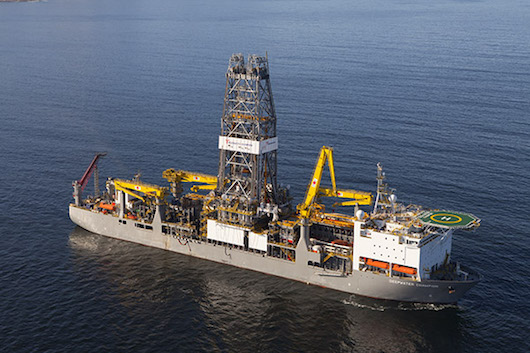
Exxon Mobile’s recent Guyana oil discovery has given the historically poor nation reason to cheer. With oil the most important commodity in the global market, the South American country expects to make a large profit from the discovery.
Exxon Mobil found the oil on their sprawling 6.6 million acre oilfield off the coast of Stabroek, Guyana.
In the Stabroek block, the company’s Liza-1 well was drilled to more than 17,000 feet. There, the company found more than 295 feet of high-quality oil-bearing sandstone reservoirs.
The oil company is encouraged by the discovery and plans to determine the potential of the other sites.
With Liza-1 being the company’s first site of many, there is a good chance of further discoveries. Also, the findings from the well will be sent for analysis to determine its full commercial potential.
Even if no further discoveries are made, Guyana’s former Minister of Natural Resources and the Environment believes any discovery of oil will greatly boost the nation’s economy.
With Guyana having the 157th largest economy in the world, the recent discovery of the highly valued commodity promises to have transformational effects on the nation. Large revenues and foreign investments will pour into the country from its oil sales.
To ensure that the money will be used wisely, the President of Guyana, David Granger, promises to create a sovereign wealth fund from the Guyana oil revenue.
A sovereign wealth fund (SWF) is a pool of a nation’s money that is set aside for investments that will benefit the country’s economy and citizens. In this case, the revenue from Guyana oil sales will be put into a fund that will be reinvested in the country.
To assist in the creation of the SWF, Guyana is turning to their neighbor to the north, Canada. Researchers at the University of Calgary are putting together plans for the creation of the SWF.
Speaking on this, Guyana’s Minister of Governance, Raphael Trotman, said, “So later in the month of November, a team is coming from the University of Calgary with the specific responsibility of putting together the mechanism for what we refer to as the Sovereign Wealth Fund.”
The minister went on to reveal that the SWF will be split into three separate sub-funds.
One will look to secure funds the nation’s wealth for the future generations. The second will be a rainy-day fund for the nation’s budget in fiscally lean years. The third will be for developmental projects or initiatives.
Trotman expanded on this, saying, “So there are three funds that comprise the Sovereign Wealth Fund, but each has a different rate at which it is supplied and different reasons or mechanisms from which it can draw down.”
The three sub-funds ensure that the Guyana oil wealth will be used to benefit the nation as a whole. It includes investments into development and plans to save for the future.
The SWF is such a popular idea among the people that during the previous election both the current President and the opposition party had plans to create one.
Upon inauguration, President Granger promised that any funds from natural resources would benefit the people through an SWF.
He believes an SWF will make sure that “children will not have to live in poverty; that no matter what happens to the resources of the country, there will always be wealth to look after their education.”
The large oil revenues pouring into the SWF ensures that Guyana will have a strong investment in the nation and its citizens.
– Andrew Wildes
Sources: Guyana Times 1, Guyana Times 2, Investopedia, Quandl
Photo: Guyanese Online

Guyana Oil Discovery to Help Nation’s Poor
Exxon Mobile’s recent Guyana oil discovery has given the historically poor nation reason to cheer. With oil the most important commodity in the global market, the South American country expects to make a large profit from the discovery.
Exxon Mobil found the oil on their sprawling 6.6 million acre oilfield off the coast of Stabroek, Guyana.
In the Stabroek block, the company’s Liza-1 well was drilled to more than 17,000 feet. There, the company found more than 295 feet of high-quality oil-bearing sandstone reservoirs.
The oil company is encouraged by the discovery and plans to determine the potential of the other sites.
With Liza-1 being the company’s first site of many, there is a good chance of further discoveries. Also, the findings from the well will be sent for analysis to determine its full commercial potential.
Even if no further discoveries are made, Guyana’s former Minister of Natural Resources and the Environment believes any discovery of oil will greatly boost the nation’s economy.
With Guyana having the 157th largest economy in the world, the recent discovery of the highly valued commodity promises to have transformational effects on the nation. Large revenues and foreign investments will pour into the country from its oil sales.
To ensure that the money will be used wisely, the President of Guyana, David Granger, promises to create a sovereign wealth fund from the Guyana oil revenue.
A sovereign wealth fund (SWF) is a pool of a nation’s money that is set aside for investments that will benefit the country’s economy and citizens. In this case, the revenue from Guyana oil sales will be put into a fund that will be reinvested in the country.
To assist in the creation of the SWF, Guyana is turning to their neighbor to the north, Canada. Researchers at the University of Calgary are putting together plans for the creation of the SWF.
Speaking on this, Guyana’s Minister of Governance, Raphael Trotman, said, “So later in the month of November, a team is coming from the University of Calgary with the specific responsibility of putting together the mechanism for what we refer to as the Sovereign Wealth Fund.”
The minister went on to reveal that the SWF will be split into three separate sub-funds.
One will look to secure funds the nation’s wealth for the future generations. The second will be a rainy-day fund for the nation’s budget in fiscally lean years. The third will be for developmental projects or initiatives.
Trotman expanded on this, saying, “So there are three funds that comprise the Sovereign Wealth Fund, but each has a different rate at which it is supplied and different reasons or mechanisms from which it can draw down.”
The three sub-funds ensure that the Guyana oil wealth will be used to benefit the nation as a whole. It includes investments into development and plans to save for the future.
The SWF is such a popular idea among the people that during the previous election both the current President and the opposition party had plans to create one.
Upon inauguration, President Granger promised that any funds from natural resources would benefit the people through an SWF.
He believes an SWF will make sure that “children will not have to live in poverty; that no matter what happens to the resources of the country, there will always be wealth to look after their education.”
The large oil revenues pouring into the SWF ensures that Guyana will have a strong investment in the nation and its citizens.
– Andrew Wildes
Sources: Guyana Times 1, Guyana Times 2, Investopedia, Quandl
Photo: Guyanese Online
Ebola Virus Returns
According to NewsWeek, the World Health Organization (WHO) said last Thursday that “it was the first time all three West African countries had held the Ebola-free status simultaneously…effectively bringing to an end the deadliest Ebola outbreak in history that has claimed lives of some 11,300 people.”
The Ebola virus disease is a severe, often fatal illness in humans. It is transmitted to individuals from human to human transmission, or from wild animals. There are currently no licensed Ebola vaccines and the average EVD case fatality rate is around 50 percent, according to the WHO.
The Ebola outbreak in West Africa has been the largest and most complex outbreak since the deadly disease was first discovered in the late 70’s.
Said the WHO, “The most severely affected countries, Guinea, Liberia and Sierra Leone, have very weak health systems, lack human and infrastructural resources, and have only recently emerged from long periods of conflict and instability.”
A test center in Sierra Leone announced that the tests on the patient who died a few days ago confirmed that his death was due to the deadly virus. To reduce further threats, Sierra Leone officials are currently investigating how the individual became infected and who may have been in contact with him.
The World Health Organization also emphasized that future flare-ups of the deadly virus are probable.
Bruce Aylward, the Ebola correspondent in the organization said that the “risk of re-introduction of infection is diminishing as the virus gradually clears from the survivor population, but we still anticipate more flare-ups and must be prepared for them.”
According to NewsWeek, recent investigations have found that the virus can remain in the male survivor’s semen for up to nine months. Hence, the WHO suggests Ebola survivors and their sexual partners abstain from sex or practice extremely safe sex.
“There is as yet no proven treatment available for EVD. However, a range of potential treatments including blood products, immune therapies and drug therapies are currently being evaluated,” said the WHO. Additionally, two potential vaccines re undergoing human safety testing.
The World Health Organization suggests that in order to prevent and control this deadly threat, community engagement is the key to successfully control the outbreaks. “Raising awareness of risk factors for Ebola infection and protective measures that individuals can take is an effective way to reduce human transmission.”
– Isabella Rolz
Sources: NewsWeek, World Health Organization
Photo: Bloomberg Business
Bill Gates’s Breakthrough Energy Coalition
At the climate event, known as COP-21, Gates announced his plan to help address climate change. It is a collection of some of the most influential entrepreneurs, and it is known as the Breakthrough Energy Coalition.
The group includes well-known business leaders such as Richard Branson, Jack Ma and Jeff Bezos.
The coalition, led by Gates, pledges to work in tandem with national governments to increase funding for clean energy research. They will also invest in risky clean energy projects that have a long return on investment but a high potential for success.
Many of the ideas coming from existing clean energy research and development are too insecure for traditional investors. They do not want to put money into an idea that might never make it to the market. This difficult journey from innovative idea to commercial product is known as the “valley of death,” and Gates’s coalition plans to bridge it.
The Breakthrough Energy Coalition will invest in those risky ideas and be patient with the returns. Gates cites flow batteries and solar paint as two such existing products that need private sector investment. If successful, solar paint could transform any surface into a solar panel.
A crucial component of this plan is national governments. The research and development for clean energy technology must start with the government because only they have the mandate and resources to do so. Business alone cannot lead the charge.
Furthermore, government-funded programs have successfully created whole new industries that from space, defense and medical research. Gates’s coalition believes governments are key to creating the clean energy industries of the future.
In association with Gates’ announcement, President Obama and leaders around the world pledged to increase public-sector spending for research and development in clean energy. This pledge, in combination with Gates’, will constitute the biggest investment in clean energy in history.
The public sector initiative is known as Mission Innovation, including 20 nations. Each participating country agrees to double its existing funding for clean energy technology within the next five years.
This pledge will increase the budget of the 20 nations to $20 billion for clean energy. These new funds will go to research and development, and the creation of new ideas and technologies.
Gates’ Breakthrough Energy Coalition will then use their business acumen to wisely invest in technology that has the greatest potential. With patient and consistent investment, the products will bypass the “valley of death.”
These historic investments from government and businesses reflect the urgency for action. Both realize the impact climate change can have on their respect areas. It can cause unrest and war for governments, and a loss of profits for businesses.
The developing world, though, has the most to lose. Man-made climate change is primarily caused by industrialization from the developed world, but affects the developed world in a greater magnitude. This harsh irony will be reduced with the teaming up of the Breakthrough Energy Coalition and Mission Innovations.
Clean energy will allow the developing world to grow and avoid the ravages of climate change. Bill Gates’ Breakthrough Energy Coalition will not only address climate change, but also fight poverty.
– Andrew Wildes
Sources: Breakthrough Energy Coalition, Mashable, The Guardian
Photo: Here & Now
HomeBioGas: Convert Waste into Energy with Haste
HomeBioGas, an organic renewable energy system created by an Israeli startup, aims to reduce the death toll in rural areas while at the same time helping farmers and families reduce their carbon footprint.
The machine safely converts food waste and animal manure into cooking gas and liquid fertilizer. The machine serves as a sustainable tool for urban and rural families living off the grid.
According to the company’s website, the 88-pound machine starts by adding a bacteria to a combination of waste and water, which triggers a fermentation process. The reaction then produces a mixture of methane and carbon dioxide, which can be used as energy.
The system can break down up to six liters of food waste, including meat and dairy. It can also dissolve 15 liters of animal manure, yielding about three hours worth of cooking gas and about 10 liters of liquid fertilizer. Families then can use the resulting gas to cook around three meals a day.
One of the few problems with HomeBioGas, however, is its dependency on warm temperatures. Under 64°F (17°C), the system will decrease its productivity, and it will cease to function at 32°F (0°C).
After a year, though, users eliminate one ton of organic waste, as well as decreasing toxic emissions going into the atmosphere.
Oshik Efrati, CEO of HomeBioGas, told Reuters that the system “will be available to everyone [who] needs it in the developing world.”
The company has already dispensed systems to underserved locations in order to cut back reliance on other types of fuel.
In the summer of 2014, Israel’s Ministry of Environmental Protection bought and installed multiple units at Umm Batin, a Bedouin village without access to clean energy and garbage removal.
The Dominican Republic’s Ministry of Energy and Mining, aiming to reduce the impoverished population’s overdependence on wood, recently signed a contract with HomeBioGas to purchase 50 biodigesters.
The pilot program’s prior success in the two countries, led their governments have decided to purchase even more biodigesters to combat poverty in these locations.
– John Gilmore
Sources: Huffington Post, Israel 21c, IndieGoGo
Photo: EcoWatch
How People Become Refugees in Europe
Syrians made up the largest part of this group, having fled their home country because of the 4-and-a-half year civil war that has taken the lives of over 200,000 Syrians, according to the New York Times.
The reasons why people become refugees are not hard to conjure – war, religious or social conflict, violence – but how these refugees secure their safety can be a long, stressful process.
The first step in seeking refuge is often finding a place that allows one to be close to their families, but far enough away from any threat of violence. According to The Guardian, it is almost impossible for Syrians to be granted legal access into other Arab countries.
This leaves places like Jordan, Turkey and Lebanon as places to escape, though refugee families in the Middle East no longer receive financial assistance from the UN due to funding shortcomings. These countries do not offer secure legal statuses to refugees either, which can prevent them from having the right to work.
These stipulations explain why so many refugees are traveling to Europe for refugee or asylum status by boat. According to the Guardian, more and more Syrians who become refugees in Europe are using the Balkan route – traveling by sea from Turkey to Greece and then walking through Macedonia and Serbia to reach European Union (EU) territories.
https://www.youtube.com/watch?v=ZHQ88y-A6iw
Open Society Foundations, an American organization whose mission statement is to “build vibrant and tolerant democracies whose governments are accountable to their citizens” works with the Common European Asylum System (CEAS) that works to guarantee that international law protects the rights of refugees in its member states.
According to Open Society Foundations, if an asylum seeker or refugee is traveling through several EU countries, the CEAS allows one EU country to send that person to the first EU country they have reached, as long as that country maintains the rights of asylum seekers.
Unfortunately, only a small portion of asylum seekers are monitored this way, and the systems in Greece, Hungary and Italy have tried to block transfers of citizens with court orders. Some people who become refugees end up back in the south where their journey began.
Groups like Open Society Foundations are crucial in helping refugees and asylum seekers partake in legal movement for work and family without violating any human rights.
Because of the large influx of refugees in Europe, Open Society Foundations find it vital to develop effective policy proposals that will lead to a progressive and successful European asylum system.
Revisions under the European Agenda on Migration state that immediate action will be taken by the EU in order to prevent further deaths and improve conditions for those seeking refuge in Europe. This includes increased funding to Frontex and Europol, two organizations that focus on border control and defense of the EU, respectively.
– Kelsey Lay
Sources: European Commission, Open Society Foundations, The Guardian 1, The Guardian 2, The New York Times
Photo: The Telegraph
Emerge Poverty Free Enables Communities
In partnership with a local organization, Sustainable Investments and Development Initiatives (SIDI), Emerge Poverty Free has begun a project in Mwanza, Tanzania to empower hundreds of fisher-women through economic and environmental conservation projects.
Tanzania is known as one of the world’s least developed rural countries, where 40 percent of the adult population earns less than 1.25 USD per day.
The goals of the Sustainable Fisheries in Mwanza project are to enable women to become self-sustainable while also improving the environment of Lake Victoria that is threatened by pollution and excessive fishing.
To reach these goals, 250 women from the Kabusuli village of the Sengerema District in Mwanza have been trained in fish farming and healthcare. The group hopes to plant 10,000 trees along the Lake Victoria shore at the end of the project.
These trees will eventually be used to provide local families with wood for cooking and building materials to reduce deforestation.
Though a fairly new project, Emerge Poverty Free reports that women involved in the group have already doubled their daily incomes by selling fish within their communities during the past 10 months.
According to Aneta Dodo, secretary of the Sustainable Fisheries in Mwanza, the group has planted 6,000 trees, created five fish ponds for domestic use and local sale that have brought high profits — and a portion of the money earned by these women funded school tuition for 30 local children.
“We have gained a lot of expertise in finance issues, fishing, environmental conservation and we are able to do most things by ourselves without having to depend on men,” she said.
Dodo reports that the group was able to secure low-interest rate loans after the group started a saving and credit facility in their village of Kabusuli.
Despite these successes, the women of Tanzania still face many economic challenges — girls have higher education drop-out rates than young men and have limited access to medical care and employment, according to Emerge Poverty Free.
Group member Asha Malando does not see these statistics as an end-all and believes that women are still capable of empowering themselves by becoming involved in community projects.
“The government cannot do everything for us. We just have to use some of these organizations well so we can develop ourselves.”
Coleta Masesla, a female fisher in Tanzania, is now able to run her own food kiosk that provides income for her children’s education and home essentials like food and clothing.
“These women have become great role models in their community as they have proved that everything is possible. Most of them had lost hope but right now they are the ones running their families. We at Emerge Poverty Free are pleased by the attitude they have shown toward lifting themselves out of poverty,” stated Jeremey Horner, Emerge Poverty Free CEO.
– Kelsey Lay
Sources: Emerge Poverty Free 1, Emerge Poverty Free 2, IPP Media, The Daily News
Photo: Flickr
Researchers Begin to Fight Hypertension in South Asia
The Duke Global Health Institute will begin a study this year to find cost-effective ways to fight hypertension in South Asia.
The study will enroll 2,500 people from 30 rural communities in Bangladesh, Pakistan and Sri Lanka, where heart attacks and strokes caused by hypertension, also known as high blood pressure, are major causes of death.
“High blood pressure is the leading risk factor for premature deaths globally,” the study’s lead researcher, Tazeen Jafar said. “The findings from [our study] are likely to provide a roadmap for effective blood-pressure lowering strategies that are sustainable…and have the potential for saving millions of lives and reducing human suffering in South Asia and possibly beyond.”
According to the World Health Organization, 82 percent of premature deaths caused by non-communicable diseases like hypertension occur in developing countries. That’s 28 million deaths per year, and health officials say these deaths are entirely preventable.
Jafar’s study will focus on four strategies. The first is to educate patients about the beneficial effects of diet and exercise on hypertension. In addition to regular weekly exercise, diets high in whole grains, fruits and vegetables while low in sodium, saturated fat, cholesterol and alcohol are considered to be the easiest ways to measurably reduce blood pressure.
His team will also attempt to improve referrals to specialists, train doctors to manage high blood pressure with cost-efficient medication and develop special services at clinics to serve patients with hypertension.
They will then compare their results to traditional health care systems to find out if they can effectively fight hypertension in South Asia within the economic means of patients in developing countries.
Reducing hypertension and other non-communicable diseases will be a priority for policymakers over the coming years, as they work towards achieving the sustainable development goals of the 2030 Agenda.
An economic impact study from the U.S. Institute of Medicine suggested related diseases in Brazil have caused up to $72 billion in productivity loss — a problem that persists because these diseases are passed down between generations. For countries in South Asia facing similar consequences, fighting hypertension-related deaths is more than a matter of public health, it is an economic imperative.
– Ron Minard
Sources: Duke University, Mayo Clinic, WE Forum, WHO
Photo: Torange
Assessing the Global Health Security Agenda
The Global Health Security Agenda was launched in 2014 as a way to bring focus to the need for a global health strategy that would respond quickly and effectively to potential epidemics — a need that was highlighted later that year by an outbreak of Ebola in West Africa.
“GHSA is about strengthening health systems for every country,” said U.S. Ambassador Bonnie Jenkins. “That means GHSA will help to prevent, detect and rapidly respond to infectious diseases like Ebola.”
The assessment is designed to measure baselines and strategies for potential improvement in regards to 11 action packages developed by GHSA countries in 2014.
Following the “Prevent-Detect-Respond” framework, these action packages include, among others, preventing microbial resistance, strengthening biosecurity, delivering immunizations, facilitating surveillance and reporting, fostering global communication and coordinating emergency response deployment and operations.
Each pilot country was scored on their capacity to take these actions based on indicators such as having biosecurity training programs, proper communication practices, national vaccine coverage, trained epidemiologists and resources to implement emergency responses. The teams then evaluated the assessment itself to determine if it was constructive and scalable.
Evaluators in Portugal, which is considered to have a strong health security strategy, noted several important improvements the assessment needs to undergo before it is launched on a broader scale.
They say that current indicators do not reflect global objectives as closely as they could. They recommended pulling indicators from existing global health initiatives (such as the Global Vaccine Action Plan) in order to maintain a focus.
Evaluators also noted that their team was given a limited amount of time to complete their assessment. This prevented them from conducting random samples from various regions across the country, in order to verify the information they received from the central health ministry. They also noted a lack of efficiency in the process stemming from the fact that the country being evaluated was not given the assessment ahead of time. The evaluators therefore suggest giving assessment missions a three-month lead time in order to properly prepare.
Overall, the teams think the tool is a promising step in assessing progress toward the Global Health Security Agenda. With further development, they are confident it can be launched in all partner countries.
– Ron Minard
Sources: Borgen Project, CDC, Huffington Post
Picture: Google Images
KIND Fund Exceeds Expectations
Since 2010, Kids In Need of Desks (KIND) has placed more than 148,755 desks in 575 primary schools in Malawi, providing actual workspaces to nearly half a million students who would otherwise be sitting on the floor. The fund has also provided over 718 scholarships to girls to complete all four years of high school.
KIND also benefits the Malawian community outside the classroom. Every desk made for Malawian children is manufactured locally. This has created numerous jobs for residents over the past five years.
The fund was created by MSNBC’s Lawrence O’Donnell after a 2010 service trip to the country. There, O’Donnell learned firsthand that the number one item Malawian school teachers said would best improve the lives of students was desks.
According to Malawian teacher Saulos Mzuwala, “In as far as education is concerned a learner is more comfortable sitting at desks than on floors. They use their knees as desks which leads to poor handwriting.”
Students too, complain about the difficulty of learning and practicing writing from this position. “We fold our legs when we’re sitting and when we try to write, our papers get damaged and that wastes a lot of our time. It’s distracting and makes it hard to do well in school,” says student Lajab Saidi.
On top of this, sitting on the floor makes their clothes dirty faster, says teacher Nema Samalira. “It’s hard for these kids to afford soap especially if they have to clean their clothes every day. If their clothes are dirty they don’t come to school.”
During that trip, O’Donnell connected with UNICEF and a Malawi woodworking shop. He paid for them to make 30 student desks. With three kids to every desk, that first delivery enabled 90 students to move from dirt floors to desks. This change happened within a single week. Now, five years later, the KIND fund has received more than $10.5 million in donations.
“Ten million dollars was beyond my wildest dream when I started KIND with UNICEF. I am in awe of the generosity of our audience. There are hundreds of thousands of students sitting at desks instead of on the floor today thanks entirely to our audience. There are girls in high school today thanks entirely to our audience. This is proof that small acts of kindness can make a big difference in our world,” says O’Donnell.
– Kara Buckley
Sources: MSNBC, PR News Wire, UNICEF USA, Vimeo
Photo: MSNBC
Ghalib Khalil: A True Pakistani Patriot
Raising roughly $100,000 to build new schools and provide free education for youth, as well as providing food to those in need within flooded regions of Pakistan, Khalil worked to increase the human capital of his nation.
Galvanized by the support of the youth in his country, Khalil worked to fill a void his government would not.
As Khalil described in a televised interview with BBC, he tried to reach out for government assistance during the flooding but was turned away. Instead of giving up, Khalil turned to the people for support to help those in need.
Through all of his efforts, the biggest factor making the difference has been the national pride of Ghalib Khalil.
When asked by theextraordinary.org what his biggest inspiration was, Khalil said, “My biggest inspiration is Pakistan itself. The country had been facing millions of problems since 64 years but it didn’t give up and never will it. The country is being betrayed by its own people but she loves them as a mother. I wonder what a great inspiration we have still we find it around us.”
Driven by the patriotic love of his country, Khalil’s work through the Rescue Pakistan Foundation earned him recognition by Youth Service America as one of the 25 Most Powerful Influential Young People in the World.
“Pakistan has given me an identity in this planet,” he said in an interview with UrbanDuniya. “A land to live, and why not? I feel really blessed and proud to be a Pakistani. Pakistan has given me so many opportunities and challenges which I’d never be able to thank my country for. My country is my challenge, my faith, my pride, my life.”
– Daniel Liddicoet
Sources: The Extraordinary, Urban Duniya, Hoping Pakistan
Photo: Flickr