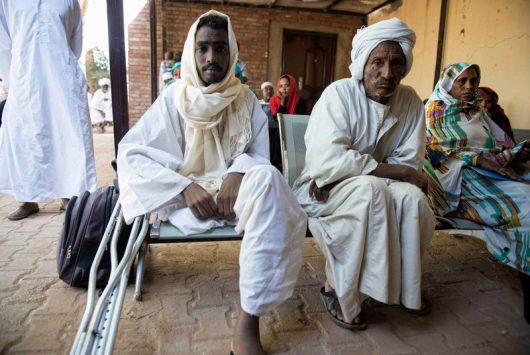
One of the top diseases in Sudan is mycetoma: a devastating illness caused by a fungal infection of the skin and bone. A causative organism, such as an infectious fungal spore, will enter the body through an open wound or abrasion and works its way through skin and tissue until it colonizes bone material. The disease can be treated with antifungal medication, but the currently available drug is only 30 percent effective and too expensive for the populations at risk.
The populations most likely to contract mycetoma are rural, isolated communities that fall within the “mycetoma belt,” including Venezuela, Chad, Ethiopia, India, Mauritania, Mexico, Senegal, Somalia, Sudan and Yemen. There is an especially long history of Mycetoma in Sudan beginning when the country produced the first report on the disease in the early 1700s, earning its reputation as the mycetoma homeland.
Generally, people in affected communities have limited access to healthcare and will contract mycetoma from walking without protective footwear. The mycetoma-causing fungus enters the body through a prick or scape on the foot. Over time, the infection will spread to the individual’s bone and they will lose the function of the affected limb.
Unable to travel long distances for medical attention, the individual is commonly forced to amputate. If they do not die from infection, many patients will suffer from additional postoperative complications, as their community healers don’t have the resources to perform safe and sanitary amputations. Mycetoma can be passed from person to person if contact is made with an infected area or surface harboring mycetoma-causing organisms.
The worst part about mycetoma is how little the world knows about its causes and symptoms. Mycetoma is so neglected that it just recently made the World Health Organization’s list of Neglected Diseases in May 2016, though cases date back more than 300 years.
While the disease is widespread, mycetoma research in Sudan is historically misrepresentative. In previous years, when the disease was not included in the WHO list of Neglected Diseases, mycetoma went unreported as doctors and healthcare workers were not actively seeking out cases.
Only two large-scale epidemiological studies for mycetoma research have ever been conducted to estimate prevalence throughout an entire country, in Mexico and Sudan. Both studies ended by 1985, rendering the results incredibly outdated.
Besides the two nation-wide studies, several single-center studies have attempted to perform a meta-analysis using specific cases from various countries. A 2014 study used cases from India, Mexico, Niger and Sudan to estimate the prevalence per country and found that prevalence ranked between 3.49 and <0.01 cases per 100,000 inhabitants.
On paper, these numbers hardly represent the holistic effects mycetoma has on rural, isolated regions, whose infected inhabitants cannot reach universities or research centers. Consequently, mycetoma receives barely any funding from international organizations and medical programs.
While the disease may not be accurately represented through numbers or statistics, it has a palpable, multiplying effect, as infected individuals cannot work, attend school or perform manual labor. Thus, not only does one case affect multiple people, but the disease creates a disastrous cycle wherein a sick individual loses the ability to walk, cannot reach medical professionals and goes unreported.
An organization called Drugs for Neglected Diseases (DNDi) recognizes the severe lack of attention paid to mycetoma within the medical community. This past May, DNDi launched a clinical trial for the new antifungal drug Fosravuconazole. Starting in July, Fosravucinazle will be investigated in a randomized controlled experiment, alongside the current medicine, itraconazole.
DNDi has chosen to conduct the study in Sudan, at the Mycetoma Research Center at the national university is in Khartoum.
In addition to investigating new treatment, the study will contribute to the research center’s previous reports. Between 1991 and 2014, the research center reports 6,792 cases of mycetoma in Sudan. But, as stated before, the prevalence of mycetoma in isolated communities is likely much higher.
To put matters into perspective, the Sudanese state of Gezira yields over 80 percent of the total number of reported cases at the Mycetoma Research Center. However, a Gezira resident would need to travel 118 miles to get to Khartoum, making the journey financially and logistically difficult, since the majority of patients are of low socioeconomic status.
Out of all the cases, 76 percent of the patients were male, while 64 percent were under 30 years old. Additionally, 28 percent were students. These numbers indicate how devastating the disease is for many people besides the infected individual, as Sudanese Men under 30 are usually primary providers for their families. Not to mention that a disease that impairs a student’s ability to go to school lessens the individual’s chance of transcending poverty.
DNDi researchers are hoping to discover a higher success rate with Fosravuconazole and gain enough regional support to partner with a regular manufacturer. Dr. Nathalie Strub-Wourgaft, medical director for the organization, said the team is “very excited about the possibility of a new treatment against this terrible and neglected condition,” as “patients have received little attention and virtually no research.”
The neglected history of mycetoma speaks to larger issues within the global health community. The disease creates a cycle; infected individuals are too isolated to be treated and too few in number to capture the attention of countries who are in a position to offer assistance.
DNDi mycetoma research in Sudan is a much needed step in the right direction. Hopefully, the clinical trial will demonstrate how important it is for the international community to investigate other neglected diseases, especially those which have had a multiplier effect in impoverished communities.
– Jessica Levitan

B-Energy: Biogas, Backpacks and Digester Systems
Solar and wind energy projects have been praised as potential ways to reduce global poverty. But German start-up organization B-Energy is promoting efficient use of another form of renewable energy to improve life in the developing world.
B-Energy has supplied households in Africa with biogas balloon backpacks, digester systems and stoves to help them convert organic waste into harnessed biogas. The energy that the bags and digesters produce can serve as cooking fuel and provide people with a source of income.
Developing countries have struggled to supply stable forms of energy to many of their inhabitants. According to the World Energy Outlook, approximately 80 percent of people without electricity live in rural areas in Sub-Saharan Africa and developing Asia. With no other alternative for energy, many people rely on biogas and struggle to efficiently transport and store it.
Founded by German entrepreneur Katrin Puetz, B-Energy serves as an innovative and affordable system that offers a reliable source of energy from human and animal waste and agricultural residue. B-Energy’s method revolves around its ‘B-pack’, which is an inflatable balloon backpack that holds methane gas produced from waste in a biogas plant or digester. People without their own plant can refill their B-packs at a nearby digester.
According to the BBC, each bag comes with a metal pipe, which users can attach to a gas-cooking stove. The bags hold 1.2 cubic meters of gas—enough for about five hours of cooking—and spare households from relying on wooden fires to prepare food.
Another key aspect of B-Energy’s system is that it creates entrepreneurial opportunities. As a “social business venture,” Puetz’s start-up encourages individuals with biogas digesters to sell their biogas to households. People with B-packs can also profit from supplying their leftover gas to others. B-Energy even provides aspiring entrepreneurs with a beginner’s kit—which includes a biogas digester, B-backpacks and stoves—and professional training to help them launch their biogas business.
Since its inception in 2014, B-Energy has steadily grown, establishing franchises in Sudan and Ethiopia. Puetz refused to accept grants from global charities in order to prove that her enterprise can be self-sufficient.
Moving forward, a significant obstacle for B-Energy is to determine how to lower the cost of its system. The Inter Press Service has reported that Ethiopians have to pay approximately 12,000 birr—equivalent to $600—for a biogas plant, two backpacks and a cooking stove.
Puetz hopes to make the B-Energy systems more affordable by allowing franchises and households to pay in installments. This change would expand access to his innovative energy solution and assist countless more in need.
– Sam Turken
Photo: Geographical
The Plight of Youth in Gaza: Their Dire Need for Improvement
The ongoing power struggle between the Israeli government and Hamas has adversely affected youth in Gaza. The situation has been exacerbating since the 2007 Israeli blockade on the Gaza strip. Moreover, youth unemployment rates have risen to a staggering 60 percent, with a nearly 80 percent dependency on foreign aid.
An analysis conducted by the International Labor Organization (ILO) accentuates that the youth in Gaza working between the ages of 10-17 has soared to 9,700. Many are below the legal age of 15, and this figure is presumed to be much more in reality.
With rising food prices and varying degrees of income disparity over the years, the plight of the youth has only intensified. The deficiency in the labor market has made it difficult for people to find work. As a result, young children work for meagre amounts to support their families, without even the basic provision of insurance.
“I have to work to earn extra money – my father is ill, and my mum has no food for us,” exclaims 7-year-old Imad Awadallah.
Humanitarian aid has benefited many young children, but the British government’s recent probe into Palestinian authorities may show a prolonged misuse of this aid.
SOS Children’s Villages has been providing care and early education to young children in Rafah since 1999. Their youth home has also helped young people with basic training to adjust to the challenges that adult life entails.
United Nations Relief and Works Agency for Palestine Refugees (UNRWA) has also provided outstanding education in Gaza for the past few years. For three years, the El-Wedad Society for Community Rehabilitation has been spearheading the push for children’s rights. They visit families and highlight the vitality of education through seminars and sessions.
It is imperative to ensure mobility and efficiency in the provision of aid. While channeling humanitarian aid, collaboration with the Palestinian government is necessary.
Countries in the region have reached out to those impoverished children. Notably, an envoy from the Jordan Hashemite Charity Organization arrived on June 16 with medical supplies. Also, many in Karara will receive help through the Turkish Crescent’s inception of the first aid station.
Moreover, the initiatives organized by Gaza’s Social Affairs Ministry of Labor will enhance a variety of skills, such as sewing and carpentry, which will help make the youth more self- sufficient. Thus, there should be an increased propensity to remain in school–increasing literacy rates are vital to increasing the diversity of the labor market.
The deployment of peacekeepers serves a dual purpose: 1) It is a necessary precaution to ensure the steady flow of aid and 2) it protects vulnerable groups (such as young children) in the more turbulent areas. Aid workers must also be well trained and experienced to safeguard the interests of the children.
Businesses that use exploitation and child labor have the potential to be blacklisted by the U.N., as it is a violation. Potential creditors must also refrain from investing in such businesses.
Considering the revolts in 2014, possible cessation of hostilities between the Hamas and Israeli government is indefinite. However, we can create awareness by supporting NGOs like Save the Children and Islamic Relief USA. Alleviating the harsh situations faced by the youth in Gaza will positively impact all involved.
– Shivani Ekkanath
Photo: Flickr
Seven Facts About Education in Pakistan
Proper education is crucial to the development of any country. Countries with excellent education systems like Finland, the Netherlands and Sweden have populations that generally live longer and have less violent conflict and poverty. This is why investment in education is critical for a stable state. While the country has shown improvement over the past decade, education in Pakistan has a long way to go.
Pakistan continues to struggle with a variety of issues including poverty and national security. The country’s instability has taken a toll on its education system, but with the help of the international community, there is hope for substantial change within the country.
– Saroja Koneru
Gov’t Supports School Programs to Reduce Hunger in Jamaica
Hunger in Jamaica has improved tremendously among primary and early childhood students with the various programs and strategies implemented by The Program of Advancement through Health and Education (PATH) and the School Feeding Program (SFP).
The Program of Advancement through Health and Education (PATH) enabled by the Government of Jamaica (GOF) continues to play an integral role in providing free lunches for primary school students with the aim of improving the nutrition of vulnerable children and eradicating hunger in Jamaica with Early Childhood students being the target group.
The Hon. Rev Ronald Thwaites in his presentation of the 2015-2016 sectoral debate revealed the aim of the Ministry of Education to expand the breakfast programs in schools initiated to provide free breakfast for 138,000 students inclusive of PATH beneficiaries.
The Ministry assigned J$2.2 billion to this program. The SFP in partnership with the Nutrition Products Limited (NPL) breakfast solutions ensures that all meals are made from local agricultural products.
Board Chairman of Nutrition Products Limited James E.D. Rawle gave a synopsis of the various products offered in the NPL Annual Report, “Segments of the Early Childhood Cohort, inclusive of hot solution (porridge), sandwiches, muffins, breads, cakes and an improved juice drink, made utilizing locally produced fruit puree”.
The NPL has provided breakfast solutions to 12,000 designated children located in Kingston & St Andrew, St Thomas, St Catherine and Clarendon each day. This initiative has helped to reduce hunger in Jamaica among students in Primary level institutions.
The SFP provides additional Nutribun snacks for these students in line with the strategy Ministry of Education to spend approximately 20 percent of the school feeding budget of J$4.6 billion on locally grown products. The Ministry intends to achieve 50 percent in three years.
The Hon. Rev Ronald Thwaites revealed that 40 percent of children lack proper nutrition and another 30 percent experience hunger on a daily basis.
“Providing nutrition in schools is adding value to the lives of our young children and the brightening of their prospects,” said Thwaites. This step towards improving the nutrition of Early Childhood students via proper victuals is a resourceful means by the GOF to improve hunger In Jamaica.
– Shanique Wright
Photo: Flickr
The Benefits of Conditional Cash Transfers in Latin America
A recent report by the Inter-American Development Bank suggests that conditional cash transfers offer a way out of this dilemma. This form of foreign aid offers cash grants to citizens in exchange for compliance. This could mean enrolling their children in school, completing regular medical exams, or attending job skills training.
In Latin America, where youth unemployment hovers around 14%, this means lower risks of radicalization. Roughly 60% of the young adults in this region work in the informal sector, where there are markedly low wages, no benefits and job insecurity.
When this occurs, many of those who might have been productive citizens turn to more lucrative (and illegal) activities. And so the conditions for terrorism flourish.
Conditional cash transfers (CCTs) for the poor in Latin America have posted consistent gains over the past 15 years. They provide money for nearly 129 million individuals of working and post-working age. In addition, some of the countries suffering from the harshest degrees of poverty are taking advantage.
UNICEF reports from 2008 found that in Paraguay, CCTs increased household per capita income by 31% while reducing food expenditure by four percent.
Child school attendance also rose, as beneficiary families were able to save 20% more than without assistance. UNICEF also reports that families enjoyed seven percent greater access to credit. Finally, they invested 45% more in agricultural production.
These are significant results for a country tackling one of the most corrupt and poverty-stricken parts of the continent. Home to radical groups such as Hezbollah and al-Qaeda, the tri-border area—between Paraguay, Brazil and Argentina—is a perfect case for why the United States should ramp up its aid to Latin America.
The endemic poverty in this area allows one to bribe a local security agent for $35 ($15 for Paraguayan officers), buy an AK-47 for $375, or solicit women under 23 years of age for as little as $15.
In this sort of environment, traditional aid projects for nutrition or housing are less effective.
Researchers from Transparency International reveal that in areas like the tri-border, local leaders inflate the amount of requested aid, inviting speculation by gangs and smugglers.
Much of the aid is then misused: corrupt leaders sell food surpluses for personal profit, award housing contracts under threat. In addition, other goods (such as prescription drugs) enter the tri-border $1.5 billion black markets.
Conditional Cash Transfers offer immunity from these abuses by requiring greater accountability from both local leaders and the community. Because they are cash benefits, municipal officials are unable to divert goods as “losses” or favor particular groups.
Instead, they ensure that valuable U.S. aid reaches the hands of those who need it most—citizens doing their part to break the cycle of poverty.
– Alfredo Cumerma
Photo: Flickr
How Big Business Contributes to Global Food Security
Approximately 805 million people around the world are starving. Extreme poverty, rapid population growth, climate change and shrinking resources are a few of the crucial factors threatening global food security.
It is estimated that by 2050 the world’s population will have grown to more than nine billion people, meaning food production will have to increase by as much as 70% in order to feed the world.
Big businesses recognize the importance of fighting global hunger. As a result, a few major companies are leading efforts to improve global food security.
Amway
Amway, a leader in the nutrition and vitamin market, launched the Nutrilite Power of 5 Campaign to raise awareness of childhood malnutrition.
The company developed Nutrilite Little Bits, a micronutrient supplement that provides impoverished children with the key nutrients and vitamins often missing from their diets.
The Nutrilite Power of 5 Campaign has provided Nutrilite Little Bits to thousands of children in 11 countries since its inception in 2014.
Amway has committed to providing five million Nutrilite Little Bits by the end of 2016. This act has the potential to benefit more than 14,000 malnourished children.
General Mills
Food giant, General Mills, pledged to work closely with smallholder farmers in developing economies to sustainably source 100% of their top ten priority ingredients by 2020.
“We know that when farmers have the knowledge and resources for their farms and families to thrive, the benefits accrue well beyond the individual and extend to the community and societal levels,” said General Mills Foundation Associate Director Nicola Dixon.
General Mills wants its farmers to produce enough to feed their families and generate an income while raising the living standards in their communities. Millions have already benefited from the company’s work.
Cargill
Cargill, one of the world’s largest food and agriculture businesses, committed to providing more than $13 million in grants through a broad set of programs focused on food security, sustainability and nutrition.
The grants will be focused on promoting sustainable agricultural practices, improving market access and productivity for farmers, supporting childhood nutrition and education and advancing healthy diets and preventing diet-related health issues in low-income communities.
“The private sector can be a catalyst for lasting change by jumpstarting innovation and economic development,” said Ruth Rawling, Cargill’s vice president of corporate affairs.
One of the grant recipients is CARE USA, which has partnered with Cargill for over 25 years to combat poverty and long-term hunger among some of the world’s most vulnerable communities.
Cargill’s grants are expected to benefit more than one million people in 15 countries.
Global food security is one of the most dire issues facing the world. One’s ability to feed themselves is directly correlated to their productivity and ability to earn a living.
There is great potential to vastly reduce poverty, increase incomes for the world’s poor and expand the world’s consumer base as big businesses further their investment in global food security.
– Sara Christensen
Photo: Flickr
The Success of Public Education in Georgia: Is It Enough?
In the years following independence from the Soviet Union, the country of Georgia faced a variety of challenges from natural disasters to political unrest. Times were tumultuous for over a decade, but in 2003, the year of the Rose Revolution, a new dawn broke for the nation. A new government arose and enacted many new programs — some of which address the ever-present issue of public education in Georgia.
Although the national plan for education in Georgia direly needed a make-over by the turn of the twenty-first century, the system had not yet become a hopeless case. All age groups within the country were evaluated with over 98% literacy, but it was usually only basic literacy with very few individuals making it to higher levels of education.
This phenomenon of widespread but low-level education can be attributed to the inefficiency and low quality of the public education programs. Ultimately, families did not feel that it was worth their time to put their children through more than the minimum required years of education.
After primary education, the government would no longer support the entirety of a student’s tuition; thus, to continue on in education, the child and his or her family would need to pay a good portion of tuition — funding that few families had to spare.
Shortly after the Rose Revolution, the newly appointed government developed a plan that would allow for the growth of a more efficient and cohesive education system.
The bill passed through the Georgian legislature was dubbed the Law on General Education, and it opened up services that the Georgian public had previously been unable to access. This new law established equal treatment for ethnic and linguistic minorities, ensuring that all could receive a free education to the newly raised requirement of the ninth grade. It also gave more local power to families to elect the principal of their child’s school, and be privy to other rights that had previously been unavailable.
With this new focus on issues surrounding public education, the government has improved many services, such as vocational training and higher education, which are now also more readily available to the public.
A great number of children enter the fifth grade, but there are unfortunately many students who do not make it past the primary levels of education. Generally, due to poverty, two percent of primary-aged children are compelled to drop out of their educational endeavors before completing their primary education.
Many see the drop-out rate due to poverty as a self-perpetuating problem. The Bertelsmann Stiftung’s Transformation Index (BTI) states that, “Households in which adults have better education are less likely to be poor.”
The key drivers of social exclusion include “low education attainment levels among household members, unemployment, lack of land ownership, lack of access to health care, lack of access to loans or credit and lack of social assistance.”
To address this prevalent issue, and to better retain and educate its students, the Georgian government has increased its spending on public education by 43% over recent years. The effort is commendable, but the BTI argues that improvement needs to increase even more in order to keep up with prevailing economic issues and bolster the educational infrastructure of the country.
With an increased amount of students graduating from secondary education, the government will soon need to provide stipends to graduates for further education in institutions of higher learning.
The issues facing the growing sector of public education in Georgia are many, but various international organizations are optimistic for the emphasis placed on education reform by the Georgian government.
With its limited resources, these global figureheads agree that it is key that Georgia puts a high priority on developing its human capital, and in this way, secure the long-term progress of the country.
– Preston Rust
Photo: Pixabay
4 Influential Humanitarian Athletes
Athletes spend numerous hours during the week training and preparing for their next matches, games and adventures. Through their unmatched hard work, they are able to capture titles while simultaneously building a career and global fame.
Going above and beyond, many athletes use their popular status and successful careers to improve the world around them. These four humanitarian athletes utilize their fame and the small amount of free time they have to contribute to global charities.
Ronaldo is known as one of the most generous athletes in the world. He often donates his bonus checks and portions of his salary to various charities and countries in need of reconstruction and help. For example, he donates millions of dollars to foundations like UNICEF and “World Vision,” which aim to enhance the lives of children in impoverished countries through the enhancement of health and education. When he’s not sweating on the field, he also takes time to physically participate in fundraising campaigns.
When Williams isn’t grinding on the court winning grand slams, she’s looking to improve the status of the world’s poor. She was named a UNICEF Goodwill Ambassador in 2011 because of her commitment to helping the youth around the globe. In 2010, Williams announced the New Schools for Asia Campaign under UNICEF, which looks to provide children in the Asia-Pacific area with schooling. Around the world, there are 67 million people who are not enrolled in school. Of those 67 million people, 26 million live in the Asia-Pacific area. UNICEF’s executive director talked about Serena, explaining that she “isn’t just a tennis champion, she is a champion for children—and a passionate advocate for providing every child with a quality education.”
Beckham was also appointed a UNICEF Goodwill Ambassador. His focus under UNICEF is the Unite Against AIDS campaign. After visiting Sierra Leone in 2007, he said, “In Sierra Leone, one in four children dies before reaching their fifth birthday – it’s shocking and tragic especially when the solutions are simple – things like vaccinations against measles or using a mosquito net to reduce the chance of getting malaria.” Beckham hopes to draw attention to the safety and health of children through his global presence.
Watson is known for circumnavigating the globe solo at the age of 16. Now at the age of 23, she continues to the explore the world as a representative for the World Food Program. This humanitarian athlete focuses her time and energy on Laos, saying, “At age 16 I achieved my dream. I want the school children in Laos to be able to achieve their dream. And stopping hunger is the first step in that process.”
Watson works with the School Meals program, making sure that kids in school are able to eat a nutritious meal every day. Global hunger affects 1 out of 7 people in the world. Jessica Watson, along with the World Food Program, aims to help 80 million people in 80 different countries combat lack of food.
These four humanitarian athletes have been able to use their global status to make a positive difference. By representing various foundations, they are not only able to raise awareness of global crises to fans around the world, but their use of fame also makes fighting global poverty a little easier.
– Casey Marx
Photo: Flickr
21st International AIDS Conference Held in South Africa
The International AIDS Society (IAS) hosted the 21st International AIDS Conference in Durban, South Africa from July 18 to July 22. The conference discussed the various improvements in HIV/AIDS science as well as challenges the medical community needs to address.
The theme of this year’s conference was “Access Equity Rights Now.” The event was designed to tackle inequalities in access to medical treatment, including barriers such as poverty, gender, race and location.
South Africa has the highest HIV/AIDS prevalence in the world. According to UNAIDS, anywhere between 6.7 and 7.4 million people live with HIV in the country. Yet, more than 60 percent of those infected are not on antiretroviral treatment.
The previous International AIDS Conference held in Melbourne, Australia called for the Victorian State government to repeal a law discriminatory to the HIV-positive population. Additionally, the 2012 conference in Washington, D.C. led to the government removing the country’s travel ban on individuals with HIV.
The equity rights movement within the 2016 conference is a push toward equality for marginalized communities affected by the virus.
According to the World Health Organization (WHO), two-thirds of new HIV infections occur in Sub-Saharan Africa. Men who have sex with men, drug users and sex workers are among the various groups that are at a higher risk of infection. Even women face higher chances of transmission and greater barriers to treatment.
The International AIDS Conference brings together health professionals to improve the state of HIV/AIDS detection and treatment around the world. While there is still a long way to go in the struggle against this virus, statistics over recent years show promise.
The WHO reports a 35% decrease in new HIV cases in addition to a 28% decrease in deaths due to AIDS since 2000. With the majority of HIV cases in low and middle-income countries, the support of the international community is crucial to saving lives.
– Saroja Koneru
Photo: Flickr
Mycetoma Research in Sudan: Addressing Neglected Diseases
One of the top diseases in Sudan is mycetoma: a devastating illness caused by a fungal infection of the skin and bone. A causative organism, such as an infectious fungal spore, will enter the body through an open wound or abrasion and works its way through skin and tissue until it colonizes bone material. The disease can be treated with antifungal medication, but the currently available drug is only 30 percent effective and too expensive for the populations at risk.
The populations most likely to contract mycetoma are rural, isolated communities that fall within the “mycetoma belt,” including Venezuela, Chad, Ethiopia, India, Mauritania, Mexico, Senegal, Somalia, Sudan and Yemen. There is an especially long history of Mycetoma in Sudan beginning when the country produced the first report on the disease in the early 1700s, earning its reputation as the mycetoma homeland.
Generally, people in affected communities have limited access to healthcare and will contract mycetoma from walking without protective footwear. The mycetoma-causing fungus enters the body through a prick or scape on the foot. Over time, the infection will spread to the individual’s bone and they will lose the function of the affected limb.
Unable to travel long distances for medical attention, the individual is commonly forced to amputate. If they do not die from infection, many patients will suffer from additional postoperative complications, as their community healers don’t have the resources to perform safe and sanitary amputations. Mycetoma can be passed from person to person if contact is made with an infected area or surface harboring mycetoma-causing organisms.
The worst part about mycetoma is how little the world knows about its causes and symptoms. Mycetoma is so neglected that it just recently made the World Health Organization’s list of Neglected Diseases in May 2016, though cases date back more than 300 years.
While the disease is widespread, mycetoma research in Sudan is historically misrepresentative. In previous years, when the disease was not included in the WHO list of Neglected Diseases, mycetoma went unreported as doctors and healthcare workers were not actively seeking out cases.
Only two large-scale epidemiological studies for mycetoma research have ever been conducted to estimate prevalence throughout an entire country, in Mexico and Sudan. Both studies ended by 1985, rendering the results incredibly outdated.
Besides the two nation-wide studies, several single-center studies have attempted to perform a meta-analysis using specific cases from various countries. A 2014 study used cases from India, Mexico, Niger and Sudan to estimate the prevalence per country and found that prevalence ranked between 3.49 and <0.01 cases per 100,000 inhabitants.
On paper, these numbers hardly represent the holistic effects mycetoma has on rural, isolated regions, whose infected inhabitants cannot reach universities or research centers. Consequently, mycetoma receives barely any funding from international organizations and medical programs.
While the disease may not be accurately represented through numbers or statistics, it has a palpable, multiplying effect, as infected individuals cannot work, attend school or perform manual labor. Thus, not only does one case affect multiple people, but the disease creates a disastrous cycle wherein a sick individual loses the ability to walk, cannot reach medical professionals and goes unreported.
An organization called Drugs for Neglected Diseases (DNDi) recognizes the severe lack of attention paid to mycetoma within the medical community. This past May, DNDi launched a clinical trial for the new antifungal drug Fosravuconazole. Starting in July, Fosravucinazle will be investigated in a randomized controlled experiment, alongside the current medicine, itraconazole.
DNDi has chosen to conduct the study in Sudan, at the Mycetoma Research Center at the national university is in Khartoum.
In addition to investigating new treatment, the study will contribute to the research center’s previous reports. Between 1991 and 2014, the research center reports 6,792 cases of mycetoma in Sudan. But, as stated before, the prevalence of mycetoma in isolated communities is likely much higher.
To put matters into perspective, the Sudanese state of Gezira yields over 80 percent of the total number of reported cases at the Mycetoma Research Center. However, a Gezira resident would need to travel 118 miles to get to Khartoum, making the journey financially and logistically difficult, since the majority of patients are of low socioeconomic status.
Out of all the cases, 76 percent of the patients were male, while 64 percent were under 30 years old. Additionally, 28 percent were students. These numbers indicate how devastating the disease is for many people besides the infected individual, as Sudanese Men under 30 are usually primary providers for their families. Not to mention that a disease that impairs a student’s ability to go to school lessens the individual’s chance of transcending poverty.
DNDi researchers are hoping to discover a higher success rate with Fosravuconazole and gain enough regional support to partner with a regular manufacturer. Dr. Nathalie Strub-Wourgaft, medical director for the organization, said the team is “very excited about the possibility of a new treatment against this terrible and neglected condition,” as “patients have received little attention and virtually no research.”
The neglected history of mycetoma speaks to larger issues within the global health community. The disease creates a cycle; infected individuals are too isolated to be treated and too few in number to capture the attention of countries who are in a position to offer assistance.
DNDi mycetoma research in Sudan is a much needed step in the right direction. Hopefully, the clinical trial will demonstrate how important it is for the international community to investigate other neglected diseases, especially those which have had a multiplier effect in impoverished communities.
– Jessica Levitan