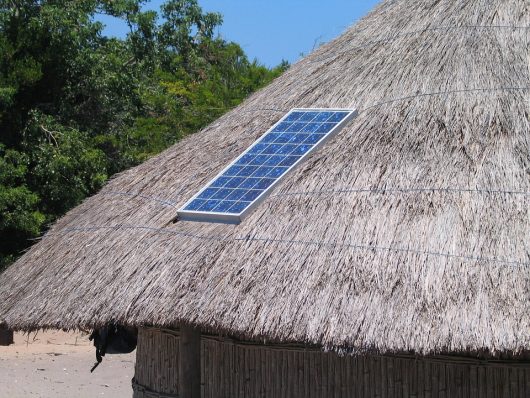
Energy poverty is a global issue. Access to energy, especially in developing areas, is severely lacking. Globally, an estimated 1.2 billion people have absolutely no access to electricity, and an additional 2.7 billion rely on the use of traditional biomass to cook.
Burning traditional biomass, which includes wood, agricultural by-products and dung, causes respiratory diseases that kill over 3.5 million annually, which is twice the amount of deaths caused by malaria every year.
Solving the problem of energy poverty is central to the goal of eliminating global poverty, but there is an extensive and politically-charged debate on the best way to approach solutions.
Tensions can run high in renewable sources such as hydro, solar and wind energy versus fossil fuels such as coal and oil. The potential role of nuclear power is also a significant consideration in the mix. Even beyond issues of energy sources, questions remain about whether energy generation should be largely centralized, or be more locally distributed?
This aspect of the question was highlighted in a recent debate held by the Brookings Institute. Ted Nordhaus is the co-founder and Research Director of the Breakthrough institute that is in favor of a more centralized model of energy development.
Nordhaus pointed out that in the past no country has had universal access to energy without the majority of the population moving out of agriculture and into cities, pointing out that growth in off-farm employment is crucial to this development.
In response, Daniel Kamme, Director of the Renewable and Appropriate Energy Laboratory at UC Berkley described the numerous technology innovations such as micro-grids and improved batteries that make a more distributed energy model more viable.
He emphasized that both centralized and distributed grids can coexist, and that rejection of smaller grids in favor of larger centralized ones is “to bet on the past, not bet on the future.”
A centralized model is more in line with coal-fired power plants and other fossil-fuel reliant methods, while a more dispersed approach has a higher reliance on renewable resources.
Proponents of fossil fuels such as Dr. Robert Bezdek, president of the consulting firm MISI, argue that the tried-and-true method of using coal is a much more reliable way to solve energy poverty, and that better scrubbing technology has improved the cleanliness of coal so that it is more sustainable.
Opponents of this viewpoint argue that this perception is an antiquated, one-size-fits-all model, and neglects to consider the level of innovation that exists now in contrast to the industrial revolution.
It is true according to World Bank data that least developed countries on average use renewable sources for 40.8 percent of their power generation, which is about twice as much as high-income countries.
Overall, the correct approach to solving energy poverty will continue to be debated until a solution is found. The answer to energy poverty must be sufficient to provide energy for both personal and commercial use in a sustainable manner.
– Adam Gonzalez
Photo: Pixabay

Hunger in Kenya: Organizations that are Helping
The Kenyan government has promised to release 50 million Kenya shillings, or $5 million, to be used to purchase food aid, but the government has yet to release the funds. West Pokot deputy governor Titus Lotee said, “We have started distributing food but the 4,000 bags of maize is not enough,” and called on humanitarian organizations to help fight the hunger in Kenya.
Action Against Hunger has implemented a strategy for 2015–2017 in Kenya in order to address two main pillars: ending the drought emergency and addressing all forms of malnutrition.
Action Against Hunger has strengthened its approach to addressing health problems in Kenya by implementing programs in nutrition, food security, water, sanitation and hygiene. Thus far, 275,552 people have received nutritional support and 25,060 people have accessed safe water and sanitation.
Another charity, Feed the Children, provides access to food, water and schooling in four of Kenya’s counties. The organization focuses on the most vulnerable: malnourished children under the age of five, pregnant and lactating women, and people living with HIV/AIDS.
Feed the Children has built water pans and rainwater harvesting systems, which can hold water for up to seven months after the rain stops for the year. The Australian government assisted Feed the Children in building 35 latrines in six schools and supplied 8,000-cubic-meter water tanks to seven schools.
The Feed Hungry Children in Kenya project is providing health clinics, where children are weighed and measured and given food supplements. Poor families are given a food ration of beans and maize each month.
In addition to the two organizations, the World Food Programme works with Feed the Children to serve regular meals to children in 170 schools throughout Kenya in hopes of mitigating the crisis.
These humanitarian organizations will work to tackle starvation and hunger in Kenya until the country’s food availability problem improves.
– Jackie Venuti
Photo: Flickr
UNESCO Education Study: 263 Million Children out of School
On July 15, a UNESCO education study found that 263 million youth and children worldwide do not attend school.
This group is comprised of about 61 million children of primary school age (6-11 years), 60 million of lower secondary age (12-14) and 142 million of upper secondary age (15-17). Most of these children reside in sub-Saharan Africa, where over a fifth of children of primary school age, a third of children of lower secondary age and nearly 60 percent of youths of upper secondary age were found to be out of school.
Out-of-school rates are particularly high among youth age 15-17 because in many countries, although primary and lower secondary schooling is mandatory, upper secondary schooling is not. Furthermore, youth in this age group are often of legal working age and must choose between employment and education. Those living in poverty often pick the former option in order to provide for their families.
In addition to wealth, other barriers to education include location, armed conflict and sex. Girls are less likely than boys to attend school. The study found that 15 million girls of primary school age will never have the opportunity to attend school; only 10 million boys will face the same predicament. More than half of these girls live in sub-Saharan Africa.
Although the numbers are shocking, they are still better than those from 2000, when 374.7 million children and youth were out of school. Progress has been made, but the results of the UNESCO education study show that there is much more work to be done.
This is especially true considering the pledge that more than 160 countries made at the 2015 World Education Forum in Incheon, South Korea. At the meeting, leaders promised to provide all girls and boys with quality and publicly funded primary and secondary education by the year 2030, a goal that is still far from actualization.
Education has always been inextricably linked to development. Quality education decreases poverty, promotes health and provides economic growth. Improving education is the key to creating more sustainable societies.
– Ugochi Ihenatu
Photo: Pixabay
Focusing on Education for The Day of the African Child
Since 1991, The Day of the African Child has been celebrated as an opportunity to advance African children’s rights. The day commemorates African students who were killed by police in a 1976 demonstration in Soweto, South Africa to protest education injustice.
The official theme of this year’s celebration, “Conflict and Crisis in Africa: Protecting All Children’s Rights,” recognizes that conflict, natural disaster and disease currently affect 500 million children worldwide. The Day of the African Child (DAC) events have centered on promoting access to education but this year there was a focus on how access is jeopardized by conflict.
According to the UNICEF All in School initiative, 36 percent of the primary-school age children who are not attending school are prevented by their residence in conflict-affected areas. Overall, this accounts for 59.3 million children. The damage to structures and infrastructure makes it difficult for African children who live in conflict zones to attend school.
According to a recent African Union report, Africa remains the most conflict-prone continent in the world. Approximately 57 million children in the world do not attend school and 30 million of those children are in sub-Saharan Africa. Living in a conflict zone not only makes attending school unsafe but also affects children’s emotional health.
The 2016 DAC celebration took place at more than 100 events worldwide thanks to partnerships with organizations like A World at School, which utilizes a network of global youth ambassadors and faith-based groups to accelerate progress in education.
This year 500 young people from around Africa staged a ‘youth takeover’ at Ethiopia’s Africa Union, in Addis Ababa for the DAC. Youth ambassadors played a key role in the celebration and promoting the message.
The African Committee of Experts on the Rights and Welfare of the Child provides member states with outlined suggestions for observing the DAC. Their recommendations further push the goals of the celebration by providing outlines of current conflict contexts in Africa, how they impact children and best practice for mitigating the impact.
The importance afforded to three decades of DAC and its worldwide events provides hope for the situation of children across Africa. While the struggles they face are remarkably diverse, more equitable access to education remains a priority.
– Charlotte Bellomy
Photo: Pixabay
What to Know about Education in Uruguay
Despite being one of the smaller nations of South America, the Oriental Republic of Uruguay boasts some of the most successful education statistics in the continent. In fact, Education in Uruguay boasts statistics among the best in the world.
According to the U.N. Development Program’s Education Index in 2013, Uruguay is “slightly better educated than the average country at 0.71 out of one” while the world’s median is 0.65. The Republic also boasts a 98.36 percent adult literacy rate, making them rank first out of 12th for South America and 33rd in the world’s ranking.
Education is compulsory in Uruguay for students between the ages of six and 11, and free at all levels. Its capital of Montevideo is also the major center for education and the home of the main and only public university: University of the Republic. Across the board, classrooms have a great student per teacher ratio, at 13.8 students per teacher. This assuring statistic has resulted in a greater amount of attention given to pupils in addition to higher grade averages.
The commitment to compulsory education in Uruguay dates back to the 1800s when President José Pedro Varela convinced the government to pass the 1877 Law of Common Education. This key statute instituted a model for public school systems and was made in the image of the French academic system. It created three separate branches – primary, secondary, and university levels. Although president for only one year, Varela’s impact remains influential to the country’s education system.
Uruguay’s commitment to education even goes so far as to become the first country to give free laptops and Wi-Fi connection to every student across the country. In 2009, President Tabaré Vázquez finalized the inaugural project “Plan Ceibal” which gave laptops to all grade school students and their teachers. The project worked in alliance with non-profit One Laptop Per Child, an organization with a mission to distribute low-cost laptops to poor children all over the world.
Education in Uruguay only continues to improve classroom conditions and technologies with each succeeding year. Minister of Education and Culture María Julia Muñoz and American Ambassador to Uruguay Kelly Keiderling recently renewed a Fulbright partnership between the two countries, which will allow teachers to learn modern education methods from their Fulbright scholars.
Muñoz stated that the Ministry of Education and Culture has even increased their contribution to the partnership program from 60,000 dollars to 100,000 dollars, to maintain their marked dedication to the lives of Uruguayan students and teachers.
The continued efforts of Uruguayan leaders will undoubtedly secure the significance of academia as an apex of the Oriental Republic and its culture. Further movements concerning the Education of Uruguay are, therefore, not to be discredited.
– Ashley Morefield
Photo: Flickr
How Should the World End Energy Poverty?
Energy poverty is a global issue. Access to energy, especially in developing areas, is severely lacking. Globally, an estimated 1.2 billion people have absolutely no access to electricity, and an additional 2.7 billion rely on the use of traditional biomass to cook.
Burning traditional biomass, which includes wood, agricultural by-products and dung, causes respiratory diseases that kill over 3.5 million annually, which is twice the amount of deaths caused by malaria every year.
Solving the problem of energy poverty is central to the goal of eliminating global poverty, but there is an extensive and politically-charged debate on the best way to approach solutions.
Tensions can run high in renewable sources such as hydro, solar and wind energy versus fossil fuels such as coal and oil. The potential role of nuclear power is also a significant consideration in the mix. Even beyond issues of energy sources, questions remain about whether energy generation should be largely centralized, or be more locally distributed?
This aspect of the question was highlighted in a recent debate held by the Brookings Institute. Ted Nordhaus is the co-founder and Research Director of the Breakthrough institute that is in favor of a more centralized model of energy development.
Nordhaus pointed out that in the past no country has had universal access to energy without the majority of the population moving out of agriculture and into cities, pointing out that growth in off-farm employment is crucial to this development.
In response, Daniel Kamme, Director of the Renewable and Appropriate Energy Laboratory at UC Berkley described the numerous technology innovations such as micro-grids and improved batteries that make a more distributed energy model more viable.
He emphasized that both centralized and distributed grids can coexist, and that rejection of smaller grids in favor of larger centralized ones is “to bet on the past, not bet on the future.”
A centralized model is more in line with coal-fired power plants and other fossil-fuel reliant methods, while a more dispersed approach has a higher reliance on renewable resources.
Proponents of fossil fuels such as Dr. Robert Bezdek, president of the consulting firm MISI, argue that the tried-and-true method of using coal is a much more reliable way to solve energy poverty, and that better scrubbing technology has improved the cleanliness of coal so that it is more sustainable.
Opponents of this viewpoint argue that this perception is an antiquated, one-size-fits-all model, and neglects to consider the level of innovation that exists now in contrast to the industrial revolution.
It is true according to World Bank data that least developed countries on average use renewable sources for 40.8 percent of their power generation, which is about twice as much as high-income countries.
Overall, the correct approach to solving energy poverty will continue to be debated until a solution is found. The answer to energy poverty must be sufficient to provide energy for both personal and commercial use in a sustainable manner.
– Adam Gonzalez
Photo: Pixabay
Heat Relief in Bangladesh: Cost-Effective Solutions
70% of the Bangladeshi population lives in huts with corrugated tin roofs, which greatly amplify the heat. Eco-Coolers, built with accessible materials such as plastic bottles, provide heat relief in Bangladesh to improve the lives of those living without power or air conditioning.
Paul works as a creative supervisor at an advertising company called Grey Group, which sponsors several pro-bono projects, including Eco-Cooler. To spread the knowledge on how to build an Eco-Cooler, Grey Group partnered with Grameen International Social Business Ltd., which works in many Bangladeshi villages.
Volunteers teach locals to build the Eco-Coolers from easily found materials and encourage them to teach others how to make them as well. Detailed, step-by-step instructions are also available on Grey’s website.
The materials to make an Eco-Cooler include a board cut to fit a window and plastic bottles with the bottom halves cut off. Due to a litter problem, plastic bottles are easy to find in rural villages. Repurposing waste for its construction and requiring no electricity to run, the Eco-Cooler serves as an environmentally-friendly and cost-effective cooling unit.
Extreme heat can decrease productivity, increase dehydration and the number of cases of heat stroke.
Considering the heat coupled with the tin-corrugated roofs, Jaiyyanul Huq, a creative director with Grey Group told The Observers, “I’ve been in these huts. It’s like being in a sauna in the Sahara.” Generally, the Eco-Cooler cools homes up to 5 degrees Celsius, or 9 degrees Fahrenheit, improving the quality of conditions for those living in homes with tin-corrugated roofs.
“The beauty of it is how easy these units are to make,” Huq told The Observers. Eco-Cooler has already impacted 25,000 homes, with more to come, providing environmentally-conscious, cost-efficient heat relief in Bangladesh.
– Laura Isaza
Photo: Flickr
5 Facts About Education in Palestine
U.S. foreign aid to Palestine is an incredibly contentious topic in current politics. However, putting past political disagreements for the sake of education is crucial for Palestinian children. Educating younger generations of children can provide hope for less poverty, radicalization and violence within the community.
– Saroja Koneru
Photo: Flickr
The Dangote Foundation Donates Food in Abuja, Nigeria
During a visit to the IDP camps of Abuja, Dangote Foundation chairman Alhaji Aliko Dangote was saddened by what he saw and pledged to alleviate the suffering of thousands of IDPs. The Dangote Foundation is a branch of the Dangote Group. The foundation provides charitable funds to a variety of causes in Nigeria and other African states.
Abuja currently has 13,481 internally displaced persons according to the latest assessment by the International Organization for Migration’s Displacement Tracking Matrix. The Dangote Foundation donated food items to the IDPs during Ramadan as a philanthropic action geared toward alleviating poverty in Nigeria.
The Federal Capital Territory (FCT) Minister Malam Muhammad Musa Bello directly received the donation and ensured that the IDPs would expressly benefit from the donations. These items included Dangote sugar, Dangote salt, Dangote Spaghetti, rice, Danvita and wheat meal.
The FCT Minister stated that the donation Abuja received was extremely generous and the country is grateful to the foundation. Moreover, the FCT Administration is committed to alleviating poverty and respects non-governmental organizations with a similar mission.
This donation has been one of many recent philanthropic actions by the Dangote Foundation in Nigeria. Within a span of five years, the foundation has donated N6.3 billion to various IDP camps in Nigeria. Currently, one US dollar equals 315.25 Nigerian Naira.
Previously, the Foundation made donations to Nigerian universities and women’s causes. They have also provided donations during ethnoreligious crises. In addition, the Dangote Foundation donated to the World Food Program to help Pakistan during massive flooding in 2010 and raised over N11billion for flood relief in Nigeria.
In coordination with the Gates Foundation; the Dangote Foundation, USAID and Nigerian governors joined together to secure political and financial resources to enhance immunization programs within Nigeria in order to keep the country polio-free.
The Dangote Foundation focuses on health, education, economic development and disaster relief through their commitment to decreasing the amount of people suffering or dying from poverty-related issues. The Dangote Foundation’s donations work to rectify the lack of education for children, to create quality healthcare and support underprivileged adults by improving access to education and healthcare.
– Kimber Kraus
Photo: Flickr
10 Interesting Facts About Somali Refugees
According to the U.N., there are more displaced persons now than there were after World War II. Somalia is one country suffering from a refugee crisis. It is a country of 10.8 million people, but as the country continues to experience political and economic instability, its people are fleeing to find life outside of Somalia.
With 1.1 million Somali refugees, the country has become the largest refugee-producing country in Sub-Saharan Africa. Here are 10 facts about Somali refugees:
– Jacqueline Venuti
Photo: All Africa
Cormack Family Funds New Children International Center
In Colombia, 11% of the country is unemployed and 37% of the country lives below the poverty line.
Children International has been working with Colombia for over 25 years to help children break the cycle of poverty. It has 10 community centers in Colombia serving more than 40,000 children.
“After having the opportunity to visit other Children International community centers, my family and I recognized the importance of these safe spaces,” said Dave Cormack. “We knew we wanted to help fund a center so that more kids have the opportunity to utilize Children International’s services.”
The new community center will include the Brightree Youth Computer Center, where children can do research, homework and learn valuable skills such as English as a second language. It will also have medical and dental clinics, a library, pharmacy and other meeting spaces.
The new youth center will have an outdoor multi-sport court, an art studio and other multi-use spaces. The centers give families a place to escape the negative influences of their poor communities.
Children in the program have access to a team of doctors, dentists, tutors and sponsors. The Children International Cormack Family Community Center is a safe place in the community and a path out of poverty.
The organization provides health benefits, including annual medical exams and health care during illness, providing nutritional support, counseling for children and families, dental care, clothing, school supplies and fees and items for the home.
The programs are focused on health, education, empowerment and employment. Through early intervention, Children International addresses children’s critical needs through daily interaction in community centers. The centers are unique facilities that enable Children International to reach its goal of eliminating poverty from children’s lives.
– Jacqueline Venuti
Photo: Children International