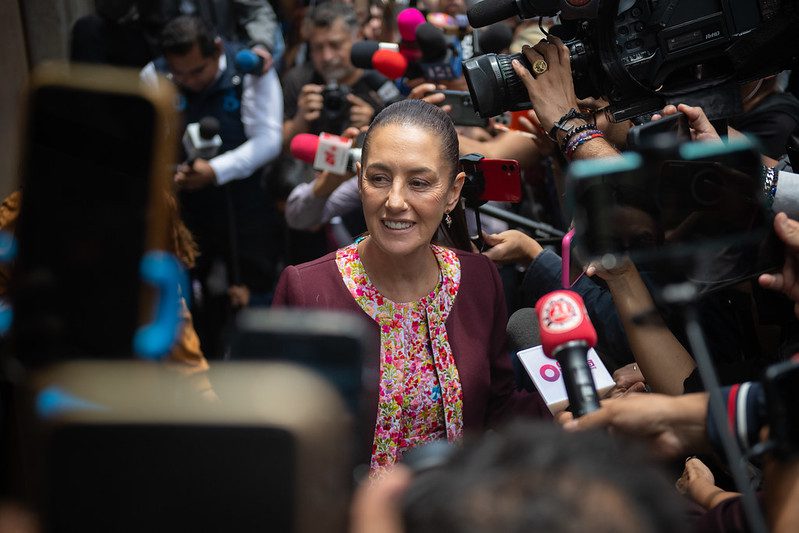
 Many countries have broken the glass ceiling with the election and faith of female leaders. Some of these known women include former Chancellor of Germany, Angela Merkel, Bolivian President, Lidia Gueiler Tejada, and American Vice President Kamala Harris. There are many women in leadership roles, trailblazing the path for more women, not only in privileged countries such as the USA, but in revolutionary ones like its neighbor, Mexico.
Mexico has witnessed many shifts in leadership in the 21st century that have caused many struggles for its residents. From drug lords to domestic abuse to bleak working conditions to a poor economy. The citizens of Mexico have known injustice and poverty.
First Female President
One woman has given herself the responsibility to seek that change for her people. New Mexican leader, President Sheinbaum. She can be attributed to a majority of the recent progress of women and girls in the country of Mexico.
Mexico’s governmental structure has not exactly catered to women, having placed them in weaker areas between the two quotas (horizontal and vertical), which translates to the ranking of the politician. In the vertical system, if the alcalde (mayor) is a man, then a síndico (trustee) must be a woman to balance the powers. In the horizontal system, the added requirement is to have candidate genders be balanced alongside both parties of the state, which adds another layer to a more feminist government. Even as the stronger option for equality, the horizontal system still requires tweaking and improvement.
How Are Gender Biases Changing?
With 60% of the vote, President Sheinbaum became the leader to lead a new era for Mexico, to level the playing field for women. Even with a long way to go, she has taken this opportunity to ensure the safety of women and girls, to provide equal opportunities for women and to increase public security.
Her legislative efforts have empowered women to seek out more for themselves in all areas of their lives: professionally and in society, producing more women in Mexican leadership roles. President Claudia Sheinbaum’s recent legislative vision includes a Constitutional Amendment for Substantive Equality, constitutional reforms, the Ministry of Women and the most recent launch of the Pension Program for Older Women.
What Female Leadership Brings
U.N. Women data states, “In Mexico, 88.9% of legal frameworks that promote, enforce and monitor gender equality under the SDG indicator [Sustainable Development Goals], with a focus on violence against women, are in place” which is a good sign of progress, yet women still face sexual abuse and domestic violence at a high rate and carry the load of doing unpaid domestic work. With changing expectations, women can take charge of their assets, career and choice of marriage.
Having a background in climate science, President Sheinbaum holds a unique view on politics and has taken action on environmental affairs as the former President’s [López Obrador] environmental minister. Impacts she has made include driving electric transit, the use of renewable energy and the production of electric cars.
Feminist Policies in Motion
Leading up to Sheinbaum’s presidency, Mexico had a balanced gender representation with 50.2% of women making up the congress. Mexico is also one of the countries whose public and foreign policy centers around women’s rights. Sheinbaum’s new policies are with feminist-led having immediate effect on the increase of femicide (in 2024, nearly 800 reports, according to WOLA) and homicide persecutions (nearly 3,000 reports, according to WOLA), destroying rape culture (more than 21,000 reports, according to WOLA), dismantling harmful gender stereotypes like assuming men make better leaders by ways of the Constitutional Amendment for Substantive Equality and the Ministry of Women addressing how Mexico could act for equality to the Elimination of Discrimination against Women (CEDAW) Committee.
Mexico’s leadership initiative of the National Care System has improved child support with the establishment of more daycares, providing a better chance for women to work alongside their male counterparts, decreasing the pay gap and increasing the value of women’s work, according to WOLA.
Luckily, the government has decriminalized abortion, yet the level of accessibility still remains an issue. With this concern in mind and many others, President Sheinbaum is challenged by producing budgets that will lend to more humanitarian resources. Further challenges are changing current policies to reflect a more feminist outlook including Mexico’s military and the percentage of women wrongfully incarcerated.
A Personal Reflection
On a first-hand account, Laura Lorena Robles Ruiz, beauty entrepreneur and State Commissioner of COESPRISSON reflects back on her experiences and visions for Mexico. In these roles, she has managed to open spaces for women, accompanying them, teaching them, and empowering them through her experience and training. Despite personal and economic challenges, she continues to contribute to society.
“Although Mexico still has a long way to go, it has taken firm steps towards equality. I am proud to see more and more women in Mexican leadership positions, bravely undertaking new ventures, earning their place with dignity, and demonstrating that their participation is not just a quota, but a strategic value derived from their capabilities. I am proud to have been an active part of this change, contributing from my public, business, and educational trenches,” she shared with The Borgen Project.
“Today, I continue to advocate for a Mexico where women live with freedom, security, and real opportunities—a Mexico where we can grow, shine, and enjoy life without asking for permission. I see my two daughters living this way, and I know that when a woman transforms herself, she also transforms her family, her community, and her country. President Sheinbaum has reshaped Mexican leadership to be more inclusive and humanitarian,” Laura Lorena Robles Ruiz added.
Women in Mexican Leadership: The Future
In daily life, Mexican women still face poor public policies that support single moms, domestic abuse cases, and rooted cultural biases. Programs like Mujeres con Bienestar have chosen the responsibility to reshape Mexican society. Pensions for older women give more control and recognition to women’s economics. Reform and constitutional changes have mended the gender wage gap (Article 123), recognizing the equality of women and men. Women in Mexican leadership are represented in the current cabinet far greater than it was before.
President Sheinbaum’s future presidency ensures a more positive attitude towards Mexico’s maturation as a country. Indeed, along with the first female president, Mexico has witnessed more female political participation, almost 40% representation in STEM, more entrepreneurship, greater representation of gender violence (#NiUnaMenos) and new cultural standards in media. In her leadership, the elevation of women will continue to be at the forefront of policy and Mexican culture.
– Melody Aminian
Melody is based in Irvine, CA, USA and focuses on Good News for The Borgen Project.
Photo: Flickr

The Work Expanding Clean Water Access
Water Sanitation and Collection in Kiribati and Tonga
The Kiribati government collaborated with the Church of Jesus Christ of Latter-day Saints and Suez Group to install 10 solar-powered water plants in five of the country’s islands. Between August 2024 and April 2025, the collective built plants on the islands of Aranuka, Onotoa, Beru, Abatiku and Arorae. This brought clean water to more than 5,800 people, 4% of Kiribati’s population. The initiative plans to build plants on four more islands, including two on the island of Marakei.
The plants focus on desalination, the process of removing salt and minerals from water. Desalination allows communities to create drinkable water from more sources, such as seawater, particularly beneficial for an island nation.
In Kiribati, drought and rising sea levels had contaminated well water, and six to eight children had died every week from illnesses associated with contaminated water. Following the construction, the Church also replaced a broken water pump and built a second water tank in the Fahefa village in Tonga, an island nation south of Kiribati.
Funding for the Water Sector in Cambodia
Cambodia’s Ministry of Industry, Science, Technology, and Innovation (MISTI) and the French Development Agency (AFD) partnered in June 2025 to finance clean water access in the country. The organizations, along with the European Union, are considering a fund of €275 million for Cambodia’s water sector between 2025 and 2027.
The organizations established a new borrowing limit to a bank to support private water supply companies. They also discussed creating programs to train water sector professionals in Cambodia.
Almost 4 million people in Cambodia lack access to a safe toilet. Of the poorest rural Cambodians, 80% defecate in open spaces, which can lead to water contamination. One in three people in the country does not separate contaminants from water, increasing the risk of contracting disease.
New Water Infrastructure in India
In June 2025, engineers inspected locations in Khowai, India, to determine which could house new water infrastructure. The town plans to install overhead water tanks at these sites, one of which is near a high school. The Khowai Municipal Council expects to allocate $5.8 million for the projects.
In Manipur, east of Khowai, the Indian government’s JalJeevan Mission (JJM) has provided rural households with tap water capabilities since August 2019. As of June 2025, the project has implemented 286 water supply schemes.
– Tyler Payne
Photo: Flickr
Gender Wage Gap in Libya
Political complexities often dominate the narrative of Libya’s socio-economic landscape. However, beneath the surface, a compelling story of progress in gender equality is unfolding, particularly concerning women’s economic roles. While a gender wage gap in Libya persists, reflecting historical and societal challenges, various initiatives and inherent strengths are actively narrowing this divide, demonstrating how life is improving for women through incremental yet impactful changes. This piece delves into the often-overlooked advancements contributing to women’s growing economic influence in Libya.
Employment and Education
A key indicator of economic empowerment is labor force participation. Since 1990, Libya has seen an increase in female labor force participation. While still lower than that of men, the trajectory is positive, with statistics showing a slight but consistent rise, reaching 33% in 2024. This upward trend signifies more women entering the workforce, which could be contributing to the national economy and gaining financial independence. Such incremental growth, though not always dramatic, represents significant progress in a context marked by traditional gender roles and economic transitions.
Education serves as a foundational pillar for economic equality, and Libya has made commendable progress in this area. A remarkable 70.5% of women aged 25 and older have attained at least some secondary education. This high level of educational attainment is a critical enabler, equipping women with the skills and knowledge necessary to pursue diverse careers, engage in higher-paying professions, and contribute to the economy in more significant ways. It indicates a long-term investment in women’s capabilities that will inevitably impact wage equality.
Women in Entrepreneurship and Innovation
Libyan women are increasingly venturing into entrepreneurship and embracing digital innovation, creating their own economic opportunities. Initiatives like “She Codes” and “Maharah Coding Academy,” with the support from organizations such as the European Union and CESVI, are empowering women with essential computer programming and digital skills. These programs not only provide pathways to employment but also foster self-sufficiency and independence. The “Deraya Initiative” further supports entrepreneurs, indicating a growing ecosystem for female-led businesses, which are crucial for economic diversification and women’s financial autonomy.
Increasing Women’s Influence in Governance and Finance
Progress is also evident in women’s growing representation in leadership and financial inclusion. The gap in account ownership between men and women in Libya (11.1%) is notably smaller than the broader Middle East & North Africa aggregate (14%), indicating greater access to financial services for women, according to the World Bank. In the political sphere, women are slowly gaining ground, holding 16.5% of seats in the national parliament in 2024, an increase since 2010.
Furthermore, women constitute 40% of members in Local Peacebuilding and Development Committees, actively influencing conflict resolution and community governance. The election of Libya’s first female mayor in late 2024 stands as a historic milestone, symbolizing a broader shift towards greater female representation and influence in decision-making roles.
Policies and Partnerships Driving Change
The strides made are significantly bolstered by the concerted efforts of both national and international organizations. The UNDP in Libya focuses on gender equality, implementing a Gender Strategy that addresses the underlying causes of inequality. It support women’s participation in elections and ensure equal access to resources and decision-making power, including the implementation of the National Strategy for the Advancement of Women in Libya.
Similarly, the European Union finances numerous projects focused on economic and social rights for women and girls, promoting equal access to technology, education, and supporting female entrepreneurship through initiatives like the EU4PSL project. These collaborations are pivotal in accelerating the pace of change.
The Path Ahead for Full Equality
While acknowledging the ongoing challenges, such as the scarcity of precise data on wage disparities and the need for further legal and social reforms, Libya’s progress demonstrates a resilient push towards gender equality. These challenges are viewed as opportunities for continued advocacy and intervention, driving further innovation in policy and programming.
The journey towards the reduction of the gender wage gap in Libya is characterized by steady, if often understated, progress. The increasing labor force participation, significant educational achievements, burgeoning entrepreneurial spirit, and growing presence in leadership positions are powerful indicators of a positive shift. These advancements, supported by dedicated national and international efforts, are not just statistics; they represent improved lives for countless women, contributing to a more vibrant and equitable Libyan society. The story of women’s economic empowerment in Libya is one of resilience, quiet determination, and a promising future.
– Cameron Jones
Photo: Flickr
Food Security in the U.S. Virgin Islands
The U.S. Virgin Islands (USVI), an unincorporated United States territory, comprises the three Caribbean islands of Saint Thomas, Saint John and Saint Croix. They span 737 square miles of hilly, rugged and mountainous terrain, with little flat land and less than 3% arable. The islands are sparsely populated (a total of 104,477) with low density. The USVI is a high-income country based on tourism due to its beautiful beaches and subtropical climate. Although on the whole its climate is attractive, the islands also experience frequent hurricanes, e.g., the back-to-back Category 5 Hurricanes Irma and Maria in 2017. Here is information about food security in the U.S. Virgin Islands.
Food Security in the U.S. Virgin Islands
Several factors challenge food security in the U.S. Virgin Islands. These include climate (hurricanes and drought), poor soil quality, limited crop diversification, lack of value-added processing, high cost of food production and limited food distribution networks. The government offers no programs or incentives to encourage the development of agricultural or food businesses. The U.S. Virgin Islands import almost all food consumed (97%). A recent study of USVI food systems also noted infrastructure issues, especially related to water capture and storage; and sociocultural factors (e.g., lifestyle, history of slavery, land ownership questions).
Adding to food security challenges in the U.S. Virgin Islands is the islands’ extent of poverty, reported by the 2020 Decennial Census to be 23% (19% on St. John, 21% on St. Thomas and 25% on St. Croix).
In November 2022, the country’s food insecurity was acknowledged in USVI Governor Bryan’s proclamation of November 12-20, 2022, as “Hunger and Homelessness Awareness Week.” The proclamation thanked those who provided services and called upon everyone to partner financially and/or volunteer to provide aid to eliminate hunger and homelessness.
USVI Hunger: US Assistance
Likely due to its size, the USVI is not included in global assessments such as the Global Hunger Index and the Global Nutrition Report. But that does not mean that hunger is nonexistent in the islands. As a U.S. territory, the Virgin Islands benefits from various assistance programs—SNAP (Supplemental Nutrition Assistance Program/food stamps), school meal programs, food programs for low-income students and families.
When the U.S. Congress cut SNAP benefits in December 2022, it was reported that the reduction of average SNAP benefits to $6/person/day affected almost 11,000 USVI households. The steepest drop was for many older adults. The cuts were due to ending Emergency Allotments related to COVID-19 and meant that USVI lost $2.1 million in assistance. These cuts had a domino effect down the food chain, on farmers and ranchers, food manufacturers, truckers, retailers and their employees. In the spring of 2025, this assistance was in jeopardy, the extent of impact depending on the budget to be approved by the U.S. Congress.
Addressing Food Security
Virgin Islands Good Food (VGF), established in 2012, is a nonprofit whose mission is “to cultivate a unique and nourishing food system for innovation, economic development, and agricultural growth,” connecting consumers, the government and private industry. Its work includes, but is not limited to, market creation and access, education and services and assistance for farmers. In February 2024, VGF hosted the first Island Food Systems Summit at the University of the Virgin Islands. U.S. Department of Agriculture representatives and representatives from the National Black Food & Justice Alliance participated with other partners and Virgin Island farmers and producers. They discussed multisector collaboration, farmer empowerment, disaster response strategies and youth engagement in food systems, in an overall effort to increase food security and sustainability.
For 20 years, the University of the Virgin Islands has observed World Food Day as an educational initiative aiming to eradicate hunger in the Virgin Islands. The university’s School of Agriculture focuses on food security and especially children’s access to nutritious meals. World Food Day 2024 included a seedling giveaway and educational workshops on cooking, composting and gardening. The School of Agriculture also organizes food drives to support local organizations such as My Brother’s Table and the Lighthouse Mission.
In January 2025, Governor Bryan signed into law the Virgin Islands Comprehensive Land and Water Use Plan. The framework of the Comp Plan focuses on:
Self-Sufficiency and Food Security in the U.S. Virgin Islands
In February 2025, the USVI Delegate to Congress, Stacey Plaskett, encouraged the islands to increase agricultural independence, which could lead to greater food self-sufficiency and thus reduce the country’s total reliance on food imports. “We here in the Virgin Islands, we don’t just need to tighten our belts,” Plaskett said. “That’s austerity measures that we know we need, but we need to create self-sufficiency, food security, to come up with innovative ways that we will make up that gap for our students and for our elders.”
Although hunger is not a significant problem for the Virgin Islands, its dependence on imports is. One can see the recognition of the need for self-sufficiency for food security in the several examples above—government legislation, the role of the University of the Virgin Islands and Virgin Islands Good Food and other nonprofits. Intersectoral activities can work effectively to improve farming communities, the supportive infrastructure and food security overall.
– Staff Reports
Photo: Unsplash
Deaf People in Tanzania: From Exclusion to Opportunity
Understanding the Context
Tanzania has more than 500,000 deaf and hard-of-hearing individuals, yet many face major barriers to education. According to government data, more than half of this population cannot read or write in English or Swahili. The Convention on the Rights of Persons with Disabilities (CRPD) says people with disabilities should have equal access to education. This poses a challenge, as Tanzania lacks enough trained teachers who know sign language. Most deaf students drop out before secondary school because classrooms are not adapted to their needs. This prevents them from gaining the basic skills needed for future jobs and independence.
The CRPD also protects the right of people with disabilities to work and earn a living. In Tanzania, many deaf individuals could be left out of the job market because they did not receive a proper education. Without training or support, they could often rely on family or informal work to survive. Social stigma and a lack of workplace accommodations could make it harder to find stable jobs. This exclusion could not only affect individuals but also hold back the country’s economy by leaving a large group of people underemployed and unable to contribute fully to national development.
Entrepreneurship as a Path to Empowerment
Entrepreneurship is becoming a valuable path to employment for deaf individuals in Tanzania, offering a way to overcome traditional job market barriers. FUWAVITA, a deaf women’s organization founded in 2018 with the support of Light for the World, empowers its members through economic skills training. Based in Dar es Salaam, the group teaches deaf women how to create and sell handmade products like soaps, batiks and beaded items. After completing the training, many participants launch small businesses that generate income and promote financial independence. This initiative not only creates sustainable livelihoods but also builds confidence and community leadership among deaf women and other deaf entrepreneurs in Tanzania overall.
Harnessing Technology for Inclusion
In Tanzania, the Federation of Disabled People’s Organizations (SHIVYWATA) is working to amplify the voices and rights of people with disabilities through advocacy and awareness. As a beneficiary of the Voice program, SHIVYAWATA promotes inclusive participation and campaigns for equal access to resources, including digital platforms, with a strong focus on reaching marginalized groups such as the deaf community. Its public engagement and visibility work had garnered recognition for fostering disability rights in innovative ways.
Meanwhile, DS International supports deaf people in Tanzania by working with local organizations that focus on advocacy, education, vocational training and more.
Building a More Inclusive Ecosystem
Tanzania has unveiled strategies regarding national disability and guidelines on disability-inclusive planning to ensure that individuals with disabilities are part of the national development. These initiatives aim to integrate disability inclusion across sectors such as education, employment, health and economic development. By addressing systemic barriers and promoting inclusive planning, the government is working to create an enabling environment where individuals with disabilities can participate equally in society. This approach reflects a commitment to equity and sustainable development in Tanzania and a more inclusive approach to society where deaf entrepreneurs can thrive and help strengthen their communities and the country as a whole.
A Model for Sustainable Development
Deaf people in Tanzania are breaking the cycle of poverty and changing how society views disability. They are proving that with the right support, people with disabilities can drive meaningful change. Tanzania combines grassroots programs, vocational training and national policies to empower these individuals.
As donors and development agencies search for effective poverty reduction strategies, Tanzania’s deaf people’s movement stands out. It shows that accessible economic systems benefit everyone- not just people with disabilities, but entire communities.
– Vasara Mikulevicius
Photo: Flickr
The Divide Between Wealth and Poverty in Abuja
Similarly, internal migration has become a growing trend in Nigeria, as those without the means to move abroad relocate to urban centers in pursuit of greener pastures. According to the United Nations (U.N.), approximately 49% of Nigerians now live in urban areas compared to 16% in 1960, highlighting the significant shift toward urbanization over the decades.
Internal Migration to Abuja
With terrorism, banditry and kidnappings in the north, along with separatist agitations in the southeast, internal migration to Abuja has been on the rise, especially among those who prefer it over Lagos. Abuja, Nigeria’s capital, is often seen as a city of wealth and opportunity. Skyscrapers, luxury estates and high-end shopping malls paint a picture of prosperity. However, beyond this facade lies a harsh reality for many residents. While the city continues to grow economically, this growth benefits only a small fraction of the population.
Poverty in Abuja
For the majority, poverty in Abuja is a daily struggle. Following a change in administration in 2023, Nigeria’s government removed fuel subsidies and floated the currency, increasing the nation’s inflation rate to more than 30% in September 2024. The government announced a new minimum wage of $43 per month in July 2024 to ease the financial burden on its citizens. However, it has yet to be implemented for primary school teachers and nurses in the Federal Capital Territory (FCT).
Consequently, more than 50% of people living in Abuja experience poverty, according to the Global Data Lab. Low-income earners, including cleaners and security guards, are the most vulnerable. Housing costs are exorbitant, with rents for studio apartments in Abuja ranging from $1,000 to more than $1,300 per year. Meanwhile, the average Nigerian employee earns less than $1,000 annually, forcing many into overcrowded slums or makeshift housing.
Despite Abuja’s reputation as a thriving metropolis, its wealth remains concentrated in the hands of a few, leaving the rest to struggle to make ends meet.
No Middle Ground
Abuja’s wealth gap is striking. In upscale areas like Asokoro and Maitama, luxury cars ply smooth roads, while nearby communities like Mpape and Dakibiyu struggle with poor infrastructure, scarce clean water and unreliable electricity. This stark contrast reflects the deep economic divide, where prosperity is concentrated among the few while many struggle to make ends meet.
The wealthiest 20% of Nigerians control 42% of the national income, while the most impoverished 20% share a mere 7%. This imbalance suggests that economic opportunities are disproportionately accessible to the affluent, leaving a significant portion of the population struggling to ascend the economic ladder.
Increased inflation has reduced purchasing power, making necessities harder to afford. The financial strain has sparked public outcry, with protests in major cities, including Abuja, as citizens demand relief from soaring living costs.
Can Change Come?
The Federal Government of Nigeria has implemented several economic reforms, including devaluing the Naira to stabilize the economy. However, these measures have also contributed to increased living costs, prompting debates about their efficacy and impact on the vulnerable population, especially those in the informal sector.
Therefore, nongovernmental organizations (NGOs) like Oxfam have highlighted the urgency of implementing progressive taxation and increasing social investments to bridge the widening economic divide. In pursuit of this goal, Oxfam actively works to enhance livelihoods, promote gender equality, strengthen governance and deliver humanitarian aid, all while creating sustainable economic opportunities for vulnerable populations.
Another NGO, the Ambience of Hope Exceptional Foundation, launched Operation Feed Abuja Municipal Area Council in December 2023, targeting vulnerable people in the city. The foundation distributed food items, sewing machines, generators, wheelbarrows, hair dryers, grinding machines, and more to uplift residents. Similarly, in 2024, the World Bank committed $12.2 billion to Nigeria’s economy to drive diversified growth, job creation and social inclusion, focusing on youth, women and marginalized communities.
Conclusion
While Abuja stands as a symbol of Nigeria’s aspirations and growth, it also embodies the profound challenges of economic inequality. Observing the city’s dual realities underscores the pressing need for policies that foster inclusive growth, ensuring that prosperity is accessible to all residents, reducing poverty in Abuja.
– Staff Reports
Photo: Flickr
Caring for Equality: Empowering Women in Uruguay
The law, backed by the coordinated efforts of multiple ministries, regulated services, trained caregivers and public awareness initiatives aimed at rebalancing gender norms. The SNIC aims to challenge deeply entrenched gendered division of labor in Uruguay, where women disproportionately shoulder unpaid domestic and caregiving work.
SIEMPRE Centers: Redefining Care and Empowering Women
Uruguay’s National Comprehensive Care System, launched in 2021, introduced SIEMPRE Centers, which are early community childhood daycares with early-learning facilities managed by public, private and civil society partnerships, according to the March 2025 report. These centers offer up to eight hours of daily care and receive support from collaboration between trade unions, employers, communities and the Instituto Nacional de Niñas, Niños y Adolescentes (INAU).
Five components driving SIEMPRE’s impact are workshops for families comprising life and vocational skills like gastronomy (cooking), sewing, hairdressing, gardening and other crafts. These workshops aim to empower parents, primarily mothers, to increase their ability to pursue education or paid work due to freed-up time. Violence prevention is a welcome side-effect of SIEMPRE Centers, with staff often able to detect and respond to domestic or gender-based violence, boosting women’s physical safety, according to the March 2025 report. Lastly, centers help shift gender norms by providing crucial skills to young fathers like cooking and nursing, which are deep-rooted stereotypes assigned to women.
Legal Advances for Women
Legal framework and broader equality policies endorse key international women’s rights treaties and implement a progressive domestic legal framework. Notable laws include:
Supporting networks and civil society organizations like Mujer y Salud en Uruguay advocate for sexual and reproductive health and rights through public awareness campaigns. Uruguay XXI, an agency that promotes investment and exports, has advanced gender equality in its workforce. Fifty six percent of its 2024 “Más Comercio” mentoring targets were women-led businesses, and women hold about 58% of its leadership roles.
Driving Change
Further engagement, such as campaigns encouraging male caregivers, aims to break norms. For example, the MenCare Campaign engages men as fathers and caregivers to promote gender equality. Although progress is slow, Uruguay is making efforts to make SNIC a social service. By strengthening collective provision, Uruguay transforms care from a burden into a collective responsibility, which would validate unpaid work and reduce hidden gender costs.
SIEMPRE Centers often negotiate through collective bargaining involving unions, employers and the government. Union-business partnerships can produce systemic reforms.
Constant Obstacles
However, despite formal equality, significant challenges persist, like unequal representation. For instance, women hold about 28% of parliamentary seats and top leadership roles, one of the lowest levels in Latin America. Women endure the brunt of unpaid labor. About 61.4% of women are involved in unpaid work, compared to 35.9% of men, resulting in women dedicating their time to domestic chores and caregiving, limiting their opportunities.
While the SNIC made strides in guaranteeing women’s care, the lack of funds makes it difficult to expand its resources. The SNIC budget share for the past five years has been stagnant, resulting in limited ability to construct and expand new centers nationwide. Violence against women in Uruguay remains at one of the highest rates in Latin America, with about 77% of women over 15 experiencing some form of gender-based violence, according to a survey conducted by the United Nations Uruguay.
Looking Ahead
Uruguay’s SNIC is a bold, feminist-informed leap in public policy that directly confronts the gendered distribution of care and builds new pathways for women’s economic and social success. SIEMPRE Centers represent a strong frontline that provides care, economic empowerment, decision-making power, and violence prevention. Yet progress could halt without continued investment, cultural transformation, and stronger female representation.
– Sebastian Llerena
Photo: Flickr
Women in Mexican Leadership
Mexico has witnessed many shifts in leadership in the 21st century that have caused many struggles for its residents. From drug lords to domestic abuse to bleak working conditions to a poor economy. The citizens of Mexico have known injustice and poverty.
First Female President
One woman has given herself the responsibility to seek that change for her people. New Mexican leader, President Sheinbaum. She can be attributed to a majority of the recent progress of women and girls in the country of Mexico.
Mexico’s governmental structure has not exactly catered to women, having placed them in weaker areas between the two quotas (horizontal and vertical), which translates to the ranking of the politician. In the vertical system, if the alcalde (mayor) is a man, then a síndico (trustee) must be a woman to balance the powers. In the horizontal system, the added requirement is to have candidate genders be balanced alongside both parties of the state, which adds another layer to a more feminist government. Even as the stronger option for equality, the horizontal system still requires tweaking and improvement.
How Are Gender Biases Changing?
With 60% of the vote, President Sheinbaum became the leader to lead a new era for Mexico, to level the playing field for women. Even with a long way to go, she has taken this opportunity to ensure the safety of women and girls, to provide equal opportunities for women and to increase public security.
Her legislative efforts have empowered women to seek out more for themselves in all areas of their lives: professionally and in society, producing more women in Mexican leadership roles. President Claudia Sheinbaum’s recent legislative vision includes a Constitutional Amendment for Substantive Equality, constitutional reforms, the Ministry of Women and the most recent launch of the Pension Program for Older Women.
What Female Leadership Brings
U.N. Women data states, “In Mexico, 88.9% of legal frameworks that promote, enforce and monitor gender equality under the SDG indicator [Sustainable Development Goals], with a focus on violence against women, are in place” which is a good sign of progress, yet women still face sexual abuse and domestic violence at a high rate and carry the load of doing unpaid domestic work. With changing expectations, women can take charge of their assets, career and choice of marriage.
Having a background in climate science, President Sheinbaum holds a unique view on politics and has taken action on environmental affairs as the former President’s [López Obrador] environmental minister. Impacts she has made include driving electric transit, the use of renewable energy and the production of electric cars.
Feminist Policies in Motion
Leading up to Sheinbaum’s presidency, Mexico had a balanced gender representation with 50.2% of women making up the congress. Mexico is also one of the countries whose public and foreign policy centers around women’s rights. Sheinbaum’s new policies are with feminist-led having immediate effect on the increase of femicide (in 2024, nearly 800 reports, according to WOLA) and homicide persecutions (nearly 3,000 reports, according to WOLA), destroying rape culture (more than 21,000 reports, according to WOLA), dismantling harmful gender stereotypes like assuming men make better leaders by ways of the Constitutional Amendment for Substantive Equality and the Ministry of Women addressing how Mexico could act for equality to the Elimination of Discrimination against Women (CEDAW) Committee.
Mexico’s leadership initiative of the National Care System has improved child support with the establishment of more daycares, providing a better chance for women to work alongside their male counterparts, decreasing the pay gap and increasing the value of women’s work, according to WOLA.
Luckily, the government has decriminalized abortion, yet the level of accessibility still remains an issue. With this concern in mind and many others, President Sheinbaum is challenged by producing budgets that will lend to more humanitarian resources. Further challenges are changing current policies to reflect a more feminist outlook including Mexico’s military and the percentage of women wrongfully incarcerated.
A Personal Reflection
On a first-hand account, Laura Lorena Robles Ruiz, beauty entrepreneur and State Commissioner of COESPRISSON reflects back on her experiences and visions for Mexico. In these roles, she has managed to open spaces for women, accompanying them, teaching them, and empowering them through her experience and training. Despite personal and economic challenges, she continues to contribute to society.
“Although Mexico still has a long way to go, it has taken firm steps towards equality. I am proud to see more and more women in Mexican leadership positions, bravely undertaking new ventures, earning their place with dignity, and demonstrating that their participation is not just a quota, but a strategic value derived from their capabilities. I am proud to have been an active part of this change, contributing from my public, business, and educational trenches,” she shared with The Borgen Project.
“Today, I continue to advocate for a Mexico where women live with freedom, security, and real opportunities—a Mexico where we can grow, shine, and enjoy life without asking for permission. I see my two daughters living this way, and I know that when a woman transforms herself, she also transforms her family, her community, and her country. President Sheinbaum has reshaped Mexican leadership to be more inclusive and humanitarian,” Laura Lorena Robles Ruiz added.
Women in Mexican Leadership: The Future
In daily life, Mexican women still face poor public policies that support single moms, domestic abuse cases, and rooted cultural biases. Programs like Mujeres con Bienestar have chosen the responsibility to reshape Mexican society. Pensions for older women give more control and recognition to women’s economics. Reform and constitutional changes have mended the gender wage gap (Article 123), recognizing the equality of women and men. Women in Mexican leadership are represented in the current cabinet far greater than it was before.
President Sheinbaum’s future presidency ensures a more positive attitude towards Mexico’s maturation as a country. Indeed, along with the first female president, Mexico has witnessed more female political participation, almost 40% representation in STEM, more entrepreneurship, greater representation of gender violence (#NiUnaMenos) and new cultural standards in media. In her leadership, the elevation of women will continue to be at the forefront of policy and Mexican culture.
– Melody Aminian
Photo: Flickr
Amazon Deforestation Undermines Indigenous Rights in Brazil
Background to Indigenous Rights in Brazil
Brazilian policy aimed to balance development needs with indigenous rights and environmental protection. This approach shifted dramatically in 1964 when military forces successfully staged a coup and established a dictatorship.
Almost immediately after seizing power, the regime prioritized economic growth through large-scale development projects. The government built highways, including the Trans-Amazonian road, promoted colonization programs, and opened the Amazon to mining, logging and agribusiness operations.
Officials adopted slogans such as “Integrar para não entregar” (“Integrate to avoid surrender”). This phrase reflected the regime’s belief that Brazil needed to occupy the Amazon to protect national interests. These policies brought severe consequences for indigenous communities.
Twenty-one years later, the military dictatorship was toppled and Brazil transitioned back into a democracy. When the democratic constitution was still in progress, indigenous advocates and allies, including the Catholic Church’s Indigenous Missionary Council (CIMI), had lobbied vigorously to enshrine indigenous rights to their ancestral lands. “CIMI has become one of the most important defenders of indigenous rights, focusing on land rights, self-organisation and health care in indigenous territories.”
Feasting on the Amazon
Reestablishing democracy and constitutional protections has not resolved these issues. Subsequent administrations continue to face pressure to accelerate economic growth in the Amazon interior. This development drives deforestation and displaces indigenous communities. Agribusiness and logging operations systematically destroy public and indigenous Amazon lands. The state of Rondônia exemplifies this pattern with one of Brazil’s highest deforestation rates.
The Pastoral Land Commission, which advocates for environmental protection through the Brazilian Catholic Church, documented increased violence linked to logging activities.
“Poor people who effectively produce on their small lands are systematically persecuted, expelled, threatened or killed in the interest of real estate speculation,” Raphael Bevilaqua, the Commission’s attorney in Rondônia wrote.
Global demand for cheap coffee, meat, and soy incentivizes these developments. Multinational corporate giants such as McDonalds, Sysco, JBS Foods and Wal-Mart actively benefit from land seizure and repurposing it for cattle use, according to Protean. One Brazilian journalist writes, “Both these broader incentives and direct investment have helped facilitate the Amazon’s destruction and promoted abuses against Indigenous peoples.”
Displacing the Kayapó and the Cost of Energy
One example of this dynamic is the construction of the Belo-Monte dam. The Brazilian government began to implement plans to construct hydroelectric dams on the Xingu River, in northern Brazil. In response, hundreds of Indigenous leaders from the Xingu basin – Kayapó, Juruna, Arara, and others – united in the town of Altamira for a historic protest meeting, the first of its kind. Completing the dam would effectively destroy the livelihoods of thousands as well as increase the risk of flooding villages.
Riding the 1989 global wave of protests, indigenous communities in the Amazon leveraged the rare opportunity to take their grievances to an international audience. Around the world, people responded with ardent pressure against the dam’s construction. The public outcry eventually led the World Bank to pull out of financing its construction. Eventually, the Brazilian government capitulated, a watershed moment. For the first time the indigenous peoples were successful in halting the destruction of ancestral land.
Reversing the Victory
Rising electricity demands coupled with public consciousness favoring cleaner solutions, lead to the dam’s construction entering the public dialogue once again. Indigenous communities began to coalesce: organizing protests, filing lawsuits, and lobbying FUNAI (analogous to the Bureau of Indian Affairs in the U.S.) against the construction. Even Sting, the British rockstar who headlined The Police, joined in their movement.
The construction went ahead in 2010 and five years later, the Brazilian government, facing substantial domestic and international scrutiny, launched an investigation into the dam’s construction. Investigation found that the dam’s main contractor, Norte Energia, had committed serious federal crimes. “In December, Brazil’s Public Federal Ministry, an independent state body, started legal proceedings to have it recognized that the crime of ‘ethnocide’ was committed against seven Indigenous groups during the building of the Belo Monte dam.”
Cautious Optimism
One tribe, the Kayapó, have been particularly vocal in halting plans to construct further dams in the region. In 2016, they scored a rare legal victory when a federal judge halted the construction of an expansion project.
The dam’s future remains uncertain as energy conglomerates and indigenous communities clash in the court system. Under President Luiz Inácio Lula da Silva, indigenous rights in Brazil have been given more consideration, but not concrete action. As of May 2025, no further construction has been initiated as the decision on construction rests with IBAMA (environmental regulation agency) to approve or deny the dam’s license.
Indigenous communities have once again banded together to oppose further degradation of the river. The Kayapaó have been successful in obtaining legal support from the Brazilian federal public defender’s office.
Advocates abroad like AIDA America and the Rainforest Foundation, are seeking to replicate the successful international pressure campaign of 1989 by amplifying indigenous voices to a global
audience.
The Future
As public awareness grows, advocacy networks are mobilizing and Indigenous leaders remain steadfast, placing Brazil at a pivotal moment. The impending decision on the dam is no longer just a yes-or-no vote—it is a chance to prove that economic growth can align with environmental stewardship.
– Max Marcello
Photo: Flickr
Women in Fiji: Gender Wage Gap
Battling Inequality
Gender inequality has been a hot topic within societal norms and traditions. The World Bank issued a report stating that women in Fiji spend 2.9 times more than men on household work. A traditional female role is to provide for the family and domestic responsibilities like cooking and cleaning. Women possess full inheritance and property rights under law; however, local city governments dispose of their decisions on collective land.
A group of 56 women founded The Women’s Rights Movement of Fiji (FWRM) in 1986. Over the years, the movement pushed for legislation in Fiji. The implementation of the Family Law Act and the Employment Regulations Act upheld the FWRM campaign in 2005.
The FWRM are known for their two main active programs: the Gender and Transitional Justice Program (GTJ) and the Intergenerational Women’s Leadership Program. Enhancing democratic recognition and the rule of law for women’s rights is the goal of the GTJ. This is positioned between right holders and responsibility bearers. The Intergenerational Women’s Program focuses more on women’s health and female leaders in high leadership roles.
Empowering Women in Fiji
GlobalGiving is a charitable organization that aims to focus on women’s empowerment through community service and project collaborations. It opens up workshops on gender gap-related issues. Since 2002, the organization has funded $1,026 million from almost 2 million donors or volunteers. The number of projects expanded to more than 40,000 in more than 175 countries around the world. They estimated 96 million citizens will live on the poverty brink by 2021.
After the COVID-19 pandemic, the dilemma grew more challenging. Its long-term goal was the launch of GlobalGiving’s empowerment programs, which ask for volunteers to help or lead women empowerment service projects. These projects range from play activities for children, women’s health plans, and community networks where women and grandparents can share stories.
Future Restorations
The gender wage gap continues to be a barrier, with women in Fiji earning lower wages and being significantly underrepresented in positions of leadership. The burden of unpaid caregiving duties that women bear limits this difference. This restricts the prospects for financial growth. But the groundwork of women’s rights has been laid. Through their reliable lobbying techniques, the women’s rights movement in Fiji has overturned discriminatory laws and regulations. Health education, skills-based training, and community development all received aid from GlobalGiving charity programs. These give women the knowledge they need to grow. Closing the gender wage gap requires persistent advocacy and ongoing funding for these organizations.
– Janae Bayford
Photo: Flickr
Progressing Education in Albania
Education Investment and Teacher Conditions
Albania has not yet met the global recommendation of allocating 6% of its gross domestic product (GDP) to education. As a result, public schools face challenges including under-resourced classrooms, limited infrastructure and a lack of inclusive tools to support diverse learners. Teachers are especially affected by these gaps, receiving low wages while working in overcrowded environments with limited professional support. According to Education International, these conditions have long-term implications for teacher retention and system performance. In response, local education unions have begun mobilizing to advocate for increased public funding and fair treatment for educators.
Barriers for Roma Children and Students With Disabilities
While Albania maintains a high enrollment rate overall, the quality and accessibility of education remain unequal. Roma children, Europe’s largest ethnic minority, face additional obstacles including poverty, discrimination and language barriers. These factors increase the risk of dropout and limit long-term academic success. Children with disabilities also encounter barriers, particularly due to limited teacher training and a lack of specialized educational strategies. According to Broken Chalk, very few teachers are equipped to support inclusive learning and those who are trained are not widely distributed across schools. As a result, many children with disabilities are unable to receive consistent, high-quality education.
UNICEF and Local Efforts to Expand Access
In partnership with the Ministry of Education and civil society, UNICEF has launched programs to identify out-of-school children and bring them back into the education system. These efforts aim to address the specific needs of marginalized groups and provide technical guidance to local and national governments. UNICEF’s involvement includes improving data systems, promoting inclusive learning environments and enhancing coordination between central and local authorities. These collaborations are designed to ensure long-term reform and more equitable educational access across Albania.
Community-Based Support Through Nehemiah Gateway
GlobalGiving has partnered with Nehemiah Gateway, a nonprofit that supports an educational program helping around 200 individuals each year in southern Albania. The program is inclusive of all students—especially Roma youth—and provides a strong academic foundation for future employment and personal growth. Nehemia Schools offer small class sizes for students in kindergarten through 12th grade, allowing staff to provide individualized attention. Every year, students from kindergarten to ninth grade receive free hot meals and social support, helping create a stable learning environment for those at risk of falling behind.
Advocacy Campaigns Push for Systemic Reform
To address structural challenges in Albania’s education system, Education International launched the Go Public! Fund Education campaign. This global movement has taken root locally, mobilizing teachers, civil society groups and policymakers to push for increased investment in education and improved working conditions. In February 2025, Albania hosted its first Community Forum on Education, which brought together educators, families and government officials. Forum participants called for stronger infrastructure, increased teacher salaries and greater transparency in school funding. A subsequent Policy Analysis Workshop focused on evaluating national education budgets and drafting reform proposals.
Looking Ahead
Ongoing advocacy from international and local stakeholders continues to spotlight education as a critical pillar of Albania’s development. While challenges persist, collaborative initiatives—such as those led by UNICEF, Nehemiah Gateway and Education International—are helping to bridge access gaps and build a more inclusive system. Progress could require sustained investment, teacher support and targeted reforms to reach underserved communities. With continued coordination and policy engagement, Albania could take further steps toward ensuring equitable, high-quality education for all students.
– Sarina Francis
Photo: Flickr