The Work Expanding Clean Water Access
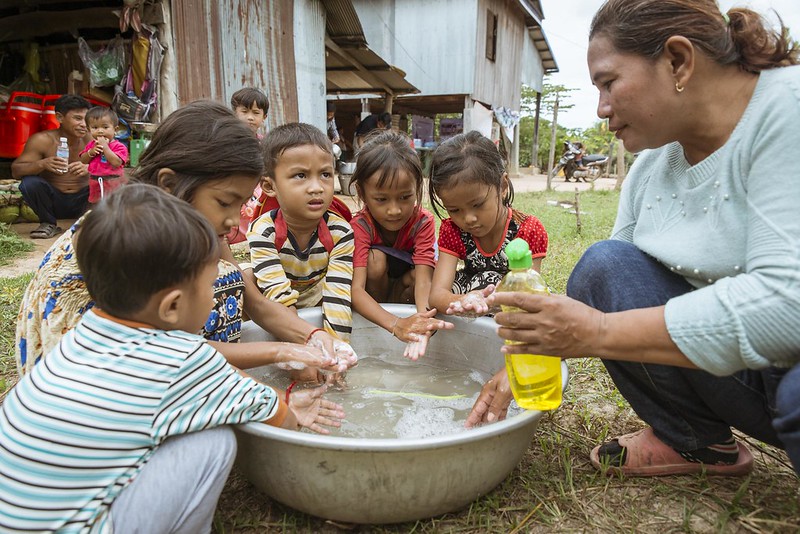 In July 2025, the Saqani village in Fiji gained clean water access. The 150 residents no longer have to boil water before drinking it, and the Fijian government is aiming to provide clean water to the entire country. This is just one example of expanded clean water access in developing countries. Around the world, 703 million people, almost 9% of the global population, do not have access to clean water. In developing countries, 80% of diseases are associated with poor sanitation. Governments and non-government organizations have partnered to address this critical issue. Here are some of their recent successes in bringing clean water to people in need.
Water Sanitation and Collection in Kiribati and Tonga
The Kiribati government collaborated with the Church of Jesus Christ of Latter-day Saints and Suez Group to install 10 solar-powered water plants in five of the country’s islands. Between August 2024 and April 2025, the collective built plants on the islands of Aranuka, Onotoa, Beru, Abatiku and Arorae. This brought clean water to more than 5,800 people, 4% of Kiribati’s population. The initiative plans to build plants on four more islands, including two on the island of Marakei.
The plants focus on desalination, the process of removing salt and minerals from water. Desalination allows communities to create drinkable water from more sources, such as seawater, particularly beneficial for an island nation.
In Kiribati, drought and rising sea levels had contaminated well water, and six to eight children had died every week from illnesses associated with contaminated water. Following the construction, the Church also replaced a broken water pump and built a second water tank in the Fahefa village in Tonga, an island nation south of Kiribati.
Funding for the Water Sector in Cambodia
Cambodia’s Ministry of Industry, Science, Technology, and Innovation (MISTI) and the French Development Agency (AFD) partnered in June 2025 to finance clean water access in the country. The organizations, along with the European Union, are considering a fund of €275 million for Cambodia’s water sector between 2025 and 2027.
The organizations established a new borrowing limit to a bank to support private water supply companies. They also discussed creating programs to train water sector professionals in Cambodia.
Almost 4 million people in Cambodia lack access to a safe toilet. Of the poorest rural Cambodians, 80% defecate in open spaces, which can lead to water contamination. One in three people in the country does not separate contaminants from water, increasing the risk of contracting disease.
New Water Infrastructure in India
In June 2025, engineers inspected locations in Khowai, India, to determine which could house new water infrastructure. The town plans to install overhead water tanks at these sites, one of which is near a high school. The Khowai Municipal Council expects to allocate $5.8 million for the projects.
In Manipur, east of Khowai, the Indian government’s JalJeevan Mission (JJM) has provided rural households with tap water capabilities since August 2019. As of June 2025, the project has implemented 286 water supply schemes.
– Tyler Payne
Tyler is based in Allentown, PA, USA and focuses on Global Health and Politics for The Borgen Project.
Photo: Flickr
