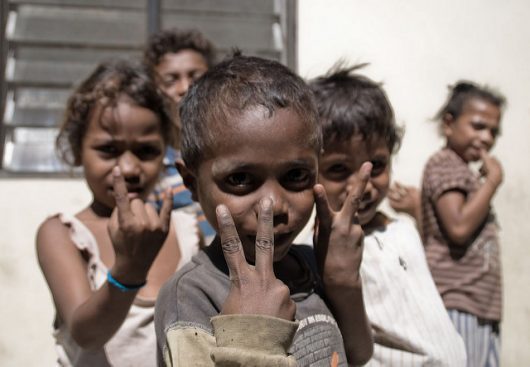
 Timor-Leste, also known as East Timor, is a Southeast Asian country comprising the eastern portion of the island of Timor. Timor-Leste has a population of about 1,211,000. Here are 10 facts about refugees from Timor-Leste:
1. Once a Portuguese colony, Timor-Leste was invaded by Indonesia in 1975 and endured years of political violence until 1999, when the overwhelming majority of Timorese people – 80 percent – voted for independence from Indonesia. In 2002, Timor-Leste became the first new sovereign nation of the century; it remains Asia’s newest – as well as one of its poorest – nations. The period between 1999 and 2002 in Timor-Leste was plagued with violence, as forces loyal to Indonesian rule fought with independence seekers. Hundreds of thousands of refugees from Timor-Leste left the country during this time. Today, many refugees from Timor-Leste have returned home, but many remain in other Southeast Asian nations and other countries around the world.
2. Nearly a quarter of a million refugees from Timor-Leste fled the country following the violent independence referendum in August 1999. According to the World Bank, in 2015 there were only 20 refugees from Timor-Leste living in other countries.
3. Evidently, the official count of the number of refugees from Timor-Leste has sharply dropped over the last two odd decades. The greatest reductions happened between 1999 and 2003, when the number of Timorese people with refugee status in other countries fell from 162,472 refugees to 127 refugees, according to the World Bank’s count.
4. The reason the number of refugees from Timor-Leste has plummeted so significantly is that many Timorese have returned to their newly-independent homeland, and others have gained residency or non-refugee status in their respective host countries.
5. The Office of the United Nations High Commissioner for Refugees (UNHCR) is the UN agency responsible for tracking and providing humanitarian assistance to refugees. UNHCR opened an office in Dili, the Timor-Leste capital, in 1999 during the political crisis regarding independence. The agency assisted hundreds of thousands of refugees from Timor-Leste and displaced persons within the country, providing medicine, resources and travel to the refugees. In 2012, the UNHCR closed its office in Dili, considering its campaign regarding refugees from Timor-Leste a success. The closure was marked by a public ceremony, in which former President of Timor-Leste, José Ramos-Horta, thanked the agency for its tremendous work during the young country’s humanitarian and political crisis.
6. The UN helped repatriate 220,000 refugees from Timor-Leste during its work with the country – the real reason that today’s official count of refugees from Timor-Leste is so low.
7. Former President José Ramos-Horta himself was a refugee from Timor-Leste. During the occupation of Timor-Leste by Indonesia from 1975 until 1999, Ramos-Horta was a strong proponent of Timorese independence, although he never took up arms himself. He presented the case for Timorese independence while living as a refugee in Australia and the U.S., and in the 1980s began a process of negotiations with Indonesia, culminating in his presentation of a peace plan to Indonesia in 1992. His peace plan included an agreement between Indonesia and Timor-Leste on humanitarian cooperation, and allowing international organizations like the UN to work in Timor-Leste. His work as a refugee from Timor-Leste and his peaceful advocacy for Timorese independence won him the Nobel Peace Prize, which he shared with Timorese Bishop Carlos Belo.
8. Not all of the refugees from Timor-Leste fled the country of their own volition. Thousands were forcibly removed from the country by government and pro-Indonesian forces and pushed into Western Timor, controlled by Indonesia. This was done to quell the independence movement in Timor-Leste. Many of these refugees were also repatriated by the UN, but about 100,000 chose to remain in the Indonesian province of East Naru Tenggara following full Timorese independence in 2002.
9. The refugees from Timor-Leste in Indonesia received little to no assistance from the Indonesian government, but private groups, international agencies and religious organizations provided help. For example, Holy Spirit Sister Sesilia Ketut, an Indonesian nun, donated money to refugees to help them start weaving businesses and make a living while in Indonesia. Sister Sesilia started the Forum for Women and Children in 2000 to help more than 300 widows living in Indonesia who had lost their husbands in the fight for Timorese independence. She provided business training, helped the widows with their children and even personally helped repatriate more than 400 refugees from Timor-Leste.
10. Because of its own history regarding refugees, Timor-Leste has vowed to never stop helping asylum seekers who come to Timor-Leste fleeing conflicts around the world. Former President Ramos-Horta said, “We are always ready to live up to our responsibilities. That’s the best way to thank UNHCR and all the countries that all these years have assisted our refugees.” Although a small country where relatively few seek asylum, Timor-Leste has laws in place to process refugee requests and assist refugees from other countries.
– David Mclellan
Photo: Flickr

Simple Interventions Prevent Common Diseases in Cameroon
According to the Institute for Health Metrics and Evaluation, HIV/AIDS is the current leading cause of death in Cameroon. Following this is malaria in second and lower respiratory infections in third. Lower respiratory infections is are most often diagnosed as pneumonia or bronchitis.
For those unfamiliar with these illnesses, the Centers for Disease Control and Prevention (CDC) contains a wealth of information. The CDC states that HIV/AIDS is a disease that weakens the immune system by attacking important cells. Though no cure exists as of today, it is preventable by avoiding contact with an infected individual’s blood or sexual fluids.
Lower respiratory infections are diseases of the lungs that are contracted by things like viruses, bacteria, and fungi. People affected by these infections will experience weakness, fever, coughing, shortness of breath, and fatigue.
Malaria is an illness that is obtained via mosquito bites and claimed the lives of 429,000 people in 2015, most of whom which were African children. Victims of this illness are affected by high fevers, chills and flu-like symptoms.
What’s notable about these three diseases is that they are all communicable; in other words, they are diseases that are contracted from person to person, or from animal to person. This means that these are diseases that can be prevented by taking precautionary actions, in most cases. In fact, seven out of the top ten causes of death are communicable, and nine out of ten in cases of premature death.
So, the common diseases in Cameroon that plague most of its population are contracted. This means that preventative measures can be taken. One example of a dramatic improvement in Cameroon’s health care comes from a very simple, yet relatively unheard of item: bed nets.
In short, bed nets are used to prevent mosquitoes from spreading malaria. Thanks to groups like One Billion Nets, malaria decreased tremendously. Back in 2005, malaria was the number one cause of death in Cameroon, but since fell to number two with a 55.8 percent drop.
According to One Billion Nets, millions of lives were saved thanks to bed nets and other sources of malaria intervention. This includes a 58 percent decline in the child mortality rate in Africa.
As just one example of the significant improvements made to Cameroonian and African health alike, this serves as a testament to why groups like The Borgen Project continue to keep aid for things like bed nets from being cut. With additional aid in the future, the rates of the common diseases in Cameroon are sure to fall in the future.
– Stephen Praytor
Photo: Flickr
10 Facts About Refugees From Timor-Leste
1. Once a Portuguese colony, Timor-Leste was invaded by Indonesia in 1975 and endured years of political violence until 1999, when the overwhelming majority of Timorese people – 80 percent – voted for independence from Indonesia. In 2002, Timor-Leste became the first new sovereign nation of the century; it remains Asia’s newest – as well as one of its poorest – nations. The period between 1999 and 2002 in Timor-Leste was plagued with violence, as forces loyal to Indonesian rule fought with independence seekers. Hundreds of thousands of refugees from Timor-Leste left the country during this time. Today, many refugees from Timor-Leste have returned home, but many remain in other Southeast Asian nations and other countries around the world.
2. Nearly a quarter of a million refugees from Timor-Leste fled the country following the violent independence referendum in August 1999. According to the World Bank, in 2015 there were only 20 refugees from Timor-Leste living in other countries.
3. Evidently, the official count of the number of refugees from Timor-Leste has sharply dropped over the last two odd decades. The greatest reductions happened between 1999 and 2003, when the number of Timorese people with refugee status in other countries fell from 162,472 refugees to 127 refugees, according to the World Bank’s count.
4. The reason the number of refugees from Timor-Leste has plummeted so significantly is that many Timorese have returned to their newly-independent homeland, and others have gained residency or non-refugee status in their respective host countries.
5. The Office of the United Nations High Commissioner for Refugees (UNHCR) is the UN agency responsible for tracking and providing humanitarian assistance to refugees. UNHCR opened an office in Dili, the Timor-Leste capital, in 1999 during the political crisis regarding independence. The agency assisted hundreds of thousands of refugees from Timor-Leste and displaced persons within the country, providing medicine, resources and travel to the refugees. In 2012, the UNHCR closed its office in Dili, considering its campaign regarding refugees from Timor-Leste a success. The closure was marked by a public ceremony, in which former President of Timor-Leste, José Ramos-Horta, thanked the agency for its tremendous work during the young country’s humanitarian and political crisis.
6. The UN helped repatriate 220,000 refugees from Timor-Leste during its work with the country – the real reason that today’s official count of refugees from Timor-Leste is so low.
7. Former President José Ramos-Horta himself was a refugee from Timor-Leste. During the occupation of Timor-Leste by Indonesia from 1975 until 1999, Ramos-Horta was a strong proponent of Timorese independence, although he never took up arms himself. He presented the case for Timorese independence while living as a refugee in Australia and the U.S., and in the 1980s began a process of negotiations with Indonesia, culminating in his presentation of a peace plan to Indonesia in 1992. His peace plan included an agreement between Indonesia and Timor-Leste on humanitarian cooperation, and allowing international organizations like the UN to work in Timor-Leste. His work as a refugee from Timor-Leste and his peaceful advocacy for Timorese independence won him the Nobel Peace Prize, which he shared with Timorese Bishop Carlos Belo.
8. Not all of the refugees from Timor-Leste fled the country of their own volition. Thousands were forcibly removed from the country by government and pro-Indonesian forces and pushed into Western Timor, controlled by Indonesia. This was done to quell the independence movement in Timor-Leste. Many of these refugees were also repatriated by the UN, but about 100,000 chose to remain in the Indonesian province of East Naru Tenggara following full Timorese independence in 2002.
9. The refugees from Timor-Leste in Indonesia received little to no assistance from the Indonesian government, but private groups, international agencies and religious organizations provided help. For example, Holy Spirit Sister Sesilia Ketut, an Indonesian nun, donated money to refugees to help them start weaving businesses and make a living while in Indonesia. Sister Sesilia started the Forum for Women and Children in 2000 to help more than 300 widows living in Indonesia who had lost their husbands in the fight for Timorese independence. She provided business training, helped the widows with their children and even personally helped repatriate more than 400 refugees from Timor-Leste.
10. Because of its own history regarding refugees, Timor-Leste has vowed to never stop helping asylum seekers who come to Timor-Leste fleeing conflicts around the world. Former President Ramos-Horta said, “We are always ready to live up to our responsibilities. That’s the best way to thank UNHCR and all the countries that all these years have assisted our refugees.” Although a small country where relatively few seek asylum, Timor-Leste has laws in place to process refugee requests and assist refugees from other countries.
– David Mclellan
Photo: Flickr
Avoiding Common Diseases in Barbados
The disease with the largest fatal impact in Barbados is cancer, comprising 29 percent of deaths. Cardiovascular diseases come in at a close second as the reason for 28 percent of deaths. All non-communicable diseases together are estimated to cause 84 percent of deaths, and most of the time other common diseases in Barbados cause more pain and inconvenience than fatalities. Tourists should be aware of hepatitis A, hepatitis E, typhoid fever, chikungunya and malaria when preparing to visit Barbados and should take all possible precautions to avoid contracting one of these illnesses.
Zika, the disease that caused a mass panic in 2016, has been reported to be active in Barbados. Spread by mosquitoes, those who contract the virus often do not suffer any symptoms. When sickness occurs, it tends to be mild. The disease has caused fear due to its link to congenital disabilities, which can in some cases be extremely serious. Expectant mothers or women who expect to become pregnant should be particularly wary of this virus and avoid traveling to Barbados.
Barbados has also been suffering from a syphilis outbreak for the past six years. Most victims are male, with an average age of 34 years. Cases of syphilis have stabilized in the last biennium, but doctors still advise travelers and citizens to only engage in sexual activity in a safe manner. This STD is one of the common diseases in Barbados and can be extremely severe if left unchecked.
The number of cases of dengue fever, a painful infection that causes a high fever, nausea and headaches, has risen significantly in Barbados since 2015. The disease, like the Zika virus and chikungunya, is spread by mosquito bite. Those living in and visiting the country should take precautions against mosquito bites to avoid these common diseases in Barbados.
With proper care and preparation, most of the common diseases in Barbados can be prevented.
– Julia Mccartney
Photo: Flickr
Causes of Poverty in Mozambique
Bunching an entire continent into the same group is easy. The average GDP per capita for African countries is around $3,300, while that of the world is much higher, at about $16,100 (only five African countries are above this number). Nearly all African countries have suffered a civil war or two in the last 100 years–12 countries were still experiencing civil war in 2016.
Does Mozambique fit this profile? With a GDP per capita of $1,128, it is well below average in purchasing power (PPP), even by African standards. It has also suffered from a civil war in the 1960s and 1970s, between the Mozambique Liberation Front (FRELIMO) and the Resistência Naciona, Moçambicana (RENAMO).
However, unlike some other countries like Ethiopia, which have been waging conflicts for decades up to the present day without relief, Mozambique enjoyed a significant time of peace between the years 1992 and 2015, when a peace treaty was signed with the RENAMO leader.
In the time between 1992 and 2015, the country eliminated all the landmines that were left over from the independence and proxy wars of the 20th century, which caused slow development and many amputees. Tourism and trade have increased as well, which resulted in a rise in GDP.
Although these political struggles are significant to the country’s economy, it is the natural disasters, such as drought, flooding and hurricanes that are ravaging the country. Floods affected well over 150,000 people in the years 2000, 2001 and 2008, displacing tens of thousands of individuals. A drought in 2009 caused a poor harvest, leading to 350,000 Mozambicans requiring food aid.
Additionally, Russian bans on Mozambique’s grains exports resulted in a food price crisis in the country, while it only increased food prices by five percent around the world. This crisis is in part due to continued tensions after the Cold War.
Additionally, there is the threat of another civil war between the RENAMO and FRELIMO groups, which caused the GDP to fall in the last two years.
The causes of poverty in Mozambique are numerous and complex. Between internal conflict, proxy wars and the climatic events resulting from global warming, Mozambique has had its share of struggle.
– Michal Burgunder
Photo: Flickr
Why is Afghanistan Poor?
One answer to the question ‘why is Afghanistan poor?’ is that the economy is too small for the growing labor force. Many workers are illiterate and looking for low skilled jobs, but there are not enough of these types of jobs. In 2016, Afghanistan’s GDP growth was 1.2 percent. While this was an increase, it is not enough to bring workers out of unemployment. Economists estimate that GDP growth needs to be eight percent to successfully employ the Afghan work force. Unfortunately, continuing conflict and insecurity within the country makes this growth unlikely.
Rural Afghanistan is poor due to its dependence on agriculture and informal labor markets. Low investments and natural disasters have hurt the agriculture market that most Afghans depend on for employment. Natural resources necessary for successful agriculture are lacking in Afghanistan. Compared to its population, there is little farmable land. Precipitation is scarce and there is insufficient irrigation infrastructure. In addition, the country has faced multiple debilitating droughts since 1999.
In rural areas, small-scale farmers and herders, landless people and women who are heads of households bear the largest burden of poverty. Women in Afghanistan face increased inequalities because they have less access to education and health services. A lack of skills or a medical condition can keep women out of the workforce. Widows account for a large population of the poor in Afghanistan. Due to fighting within the country, there may be over one million widows in Afghanistan. Most of these women have children to support. Unfortunately, the patriarchal society excludes them from many social and employment opportunities, so most become beggars.
Many countries and organizations have poured aid into the country. However, it does not seem to be helping. The inequality between the rich and poor in the country is increasing. Much of the aid went to build schools and hospitals, increase public services and repair infrastructure. While these human services are important, the agriculture sector continues to struggle, and rural households don’t have protection from economic shocks. In addition, the government did not always distribute funds fairly throughout the country.
Why is Afghanistan poor? Afghanistan is poor due to continuing shocks to the country, and it is necessary to build programs to insulate households from economic instability.
– Sarah Denning
Photo: Flickr
Human Rights Violations in Uganda
President Yoweri Museveni was elected for yet another five-year term in February 2016, putting him in power for at least the next 30 years. The election process was claimed to have been obstructed by removing the freedoms of expression, assembly and association of citizens. Violations of these freedoms were carried out by security forces.
Government officials and police repeatedly tried to keep journalists and media outlets out of commission by using physical force or by shutting down entire operations. For example, soldiers from the special forces stopped a local television station from covering some campaign meetings of the opposing candidate, Dr. Kizza Besigye from the Forum for Democratic Change (FDC). Furthermore, the Uganda Communications Commission blocked social media sites on election day for what they said was “national security reasons.” These violations prevented the flow of information and obstructed citizens’ rights to obtain valuable information.
The police repeatedly interrupted campaign rallies for Besigye by using force against protesters and even arresting Besigye himself, detaining him before releasing him with no charges laid. Police even opened fire on FDC supporters in Kampala, killing one and injuring many others. Throughout the election process, the police targeted FDC supporters and anyone associated with Besigye’s campaign.
Although non-governmental organizations (NGOs) are allowed in the country, they are not given an easy pass. The NGO Act, which went into effect in March of 2016, vaguely presents its policy, leaving room for interpretation as to how it can be applied. Several NGO offices were broken into last year and thieves took computers, internet servers, projectors and more. Although a committee was formed to investigate, no progress on the case has been made.
These human rights violations in Uganda should be a concern for the country, the continent of Africa, and the world. They showcase just how far people can go in mistreating those who disagree with or challenge them. Hopefully with time and continued help from NGOs, human rights violations can be significantly reduced in the country of Uganda.
– Emily Arnold
Photo: Flickr
5 Causes of Poverty in Angola
5 Causes of Poverty in Angola
Understanding Poverty in Angola
The devastation of war, the high fertility rate, limited access to healthcare, lack of quality education for all and income inequality partially due to government corruption are the primary causes of poverty in Angola. Fortunately, there is evidence of improvements. The government is beginning to expand its economy which will create jobs. It is also making strides to become transparent, which can increase accountability. Plus, Angola is investing in water, electricity and transportation to improve the lives of its people. Nonprofit organizations also help impoverished Angolans by providing healthcare and schools. With time and effort, Angola’s poverty rate should decrease.
– Kristen Reesor
Photo: Flickr
How to Help the Extreme Poor in India
Donate
According to the United Nations International Children’s Emergency Fund (UNICEF), 47 percent of Indian girls are married by the age of 18. While it is illegal for girls in India to marry before the age of 18, many still do because their families live in poverty.
One method to combat child marriage is education. The non-profit Girls Not Brides, for example, is currently fundraising for Shadhika, an organization that pays tuition for at-risk Indian girls. Right now, they are $8,568 away from a $30,000 goal.
Donations to this cause enable more Indian girls living in extreme poverty to attend school and avoid underage marriage. By donating to this and other similar organizations, those who are not currently in India can still assist those in poverty.
Contact Congress
For 2017, the U.S. government plans to spend $49.5 million of foreign aid on health in India. Half of this aid will be allocated for HIV/AIDS. To ensure the effectiveness of this aid, Congress is currently in the process of potentially passing the Global Health Innovation Act (H.R. 1660).
This act requires the United States Agency for International Development (USAID) to give an annual report to Congress describing the “development and use of global health innovations” in their work.
Emailing or calling elected representatives will support this bill on top of promoting the use of health innovation to achieve an HIV/AIDS-free generation. Representatives need to know that their constituents are interested in a goal in order for it to get the attention it deserves.
Shop
Shopping is another way to help the extreme poor in India. Currently, about ten million Indian women are commercial sex workers–the Anchal Project wants to change that.
The Anchal Project employs Indian women, 85 percent of whom were once in the sex trade, to create and make original designs for ecologically sound clothing and fabrics (mainly scarves).
Shopping here will support women in their goal of earning full-time employment and leading change in their families and communities, in effect supporting the extreme poor in working their way out of poverty.
Stay Informed
As most of the world’s poor live in India, the country is a great focus for The Borgen Project and other organizations working to fight poverty. Read up on current struggles and efforts to improve conditions for the poor in India to better learn how you can keep helping in the future.
While people are often told that they as an individual can change the world, it often seems that the change desired is too arduous to achieve. Nevertheless, a community of people can come together to end global poverty and help the extreme poor in India.
– Sean Newhouse
Photo: Flickr
Six of the Most Common Diseases in Morocco
A large number of deaths over the years due to common diseases in Morocco can be overwhelming and make solutions seem nearly impossible. However, it is important to recognize improvements that have been made in areas of sanitation and medical implementation while still remaining aware of those at risk.
– Mikaela Frigillana
Photo: Flickr
Why is the Cost of Living in Norway So High?
With its capital, Oslo, ranked as the 59th most expensive city in the world, Norway is anything but cheap. The high cost of living in Norway is a result of its egalitarian social system, which relies on a value-added tax system and minimal variations between incomes among its citizens to sustain its unique economy and socioeconomic structure. However, the social welfare system provided by the Norwegian government as well as the low unemployment rate in Norway are the positive results of the pricey standard of living.
A key feature that defines the high cost of living in Norway is the increased tax rate. From income tax (starting at 28 percent) to value-added tax, Norway’s tax structure strengthens its egalitarian social system. One of the benefits of using this type of social system is that there is a very minimal differentiation between incomes in Norway. This prevents wage-gaps and renders social classes in Norway to practically nonexistent.
While inadequate pay for minimum wage is a problem among many developed countries, Norway has abandoned this concept all together. Most citizens in different employments sectors, from education to food service, earn a living wage. Although this boosts the price of common goods significantly, it also ensures that Norway’s working class does not become impoverished. This socioeconomic ideology is responsible for reducing Norway’s unemployment rate to a minuscule 3.4 percent.
Education, health care and transportation in Norway are all subsidized by the government. High taxes provide for quality public services. This is especially evident in health care for Norwegian families; cash-for-care benefits, as well as free prenatal visits, including maternal and paternal leave, are all covered by the Norwegian government.
Mutual functionalism between Norway’s citizens and government not only allows its economy to thrive but its democratic process too as well. By rewarding workforce participation with quality social welfare, the Nordic model is an economic solution to ensure societal development. Although the cost of living in Norway may seem inopportune at first glance, there is no doubt that the Norwegian social system provides exceptional benefits for its citizens.
– Kaitlin Hocker
Photo: Flickr