 Bulgaria is integrated into the EU and its economy is growing while unemployment and poverty decline. But not all populations are benefiting from these improvements. Income inequality is vast and not all Bulgarians have good economic opportunities. Furthermore, certain populations are denied human rights in Bulgaria.
Journalists
The U.S. State Department notes that there have been threats of intimidation against journalists. While the courts generally rule in favor of free speech, government officials have often sued for libel and defamation. Some have threatened journalists’ lives for their reporting.
The Disabled
Mentally and physically disabled people tend to be institutionalized in Bulgaria. These sites are poorly maintained and understaffed. For those capable of education, there is little policy to guide how to teach them. As a result, many disabled children are uneducated. While discrimination based on disability is illegal, many cannot obtain jobs because of their lack of education and training. Additionally, most workplaces are not equipped to accommodate the disabled.
Roma
Bulgaria generally excludes the Romani population from society. Their children have less access to education and healthcare than other Bulgarian children. They are also found in mental health institutions, special education schools and detention centers more often. The Romani also experience more violence and police harassment.
Women
Women face several human rights abuses in Bulgaria, from income inequality to religious discrimination and sexual abuse. Sex trafficking of Bulgarian women and children is recognized as a great concern to the U.S. State Department. Furthermore, there is a taboo about reporting rape in Bulgaria, leading to many women not reporting the crime.
Refugees
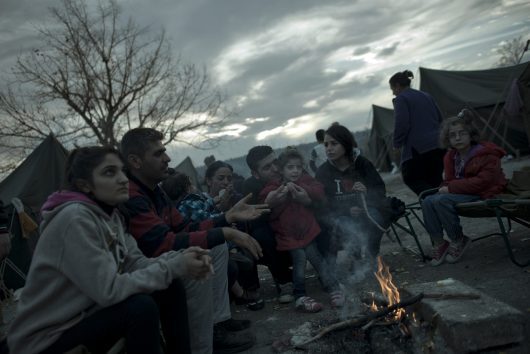
There are numerous reports of police brutality against refugees fleeing into Bulgaria. Refugees have been separated from family members, beaten and robbed. Some are sent back to their country of origin, while others are detained longer than what is considered ethical.
There are alarming abuses of human rights in Bulgaria. The good news is that many watchdog organizations are aware and working to end them. Amnesty International and The Human Rights Watch are acting as sentries on Bulgaria’s activity. The U.S. State Department has released reports about Bulgaria, while the U.N. has called on Bulgaria to improve conditions. As the country grows in the global community, hopefully the gains will been felt by all populations.
– Mary Katherine Crowley
Photo: Flickr

Technological Advancements in Kenyan Education
Amaf Primary and Elim Academy in Kawangware, a low-income settlement in Nairobi, have already reaped the benefits of such technology. Since advertising their new computers, these schools both have waiting lists and excited students.
The M-Pesa Foundation Academy in Thika is also establishing itself as a benchmark for Kenyan education reform. Every student has their own iPad, allowing for free use of the Internet to nurture discovery and an interest in learning.
These efforts can be attributed to the eLimu project, which selected these schools to integrate interactive tablets into the classroom to allow them to use modern and advanced teaching methods.
Plan International Kenya is another organization that works alongside projects such as eLimu to advance literacy among children through the use of technology. After being piloted in 25 schools, Plan International Kenya is set to put its technological resources in 300 schools across the country.
With the help of such famous technical partners as Nokia, British Telecom and Lenovo, OSL works to help teachers create more interactive and inclusive learning methods and environments through information and communication technologies.
The main idea behind these new technological advancements in Kenyan education is to help teachers make school more exciting and interactive to attract more students.
After recognizing the success of the 16 pioneer teachers selected for training, the Kenyan government is now supporting the implementation of a project to work with the Kenya Institute of Curriculum Development to train teachers to integrate modern technology into their teaching methods.
– Tucker Hallowell
Photo: Google
The Grenada Poverty Rate Is the Country’s Biggest Challenge
Currently, the Grenada poverty rate stands at 32 percent. The country also has the highest extreme poverty rate in the eastern Caribbean, with a rate of 13 percent. It has one of the highest unemployment rates in the Caribbean as well. About 15 percent of people are out of work in Grenada.
The economic situation in Grenada is fragile. Agriculture and tourism are very important economically. Approximately 90 percent of the farms in Grenada are less than 2 hectares. This has caused the Grenada economy to fluctuate over the past couple of years. For example, in 2008 the economy grew by 2 percent, only to shrink by 8 percent in 2009.
In response to lower agricultural production, the Grenada government has implemented the Cocoa Revitalization Program. The goal of this program is to commercialize over 1,000 acres of land. The government is also planning on launching the Climate-Smart Agriculture and Rural Enterprise Programme in 2018. The goal of the program is to increase agricultural productivity through better information about climate change. The Caribbean Development Bank (CDB) also implemented the Grenada Rural Enterprise Project to combat Grenada’s rural problems.
The government also has several economic development programs underway. The government received $10.8 million from the IMF under the Emergency Assistance Program, which they invested into the Bridges and Roads Investment Project.
If the Grenada government continues to be dedicated to ending poverty, the Grenada poverty rate will go down. As Prime Minister Mitchell said, “The future is promising but challenging. However, together with the CDB and our non-borrowing members, we are assured that we can achieve the future we want for the people.”
– Bruce Edwin Ayres Truax
Photo: Flickr
Energy in Tanzania
Into this scenario walks a Dutch energy company called Devergy, whose innovative approach makes clean energy accessible to rural Tanzanians across the nation. Devergy works on a pay-as-you-go model, relying on mobile banking – a financial practice which is already widely used across many African nations.
This model allows consumers to control their energy consumption and their financials; one uses as much or as little as necessary based on his or her need and financial situation. It is a financially accessible option – energy “credits” cost as much as phone credits and less than kerosene lighting – that gives the consumer complete control. This ultimately empowers individuals by giving them the (literal) power to light their homes and businesses as much or as little as they need, all within the confines of their personally-dictated financial arena.
Importantly, the energy provided is also clean. Most rural areas do not have access to electrical grids, and the cost of expanding those grids is currently not economically feasible, which is why 90 percent of all energy consumption comes from biomass materials such as wood. Instead of trying to create access to the general energy grids already in place, the company instead installs solar micro-grids in villages. These micro-grids generate renewable energy, which is connected to homes by locally-trained technicians and accessed by the village inhabitants through the aforementioned model.
In the last two years, more than 150,000 lives have been impacted by implementing these micro-grids across the nation. Though there is still much work to be done to solve the energy issue in Tanzania, the future is looking bright as Devergy paves the way by providing clean, efficient energy to citizens of the country.
– Kailee Nardi
Photo: Flickr
Questions and Answers About the Poverty Rate in East Timor
What is the poverty rate in East Timor?
A reported 41.8 percent of the population in East Timor lives below the national poverty line. There is also immense income inequality in East Timor. In 2006, the poorest two-fifths of the population accounted for 18 percent of the country’s expenditure and the wealthiest two-fifths of the population accounted for 66 percent of the spending. Poverty rates are highest in rural areas.
How has the poverty rate changed?
In 2001, the poverty rate in East Timor was 36.3 percent. In 2007, the poverty rate rose to 49.9 percent. The poverty rate increased from 2001 to 2007 because the part of the economy not based on petroleum decreased. The non-petroleum economy must increase in order for the poverty rate in East Timor to decline. In addition, some of the initial elections in the country were violent and chaotic, which can cause poverty and instability.
What are some of the causes of poverty in East Timor?
As a young country, East Timor has had to rapidly create many institutions. The expanding population is placing pressure on the already limited job market. Many people in East Timor are unemployed. In addition, the transition from Indonesian occupation was chaotic and violent. A significant amount of infrastructure in the country was destroyed or damaged during this transition. These damages have hurt the operation of the economy and the government has had to fund repair projects.
How can the government reduce the poverty rate in East Timor?
The government needs to make plans to diversify the economy. In addition, the country needs to improve healthcare and education services. The population needs to gain industry skills so that the economy can expand and diversify. Programs should be designed to target young people; 60 percent of the population is under 25, and they are the future workforce. The government should also encourage private investment. Finally, as a new country, East Timor must continue strengthening its national and regional institutions.
While East Timor has quite a long way to go, it has also seen many successes, mainly in healthcare and education. The population has an increased life expectancy and a reduced child mortality since 2002. School enrollment and literacy have increased since the country gained independence. East Timor also eliminated leprosy since its inception. The poverty rate in East Timor should continue to decline due to the government’s focused work.
– Sarah Denning
Photo: Flickr
The Deeply Rooted Causes of Poverty in Estonia
One in five people live under the poverty line in Estonia. Statistics Estonia reported in 2014 that 21.6 percent of people were considered impoverished and 6.3 percent lived in deep poverty. 8 percent of the poor are employed, and more of these individuals are female than male. In 2015, 21.3 percent lived in poverty and 3.9 percent in deep poverty, suggesting improvements in the distribution of wealth.
A lack of education is one of the causes of poverty in Estonia, and those who have received low levels of education have a 33 percent chance of living in poverty. The elderly are also at risk for an impoverished life. As of 2015, over 40 percent of individuals over 65 lived below the poverty line. These citizens are often dependent on pensions from the government.
The income inequality in Estonia has led to the segregation of cities, including its capital, Tallinn. The rich are moving to certain districts and the poor are living in others. This in itself is not inherently negative, aside from the fact that people are living in poverty, but can lead to conflict when the segregation extends to minority ethnic and racial groups.
While these figures on the causes of poverty in Estonia sound disheartening, the percentage of people living in relative and total poverty have actually decreased from previous years. As of 2014, the total income increased from the year before, and the gap between the rich and poor decreased. With increased foreign aid and governmental efforts to improve education and support for the poor elderly, the former USSR republic will be well on its way to eliminating the causes of poverty in Estonia.
– Julia McCartney
Photo: Google
Comoros Poverty Rate
Healthcare
The results of a 2014 World Health Organization report show that over half of all deaths in the Comoros are due to maternal, perinatal and nutritional conditions. The country severely lacks access to quality communal healthcare. With less than 5 percent of the budget dedicated to healthcare, operational facilities remain scarce. Fortunately, the country has seen progress in reducing the incidence of malaria. Spraying campaigns and the distribution of insecticide-treated nets across the three islands have greatly aided in its decline. The country has also seen noteworthy advancement in the under-five mortality rate and maternal mortality ratio.
Education
High repetition, increased dropout rates and poor learning outcomes remain problematic factors for the Comoros. High levels of illiteracy and dependency on foreign aid hinder economic development. However, according to The Global Partnership for Education, the Comoros has stepped up their access to quality education. The UNICEF Annual Report for 2016 shows the number of schools providing preschool education reaching almost 50 percent. Children are gradually starting to benefit from valuable education through the expansion of social, cognitive, motor and emotional skills.
Population
At a glance, the Comoros appears to be a very lightly populated country. But when compared to other regions, the Comoros ranks 25th in population density in the world. This ranking is predicted to increase, leading to more population pressure. The rising population has already led to widespread poverty in the form of limited land, lack of resources and unemployment. As a result, at least 150,000 people live abroad. Citizens are moving to countries like France in search of more space and essentially, a better life.
The Comoros poverty rate has started to improve thanks to a reformed poverty reduction strategy. In 2014, the country created a new growth policy that aims to strengthen the economy. Government, quality of life and resilience are all a major focus. The World Bank has also partnered with the Comoros in hopes of endorsing shared growth and increasing employment. Statistics verify that development for the region is slow, but eliminating poverty is a main priority.
– Emilee Wessel
Photo: Flickr
How to Help People in Armenia
KASA Swiss Humanitarian Foundation
For almost 20 years, KASA has been supporting impoverished Armenians through the contribution of material aid, training opportunities and developmental tools. Education alongside communication allows KASA to promote a civil society and sustainable growth. This NGO is currently involved in three projects, with their most popular one titled Sponsored Families. Every year, 20 to 25 Armenian families struggling with illness, unemployment and inadequate housing are supported through Sponsored Families. KASA strongly encourages others to help people in Armenia by funding these families. The organization also prospers via volunteer efforts, organizing collaborated events and spreading the word.
Full Life
Originated due to civic responsibility, Full Life works for equal rights for the 6.2 percent of Armenians struggling with disabilities. Their involvement goes beyond advocacy and public awareness through the implementation of multiple programs. A recent project included employment of people with disabilities in the livestock sector. This project is certainly a priority when one considers the 35.2 percent poverty rate among Armenian households with no employed members. Full Life seeks most of its support through volunteer work and contributions. They also build awareness through various campaigns and encourage the public to join their mission of equal opportunity.
Peace Dialogue
Like many other countries around the world, Armenia has experienced its fair share of conflict. A prime example is a disagreement with their neighbor Azerbaijan over the territory of Nagorno-Karabakh. Ethnic clashes date back centuries, with tension between the two countries still existing. Peace Dialogue studies conflict and unites experienced human rights defenders to promote peace-building initiatives. Over the course of 2015-2016, Peace Dialogue has been involved in seven projects. The programs ranged from reducing corruption risk in public transportation to using artistic means for human rights protection. Much of Peace Dialogue’s assistance is generated through sponsors, but they accept help in the form of donations as well. Involvement is also stimulated by their online presence where they feature articles, research and annual reports.
Helping people in Armenia begins with looking at what the country needs. Many of Armenia’s goals relate to poverty reduction, equal rights and peace. Successful NGO outcomes require more than subsidies to see results. Management and large-scale immersion are also crucial to successful function. Each NGO mentioned offers three methods of participation: funding, volunteerism and public understanding. If you are unable to share your money or time, exchanging thoughts on Armenia’s issues over social media is an excellent way to get the ball rolling.
– Emilee Wessel
Photo: Flickr
Human Rights in Bulgaria
Journalists
The U.S. State Department notes that there have been threats of intimidation against journalists. While the courts generally rule in favor of free speech, government officials have often sued for libel and defamation. Some have threatened journalists’ lives for their reporting.
The Disabled
Mentally and physically disabled people tend to be institutionalized in Bulgaria. These sites are poorly maintained and understaffed. For those capable of education, there is little policy to guide how to teach them. As a result, many disabled children are uneducated. While discrimination based on disability is illegal, many cannot obtain jobs because of their lack of education and training. Additionally, most workplaces are not equipped to accommodate the disabled.
Roma
Bulgaria generally excludes the Romani population from society. Their children have less access to education and healthcare than other Bulgarian children. They are also found in mental health institutions, special education schools and detention centers more often. The Romani also experience more violence and police harassment.
Women
Women face several human rights abuses in Bulgaria, from income inequality to religious discrimination and sexual abuse. Sex trafficking of Bulgarian women and children is recognized as a great concern to the U.S. State Department. Furthermore, there is a taboo about reporting rape in Bulgaria, leading to many women not reporting the crime.
Refugees
There are numerous reports of police brutality against refugees fleeing into Bulgaria. Refugees have been separated from family members, beaten and robbed. Some are sent back to their country of origin, while others are detained longer than what is considered ethical.
There are alarming abuses of human rights in Bulgaria. The good news is that many watchdog organizations are aware and working to end them. Amnesty International and The Human Rights Watch are acting as sentries on Bulgaria’s activity. The U.S. State Department has released reports about Bulgaria, while the U.N. has called on Bulgaria to improve conditions. As the country grows in the global community, hopefully the gains will been felt by all populations.
– Mary Katherine Crowley
Photo: Flickr
Empowerment Through Chess: Uganda’s Som Chess Academy
With a single chess board and a heart for change, Robert Katende launched Uganda’s Som Chess Academy in the Katwe slums of Kampala in 2004. Thirteen years later, the program boasts 13 different centers in varying parts of Uganda (one which focuses on children with disabilities), an impending expansion into neighboring Kenya, an estimated participant count of 1,400 and a world-class chess player in Phiona Mutesi.
The most attention has been gifted to the incredible story of Ms. Mutesi, whose rise from the slums of Katwe to the international chess arena has been featured in ESPN Magazine and Disney’s Queen of Katwe film. And understandably so—Phiona has been honored in various capacities, most notably as one of three “Women of Impact” at the 2013 Women of the World Summit. Her story is especially significant considering the relatively limited role of women in Ugandan society. Such a role ensures that the literacy rate for girls 15 years of age and older is cemented at 65 percent—a rate which is a full 18 percent lower than that of their male peers. Consequentially, Phiona’s success has paved the way for other women to also strive for their goals and meet their potential in spite of traditional gender barriers like minimized education.
However, the everyday successes of Uganda’s Som Chess Academy demand recognition as well. The program is completely free for its participants and provides tangible perks, such as meals, but it also provides something arguably more important: intangible perks, such as personal empowerment, something that is so incredibly significant for children who have very few opportunities to know their strength.
The program operates under the guidance of about 40 peer coaches who aim to not only teach chess but to teach it well—in 2015, Som Academy placed seventh in the national chess league—but to also teach life skills that focus on character development, goal-creation and leadership skills, too. Chess is only a vessel with which to facilitate these understandings; the strategy, mental discipline and adaptation required to play the game is translated into real-life usage as well.
Furthermore, the program actually enrolls participants in school and supports them throughout their academic endeavors, with several of the program’s graduates going on to higher education levels that would have otherwise been inaccessible to children entrapped in the cycle of slum poverty. In an environment where 31 percent of urban children aged 13 to 18 are not attending secondary school, a free program that empowers and ultimately pushes such children into the educational system is truly an incredible gift to a deserving community.
– Kailee Nardi
Photo: Flickr
Common Diseases in Monaco Life Expectancy
Monaco is best known as one of Europe’s microstates and a favorite destination of the wealthy. Like any country, there are common diseases in Monaco, but the good news is that they do not have much of an effect on the population’s health or longevity.
Travelers to Europe may not think they are in danger of contracting diseases, but it is entirely possible. Depending on what activities tourists participate in, according to the Centers for Disease Control, Monaco presents risks of Hepatitis A, Hepatitis B and rabies. Hepatitis A is transmitted via contaminated food and water, whereas Hepatitis B is contracted through sexual contact or contaminated needles and blood products. Rabies, spread by bats in Monaco, is rare, but possible. Tourists who may be in areas with bats, or wildlife professionals who may be in close contact with them should get vaccinated for rabies.
Some of the more common diseases among residents of Monaco include various types of cancer, cardiovascular disease and diabetes. Monaco is an extremely healthy country. Residents benefit from the Monaco Health Screening Centre, established as a preventative health resource. The most common cancers in Monaco are breast and bowel cancer. Monaco is confident that vaccinating for cervical cancer, which is caused by the human papillomavirus (HPV), along with screening will lead to the eradication of the disease. The Centre also screens for osteoporosis, breast cancer and HIV. The majority of patients who come to the Centre for breast cancer screenings are proactive in doing regular breast exams on their own.
Because there is considerable wealth in Monaco, it is no surprise that the average life expectancy is 89.73 years. Rich countries have more money to spend on healthcare. Preventative measures go a long way in catching serious diseases and illnesses which might lead to death if not detected early.
Cardiovascular disease also exists in Monaco, with 114 deaths per 100,000 people. Monaco ranks 188 out of 189 in this regard, with Japan having the lowest number of deaths from cardiovascular disease. Common diseases in Monaco are similar to other developed countries, but because of early screenings and other preventative measures, those illnesses are not as much of a threat.
– Gloria Diaz
Photo: Google