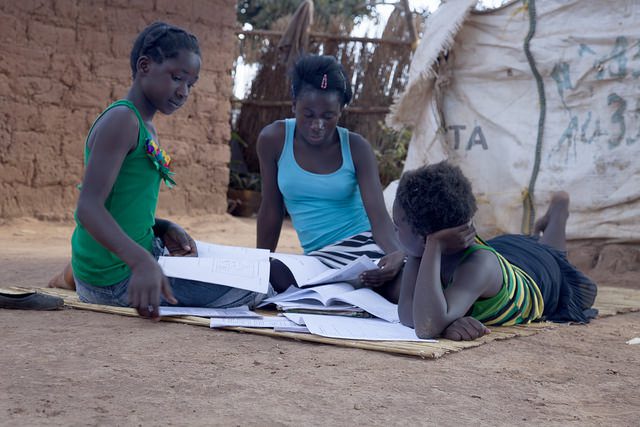
 Several legislative initiatives are building rungs in the socioeconomic ladder to improve women’s empowerment in Botswana. The nation currently ranks 95th out of 188 countries in the United Nations Development Programme Gender Inequality Index report. Ranking in the 21st percentile is not ideal, but conditions are ostensibly better; in 2015, Botswana ranked 108th.
The Gender Affairs Department has sanctioned programs dedicated to the coordination and development of gender equality throughout the republic. The Women’s Economic Empowerment Programme and the Women’s Grant are two such examples. These agendas provide seed money for women’s groups to help jumpstart women-led small business projects.
The presence of women in the business sector and in leadership positions is important, especially when it comes to women’s empowerment in Botswana. “When women are empowered and can earn an income, they invest back into their families and communities [statistically more than men]. This drives hunger, poverty and malnutrition down and improves standards of health, education and well-being, which is good for all of us,” says Michelle Bachelet, the U.N. Women executive director. Women in businesses and leadership positions have profound social and global implications.
The National Policy on Gender and Development was approved by the Botswanan government in March 2015. This policy is designed to address the social inequities that still survive economically and socially. Priority areas include poverty prevention and economic development, social protection, the promotion of democracy, freedom from violence and the protection of vulnerable groups. The recognition of gender equality and legal involvement is important because it lends credence to the cause and serves to empower women in Botswana.
Botswana’s Vision 2036, underscored by their slogan “prosperity for all”, is a legislative movement aimed at developing the republic economically, socially and administratively. The vision is designed to complement Africa’s Agenda 2063, a socioeconomic-focused initiative. “Botswana will be a society where all men and women have equal opportunity to actively participate in the economic, social, cultural and political development,” the Vision 2036 declaration explains. Gender equality is central to the success of its overall goal of putting Botswana on the economic map.
Women’s empowerment in Botswana is improving. Since 1990, the average expected years of schooling for girls has gone from 10.3 years in 1990 to 12.8 years in 2015. The percentage of women with at least some secondary education went from 41 percent (1990) to 85.1 percent (2015). The average gross national income for females has gone up from $7,988 (1991) to $13,281 (2015).
Remarking on the UNiTE campaign to end violence against women and the National Gender-Based Violence Strategy 2015-2020, Vice President Mokgweettsi E. Masisi highlights Botswana’s commitment to “achieving gender equality and empowering women and girls, and all other goals that intend to improve the dignity and the status of women,” at the 2015 Global Leaders’ Meeting on Gender Equality and Women’s Empowerment in Botswana.
African feminism and empowerment is a striking movement gaining traction and saturating Botswana. “Feminism in the African continent has existed for generations,” says Botswanan columnist Taffiny Kablay. Kablay mentioned the names of aerospace engineer Bonolo Mpabanga, writer Siyanda Mohutsiwa, “Mma Mosadi Movement” co-founder Marea Otlaadisa and stroke awareness campaign creator Bakhwi Kragh to illustrate that there are several pioneers of women’s empowerment in Botswana. The necessary cornerstones are all in place for the progression of Botswana with African feminist rhetoric buttressing legislation, thereby collaborating social and administrative efforts.
– Sloan Bousselaire
Photo: Flickr

Women’s Empowerment in Sudan
Located in North Africa, Sudan has a population of 47.5 million people. Omar Hassan al-Bashir, the country’s current president, came into power in 1989 and was first elected president in 1996. The country endured many years of conflict between its northern and southern regions before a vote in July 2011 split the country in two. Many of the issues between the two areas stemmed from a conflict over religion, the mainly Christian and Animist south disagreeing with being ruled by the Muslim north.
The population which was perhaps the most severely affected by the war was Sudanese women. USAID reported that Sudanese women were disproportionately impacted by the conflict, which took a negative toll on a myriad of factors, including their health, safety and economic opportunities.
Despite how severely they were affected, women had a large role in the reconciliation between communities and the overall peacebuilding in the country. This is why USAID worked to gain additional support for the problems Sudanese women face.
Many organizations, like USAID and the U.N. Fund for Gender Equality (FGE), work to provide programs for understanding women’s empowerment in Sudan, among other places. Their work aims to prevent women from being so harshly impacted by the political climate in Sudan. However, the conflict still caused a plethora of Sudanese women to become refugees or internally displaced.
Additionally, the war has forced many of the women to become the heads of their households. It is estimated that the women that were widowed by the war became the heads of 60 percent of households in Sudan.
However, Sudanese Women Empowerment for Peace (SuWEP), formed in the 1990s, has brought many women in Sudan together. Some of the group’s goals include providing women with conflict resolution training and advocating for the inclusion of women from all different backgrounds. The group’s overall aim centers around improving women’s empowerment in Sudan.
Though the group faces many obstacles, such as a lack of funding, international recognition and mobility due to the war, it remains active. SuWEP still works to raise awareness and share information. Some of the group’s partner organizations organized and implemented activities, which SuWEP currently runs. The work done by SuWEP to improve the lives of women affected by the war demonstrates the importance of improving women’s empowerment in Sudan.
Despite displacement and other negative effects experienced by Sudanese women as a result of the conflict, groups such as SuWEP are working with great effort to remedy these issues. The recent split between the two regions of Sudan presents additional problems for SuWEP but they will continue to work towards ensuring a peaceful transition.
– Haley Rogers
Photo: Flickr
Development Projects in Ecuador Boost Sustainability
Healthcare
The overall health of Ecuadorians has improved dramatically in recent years. Deaths due to malaria, HIV/AIDS, tuberculosis and under-five mortality rates are all below the global baseline set by the World Health Organization. This can, in part, be attributed to programs such as the Peace Corps’ community health projects. These programs seek to improve access to maternity care and birth control and to prevent tropical diseases, among other things.
Infrastructure – Roads
Ecuador’s coastal roads were little more than dirt paths until an $800 million allotment in the late 1990s with an additional $5 billion planned. The last ten years alone have seen 700 miles of new roads built, roughly a tenth of Ecuador’s entire road network.
Infrastructure – Water
Along with Ecuador’s road system, improved sewage management is helping develop the country’s infrastructure. While there is an abundance of water in Ecuador, roughly 10 percent of drinking water is untreated. Sustainable water systems are Ecuador’s goal, of course, but the country has made tremendous strides in updating its sewage system over the last few years. One of the ways this is being accomplished is through a new wastewater treatment plant in the city of Santiago de Guayaquil, strategically placed between two major rivers.
Education
The First Social Development Project serves to modernize Ecuador’s education system. The World Bank is overseeing the development of this project and seeks to improve education through multiple means. These include improving classroom materials and teacher training, decentralizing management and offering assessment programs to ensure continued improvement across the board. Additionally, the program is increasing access to special education as well as adult and vocational education.
Economy
Until May 2017, Rafael Correa served as Ecuador’s president for a decade. His presidency mirrored a period of growth and sustainability. Ecuador’s gross domestic product and wages increased, while unemployment, inflation and poverty rates decreased. While no longer serving as Ecuador’s president, the country saw sustainability under his administration. While many development projects in Ecuador stemmed from President Correa’s management, perhaps the most important factor to an improved economy is the consistent management of its resources.
Development projects in Ecuador are making a difference. Access to quality water, education and healthcare, coupled with a strong economy and well-managed infrastructure creates a recipe for success to a developing country. These projects seem to be putting Ecuador on the right path.
– Eric Paulsen
Photo: Flickr
Successes for Women’s Empowerment in Botswana
The Gender Affairs Department has sanctioned programs dedicated to the coordination and development of gender equality throughout the republic. The Women’s Economic Empowerment Programme and the Women’s Grant are two such examples. These agendas provide seed money for women’s groups to help jumpstart women-led small business projects.
The presence of women in the business sector and in leadership positions is important, especially when it comes to women’s empowerment in Botswana. “When women are empowered and can earn an income, they invest back into their families and communities [statistically more than men]. This drives hunger, poverty and malnutrition down and improves standards of health, education and well-being, which is good for all of us,” says Michelle Bachelet, the U.N. Women executive director. Women in businesses and leadership positions have profound social and global implications.
The National Policy on Gender and Development was approved by the Botswanan government in March 2015. This policy is designed to address the social inequities that still survive economically and socially. Priority areas include poverty prevention and economic development, social protection, the promotion of democracy, freedom from violence and the protection of vulnerable groups. The recognition of gender equality and legal involvement is important because it lends credence to the cause and serves to empower women in Botswana.
Botswana’s Vision 2036, underscored by their slogan “prosperity for all”, is a legislative movement aimed at developing the republic economically, socially and administratively. The vision is designed to complement Africa’s Agenda 2063, a socioeconomic-focused initiative. “Botswana will be a society where all men and women have equal opportunity to actively participate in the economic, social, cultural and political development,” the Vision 2036 declaration explains. Gender equality is central to the success of its overall goal of putting Botswana on the economic map.
Women’s empowerment in Botswana is improving. Since 1990, the average expected years of schooling for girls has gone from 10.3 years in 1990 to 12.8 years in 2015. The percentage of women with at least some secondary education went from 41 percent (1990) to 85.1 percent (2015). The average gross national income for females has gone up from $7,988 (1991) to $13,281 (2015).
Remarking on the UNiTE campaign to end violence against women and the National Gender-Based Violence Strategy 2015-2020, Vice President Mokgweettsi E. Masisi highlights Botswana’s commitment to “achieving gender equality and empowering women and girls, and all other goals that intend to improve the dignity and the status of women,” at the 2015 Global Leaders’ Meeting on Gender Equality and Women’s Empowerment in Botswana.
African feminism and empowerment is a striking movement gaining traction and saturating Botswana. “Feminism in the African continent has existed for generations,” says Botswanan columnist Taffiny Kablay. Kablay mentioned the names of aerospace engineer Bonolo Mpabanga, writer Siyanda Mohutsiwa, “Mma Mosadi Movement” co-founder Marea Otlaadisa and stroke awareness campaign creator Bakhwi Kragh to illustrate that there are several pioneers of women’s empowerment in Botswana. The necessary cornerstones are all in place for the progression of Botswana with African feminist rhetoric buttressing legislation, thereby collaborating social and administrative efforts.
– Sloan Bousselaire
Photo: Flickr
10 Facts About Poverty in Bangladesh
Although Bangladesh has existed as an independent state for less than 50 years, the cultural and linguistic roots of the Bangla, or Bengali, people are believed to have been established in the seventh century. Despite this rich cultural history, 31.5 percent of the population lives below the poverty line in Bangladesh today. The following 10 facts about poverty in Bangladesh give further context to this nation’s economic struggles.
Poverty in Bangladesh Facts
Expert analysis of the Bangladesh Poverty Assessment indicates that poverty in Bangladesh will continue its slow but steady reductive trend with the implementation of several key economic reforms, which include investment in the skills development of its rapidly expanding workforce, coordinating multi-sector development and consolidating safety net programs to be better timed and tailored to the needs of the poor. Following through on these reforms will ensure that fewer people in Bangladesh are living in poverty in the future.
– Savannah Bequeaith
Photo: Flickr
Improving Women’s Empowerment in Myanmar
One of the most notable recent pushes for gender equality was the U.N. Millennium Development Goal number three, which seeks to promote gender equality and empower women. This goal has helped governments and NGOs all over the world have a better understanding of the importance of prioritizing women’s empowerment.
Myanmar is an example of a country that still has a long way to go to achieve gender equality. But progress is being made in closing the gender gap. The country is at a key juncture and must continue to develop in a way that benefits its entire population.
Here are some of the positive steps that are being taken toward women’s empowerment in Myanmar.
Women’s empowerment in Myanmar has improved in key ways, but there is still work to be done. Because of the long history of patriarchal societies ingrained in cultures across the globe, progress toward women’s empowerment is often slower than we would hope for it to be.
It is important to recognize the progress that is being made while maintaining a commitment to the goal of complete gender equality across the globe.
– Aaron Childree
Photo: Flickr
Women’s Empowerment in Kazakhstan
Since gaining independence in 1991 with the collapse of the Soviet Union, Kazakhstan has come to have a population of 17.8 million. Its president, Nursultan Nazarbayev, has been in power since independence. Not only is the country’s population large, but so is its geographic size, being no smaller than Western Europe. Though the country may face issues in some areas, the issue of women’s empowerment in Kazakhstan is better than it is in some other countries.
The percentage of women in the national parliament in Kazakhstan is equivalent to that of France, ranking Kazakhstan 47th in the world. This ranking is nearly 30 spots higher than the U.S., which is ranked 76th when it comes to the country’s percentage of women in national parliaments.
Similarly, 66 percent of entrepreneurs in Kazakhstan are women and in 2011, 34.4 percent of businesses in the country were either owned or partly-owned by women. Statistics like these are what contribute to Kazakhstan’s rank of 43 out of 142 countries when considering gender equality.
The country’s effort to support entrepreneurship among its female population is evident with its support of the UNDP Country Development Programme Document for 2016-2020, which aimed, among many other things, to provide more specialized support to female entrepreneurs. This document was created with the help of Kazakhstan’s government.
However, the country still faces problems when it comes to the issue of violence against women. In 2016, there were 2481 registered cases of violence against women and young girls, though this number does not account for undocumented violence. In the same year, 778 women died because of sexual assault, 742 of those being due to suicide.
Despite this setback, U.N. Women in Kazakhstan has funded a project that aims to provide survivors of this trauma with the help they need, which is a positive step regarding women’s empowerment in Kazakhstan.
The country views women as important contributors to its economic, political and social success and even recognizes International Women’s Day, March 8, as a national holiday.
Though Kazakhstan may still struggle with gender inequality and violence against women, the country has made significant efforts to remedy these issues, such as providing $56 million for the development of programs that will support women’s entrepreneurship. As with many other countries, women’s empowerment in Kazakhstan can improve, but improvement is hardly implausible with the number of resources Kazakhstan dedicates to improving gender equality.
– Haley Rogers
Photo: Flickr
Recognizing Contributions of Humanitarian Aid to Myanmar
As of October 19, 2017, almost 600,000 Rohingya have fled Myanmar into neighboring Bangladesh and the number is continuing to climb. The U.N. referred to the situation as “a textbook example of ethnic cleansing”. The government has denied many of the allegations and has taken control of aid operations, blocking many types of aid from reaching the country.
Yet even in such dark situations, inspiring examples of kindness and generosity can be found. In that spirit, here are some of the positive stories of humanitarian aid to Myanmar in the midst of a horrendous situation.
These are only a few of the many governments, organizations and individuals that have assisted the Rohingya people in the midst of this horrendous crisis. Humanitarian aid to Myanmar and the surrounding area continues to be delivered in many different forms.
The humanitarian aid to Myanmar is a reminder that even in times of unspeakable tragedy, there are always individuals who are helping and making a difference. It is imperative to keep this in mind when thinking about the importance of humanitarian aid and foreign assistance.
– Aaron Childree
Photo: Flickr
Steps in the Right Direction: Infrastructure in Sri Lanka
Sri Lanka has the highest road density of all South Asian countries and in 2004 it reached out to the World Bank for aiding its road sector. With funding from the World Bank, among other organizations, the country was able to carry through the Road Sector Assistance Project (RSAP) and reconstruct its rural and national roads. A main objective of the project was to create an efficient national road system and therefore lower transportation costs for its population.
Another positive step for Sri Lanka was the creation of the Road Maintenance Trust Fund, which efficiently allocated resources for road maintenance in a way that was transparent to the public. The trust fund also created a sense of social responsibility for contractors, as it made them obligated to repair and renovate roads and public buildings like schools and health clinics.
In 2005, Sri Lanka requested aid from the Asian Development Bank (ADB) in order to improve services such as water supply, drainage and solid waste management. The ADB evaluated the use of these funds and determined that Sri Lanka was successful in improving living conditions and reducing poverty through the updating of infrastructure services.
Additionally, the Asian Development Bank funded the National Highways Sector Project in Sri Lanka since 2016. This project focused on upgrading about 223 kilometers of major highways in the country and also implemented a more efficient maintenance system. These improvements to the road system in Sri Lanka has made transportation much easier for many farmers and merchants who would previously travel long days to sell their products.
These steps show Sri Lanka moving in the right direction in terms of infrastructure. In the future, the main issues the country may face are related to lack of funding for infrastructure. In order to maintain this growth, the government should prioritize internal development and continue to partner with organizations like the ADB and the World Bank.
With the improvements to infrastructure in Sri Lanka, there have also been improvements to other areas of development throughout the country, such as poverty levels and access to medical care. If Sri Lanka can continue this trend, it will be doing a service to its residents, its economy, and its overall development.
– Liyanga de Silva
Photo: Flickr
Addressing Nine Important Facts about Poverty in Georgia
Here are nine facts about poverty in Georgia.
In order to combat the growing effects of poverty in Georgia, it is necessary that the country’s citizens receive help in the form of both domestic and foreign aid. With hope, Georgians can be lifted out of their joblessness and set out on a path to a brighter future.
– Andrew Revord
Photo: Flickr
Working Toward Women’s Empowerment in Malaysia
Malaysia is a diverse and multiracial country where the status of women’s empowerment is complex and may depend on their religion and ethnic background. About 60 percent of Malaysians are Muslim Malays, 23 percent are Chinese, 7 percent are Indian and the rest hail from various indigenous groups. The country’s major religions include Christianity, Buddhism and Hinduism.
Within Malaysia’s large Muslim community, over 90 percent of women reported undergoing female genital mutilation (FGM), making the country one of the worst offenders in the world for the practice. FGM is spreading in popularity in Malaysia, especially in more conservative Muslim states dominated by religious parties.
While non-Muslim women have equal parenting rights across the country, Muslim women only enjoy those rights in four out of thirteen states. Child marriage is still permitted in Malaysia, and efforts to raise the age of marriage for girls to 18 were defeated in parliament last year.
Despite these challenges, a greater focus has been placed on women’s empowerment in Malaysia, particularly in regard to women entrepreneurs, journalists and politicians. Wan Azizah Wan Ismail, the wife of imprisoned former Deputy Prime Minister Anwar Ibrahim, is the leader of the country’s opposition and may become Malaysia’s first female prime minister at the next elections in 2018.
The United Nations Development Program (UNDP) has a project that supports women’s empowerment in Malaysia by aiding low-income women entrepreneurs in the conservative states of Terengganu and Kelantan, enabling them to succeed in the cottage food industry. Women now outnumber men in universities despite constituting a minority of the total population and participation in the labor force has steadily increased in the last two decades.
– Giacomo Tognini
Photo: Flickr