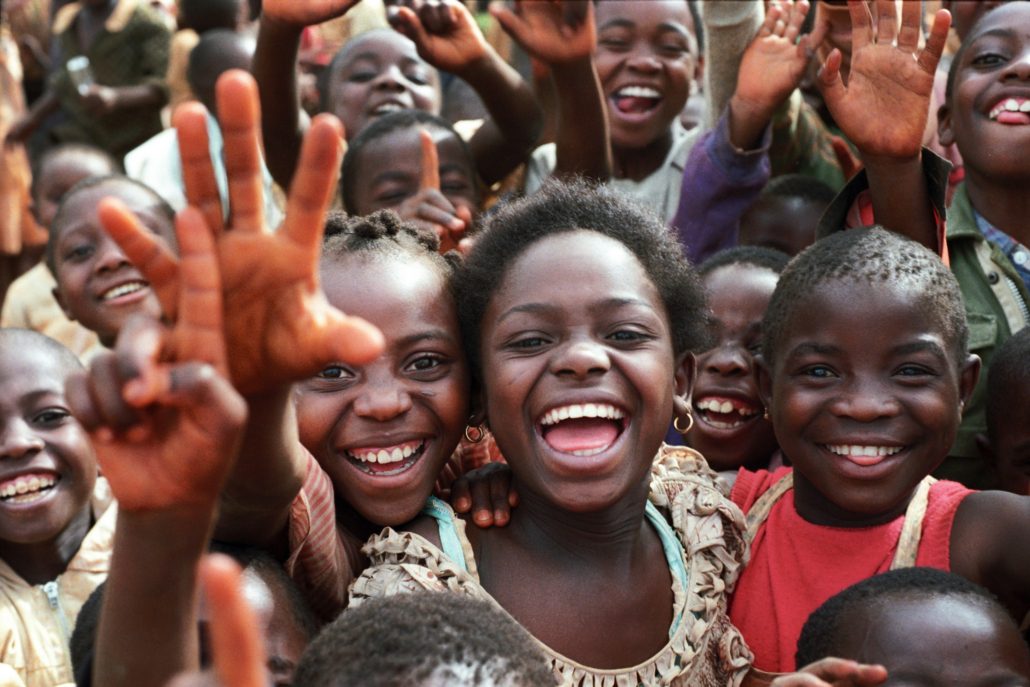
 Angola, located on the southwest coast of Africa, has little data on child marriage. However, from the statistics that have emerged, it paints a rather alarming picture. The lack of stories from underage brides can indicate that there has been little investigation into this topic, making it even more crucial that the internet is bringing the focus to child marriage in Angola.
The Hard Facts
Angola’s legal age of marriage is 18. However, this law can have exceptions. If the guardians of a minor believe marriage to be in the best interest of the child, children can marry from as young as 15.
In Angola, 8% of girls are married before they are 15 years old. While this can appear to be a relatively low percentage, that is still 929,000 young girls. The statistic is even higher for brides under the age of 18, at around 30%. This means that at least 2.9 million girls are married before they reach the legal age of marriage in Angola. While child marriage is less common for boys, 6% of boys in Angola also marry before they are 18.
Why is Child Marriage Happening in Angola?
Gender inequality is a primary cause of child marriage. The perpetuated belief that girls and women are lesser than their male counterparts can contribute to violence against girls. More than 7,000 girls reported in 2020 that they had experienced some form of physical, verbal or sexual violence. And, that same year, there were reports of a further 15,000 cases of violence against children. Violence against women correlates with the increased number of child brides. From 2017 to 2020, the yearly number of reported child marriages rose from 11 to 267.
Young girls are subject to the majority of child marriages, highlighting the strong tie to gender inequality. Girls are valued more for their potential relationships with men, rather than for their own independent futures. Young women will have their development stunted by these marriages, teaching them to rely on their husbands rather than their own skills.
Additionally, COVID-19 largely affected Angolan girls. Only 19.73% of children attended a school prior to the pandemic and the closure of schools from 2020 puts children at a heightened risk of falling victims to child marriage and/or gender-based violence. Since the schools have been re-opened there is no data to show how many children have returned to school. The children will have been impacted from the years without education, and many are now too old to return to their studies.
The Solutions from The Angolan Government
The Angolan Government are now bringing the focus to child marriage in Angola. It has pledged that by 2030, it will have ended child and forced marriages. It is among 20 countries that have committed to this cause. From 2013, the government has co-sponsored numerous Human Rights Council resolutions which focus on putting an end to child marriage. Amidst this, it also signed a statement at the Human Rights Council which implored a solution to child marriage.
In 2019, the Angolan Government stated that they were in the process of adopting a national strategy to prevent child pregnancies and marriages. The government continues to address the issue of underage marriages, and it is hopeful that with a strategy in place, it can significantly reduce the number of cases.
The Work of Mwana Pwo
Created in 2017, Mwana Pwo is an organization based in Angola that aims to inspire leadership amongst women. Mwana Pwo translates to “girl child” in Chokwe. Maria Malomalo created this organization after going to a clinic for check-ups during her third pregnancy and realizing she was nearly always the oldest woman there. She was only 30 at the time. Maria began to question why so many young girls were marrying and giving birth at such a young age, this led to the creation of Mwana Pwo.
In terms of bringing the focus to child marriage in Angola, Mwana Pwo created the project Just a Child in 2022. The organization Bread for The World funded it, which works to eradicate world hunger. The objective of Just a Child is to reduce the number of cases of child marriage in Angola.
Poverty definitely has links to child marriages. Many families view marriage as a way for girls to escape poverty and simultaneously reduce costs for a household. This is why the work of Mwana Pwo is so essential. By encouraging young girls to become leaders and seek an education, the organization is enabling them to escape poverty independently.
Mwana Pwo has stated that “The impact of poverty on child marriage is undeniable, but sometimes you also have to ask ‘why don’t they sell their sons? So it’s the whole issue around gender inequality and looking at women as ‘things,’ not as people.”
The organization has set up facilities that allow young women and girls to develop new skills. Its information hubs provide a place for girls to enroll in courses such as entrepreneurship, IT and business. These skills are life changing and enable young girls to take control over their own futures. The website for Mwana Pwo goes into further detail on the great work it is carrying out and what it has accomplished with donations.
– Katie Gray
Katie is based in Glasgow, UK and focuses on Good News and Global Health for The Borgen Project.
Photo: Unsplash

Inclusive Education: Confronting Disability and Poverty in Bhutan
Despite the importance given to GNH, the country faces a number of challenges with respect to poverty including access to education and basic resources, access to health care and social support. These factors disproportionately affect vulnerable populations in the country, especially children with disabilities. However, recent developments in regional and national policies and legislation aimed at addressing disability and poverty in Bhutan have resulted in positive changes in these areas.
The Correlation Between Disability and Poverty in Bhutan
The Oxford Poverty and Human Development Initiative (OPHI) report (2018) indicated that people with disabilities experienced significantly higher levels of multidimensional poverty in Bhutan. It suggested that the multidimensional poverty rate of people was at a stark 11.1%, as compared to people without disabilities (5.6%). A 2022 report revealed that systematic barriers to education, vocational training and employment particularly affecting children and youth with disabilities reinforces the connection between disability and poverty in Bhutan. It further emphasized the role of Bhutanese social norms, like “Karuna” (compassion) and “Karma,” in perpetuating social and economic exclusions experienced by the disabled population especially.
The intersection of lack of coordination, funding for initiatives and targeted support were identified as both the cause and consequence of poverty in Bhutan. Another study noted a higher degree of prevalence of disabilities amongst poor children and those of mothers with lower levels of education. While this analysis does not paint a rosy picture regarding the intersection of disability and poverty in Bhutan, it acts as an entry point for change, grounded into local social institutions and realistic implementation, offering a roadmap to the policymakers for actionable goals—an approach that is already beginning to show tangible progress.
Disability and Education in Bhutan
In 2024, Kesang Chuki Dorjee, Chairperson of the Social and Cultural Affairs Committee (SCAC) presented a report titled “Review Report on the State of Persons with Disabilities.” In the report, Dorjee indicated how between the 12th and 13th Five-year plans, the government’s allocation towards educational activities for children with disabilities saw a rise from approximately Nu 87 million to Nu 1.115 billion.
The 2024 report estimated that 1,071 children with disabilities were attending in schools in a nationwide capacity. Bhutan has established three early childhood intervention centers offering services including communication skills, socialization behavior management, school readiness and other vocational training, like cooking, weaving tailoring and so on. Guided by the Sustainable Development Goals (SDGs), Bhutan has made important strides in implementing these inclusive strategies and policies for educating children with disabilities.
Education is an important aspect in the intersection of disability and poverty in Bhutan. The fact is that education is a critical point of intervention as it directly tackles the root cause of marginalization. As the abovementioned data suggests, children with disabilities are especially more likely to experience discrimination in mainstream educational settings. Ensuring that all children can participate in quality education regardless of ability can help build a stronger economic future for all, along with promoting equity. In Bhutan, where educational attainment has close links with future livelihoods, inclusive educational policies have become a key tool in breaking the cycle of intergenerational poverty, promoting social inclusion and fulfilling the country’s Gross National Happiness (GNH) philosophy of collective well-being and equity.
Looking Ahead
Despite many challenges stemming from the link between disability and poverty with respect to children in Bhutan, the momentum for change has been set into motion. The significant increase in government investment, along with inclusive educational initiatives, reflects a national commitment to ensuring that no child is left behind. As Bhutan continues incorporating principles of Gross National Happiness into its policies, the government and stakeholders are working to ensure that children with disabilities living in poverty, not only gain access to equitable education but also have the opportunity to contribute meaningfully to society. Though the journey may be long, the actions taken today are laying a strong foundation for a more inclusive and equitable Bhutan in the future.
– Vasudhaa Shakdher
Photo: Unsplash
Drones Reducing Tuberculosis in Nepal
A Persistent Threat in Nepal
Tuberculosis is a serious infectious bacterial disease that spreads through coughs and sneezes. When detected and treated early, it is both preventable and curable. However, geographic and economic barriers make tuberculosis more difficult to manage in Nepal. Approximately 50% of Nepalis must travel between six and eight hours to reach a health care facility. It is the isolation and lack of infrastructure in the rural regions, where 80% of Nepalis reside, that deepens the inaccessibility of medical care. With these roadblocks, fewer citizens actively seek out care and the diagnosis of tuberculosis is consistently delayed. As a result, almost 70% of Nepalis are carriers of the disease and may face serious consequences in the future.
The Danger of Delayed Treatment
Once exposed to tuberculosis, it is important to seek out medical care quickly to begin treatment and prevent the spread of this potentially deadly disease. However, because seeking medical treatment in Nepal is such a burden, many seek it out very infrequently or not at all. The longer people wait to seek tuberculosis treatment, the more serious the illness can become. By waiting for an official diagnosis and treatment, they risk increased rates of community transmission and potential health issues. This transmission and these complications have led to significant economic decline. Many become bedridden or unable to work as a result of the disease, leading to increased poverty rates. Telemedicine, however, is making notable progress. Organizations have begun using drones to diagnose and treat tuberculosis patients more efficiently.
Using Drones to Fight Tuberculosis in Nepal
A number of institutions, including WeRobotics, Stony Brook University and Nepal Flying Labs, have been utilizing cargo drones to combat tuberculosis in Nepal. These drones collect samples from individuals suspected of having tuberculosis and deliver them for testing. The same drones also help administer treatment. Tuberculosis treatment often spans several months, making it difficult for patients in remote areas to complete. However, with the support of these drones, a technology known as e-DOTS can facilitate therapy remotely.
Building Toward Health Equity
The efforts made by these international organizations are enabling tuberculosis diagnosis and treatment. Technology like these drones is not only helping to reduce the prevalence of tuberculosis, but also represents a step toward bringing medical care to rural areas in need. Telemedicine is actively empowering rural communities by providing access to timely care. So far, these drones have tested more than 700 people in rural Nepali communities. It is the hope of many that technology like this will continue to cross borders and support international poverty reduction.
– Caroline May
Photo: Flickr
Bringing the Focus to Child Marriage in Angola
The Hard Facts
Angola’s legal age of marriage is 18. However, this law can have exceptions. If the guardians of a minor believe marriage to be in the best interest of the child, children can marry from as young as 15.
In Angola, 8% of girls are married before they are 15 years old. While this can appear to be a relatively low percentage, that is still 929,000 young girls. The statistic is even higher for brides under the age of 18, at around 30%. This means that at least 2.9 million girls are married before they reach the legal age of marriage in Angola. While child marriage is less common for boys, 6% of boys in Angola also marry before they are 18.
Why is Child Marriage Happening in Angola?
Gender inequality is a primary cause of child marriage. The perpetuated belief that girls and women are lesser than their male counterparts can contribute to violence against girls. More than 7,000 girls reported in 2020 that they had experienced some form of physical, verbal or sexual violence. And, that same year, there were reports of a further 15,000 cases of violence against children. Violence against women correlates with the increased number of child brides. From 2017 to 2020, the yearly number of reported child marriages rose from 11 to 267.
Young girls are subject to the majority of child marriages, highlighting the strong tie to gender inequality. Girls are valued more for their potential relationships with men, rather than for their own independent futures. Young women will have their development stunted by these marriages, teaching them to rely on their husbands rather than their own skills.
Additionally, COVID-19 largely affected Angolan girls. Only 19.73% of children attended a school prior to the pandemic and the closure of schools from 2020 puts children at a heightened risk of falling victims to child marriage and/or gender-based violence. Since the schools have been re-opened there is no data to show how many children have returned to school. The children will have been impacted from the years without education, and many are now too old to return to their studies.
The Solutions from The Angolan Government
The Angolan Government are now bringing the focus to child marriage in Angola. It has pledged that by 2030, it will have ended child and forced marriages. It is among 20 countries that have committed to this cause. From 2013, the government has co-sponsored numerous Human Rights Council resolutions which focus on putting an end to child marriage. Amidst this, it also signed a statement at the Human Rights Council which implored a solution to child marriage.
In 2019, the Angolan Government stated that they were in the process of adopting a national strategy to prevent child pregnancies and marriages. The government continues to address the issue of underage marriages, and it is hopeful that with a strategy in place, it can significantly reduce the number of cases.
The Work of Mwana Pwo
Created in 2017, Mwana Pwo is an organization based in Angola that aims to inspire leadership amongst women. Mwana Pwo translates to “girl child” in Chokwe. Maria Malomalo created this organization after going to a clinic for check-ups during her third pregnancy and realizing she was nearly always the oldest woman there. She was only 30 at the time. Maria began to question why so many young girls were marrying and giving birth at such a young age, this led to the creation of Mwana Pwo.
In terms of bringing the focus to child marriage in Angola, Mwana Pwo created the project Just a Child in 2022. The organization Bread for The World funded it, which works to eradicate world hunger. The objective of Just a Child is to reduce the number of cases of child marriage in Angola.
Poverty definitely has links to child marriages. Many families view marriage as a way for girls to escape poverty and simultaneously reduce costs for a household. This is why the work of Mwana Pwo is so essential. By encouraging young girls to become leaders and seek an education, the organization is enabling them to escape poverty independently.
Mwana Pwo has stated that “The impact of poverty on child marriage is undeniable, but sometimes you also have to ask ‘why don’t they sell their sons? So it’s the whole issue around gender inequality and looking at women as ‘things,’ not as people.”
The organization has set up facilities that allow young women and girls to develop new skills. Its information hubs provide a place for girls to enroll in courses such as entrepreneurship, IT and business. These skills are life changing and enable young girls to take control over their own futures. The website for Mwana Pwo goes into further detail on the great work it is carrying out and what it has accomplished with donations.
– Katie Gray
Photo: Unsplash
3 Charities Operating in Hong Kong
These three charities operating in Hong Kong provide aid to the most vulnerable communities and aim to mobilize local society to offer them care and support.
Kadoorie Farm and Botanic Garden
Sir Horace and Lord Lawrence, two brothers, founded Kadoorie Farm and Botanic Garden (KFBG) in 1956. The idea sprouted after a surge of Chinese immigrants arrived in Hong Kong following the civil war at the end of 1946. Since many of these immigrants were farmers, the Kadoorie brothers provided them with training, guidance on how to plough their land and interest-free loans.
Its programs empower rural communities in Hong Kong and beyond to build income sources, improve food security and gain skills that promote long-term self-sufficiency and environmental resilience.
Hong Kong Family Link Mental Health Advocacy Association Limited
This organization was established in 2003 by Dr. Lee Cheng and Dr. Zhao Yulong to raise awareness about mental health in Hong Kong. In a society where stigma around mental illness remains widespread, the Hong Kong Family Link Mental Health Advocacy Association Limited works to combat discrimination and uphold the rights of people with mental health conditions.
The organization not only works to improve the lives of individuals with mental health conditions by providing access to education, employment and housing, but also offers medical care and vocational training to support their recovery from treatable illnesses.
In addition, it trains family members to actively participate in the care and recovery of their loved ones, empowering them to become part of the healing process. To further dismantle the stigma surrounding mental illness, the organization engages the broader community, partnering with volunteers, journalists, medical professionals and other organizations to raise awareness and foster collaboration.
Helping Hand
Helping Hand was founded after Bob Saunders, a former fishmonger, came across 120 elderly individuals who had been evicted from “caged homes” and abandoned on the streets with only their meager belongings. In response, he established Helping Hand in 1978 to support underprivileged older adults in Hong Kong, with a mission to ensure they live with dignity after years of hard work.
Since then, the organization has expanded its services across several locations, including Tai Wo Ping, Shun Lee Tsuen and Lai King. Helping Hand provides 1,000 beds across its care homes and serves more than 40,000 older adults in need each year. Its services include housing, rehabilitation, a holiday center, physical activities and training programs designed to enhance the well-being of elderly residents.
In 1984, the organization launched its signature Cookie Campaign. This highly successful fundraising initiative continues to support Helping Hand’s mission of caring for Hong Kong’s aging population.
Conclusion
Despite the efforts of these three charities operating in Hong Kong, there is much more to do to bridge the wealth gap, eliminate societal stigma and provide every HongKonger with a decent and dignified life. Funding, volunteer work and community mobilization are the key moving forward.
– Yasmine Belabed
Photo: Flickr
Strengthening Disease Prevention in Sudan
Health Challenges Under Conflict
A major challenge Sudan faces in tackling the spread of disease and poverty begins with child immunization. The most prevalent diseases within Sudan include malaria, cholera, measles and dengue fever affecting 3.4 million children under the age of 5 years old. Ongoing conflict has severely disrupted vaccination efforts, worsening children’s access to aid as well as making it increasingly difficult to reach these children with essential, life-saving immunizations. While UNICEF continues to provide critical support in delivering vaccines, sustained investment and stability are essential to protecting public health. UNICEF has been providing support to Sudan since 1952, and in 2024, it helped more than 9.8 million Sudanese individuals access sanitary water and provided education and psychosocial care to 2.7 million children and caregivers. To effectively prevent the spread of infectious diseases, Sudan must prioritize the restoration and continuity of its national immunization program.
Non-communicable diseases (NCDs) represent the leading cause of morbidity worldwide, accounting for 71% of global deaths, and they are becoming more and more prevalent in Sudan. Data from the NCD Progress Monitor shows that the percentage of NCD related mortality had increased from 32% in 2015 to 54% in 2022. Sudan’s progress in implementing NDC policies has been slow as the country achieved five of the 19 NCD targets in 2022.
Organizations Assisting Sudan
Despite immense challenges, several global aid organizations are making an impact, including UNICEF and World Vision who have enabled Sudan’s development by helping individuals who have been directly affected by this ongoing conflict by providing necessary education, food and water and shelter. World Vision has been able to reach more than 3 million individuals, providing them with emergency assistance in Sudan’s unstable climate, making a significant impact. These organizations help to boost social development in Sudan, ultimately aiding them to reduce levels of poverty and increase individual’s livelihoods.
Action Against Hunger is an organization that is fixated on providing care to individuals experiencing this violence and ongoing conflict. It has been working in Sudan since 1985 to provide fresh water and food as well as malnutrition treatment to those deprived of food. From 2023-2024, it has helped more than 815,000 Sudanese people access food by working in 15 different locations in Sudan to reach the optimum number of people. This organization has also been growing rice in flood waters and farming onions, helping to create new emergency services and rebuild livelihoods, ultimately contributing to the resistance of poverty in Sudan.
Advancing With Sustainability and Purpose
After the breakout of the war in 2023, the International Rescue Committee (IRC) established a prevalent presence in Al Jazirah State where health and nutrition services were provided and assisted 400,000 Sudanese refugees prior to the War. The IRC established a WASH program – which is an integrated water, sanitation and hygiene program – to help disease prevention in Sudan.
– Carise Wallbank
Photo: Unsplash
The Fight Against Child Poverty in Lima, Peru
Several organizations, both international and local, operate in Peru with the aim of alleviating child poverty in Lima. Their charitable efforts contribute to improving the livelihoods of thousands of disadvantaged youths living in the Peruvian capital.
SOS Children’s Villages
SOS Children’s Villages is the largest charitable organization in the world dedicated to the rights of children, particularly those without or at risk of losing family care. Established in 1946 in Austria, it now operates in 135 countries worldwide. The Peruvian branch of SOS Children’s Villages addresses concerning problems affecting the country’s urban youth: according to official figures, more than 3.4 million were at risk of losing family care in 2019 and more than 1.5 million did not work or study in 2023.
Its work is focused on providing children with a safe family environment by strengthening families’ child-rearing skills, settling children with relatives, training family care professionals and providing integral development courses. It also lobbies the Peruvian government so it increases assistance to vulnerable youths. All of these initiatives establish a solid foundation for child social development that is particularly felt in Lima, a dense urban environment where family fracturing is prevalent.
Un Techo Para Mi Pais
Un Techo para mi País (TECHO) is a Latin American nonprofit that works to provide proper housing to vulnerable populations. Though active in 18 countries, its activities in Peru overlap mostly with the aforementioned pueblos jóvenes of the major cities. Since 2006, it has built 5,800 emergency settlements and provided aid to more than 26,000 people. Approximately 3.5 million Limans experience home precarity or homelessness, and around 300,000 of them are children. As the epicenter of Peru’s child homelessness problem, TECHO concentrates its house-building activities in the city’s most underprivileged areas.
This also includes increased access to sanitation and clean water, providing these services to almost 11,000 people. The work TECHO performs elevates the living standards of those residing in the notorious pueblos jóvenes, particularly those in the massive urban sprawl of Lima.
Caritas Internationalis
Caritas Internationalis, founded in 1951, is another international relief group, aligned with the Catholic Church. Since its beginning in 1955, Caritas in Peru has carried out programs that foster human development, particularly among the disadvantaged. It fights against discrimination and social exclusion, which are prevalent in Lima and other cities, by providing families with the training and resources to elevate themselves. Some of its programs include rural development through cacao planting, caring for the elderly, providing aid to migrants and work training for at-risk youths. When it comes to impoverished youths in Lima, this latter initiative is particularly relevant: Caritas provides workshops and vocational training for youths, specifically focusing on the pueblos jóvenes, where educational and economic opportunities are scarce.
It also engages in political advocacy, initiatives in environmental responsibility and projects for natural disaster mitigation. Although active throughout Peru, Caritas places a special emphasis in urban areas given the prevalence of factors such as economic inequality, urban poverty and crime, and their work directly benefits vulnerable populations experiencing child poverty in Lima.
Looking Ahead
Lima, the largest city in Peru, offers its own unique range of social challenges. It is only a very small fraction of the problem that is child poverty; however, professional, dedicated organizations with decades of experience are making genuine progress. Every day sees steady progress in the fight against child poverty in Lima. While the reliability of aid from world governments comes increasingly under question, supporting private initiatives may be the future of the ongoing fight against poverty in all its facets and across every corner of the world.
– Rafael Saavedra
Photo: Unsplash
Understanding the Gender Wage Gap in Mozambique
Mozambique’s situation is typical of its regional context. In East and Southern Africa, women earn on average 21% less than men. This unjust state of affairs reflects broader regional gender inequalities relating to education access, as well as deep-rooted attitudes regarding social roles. Here are three key factors affecting the gender wage gap in Mozambique:
1. Women Work Fewer Hours Than Men
The gender wage gap in Mozambique is only 1.6% at the hourly level, but 14.9% at the monthly level. This means that women earn significantly less than men throughout the course of the month, embedding long-term income disparities. One explanation for this is the substantial role of unpaid domestic labor such as child-rearing, which women usually perform, often rendering them unable to work for as many hours as men. Discriminatory working practices are also a concern in this regard.
2. Social Attitudes to Gender Are Highly Restrictive
Gender roles in Mozambique are traditional and deep-rooted. The largest employment sectors for men are “masculine” in nature — manufacture, construction and transport — while for women, the largest sectors are household work and education. Unpaid domestic labor reflects a social contribution that is ‘unseen’ in terms of income. Estimates have indicated that 37% of women and men would need to switch occupations in order to reverse the gender wage gap that these imbalances cause.
Restrictions upon women’s autonomy in Mozambique begin in childhood. About 53% of Mozambican women marry before the age of 18, while 153 of every 1,000 adolescent females (15-19 years old) gave birth in 2023. These alarming figures demonstrate how many young women end up in domestication before they have any notions of formal employment.
3. Educational Attainment Is Highly Imbalanced
The gender wage gap in Mozambique is more pronounced (23.4%) for those who only have a primary level of education than for those who have a post-secondary level of education (13.8%). This is in the context of more girls completing secondary education than boys. Therefore, women who fail to complete secondary education end up with greater wage imbalances and worse socioeconomic prospects.
Moreover, the female literacy rate in Mozambique is substantially lower than the male literacy rate (49% to 72%). This prevents vast numbers of women accessing higher education and the higher-skilled, higher-paid employment opportunities that it beckons.
How the Gender Wage Gap in Mozambique Affects Women
One impact of the gender wage gap in Mozambique is the financial disempowerment of women, including through a lack of financial independence and long-term economic security. Significantly fewer women than men have a banking account (38.7% to 61%), and fewer women than men receive support for the future through pensions or life insurance. Low literacy rates and education levels compound this impact, making many women dependent upon their husbands. The gender wage gap can therefore be understood both as a symptom of and as a cause of restrictive societal expectations of women: it reinforces the deep-rooted inequalities within Mozambican society that give rise to it in the first place.
Reasons To Be Hopeful
Foreign governments and NGOs are offering development aid to target the root causes of the gender wage gap in Mozambique as a matter of priority. For example, Canadian development aid funds the Empowering Adolescent Girls to Learn and Earn (EAGLE) scheme, which aims to help 4,200 adolescent girls in Mozambique improve their educational attainment. Working with community leaders in the highly impoverished Monica and Sofala provinces, the scheme focuses on girls who have previously been forced out of school through marriage or pregnancy. The program provides accelerated literacy, numeracy, business and vocational classes, equipping the girls with important life skills required to enter formal employment and become more economically empowered. So far, EAGLE has helped enroll almost 1,000 girls in primary school, and 99% of participants have passed their National Literacy and Numeracy exams.
Furthermore, the World Bank is aiming to increase the number of girls completing primary and secondary education on a large scale through its Improving Learning and Empowering Girls in Mozambique program. Through a $299 million funding commitment from the U.S., the initiative has significantly increased the primary level grade retention of girls living in highly impoverished areas by providing resources such as textbooks and equipment and leading teacher training programs. At least 55,000 students have benefitted so far.
Looking Ahead
Although the gender wage gap in Mozambique appears to be an insurmountable challenge, development aid programs such as these indicate that where there is the political and economic will to address deep-rooted gender inequalities, issues of female economic empowerment can slowly be overcome.
– Joseph Webb
Photo: Wikipedia Commons
The Push for Social Services in Nigeria
The Struggle to Find Social Services
Housing is more than just shelter for a lot of people. It also relates to stability and a quality of life. In Nigeria, where millions of people live in poverty, the housing crisis is high due to the lack of accessible social support systems. Many citizens are left to navigate high living costs, underemployment, and rising rent prices without government aid.
The housing crisis emphasizes the broader issue of limited access to social services in Nigeria. Social services are typically defined as essential resources that governments or nonprofit organizations usually provide to help individuals meet their basic needs. These services may include health care, food assistance and subsidized housing. While it is important to avoid long-term dependency, many individuals facing poverty, displacement, or other challenges need temporary support to regain stability and move forward.
Property and Perspective
James Sosan, a property owner from Nigeria currently residing in the United States, shares his perspective on the affordable housing crisis. With properties in both Nigeria and the U.S., Sosan has noticed major differences in affordability and government involvement. He told The Borgen Project, “In Nigeria, it is difficult to live on your own, especially without help.” He goes on to say the cost of living is high, and there is not much government support that helps people make ends meet.
Sosan explains that many young Nigerians who attempt to live independently often struggle to maintain housing. “They end up returning home,” not because they want to, but because they have no choice. It delays independence and creates this cycle where people stay financially dependent on their families for much longer than many would like. This kind of dependency could have an effect on long-term success and trap individuals in cycles of poverty that are difficult to break. James is disappointed by the lack of social services in Nigeria and wishes for more to be done.
Solutions
While access to such services remained limited, some initiatives in Nigeria are working to reverse this trend. One of the most prominent initiatives is the Renewed Hope Agenda. The agenda was launched under the Tinubu administration to enhance the quality of life for Nigerians. A significant part of this agenda involves working with the National Directorate of Employment (NDE). A multi-phase approach is in progress to create job opportunities. Recently, the second phase was approved, focusing on providing citizens with practical job skills in various industries. The NDE is working to strengthen the nation’s employment rate while providing people with important skills.
To further support the overall goal, the government has also launched the 3 Million Technical Talent Program. Led by the National Information Technology Development Agency (NITDA) and the Ministry of Communications, the program aims to train 3 million Nigerians in high-demand digital fields like artificial intelligence, software development, and more.
This initiative could allow Nigerians to establish a strong footing in the tech world. Furthermore, it could foster a community of skilled professionals who can participate in the rapidly growing digital economy.
Lastly, the Renewed Hope Housing Program is addressing Nigeria’s severe housing deficit by developing affordable housing across multiple states. These units are made for low-income families and are supported by public-private partnerships. These efforts aim to tackle both economic instability and the social barriers that trap many Nigerians in cycles of poverty.
– Knia Parks
Photo: Flickr
Health Care Crisis: 4 Diseases Impacting Kenya
Malaria
In 2022, Kenya reported around 5 million cases of malaria, with more than 12,000 Kenyans dying as a result of the outbreak. Lack of rainfall and high temperatures have exacerbated the already dire risk of Malaria contamination, as Kenya’s lack of rainfall has created environmental conditions that are highly conducive to Malaria exposure.
Extreme changes in Kenya’s weather patterns have attracted a breed of mosquito, Anopheles Stephensi, which serves as an avid transmitter of malaria. Studies have concluded that the resurgence of the Anopheles Stephensi population in Kenya could potentially expose around 126 million Kenyans to Malaria.
HIV/AIDS
Kenya currently has the seventh largest percentage of people infected with AIDS/HIV globally. Due to the erroneous distribution of health care facilities across Kenya, faulty educational policies and cultural/systemic gender norms, AIDS/HIV reigns as one of the leading causes of death in Kenya. The HIV/AIDS epidemic disproportionately affects women, especially young women (15-24), as women and young girls make up two-thirds of the current percentage of Kenyans living with AIDS/HIV. The current U.S. foreign aid freeze has only exacerbated this issue, as foreign aid has historically accounted for 40% of Kenya’s HIV/AID preventative resource supply.
Cholera
Kenya has historically been a hotspot for frequent Cholera outbreaks and has continued to affect the Kenyan population due to poor sanitation infrastructure and lack of access to clean water. Heavily populated areas like refugee camps, informal settlements, and other highly populated and poorly regulated areas have especially served as hotspots for Cholera contamination.
While efforts like nationwide vaccine distribution, an increase in research towards Cholera prevention/preparedness, and an increase in policy highlighting health care reform in Kenya have helped mitigate outbreaks in recent years, Kenya has had a Cholera outbreak almost every single year since its first outbreak in 1971.
Tuberculosis
In 2016, Tuberculosis was the fourth-leading cause of death in Kenya, and the reported cases of TB contamination have increased sixfold in the last 15 years. The COVID-19 pandemic only exacerbated these rates, as the percentage of Kenyans who contracted Tuberculosis increased from 49% in 2019 to 61% in 2020. While the spike in Tuberculosis rates has since decreased as the turbulence of the pandemic has decreased, the 2020 Tuberculosis outbreak represents the severe fragility of Kenyan’s health care sector, as statistics have repeatedly shown that the slightest economic, political, health care, or societal issue can seriously exacerbate an already extremely vulnerable healthcare system.
The Future
Though many issues continue to fray the fabric of the health care sector in Kenya, there is hope for the welfare of Kenyan citizens. In 2024, President William Ruto implemented the Social Health Insurance Fund, mandating health care coverage for citizens nationwide.
NGOs like UNICEF and the World Health Organization (WHO) continue to implement immunization programs to reduce diseases impacting Kenya. Though much work is still necessary when it comes to health care reform in Kenya, the shift in political attention towards healthcare reform, coupled with the persistence of NGO efforts to supply Kenya with the proper resources to combat disease outbreaks, establish that hope for the improvement of Kenya’s fractured healthcare system remains steadfast.
– Ava Lachini
Photo: Flickr
Cartel Crisis: Addressing Child Poverty in Ecuador
Overview of Ecuador’s Cartel Crisis
Ecuador is a small and highly biodiverse South American country bordering the world’s two leading producers of cocaine: Colombia to the north, and Peru to the south. Historically, Ecuador has been considered one of the more stable Latin American nations, largely evading the well-documented cartel-driven violence that has plagued its neighbours.
However, in the aftermath of the COVID-19 pandemic and despite not producing the drug itself, around 70% of the world’s cocaine now passes through Ecuador, BBC reports. Large criminal organizations from Albania, Mexico and Colombia have colluded with local gangs to control Ecuador’s ports and their shipping routes. Devastating violence has followed: there were 781 murders in January 2025 alone.
President Daniel Noboa — re-elected in April — has instigated a State of Emergency, including a nightly curfew, on several occasions, and has promised to crack down on the violence. Yet even with notorious gang leader Fito being extradited to the U.S., the violence is continuing and spreading inland: on 28 July 2025, 17 people were shot dead in the small town of El Empalme.
Child Poverty in Ecuador
Child poverty is a major social issue facing Ecuador, with the World Bank reporting that 45% of under-14s live below the poverty line. The implications make for grim reading: malnutrition affects 23% of Ecuadorian children; many, especially in rural areas, cannot access education; several fall victim to child sexual abuse. Poorer children in cities often have to work on the streets to support their families, and schooling itself is often so poor that it fails to help those from disadvantaged backgrounds out of poverty.
Child Poverty and the Cartel Crisis
Inner-city slums such as those in the capital, Quito, and in the major port city of Guayaquil, are perfect targets for criminal gangs and a focal point of Ecuador’s cartel crisis. Many have been branded “breeding grounds” for child and adolescent gang violence, whereby children growing up in overcrowded houses and unsafe neighbourhoods, and who lack strong support networks, develop a distorted concept of violence as a normal element of home life.
Criminal gangs seek to exploit young people’s lack of social and economic opportunities, instilling fear in impoverished communities. Some inner-city schools struggle with “micro-trafficking”, whereby older children recruit younger children into gangs within the school grounds. Teachers report feeling afraid of teaching children whose parents are gang members, for fear of drawing their attention.
Addressing Child Poverty in Ecuador’s Cartel Crisis
Two significant aid programmes are seeking to address child poverty during Ecuador’s cartel crisis. In February 2025, the World Bank committed to a $110 million U.S.-funded “Social Safety Net” program, focusing on improving child development and tackling the most significant dimensions of child poverty in Ecuador. Among its interventions are cash transfers for households with children under 3 years old and cooperative work with Ecuador’s Ministry of Health to increase the provision of nutrition services across the country to address child malnutrition.
Additionally, Cross International provides direct aid to children living in poor inner-city slums. Cross International provides food and academic support for primary schools to support families who do not have the time or resources to feed or academically assist their children. For those in secondary school, Cross International have innovatively established a night school, acknowledging those children who have to work in the daytime to support their families, according to its website. These measures explicitly aim to support at-risk children living in poverty during Ecuador’s cartel crisis.
Although the situation in Ecuador is undeniably bleak, these aid schemes are providing vital support in addressing child poverty and reducing the risk of Ecuador’s cartel crisis engulfing many more young people.
– Joseph Webb
Photo: Wikimedia Commons