Higher Education in Bhutan
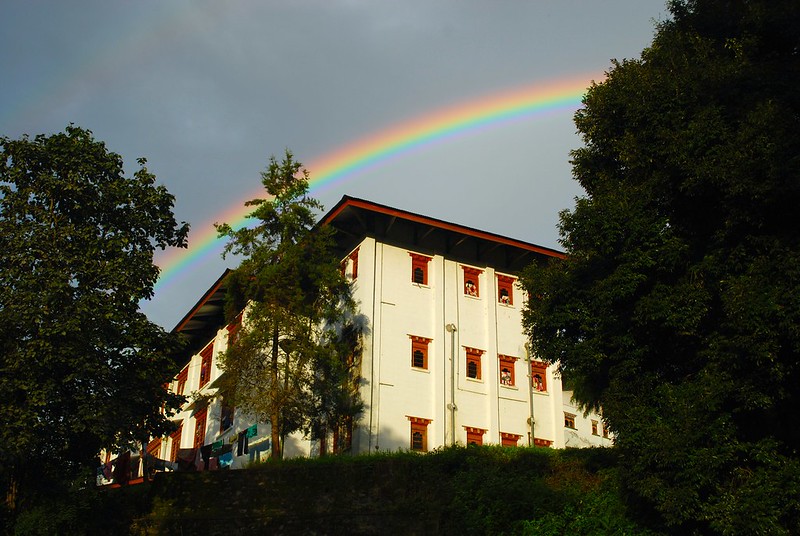 Higher education in Bhutan is bringing a tremendous opportunity to this remote land. Bhutan is a remote, landlocked and mountainous country in Central Asia, between Tibet (China) and India, with a population of 750,000. Bhutan may be small, but it has a lot of potential. One of the few countries to avoid colonialism, remain self-governing and maintain a sense of mystery. While Bhutan may try and be isolationist, it is now heavily reliant on agriculture and tourism. However, this historic Kingdom may be small and resource-limited, but its innovation and investment are not. Bhutan was the first country in the world to have happiness be a state policy and now higher education in Bhutan is bringing limitless opportunities to its people.
Prioritizing Education
Bhutan recently established democracy, with the country becoming a constitutional monarchy in 2008, but for the past 100 years, Bhutan has prioritized education. While secular, it still effectively incorporates traditional values, its unique heritage and culture into it. Its constitution also reinforces this, with article 9 ensuring “spiritual and emotional development are equally as important as the promotion of material consumption and modern physical comforts…and that the ultimate purpose of the government is to promote the happiness of its people,” according to a 2016 article. It certainly is the happiest, with its king, his majesty Jigme Singye Wangchuk having coined the term Gross National Happiness (GNH). Bhutan strikes a balance between modernization and maintaining its identity.
While formal education may have originally started in the 1950s, before this the monasteries delivered education on a tiny scale, with only 2,500 children enrolled in primary school. There are now two universities, both providing the only college and post-college education within the country. In 2003, The Royal University of Bhutan (RUB) opened and was The first establishment. In 2008, a separate school split off into its separate institution, the Gedu College of Business Studies. This has meant that there are now more than 10000 students in various programs.
Environmental Education
Environmental education is also part of higher education in Bhutan. The Royal Thimphu College offers Environmental Management (BSc) and there is also the Russell E. Train Education for Nature (EFN) scholarship, provided by the World Wide Fund (WWF) Bhutan’s Youth and Education Program, to help support future conservationists. From 2016-2018, 18 students benefited from the scholarship.
The WWF also offers The Education for Sustained Development (ESD) project, which promotes knowledge and development of fundamental skills necessary for young people to help create a sustainable future, through environmental conservation. There is also the chance to become a Living Planet ambassador, for those who demonstrate a passion for environmental action, with the first one appointed in November 2020.
Foreign Aid and Governmental Funds
The Government of Bhutan funds both universities, which gets part of its funding from grants from the Government of India. Not only does India help fund Bhutan education, but Indian teachers also serve in remote Bhutanese villages, to bring education to even the most distant parts. In fact, in 2019 Jai Bir Rai, the education minister in India, organized a special ceremony to honor 80 teachers and celebrate diplomatic relations between Bhutan and India.
Foreign aid also contributes to this funding. The Asian Development Bank (ADB) has dedicated a total of $1.2 billion to Bhutan, as of 2024. The EU also allocated €31 million from 2021 until 2024, which renews this year and dedicates €9.3 million of this funding to strengthening local government and digitalization in education.
Bhutan spends a lot of its own money too. For example, from 2015 to 2020, Bhutan’s GDP increased by 33.4% whereas the public education budget increased by 58% within the same period, demonstrating that Bhutan reinvests profit from growth.
However, 12.4% of the population lived below the national poverty line in 2022, and with the U.N. stating that globally, 420 million could escape poverty by finishing secondary education, this level of investment can make a real difference.
Prioritizing Universal Values
Higher education in Bhutan does not mean that the state exclusively benefits from this investment in education, the world does as well. For example, through Erasmus+, “more than 600 student exchanges between Bhutan and the EU have taken place over five years(2015-19).” From humble beginnings, Bhutan has demonstrated that a country can prioritize universal values, knowledge, happiness and the world.
– Jack Timmins
Photo: Flickr
