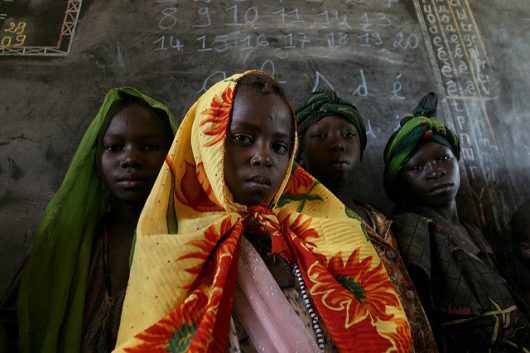
All over the world and throughout history women have not been given the same opportunities as men, whether in business, education or healthcare. These strict gender norms can be difficult to overcome anywhere, but it’s especially difficult to overcome in an impoverished country. There are nonprofits all over the world helping to empower women to be successful in their communities — here are five nonprofits that empower women.
Share and Care Foundation
The Share and Care foundation is concentrated in rural India. The goal of the foundation is to create equality, specifically gender equality, healthcare and education. The organization helps to empower women in rural India through teaching different life skills and helping these women overcome gender norms present in their country.
Some of the opportunities available for women through this foundation are:
- Vocational training
- Financial management skills
- Self-defense lessons
- Confidence training
- Safe space for women that have escaped red light districts.
The foundation also has a class on gender equality open to both young boys and girls to help re-educate the youth on a woman’s role in society.
This foundation has been very successful in helping to empower women throughout rural India. The Share and Care Foundation has taught women business skills in subjects like fashion design or computer training, shown women they can be self-employed and contribute to India’s economy and helped many women regain the confidence they need to succeed.
School Girls Unite
This goal of School Girls Unite is to overcome prejudice throughout the world and provide girls with an education and leadership skills. The organization believes no one should be denied the freedom of an education, especially based on their gender. This foundation works specifically in the country of Mali, where only 50 percent of girls completed elementary school.
School Girls Unite has provided many young girls an education in Mali that they otherwise would not have received. The group provides full scholarships to ten girls a year; the cost of attending school for one year is only $75. This cost is broken down into $35 for tuition, $20 for books and supplies and $20 for tutoring and mentoring.
The efforts of School Girls Unite have helped ten girls complete ninth grade, which is very rare in rural Mali; in addition, three students are continuing in their education without scholarships and two girls have received an associate’s degree. This nonprofit has been helping to empower women and changing lives for almost 15 years.
Women for Women International
Women for Women International was started in 1993 and has provided aid to over 478,000 women since. These women harken from eight different countries that have been impacted by war or conflict. This foundation is helping to empower women by supplying them with support, tools and life skills to help them become economically self-sufficient.
In addition to such benefits, women also learn life, vocational, health and nutritional skills in this program. Once they are enrolled, this population is also provided with a monthly stipend to help be able to pay for things while they learn valuable life skills.
Women for Women International has changed and improved the lives of women in Afghanistan, Bosnia and Herzegovnia, the Democratic Republic of the Congo, Iraq, Kosovo, Nigeria, Rwanda and South Sudan.
Women’s Global Empowerment Fund
Women’s Global Empowerment was founded in 2007 and has since changed the lives of many women in Uganda. This fund has given numerous women access to microcredit loans, literacy, education in business, leadership development and health initiatives.
As of 2017, this organization provided over 10,000 microcredit loans, business training classes and other developmental programs. This program has improved the lives of many women in Uganda by empowering them through business education and skills that help women work in agriculture and markets, among other vocational sectors in Uganda.
Madre
Madre aims to help the world become a place where all individuals can enjoy human rights. They partner with local women’s groups stricken with war or disaster throughout the world.
One of the organization’s goals is to advance women’s rights by meeting the urgent needs of these communities and providing solutions. Madre combines meeting urgent needs and teaching women life and leadership skills to create long lasting change throughout the world.
Madre works with communities in Nicaragua, Guatemala, Haiti, Columbia, Kenya, Palestine, Syria and Iraq. For 35 years, this organization has improved the lives of many women by fighting to combat violence against women, building peace throughout the world, fighting to end rape as a weapon of war, battling for rights of the LGBTIQ community, and providing emergency relief to communities in need.
These nonprofits that empower women do so by providing resources and education needed to build sustainable communities. Hopefully, others will continue to follow in such inspirational footsteps.
– Ronni Winter
Photo: Flickr

Tourism Industry in Azerbaijan Has Potential to Alleviate Poverty
Oil has long been Azerbaijan’s main export commodity. However, a recent switch to an independent economy inspired the birth of a new market- tourism. Along with the increase in country’s GDP and increase in jobs, the tourism industry in Azerbaijan has the potential to alleviate poverty, especially for the 5.9 percent of the population that still lives on less than $1.25 a day.
Azerbaijan and United Nations
In February 2018, United Nations Sustainable Development report detailed the potential that the private business sector in Azerbaijan has to alleviate poverty. If used in alignment with the United Nations Sustainable Development Goals, tourism as a mean for poverty alleviation could produce great results.
The United Nations Development Programme partnered with the American Chamber of Commerce (AmCham) in Azerbaijan to reiterate the potential the U.N. Sustainable Development Goals (SDGs) could have on Azerbaijan’s poverty reduction.
The U.N. SDG’s aim to create 380 million jobs in food, agriculture, urban mobility, energy, health and well-being globally by 2030 by partnering with local and private sector businesses. A commitment of the U.N. to support the government, private sector and civil society in Azerbaijan is a step in the right direction that could link the developing tourism industry with poverty reduction.
American Chamber of Commerce Executive Natavan Mammadova also spoke of the importance of small and medium businesses in Azerbaijan in regards to aligning the county’s economic growth with poverty reduction, which is the number one goal of the SDG’s.
Tourism potential
Tourism is a great opportunity for developing countries as they are rich in culture and have beautiful landscapes. Being on the Caspian Sea shoreline, Azerbaijan’s breathtaking landscapes, hiking and skiing trails in the Caucasus mountains and developing modern art scene make the country a perfect candidate for the tourism market.
Five percent of the world’s GDP comes from tourism and 235 million jobs are created by tourism (one in 12 jobs worldwide) every year. When focused on the potential to alleviate poverty, tourism provides jobs and sustainable incomes to local people through small community-based businesses. According to the U.N. World Tourism Organization (UNWTO), in some developing countries, notably small island states, tourism can account for over 25% of GDP.
In Azerbaijan, the success of the developing tourism industry has a potential to provide jobs to those in need. The continued success of the tourism market is being supported by the State Tourism and Agency Board that was created in May 2018. Among other things, this organization has partnered with the UNWTO to enter the 1st annual Tourism Startup Competition in 2018. Events like this will continue to develop new markets, create jobs and help people out of poverty.
Markets indirectly related to tourism like agriculture and transportation can also expect an increase with the tourism development. This is good news, as 54.9 percent of the total land area in Azerbaijan is used for agriculture.
Whether the newly developing tourism industry in Azerbaijan is providing additional income or is supporting small businesses, the jobs this market is developing have the potential to alleviate poverty and help those who are struggling. Continued commitment to growing the tourism market will increase the number of people being helped out of poverty.
– Hope Kelly
Photo: Flickr
5 Facts About Cancer in Serbia
The Serbian people are resilient. Tumultuous Serbian centuries have seen empires rise and fall. in the past three decades alone, Serbs have weathered political upheaval and civil war, all topped off by a two and a half month long airstrike. But today, they face an unprecedented problem: cancer. In the text below is the list of five key facts about cancer in Serbia.
5 Facts About Cancer in Serbia
Ultimately, to alleviate the crisis of cancer diseases in Serbia, the focus must be on addressing the multitude of risk factors and improving the productivity of the health care system. The Serbian government, with the help of focused foreign aid initiatives, has the power to save lives.
– Ivana Bozic
Photo: Flickr
Top 10 Facts About Poverty in the Maldives
The South Asian island nation of the Maldives is famous worldwide for its pristine beaches, which attract more than one million tourists a year. While the Maldives may be famous for its luxurious accommodations, the country still struggles with poverty and diversified economic development. Below are the top 10 facts about poverty in the Maldives.
The Maldives has transformed its economy over the last few decades to become a luxury tourism hotspot. A drastic increase in the service industry, along with the small, albeit present, agricultural industry, has allowed the country to improve its standard of living. Although the economy has rapidly grown, poverty for some people in the Maldives remains a reality. With a more diversified economy and population density issue resolved on the island nation, poverty will continue to decrease in the Maldives.
– Matthew Cline
Photo: Flickr
Updated: May 27, 2024
You Go Girl: Top 5 Nonprofits that Empower Women
All over the world and throughout history women have not been given the same opportunities as men, whether in business, education or healthcare. These strict gender norms can be difficult to overcome anywhere, but it’s especially difficult to overcome in an impoverished country. There are nonprofits all over the world helping to empower women to be successful in their communities — here are five nonprofits that empower women.
Share and Care Foundation
The Share and Care foundation is concentrated in rural India. The goal of the foundation is to create equality, specifically gender equality, healthcare and education. The organization helps to empower women in rural India through teaching different life skills and helping these women overcome gender norms present in their country.
Some of the opportunities available for women through this foundation are:
The foundation also has a class on gender equality open to both young boys and girls to help re-educate the youth on a woman’s role in society.
This foundation has been very successful in helping to empower women throughout rural India. The Share and Care Foundation has taught women business skills in subjects like fashion design or computer training, shown women they can be self-employed and contribute to India’s economy and helped many women regain the confidence they need to succeed.
School Girls Unite
This goal of School Girls Unite is to overcome prejudice throughout the world and provide girls with an education and leadership skills. The organization believes no one should be denied the freedom of an education, especially based on their gender. This foundation works specifically in the country of Mali, where only 50 percent of girls completed elementary school.
School Girls Unite has provided many young girls an education in Mali that they otherwise would not have received. The group provides full scholarships to ten girls a year; the cost of attending school for one year is only $75. This cost is broken down into $35 for tuition, $20 for books and supplies and $20 for tutoring and mentoring.
The efforts of School Girls Unite have helped ten girls complete ninth grade, which is very rare in rural Mali; in addition, three students are continuing in their education without scholarships and two girls have received an associate’s degree. This nonprofit has been helping to empower women and changing lives for almost 15 years.
Women for Women International
Women for Women International was started in 1993 and has provided aid to over 478,000 women since. These women harken from eight different countries that have been impacted by war or conflict. This foundation is helping to empower women by supplying them with support, tools and life skills to help them become economically self-sufficient.
In addition to such benefits, women also learn life, vocational, health and nutritional skills in this program. Once they are enrolled, this population is also provided with a monthly stipend to help be able to pay for things while they learn valuable life skills.
Women for Women International has changed and improved the lives of women in Afghanistan, Bosnia and Herzegovnia, the Democratic Republic of the Congo, Iraq, Kosovo, Nigeria, Rwanda and South Sudan.
Women’s Global Empowerment Fund
Women’s Global Empowerment was founded in 2007 and has since changed the lives of many women in Uganda. This fund has given numerous women access to microcredit loans, literacy, education in business, leadership development and health initiatives.
As of 2017, this organization provided over 10,000 microcredit loans, business training classes and other developmental programs. This program has improved the lives of many women in Uganda by empowering them through business education and skills that help women work in agriculture and markets, among other vocational sectors in Uganda.
Madre
Madre aims to help the world become a place where all individuals can enjoy human rights. They partner with local women’s groups stricken with war or disaster throughout the world.
One of the organization’s goals is to advance women’s rights by meeting the urgent needs of these communities and providing solutions. Madre combines meeting urgent needs and teaching women life and leadership skills to create long lasting change throughout the world.
Madre works with communities in Nicaragua, Guatemala, Haiti, Columbia, Kenya, Palestine, Syria and Iraq. For 35 years, this organization has improved the lives of many women by fighting to combat violence against women, building peace throughout the world, fighting to end rape as a weapon of war, battling for rights of the LGBTIQ community, and providing emergency relief to communities in need.
These nonprofits that empower women do so by providing resources and education needed to build sustainable communities. Hopefully, others will continue to follow in such inspirational footsteps.
– Ronni Winter
Photo: Flickr
The Most Pressing Facts about Poverty in Sri Lanka
Sri Lanka is working hard to reduce poverty with its partners such as the United Nations Development Program and the World Bank. The country has faced a number of development barriers, such as a three-decade civil war, which ended in 2009, and a devastating tsunami in 2004. While sustainable development is ongoing in the country, poverty in Sri Lanka is still a significant issue. Here are the most pressing facts about poverty in Sri Lanka.
Top 10 Facts about Poverty in Sri Lanka
Looking Forward
According to the World Bank, Sri Lanka’s economic outlook remains favorable despite recent declines. The organization reports, “Growth should continue to translate into poverty reduction and improvement in living standards.”
The country still has a long road ahead recovering from civil war and facing ongoing environmental crises, but the declining trend in poverty is a good sign for Sri Lanka’s future.
– Kathryn Quelle
Photo: Unsplash
Content or Dissatisfied: 10 Facts About Living Conditions in Turkey
Turkey is a country where a great deal of misinformation exists online. There have been many ups and downs in the country’s agenda lately, and gathering the top 10 facts about living conditions in Turkey is difficult due to the massive instability of continuous changes. Here are the top facts about living conditions in Turkey.
Top 10 Facts About Living Conditions in Turkey
Fostering Satisfaction
Despite Turkey’s struggles, many of the nation’s inhabitants are satisfied with their ways of life. The nation still has far to go for complete equality of living standards, but with fiscal, social, and economic changes, the nation can continue to steadily improve its inhabitants’ lives.
– Orçun Doğmazer
Photo: Pixabay
Benefits of Smart Cities in Africa
Interestingly, the common perception of Africa doesn’t tend to include sprawling urban metropolises; rather, a person typically visualizes a past version that is an incomplete picture of Africa today. While the majority of Africans still live in rural areas, the continent is one of the most quickly urbanizing regions in the world.
Urbanization
By 2050, 2.5 billion more people will live in cities and almost 90 percent of those people will be from either Africa or Asia. Three African cities have already grown beyond a population of 10 million and are formally considered megacities.
More cities will gain that title in the coming decades. This rapid urbanization provides opportunities for many African nations and their citizens, but it also poses serious long-term problems if not handled properly. With these concerns in mind, several countries have begun developing what has become known as smart cities in Africa.
The Problem with Cities
Many African cities have not been as able to cope as well with the massive increase in urbanization as other cities around the world. Perhaps the most obvious problem is housing. More than 60 percent of the continent’s urban population live in informal settlements where poverty and poor living conditions are rampant.
While the very poor are most affected, African cities’ weak infrastructure affects all of their residents. Some common difficulties that these cities face are:
Developing smart cities in Africa has the potential to help address these problems.
Smart Cities in Africa
Broadly speaking, smart cities aim to use new data-collecting technology and modernized infrastructure to provide safer and more efficient services for their citizens. This can take a variety of forms, many of which have already begun to be used around the continent.
Cape Town is a good example of such a solution. The South African city has partnered with network providers to acquire data from sensors placed around the city. This data helps the city run more effectively in several ways ranging from traffic monitoring to waste management, crime detection and fire response.
Some countries are taking another route toward smart cities by proposing satellite cities — new urban areas built in areas near pre-existing cities. Kenya, Rwanda, Nigeria and other countries all have such projects in the works. Many of these satellite cities would provide thoroughly modern infrastructure and luxury amenities to attract tech-savvy entrepreneurs.
Smart, Safe and Sustainable
While satellite cities have faced some criticism for being created well out of reach of the millions of poor Africans already living in cities, they are only one facet of a movement toward better urban areas across the continent.
Smart cities in Africa are still in their infancy, but they have an advantage. While many cities in the developed world have to maintain outdated infrastructure, African cities can build updated services and facilities from the ground up.
As African economies continue to grow, these modernized cities will be able to make more sustainable use of resources, respond better to crises and adapt to a world racing forward in the field of technology.
While smart cities will not fix Africa’s urbanization problems overnight, they are certainly a step toward both providing better living conditions and being able to compete with other cities around the world in the global economy.
– Joshua Henreckson
How Breastfeeding Helps Alleviate Poverty
The first week of August was World Breastfeeding Week, a week that, among other things, aims to inform the public something often overlooked: increasing the number of moms who breastfeed could significantly help decrease infant mortality and boost survival in extreme poverty. A healthy and low-cost practice, breastfeeding helps alleviate poverty.
Essential Health Benefits and Survival Booster
Breast milk has all the nutrition that a baby needs in its first six months of life and is a natural way of warding off diseases. Studies show that breastfeeding could decrease the risk of diabetes, allergies and other health hazards that may come in the baby’s later life. It is recommended that mothers feed their babies with breast milk exclusively for six months, and then breastfeed up to two years while introducing nutritional solid food.
Breastfeeding is not only beneficial but also necessary. A baby’s survival rate is boosted if it takes in breast milk within the first hour after birth. Failure to give a baby breast milk within a short period of time after birth could increase the possibility of infant death by as much as 80 percent.
The effects of breastfeeding on a global scale are striking. If all mothers across the world exclusively breastfeed their babies for six months and then feed their babies with breast milk along with other solid food for another year, 13 percent of global child deaths under five could be averted. Other recommended methods to increase child survival, such as hygienic delivery, Hib vaccine and tetanus toxoid, could each avert only up to 5 percent of child deaths under five.
“Breastfeeding is the best gift a mother, rich or poor, can give her child, as well as herself,” UNICEF’s Deputy Executive Director Shahida Azfar said on Mother’s Day.
Why Breastfeeding Helps Alleviate Poverty?
Breastfeeding is important everywhere in the world, and an essential way to help mothers in poverty or wealth. But poor regions with unclean water and insufficient hygiene should especially embrace breastfeeding because in these places this issue has a higher stake: artificial milk or infant formulas could become poisonous if contaminated, resulting in illnesses, or even death. Breast milk also provides sufficient water for babies in their first six months.
Breastfeeding is low-cost yet easily meets the nutritional needs of young babies. In other words, breastfeeding promises food security for babies and takes off some of the households’ financial burdens.
In a joint message released during the 2016 Breastfeeding Week, UNICEF and WHO stated: “breastfeeding is not only the cornerstone of a child’s healthy development; it is also the foundation of a country’s development. In fact, supporting breastfeeding is one of the smartest investments countries can make in the well-being of their citizens–and thus, in their own long-term strength.”
Why Aren’t More Mothers Breastfeeding?
It might be counter-intuitive that many mothers do not breastfeed their babies even though breastfeeding is ultimately the most cost-efficient practice. But breastfeeding may not be as easy as it appears: female workers often cannot afford sustained breastfeeding because their working environment or work routine do not provide them with the time and space for the practice.
UNICEF calls for support of national legislation and policies that provide women with paid maternity leave, breastfeeding breaks and other deserved benefits after birth.
UNICEF and WHO also launched the Baby-Friendly Hospital Initiative (BFHI) in 1991. This initiative essentially does not allow feeding bottles and cheap breast milk substitutes. The initiative proved highly successful. Cuba, for example, saw a three-fold increase in exclusive breastfeeding for four months in the stretch of only six years after making 49 of 56 hospitals or maternity facilities baby-friendly.
Countries also need more informed, supportive health-workers who encourage and assist with breastfeeding. Advocacy for breastfeeding like the World Breastfeeding Week also helps raise awareness.
“Now, as governments around the world develop budgets and action plans to achieve the Sustainable Development Goals, breastfeeding must be a policy, programming, and public spending priority,” WHO and UNICEF stated in 2016.
– Feng Ye
Photo: Flickr
Top 10 Facts about Hunger in Haiti
After the 2010 earthquake in Haiti, countries around the world, including the U.S., sent a great deal of assistance to the devastated country. The U.S. has given about $13 billion to Haiti in foreign aid. Despite these efforts, the people of Haiti still face elevated poverty and hunger levels.
In October 2016, Haiti faced one of its worst hurricanes to date. Hurricane Matthew was a category four storm that caused severe damage and killed approximately 600 people. Many organizations continue to help repair the damage Matthew and earlier storms brought to Haiti. To understand the severity of the crisis, look below for the top 10 facts about hunger in Haiti:
Top 10 Facts About Hunger in Haiti
These top 10 facts about hunger in Haiti highlight the dire conditions in the country. Though the hunger crisis persists, there are organizations working tirelessly to help the country and its people. An example of this is an organization called Action Against Hunger. This organization seeks to provide families in Haiti with agricultural training. This gives them not just short-term food relief, but also a long-term source of food and economic growth.
Natural disasters are inevitable and one cannot be sure when Haiti will face another great set back. However, if more is done to amplify the country’s growth now, Haiti will be better prepared to face such disasters and avoid some of its devastating consequences.
– Julia Bloechl
Photo: Flickr
Top 10 Facts About Poverty in Cambodia
Cambodia has made phenomenal progress against poverty in the past few decades. The country surpassed the Millennium Development Goals and expanded their road system, irrigation and agriculture market. The following are the top 10 facts about poverty in Cambodia.
Top 10 Facts About Poverty in Cambodia
Cambodia has made great strides since the start of the century in working to alleviate poverty and recover from the Khmer Rouge regime. Some of these top 10 facts about poverty in Cambodia still paint a more negative picture, but others provide hope for the future. If the good fortune that has befallen the agriculture industry continues and more awareness can be raised on the conditions that need improvement in Cambodia, one can expect to continue to see growth in the coming years.
– Amelia Merchant
Photo: Flickr