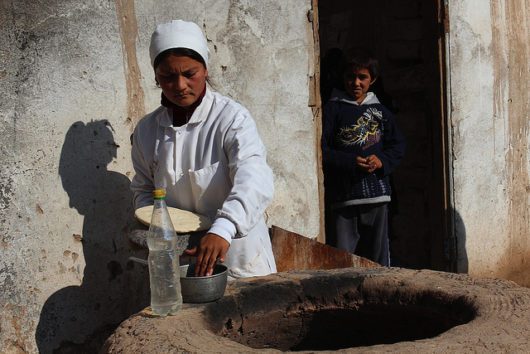
For a small country in Central Asia, Tajikistan makes U.S. news relatively frequently, often because the lives of women there differ from the U.S. norm. Those living in the area have suffered from political turmoil and poverty. While the news often focuses on the modern oppression of women, the mistreatment of women in Tajikistan stems from a larger injustice, centuries of poverty in the country that has affected women more than men.
Religious Oppression for Women in Tajikistan
Recently, the news has highlighted that Tajikistan’s Ministry of Culture published a “Book of Recommendations” for women’s attire. In the book, models display what the country deems appropriate attire for many occasions, setting standards for work and many social events.
What particularly incited opposition from many was the book’s overt advisement against Muslim and Islamic clothing, like the hijab, as well as Western clothing, which was deemed too scandalous. Furthermore, in 2017, the Tajikistan government instituted a policy of texting women reminders about wearing traditional clothing. This followed the government’s efforts in 2016 to close shops selling women’s religious clothing.
Additionally, the Tajikistan government created a law requiring traditional attire and culture at important events, such as weddings and funerals, officially banning “nontraditional dress and alien garments.” In August, the month it became law, 8,000 women wearing hijabs were stopped by government officials and told to remove their religious garments.
Maternal Mortality Rates for Women in Tajikistan
Tajikistan is one of the world’s poorest countries. Thirty-two percent of Tajiks live in poverty, but in rural areas, that number rises to 75 percent. Consequentially, women face staggering maternal mortality rates with 65 women out of every thousand dying from pregnancy or childbirth. In fact, mortality rates for both mother and infant are higher than any other country in Central Asia, a region already significantly behind Western standards.
This lag correlates with the upheaval faced by Tajiks since the responsibility for healthcare had changed hands so many times in the past. Tajikistan was part of the Soviet Union from 1929 to 1991. Then, shortly after gaining independence in 1991, Tajikistan suffered from a brutal civil war that not only claimed tens of thousands of Tajik lives but also crippled the healthcare system, contributing to such high maternal mortality rates.
Caring for the Home and Family
Political upheaval abruptly caused women to become household managers without any aid, leaving them to struggle with poverty. The civil war crippled industrial and agricultural production, the latter of which the country’s economy depended on almost entirely. Since then, nearly 1.5 million Tajik men have left the country to seek employment elsewhere, often leaving wives in charge of the home and children. But, unfortunately, households headed by women are significantly poorer than those headed by men.
Representation and Education for Women in Tajikistan
Female representation in government has remained below international standards because of the poverty caused by political upheaval. Only 12 of the 62 legislators in Tajikistan are women. Those who do make it into politics are often stuck in the lower ranks with little to no opportunity to rise to levels where they can create change.
Private Muslim schools educated the majority of the country’s population from early 1800 until the 1920s when The Soviet Union secularized education. However, with independence came a decreased government budget for education as the private funds disappeared. Moreover, women either have to marry young or are too busy working and, therefore, do not have an opportunity to receive an education.
Improvements Being Made For Women in Tajikistan
Due to The Soviet Union’s systemized education, literacy rates grew, and that shift in norms has continued to benefit men and women in Tajikistan. Additionally, in the two decades following independence, poverty rates have dropped, suggesting a growing stability. In fact, in 1999, 81 percent of the country lived in poverty, and in ten years that number has almost halved to 47 percent. Additionally, extreme poverty decreased from 73 percent in 1999 to 14 percent in 2013.
The U.N. has been working in Tajikistan to improve conditions for women since 1999 by empowering women and promoting gender equality. Furthermore, local and international stakeholders have been given a way to provide activities for women, such as the Rapid Emergency Assessment and Coordination Team (REACT), which helps train women to respond in disaster situations.
Hope for a Better Future
Therefore, beyond the uproar over women’s clothing being regulated by the government lies a deeper historical injustice due to poverty. Women have had little control over Tajikistan’s laws that have targeted them and a lack of access to education that prevents this fact from changing.
Despite concerning media coverage, possible improvements for the lives of women in Tajikistan exist. As stability grows, the potential exists to improve the budget for healthcare and education and, therefore, reduce poverty. Backed with proper healthcare and educational opportunities, women will have the ability to gain access and opportunities to dictate the laws of their country, such as those about their clothing, by becoming more active in the political sphere.
– Charlotte Preston
Photo: Flickr

Medical Tourism in India
India is, surprisingly to some people, known today for cost-effective and high-quality medical treatments, and the country achieves this by using the latest technologies and skilled doctors. This has turned India into a hub for medical tourism, with many foreign patients traveling to the country for treatment. Several countries, including Pakistan, Bangladesh, Afghanistan, Iraq, Nigeria and the United States are all utilizing medical services in India.
The Growth of Medical Tourism in India
Medical tourism in India is estimated at $3 billion and continues to grow rapidly. In fact, it is projected to grow to $8 billion by 2020. This leads to job creation in both the public and private sectors in the country and promotes development and poverty alleviation in India. This thriving industry has the support of government agencies as well as the private sector. Besides medical services, there are many auxiliary service providers who also participate, including public and private transport operators, hotel and guest house owners.
Advantages of the Indian Medical Care System
India offers high-quality medical facilities and skilled medical personnel for a much lower cost in some of the more developed countries, thus attracting patients, that can as well be considered medical tourists. For example, treatment costs in India are around a tenth of the price in the United States.
With thousands of experienced doctors and nurses, India also offers a high quality of care. Another advantage of medical tourism in India is a lack of a language barrier. For English-speaking patients, India is a convenient destination for medical care, as English is the official language in this country. To aid those who are not proficient in English, some hospitals have hired translators fluent in languages of Eastern Europe and Africa.
The Government Role in Medical Tourism Growth
Almost 500,000 medical tourists came to India for treatment in 2017 and India holds 18 percent of the global medical tourism market. The government of India has removed visa restrictions for this type of tourism to further spur growth. In fact, e-tourist visas are now being offered for such treatment, including for short-term ailments. By speeding up the visa process and creating designated immigration facilities, the government is attempting to encourage the growth of this industry by attracting tourists from all over the world. The number of medical tourism visas in India has risen by 45 percent in 2016 compared to the previous year.
Alternative Medicine
While India is known for cardio therapy, transplants and orthopedics, alternative medicine and wellness procedures such as Ayurveda, Yoga and Acupuncture are also gaining popularity in the West, which draws patients to India, where there are experts in these fields as well.
The government is focusing on endorsing its wellness industry by setting up new facilities. It has set up the Ministry of AYUSH to promote research and education in this industry. The government has also invested in publicity and organization of events and seminars to promote this industry and attract private investment.
The Federation of Indian Chambers of Commerce and Industry has launched a global summit to promote health care services export from India. The state tourism department of Maharashtra has launched a portal to make information about medical care more accessible. By consulting various stakeholders and government agencies, the county is attempting to create a feedback system to further assist patients.
Medical tourism in India is one of the ways in which the country has a chance to promote growth and development, while successfully leveraging its resources and facilities. The rise in the number of doctors, facilities and access to technology further enables India to be a viable destination for patients worldwide.
– Isha Kakar
Photo: Flickr
The Paradox of Water Crisis in Mexico
Mexico City is facing a water crisis, with one in five citizens lacking access to reliable tap water. Many people only receive water once a week from a truck they must pay to deliver the water to the designated area and even then they have to wait in line for hours, sometimes overnight, out of fear the truck will run out of the water.
The poorest areas are not serviced by these expensive trucks and individuals must walk long distances to get water for their families. Mexico City’s water crisis is worsening as temperatures increase, droughts get longer and more frequent, aquifer water levels continue to drop and a lack of funds prevents solutions from being implemented.
However, while many people in the city lack clean water, the city also has a problem with floodings. This represents the paradox of water crisis in Mexico.
Water Sources in the City
A significant portion of the city’s water comes from underground aquifers. Water-impervious surfaces such as concrete and asphalt prevent water from filtering through the ground to the depleted aquifers. Mexico City continues to draw water from this finite resource while increased development inhibits rainwater from replenishing the water level, raising concerns about the future availability of water.
Because local water sources are insufficient to supply Mexico City’s large population of 21 million, about 40 percent of water is brought into the city from remote locations. There are over 8,000 miles of pipes designed to transport this water. Forty percent of the water that needs to be supplied is lost as a result of leaking pipes or theft. Even with these supplementary water sources, Mexico City struggles to consistently supply all its citizens with tap water. This problem is exacerbated by a lack of infrastructure designed at capturing rainwater and recycling waste water.
The Paradox of Water Crisis in Mexico
The paradox of Mexico City’s water crisis is that the same population facing a water shortage is also plagued with periodic flooding. Situated 1.5 miles above the sea level, the city was originally settled by the Aztecs in the 14th century on an island in the middle of a system of lakes. As the population grew, some of these lakes were filled, and eventually, the Aztecs were conquered by the Spanish and any remaining lakes were drained.
In addition, as the aquifers are depleted to supply the city with water, the ground compresses and the city sinks up to nine inches a year in some regions. This combination makes Mexico City prone to flooding during summer storms.
Solutions to the Problem
In order to address this problem, multiple projects have been proposed. Parks have been designed in key areas to allow rainwater to seep into the ground and replenish the aquifer while minimizing flood risk. Other efforts focus on reducing the impact of development and improving wastewater management to increase local water availability. For example, some roadways built on top of what used to be river beds have been altered to incorporate linear parks aimed at treating runoff.
Sustainable projects like these are increasingly common as the future of water availability becomes a greater concern. However, to truly address Mexico City’s water crisis the government will have to significantly invest in new infrastructure aimed at collecting rainwater and recycling waste water. Relying on a depleted aquifer and water imported from remote sources is not a long-term solution and locals will continue to suffer the paradox of water crisis in Mexico, the situation in which they lack access to reliable water sources while also being at risk of debilitating floods.
– Georgia Orenstein
Photo: Flickr
Anganwadi Workers in India
Anganwadi is a child and health care system in India, initiated by the government to promote nutrition, education and health care to its citizens, particularly in rural areas. Anganwadi workers in India are the first point of contact between organized health care and the poor people in rural India. The responsibilities of these workers include caring for the health and well being of nursing women, children and socioeconomically deprived groups.
The Anganwadi Workers
There are over one million Anganwadi centers in India with 2 million workers, benefiting over 70 million people. Each worker is responsible for the well-being of around 1,000 people in villages across India. The workers are from the community they operate in and thus have an intimate understanding of the issues surrounding patients. They are able to gain the trust of the patients and are thus able to provide for their needs.
This workforce includes mostly women and is regarded as an acceptable and effective means of employment for women in rural areas. Nursing women and children are comfortable being treated by these workers and find it easier to seek help. The workers participate in rudimentary training and skills to care for the people in their village.
The workers are often the only source of help for villagers and thus allow more people to gain access to health care. Rural India suffers from issues such as overpopulation, lack of sanitation and illiteracy, and these workers are able to ease the overburdened health care system of the country.
Benefits for the Children
Anganwadi centers also serve as free-of-cost preschool centers for children in the area. These centers also organize immunization programs for children and provide information on how to attain adequate nutrition. The mission of the organization is to remove malnutrition in India by 2022. The successes of polio and leprosy eradication programs in the country owe a great deal to the efforts of the Anganwadi workers.
The Ministry of Women and Child Development provides different types of training for workers, including classroom training. Some workers receive up to 3 months of training. Workers are also provided with refresher training from time to time. This ensures that workers have some understanding of health care and social development of children and are able to provide assistance to families.
Educational and Environmental Role
There has been a recent focus on sanitation measures that include providing drinking water, promoting personal hygiene practices and establishing practices of environmental sanitation. This provides people with tools to care for themselves and their environment. Workers provide advice on preventing open defecation, unhygienic food preparation and unsanitary living.
Anganwadi centers also organize workshops to empower adolescent girls through education, skill development and personal hygiene. By promoting literacy and nutrition, the centers are providing resources to young girls to develop themselves personally and professionally. This is also a means to reduce child marriages by providing skills to be economically and socially empowered.
Workers also utilize technology such as smartphones to create a database of residents of the village and schedule home visits for those who are immobile. Technology is also used to track activities, attendance and growth. This is also a good way to track progress and keep workers accountable.
Despite their helpful service, Anganwadi workers in India are severely underpaid. The government of India has provided greater incentives and salary to these workers so they are able to provide for themselves adequately.
Anganwadi workers in India provide the systematically oppressed with access to health care, education and sanitation facilities. This allows for an improvement in the quality of life of Indians and provides many women with employment opportunities. Continuous work of this organization will benefit the country in its goal of eradicating poverty.
– Isha Kakar
Photo: Flickr
Top 10 Facts About Poverty in the Democratic Republic of the Congo
Poverty in the Democratic Republic of The Congo (DRC) can be interpreted as a combination of spillover conflict from neighboring African nations, as well as an embedded culture of governmental corruption. In the text below, the top 10 facts about poverty in the Democratic Republic of the Congo will address the underlying causes, as well as how DRC has been able to improve impoverished conditions in recent years.
Top 10 Facts About Poverty in the Democratic Republic of the Congo
These top 10 facts about poverty in the Democratic Republic of the Congo provide an understanding of not only how poverty developed in the country and the effects poverty has had on the people, but also working solutions to address this issue. The Democratic Republic of the Congo can also provide an example of success for other post-conflict societies in improving poverty rates.
– Kimberly Keysa
Photo: Flickr
Human Rights in Vietnam
The state of human rights in Vietnam is dire and has hit an all-time low level in 2017. Activism, religious diversity, political variance and even integrity within the judicial and police systems are almost non-existent. Vietnam has seen backlash for its controversial and rigid ways from the U.S. and other Western countries, but the country continues to ignore it and even fights opposition to their government in favor of preserving the authority of the ruling Vietnamese Communist Party.
Vietnamese Political Situation
The Vietnamese Communist Party is the sole state of leadership in Vietnam and has been in this position since 1980. The 1992 constitution, however, delegated more authority to the president and to the cabinet. The party, nevertheless, maintained responsibility for overall policy decisions. Challenges to the Vietnamese Communist Party are not tolerated, and often end in incarceration.
In fact, Vietnam actually prohibits the establishment or operation of independent political parties, labor unions and human rights organizations. Approval from Vietnamese authorities is needed for public gatherings. These authorities can refuse permission for meetings, marches, or public assemblies they believe to be politically unacceptable.
In 2011, the U.S. Department of State did a report on human rights in Vietnam and deemed the country to be “neither free nor fair” and claimed a large contributing factor for this state was the corruption of the judicial and police systems. The report stated that the Vietnamese judicial system was inefficient and experienced political influence and endemic corruption. Moreover, there were multiple cases of police brutality in both arrests and later detention, denial to a fair trial, ambiguity in arrests, and inhumane prison conditions. A government official from Vietnam fired back at the report stating that Vietnam supports human rights but opposes initiatives by outside nations interfering in internal affairs.
Reports on the Current Situation
The Vietnamese government has proven to be untrustworthy in their claims about human rights in Vietnam as well. The Vietnamese government has continuously claimed, since 2010, that there are no political prisoners in Vietnam. Yet as of April 2018, there have already been approximately 97 prisoners of conscience in the country.
In 2012, the U.N. ran their own human rights report on Vietnam and the results were increasingly positive, relative to the U.S. report in 2010. Though, the report still urged the government to implement major human rights treaties, like the Convention against Torture and Other Cruel, Inhuman or Degrading Treatment which is an international human rights treaty meant to prevent all acts of cruel and inhuman treatment across the world.
Yet, despite this relatively positive report, human rights in Vietnam took a decline in 2017. The Human Rights Watch reported at least 36 cases of violence against activist from January to April 2017. Moreover, the Human Rights Watch found that the judicial system was still very much under the control of the government and that it has failed to meet international standards.
In Vietnam, people who suffer from a drug dependency, including children, are sent to governmental detention centers where they are forced to do menial work or “labor therapy.” It was reported by state media that during the first six months of 2017, about 3,168 people were sent to centers in Ho Chi Minh City. It was also found that those that are most at risk of violent treatment in these centers are children, women and ethnic minorities which goes directly against the Convention against torture and other cruel, inhuman or degrading treatment treaty the U.N. urged Vietnam to implement back in 2012.
There are organizations who are actively attempting to intervene in the high number of arrests being made by law officials of The Vietnamese Communist Party, and who are also fighting for the improvement of Human Rights conditions in Vietnam.
Organizations Involved in improving Human Rights in Vietnam
Organizations like the Human Rights Watch and the International Federation For Human Rights (FIDH) have urgently been asking for donations and letters to intercede the Human Rights violations being made in Vietnam. Moreover, there has been an increase in the number of activists for Human Rights, within Vietnam, in the last decade.
However, Vietnamese activists have to remain relatively quiet in their effort to bring these violations to the attention of the rest of the world due to the high probability of being arrested. Since 2014, there have been a little over 160 human rights activists that have been jailed in Vietnam, and this number continues to rise.
Thus, it remains to be seen if the conditions of Human Rights in Vietnam will improve in the coming years, but with the high number of arrests already in 2018, the outlook does not look so bad. The government has to change it’s attitude towards this issue if the country plans to grow in this aspect.
– Isabella Agostini
Photo: Flickr
Top 5 Countries Receiving Economic Aid in 2019
In the fiscal year 2019, the U.S. Federal Government plans on spending $1.24 trillion. Out of this amount, foreign assistance will account for $27 billion. This spending is broken down into several categories including economic development. Approximately $2 billion will be directed toward generating economic growth in developing countries. In the text below, the top five countries receiving the economic aid in 2019 are presented.
Jordan
The first country on the list is Jordan. Jordan will receive $1.27 billion in aid and roughly 48 percent of that money is planned for economic development. The focus of this aid is on a plan called the Microeconomic Foundation for Growth Assistance. The goal of this funding is to create a stable economic landscape that will allow the private sector to invest. This will aid Jordan by creating both monetary and fiscal policies that will allow the government to have a greater control of the economy.
These reforms are needed due to the economic crisis that Jordan is currently facing. Jordan’s debt makes up 94 percent of the country’s GDP. The cost of living has also risen dramatically in the past years. The Economist ranked Amman, the capital of Jordan, as the most expensive Arab city to live in. However, Jordan is working to end its economic crisis. Recently, Jordan received a $723 million loan from the International Monetary Fund (IMF) and plans to lower the country’s debt to 77 percent of GDP by 2021.
Afghanistan
The second country on the list is Afghanistan. This country is projected to receive $93 million for economic development. Most of this funds ($57 million), will be aimed toward agricultural development. This money will be focused on the distribution, processing and trade of agricultural goods.
In 2018, Afghanistan’s GDP increased by five times compared to 2002. However, a large trade deficit threatens Afghanistan’s economy. Most of Afghanistan’s economy relies on imports and this is the main reason why the country needs help in distributing agricultural goods. The United States Agency for International Development (USAID) provided airlifts in 2017 to help export goods to international markets. USAID also provided alternative road transport. In total, this organization helped to move $223 million of goods.
Kenya
In 2019 Kenya, will receive $624 million of aid from the United States. Out of this amount, 5 percent will be aimed at economic development of the country, totaling $29 million. Almost 80 percent of this money will be for agriculture. Like Afghanistan, the focus of the aid is towards the distribution, processing and trade of agricultural goods.
In Kenya, agriculture makes up 27 percent of the country’s GDP and it is vulnerable to various kinds of natural disasters, like droughts. In 2014, Kenya reported a national drought emergency and the drought left millions of people vulnerable.
The drought continued to 2018 and USAID is studying the situation and working on solutions to help lessen the impact of the drought. In the period of 2015 to 2017 USAID implemented several programs to help create more drought resistant incentives for farmers. Kenya’s GDP is expected to grow by 5.5 percent in 2018, compared to 4.8 in 2017. This is directly related to a better weather situation in the country.
Tanzania
Economic aid directed toward Tanzania is projected to be 1 percent of the aid package, which equals $7 million. This amount will be aimed towards agriculture.
Agriculture makes up for 25 percent of Tanzania’s GDP and around 75 percent the country population is employed in this sector. The United States sees this as an opportunity to increase incomes and living conditions for Tanzanians. USAID has been working on a program in Tanzania known as Feed the Future. This program increases competitiveness, productivity and creates infrastructure so farmers can reach more markets.
In 2017, over 400,000 Tanzanians have benefited from Feed the Future. This is reiterated by the fact that rice productivity doubled per acre and the average gross margins for horticulture reached $3,900 per acre.
Uganda
Uganda is projected to receive $461 million in 2019. Four percent or almost $19 million are going towards economic development. Majority of this amount is going towards agriculture development.
Like Tanzania, a large percentage of Uganda’s GDP and workforce are concentrated in agriculture. Twenty-four percent of the country’s GDP is made up of agriculture and farming employs two-thirds of the population.
USAID implemented the Feed the Future Program in Uganda as well. One of the most important initiatives was implementing an e-verification sticker in fruits sold that was intended for keeping track of purchase inputs. This initiative is aimed at combating the $1 billion loss that Uganda faces from counterfeit inputs on yearly basis. It also laid private investors consciences to rest, since they invested over $6 million in Uganda’s agricultural business in 2016.
In summary, the top five countries receiving the economic aid from the U.S. in 2019 are Jordan, Afghanistan, Kenya, Tanzania and Uganda. The United States government invests billions of dollars every year into foreign aid. One of the best ways to use that money is to invest in economic development, which helps improve the conditions of people living in developing countries.
Economic stability is one of the most crucial factors in ensuring safety across the world.
– Drew Garbe
Photo: Flickr
A Pledge to Reduce HIV in the Philippines
HIV/AIDS in the Philippines continues to be a growing epidemic with an average of 68,000 individuals currently living with HIV, and fewer than half of them are being treated with antivirals. The Philippines now has the fastest growing HIV epidemic in Southeast Asia and in the world, reporting to have about 1,021 new cases of HIV/AIDS infected people in January 2018, with 17 percent of those newly infected individuals already showing signs of advanced infection. Luckily, the Philippines government is taking action to reduce HIV in the Philippines.
How the Philippines Are Addressing HIV/AIDS
In August 2018, a government organization called The League of Cities of the Philippines (LCP) signed a partnership with UNAIDS in order to fast track the reduction of the number of new HIV/AIDS infections within the country.
UNAIDS states that for the past seven years, annual, new HIV infections have more than doubled, reaching to about 12,000 in 2017. Because 80 percent of HIV cases are reported within 70 cities in Manila, LCP and local governments in the Philippines are taking direct action regarding this epidemic, pledging to eradicate this disease.
According to Laarni L. Cayetano, the National Chair of LCP, the HIV/AIDS epidemic in the Philippines is definitely an issue, stating it “‘needs urgent action among local governments, especially since key populations at risk of infections reside mostly in cities.'”
The Philippines are already beginning to address this issue by starting more innovative services to prevent HIV. Quezon City, for example, has continued to increase HIV funding since 2012 in order to build three clinics that now provide rapid, judgment-free HIV testing and counseling for those who are infected.
The Department of Health
The Department of Health (DOH) has launched a tri-beauty pageant, specifically a “Lhive Free Campaign,” in Quezon City in order to find ambassadors in the prevention of HIV/AIDS among youth. With DOH’s desire to reduce HIV in the Philippines, this campaign serves as a message to the people as well as provides free, early detection methods and free medications needed for those infected.
Beauty Queen and Actress Kylie Verzosa, who was crowned Miss International in 2016 and is currently a DOH ambassador, also supports this campaign and pageant. Although Verzosa is known for her advocacy on mental health, she also shares a passion to spread awareness of HIV/AIDS and promote its prevention. She sees HIV as a physical, emotional, and mental health concern, considering that depression and anxiety can be developed in an HIV patient struggling to live with this condition.
The DOH and World Health Organization (WHO) in the Philippines previously held free, anonymous HIV screenings in the workplace for more than 400 people, DOH staff members and walk-ins alike. They provided eight different stations located throughout the DOH grounds. This service not only helped to promote HIV/AIDS testing as a strategy to fight against this epidemic but it is also important, according to Health Secretary Francisco T. Duque, for DOH staff members to know their own HIV status as they are encouraging others to seek treatment.
Other Groups Working to Prevent HIV/AIDS
Other departments and organizations are working to help decrease the HIV/AID epidemic in the Philippines. Dr. Edsel Maurice T. Salvana, the director of the Institute of Molecular Biology and Biotechnology at The National Institutes of Health (NIH) at the University of the Philippines, reports that the NIH is researching and working on the molecular epidemiology of HIV viruses that appear to be drug-resistant. The NIH is also offering a variety of services for those infected in this country, such as HIV drug-resistance testing and genotyping, helping to end the further increase of the disease.
The Human Rights Watch also provided recommendations regarding the government’s approach to reduce HIV in the Philippines. The group suggests implementing further HIV prevention education within schools, providing access to condoms, destigmatizing the infection and reinitializing harm reduction programs that focus on injecting drug use.
The LCP partnership with UNAIDS serves as an opportunity and a push to help end the growing HIV/AIDS epidemic in the country. As governments vow to reduce HIV in the Philippines, improvements in the health of the people the country will increase substantially. Advocating for and addressing this issue will not only encourage citizens to seek available treatments but it can also prevent the further spread of HIV/AIDS in the Philippines in the future.
– Charlene Frett
Photo: Flickr
Poverty and Oppression of the Women in Tajikistan
For a small country in Central Asia, Tajikistan makes U.S. news relatively frequently, often because the lives of women there differ from the U.S. norm. Those living in the area have suffered from political turmoil and poverty. While the news often focuses on the modern oppression of women, the mistreatment of women in Tajikistan stems from a larger injustice, centuries of poverty in the country that has affected women more than men.
Religious Oppression for Women in Tajikistan
Recently, the news has highlighted that Tajikistan’s Ministry of Culture published a “Book of Recommendations” for women’s attire. In the book, models display what the country deems appropriate attire for many occasions, setting standards for work and many social events.
What particularly incited opposition from many was the book’s overt advisement against Muslim and Islamic clothing, like the hijab, as well as Western clothing, which was deemed too scandalous. Furthermore, in 2017, the Tajikistan government instituted a policy of texting women reminders about wearing traditional clothing. This followed the government’s efforts in 2016 to close shops selling women’s religious clothing.
Additionally, the Tajikistan government created a law requiring traditional attire and culture at important events, such as weddings and funerals, officially banning “nontraditional dress and alien garments.” In August, the month it became law, 8,000 women wearing hijabs were stopped by government officials and told to remove their religious garments.
Maternal Mortality Rates for Women in Tajikistan
Tajikistan is one of the world’s poorest countries. Thirty-two percent of Tajiks live in poverty, but in rural areas, that number rises to 75 percent. Consequentially, women face staggering maternal mortality rates with 65 women out of every thousand dying from pregnancy or childbirth. In fact, mortality rates for both mother and infant are higher than any other country in Central Asia, a region already significantly behind Western standards.
This lag correlates with the upheaval faced by Tajiks since the responsibility for healthcare had changed hands so many times in the past. Tajikistan was part of the Soviet Union from 1929 to 1991. Then, shortly after gaining independence in 1991, Tajikistan suffered from a brutal civil war that not only claimed tens of thousands of Tajik lives but also crippled the healthcare system, contributing to such high maternal mortality rates.
Caring for the Home and Family
Political upheaval abruptly caused women to become household managers without any aid, leaving them to struggle with poverty. The civil war crippled industrial and agricultural production, the latter of which the country’s economy depended on almost entirely. Since then, nearly 1.5 million Tajik men have left the country to seek employment elsewhere, often leaving wives in charge of the home and children. But, unfortunately, households headed by women are significantly poorer than those headed by men.
Representation and Education for Women in Tajikistan
Female representation in government has remained below international standards because of the poverty caused by political upheaval. Only 12 of the 62 legislators in Tajikistan are women. Those who do make it into politics are often stuck in the lower ranks with little to no opportunity to rise to levels where they can create change.
Private Muslim schools educated the majority of the country’s population from early 1800 until the 1920s when The Soviet Union secularized education. However, with independence came a decreased government budget for education as the private funds disappeared. Moreover, women either have to marry young or are too busy working and, therefore, do not have an opportunity to receive an education.
Improvements Being Made For Women in Tajikistan
Due to The Soviet Union’s systemized education, literacy rates grew, and that shift in norms has continued to benefit men and women in Tajikistan. Additionally, in the two decades following independence, poverty rates have dropped, suggesting a growing stability. In fact, in 1999, 81 percent of the country lived in poverty, and in ten years that number has almost halved to 47 percent. Additionally, extreme poverty decreased from 73 percent in 1999 to 14 percent in 2013.
The U.N. has been working in Tajikistan to improve conditions for women since 1999 by empowering women and promoting gender equality. Furthermore, local and international stakeholders have been given a way to provide activities for women, such as the Rapid Emergency Assessment and Coordination Team (REACT), which helps train women to respond in disaster situations.
Hope for a Better Future
Therefore, beyond the uproar over women’s clothing being regulated by the government lies a deeper historical injustice due to poverty. Women have had little control over Tajikistan’s laws that have targeted them and a lack of access to education that prevents this fact from changing.
Despite concerning media coverage, possible improvements for the lives of women in Tajikistan exist. As stability grows, the potential exists to improve the budget for healthcare and education and, therefore, reduce poverty. Backed with proper healthcare and educational opportunities, women will have the ability to gain access and opportunities to dictate the laws of their country, such as those about their clothing, by becoming more active in the political sphere.
– Charlotte Preston
Photo: Flickr
Younger Generations Stand up to End HIV in Fiji
Fiji, a country located in the South Pacific, consists of 300 islands and has a current population of over 914,000 people. Although Fiji has one of the lowest prevalence of HIV in the world, HIV cases and the risk of HIV are consistently increasing. Luckily, young people are educating themselves in order to fight against HIV in the country. They are becoming involved in this topic and trying to achieve the United Nations Political Declaration on Ending AIDS.
Meeting in Suva
In October 2018, according to The Joint United Nations Programme on HIV/AIDS (UNAIDS), 24 teenagers attended the meeting in Suva, Fiji, desiring to distinguish the factors that would put young people at risk of HIV.
Fiji’s Global HIV/AIDS Progress report states that less than 1,000 people were living with HIV in 2014 in the country. Out of the age group between 15 and 49 years old, around 0.1 percent had a virus. Despite these statistics, HIV cases are beginning to increase as there were 68 new HIV cases in 2014 and 50 more in 2015.
In a hope to prevent any further new cases, especially in younger generations, teenagers who attended the meeting identified what could possibly risk the youth’s health regarding HIV.
UNAIDS states that attendees noticed and appreciated the steps Fiji has taken to reduce the risk of HIV, including policies created in order to establish a clearer access to HIV services for young people. Yet, the participants identified that Fiji needs to address the lack of access to condoms, harm reduction programs, stigma and discrimination.
Youth Knowledge on AIDS
A representative of Reproductive Family Health Association, Swastika Devi states that while many younger generations are quite aware of how HIV is prevented and transmitted “many of them are not aware that antiretroviral treatment exists.” This is why they desire to get and share access to this information as well as a program to attain it. Although about 300 people in people are receiving the antiretroviral treatment (ART) in Fiji, young people might not be aware of this.
Youth that attended this meeting suggested and agreed to not only conduct a youth advocacy network regarding sex education and reproductive health but they also desired to involve youth leaders from certain communities and areas that deal with HIV to increase advocacy and engagement in fighting against this epidemic. They have connected with the Ministry of Health and Medical Services in Fiji as well as Fiji’s World AIDS Day.
The UNAIDS Country Director in Fiji, Renata Ram, has also desired for youths to get involved in eradicating the HIV epidemic. She states that because this epidemic is affecting younger generations, they should be involved and lead their own communities to help those that are affected.
Inter-faith Strategy on HIV and AIDS
Fiji already had a strategy regarding the reduction of HIV prevalence called Fiji’s Inter-faith Strategy on HIV and AIDS. This strategy was active from 2013 to 2017. It involved faith-based responses to this epidemic that aimed to prevent and treat HIV/AIDS but also cared for and supported those that were affected. The strategy included involving organizations that are faith-based in order to eliminate HIV infections, discrimination and AIDS-related deaths as well as creating strategies and actions to achieve all these goals.
Despite the fact that Fiji has one of the lowest HIV prevalence in the world, this is still a growing epidemic in this country and this problem cannot be ignored. Luckily, young generations have every desire to end HIV in Fiji, and they want to help those affected with this disease. Fighting against HIV in Fiji within younger generations is not only helping to better the country, but also better the future.
– Charlene Frett
Photo: Flickr
Ger Districts in Mongolia: How to Help People in Transition
Mongolia is changing rapidly. A society that had a not so distant past defined by nomadic herding on the steppes has become heavily urbanized in only a few decades. Today, around 70 percent of Mongolians live in cities. Nearly half of the population lives in the capital of Ulaanbaatar alone.
This quick change was set in motion in the early 2000’s by a booming new mining industry that promised the opportunity for those willing to move to the cities. It hasn’t come without drawbacks, though. As the economy stalled in recent years, the steady stream of jobs and money dried up. Every year, thousands of Mongolians moved to the cities, but the cities weren’t ready for them.
Finding no place for themselves in the developed parts of cities, these people set up semi-permanent camp in ger districts on the outskirts. Gers are the traditional tent dwellings of Mongolian nomads. While they are tested against the harsh conditions of the Mongolian steppes, they have not adapted well to the urban environment.
Difficulties in the Ger Districts
Ger districts are home to a significant part of the Mongolian population. Nearly 800,000 people live in Ulaanbaatar’s ger districts alone. That’s more than 25 percent of all Mongolian citizens. With this in mind, the poor living conditions that these people face are especially concerning.
The districts have very limited access to utilities and infrastructure. Residents do have access to electricity, but they must purchase water from government kiosks. Waste removal is also inefficient and infrequent.
Few homes in the ger district can tap into to the city’s heating system. Around 85 percent of households rely on wood or coal-burning stoves for warmth. These stoves are inefficient and are a massive source of pollution, especially in the winter when they must be kept burning throughout the day. They are one of the primary reasons that Ulaanbaatar is one of the most polluted places in the world.
The hastily-constructed districts have poor transportation infrastructure as well. A lack of street lights means that crime rates rise after dark. Most roads are made of dirt and are difficult to keep passable and safe. Public transportation is rare, which leaves many people in the ger districts unable to travel to the schools and jobs that enticed them to cities in the first place.
Building the Apartments
Improving living conditions in the ger districts is a difficult task, but one that the Mongolian government is taking seriously.
One of the most straightforward ways to move forward is to develop apartment complexes for people living on the outskirts of cities. This would help address several problems at once.
Apartments are much easier to integrate into the city’s heating system. Bringing each ger into the system could cost from $2,000 to $4,000, while apartment units would only cost less than $500. Apartments are also better insulated than gers, which means heating would be cheaper and more efficient in the long run. Reducing the use of stoves necessary for so many gers could also mean a significant improvement in Ulaanbaatar’s pollution problem.
Unfortunately, the apartment-building strategy has several problems. Real estate is expensive and difficult to develop in Mongolian cities. The cost required to overcome these challenges also often prices poor ger district residents out of apartments once they are built. Financial services like mortgages are unavailable, which further compounds the problem.
However, while the long-term transition of ger residents into modern living spaces will require both time and economic reforms, many smaller programs have already been able to help people in their daily lives.
Implemented Programs
An example is the World Bank’s Ulaanbaatar Clean Air Project. The project provided home insulation and almost 200,000 energy-efficient stoves to the capital’s ger districts. After the project, air pollution in the city dropped for four years in a row. Pollution is on the rise again today thanks to a steadily increasing population, but the project is proof that even more moderate interventions can make a big difference.
This year, the Asian Development Bank announced the $80 million loan to develop sustainable, eco-friendly mini-districts within the larger Ulaanbaatar ger districts. Other international groups like the United Nations Development Program (UNDP) and the International Finance Corporation (IFC) have also offered aid to the Mongolian government with financing and infrastructure.
It is clear that the problems faced by ger districts are complicated and will not be solved overnight. The Mongolian government and economy are still very young and development will need to be approached carefully.
However, while the people of the ger districts are caught in transition, they have not been forgotten. Improvements are already being made and will continue to be made as long as the cooperation between Mongolia and the international community can continue.
– Joshua Henreckson
Photo: Flickr