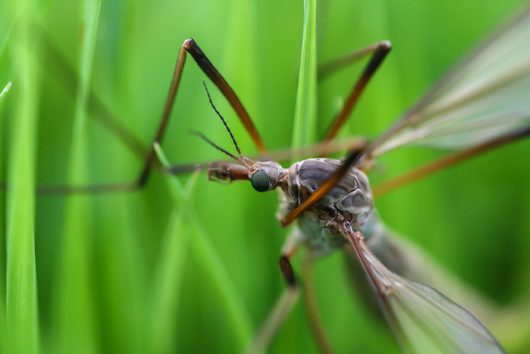
According to the World Health Organization (WHO), viruses spread by mosquitos kill an estimated 700,000 people a year. Out of the mosquito-spread viruses, dengue, Zika and chikungunya are considered some of the most dangerous due to the quickness and severity of their infection rates. Although disease prevention has proven to be expensive for developed and developing countries alike, Wolbachia is increasingly being explored as a new tool in the fight against mosquitos.
Wolbachia Bacteria
Wolbachia, a word most of us are not familiar with, is, in fact, a safe and naturally developed bacteria that is present in 60 percent of all insect species. However, Wolbachia is not found in the Aedes aegypti species of mosquito that are the primary transmitters of dengue, Zika and chikungunya to humans.
The bacteria prevent the spread and outbreak of viruses by acting as a natural competitor in the mosquito. First, Wolbachia boosts the immune systems of Aedes aegypti mosquitos and prevents viruses from being able to spread to and survive on the species. Secondly, Wolbachia effectively consumes molecules, such as cholesterol, which viruses need in order to thrive.
In other words, viruses are being prevented from spreading viruses mosquito-to-mosquito and mosquito-to-human. This bacteria has proven to be very efficient in reducing the threat of mosquitos.
The World Mosquito Program
The leader in utilizing Wolbachia against mosquito-spread viruses is the nonprofit World Mosquito Program (WMP). The WMP conducts research, works with communities, governments and other nonprofit organizations and implements the release and studying of Wolbachia bacteria in mosquito populations.
Currently, the WMP operates in 12 at-risk countries with a primary interest in economically disenfranchised countries and populations. These 12 countries are Vietnam, India, Sri Lanka, Indonesia, Australia, Kiribati, Vanuatu, New Caledonia, Fiji, Mexico, Colombia and Brazil. According to the U.N. Development Programme, viruses such as Zika pose tremendous economic, health care and tourism risks to countries while simultaneously hurting people in poverty who have a reduced access to health and sanitation facilities.
Support in Reducing the Threat of Mosquitos
Throughout the countries mentioned above, the WMP has gained countless support from communities, governments and nonprofits. For instance, the Australian and New Zealand have worked closely together to fund the WMP projects in Fiji and Vanuatu. In Fiji, these additional funds have allowed the WMP to reach an additional 120,000 people.
A well-known U.S. nonprofit organization, the Bill and Melinda Gates Foundation, has become an important funder for the WMP projects and for developing new technology for research and operations. The U.S. Agency for International Development has proven to be a lead contributor to financing projects against Zika in Colombia, where 25 million people are at-risk to an outbreak.
Other important actors that participate in WMP programs include the U.K. and Brazilian governments, the Candeo Fund, the Wellcome Trust, local rotary clubs and many health ministries and local governments.
Results are just as vital as gaining support for reducing mosquito-spread viruses. While the WMP has not moved onto phase two by analyzing the reduction of viruses, they have collected data for the spread and sustainability of Wolbachia in mosquito populations.
Tri Nguyen Island, Vietnam, Queensland and Australia have witnessed the spread of Wolbachia to nearly 100 percent of their mosquito populations since the projects began.
Doubts about Wolbachia
While initial results look promising, there have been reasonable doubts expressed about using Wolbachia bacteria. Some studies suggest that Wolbachia enhances the ability of West Nile Virus to spread in the Culex tarsalis mosquito and that temperatures play a large role in the effectiveness of the bacteria. However, the WMP has discounted the temperature claim by referencing the success rates in Vietnam, Australia, Brazil and Colombia in reducing the threat of mosquitos.
Despite the possible consequences, the WMP has maintained its belief in the ability of Wolbachia and continuing to research and study the results as much as possible. Looking at their sponsors, the WMP has become a popular potential solution to actors affected by and interested in mosquito-spread viruses.
These sponsors are not the only ones, however, as the WHO has labeled Wolbachia as a viable tool going forward. In 2016, the organization recommended that Wolbachia should be tested in pilot programs in order to gain more beneficial evidence. In fact, their laboratory tests confirmed that Zika, Dengue and Chikungunya were reduced in mosquitos introduced to Wolbachia.
The WMP’s program is meant to be a long-term, low-cost and sustainable virus reduction solution, not the one to be used just in emergency circumstances. With that being said, Wolbachia should be part of a greater toolbox in reducing mosquito-spread viruses through prevention, containment and reduction.
To reiterate, the entomology coordinator for the WMP operations in Brazil stated to the U.N. that Wolbachia bacteria is not a silver bullet, but it is really promising.
– Tanner Helem
Photo: Flickr

Elbi App Turns Fashion into Fundraising
When Russian model, Natalia Vodianova, looked onto her Instagram feed years ago, she was frustrated. Though thousands of people liked her photos within minutes, Vodianova felt that had the wrong priorities on social media. She wanted to harness social media for social good, through an app that would make it easier for people to support charitable causes and turn the users’ love of fashion into fundraising. Now, Vodianova and Elbi’s co-creator, Timon Alfinsky, have created an app that connects users to charities and motivates them to donate.
How the App Works
Launched in 2015, the Elbi app thrives on the philosophy that little actions make a big difference. The app shows users different charitable organizations, through an easy-to-read, “newsfeed.” Users have several options to engage with charitable projects; they can donate, create content and share stories on other social media platforms. With focuses ranging from supporting Special Olympic athletes to funding education worldwide, the Elbi app helps donors find causes to support.
Each charitable campaign features a short video or photograph, along with information about the cause. Highlighting individual stories, this presentation helps make each cause more relatable to the user. Donating is made easy through the donation button, the “LoveButton.” Thus, the app mobilizes micro-donations, since users can contribute as little as $1 with each donation. In fact, 100 percent of these donations go directly to each charity, excluding any bank transaction fees.
While the Elbi app focuses primarily on fundraising, it also encourages users to raise awareness for charitable causes by creating and posting photos or other content in support of the cause. The pages also have leaderboards to rank the top donors to each cause; however, the main motivation to donate comes from Vodianova’s own specialty: fashion. The Elbi app turns fashion into fundraising, by allowing donors to trade their micro-donations for fashionable items.
Turning Fashion into Fundraising
When a user donates $1 with the “Love Button,” the Elbi app rewards the user with one LoveCoin. As users amass LoveCoins, they can use them in the “LoveShop.” The LoveShop carries exclusive goods from popular brands, such as Beats by Dre, Givenchy, Fendi, and H&M Conscious. By creating videos reacting to and supporting charitable causes, Elbi app users can earn additional LoveCoins to use in the LoveShop.
Beyond this, through the ElbiDrop tab, users have the chance to win products that are unavailable anywhere else. These products appeal to a wide range of people, with everything from soccer balls signed by professional players to limited-edition handbags. ElbiDrop introduces these exclusive items to users and then gives them 24 hours to collect LoveCoins. The user who collects the most LoveCoins in that period of time gets to trade their LoveCoins for the special item. Thus, ElbiDrop motivates users to return to the Elbi app constantly and drives donations in pursuit of specific items. This allows people to donate and turn their pursuit of fashion into fundraising.
Changing the Way We Donate
By giving potential donors an easy, user-friendly platform, the Elbi app makes donating fast and personal. The app allows users to see videos that make each issue personal and relatable. Accordingly, the Elbi app gives smartphone users a different way to donate, which maximizes small donations towards a charitable cause. In just a few minutes, users can donate and raise awareness for charitable causes they believe in, all with the convenience of the Elbi app.
– Morgan Harden
Photo: Flickr
Reducing the Threat of Mosquitos: Wolbachia
According to the World Health Organization (WHO), viruses spread by mosquitos kill an estimated 700,000 people a year. Out of the mosquito-spread viruses, dengue, Zika and chikungunya are considered some of the most dangerous due to the quickness and severity of their infection rates. Although disease prevention has proven to be expensive for developed and developing countries alike, Wolbachia is increasingly being explored as a new tool in the fight against mosquitos.
Wolbachia Bacteria
Wolbachia, a word most of us are not familiar with, is, in fact, a safe and naturally developed bacteria that is present in 60 percent of all insect species. However, Wolbachia is not found in the Aedes aegypti species of mosquito that are the primary transmitters of dengue, Zika and chikungunya to humans.
The bacteria prevent the spread and outbreak of viruses by acting as a natural competitor in the mosquito. First, Wolbachia boosts the immune systems of Aedes aegypti mosquitos and prevents viruses from being able to spread to and survive on the species. Secondly, Wolbachia effectively consumes molecules, such as cholesterol, which viruses need in order to thrive.
In other words, viruses are being prevented from spreading viruses mosquito-to-mosquito and mosquito-to-human. This bacteria has proven to be very efficient in reducing the threat of mosquitos.
The World Mosquito Program
The leader in utilizing Wolbachia against mosquito-spread viruses is the nonprofit World Mosquito Program (WMP). The WMP conducts research, works with communities, governments and other nonprofit organizations and implements the release and studying of Wolbachia bacteria in mosquito populations.
Currently, the WMP operates in 12 at-risk countries with a primary interest in economically disenfranchised countries and populations. These 12 countries are Vietnam, India, Sri Lanka, Indonesia, Australia, Kiribati, Vanuatu, New Caledonia, Fiji, Mexico, Colombia and Brazil. According to the U.N. Development Programme, viruses such as Zika pose tremendous economic, health care and tourism risks to countries while simultaneously hurting people in poverty who have a reduced access to health and sanitation facilities.
Support in Reducing the Threat of Mosquitos
Throughout the countries mentioned above, the WMP has gained countless support from communities, governments and nonprofits. For instance, the Australian and New Zealand have worked closely together to fund the WMP projects in Fiji and Vanuatu. In Fiji, these additional funds have allowed the WMP to reach an additional 120,000 people.
A well-known U.S. nonprofit organization, the Bill and Melinda Gates Foundation, has become an important funder for the WMP projects and for developing new technology for research and operations. The U.S. Agency for International Development has proven to be a lead contributor to financing projects against Zika in Colombia, where 25 million people are at-risk to an outbreak.
Other important actors that participate in WMP programs include the U.K. and Brazilian governments, the Candeo Fund, the Wellcome Trust, local rotary clubs and many health ministries and local governments.
Results are just as vital as gaining support for reducing mosquito-spread viruses. While the WMP has not moved onto phase two by analyzing the reduction of viruses, they have collected data for the spread and sustainability of Wolbachia in mosquito populations.
Tri Nguyen Island, Vietnam, Queensland and Australia have witnessed the spread of Wolbachia to nearly 100 percent of their mosquito populations since the projects began.
Doubts about Wolbachia
While initial results look promising, there have been reasonable doubts expressed about using Wolbachia bacteria. Some studies suggest that Wolbachia enhances the ability of West Nile Virus to spread in the Culex tarsalis mosquito and that temperatures play a large role in the effectiveness of the bacteria. However, the WMP has discounted the temperature claim by referencing the success rates in Vietnam, Australia, Brazil and Colombia in reducing the threat of mosquitos.
Despite the possible consequences, the WMP has maintained its belief in the ability of Wolbachia and continuing to research and study the results as much as possible. Looking at their sponsors, the WMP has become a popular potential solution to actors affected by and interested in mosquito-spread viruses.
These sponsors are not the only ones, however, as the WHO has labeled Wolbachia as a viable tool going forward. In 2016, the organization recommended that Wolbachia should be tested in pilot programs in order to gain more beneficial evidence. In fact, their laboratory tests confirmed that Zika, Dengue and Chikungunya were reduced in mosquitos introduced to Wolbachia.
The WMP’s program is meant to be a long-term, low-cost and sustainable virus reduction solution, not the one to be used just in emergency circumstances. With that being said, Wolbachia should be part of a greater toolbox in reducing mosquito-spread viruses through prevention, containment and reduction.
To reiterate, the entomology coordinator for the WMP operations in Brazil stated to the U.N. that Wolbachia bacteria is not a silver bullet, but it is really promising.
– Tanner Helem
Photo: Flickr
Increasing Financial Inclusion in Australia Through Fintech
Recent reports estimate that globally, nearly two billion adults do not have access to a bank account. As a result, services such as loan credit and financial planning advice are denied to people all over the world. The primary reason that people do not have access to bank services is the lack of accessibility and affordability, especially as major banks all but dominate the entire market share regarding financial services.
However, there has been a global movement to make financial services more readily available to people who could not normally afford them. Financial technology (fintech for short) is an industry that uses technology to offer premium financial services at much more affordable costs and sometimes even for free. While fintech companies do not aim to compete with large banks, they do offer specific services, such as loan credit or financial planning advice.
Fintech is used to describe new tech that seeks to improve and automate the delivery and use of financial services. In achieving this goal, fintech allows access to financial services to more people and helps fight poverty.
Financial Inclusion in Australia through Fintech
There has been a rise of fintech in Australia. Over the past 12 months, the financial technology sector of Australia has been rapidly evolving. An estimated 600 financial technology companies are currently being operated in Australia and this number has doubled since 2015. In fact, fintech is the largest startup sector in the country, with one in every five startups targeting fintech.
Some of the most successful startups in Australia include Prospa, Zip Money, and AfterPay Touch.
Prospa is Australia’s leading online lender to small businesses. This company has funded over $500 million, allowing small businesses to receive funding in a short period, as little as twenty-four hours. By making these funding more accessible, small and medium business owners will have the proper financial means to expand their businesses.
Zip Money provides microloans to people, free of fees. With over 700,000 users, ZipMoney allows consumers to make important purchases without any delays.
AfterPay Touch is a digital payment service that targets consumer-facing organizations. With over 800,000 customers and 6,000 retail merchants onboard, AfterPay Touch provides payment security, compliance, and fraud services at much more affordable costs.
Fintech Advantages
Although these companies provide vastly different services, they all have a common goal: to make financial services more convenient, accessible and affordable. These companies allow people to absorb unexpected losses, be financially mobile and save for the future. They are very helpful in achieving financial inclusion in Australia and in other countries as well.
Additionally, because these fintech companies are increasing financial inclusion for small and medium business owners, they are allowing business owners more opportunities to grow and expand their businesses. As a result, more jobs will be created and more people will be lifted out of unemployment and poverty.
The Impact of Fintech in Australia and Other Countries
The impact of fintech in Australia and its booming economy is not just felt domestically, but globally as well. For instance, Australian fintech startups are also working together with the Indonesian government to increase financial inclusion in Australia and Indonesia.
Indonesia has 49 million unbanked micro-enterprises. Australia has a new $1 billion New Payments Platform (NPP) that allows people to make real-time payments over the digital economy. This platform has the potential of advancing financial inclusion for both businesses and individuals in Indonesia. Increased financial inclusion will allow people not just to have access to a banking account, but also to escape poverty and recover from financial setbacks.
Recognizing that financial inclusion reduces inequality and helps millions of people lift themselves out of poverty is key to the development of fintech startups around the globe. As more governments start working together with the private sector, the impact of this new technology can be monumental.
– Shefali Kumar
Photo: Flickr
Famine Action Mechanism: Life-Saving AI Technology
The World Bank has discovered a new approach to helping the 124 million people currently affected by crisis-levels of food insecurity: artificial intelligence.
Three international organizations: the World Bank, the U.N. and the International Committee of the Red Cross, have partnered with three of the world’s largest tech giants: Microsoft, Google and Amazon, in a joint initiative to preemptively address world hunger. The result? It’s called the Famine Action Mechanism (FAM).
What is Famine Action Mechanism?
Launched by U.N. Secretary-General António Guterres on September 23, 2018, in New York, the Famine Action Mechanism seeks to improve international food aid through famine prevention, preparedness and early action. FAM is being created to augment the capability of existing warning systems to effectively distribute aid prior to the emergence of famine. This is being done through the establishment of official procedures that connect early warnings with financing and implementation.
With the cooperation of humanitarian development organizations, tech companies, academia, the insurance sector and, of course, international organizations, this collaborative effort hopes to see success through the investment of a wide variety of stakeholders.
While other forms of famine prediction, like Famine Early Warning Systems Network started by USAID in 1985, already exist, it lacks the ability to give real-time data and requires the hard work of hundreds of employees.
If successful, the Famine Action Mechanism will be the first quantitative modeling process using an algorithm to calculate food security in real time.
Hope is high for executives at Google and Microsoft who have seen the humanitarian power of technology firsthand. Advanced technologies have already proven effective in helping farmers to identify the disease in cassava plants as well as keeping cows healthier and more productive. President of Microsoft, Brad Smith, has expressed that artificial intelligence holds huge promise in forecasting early signs of food shortages.
How is FAM going to be implemented?
Famine Action will be implemented through four steps:
Isn’t Famine Pretty Easy to Predict?
While seemingly slow to take place, the cause of famine, defined as a daily hunger-related death rate that exceeds 2 per 10,000 people, is extremely complex.
The usual suspects of food insecurity like drought and crop production aren’t always the forces that bring a community to famine. Other factors like political instability, inflation or a natural disaster have the potential to significantly alter a community’s food supply. Additionally, nine of the last 10 major famines were triggered by conflict and war.
The uncertainty around when and how an undernourished community shifts into a crisis of famine adds to the importance of preemptive action for food insecurity and the demonstrated need for the Famine Action Mechanism.
Hunger in the World Today
After years of progress on decreasing hunger in the world, we have backtracked on those advancements with more than 820 million undernourished people in 2017. Approximately 155 million children will see the effects of stunting for their entire lives due to chronic malnourishment as well as a reduction of up to 13 percent of their lifetime income. Additionally, last year in Nigeria, Somalia, Yemen and South Sudan, more than 20 million people faced famine or near crisis levels of food insecurity.
One in nine people in the world today do not have enough to eat, but that does not mean we cannot get back on track. Not only can early response to famine result in saved lives and decreased suffering, but it is also cost effective. The World Bank predicts that an earlier response rate can reduce humanitarian costs up to 30 percent.
In 2017, the World Bank President Jim Yong Kim and U.N. Secretary-General Antonio Guterres pledged to have zero tolerance toward famine, and in the declaration of this program that pledge has been renewed. In the eyes of the United Nations, the success of the 2030 Agenda for Sustainable Development means ending hunger everywhere for everyone.
To conclude, in the words of Mr. Guterres: “Crisis prevention saves lives. We need to put cutting-edge technology to full use, in the service of all humankind in order to feed everyone in our world and to leave no one behind.”
– Sara Andresen
Photo: Flickr
The Chanje Movement’s Projects: Five Symptoms of Poverty in Haiti
From the devastation caused by the 2010 earthquake and the Haitian Creole word “chanje,” meaning “change” and “transformation,” hope for Haitians has emerged in the form of the Chanje Movement. According to the movement’s website if you can say yes to change and share it with the community and the world, then you could be considered as a part of the Chanje Movement.
Yet, beyond such motivating and inclusive statements, the Chanje Movement tangibly combats poverty in Haiti by transforming the lives of the next generation through addressing basic needs, creating healthy communities and providing leadership training.
The Chanje Movement believes that young people in Haiti have the power to reconstruct a nation in which more than 50 percent of the population is poor and 2.5 million people need humanitarian aid eight years after the earthquake that took 316,000 lives.
Five of the projects the Chanje Movement promotes on its website highlight five symptoms of poverty in Haiti. They are described below.
The Dream Center
The Dream Center is intended to be a community center where Haitians can gather to have a variety of physical and social needs meant. In Croix-des-Bouquets, a village about eight miles northeast of Port-au-Prince, people are working on building in stages a space for a church with a local pastor, a medical clinic, an education center, a trade school, a home for orphans and an auditorium for special events.
Specifically, the Chanje Movement desires for this type of space to be replicable throughout Haiti, so as they equip the Haitians of Croix-des-Bouquets, they can, in turn, spread similar positive change throughout the country. The World Bank claims that one of the key needs poverty in Haiti has created is the investment in people, both in their individual futures and access to basic services and collectively as a community. The Dream Center aims to accomplish these needs.
Clean Water
So many places in Haiti need clean water that the Chanje Movement usually has a waitlist for when they receive donations. Less than 50 percent of the rural population has access to clean water. This is because rural areas often depend on piped water systems that require hand pumps. These systems require funds for maintenance, so they are often neglected. The lack of clean water unsurprisingly leads to health problems, such as the cholera epidemic after the 2010 earthquake that claimed 8,700 lives. The whole system is tenuous, as exemplified by the resurgence in cholera in early 2015 following heavy rains.
Build a Home
Tens of thousands of Haitians lost homes in the earthquake and about 55,000 people still live in tents and makeshift homes eight years later. These abodes do not offer safety, shelter from tropical storms, insulation or hygienic conditions. The Chanje Movement’s efforts to build real homes benefits individuals and the Haitian economy, as Haitian workers are employed to construct them.
Micro Loans
With donated funds, the Chanje Movement loans up to $500 to Haitians to be paid back in six months to two years, increasing economic stability by allowing Haitians a chance to start businesses. When the loans are paid back, funds are immediately reinvested in a new entrepreneur. The World Bank claims that helping Haitians use their skills to start their own businesses will be crucial in ending poverty in Haiti, as the income a business provides will allow assets to accumulate, protecting the next generation of Haitians from the devastating consequences of a natural disaster like the earthquake with savings.
Additionally, helping Haitians generate more steady income through their own businesses could address the orphan crisis that is a huge issue related to poverty in Haiti. Currently, 30,000 children live in orphanages in Haiti, but 80 percent of these orphans have at least one living parent, a discrepancy caused by the homelessness following the earthquake.
Backpacks for Kids
Meanwhile, backpacks full of supplies help provide for some of the country’s orphans at the homes the Chanje Movement has for children in Croix-des-Bouquets.
Daniel DiGrazia attends Crossline Church, a church partnered with a Christian organization called The Global Mission that currently connects 18 churches and humanitarian outreaches around the world, including the Chanje Movement. DiGrazia has been to Haiti four times in the past three years and explains that a key part of distributing these supplies, which he helped with earlier this summer, is playing with the kids that live in these orphanages.
Because he keeps going back, he says, “I have grown in relationship with a multitude of the people there.” While DiGrazia’s team helped the Chanje Movement administer relief during his trips, the reason he keeps going back is to show love to the Haitians by continuing to invest in these relationships.
He explains, “I’d love to go again next year. It is a really good experience and I really love the people there. And I really don’t want to just be there and gone. I want to build relationships and keep coming back and see how they’re doing.”
For those that cannot immediately travel to Haiti, supporting the Chanje Movement tangibly combats poverty in Haiti. In the past year, thousands of Haitians had basic needs met with clean water and food provided by the Chanje Movement. This organization has also trained 500 future leaders and helped 75 children access education, taking steps towards Haiti without poverty and the need for humanitarian aid.
– Charlotte Preston
Photo: Flickr
How Saudi Arabia Plans to Tackle Unemployment
Unemployment in Saudi Arabia reached a record high 12.9 percent in the first fiscal quarter of 2018. To alleviate this number and the ever-present wealth gap, Crown Prince Mohammed bin Salman has announced various social and economic reforms he hopes will mark a turning point in Saudi Arabian growth.
How Saudi Arabia Plans to Tackle Unemployment
Consistently one of the world’s top oil producers, Saudi Arabia hopes to lessen its dependence on the financially unstable resource to create a more diverse economy and to generate more jobs for its citizens.
The Saudi government will, however, continue to rely on oil for the foreseeable future in order to generate the capital that will allow them to invest in non-oil industry, ultimately alleviating the country’s reliance on oil.
Moving Away from Oil
Saudi Arabia has already shown a significant shift toward non-oil markets, specifically in the form of entertainment. The ban on movie theaters was recently lifted, and AMC Theaters proposed a plan to construct 40 theatres across 15 Saudi Arabian cities within the next five years, and a total of 100 theatres by 2030.
By introducing leisure-centric businesses, the Saudi government hopes to encourage spending by wealthy citizens while simultaneously providing jobs for the country’s impoverished citizens.
Incentivize Employment of Citizens
A major component affecting unemployment in Saudi Arabia is the number of foreign workers employed by private companies. Non-nationals account for 80 percent of the workforce, as they are typically migrants from neighboring countries willing to work for less than asked by Saudi Arabian citizens.
The Saudi Arabian government has announced in a series of reform plans, including the ambitious Vision 2030, that the country will invest in education for its people to prepare them to participate in the workforce. Additionally, the kingdom proposed strict nationalization quotas in the private sectors, meaning businesses will be required to hire a much higher rate of citizen workers.
By the end of the next decade, Saudi Arabia hopes that by investing in private enterprises and encouraging those enterprises to prioritize hiring Saudi nationals, they may increase the GDP generated by small businesses from 20 percent to 35 percent while simultaneously lowering the unemployment rate to 7 percent.
Social Reform
Beyond the humanitarian benefits that come from Saudi Arabia granting women many previously-withheld privileges, this key piece of social reform has the potential to bolster the economy by creating a new demographic of workers and consumers.
With nearly half the population of Saudi Arabia being female, introducing women to the workforce will allow for supplemental income in lower-class homes and help to fill the demand once nationalization quotas for small businesses are implemented.
The Saudi government expects social and economic reform to work cyclically, meaning that as previously marginalized people are introduced to the workforce, these members of society will help to grow the economy. This will then, in turn, create new businesses in need of more workers.
Looking Forward
Although Saudi Arabia is making very notable progress in terms of economic and social growth, it may take time for its efforts to translate to noticeable change. Many foreign and domestic investors remain wary of investing in Saudi Arabia, which are sentiments to be expected when a country announces major renovation.
However, once changes begin to take place and progress starts to show, investors may see the country as a place of economic potential. If the plans put forth in Vision 2030 come to fruition, unemployment in Saudi Arabia may dramatically decrease, and the country may find itself in a place of great economic development.
– Rob Lee
Photo: Flickr
Martial Arts in Brazil: A Success Tool for Children
Brazil’s strength lies in its globalization: soccer and its telenovelas, for instance, are instantly recognizable to the international gaze as part of the country’s cultural brand. The same can be said for martial arts. The practice of martial arts in Brazil has existed since the 16th century, but the nation didn’t globally influence the field until the 20th century. Today, martial arts is a tangible and widely known element to Brazil’s landscape that is steadily being used to empower the upcoming generation.
Martial Arts
Martial arts is not just a combat sport; it is a codified system that permits the individual to learn more about oneself internally and externally. Many, if not all, forms of martial arts strive to improve the body, mind and spirit in equal precedence. Its cultural eminence and exploration of one’s limits make martial arts an excellent teaching enhancement for children in Brazil.
This is doubly true for those born in favelas – Brazilian slums where youth options are often limited to criminality, drug trafficking and sex trade. Families are increasingly enrolling their children in martial arts classes to keep them off the violent and poverty-ridden streets. The safe and controlled practicum of martial arts provides a fresh approach to life; children that would have otherwise continued to churn the cycle of poverty are able to build trust, strength and companionship while training with others.
Fight for Peace
Located in Complexo da Maré, a dangerous complex of favelas in Rio de Janeiro’s North Zone, is the organization Fight for Peace. The organization’s mission is upheld by their Five Pillars methodology. The First Pillar is to teach boxing and martial arts to local youth in order to boost self-esteem, discipline and respectful camaraderie. The other Four Pillars are education, employability, support services and youth leadership. These include opportunities such as vocational courses, home visits, education for those with learning difficulties and individual mentoring.
Children are encouraged to maintain an education and thereby continue their martial arts training until at least the age of schooling. By employing a multi-disciplinary approach that starts with martial arts in Brazil, Fight for Peace emboldens young individuals in disadvantaged communities to realize and pursue their potential.
Jose Aldo Fight School
Another valuable resource in Maré is the Jose Aldo Fight School, founded by UFC Featherweight Champion, Jose Aldo. As someone who came from an impoverished background with limited opportunities, Aldo has turned his success into a platform that paves the way for others.
So far, Aldo’s school has trained 534 students between the ages of 6 and 22 in judo, jiu-jitsu and boxing. The school aims to provide a strong and supportive community where children won’t feel that their only option out of hardship is to resort to crime.
Empowering the Youth
“Here, we replace a gun for a kimono,” says Marcelo Negrão, a jiu-jitsu teacher at Jose Aldo Fight School. Martial arts in Brazil have enabled its impoverished youth to harness the formative power of sport and use that confidence to create new paths for themselves.
Going forward, this medium of empowerment will hopefully continue to gain traction within the nation and as a global practice.
– Yumi Wilson
Photo: Huffington Post
3 Organizations Reduce Poverty in Bangladesh
In the last decade, numerous methods, groups and programs have attempted to reduce poverty in Bangladesh. With help from its government, as well as other governments, the nation has managed to reduce its poverty levels by over half in the last decade and is working towards reducing it even further. The country has implemented several successful development innovations. On top of it all, the country is also providing asylum to almost one million Rohingya people.
3 Organizations Reduce Poverty in Bangladesh
What has been done to get Bangladesh to this point? These are three organizations and their efforts that helped reduce poverty in Bangladesh:
Daily Improvement
Organizations and charities recognized that investing in the people of Bangladesh was the best way to reduce poverty. World Bank group president, Jim Yong Kim, gave a speech in 2017 praising the efforts made by Bangladesh. One of his most important points was that between 2003 and 2013, women’s employment jumped from seven million to seventeen million.
Bangladesh aims to become a middle-income country by 2021 and to eradicate most, if not all, poverty by 2030. With the help and compassion from several organizations and the government, there has been great progress to reduce poverty in Bangladesh. Many other countries could follow suit and learn from Bangladesh’s poverty reduction efforts.
– Miranda Garbaciak
Photo: Flickr
What is USAID?
The United States Agency for International Development (USAID) is often brought up when people talk about spending bills for foreign aid and in policy reports analyzing the government foreign assistance programs. They do not explain what USAID actually is, what its purpose is, who is in charge of it, or what are its responsibilities as an organization.
The text below will go through the history of USAID, its importance to the United States government, and the organization’s responsibilities in the fiscal year 2019.
History of USAID
In the fall of 1961, U.S. Congress passed the Foreign Assitance Act. This act formally separated military and non-military aid since before this point political and military spending was not differentiated from development spending. The bill also mandated for the creation of an agency that will be responsible for managing the new category of economic and development aid. President John F. Kennedy, shortly after the passing of the bill, created USAID by executive order.
The creation of USAID unified several existing programs and operations, including the Food for Peace Program, loans from the Development Loan Fund and the economic assistance from International Cooperation Agency. By unifying these operations, USAID provided a new focus on aiding other countries.
Who is in charge of USAID and what is USAID responsible for?
USAID largely follows the policy directions of the President, State Department and the National Security Council. It can be stated with the certainty that it is not a completely interdependent agency. USAID is not responsible for military aid whose responsibility falls primarily to the Department of Defense. Instead, USAID is concerned with humanitarian and development aid.
Since its formation, USAID’s scope of humanitarian aid expanded. USAID’s assistance now includes global health, gender equality, water and sanitation, education and many other categories. It also works in several regions all over the world including Asia, the Middle East and Africa.
A good example of what USAID does as an organization is the program called Promoting Gender Equality in National Priority Programs Project (PROMOTE) in Afghanistan. This program aims to increase female participation in the total workforce by offering women internships to build up their resume and network.
It will also help the economic development of Afghanistan by creating a larger workforce. According to an evaluation made by USAID in 2017, 237 women got a job in the first year of the program’s implementation. Also, 98 percent of the women who were helped into internships by USAID reported that they were working in a women-friendly workplace.
What is USAID planning on doing in 2019?
USAID and the State Department will receive $39 billion from the president’s budget. USAID is responsible for managing $16 billion of this amount that is just below half of all the money allocated to foreign aid. USAID hopes to accomplish several objectives in the fiscal year 2019 including providing leadership in response to national disasters and human crises, improving global health by stopping the spreading of diseases and improving transparency of the organization’s activities and its spendings.
To summarize, what is USAID? USAID is an organization that is the primary executor of foreign aid spending of the United States. It oversees billions of dollars every year with the goal of helping developing nations economically, socially and politically. USAID does this through the creation of government programs to help those who need it most.
– Drew Garbe
Photo: Flickr
Top 10 Facts About Living Conditions in Nicaragua
Nicaragua faces mounting violence and instability as citizens go out to the streets to protest the corrupt rule of President Daniel Ortega. During times of chaos, it is important to understand what conditions for citizens have been like in previous years. The following 10 facts about living conditions in Nicaragua presented in the text below both describe the unsettling state of affairs in the country and provide evidence of hope for a brighter future.
Top 10 Facts About Living Conditions in Nicaragua
These top 10 facts about living conditions in Nicaragua provide a mixed account of the status of the country. Nicaragua is developing and it cannot be, in any case, characterized as a stable country. Recent progress, however, indicates that the country could have the potential to develop and attain stability. Late violent outbursts linked to government corruption thwart such hopes for progress and the current priority for the Nicaraguan people should be finding peace and justice through dark times. It is important to remember the progress that Nicaragua has made, and can continue to make after such peace is settled.
– Julia Bloechl
Photo: Flickr