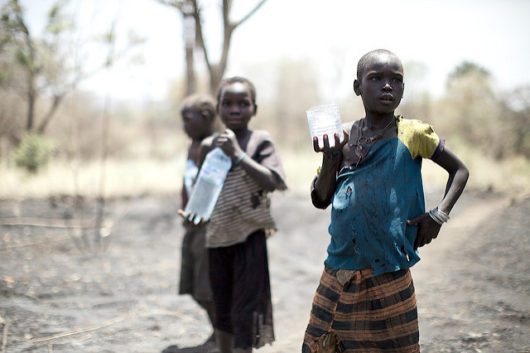
With a mass exodus from South Sudan, Uganda has become the largest refugee-host nation in Africa. Both 2017 and 2018 saw a significant influx of refugees into the country. Experts believe the number of refugees is only going to increase in the upcoming period.
As more and more refugees enter Uganda, its basic services and resources are continuously put under increased stress. Child refugees in Uganda have become a very significant issue facing the Ugandan government and international organizations. However, government and different organizations teamed up to initiate a long-term plan to help refugee and native-born children alike.
The Problem in Numbers
As of early 2018, there were over one million refugees from South Sudan and 300,000 from Burundi, the Democratic Republic of the Congo and other closely neighboring countries in Uganda. Out of these 1.3. million, its estimated that 61 percent are children.
Due to a shortage of aid workers, funding and supplies refugee children face severe consequences such as virus and disease outbreaks. The Ugandan Ministry of Health alongside the U.N. International Children’s Emergency Funds (UNICEF) were able to successfully stop a Marburg virus outbreak in refugee camps. Despite this achievement, there are growing concerns about measles, malaria and cholera.
Many child refugees in Uganda face little access to education. Only 35 percent of 5-year-olds entering primary schooling were enrolled in any sort of educational programs provided by nonprofit organizations or by the Ugandan government.
Extremely high acute malnutrition rates ranged from 14.9 percent to 21.5 percent among new arrivals, with some areas experiencing a 2 percent growth in malnutrition rates in 2018.
There is a high number of unaccompanied children that are often the most vulnerable with little to no support from adult-aged persons. These children can be easily forced into armed groups or sex slavery.
The Northern Region of Uganda is responsible for most of the refugees and has also experienced challenges for the local children. For instance, 24 percent of females older than 15 are illiterate, 17 percent of school-aged children are out of school, 53 out of 1000 children die before their fifth birthday and 21 percent of Ugandans live in poverty.
Nongovernmental Organizations Efforts
While the refugee crisis has proven to be a great challenge for Uganda, the country has chosen to commit its resources in order to protect and provide for the vulnerable population living alongside the local population. Three international organizations have begun long-term projects in order for the Ugandan government to reform the country and better care for refugees and native populations alike.
Save the Children
Save the Children is the largest global charity for children started in the United States. The nonprofit has worked alongside the U.N. in implementing their programs throughout Northern Uganda. As of 2017, Save the Children oversaw six refugee sites, an emergency health unit teamed up the Ugandan Ministry of Health and 30 child-friendly spaces and educational facilities. Moreover, additional programs extended beyond refugee camps to encompass local communities with the goal of increasing child protection, education and food and economic security.
According to their 2017 report, 66,114 children were given shelter, 89,790 were cared for in crisis situations, 312,790 were provided with medical and sanitation supplies, 20,169 were raised from malnutrition and 3,154 parents were supported to meet the basic needs of their children.
UNHCR
The United Nations High Commissioner for Refugees (UNHCR) has primarily focused its attention on identifying refugee populations and supporting unaccompanied children. Working in close collaboration with the Ugandan government, the agency’s largest biometric data in history was launched in 2017. The point of recording refugees and providing identification for them is to better plan and situate resources and responses. If aid groups know exactly where vulnerable populations are and what are their circumstances, then professionals will respond more effectively and efficiently. To this date, over one million refugees have been identified.
As children spill across the border without adult supervision, extra resources are needed for their protection. The UNHCR has created and built settlements where older children are the heads of the household and they are provided with shelter, protection, education and basic services. However, staff shortages have proven difficult to monitoring these children at all times.
UNICEF
UNICEF has taken a lead role in helping child refugees in Uganda by directing programs between the Ugandan government and active nonprofits. Unfortunately, the agency only received 30 percent of requested funding in 2017. Despite these shortages, 61 percent of total targets were still met in nutrition (741,436 children aided), health (667,050), sanitation (463,480), protection (13,821), education (119,059) and HIV & AIDS (4,630).
With these results in mind, UNICEF has ambitious goals going forward. In 2018, the organization is expecting a final requested funding of more than $66 million. This funding will be focused on education, health, water and sanitation, nutrition, protection and HIV/AIDS.
Furthermore, the agency is beginning the planning of a long-term and collaborative program between nonprofits, the Ugandan government and international agencies. The basic provisions of the program include the dispersion of technological supplies and know-how, national educational and health strategies linked with refugees and the strengthening of emergency response teams. For example, m–Tac, a mobile app recently introduced to Uganda, allows agencies to send vital information to field teams during crises.
Humanitarian groups and the Ugandan government are launching some of the world’s largest refugee programs. The question of receiving refugees has long been about how to best protect them from harm and danger. The child refugees in Uganda certainly have a long path ahead of them, but they won’t have to walk on alone.
– Tanner Helem
Photo: Flickr

Younger Generations Stand up to End HIV in Fiji
Fiji, a country located in the South Pacific, consists of 300 islands and has a current population of over 914,000 people. Although Fiji has one of the lowest prevalence of HIV in the world, HIV cases and the risk of HIV are consistently increasing. Luckily, young people are educating themselves in order to fight against HIV in the country. They are becoming involved in this topic and trying to achieve the United Nations Political Declaration on Ending AIDS.
Meeting in Suva
In October 2018, according to The Joint United Nations Programme on HIV/AIDS (UNAIDS), 24 teenagers attended the meeting in Suva, Fiji, desiring to distinguish the factors that would put young people at risk of HIV.
Fiji’s Global HIV/AIDS Progress report states that less than 1,000 people were living with HIV in 2014 in the country. Out of the age group between 15 and 49 years old, around 0.1 percent had a virus. Despite these statistics, HIV cases are beginning to increase as there were 68 new HIV cases in 2014 and 50 more in 2015.
In a hope to prevent any further new cases, especially in younger generations, teenagers who attended the meeting identified what could possibly risk the youth’s health regarding HIV.
UNAIDS states that attendees noticed and appreciated the steps Fiji has taken to reduce the risk of HIV, including policies created in order to establish a clearer access to HIV services for young people. Yet, the participants identified that Fiji needs to address the lack of access to condoms, harm reduction programs, stigma and discrimination.
Youth Knowledge on AIDS
A representative of Reproductive Family Health Association, Swastika Devi states that while many younger generations are quite aware of how HIV is prevented and transmitted “many of them are not aware that antiretroviral treatment exists.” This is why they desire to get and share access to this information as well as a program to attain it. Although about 300 people in people are receiving the antiretroviral treatment (ART) in Fiji, young people might not be aware of this.
Youth that attended this meeting suggested and agreed to not only conduct a youth advocacy network regarding sex education and reproductive health but they also desired to involve youth leaders from certain communities and areas that deal with HIV to increase advocacy and engagement in fighting against this epidemic. They have connected with the Ministry of Health and Medical Services in Fiji as well as Fiji’s World AIDS Day.
The UNAIDS Country Director in Fiji, Renata Ram, has also desired for youths to get involved in eradicating the HIV epidemic. She states that because this epidemic is affecting younger generations, they should be involved and lead their own communities to help those that are affected.
Inter-faith Strategy on HIV and AIDS
Fiji already had a strategy regarding the reduction of HIV prevalence called Fiji’s Inter-faith Strategy on HIV and AIDS. This strategy was active from 2013 to 2017. It involved faith-based responses to this epidemic that aimed to prevent and treat HIV/AIDS but also cared for and supported those that were affected. The strategy included involving organizations that are faith-based in order to eliminate HIV infections, discrimination and AIDS-related deaths as well as creating strategies and actions to achieve all these goals.
Despite the fact that Fiji has one of the lowest HIV prevalence in the world, this is still a growing epidemic in this country and this problem cannot be ignored. Luckily, young generations have every desire to end HIV in Fiji, and they want to help those affected with this disease. Fighting against HIV in Fiji within younger generations is not only helping to better the country, but also better the future.
– Charlene Frett
Photo: Flickr
Ger Districts in Mongolia: How to Help People in Transition
Mongolia is changing rapidly. A society that had a not so distant past defined by nomadic herding on the steppes has become heavily urbanized in only a few decades. Today, around 70 percent of Mongolians live in cities. Nearly half of the population lives in the capital of Ulaanbaatar alone.
This quick change was set in motion in the early 2000’s by a booming new mining industry that promised the opportunity for those willing to move to the cities. It hasn’t come without drawbacks, though. As the economy stalled in recent years, the steady stream of jobs and money dried up. Every year, thousands of Mongolians moved to the cities, but the cities weren’t ready for them.
Finding no place for themselves in the developed parts of cities, these people set up semi-permanent camp in ger districts on the outskirts. Gers are the traditional tent dwellings of Mongolian nomads. While they are tested against the harsh conditions of the Mongolian steppes, they have not adapted well to the urban environment.
Difficulties in the Ger Districts
Ger districts are home to a significant part of the Mongolian population. Nearly 800,000 people live in Ulaanbaatar’s ger districts alone. That’s more than 25 percent of all Mongolian citizens. With this in mind, the poor living conditions that these people face are especially concerning.
The districts have very limited access to utilities and infrastructure. Residents do have access to electricity, but they must purchase water from government kiosks. Waste removal is also inefficient and infrequent.
Few homes in the ger district can tap into to the city’s heating system. Around 85 percent of households rely on wood or coal-burning stoves for warmth. These stoves are inefficient and are a massive source of pollution, especially in the winter when they must be kept burning throughout the day. They are one of the primary reasons that Ulaanbaatar is one of the most polluted places in the world.
The hastily-constructed districts have poor transportation infrastructure as well. A lack of street lights means that crime rates rise after dark. Most roads are made of dirt and are difficult to keep passable and safe. Public transportation is rare, which leaves many people in the ger districts unable to travel to the schools and jobs that enticed them to cities in the first place.
Building the Apartments
Improving living conditions in the ger districts is a difficult task, but one that the Mongolian government is taking seriously.
One of the most straightforward ways to move forward is to develop apartment complexes for people living on the outskirts of cities. This would help address several problems at once.
Apartments are much easier to integrate into the city’s heating system. Bringing each ger into the system could cost from $2,000 to $4,000, while apartment units would only cost less than $500. Apartments are also better insulated than gers, which means heating would be cheaper and more efficient in the long run. Reducing the use of stoves necessary for so many gers could also mean a significant improvement in Ulaanbaatar’s pollution problem.
Unfortunately, the apartment-building strategy has several problems. Real estate is expensive and difficult to develop in Mongolian cities. The cost required to overcome these challenges also often prices poor ger district residents out of apartments once they are built. Financial services like mortgages are unavailable, which further compounds the problem.
However, while the long-term transition of ger residents into modern living spaces will require both time and economic reforms, many smaller programs have already been able to help people in their daily lives.
Implemented Programs
An example is the World Bank’s Ulaanbaatar Clean Air Project. The project provided home insulation and almost 200,000 energy-efficient stoves to the capital’s ger districts. After the project, air pollution in the city dropped for four years in a row. Pollution is on the rise again today thanks to a steadily increasing population, but the project is proof that even more moderate interventions can make a big difference.
This year, the Asian Development Bank announced the $80 million loan to develop sustainable, eco-friendly mini-districts within the larger Ulaanbaatar ger districts. Other international groups like the United Nations Development Program (UNDP) and the International Finance Corporation (IFC) have also offered aid to the Mongolian government with financing and infrastructure.
It is clear that the problems faced by ger districts are complicated and will not be solved overnight. The Mongolian government and economy are still very young and development will need to be approached carefully.
However, while the people of the ger districts are caught in transition, they have not been forgotten. Improvements are already being made and will continue to be made as long as the cooperation between Mongolia and the international community can continue.
– Joshua Henreckson
Photo: Flickr
Top 10 Facts About Girls’ Education in Kenya
Kenya is a country located on the eastern coast of the African continent with ongoing reforms for tremendous political, social and economic development. The first steps of these reforms began with the passage of a new constitution in 2010 that introduced a bicameral legislative house and devolved county government. Whilst these developments are taking place, the country faces challenges fighting poverty, inequality, climate change and the vulnerability of the economy to internal and external fluctuations.
A huge subset of these challenges facing Kenya is girls education. Similar to the countries across the continent, Kenya portrays a reality where girls are denied their right to education due to social and cultural norms, such as child marriage and female genital cutting aside from economic barriers. These top 10 facts about girls’ education in Kenya reveal some of the historical contexts for these hurdles, the challenges for better access and steps being taken toward future goals.
Top 10 Facts About Girls’ Education in Kenya
Investing in Girls’ Education in Kenya
Long-standing traditions and beliefs along with high levels of poverty are seemingly huge hurdles to overcome; however, the pursuit of providing more than half of the Kenyan population with access to education is a challenge worth taking — especially when it has the potential for great social and economic returns.
– Bilen Kassie
Photo: Flickr
Child Malnutrition in North Korea
One in five children in North Korea is malnourished. The United Nations claims that 200,000 children in this country are suffering from acute malnutrition.
Child malnutrition in North Korea is a growing concern of various humanitarian organizations. Aid programs find trouble reaching the country due to trade restrictions and only a few groups are allowed to enter North Korea. Although the percentage of children stunted by malnutrition in North Korea has dropped from 28 percent in 2011 to 20 percent in 2018, children are still facing severe malnutrition and are in need of immediate assistance.
World Food Programme Role in North Korea
A very big problem of the Democratic People’s Republic of Korea is that it suffers from a drastic food shortage. The World Food Programme (WFP) has stated that a combination of the country’s harsh climate, rocky terrain, lack of farming technology and the recent 2015 drought have all contributed to a significant reduction in harvest.
WFP provides several programs to the country such as food for work program, food for nursing or pregnant women and support of factories that produce fortified meals. However, WFP has recently had trouble finding funding as many donors are unwilling to fund North Korean programs even though the country’s sanctions do not limit aid programs.
UNICEF in North Korea
UNICEF has expressed that there is a dire humanitarian need in North Korea. As of 2017, they had screened 90 percent of children under the age of 5 with severe acute malnutrition in the country and have treated 19,000 of those children.
One of UNICEF’s focuses is nutrition and sanitation interventions, specifically for children and mothers who just got their babies, in order to help combat child malnutrition in North Korea. The organization has stated that it needs $16,5 million to meet all of its goals for the country in 2018. These goals include providing children and pregnant women with nutrition, proper hygiene and safe drinking water. UNICEF is not the only group focused on the needs of new mothers and children.
First Health Steps
First Health Steps Canada is another on-ground organization attempting to battle child malnutrition in North Korea. The group mainly focuses on children, pregnant women and nursing mothers. They have two programs that are called Soymilk and Sprinkles that are used to provide necessary nutrition to young children all over North Korea.
Through the Soymilk program, they deliver soybeans to North Korea that are then turned into soymilk and delivered to daycares and elementary schools. Their Sprinkles program delivers micro-nutrient packs to pregnant women, nursing mothers and young children. The group also works on the ground and has visited the Yonsa county after Typhoon Lionrock to ensure that building supplies and food have been delivered. First Steps has provided an invaluable aid to the food insecure people of North Korea.
Organizations such as UNICEF, First Steps and the World Food Programme are attempting to find solutions to the dire need of food security and child nutrition in North Korea. Although a lot of progress has been made in the last decades, child malnutrition in North Korea is still a high priority issue.
Although it seems bleak, there is hope since more aid workers and groups are finding it easier to access the country. Officials of the country have also been cited as wanting to focus more effort on the economic stability of the country which could ensure the health of their people. As more focus is being put on humanitarian needs and less on political tensions, food security in North Korea is certainly going to improve in the upcoming period.
– Olivia Halliburton
Photo: Flickr
Informal Sector in India: Hub for Hope and Change
The socio-economic landscape in India is largely informal. According to the International Labor Organization, close to an estimated 81 percent of all employed people in India are engaged in the informal economy, most of which is in the agricultural sector.
The Informal Sector in India
Contrary to popular belief, the informal sector in India has seen improvements in productivity and employment and, to some extent, wages. The informal sector contributes to the economy and also helps the formal economy; however, informal economy workers continue to earn lower wages, lack social security and have less protection than their peers in the organized sector. The informal sector attracts the workforce because it offers easy access; the formal sector, on the other hand, hosts barriers to entry that are often costly and tedious to get through.
The informal sector in India is socially regulated rather than state-regulated; however, the government is attempting to gather data and regularize the informal sector through the process of digitization. This will allow for effective regulation of cash transfers and provide the government with the tools to better understand the informal sector. By mapping the vast informal sector, the government will have more information about the real growth in India’s economy.
Women Workers in India
Around 94 percent of total women workers are employed in the informal sector, most of whom work as agricultural workers, construction labor and domestic help. Many women are able to gain entry and jobs in this sector, as there are no barriers with regards to skill. This then acts as a way for women to provide for their families. Women find it difficult to enter the organized sector, and their gender exposes them to political, economic and social discrimination, which is why they enter the informal sector.
There is hope that women’s participation in the workforce will reduce gender inequality and that integrating women into the labor force will allow for social and economic empowerment. However, there is a lack of recognition of the role of women in both their homes and at work.
Equality, Gender and Children
It might appear that there is little gender discrimination in the informal sector, as it is commonplace to see women working alongside men, carrying heavy loads on construction sites or in brick kilns. However, closer examination reveals that amongst the more skilled and higher-paid jobs — such as that of masons, plumbers or carpenters — the workforce is predominantly male.
There are also concerns about the welfare of children — women are often left with no option but to bring infants to the workplace, where they exist largely unattended. Non-governmental organizations are now setting up mobile creches so that the children of migrant workers receive some care; but this option is limited in its current status as an urban phenomenon, confined to the metropolises.
Goal for Growth
Women’s collectives are agencies which provide women with the space to grow and demand rights. This provides women with legal training to seek social services and adequate work conditions. In recent years we see greater activity here, especially in the field of legal aid, and women-only police stations make it easier for women to seek justice.
Some areas, however, remain untouched; domestic workers, for instance, have no written contracts, they enjoy no mandatory weekly off days nor any regulated working hours. Thus. one can see that there is a need to create regulations in the informal sector in India to measure growth, empower women and improve working conditions.
– Isha Kakar
Photo: Flickr
Top 10 Facts About Hunger in Argentina
Argentina is the eighth-largest country in the world and the second-largest country in South America with a current population of almost 46 million people and the third-largest economy in Latin America. While Argentina has seen some progress in reducing its rates of hunger and malnourishment, the country still struggles with food insecurity among many children and families.
Top 10 Facts About Hunger in Argentina
These top 10 facts about hunger in Argentina represent the country’s consistent efforts in fighting and eliminating hunger. The many organizations operating in the country provide hope to find solutions and strategies to end the hunger epidemic in Argentina.
– Staff Reports
Photo: Flickr
Updated: June 29, 2024
Cocoa Supply Chain and Mars’ Sustainability Pledge
From 2018 to 2025, Mars Food Corporation has pledged $1 billion to establish ethical, sustainable supply chains. Mars, the parent company of M&M, Milky Way, Snickers, Uncle Ben’s and Combos, generates nearly $35 billion every year. With the money pledged, Mars hopes to improve its cocoa supply chain quality in various ways. Some of the issues being addressed are eliminating child labor, curbing worker exploitation, and promoting economic stability networks among their suppliers. One of the central aims of the sustainability pledge is to prioritize the wellbeing and interests of small farmers.
Issues in the Cocoa Supply Chain
Cocoa beans are the basis for some of Mars’ most popular treats. Farmers harvest and process more than 3 million tons of cocoa beans every year to keep up with the demand for chocolate products. Though chocolate sales in the United States generated $22 billion in 2017, the highest since 2012, cocoa prices did not increase accordingly. In fact, in the same year, cocoa commodity prices hit their lowest price in five years. This dramatic drop in price, more than 30 percent less than 2015, puts a stress on the supply chain greatly.
Individual farmers with modest landholdings produce the majority of cocoa worldwide. Most of these cocoa farmers have no other source of income and subsist on approximately $2 a day. While there are certifications for cocoa products such as Fair Trade and Rainforest Alliance, which consumers can use to minimize the environmental impact of cocoa production, these certifications do not address the condition of farmers. The farmers’ lack of power in this supply chain leaves them vulnerable to poverty whenever cocoa prices fluctuate.
Fixing the Cocoa Supply Chain
According to John Ament, Mars’ global vice president of cocoa, the cocoa supply chain is broken. Mars Food Corporation’s sustainability pledge hopes to improve the cocoa supply chain and draw attention to the social and environmental issues tied to the cocoa industry. To protect the interests of small farmers, Mars plans to restructure its premium model which guarantees higher prices for responsibly sourced cocoa.
The above change will increase paid premiums and ensure that farmers receive a higher percentage of that premium. However, the company also hopes to provide 75,000 farmers and their families with support to augment crop productivity and diversify their income. Since cocoa has only two peak seasons annually, encouraging the development of other skills will empower farmers and help them achieve financial stability.
In addition to these measures, Mars’ sustainability pledge strives to curb deforestation, through enhanced certification standards. As of now, half of Mars’ cocoa carries a Fairtrade or Rainforest Alliance certification. Though Mars had previously stated an intention to purchase exclusively certified cocoa by 2020, the company wants to take this even further by introducing special criteria for Mars products. These criteria will go beyond the requirements of standard certifications and strive for full traceability, verified by a third party, to ensure its cocoa does not come from protected forests.
Plans for the Future
The CEO of Mars Food Corporation, Grant F. Reid, hopes that their sustainability pledge will encourage other companies to invest in similar goals. He said, “the engine of global business—its supply chain—is broken, and requires transformation, cross-industry collaboration to fix it.” As a food company, with an inherent interest in agriculture, Mars is approaching the pledge from a business and societal standpoint. This pledge will hopefully create a trend among large corporations of fusing business and social interests.
– Morgan Harden
Photo: Pixabay
Child Refugees in Uganda: Solutions to a Crisis
With a mass exodus from South Sudan, Uganda has become the largest refugee-host nation in Africa. Both 2017 and 2018 saw a significant influx of refugees into the country. Experts believe the number of refugees is only going to increase in the upcoming period.
As more and more refugees enter Uganda, its basic services and resources are continuously put under increased stress. Child refugees in Uganda have become a very significant issue facing the Ugandan government and international organizations. However, government and different organizations teamed up to initiate a long-term plan to help refugee and native-born children alike.
The Problem in Numbers
As of early 2018, there were over one million refugees from South Sudan and 300,000 from Burundi, the Democratic Republic of the Congo and other closely neighboring countries in Uganda. Out of these 1.3. million, its estimated that 61 percent are children.
Due to a shortage of aid workers, funding and supplies refugee children face severe consequences such as virus and disease outbreaks. The Ugandan Ministry of Health alongside the U.N. International Children’s Emergency Funds (UNICEF) were able to successfully stop a Marburg virus outbreak in refugee camps. Despite this achievement, there are growing concerns about measles, malaria and cholera.
Many child refugees in Uganda face little access to education. Only 35 percent of 5-year-olds entering primary schooling were enrolled in any sort of educational programs provided by nonprofit organizations or by the Ugandan government.
Extremely high acute malnutrition rates ranged from 14.9 percent to 21.5 percent among new arrivals, with some areas experiencing a 2 percent growth in malnutrition rates in 2018.
There is a high number of unaccompanied children that are often the most vulnerable with little to no support from adult-aged persons. These children can be easily forced into armed groups or sex slavery.
The Northern Region of Uganda is responsible for most of the refugees and has also experienced challenges for the local children. For instance, 24 percent of females older than 15 are illiterate, 17 percent of school-aged children are out of school, 53 out of 1000 children die before their fifth birthday and 21 percent of Ugandans live in poverty.
Nongovernmental Organizations Efforts
While the refugee crisis has proven to be a great challenge for Uganda, the country has chosen to commit its resources in order to protect and provide for the vulnerable population living alongside the local population. Three international organizations have begun long-term projects in order for the Ugandan government to reform the country and better care for refugees and native populations alike.
Save the Children
Save the Children is the largest global charity for children started in the United States. The nonprofit has worked alongside the U.N. in implementing their programs throughout Northern Uganda. As of 2017, Save the Children oversaw six refugee sites, an emergency health unit teamed up the Ugandan Ministry of Health and 30 child-friendly spaces and educational facilities. Moreover, additional programs extended beyond refugee camps to encompass local communities with the goal of increasing child protection, education and food and economic security.
According to their 2017 report, 66,114 children were given shelter, 89,790 were cared for in crisis situations, 312,790 were provided with medical and sanitation supplies, 20,169 were raised from malnutrition and 3,154 parents were supported to meet the basic needs of their children.
UNHCR
The United Nations High Commissioner for Refugees (UNHCR) has primarily focused its attention on identifying refugee populations and supporting unaccompanied children. Working in close collaboration with the Ugandan government, the agency’s largest biometric data in history was launched in 2017. The point of recording refugees and providing identification for them is to better plan and situate resources and responses. If aid groups know exactly where vulnerable populations are and what are their circumstances, then professionals will respond more effectively and efficiently. To this date, over one million refugees have been identified.
As children spill across the border without adult supervision, extra resources are needed for their protection. The UNHCR has created and built settlements where older children are the heads of the household and they are provided with shelter, protection, education and basic services. However, staff shortages have proven difficult to monitoring these children at all times.
UNICEF
UNICEF has taken a lead role in helping child refugees in Uganda by directing programs between the Ugandan government and active nonprofits. Unfortunately, the agency only received 30 percent of requested funding in 2017. Despite these shortages, 61 percent of total targets were still met in nutrition (741,436 children aided), health (667,050), sanitation (463,480), protection (13,821), education (119,059) and HIV & AIDS (4,630).
With these results in mind, UNICEF has ambitious goals going forward. In 2018, the organization is expecting a final requested funding of more than $66 million. This funding will be focused on education, health, water and sanitation, nutrition, protection and HIV/AIDS.
Furthermore, the agency is beginning the planning of a long-term and collaborative program between nonprofits, the Ugandan government and international agencies. The basic provisions of the program include the dispersion of technological supplies and know-how, national educational and health strategies linked with refugees and the strengthening of emergency response teams. For example, m–Tac, a mobile app recently introduced to Uganda, allows agencies to send vital information to field teams during crises.
Humanitarian groups and the Ugandan government are launching some of the world’s largest refugee programs. The question of receiving refugees has long been about how to best protect them from harm and danger. The child refugees in Uganda certainly have a long path ahead of them, but they won’t have to walk on alone.
– Tanner Helem
Photo: Flickr
Child Poverty in Albania
Albania, a small country located in the Balkan, has a harsh and troubling history. From a constructing of half-a-million bunkers due to fear of a foreign invasion to multiple economic crises, corruption and civil unrest, Albania has seen it all. Such disruptions have taken a toll on the Albanian people, especially its children. As the situation in Albania gradually improves, targeting child poverty has become a significant focus of the international community. In the text below, 10 facts about the child poverty in Albania are presented.
10 Facts About Child Poverty in Albania
Perhaps the biggest organization influencing poverty in Albania is the European Union (EU). While Albania is a candidate for the EU, the organization is requiring that the country progresses on political and economic reforms, improves governance and the rule of law and observes human rights standards.
Albania has shown that it values a future of being an E.U. member, which would be a significant step to building a stronger relationship between the United States and Albania. But in the first place, foreign aid will is needed to create a system capable of protecting every child and ending child poverty in Albania.
– Tanner Helem
Photo: Flickr
Examples of the Private Sector Fighting Poverty
When it comes to global poverty, the solution should involve collective effort from different organizations and individuals as well. These involve various participants from volunteers and nonprofit organizations to the government or even celebrities who are contributing their time to raise public awareness and much more. In fact, even private sector fighting poverty via Corporate Social Responsibility (CSR) is crucial too.
Corporate Social Responsibility (CSR)
Many large businesses and corporations are doing their bit for the world. Examples of private sector fighting poverty are not only motivational but also help to eliminate the sources of and causes leading to global poverty. Each year, different companies take action to do what is necessary for their community. The concept was introduced in the 1800s when the U.S. Supreme Court stated that corporations are people and they should be good citizens.
There are several ways for companies to practice Corporate Social Responsibility. Environmental efforts, volunteering, ethical labor practices and philanthropy are some of the examples. The private sector fighting poverty is reflected in many of the world’s biggest and most profitable businesses. CSR has become so critical that, for example, in the U.S., more than 60 percent of citizens hope that business will drive social and environmental changes in the absence of government actions and regulations.
Private Sector Fighting Poverty
Print giant, Xerox, has been focusing on different social areas with many projects, but it’s most recognizable one is the Xerox Community Involvement Program. Through this program, Xerox encourages its employees to work on social projects of their choice. They can also get a paid leave of absence to focus on their respective projects.
Another company that has been running several projects for the social good is the shoe company, Toms. Their well-known project One for One Campaign came into existence after the company’s founder, Blake Mycoskie, witnessed the difficult life of Argentinian children who grow up without wearing shoes. The idea of the project is really simple: Toms provides shoes to the children in need in 60 countries as it donates one pair of shoes for every pair of shoes sold.
Microsoft is another company taking responsibility for social issues. According to Forbes, the company holds the second highest rating on CSR score for all their educational and environmental contributions worldwide. It’s also known that the company’s co-founder and former CEO, Bill Gates, started the Bill & Melinda Gates Foundation to combat infectious diseases, promote equality, empower the poor and much more.
How CSR Benefits the Private Sector
Numerous big giants such as the BMW Group, Google, Samsung, LEGO Group, The Walt Disney Company, etc., have been taking action. Many of these companies benefit from their CSR as well. For example, Google Green is a social effort geared toward using resources effectively and increasing the use of renewable power. Ever since this cultural change occurred, Google’s data centers’ power requirements have reduced by about 50 percent. This means that what is saved by a social project can now be used for other operations.
Fighting global poverty and its causes needs to be a collective effort and the involvement of the private sector is highly crucial.
– Orçun Doğmazer
Photo: Flickr