 Three priests stand around Joy, a 15-year-old girl, pinching and slapping her. Joy, like many other children, is a victim of the child witch hunts in Nigeria. “My grandmother was sick, and her leg became very swollen. She said I was the one responsible, that I was a witch,” Godbless told Al-Jazeera. Now he is one of the many street children on the outskirts of Calabar, scouring dumpsites for plastic bottles and cans to cash-in for food.
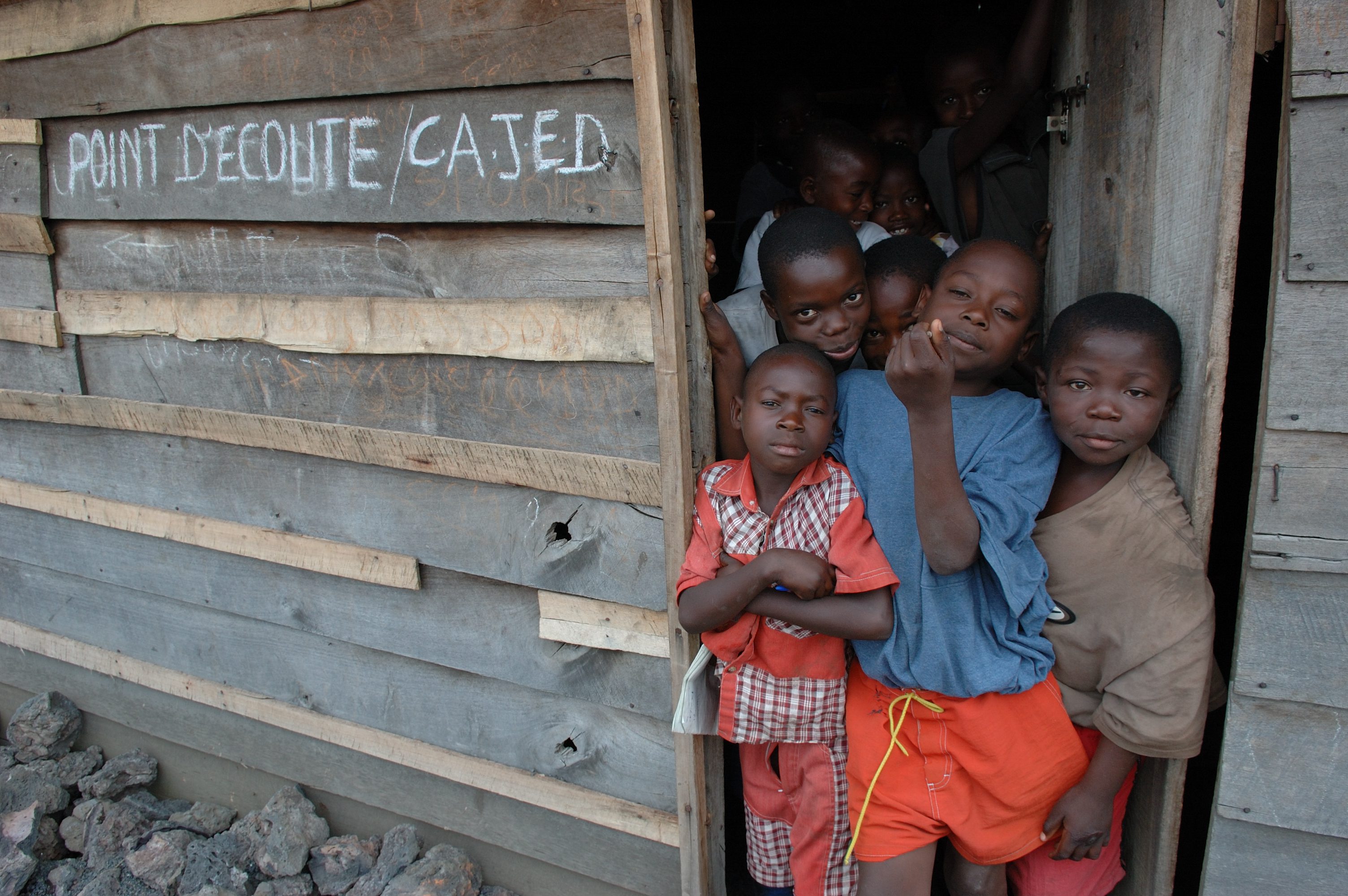
Child witch hunts are not exclusive to Nigeria. Cases have been documented in Tanzania, the Democratic Republic of the Congo, Bolivia, Guatemala, India, Iran, Saudi Arabia and even communities in Europe and the United States.
The “Simple” Answer to Complicated Problems
In some regions, witchcraft has become a way to explain misfortune and hardships, such as death, divorce or illness in families and communities. A part of the problem is limited knowledge about illnesses, which when coupled with strong cultural beliefs, prompts people to search for metaphysical answers. Children who seem aggressive, solitary or have physical deformities are more likely to be accused, as well as orphans raised by relatives, such as Godbless.
Children and even babies have been branded witches, and cases of abuse include being ostracized, chained, starved or beaten. Some children are even set on fire and are beheaded. Humanitarian organizations have reported an increase in accusations of witchcraft over the past 10 years and especially against children.
In the Niger Delta, child witch hunts are a manifestation of severe socio-economic problems, such as poverty, conflict and HIV/AIDS. Although the region has an abundance of natural resources it remains crippled by economic underdevelopment, inequality and environmental degradation, with up to 46 percent of the population living in poverty. The average daily wage is a little more than a dollar. Economic pressure and misfortunes make children in the Delta an easy scapegoat for familiar problems. In the Congo, the first cases of child witchcraft came with the rise of urbanization due to poverty and war, and the emergence of religious sects.
Homelessness is a Common Outcome
In 2010, researchers found that 85 percent of street children in Akwa Ibom, a state in Nigeria, were accused of witchcraft. An earlier report estimated that 15,000 children in Akwa Ibom and Cross River were accused. In Kinshasa, the capital of the Democratic Republic of the Congo, more than 20,000 street children were victims of the child witch hunt phenomenon. In 2017, 640 boys and more than 1,000 girls between the ages of 6 and 17 were accused of witchcraft in the Congo and subjected to violent exorcisms.
Examples of Solutions
Despite these concerning statistics, today, there are numerous local and international organizations dedicated to protecting victims, raising awareness of child abuse and improving education, legislation and law enforcement.
Nigeria’s criminal code and 2003 Child Rights Act outlaws abuse and accusations of witchcraft, although implementing the law at the state level has been slow. Only three-quarters of Nigeria’s states have domesticated the law. The charity, Safe Child Africa, however, was able to persuade the Akwa Ibom state government to make child witchcraft accusations illegal. By investing in sheltering and educating alleged child witches, Akwa Ibom is the only state that is specifically providing for the abuse of children accused of witchcraft.
In Cross River, UNICEF has been working with the ministry of sustainable development and social welfare to address their version of the Child Rights Act, which does not explicitly outlaw witch-branding. Cross River’s 2018 budget included shelter for children at risk of being accused of witchcraft.
The orphanage DINNoedjaelp – founded by the Danish humanitarian Anja Ringgren Loven – provides medical care, food and education to over 30 alleged child witches. “Right now, Nigeria is the African country with the most children out of school. When the Nigerian government does not use agents to inform and educate, we must through our educational work try to stop the superstition,” Loven told People Magazine.
Reuniting Families
The small Nigerian volunteer organization, Today for Tomorrow, meets street children near the Lemna dumpsite in Calabar – where Godbless now lives – to provide food and health care. Way to Nations, DINNoedhjaelp and other Nigerian organizations do not only rescue children but try to reunite them with their families as part of restoring and educating communities.
“Home visits is the most important part in our advocacy program. When children, who were previously accused of being witches come back to their family and village again, and look healthy, strong, speak good English, have gotten their confidence and hope back, that gives the whole village something to think about,” Loven said of reuniting the children with their families.
Ending child witch hunts requires education just as much as addressing widespread poverty. After government agencies held a series of meetings regarding the issue of child witches and abuse, religious and civil liberty organizations began working to end the hysteria, including several Nigerian Pentecostal churches, who mobilized people through sermons, print media and film. According to Dr. Utibe Effiong, churches have started producing movies that highlight the damage these accusations cause.
Although change is happening, the fight is far from over. Providing a stable future for children in Nigeria and beyond means alleviating poverty by revitalizing economies and educating the masses, so cultural and economic change can happen.
– Emma Uk
Photo: Flickr

10 Facts About Hunger in Algeria
10 Facts About Hunger in Algeria
These 10 facts about hunger in Algeria illustrate that hunger is a problem that the country may overlook. At first glance, the country may appear to be doing well, however, the most impoverished Algerians suffer greatly from food insecurity. Thankfully, the country is making progress in combating this difficult problem, which means there is hope that Algeria will one day eliminate hunger.
– Gaurav Shetty
Photo: Flickr
Updated: July 12, 2024
10 Facts About Life Expectancy in Namibia
Namibia has continued to make large strides in many aspects of life, including life expectancy. Having suffered a history of colonization and oppression, Namibia struggled for years with political, social and cultural issues. However, as the country has begun to strengthen and mingle on a global level, it has and is continuing to make exceptional progress. These 10 facts about life expectancy in Namibia will bring attention to the country’s progress and highlight the necessary changes.
10 Facts About Life Expectancy in Namibia
Some have labeled Namibia one of the most promising countries in Africa because of its increasing social, cultural and economic status. One, however, cannot ignore that there is still a lot of room for progress, especially when looking at the less privileged groups in the country. These 10 facts about life expectancy in Namibia highlight all the good that has taken place and should pose some insight into the future.
– Samira Darwich
Photo: Flickr
Fighting Poverty Through Sustainable Energy in Africa
Pushing for Sustainability
Sustainable energy in Africa has seen significant boosts in recent years. One country making particularly significant strides in sustainable energy in Africa is Kenya. With a renewable energy rate of about 73 percent, Kenya is making efforts to retain sustainability. In fact, the largest wind farm in Africa just recently completed construction in Lake Turkana, Kenya. The facility has been under construction since 2014, and with a total of 365 wind turbines, it will mark a significant boost toward sustainable energy both in Kenya and in Africa as a whole.
In fact, Kenya is making an official, concerted effort towards becoming 100 percent green energy powered by 2020. Kenya’s president, Uhuru Kenyatta, has made clear his commitment to expanding renewable energy in Kenya and has gained support from other developed nations to help invest in those projects in Kenya. Investments have led to increases in wind, solar and hydroelectric power projects over the past 10 to 15 years, with many such facilities doubling in number. Reliance on low-emission geothermal energy has also risen sharply, with Kenya ranking ninth in the world in how much power it generates from geothermal energy.
Sustainable Energy and Fighting Poverty
Aside from being environmentally conscious, renewable energy facilities also markedly increase employment. More sustainable energy in Africa can help people out of poverty. Kenya’s pushes towards wind and solar energy have led to the direct employment of 10,000 workers. Not only that, but access to electricity from these projects has also allowed some 65,000 additional people to seek out and obtain jobs elsewhere, which they could not have found without the use of electricity. The number of workers employed in the sustainable energy sector is also expected to increase by 70 percent by 2022-2023. Similarly, in Nigeria, it is expected that sustainable energy will create 52,000 jobs by that same timeframe.
It is evident that sustainable energy in Africa will drive the future of countries like Kenya and Nigeria, and assist with uplifting people both directly via increased employment and indirectly due to expanded access to clean electricity. These industries will increase not only sustainable sources of energy, but will create a sustainable economy and a sustainable population that will not succumb to the negative impacts of unemployment and poverty.
– Jade Follette
Photo: Flickr
8 Facts About Education in Sierra Leone
Situated towards the bottom of the bulge on Africa’s west coast, Sierra Leone sits on top of one of the most concentrated gold and diamond deposits in the world. But the country’s history as a prime subject of colonialism’s horrors explains why it consistently ranks as one of the poorest in the world. Here are eight facts about education in Sierra Leone that help gage context for the country’s current state of affairs.
8 Facts About Education in Sierra Leone
Even with all these improvements, it must be noted that Sierra Leone still faces significant gender discrimination in its education system, as women are currently significantly underrepresented. For instance, in 2015, the male literacy rate almost doubled the female literacy rate for the population aged 15 or older.
However, hopefully, the trend of inclusion rooted in uniform equity being promoted by Bio will soon extend to all people, especially those historically excluded. His sentiment is echoed in his own words as he said during his campaign, “Education is a fundamental right for all Sierra Leoneans.”
– Liam Manion
Photo: Global Partnership
Top 10 Facts About Living Conditions in Tokelau
Tokelau, a country between Hawaii and New Zealand, consists of three coral atolls and is home to a population of approximately 1,500 inhabitants. Here are the top 10 facts about living conditions in Tokelau.
Top 10 Facts About Living Conditions in Tokelau
As a result of Tokelau’s diminutive size and remoteness, the people of Tokelau live in accordingly interdependent communities. Extreme tropical weather and the effects of rising sea levels present challenges to life in the atolls. As a result, Tokelau has implemented plans for sustainability and preventative measures for emergencies to combat these issues. Recent advances in public services facilitate efforts to modernize the nation. As demonstrated by the top 10 facts about living conditions in Tokelau, the country and its people plan only to prosper.
– Bhavya Girotra
Photo: Wikipedia Commons
Ending Child Witch Hunts in Nigeria
Child witch hunts are not exclusive to Nigeria. Cases have been documented in Tanzania, the Democratic Republic of the Congo, Bolivia, Guatemala, India, Iran, Saudi Arabia and even communities in Europe and the United States.
The “Simple” Answer to Complicated Problems
In some regions, witchcraft has become a way to explain misfortune and hardships, such as death, divorce or illness in families and communities. A part of the problem is limited knowledge about illnesses, which when coupled with strong cultural beliefs, prompts people to search for metaphysical answers. Children who seem aggressive, solitary or have physical deformities are more likely to be accused, as well as orphans raised by relatives, such as Godbless.
Children and even babies have been branded witches, and cases of abuse include being ostracized, chained, starved or beaten. Some children are even set on fire and are beheaded. Humanitarian organizations have reported an increase in accusations of witchcraft over the past 10 years and especially against children.
In the Niger Delta, child witch hunts are a manifestation of severe socio-economic problems, such as poverty, conflict and HIV/AIDS. Although the region has an abundance of natural resources it remains crippled by economic underdevelopment, inequality and environmental degradation, with up to 46 percent of the population living in poverty. The average daily wage is a little more than a dollar. Economic pressure and misfortunes make children in the Delta an easy scapegoat for familiar problems. In the Congo, the first cases of child witchcraft came with the rise of urbanization due to poverty and war, and the emergence of religious sects.
Homelessness is a Common Outcome
In 2010, researchers found that 85 percent of street children in Akwa Ibom, a state in Nigeria, were accused of witchcraft. An earlier report estimated that 15,000 children in Akwa Ibom and Cross River were accused. In Kinshasa, the capital of the Democratic Republic of the Congo, more than 20,000 street children were victims of the child witch hunt phenomenon. In 2017, 640 boys and more than 1,000 girls between the ages of 6 and 17 were accused of witchcraft in the Congo and subjected to violent exorcisms.
Examples of Solutions
Despite these concerning statistics, today, there are numerous local and international organizations dedicated to protecting victims, raising awareness of child abuse and improving education, legislation and law enforcement.
Nigeria’s criminal code and 2003 Child Rights Act outlaws abuse and accusations of witchcraft, although implementing the law at the state level has been slow. Only three-quarters of Nigeria’s states have domesticated the law. The charity, Safe Child Africa, however, was able to persuade the Akwa Ibom state government to make child witchcraft accusations illegal. By investing in sheltering and educating alleged child witches, Akwa Ibom is the only state that is specifically providing for the abuse of children accused of witchcraft.
In Cross River, UNICEF has been working with the ministry of sustainable development and social welfare to address their version of the Child Rights Act, which does not explicitly outlaw witch-branding. Cross River’s 2018 budget included shelter for children at risk of being accused of witchcraft.
The orphanage DINNoedjaelp – founded by the Danish humanitarian Anja Ringgren Loven – provides medical care, food and education to over 30 alleged child witches. “Right now, Nigeria is the African country with the most children out of school. When the Nigerian government does not use agents to inform and educate, we must through our educational work try to stop the superstition,” Loven told People Magazine.
Reuniting Families
The small Nigerian volunteer organization, Today for Tomorrow, meets street children near the Lemna dumpsite in Calabar – where Godbless now lives – to provide food and health care. Way to Nations, DINNoedhjaelp and other Nigerian organizations do not only rescue children but try to reunite them with their families as part of restoring and educating communities.
“Home visits is the most important part in our advocacy program. When children, who were previously accused of being witches come back to their family and village again, and look healthy, strong, speak good English, have gotten their confidence and hope back, that gives the whole village something to think about,” Loven said of reuniting the children with their families.
Ending child witch hunts requires education just as much as addressing widespread poverty. After government agencies held a series of meetings regarding the issue of child witches and abuse, religious and civil liberty organizations began working to end the hysteria, including several Nigerian Pentecostal churches, who mobilized people through sermons, print media and film. According to Dr. Utibe Effiong, churches have started producing movies that highlight the damage these accusations cause.
Although change is happening, the fight is far from over. Providing a stable future for children in Nigeria and beyond means alleviating poverty by revitalizing economies and educating the masses, so cultural and economic change can happen.
– Emma Uk
Photo: Flickr
Top 8 Most Influential First Ladies for Global Issues
U.S. presidents are often put in the spotlight, but what many people overlook is the work of America’s First Ladies. This list offers insight into the most influential First Ladies for global issues and their efforts to address these issues.
Top 8 Most Influential First Ladies for Global Issues
– Gabriella Gonzalez
Photo: Flickr
10 Facts about Child Labor in China
Top 10 Facts About Child Labor in China
– Henry Burkert
Top 10 Facts About Living Conditions in Hungary
Hungary is a country of 9.8 million people located in central Europe. It makes up a portion of the EU’s southern border and is a major immigration hub. Hungary is one of the EU’s poorer countries, with a GDP in the lower third of all member states, though it is still better off than many of its central European and Balkan neighbors. Below are the top 10 facts about living conditions in Hungary.
Top 10 Facts About Living Conditions in Hungary
Unemployment is high in Hungary, with only 68 percent of people age 15 to 64 employed. Of those employed, 75 percent are men and 61 percent are women. However, the number of employees working very long hours is less than 4 percent–much lower than the United States, where 11 percent of employees work long hours.
In terms of GDP, Hungary is ranked 23rd out of the EU’s 28 member states, at 68 percent of the EU’s average. In first place for the region is Austria, which produces at roughly twice Hungary’s capacity. Another metric used to determine the welfare of the consumer, Actual Individual Consumption (AIC), places Hungary second-to-last.
In 2015, the Hungarian government ended housing support to nearly half a million impoverished residents. Prior to that, several hundred thousand Hungarians were already experiencing housing poverty. A Habitat for Humanity report from 2014 noted that more than half a million Hungarians lived with leaky roofs and/or moldy walls. Just under half of the population (44.6 percent) live in overcrowded flats, and 52 percent of Hungarians not living in major cities have access to a sanitary sewer.
Although Hungary has had universal health care coverage since the 1940s, it still ranks in the bottom third in the EU in terms of quality of coverage. This is partly due to low salaries—medical professionals cannot expect to make as much money in Hungary as they would in other EU member states. The main issue is a focus on curative care in hospitals, rather than preventative care in other medical facilities.
As of 2018, Hungary has an annual inflow of $4.3 billion per capita of foreign direct investment (FDI), a full recovery from the stagnation of the 2009-10 financial crisis. While this is partly since Hungary has an ideal geographical position for foreign investment, foreign investors have also shifted focus from the relatively poor textile and food processing industries to more lucrative industries such as wholesale, retail trade and automotive repair.
For primary school students, enrollment has varied slightly over the past two decades, but has remained above 95 percent overall. At its highest, the enrollment rate was 97.2 percent in 2009, and at its lowest in 2012, at 95.7 percent. For adolescents in school, the statistics are similarly good: though there has been a slight rise since 2014 of the number of adolescents out of school, the overall number has hovered at less than 5 percent.
Only 13 percent of 25-64 year-olds have a bachelor’s degree, with 9 percent of that population holding a master’s degree or equivalent. These statistics are low, but the individuals who possess these degrees are reaping the benefits. Studies have shown that postsecondary education credentials can potentially double one’s earnings in Hungary: a bachelor’s degree is worth a wage premium of 72 percent, while a master’s or above can earn 140 percent more than the country’s respective average salaries.
An initiative led by the NGO HEInnovate to invest in higher education has been taking place over the last decade, spurred by a decline in institutional funding from the state. The focus of this initiative has been to utilize Hungary’s educational system to boost economic and socio-cultural development at the local and national levels. This has led to a marked increase in venture capital and start-up creation among academics and has caused strong domestic economic growth.
Since his election in 2010, Hungarian Prime Minister Viktor Orban has taken steps to consolidate hundreds of pro-government media outlets into a propaganda conglomerate. These actions have been received well by some but not as well by others — Orban enjoys far more support from individuals living in rural areas of Hungary than he does from individuals living in Hungary’s urban centers.
Since a section of Hungary’s border forms the external border of the European Union, the country has received many migrants in the past. However, in recent years Hungary has adopted a harder stance on immigration, which has drastically reduced the number of asylum seekers from the Middle East.
These top 10 facts about living conditions in Hungary demonstrate how the country remains at a crossroads in the European Union—geographically, economically and socially. While the country performs well in some areas, such as education and cost of living, it still faces more economic hardship than most other EU member states, and its status as a migration hub has led to entrenched xenophobia in the country’s political landscape.
– Rob Sprankle
Photo: Flickr
Ebola Prevention in Rwanda
In August 2018, the World Health Organization confirmed an Ebola virus outbreak in the Democratic Republic of the Congo. Since then, the Rwandan government has taken a proactive stance with a rigorous system to promote Ebola prevention in Rwanda. So far, the system has been successful. Despite constant traffic across the borders between the DRC and Rwanda, there have been no cases of Ebola in Rwanda.
Threat of Transmission from the DRC
Since the outbreak of Ebola in the DRC, there have been more than 2,600 confirmed cases of the virus and 1,800 deaths. According to the WHO, the DRC Ebola outbreak is one of the worst outbreaks in history, second only to the 2014 West Africa Ebola epidemic. The WHO recently designated the outbreak as a global health emergency. With approximately 12 cases of Ebola arising every day in the DRC, the threat of transmission to other countries is still high, especially Rwanda. Since the Ebola threat is just across their border, Rwanda’s government has been proactive in preventing it.
Strategies for Ebola Prevention in Rwanda
The Rwandan National EVD Preparedness Plan is the basis of Ebola prevention, with key strategies, including early detection and response training, Ebola education, vaccinating health workers, outfitting health facilities, and carrying out simulation drills.
Early detection and response training help prepare medical staff, from Red Cross volunteers to health care centers. Rwanda’s efforts to educate its citizens, also contribute to early detection and response training. Through radio, television, billboards and community meeting, the public has learned the signs and symptoms of Ebola, so citizens are better prepared.
Vaccinating health workers in high-risk areas is also critical to controlling transmission, should health workers encounter a patient with Ebola. Approximately 3,000 health workers have received vaccinations so far. Beyond health care officials, Rwanda set up an Ebola treatment center and 23 isolation units. These measures, paired with simulation exercises to maximize response efficiency, go beyond proactive, by preparing for potential Ebola transmission.
In addition to all these measures, health officials check for Ebola symptoms at points of entry to Rwanda. Officials check travelers’ temperatures and make them wash their hands, while Ebola awareness messages play in the background. So far, these measures have kept Ebola out of Rwanda. Even so, the threat of Ebola spreading to Rwanda remains critical.
Increasing Threat of Ebola Transmission
In early August 2019, Rwanda briefly closed its borders, after the third confirmed Ebola death in the Congolese border city of Goma. According to a joint statement from the WHO and the United Nations, the latest case of Ebola in the highly populated, border city of Goma increases the risk of the virus spreading to other countries.
The government closed the border to cut down on traffic between the two countries, due to concerns of transmission between Goma and the Rwandan city of Gisenyi. Though Rwandan officials shortly reopened the border in response to international criticism, they have also increased cross-border monitoring between the two countries.
Moving Forward
As WHO Director-General, Dr. Tedros Adhanom Ghebreyesus noted, “Rwanda has made a significant investment in Ebola preparedness.” These investments and prevention strategies have stopped the spread of Ebola into Rwanda thus far. However, the threat of Ebola transmission will remain significant, until the outbreak is controlled in the DRC. Therefore, it is crucial that the Rwandan government, as well as health organizations worldwide, keep encouraging Ebola prevention in Rwanda.
– Morgan Harden
Photo: Flickr