Ebola Prevention in Rwanda
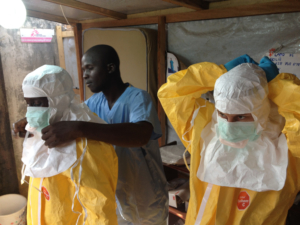
In August 2018, the World Health Organization confirmed an Ebola virus outbreak in the Democratic Republic of the Congo. Since then, the Rwandan government has taken a proactive stance with a rigorous system to promote Ebola prevention in Rwanda. So far, the system has been successful. Despite constant traffic across the borders between the DRC and Rwanda, there have been no cases of Ebola in Rwanda.
Threat of Transmission from the DRC
Since the outbreak of Ebola in the DRC, there have been more than 2,600 confirmed cases of the virus and 1,800 deaths. According to the WHO, the DRC Ebola outbreak is one of the worst outbreaks in history, second only to the 2014 West Africa Ebola epidemic. The WHO recently designated the outbreak as a global health emergency. With approximately 12 cases of Ebola arising every day in the DRC, the threat of transmission to other countries is still high, especially Rwanda. Since the Ebola threat is just across their border, Rwanda’s government has been proactive in preventing it.
Strategies for Ebola Prevention in Rwanda
The Rwandan National EVD Preparedness Plan is the basis of Ebola prevention, with key strategies, including early detection and response training, Ebola education, vaccinating health workers, outfitting health facilities, and carrying out simulation drills.
Early detection and response training help prepare medical staff, from Red Cross volunteers to health care centers. Rwanda’s efforts to educate its citizens, also contribute to early detection and response training. Through radio, television, billboards and community meeting, the public has learned the signs and symptoms of Ebola, so citizens are better prepared.
Vaccinating health workers in high-risk areas is also critical to controlling transmission, should health workers encounter a patient with Ebola. Approximately 3,000 health workers have received vaccinations so far. Beyond health care officials, Rwanda set up an Ebola treatment center and 23 isolation units. These measures, paired with simulation exercises to maximize response efficiency, go beyond proactive, by preparing for potential Ebola transmission.
In addition to all these measures, health officials check for Ebola symptoms at points of entry to Rwanda. Officials check travelers’ temperatures and make them wash their hands, while Ebola awareness messages play in the background. So far, these measures have kept Ebola out of Rwanda. Even so, the threat of Ebola spreading to Rwanda remains critical.
Increasing Threat of Ebola Transmission
In early August 2019, Rwanda briefly closed its borders, after the third confirmed Ebola death in the Congolese border city of Goma. According to a joint statement from the WHO and the United Nations, the latest case of Ebola in the highly populated, border city of Goma increases the risk of the virus spreading to other countries.
The government closed the border to cut down on traffic between the two countries, due to concerns of transmission between Goma and the Rwandan city of Gisenyi. Though Rwandan officials shortly reopened the border in response to international criticism, they have also increased cross-border monitoring between the two countries.
Moving Forward
As WHO Director-General, Dr. Tedros Adhanom Ghebreyesus noted, “Rwanda has made a significant investment in Ebola preparedness.” These investments and prevention strategies have stopped the spread of Ebola into Rwanda thus far. However, the threat of Ebola transmission will remain significant, until the outbreak is controlled in the DRC. Therefore, it is crucial that the Rwandan government, as well as health organizations worldwide, keep encouraging Ebola prevention in Rwanda.
– Morgan Harden
Photo: Flickr
