Higher Education in the DRC
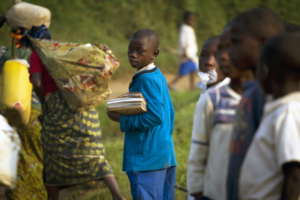 Historically, political turmoil in the Democratic Republic of the Congo (DRC) has contributed to the country’s higher education gap, which persists today. Militant activity connected to the rebel group M23 has resurged since November 2021. Efforts to meet the urgent needs of the 1.2 million people displaced by violence in the eastern provinces of North and South Kivu alone have taken the place of addressing disparities in higher education.
Despite recent efforts to make education equally available, bridging this gap for rural populations, low-income families and disabled and female students remains largely on the back burner. Here’s a look at the complex factors influencing higher education as a goal for all Congolese students and the path forward to make this a reality.
The DRC’s Educational Landscape
Barriers to higher education can be traced back to the DRC’s colonial period, when education was distributed exclusively to the elite class. Today, this trend manifests as an educational gender gap. In 2020, for instance, only 8% of Congolese men enrolled in tertiary education, while this figure was a mere 5% for Congolese women. Meanwhile, the DRC has one of the youngest populations, with more than 60% of people younger than 25.
The country’s lack of educational resources poses the risks associated with an under-skilled workforce, such as high youth unemployment and economic instability. Still, from 2010 to 2024, the number of Congolese children enrolled in secondary education increased from 2.3 million to 7.5 million. With such demographics, demand for education in the DRC is predictably high, yet enrollment in higher education doesn’t reflect this.
While overall enrollment in schooling for Congolese children has shown progress, the marginal number of students able to afford higher education reveals a systematic disparity between educational demand and resource availability. As a result, future adults with less education will become vulnerable to the same financial instability that withheld them from pursuing higher education.
Factors Affecting Higher Education in the DRC
A significant correlation exists between the quality of health and the attained level of education. UNESCO considers the expected health and the attained schooling that Congolese children will receive in their lifetimes and currently estimates these children will only achieve 37% of their full potential. The DRC’s low yield in tertiary school enrollment is reflected in its low funding for educational resources, with only 2.3% of the country’s GDP invested in the education sector.
Additionally, as civil unrest displaces families, funds once set aside for higher education are instead diverted to cover food, shelter and other basic needs. Rural communities, already lacking infrastructure, remain cut off from adequate educational services, widening the resource gap between urban and rural students. In these same areas, violence often disrupts schooling, while the limited educational materials the Congolese government can distribute are stretched especially thin.
In 2019, the DRC attempted an educational reform to make free schooling equally accessible nationwide. However, many parents continued paying teacher salaries themselves. Particularly in large cities, families have struggled to sustain education through out-of-pocket payments. In contrast, higher education often remains under-resourced and staffed by undertrained teachers. Congolese teachers have gone unpaid, raising concerns that federal funds meant to improve educational quality are not reaching students as intended.
Who Is Without Access to Educational Opportunity?
While the DRC’s poor infrastructure affects all students, higher education remains disproportionately inaccessible for women because of deep-rooted cultural and social barriers. The gender gap in higher education enrollment is narrowing, yet high fertility rates and cultural pressure for early marriage compound disadvantages for women. For those who do not complete secondary school, the likelihood of marrying young and bearing children is nearly twice as high as that of their peers.
Driving Access to Higher Education
While solutions like free education can be achieved, a community-based approach is necessary to compensate for the gaps preventing Congolese youth from pursuing higher education. On a structural level, reforming the education system could produce a more relevant curriculum to better equip Congolese students for success in the workforce. Still, the need remains to eliminate social, financial and political barriers deterring students from higher education.
The DRC’s government institutions must also do their part to distribute educational resources equitably. In the meantime, the World Bank is one organization spearheading educational funding in the DRC. In 2024, the World Bank helped channel $67 million from the Global Partnership for Education to the DRC to stock classrooms, support disabled students and advance girls’ secondary education.
While external funding doesn’t promise a permanent solution for higher education in the DRC, it does set an agenda as the country continues to navigate systemic reform on behalf of its current and future students.
– Isla Hansen
Isla is based in Spokane, WA, USA and focuses on Good News and Politics for The Borgen Project.
Photo: Wikimedia Commons
