The Hexavalent Vaccine Program in Senegal
 Senegal stands as one of Africa’s most stable and developing countries. From previous opposing leadership, Senegal now stands as a free country that can restructure its infrastructure. The most recent implementation in Senegal, the hexavalent vaccine program, plans to provide a healthier and more accessible future for health care.
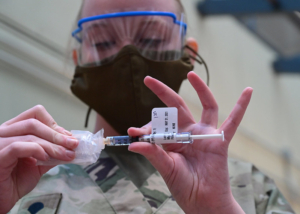
The hexavalent vaccine program was officially introduced in Senegal in early July 2025. Centered on the Vaxelis vaccine, the initiative represents a major step toward ensuring healthier, more efficient lives for citizens by protecting children against multiple deadly diseases with a single shot.
Facts About the Hexavalent Program
The hexavalent program provides new, effective vaccines to combat six different diseases. The Vaxelis shot aims to prevent:
- Whooping Cough
- Hepatitis B
- Diphtheria
- Poliomyelitis (Polio)
- Haemophilus Influenzae Type B
- Tetanus
The hexavalent vaccine replaces the previous, separately administered vaccines. This six-in-one vaccine’s impact can be endless, as it is time and cost-effective. This three-round immunization works on a 14-week schedule for completion. With infancy, this can be a four-round immunization cycle to protect against Hepatitis B preemptively.
This program aims to improve efficiency by reducing costs and the number of injections needed. From 2024 to the present day, the price has ranged from $4.50 to $2.85 per dose. In developing and low-income countries, $2.85 per dose is the average for the three-dose vaccine.
This vaccine will impact and create financial markets that will draw investment efforts. The hexavalent program can promote a flourishing market, rather than destroying it.
Senegal’s Hexavalent Vaccine Rollout
Senegal is among the first low-income countries to adopt this innovation. This vaccine eases the burden on children and parents, strengthens polio defense and aligns with WHO’s optimized immunization schedules. Backed by Gavi (covering most costs) and the Senegalese government (20% contribution), the rollout is expected to prevent 2,300 hospitalizations annually by 2030.
The Minister of Health and Social Action, Dr. Ibrahima Sy, emphasized the importance of this program and how this reinforcing vaccine will offer a healthier future for Senegal: “For the past 18 months, our teams have been working tirelessly to prepare this transition. Hexavalent embodies our commitment to offering Senegalese children simplified and reinforced protection.”
This program signals a healthier future for fragile health care systems struggling with limited resources. Other countries are already studying Senegal’s model to adapt and strengthen their own immunization efforts.
Conclusion
With its strong commitment to universal health care coverage, Senegal is shifting its focus toward addressing the systemic barriers that continue to delay this mission. A critical review is being performed to study these weak points and how to implement successful foundations.
It marks a historic moment for Senegal, reflecting a turning point in its health sector and shaping the trajectory of future health care development across the nation.
– Emma Rowan
Emma is based in Boston, MA, USA and focuses on Global Health for The Borgen Project.
Photo: Flickr
