 Oxfam is a global organization focused on ending poverty and inequality. It provides emergency relief during crises, like natural disasters or conflicts, while also working on long-term solutions such as fair wages, gender equality and climate action. For more than 80 years, Oxfam has partnered with communities around the world to promote dignity and opportunity, while also pressing governments, corporations and financial institutions to create fairer systems. Here are 5 Oxfam innovations fighting poverty:
SuperAdobe
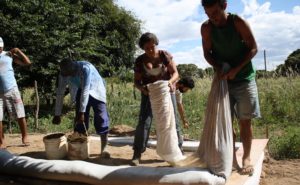
Oxfam introduced a new type of shelter, called SuperAdobe, in Jordan’s Za’atari refugee camp. Built from basic, low-cost resources like sand-filled bags and barbed wire, these structures provide a practical alternative to the metal caravans many refugees currently live in. SuperAdobe homes are built to stay cool during scorching summers and retain heat through the cold winter months.
The construction method behind SuperAdobe relies on layering sand-filled bags, stacked in either circular or elongated forms. Between each row, barbed wire is laid to strengthen the walls and hold them in place. To improve durability, materials like lime, cement or asphalt can be blended into the soil. The technique mirrors the way clay coils are shaped together in pottery; only here is it used on a larger scale to form entire buildings.
This versatile system can be adapted to create rounded designs such as domes, arches and vaults, as well as traditional rectangular structures. Beyond housing, the approach is also suited for practical applications, including silos, water storage systems, erosion control and even infrastructure projects like roads or bridges.
BlocRice
In Cambodia, an Oxfam initiative called BlocRice is changing how rice farmers engage with global markets. The program is designed to strengthen farmers’ ability to advocate for fair compensation by giving them a stronger voice in price negotiations. At its core, the project introduces digital contracts that directly link members of farming cooperatives with international exporters and European buyers.
By formalizing these agreements through technology, the system not only ensures transparency but also provides farmers with tools that enhance both their economic security and their social standing. Through the BlocRice system, buyers agree to purchase rice at the going market rate with an additional premium, giving farmers both a steady outlet for their harvest and greater financial predictability.
The program also establishes a shared digital platform where all parties involved can track agreements in real time. For some farmers, the additional premium translated into close to $100 in extra income.
TWB Glossary App
In Bangladesh’s Cox’s Bazar, where close to a million Rohingya refugees have sought safety, aid workers struggled to overcome language barriers. Although the Rohingya language shares similarities with local dialects, the differences often made communication difficult, especially when it comes to ensuring refugees could voice their own concerns.
To bridge the gap, a multilingual Glossary App was developed through a collaboration between Oxfam, Translators Without Borders and UNICEF. Covering five languages spoken in the camps, Bangla, Burmese, Chittagonian, English and Rohingya, the tool is now helping humanitarian organizations improve outreach and better respond to community needs.
Hydroponics
Survival in the Algerian Sahara is a daily battle against extreme conditions; temperatures soar past 122 degrees, sandstorms sweep the land and farming is virtually impossible. Sahrawi refugees have endured life in five camps near Tindouf, where one in four struggles with chronic malnutrition.
While international food aid provides some relief, it cannot solve the crisis alone. Oxfam innovations in fighting poverty created a more sustainable option through a hydroponics initiative. By cultivating plants without soil, the program supplies feed for the goats that many families rely on for meat, milk and income. Each greenhouse produces around 132 pounds of fresh feed daily, enough to sustain 20 goats, marking a promising step toward greater food security in the camps.
Led by Sahrawi refugee and Oxfam engineer Taleb Brahim, the initiative turns simple structures, like mud-built domes or repurposed shipping containers, into small-scale greenhouses for livestock feed. Inside, rows of shelves hold shallow trays where barley seeds are spread and kept moist until they sprout. They are then transferred into larger tubs and irrigated daily through a solar-powered pumping system. This low-cost, sustainable method transforms barren spaces into reliable sources of fresh feed.
Sanitation
Oxfam faced a pressing challenge in Bangladesh: how to manage human waste when a sudden surge of people in temporary shelters overwhelmed existing latrines. Rohingya camps experienced outbreaks of severe diarrhea, alongside respiratory illnesses and skin conditions such as scabies, all stemming from inadequate hygiene and sanitation.
To address the growing problem, the Oxfam team established a large-scale centralized sanitation facility capable of safely handling the waste of up to 150,000 individuals. The system operates with zero environmental harm, marking the first successful implementation of such a large-scale waste management solution in a refugee camp.
Final Remarks
Oxfam innovations are fighting poverty. From sustainable housing, effective communication and the cultivation of small-scale greenhouses, Oxfam is empowering communities to build a better future. With continued support and innovation, a more equitable world is within reach.
– Gabriella Luneau
Gabriella is based in Raleigh, NC, USA and focuses on Good News and Global Health for The Borgen Project.
Photo: Flickr

5 Oxfam Innovations Fighting Poverty
SuperAdobe
Oxfam introduced a new type of shelter, called SuperAdobe, in Jordan’s Za’atari refugee camp. Built from basic, low-cost resources like sand-filled bags and barbed wire, these structures provide a practical alternative to the metal caravans many refugees currently live in. SuperAdobe homes are built to stay cool during scorching summers and retain heat through the cold winter months.
The construction method behind SuperAdobe relies on layering sand-filled bags, stacked in either circular or elongated forms. Between each row, barbed wire is laid to strengthen the walls and hold them in place. To improve durability, materials like lime, cement or asphalt can be blended into the soil. The technique mirrors the way clay coils are shaped together in pottery; only here is it used on a larger scale to form entire buildings.
This versatile system can be adapted to create rounded designs such as domes, arches and vaults, as well as traditional rectangular structures. Beyond housing, the approach is also suited for practical applications, including silos, water storage systems, erosion control and even infrastructure projects like roads or bridges.
BlocRice
In Cambodia, an Oxfam initiative called BlocRice is changing how rice farmers engage with global markets. The program is designed to strengthen farmers’ ability to advocate for fair compensation by giving them a stronger voice in price negotiations. At its core, the project introduces digital contracts that directly link members of farming cooperatives with international exporters and European buyers.
By formalizing these agreements through technology, the system not only ensures transparency but also provides farmers with tools that enhance both their economic security and their social standing. Through the BlocRice system, buyers agree to purchase rice at the going market rate with an additional premium, giving farmers both a steady outlet for their harvest and greater financial predictability.
The program also establishes a shared digital platform where all parties involved can track agreements in real time. For some farmers, the additional premium translated into close to $100 in extra income.
TWB Glossary App
In Bangladesh’s Cox’s Bazar, where close to a million Rohingya refugees have sought safety, aid workers struggled to overcome language barriers. Although the Rohingya language shares similarities with local dialects, the differences often made communication difficult, especially when it comes to ensuring refugees could voice their own concerns.
To bridge the gap, a multilingual Glossary App was developed through a collaboration between Oxfam, Translators Without Borders and UNICEF. Covering five languages spoken in the camps, Bangla, Burmese, Chittagonian, English and Rohingya, the tool is now helping humanitarian organizations improve outreach and better respond to community needs.
Hydroponics
Survival in the Algerian Sahara is a daily battle against extreme conditions; temperatures soar past 122 degrees, sandstorms sweep the land and farming is virtually impossible. Sahrawi refugees have endured life in five camps near Tindouf, where one in four struggles with chronic malnutrition.
While international food aid provides some relief, it cannot solve the crisis alone. Oxfam innovations in fighting poverty created a more sustainable option through a hydroponics initiative. By cultivating plants without soil, the program supplies feed for the goats that many families rely on for meat, milk and income. Each greenhouse produces around 132 pounds of fresh feed daily, enough to sustain 20 goats, marking a promising step toward greater food security in the camps.
Led by Sahrawi refugee and Oxfam engineer Taleb Brahim, the initiative turns simple structures, like mud-built domes or repurposed shipping containers, into small-scale greenhouses for livestock feed. Inside, rows of shelves hold shallow trays where barley seeds are spread and kept moist until they sprout. They are then transferred into larger tubs and irrigated daily through a solar-powered pumping system. This low-cost, sustainable method transforms barren spaces into reliable sources of fresh feed.
Sanitation
Oxfam faced a pressing challenge in Bangladesh: how to manage human waste when a sudden surge of people in temporary shelters overwhelmed existing latrines. Rohingya camps experienced outbreaks of severe diarrhea, alongside respiratory illnesses and skin conditions such as scabies, all stemming from inadequate hygiene and sanitation.
To address the growing problem, the Oxfam team established a large-scale centralized sanitation facility capable of safely handling the waste of up to 150,000 individuals. The system operates with zero environmental harm, marking the first successful implementation of such a large-scale waste management solution in a refugee camp.
Final Remarks
Oxfam innovations are fighting poverty. From sustainable housing, effective communication and the cultivation of small-scale greenhouses, Oxfam is empowering communities to build a better future. With continued support and innovation, a more equitable world is within reach.
– Gabriella Luneau
Photo: Flickr
Foreign Aid and Poverty in Lebanon: Shaping Regional Stability
The issue is intrinsically linked to foreign assistance and poverty in Lebanon, with U.S. and European initiatives being pivotal in ensuring food security, educational access for children and availability of health care services. Assistance not only supports at-risk homes but also mitigates unrest that may spread across the Middle East.
Food Vouchers That Keep Families Afloat
International assistance programs have emerged as a crucial support system for several Lebanese families. The World Food Program (WFP) offers electronic food vouchers and financial aid via redeemable e-cards at local retailers.
These allow families to buy essential items while supporting Lebanon’s fragile economy. A mother in Tripoli who relies on the vouchers explained, “With the card, I can buy bread, rice and milk for my children. Without it, I would have to skip meals so they could eat.”
She added that her children can stay in school thanks to aid-supported meal programs. “When they eat at school, I know they can concentrate on learning. It gives me hope they will have a better life than mine.” (Interview)
How Aid Becomes a Tool for Stability
The European Union and World Bank saw assistance as both humanitarian aid and a strategy for fostering regional stability. The World Bank reports that initiatives such as the Emergency Social Safety Net have provided financial aid to more than 150,000 at-risk families.
These programs illustrate the intersection of foreign aid and poverty in Lebanon with overarching objectives, including the reduction of extremism, mitigation of migratory pressures and enhancement of resilience against future adversities.
The Challenges Families Still Face
Despite advancements, political instability and inadequate governance constrain the comprehensive effectiveness of assistance. The International Monetary Fund (IMF) has conditioned its support on structural changes, compelling Lebanon to tackle corruption and financial mismanagement prior to releasing billions in aid.
Nevertheless, assistance groups have established mechanisms to circumvent inefficiencies. Programs using electronic vouchers and direct cash transfers minimize corruption threats while guaranteeing that assistance is delivered to those in greatest need.
“When the aid is late, we run out of food. Sometimes I borrow from neighbors, but they are also struggling, so it is very hard,” the interviewee explained.
Such innovations show how foreign aid and poverty in Lebanon are tightly connected, with delivery methods determining how effective assistance can be.
Aid as Investment, Not Charity
Critics sometimes characterize assistance as unsustainable; yet data demonstrates that expenditures in education, food security and health care provide long-term benefits. For example, each dollar spent in early childhood nutrition generates up to $16 in future economic return, while enhancing educational continuity and food accessibility increases productivity and decreases healthcare expenses.
In Lebanon, assistance not only mitigates suffering but also averts regional spillover effects that might exacerbate security issues, with experts cautioning that state failure could trigger displacement, extremism and wider conflict.
International donors are enhancing the everyday lives of Lebanese residents and refugees, therefore not only addressing immediate needs but also investing in the nation’s resilience and peace. In this context, foreign aid and poverty in Lebanon illustrate that humanitarian assistance serves as a strategic investment in peace and development.
“I do not want charity. I just want steady work. Until then, this help keeps us going. Without it, many families like mine would not survive,” a mother from Tripoli told The Borgen Project.
Why Lebanon Proves Aid Matters
The situation in Lebanon illustrates the intrinsic link between foreign aid and poverty in Lebanon; help serves not just as a moral obligation but also as a mechanism that directly mitigates poverty and enhances regional stability. Food coupons that sustain families and cash transfers that uphold dignity are effective solutions, especially in a precarious political climate. As global leaders deliberate on budgets, Lebanon exemplifies the need to sustain and augment aid: it lleviates poverty and preserves broader stability.
– Ray Bechara
Photo: Flickr
Nigeria’s Promise of Plastic Bottle Bricks
A Parallel Plastic Waste Problem
Traditional construction methods, reliant on expensive materials like cement and concrete, remain out of reach for much of the population. At the same time, Nigeria is also battling a major plastic waste crisis. The country is the world’s second-largest plastic polluter and inadequate waste management services mean that plastic often accumulates in public spaces or is burned, creating further environmental hazards.
The Rise of Plastic Bottle Bricks
In response to these pressing challenges, several communities, engineers and social enterprises are exploring an unconventional but promising solution: building homes using plastic bottle bricks. This method involves filling discarded plastic bottles with sand or other materials and using them in construction as a substitute for conventional bricks.
Research and field trials have shown that these bottle bricks are cost-effective, up to 30–50% cheaper than traditional bricks and structurally sound. Compacted sand inside the bottles is nearly 20 times stronger than regular bricks. Additionally, these structures offer thermal insulation, making them well-suited to Nigeria’s hot climate.
One notable example is the work of Yahaya Ahmed from Nigeria’s Development Association for Renewable Energies. According to Ahmed, homes made from bottle bricks cost only a third of traditional concrete structures. These homes also help reduce plastic waste, a significant environmental benefit given Nigeria’s growing consumption of bottled water.
Pilot Projects Showing Promise
Pilot projects across Nigeria, including in Yelwa village and Paipe community, have shown successful implementation of this technology. In Paipe, a prototype home was built at 35% of the cost of a standard house and integrated renewable energy and water systems. These projects address the housing and waste crises and provide employment and technical training for young engineers and local workers.
Social enterprises like Brickify are also contributing to this movement. Founded in 2019, Brickify recycles plastic waste into interlocking “Lego-style” bricks for building low-cost homes, schools and public toilets. The organization has recycled more than 50,000 tons of plastic waste and engages local communities by offering incentives, such as school fees or meals, for collecting plastic waste. Its water, fire and wind-resistant bricks significantly reduce construction time and material costs.
Barriers and the Path Forward
Despite its promise, bottle brick technology faces several challenges, including a lack of skilled labor, insufficient government incentives and limited research funding. For wider adoption, sustained collaboration between government bodies, private investors and environmental organizations will be necessary.
Ultimately, while plastic bottle brick homes are not a complete solution to Nigeria’s housing crisis, they offer a practical and sustainable model that addresses multiple issues at once: housing, waste, unemployment and environmental degradation.
– Sriya Regulapati
Photo: Flickr
How Partners of the Americas is Fighting Global Poverty
About Partners of the Americas
Partners of the Americas is a nonprofit, nonpartisan organization made up of volunteers and development officials committed to serving people in developing countries. It was founded in 1964, inspired by the Alliance for Progress initiative launched by the United States (U.S.) President John F. Kennedy. The organization’s reason behind forming partnerships is to “create opportunity, foster understanding and solve real-life problems” for those in need. It has established international offices across the globe to achieve those results, with offices opening in regions like the Caribbean and Central America.
Partners of the Americas Projects
Partners of the Americas performs several initiatives across the globe to help empower communities in developing countries. These initiatives focused on strengthening agricultural productivity and sustainability, empowering people and institutions to create sustainable solutions to meet local needs, promoting education in developing countries and strengthening labor rights abroad to ensure fair competition for workers and businesses.
These initiatives have proved effective, each with success stories in countries across the globe. Examples include the Empowering Women in the Mexican Workplace project, which seeks to improve labor conditions for women in Mexico and the 100,000 Strong in the Americas Innovation Fund, which aims to expand opportunities for higher education institutions to launch innovative student exchange and training programs.
The organization also conducts lobbying initiatives, aiming to educate the Members of Congress and the executive branch on its work and impact across the Americas. Partners of the Americas worked with Bridge Consulting in 2024 to achieve this feat and properly educate the Members of Congress and the executive branch.
The Impact
Partners of the Americas has made a notable impact in empowering communities across the globe for nearly six decades. Its wide-reaching programs have supported thousands of individuals in gaining access to education, food security, economic opportunity and fair labor practices, all while centering the voices and leadership of local partners. The organization continues to make an impact worldwide through its 60 chapters established in more than 30 countries. It brings together communities, individuals, organizations and volunteers across borders to serve people in developing countries.
Getting Involved
Partners of the Americas is actively creating ways for individuals to become involved in its organization. The organization has volunteer opportunities for those who want to get involved, hosting events to engage with their members and stakeholders and even has internship positions for those wanting to make a change in the Americas. With a legacy rooted in service and collaboration, Partners of the Americas remains a beacon of hope for communities striving toward a better future. Its work continues to prove that lasting impact begins with people coming together across borders to create meaningful change.
– Jaden Hartfield
Photo: Flickr
Elderly Poverty in Japan and the Rise of Lonely Deaths
According to a 2024 study by the National Police Agency, the elderly population in Japan makes up 76% of solitary deaths. Experts believe this is a public health emergency with contributions from weak social safety nets and shifts in family structures.
Scope of the Crisis
Living alone is now common for older adults in Japan. The National Institute of Population and Social Security Research reports that 19.4% of seniors age 65 and older currently live alone. This shift reflects Japan’s low birth rate, shrinking family units and increasing urban migration.
According to the World Bank, 30% of Japanese adults are above 65. Experts expect that number to rise, with elderly single households estimated to increase by 47% by 2050. This creates a society where aging in isolation becomes increasingly unavoidable due to limited funds and inadequate elder care infrastructure.
Causes of Lonely Death Among the Elderly
Japan is one of the fastest-aging societies in the world, with 29.1% of its population now aged 65 or older. Meanwhile, multigenerational households are disappearing. Multigenerational households dominated half of Japan’s families in 1980 but shrank to 12.2% by 2015.
Cultural norms previously dictated that children cared for aging parents. But economic pressures, migration and social stigma around dependence have shattered those expectations, creating an increase in elderly poverty in Japan. According to Matthew Penney, almost 20% of Japan’s elderly struggle with relative income poverty.
Loneliness and Isolation
The economic consequences are severe. Elder poverty in Japan is high, almost double the average for the Organization for Economic Co-operation and Development (OECD). According to the Asia-Pacific Journal: Japan Focus, most single older women in Japan live below the poverty line. They are also likely to outlive their spouses and suffer in silence rather than ask for help.
These women are extremely vulnerable. Many of them have no pension or savings because they spent most of their lives as homemakers. Social isolation further compounds the problem. A white paper from Japan’s Cabinet Office confirms the rise in levels of loneliness among seniors, proving that isolation increases the risk of both depression and death.
Promising Solutions
To address the crisis of social isolation, the Japanese government funds new programs such as dementia cafés. These cafés are part of The New Orange Plan, designed to foster connection and reduce loneliness. There is also considerable development in community centers to intervene early on.
Local organizations, such as the Zero Isolation Project, are advocating for more robust volunteer programs and increased awareness campaigns. Offering services that include volunteer visits and support services, Japan is banding together to help the elderly population feel less alone.
Final Remarks
Addressing Japan’s elderly crisis provides a global model for aging care and preventative measures. When governments take action to support the elderly poor, they ensure people have the resources they need to feel safe and supported.
– Nicole Fernandez
Photo: Flickr
Brazil’s Removal From the Hunger Map
Many plans, programs and initiatives were implemented to achieve Brazil’s removal from the Hunger Map. These plans include:
The Food on the Plate and the PLANAPO Programs
The Food on the Plate,” and the PLANAPO plans were all created to ensure food on the table for all Brazilians. The programs also seek to minimize poverty by building a resilient and sustainable food production system that uplifts small-scale farmers, agriculture cooperatives and community-based associations. Central to this vision is a national commitment to ending hunger, ensuring equitable access to nutritious food for all, while promoting environmental health and local empowerment.
Rice Production and the Zero Hunger Strategy
Our Rice Program provides low-interest credit and technical support to small producers while supplying rice to solidarity kitchens and food-insecure populations, helping those in poverty. The renovation of the Conab warehouse increases grain intake capacity, improves food logistics and reduces spoilage. Meanwhile, the leasing of spaces enhances the distribution of fresh produce to urban areas. It stimulates economic activity and job creation through expanded vendor participation.
In parallel, the modernization of food banks, which is aligned with the national “Food on the Plate” plan, upgrades the infrastructure for food recovery and redistribution. This initiative helps redirect surplus food to vulnerable populations, improving efficiency and equity in the food system. These programs promote sustainability, reduce hunger and strengthen Brazil’s resilience against economic and environmental disruptions.
Brazil also implemented the zero hunger strategy, which allows access to adequate food, agricultural support, income-generating activities and social participation. These plans and programs allowed Brazil to leave the Hunger Map and helped many underserved communities.
Conclusion
Brazil’s removal from the Hunger Map marks a transformative milestone in its fight against poverty and food insecurity. The country has shown that systematic change is possible when policy meets community needs through strategies like sustainable agriculture, modernized infrastructure and inclusive social programs.
Initiatives like Food on the Plate, PLANAPO and Arroz de Gente improved food access, empowered small producers and revitalized local economies. Brazil’s success story offers a powerful model for other nations grappling with hunger, proving that hunger can be eradicated with political will, innovation and grassroots engagement.
– Karisma Polly
Photo: Unsplash
How Mobile Libraries Fight Poverty Through Global Literacy Access
Floating School Boats and Libraries in Bangladesh
Operating 111 floating school boats and libraries, Shidhulai Swanirvar Sangstha in Bangladesh serves more than 100,000 people in flood-prone areas. These boats do more than carry books; they are also equipped with solar-powered technology and classrooms, allowing for the assurance of the continuation of education during floods.
Each vessel teaches lessons in literacy, mathematics and other more specific topics like environmental awareness. In countries where flooding can disrupt thousands, innovations like these allow for education not to come to a standstill.
UNDP-Supported Digital Literacy Hubs in Ukraine
Repurposed libraries supported by the United Nations Development Program (UNDP) have become digital literacy hubs benefiting several Ukrainians. The program swiftly grew, beginning with 52 trainers who trained 235 administrators to host 135 events for 2,109 participants. It reached 25,391 people in 22 regions and Kyiv by the end of 2024 and 82% of them reported having strong digital skills following training, compared to just 17% previously.
Today, more than 3,000 libraries offer courses designed for senior citizens that cover everything from using e-services to cyber hygiene, AI tools and smartphone fundamentals. In 2025, new coordinators will receive Diia, AI and event planning training. By ensuring these abilities continue proliferating, educational tools turn libraries into centers of social resilience and economic opportunity. Besides mobile initiatives, UNDP’s impact is transforming library access into bridges for economic development.
Why Mobile Libraries Matter for Poverty Reduction
Mobile libraries are effective instruments for ending the cycle of poverty and offer more than just book delivery services. Research shows that access to mobile libraries significantly boosts reading comprehension, raising literacy scores by 3.3 points on standard scales and explaining 46% of literacy and reading ability variation.
This improvement goes beyond academics; literacy is a key tool in reducing poverty because it is directly associated with increased earning potential, better health outcomes and better employment opportunities. Mobile libraries remove barriers such as distance, cost and poor infrastructure, often preventing people in rural or disaster-affected areas from accessing education. They deliver books, learning materials and internet access directly to underserved communities.
Mobile classrooms and floating libraries guarantee that education continues even in the face of floods or other disruptions in vulnerable climate areas and they offer secure spaces for learning and socializing in regions affected by conflict. By making literacy attainable for all, mobile libraries promote long-term community development globally and empower individuals.
Moving Forward
These programs have repeatedly shown that people can change their lives when they have direct access to books, technology and learning spaces. This is especially true for those who live in remote, underserved or crisis-affected areas. The current challenge is to increase this reach. In addition to scaling up current programs, further funding would support innovative delivery strategies, the creation of locally relevant content and the incorporation of digital tools that equip communities to meet the demands of the contemporary economy.
Through universal literacy access, mobile libraries fight poverty by transforming reading into a domino effect of social resilience, economic opportunity and educational advancement.
– Kyra Cribbs
Photo: Flickr
Economic Development and Gender Equality in Croatia
Although Croatia provides universal health care and public education, social inequalities persist, especially between people who live in rural and urban areas. Women in Croatia often face underrepresentation in leadership, wage gaps and limited job opportunities.
Women in the Workforce of Croatia
In the past decade, the labor market for Croatian women has improved significantly, with many indicators nearing EU averages. As of 2023, only 19.4% of women in Croatia aged 15–24 were employed, compared to an EU unemployment rate of about 33% for the same age group. Among women in the later stages of their careers, the employment-to-population ratio was 47.5%, below the EU average of 58.0%.
There is significant pressure for Croatian women, especially those in rural areas, to conform to traditional gender norms; family and caregiving responsibilities primarily fall on them. Combined with the fact that Croatian women are more likely to work in nonstandard forms of employment and earn less than men, this remains a major factor in the gender employment gap. As of 2023, more than 1.7 million people were active in Croatia’s labor market, with the employment rate at 62.1% for women and 69.4% for men.
Croatian women are making waves in the job market, dominating fields like education, entrepreneurship and services. Notable examples include:
Gender Equality Strategy
The EU Gender Equality Strategy is a program implemented from 2020 to 2025, aiming to make Europe “gender-equal.” Its key objectives include:
The program also focuses on boosting leadership, along with combating gender-based violence and protecting and supporting victims. In Croatia, gender equality is first guaranteed under the Constitution of the Republic of Croatia and then further discussed in the Gender Equality Act.
The U.N. Women’s Regional Office for Europe and Central Asia has introduced several initiatives to advance gender equality across the region, aiming to address discrimination, poverty and exploitation faced by women. One such initiative is the Women’s Entrepreneurial Expo, launched in 2021 in partnership with the European Bank for Reconstruction and Development.
The Expo has raised awareness of women’s achievements in entrepreneurship while fostering a vibrant community where women support one another. It has helped entrepreneurs build relationships, engage in peer learning, network, collaborate and explore opportunities for business growth. The initiative highlights women-led enterprises and promotes inclusive markets that empower and sustain women entrepreneurs.
Conclusion
Croatia’s social progress and economic growth are closely linked to the participation of its women in the workforce. While it has made significant strides in health care access, education and EU integration, the gender gap persists and limits women’s economic potential.
For Croatian women, closing the gender gap is crucial, as gender equality brings significant financial benefits. It drives community development, fosters innovation and boosts GDP by increasing the total value of goods and services. Advancing gender equality would empower women and contribute to broader poverty reduction and sustainable development.
By promoting women’s entrepreneurship and supporting policies that close wage disparities, Croatia can tap into the full potential of its population. This ensures that women are not just participants, but active leaders in shaping the nation’s economic future.
– Madyn Lewis
Photo: Flickr
Innovations in Poverty Eradication in Gambia
To combat the impoverished conditions that consistently attack the nation, many projects have started up to help Gambia combat its ongoing battle with nationwide poverty. Here are some of those projects and their innovations in poverty eradication in Gambia.
The Inspiring-Young Stars Program
The Inspiring-Young Stars Program is a Gambian nonprofit organization that kick-started in 2016, with its mission to transform the lives of children through education and service. This program puts a big emphasis on education because it believes education can reduce the impact of poverty in Gambia, despite not directly solving the problem itself.
The Gambia struggles to improve its access to education due to its limited resources. This includes a lack of funding for education, teaching facilities and teachers. This leads to a vast majority of Gambia lacking quality education, as only 11% of children aged 7 to 14 demonstrate fundamental literacy skills and 9% in numerical skills. Ghana’s education system contributes to its high dropout rate of 29% among Gambian children. Because the Inspiring Young Stars programs believe education can help reduce poverty, they emerged as one of the major innovations in poverty eradication in Gambia.
The Micro-Gardening Project
One of the Inspiring-Young Stars Program’s many projects, which is considered extremely crucial, is the micro-gardening project. This project brings together children from their community libraries, youth volunteers and Charter School students to learn how to grow and care for a garden. This enables the students to learn the skills necessary to maintain a garden for growing vegetables and crops. This project not only serves as a way to learn technical skills, but it also serves as a space for learning critical life skills for the future.
Other Projects
The program also hosts other projects that give Gambian children access to resources to teach themselves and others fundamental literacy skills.
While there isn’t much data on what the organization has accomplished overall, the Inspiring-Young Stars Program continues to do projects that involve the Gambian youth to help them learn vital skills. Overall, such projects that this program gets involved in provide an education to children and other youth volunteers for crucial life skills, despite the adversities they all face. Through such projects, it helps get the Gambian youth involved in efforts to reduce poverty, making in one of the significant innovations in poverty eradication in Gambia.
International Fund for Agricultural Development (IFAD)
The International Fund for Agricultural Development (IFAD) is the world’s fund for transforming agriculture, rural economies and more. IFAD invests in rural people, who are often the most vulnerable and the world’s poorest like those in the Gambia.
To reduce poverty levels in the Gambia, IFAD has developed a strategy to accomplish this. Because a majority of Gambia’s poor are farmers, taking specific action to help these farmers will support them in various aspects. On the financial aspect, this involves increasing their access to markets. In doing so, it allows these farmers to support themselves financially.
This also involves increasing the value of certain crops by increasing the value chain participants. By increasing the value of crops through such means, it helps make it easier for farmers to support themselves financially. Their efforts to support the majority of Gambia’s poor make this one of the many innovations in poverty eradication in Gambia through making strides to improve both Gambia and other impoverished nations worldwide.
Throughout its efforts, it has helped many of Gambia’s poor, especially its rural farmers. IFAD has supported 11 programs and projects in the Gambia that have all cost an estimated total of $287.21 million. IFAD has supported more than 195,000 rural households in the Gambia that are experiencing poverty. IFAD’s time and efforts to support Gambia’s poor, especially its farmers, have made it one of the main organizations that have utilized innovations in poverty eradication in Gambia through its strategic plan and objectives.
Concluding Thoughts
Efforts for organizations like IFAD and the Inspiring-Stars Program have helped combat the Gambia’s battle with poverty, which has helped improve conditions in the country. Whether it is expanding education or even helping farmers support themselves financially, the efforts they have had an impact on reducing poverty in the Gambia.
– Pramod Sesh
Photo: Pixabay
Aging in Silence: Combating Elderly Poverty in Comoros
A Crisis of Aging Without Support
Comoros is a lower-middle-income archipelago of about 866,000 people. Poverty remains widespread; approximately 38% of the population lived below the $3.65 per day poverty line in 2024. This hardship is concentrated in rural areas, where elderly individuals often lack stable income, pensions or access to basic services.
There is no universal pension system. Many older adults continue subsistence farming into advanced age, often when health limits their work. With adult children migrating to Mayotte, France or mainland Africa, elders can be left isolated, reliant on intermittent remittances or community goodwill.
Remittances from Comorians abroad are a financial lifeline, contributing roughly 25% of gross domestic product (GDP). They offer crucial short-term support but cannot substitute systemic protection. Their distribution is uneven, especially among disadvantaged older women and those on remote islands.
Many older people in Comoros suffer from chronic illnesses such as hypertension, arthritis, diabetes and visual impairment, conditions that worsen without consistent access to health care. Mental health concerns, including depression and cognitive decline, are common among older adults, especially those living in isolation or without financial security.
Poverty impacts older women more severely than men in Comoros. Due to lower lifetime earnings, informal labor participation and gender inequality in property ownership, women are less likely to have savings or access to land or inheritance. Older women are also more likely to be widowed and live alone, making them more vulnerable to poverty and neglect.
Building Hope Through Social Protection
In 2023, the World Bank approved a $30 million grant to strengthen the country’s social safety net. The funds support cash transfers for the chronically poor, climate-sensitive public works and income-generating programs reaching more than 40,000 households. While not specifically for older adults, the program lays essential groundwork for broader inclusion.
A Vision of Inclusion
Comoros is at a pivotal moment: economic growth is projected to reach 4% by 2027, partly fueled by remittances, tourism and public investments connected to the Comoros Emergent 2030 plan. Yet without urgent, elder-focused policies, the nation risks leaving its seniors behind.
By weaving elders into economic plans through pensions, health care, community conservation and blue economy jobs, Comoros can recognize and repay the generation that nurtured it through adversity. Support from the diaspora, international donors and NGOs could align with government efforts to create a society where leaders can age with dignity.
With determined leadership and sustained investment, Comoros could transform elderly poverty from a silent crisis into a story of resilience and shared prosperity.
– Reign Lankford
Photo: Flickr