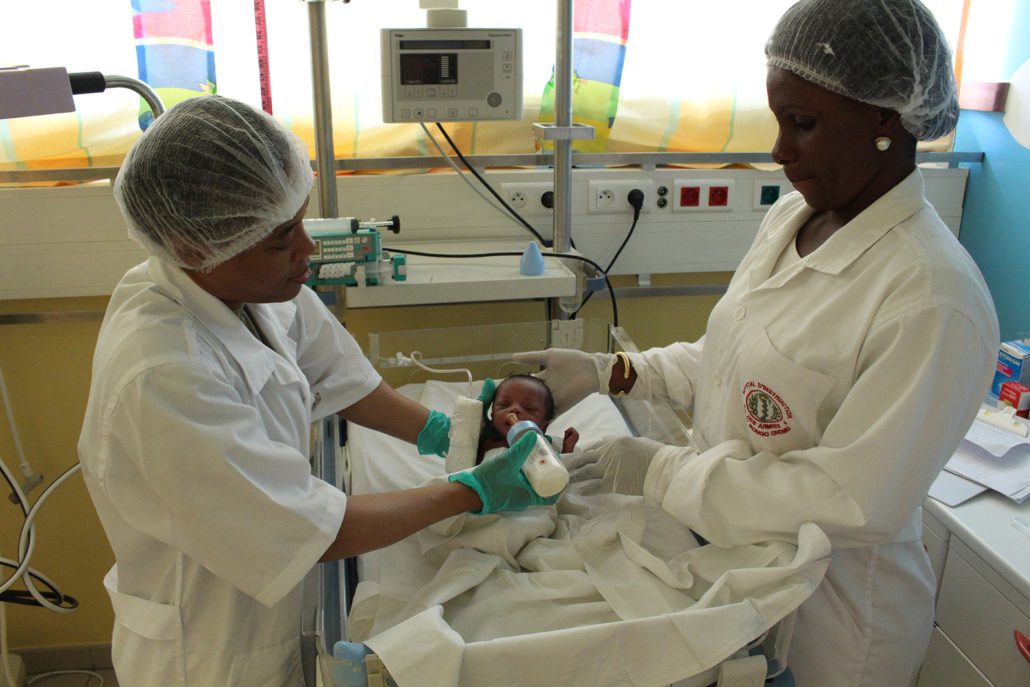
Gabon, a country of around 2 million people located in western Central Africa, shows how a universal healthcare system can succeed. The relatively recent improvement in healthcare in Gabon provides a roadmap for other countries. Furthermore, Gabon highlights which areas of healthcare could use improvement and how best to go about enhancing it.
The Good
Gabon’s national healthcare system, Caisse Nationale d’Assurance Maladie et de Garantie Sociale (CNAMGS), emerged in 2008. In its infancy, the program provided healthcare coverage to students, the poor and the elderly. Since then, it has extended coverage to public-sector workers in 2011 and private-sector workers in 2013. As early as 2011, 417,118 of the 546,125 eligible poor residents of Gabon signed up for the program.
Many typically consider healthcare in Gabon above-average for West Africa in both access and effectiveness. For instance, Gabon has a high healthcare center density and a below-average adult mortality rate from non-communicable diseases.
Gabon employs a novel and effective system to help finance its expansive healthcare coverage: levies on mobile phone companies and on money transfers outside of the country. This system is an incredible success, according to Dr. Inoua Aboubacar, a World Health Organization public health specialist located in Gabon. Overall resources for CNAMGS quadrupled from 2008 to 2011, increasing from 12.5 billion CFA to over 47 billion CFA (nearly $8.5 million). Around 17.5 billion CFA came from these levies.
Launched in 2010, the National Health Strategy now provides 100% covered maternal healthcare in Gabon. The program covers approximately 85% of healthcare costs in other areas as well. Out-of-pocket copays cover any additional costs. Nevertheless, maternal mortality rates remain worrisome, with 261 deaths per 100,000 live births as of 2015.
Universal healthcare was achieved in Gabon in only 10 years, quicker than developed countries such as South Korea, where it took 12 years.
What Needs Improvement
Healthcare in Gabon, while successful in many ways, lacks the national spending that it deserves. Healthcare spending only accounts for 3.44% of the country’s total GDP, which is the lower than Gabon’s neighbors of Cameroon, Equatorial Guinea, the Democratic Republic of the Congo, Republic of Congo and Chad. Although Gabon has the classification of an upper-middle-income country, it still spends less on healthcare than many comparable countries.
HIV/AIDS is a major problem in Gabon. An estimated 3.8% of adults live with the disease in Gabon, which makes it the 14th worst affected country in the world. However, the effects of the disease are diminishing. In 2017, the Gabon Ministry of Health launched a program to raise awareness and understanding of HIV through various campaigns and events in high schools.
Out-of-pocket spending for the people of Gabon is still higher than ideal. In the country, one can attribute 21.87% of healthcare expenditures to out-of-pocket spending, which is higher than in most economically similar countries in the region.
Healthcare in Gabon is a success by most standards, especially in comparison with other countries in Africa. It is far from perfect, though, and improvements must continue in the future. Still, Gabon’s quick and targeted approach should be a model for other countries seeking to improve healthcare programs of their own.
– Evan Kuo
Photo: Department of Defense

Childcare Reforms in Chile: What’s Being Done
Chile has made major strides in reducing national poverty, with 62% of the population holding a secure job. Social and educational policies have increased the number of mothers at work, with fewer people to take care of children. The need for childcare and afterschool programs in Chile has become a key focus for decreasing poverty rates in female-headed households. The government and nonprofit programs have stepped in to make crucial childcare reforms in Chile.
Poverty Trap For Female-Headed Households
Of the 49% of Chileans who were unemployed in 2011, a disproportionate amount were women. Female-headed households make up 51% of households below the poverty line. The tremendous obligation of Chilean women to raise their children is a full-time job. Many mothers are unable to seek employment because of a lack of childcare resources and services, increasing the rates of poverty in female-headed households
Chilean Education Reforms
In 2013, the Chilean government passed a law making kindergarten nationally accessible to all children. Previously parents had to pay to enroll their students in school at six years old. The law helped alleviate stress from many mothers and increased employment rates.
In efforts to equitize and optimize access for Chilean children to quality education, the government passed the Inclusion Law in 2015, making any for-profit ambition and action from government-funded schools illegal. The law had positive effects; a study conducted in 2017 showed that 85% of students in Chile were accepted to “one of their preferred schools.”
After the enactment of these two laws, public schools became an accessible form of childcare for struggling mothers. This allowed them time to seek employment. Parents can now send their children to their desired schools affordably and close to home.
Chile Grows With You Program
The youth support and care program Chile Grows With You was enacted in 2009 during the first female presidency of Michelle Bachelet. Chile Grows with You provides intersectional childcare, nutrition, health and hygiene services to help nurture Chilean children’s psychological development. The childcare programs and outlets fit various social and developmental needs of students.
Bachelet’s push for reform of past childcare services and policies is the reason why all Chilean children from ages zero to six are entitled to childcare and healthcare services, regardless of socioeconomic status or disability. Although the program is open to all, it specifically seeks to help families in the lowest socioeconomic bracket of Chile. This gives struggling, low-income families access to childcare, education and healthcare systems.
Chile Grows With You Childcare Reforms
Chile Grows With You guarantees free access to nursery school for children two to six years old and provides additional childcare hours as needed to full-time mothers and caregivers.
For children too young for nursery school (under two years old), the program provides free access to daycare centers for mothers or caregivers lacking the financial means to leave work to care for their infant.
Chilean children with disabilities are also protected under the program. President Bachelet increased access to healthcare and childcare services for children who show signs of mental and physical disabilities in their early youth.
A New Life For Chilean Mothers and Children
Since the implementation of Chile Grows With You, over 60% of families of the lowest socioeconomic status have been able to gain access to free childcare programs and services, directly impacting female-headed households by giving women more time to attain education and employment.
While poverty in Chile remains an issue, particularly in female-headed households, the government and Chile Grows With You are working to make a positive change. Chilean mothers raising young children have been able to take small steps, turning over major strides through Chile Grows With You; pulling themselves and their children out of poverty. Government-provided childcare programs and services are not only helpful for struggling parents — they are an inspiration for impoverished Chilean children.
– Nicolettea Daskaloudi
Photo: Flickr
What to Know about Healthcare in Gabon
Gabon, a country of around 2 million people located in western Central Africa, shows how a universal healthcare system can succeed. The relatively recent improvement in healthcare in Gabon provides a roadmap for other countries. Furthermore, Gabon highlights which areas of healthcare could use improvement and how best to go about enhancing it.
The Good
Gabon’s national healthcare system, Caisse Nationale d’Assurance Maladie et de Garantie Sociale (CNAMGS), emerged in 2008. In its infancy, the program provided healthcare coverage to students, the poor and the elderly. Since then, it has extended coverage to public-sector workers in 2011 and private-sector workers in 2013. As early as 2011, 417,118 of the 546,125 eligible poor residents of Gabon signed up for the program.
Many typically consider healthcare in Gabon above-average for West Africa in both access and effectiveness. For instance, Gabon has a high healthcare center density and a below-average adult mortality rate from non-communicable diseases.
Gabon employs a novel and effective system to help finance its expansive healthcare coverage: levies on mobile phone companies and on money transfers outside of the country. This system is an incredible success, according to Dr. Inoua Aboubacar, a World Health Organization public health specialist located in Gabon. Overall resources for CNAMGS quadrupled from 2008 to 2011, increasing from 12.5 billion CFA to over 47 billion CFA (nearly $8.5 million). Around 17.5 billion CFA came from these levies.
Launched in 2010, the National Health Strategy now provides 100% covered maternal healthcare in Gabon. The program covers approximately 85% of healthcare costs in other areas as well. Out-of-pocket copays cover any additional costs. Nevertheless, maternal mortality rates remain worrisome, with 261 deaths per 100,000 live births as of 2015.
Universal healthcare was achieved in Gabon in only 10 years, quicker than developed countries such as South Korea, where it took 12 years.
What Needs Improvement
Healthcare in Gabon, while successful in many ways, lacks the national spending that it deserves. Healthcare spending only accounts for 3.44% of the country’s total GDP, which is the lower than Gabon’s neighbors of Cameroon, Equatorial Guinea, the Democratic Republic of the Congo, Republic of Congo and Chad. Although Gabon has the classification of an upper-middle-income country, it still spends less on healthcare than many comparable countries.
HIV/AIDS is a major problem in Gabon. An estimated 3.8% of adults live with the disease in Gabon, which makes it the 14th worst affected country in the world. However, the effects of the disease are diminishing. In 2017, the Gabon Ministry of Health launched a program to raise awareness and understanding of HIV through various campaigns and events in high schools.
Out-of-pocket spending for the people of Gabon is still higher than ideal. In the country, one can attribute 21.87% of healthcare expenditures to out-of-pocket spending, which is higher than in most economically similar countries in the region.
Healthcare in Gabon is a success by most standards, especially in comparison with other countries in Africa. It is far from perfect, though, and improvements must continue in the future. Still, Gabon’s quick and targeted approach should be a model for other countries seeking to improve healthcare programs of their own.
– Evan Kuo
Photo: Department of Defense
How The Mobile Industry in Sub-Saharan Africa is Creating Millions of Jobs
There is no doubt that the most important factors in alleviating poverty are increasing access to safe drinking water, food security and healthcare. But there is another important piece to the puzzle: digital technology. Technology has the power to disrupt and transform a country’s economy while having a positive impact on citizens’ lives. One of the most important facets of the broad world of technology is the mobile economy. The mobile industry in sub-Saharan Africa is creating millions of jobs for the expanding workforce.
Barriers to Employment
Although Africa has experienced robust economic growth, it still faces a daunting challenge: creating enough decent jobs for a rapidly growing workforce. In sub-Saharan Africa, 60 percent of the jobs available are farming. With climate change intensifying and putting a strain on the agricultural sector, there is a desperate need for more secure jobs. The workforce is experiencing a “double burden.” Although more young people are completing tertiary education, the education system’s disconnect with the economic industries and requirements have created a skill gap. This has left young workers underqualified for positions that may open up but require them to invest in additional training. Additional training can be expensive and it doesn’t guarantee a job offer. The lack of available jobs also leaves the youth with little incentive to invest more in their education.
The Mobile Industry
Technology, particularly mobile devices, is rapidly transforming the world. It facilitates connectivity, allows easier access to emergency services and provides economic opportunities. The mobile industry in Sub-Saharan Africa continues to grow at an explosive rate. In 2012, only 32% of the population had a mobile subscription service. By 2018, 456 million people had a subscription, a 12% increase. It is expected that by 2025, half of the population will have a mobile subscription. Not only is the industry-transforming millions of people’s lives, but it has also positively affected sub-Saharan Africa’s economy. In 2018, the mobile economy and services contributed to $144 billion, or 8.6%, of the country’s GDP. It has also created millions of jobs. The mobile industry directly employed 1.9 million people and over 2.4 million people indirectly in 2018. The industry is on an upward trajectory and projects that in 2025 an additional 500,000 jobs will be available.
The Solution
Although the mobile industry in sub-Saharan Africa has generated millions of jobs and will continue to do so in the future, there are still major obstacles remaining. There still aren’t enough jobs to go around and there is a major skill gap in the workforce.
To continue the growth, it is critical that governments play an active role to support the mobile economy. Tax incentives can facilitate the adoption of technology among its citizens. It is also important that governments pass regulations to protect market competition. Increased competition in the market can lower the prices of the technology and lead to the creation of more jobs. The government also needs to ensure there is a reliable and affordable digital infrastructure in rural areas and invest in human capital through skills training.
– Jasmine Daniel
Photo: Flickr
10 Facts About Sanitation in Gabon
10 Facts about Sanitation in Gabon
Universal sanitation and related basic needs are clearly part of an intricate web that entangles a host of other internal problems. With the rising influence of existing and emerging domestic and international programs, these investments will improve sanitation; this will ultimately move Gabon toward a healthier future.
– Mizla Shrestha
Photo: Flickr
Immunization Rates Worldwide During COVID-19
As COVID-19 continues to spread across the globe, there is growing concern that immunization rates worldwide will be drastically impacted. Impoverished nations are particularly susceptible to declining vaccination rates due to COVID-19. Therefore, it is critical that routine vaccinations continue to be delivered globally to avoid the resurgence of preventable diseases in the years to come.
DTP3 Vaccination Rate
The concern that routine vaccination rates will drop in 2020 stems primarily from data collected in the first four months of this year. The most widely-used indicator of vaccination coverage in a country is the number of children completing the full course of DTP3; this course consists of injections of the vaccines against diphtheria, tetanus and pertussis. In 2019, the vaccination rate for completing this indicator vaccine reached 85 percent globally. However, in 2020 there has been a large drop in the number of children receiving all three doses of DTP3. If this trend continues for the rest of the year and fails to rise quickly in the coming months, this year could be the first since 1992 to have a decrease in the DTP3 vaccination rate.
Preventable Disease Vaccination
The fall of the DTP3 vaccination rate suggests that the administration of other critical vaccines is following the same pattern. The World Health Organization reports that a minimum of 30 global vaccination initiatives for measles were canceled or are currently at risk. A survey of 82 countries conducted by multiple vaccine providers and affiliates found that 75% of those surveyed reported disruptions to vaccination campaigns due to COVID-19. In addition to challenges in providing vaccines, people refusing to leave their homes and government restrictions are factors in this sharp decrease.
Prior to the COVID-19 pandemic, there was already concern about stalling vaccination rates. The DTP3 immunization rate has hovered around 85%, but a minimum of 95% is recommended to avoid outbreaks. It is critical that routine vaccination rates do not fall in order to prevent the resurgence of diseases. It is estimated that over two million children die every year from vaccine-preventable diseases. Furthermore, these preventable diseases disproportionately affect those living in impoverished countries, which already have lower vaccination rates.
The GAVI Alliance
There are some organizations working hard to face the new challenges to vaccination campaigns brought about by COVID-19. The GAVI Alliance, a vaccine organization, operates in 73 countries, 70 of which have reported COVID-19 cases. The organization has reaffirmed its commitment to providing routine vaccinations, as well as additional funding for health institutions to combat the pandemic. It is also working to establish equitable access to a vaccine for COVID-19 once one becomes available.
If immunization rates worldwide continue to drop this year, it could set back years of progress. This could lead to larger outbreaks of preventable diseases in the near future. Some organizations, such as GAVI, are working to overcome this challenge. However, the World Health Organization’s warning is serious; there are substantial challenges facing routine immunization campaigns during this pandemic that must be mitigated.
– Kayleigh Crabb
Photo: Flickr
Rome’s Famous Trevi Fountain Fights Poverty
The Trevi Fountain
The Eternal City is home to countless ancient and renowned monuments including the Colosseum, the Pantheon, the Spanish Steps and, of course, the Trevi Fountain. Apart from being one of the most famous baroque fountains in the world, the Trevi Fountain is also known for its coin tradition. Visitors throw three coins over their shoulders into the fountain’s vast pool of water. The first coin promises that the owner of the coin will one day return to Rome. The second coin promises that love shall soon be discovered. The third coin promises that the owner of the coin will marry the love they found. Due to this tradition, approximately €3,000 a day are thrown into the Trevi Fountain totaling €1.5 million annually.
In 2002, the Trevi Fountain became famous for a reason other than its ancient history and romantic traditions. Its new fame arose because of a man named Roberto Cercelletta. Cercelletta was homeless and used the Trevi Fountain’s coin tradition to alleviate his poverty. Every night, Roberto would wade into the fountain’s pool and collect the coins, all while evading detection from the police. Roberto could collect almost €1,000 in about 15 minutes of scavenging. He got away with his escapade for 34 years before his arrest by the police in 2002.
Roberto Cercelletta’s Impact on Poverty in Rome
The story of Roberto inspired the Italian government to donate the Trevi Fountain’s coin collection to helping Rome’s homeless and disenfranchised population. Today, the coins from the Trevi Fountain are removed three times a week by a company known as Azienda Comunale Energia e Ambiente (ACEA). ACEA typically collects €8,000 from the fountain per visit. The ACEA then gives the coins to the police to weigh and deposit. After depositing the coins, the Italian government donates the money (which is usually $1.7 million per year) to a local charity called Caritas Roma that is dedicated to providing support to the poor and homeless in Rome.
5 Facts About Caritas Roma
Although Roberto Cercelletta was a thief of some notoriety, he inspired monumental change in policies that never truly recognized the plight of homelessness. Now, the Trevi Fountain fights poverty through every coin thrown into it. This story reflects how a simple diversion of funds from a long-standing tradition can make a lasting and positive impact on poverty.
– Ashley Bond
Photo: PublicDomainPictures
Taiwan’s Successful Response to COVID-19
A Success Story
COVID-19 first made it to Taiwan on January 21, 2020. Despite Taiwan’s proximity to China and its population of over 23 million, the total number of cases as of August 2020 remains under 500, with only 7 confirmed deaths. Of these cases, a majority of them occurred in March 2020. The country saw few cases in April, as well as in the following months. COVID-19 in Taiwan has experienced no local transmission of the virus for over 100 days, while many other countries worldwide continue to struggle with increasing numbers. Of the 467 confirmed cases, over 400 of them were from overseas arrivals and an outbreak on a naval ship, leaving less than 100 cases the result of citizen-to-citizen transmission within the country. The success in the battle against COVID-19 in Taiwan is largely attributed to a few key factors.
Healthcare in Taiwan
The pre-existing infrastructure of Taiwan’s healthcare system proved to be a vital tool in their successful approach toward fighting COVID-19. Taiwan’s national health insurance exists as a universal, mandatory coverage system that applies to all residents and long-term visitors. A single-payer system powers this universal coverage, which receives most of its funding from payroll-based premiums. However, the government offers significant subsidies for certain groups including low-income households and civil servants, among others. Coverage encompasses preventative and primary care, along with more specialized sectors of treatment such as mental health services and hospital stays. Most care is provided through private providers.
The initial response to COVID-19 in Taiwan included an aggressive initial reaction to the virus. The country immediately developed rapid testing and widely distributed masks to healthcare workers and citizens. Though this universal system has existed in Taiwan since the late 1980s, it is a newer development that lent an unexpected hand in national COVID-19 defense.
Contact Tracing
A crucial component of Taiwan’s response to COVID-19 lies in its advanced immigration database and rapid information sharing system. This system helped tremendously in slowing the spread of the virus. Taiwan’s immigration database allows medical providers to access travel information for patients. This helped with early detection and determination of high-risk areas. Robust contact tracing allowed the Taiwanese government to rigorously track cases and put isolation protocols into place based on the data in order to contain larger community outbreaks. “Digital fencing” identified individuals at greater risk in order to quarantine them. The Taiwanese government also put into place measures to support those facing isolation, including laundry services, meal assurance and transportation to medical appointments. These kinds of services offered further incentives for individuals to follow strict isolation protocols. Citizen’s cooperation helped to quickly suppress the spread of COVID-19 in Taiwan.
Cultural Advantages
The Taiwanese response to COVID-19 was also strengthened by a few cultures anomalies, including its prior battle with SARS in 2003. Immediately upon discovery of an abnormal respiratory illness out of Wuhan, Taiwan tightened its borders. They also began thorough testing on those arriving from affected areas. Taiwan also utilizes a historically transparent approach to public health, keeping its citizens informed and answering questions about the progression of the virus. This has led to a culture that tends to follow government guidance. Taiwan also has the additional advantage of an established culture of mask-wearing. While other countries struggle to adhere to mask guidelines, Taiwan transitioned more easily; masks were already a socially acceptable accessory.
– Jazmin Johnson
Photo: The Diplomat
Innovative Ways to End Hunger in Niger
About 20% of people in Niger are food insecure due to a growing population, regional conflict and environmental challenges. Though that percentage is rising, international organizations and governments are finding innovative ways to end hunger in Niger.
Threats to Food Security in Niger
According to the World Bank, Niger’s population is increasing annually by 3.8%, well above the average for countries in Sub-Saharan Africa. Coupled with a large number of refugees from countries like Mali and Nigeria, an extremely high birth rate is driving Niger’s population growth and ultimately causing food resources to become scarce.
As a result of the conflicts on the borders of Mali and in the Lake Chad Basin, an influx of refugees has migrated to Niger. Further, these regional conflicts have caused widespread displacement among Nigerien citizens domestically, resulting in a major displacement crisis. According to the Norweigan Refugee Council, Niger’s displacement crisis is severe and worsening from the lack of international aid and media coverage. Because food resources are scarce, this displacement crisis is intensifying hunger in Niger.
In addition to the upsurge in Niger’s population, environmental challenges pose a threat to food security. Niger experiences an annual dry or “lean,” season where a lack of rainfall limits crop production and thus lowers the availability of food. A dry season is regular and Niger’s people expect it; however, in the past 20 years, rainfall and temperature have become increasingly irregular, causing more severe food shortages. Nigerians are concerned that desertification and rising global temperatures will only extend and intensify the dry season, disrupting the livelihoods of the majority of rural Nigerien households that rely predominantly on agriculture to survive.
Although food insecurity affects all types of Nigerien communities, it more heavily affects two demographic groups: women and children. Women and children in Niger are more likely to experience malnourishment, which leads to higher rates of anemia. According to the World Food Programme, estimates determined that 73% of Nigerien children under the age of 5 and 46% of Nigerien women are anemic.
The International Community’s Role in Ending Hunger in Niger
Countries like the United States are supporting programs like the World Food Programme, Mercy Corps and Doctors Without Borders to relieve both the immediate and long-term effects of food insecurity in Niger. Each organization takes unique approaches to end hunger in Niger.
The World Food Programme, for instance, focuses on land rehabilitation programs that provide food and financial aid to families who are trying to recover unproductive farmland. The hope is that healthy land will allow agriculture in Niger to be prolific in the future.
Mercy Corps works with mostly Nigerien citizens on projects that encourage people in Niger to diversify their livelihoods in order to ensure that families have several opportunities to earn income in the event that climatic shocks should continue to stunt the agricultural industry. It helped more than 130,000 people in Niger in 2018.
While the World Food Programme and Mercy Corps focus largely on developing a self-sufficient Nigerien economy, Doctors Without Borders works to alleviate the immediate consequences of hunger in Niger by treating acute malnutrition, especially in children. The organization provided 225 families with relief kits in Tillabéri.
While regional conflict, a rapidly growing population and unpredictable weather further food insecurity in Niger, the international community is seeking a multidimensional solution to stimulate the Nigerien economy, end hunger in Niger and help communities flourish.
– Courtney Bergsieker
Photo: Flickr
Cabarete Sostenible Feeds Popular Tourist Destination
Cabarete Sostenible was assembled as a response to the economic consequences of COVID-19. The Dominican Republic ultimately decided to shut its borders, and this effectively suspended Cabarete’s tourism industry. Cabarete Sostenible provides food to Cabarete’s local population.
Cabarete is one of the world’s most popular tourist destinations for surfers, water-skiers, swimmers and even horseback riders. The town draws tourists through its rich culture, natural scenery and of course, its beautiful beaches.
But this idyllic vision of Cabarete tells less than half of the whole story of the Dominican Republic. The Dominican Republic has fought a decades-long war against hunger and poverty. Though, in that time, the country has made significant improvements to its poverty rate and its rate of hunger.
Declining Poverty and Hunger
The Dominican Republic’s Gross Domestic Product increased at an average rate of 5.8% per year between 2011 and 2016. This was the second-highest rate of GDP growth in Latin America in that period. In 2017, the poverty rate was 15.9%, then dropping to 13.8% in 2018.
Similarly, the rate of hunger in the Dominican Republic continued to decrease over the same period of time. The Dominican Republic’s Global Hunger Index score was 12.8 in 2010. By the end of the decade, that score decreased to 9.2.
COVID-19 is a Threat to Continued Improvement
The World Bank has assessed that closures of a majority of the Dominican Republic’s tourism industry will lead to lower household income and higher rates of poverty. Cabarete Sostenible notes that over 65% of Cabarete’s population depends on the tourism industry for resources and food. Although the population is a relatively small 20,000 people, thousands in Cabarete are facing food shortages.
Cabarete Sostenible
A person is food insecure if he or she is without a three-day supply of food at any given time. Roughly 80% of Cabarete’s population is food insecure. Cabarete Sostenible has developed both an immediate and a longer-term solution to address food insecurity and hunger in Cabarete.
In the short term, Cabarete Sostenible provides ration packs to hungry and food-insecure individuals, which contain a week’s worth of nutrition. Ration packs include rice, beans, cooking oil, pasta, soap and bleach, milk, fruit pulp, oranges, spinach and dark, leafy greens. Four-dollar donations feed one person for one week, and 15-dollar donations feed a family of four for one week. All of the donations go directly to purchasing food.
In the long term, Cabarete Sostenible is building sustainable food production facilities. The organization has mobilized local landowners as part of this effort. Their project includes building “community gardens, permaculture farms and food education programs.”
Looking forward
The Dominican Republic locked down national borders because of COVID-19. This led to an economic and humanitarian crisis in Cabarete because over half of the local population depends on tourism for resources and food. As a result, the Dominican Republic will likely experience a regression in its rate of poverty and the rate of hunger because of disruptions to local economies. Cabarete Sostenible provides ration packs to the local population of Cabarete in order to limit further devastation. These ration packs are funded, in large part, by individual donations, or rather individual acts of love and solidarity.
– Taylor Pangman
Photo: Wikimedia Commons
Poverty Rates in Mexico Threaten American Security
Cause of Rising Poverty Rates
Unfortunately, COVID-19 continues to ravage Mexico’s globally-dependent economy and unequipped health system. Simultaneously, this massive group of people living in poverty is only going to expand. Addressing this growing crisis is not only our humanitarian duty as one of its major allies. Rising poverty rates in Mexico will also inevitably threaten the American people in two key ways.
A Persisting Opioid Epidemic
In 2017, President Trump declared the Opioid Epidemic as a national emergency, citing the rising cases of fentanyl overdose deaths. Despite the domestic focus on the problem, it has become more evident that a solution to save the tens of thousands of Americans dying in this crisis requires us to look to the source of the epidemic– Mexico. According to the acting Drug Enforcement Administration (DEA) director, Mexican cartels have been responsible for the vast majority of synthetic drugs entering the U.S., including fentanyl.
Problematically, these cartels have been fueled by rising poverty rates in Mexico. In many places, economic hardship has allowed cartels to thrive. They have used protection and basic necessities as a powerful incentive to recruit historically poor populations. Also, vulnerability within many communities has allowed cartels to grow their influence through hollow gestures of aid. This turns cities towards helping their cause; because of this, despite growing civilian casualties in cartel wars, Mexican cartels have seen massive growth in influence and prowess, allowing for them to grow their opioid trade on the US-Mexican border. In order to minimize the cartel’s fueling of the Opioid Epidemic, the American government needs to do more to fight poverty within Mexico. It also needs to find a long term solution to curb the rooted influence most of these cartels have found.
Growing Human Trafficking Concern
Additionally, rising poverty rates in Mexico have pushed many Mexicans towards other illicit industries. According to the London School of Economics, sex trafficking and exploitation is incredibly profitable. As a result, rising economic inequality has pushed many Mexicans towards this industry.
Many people within Mexico have had no choice but to turn to these alternate industries to survive. This is due to a lack of opportunity. As a result, human trafficking has grown within Mexico, with 21,000 minors falling victim to this horrid industry. This problem is not an isolated one. According to the Human Rights Watch, as a result of this industry, Mexico has become one of the largest sources of human trafficking in cases in the U.S. Simply put, rising poverty rates are only fueling a major threat to the U.S. They hurt women and children alike in one of the world’s most horrid illicit industries. Action needs to be taken in order to curb the rising poverty rates in Mexico that have been paramount in causing this crisis.
Mexico has always been a critical economic and geopolitical ally to the U.S. However, as it falls into a growing poverty crisis, the U.S. cannot turn a blind eye. Luckily, positive progress is being seen. Countless organizations such as Freedom from Hunger, Un Techo para mi País (TECHO) and the Economic Commission for Latin America and the Caribbean (ECLAC) have all been working to mitigate the crisis. In 2018, the U.S. also pledged $4.6 billion to bolster development in Southern Mexico. By continuing on this path and pushing for even more developmental assistance in the future, we cannot only effectively curb the growing poverty crisis. Instead, we can also provide a more secure America for generations to come.
– Andy Shufer
Photo: Flickr