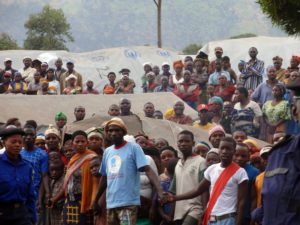
The Democratic Republic of the Congo (DRC) is a country roughly three times the size of Texas, rich in fertile land, minerals, precious metals and potential for green energy initiatives. Despite this, approximately 72% of Congolese people live in extreme poverty. Located in central Africa, the DRC has experienced decades of dictatorship and civil war after gaining its independence.
The DRC enjoyed a brief respite from tension when its civil war ended in 2003, and in 2019, the nation saw its first peaceful transfer of power since independence. Though these developments are promising, many of the nearly 90 million people who call DRC home do not consistently have a home. Here are some facts about homelessness in the Democratic Republic of the Congo that are worth knowing.
Understanding Homelessness and Displacement
Homelessness in the Democratic Republic of the Congo is better understood in terms of displacement. While displaced people may actually have had resources to build a home, they have been forced to move repeatedly, usually suddenly, because of violence or disaster. The Internal Displacement Monitoring Centre estimates that more than five million people are currently internally displaced in the DRC, making up one-tenth of the entire world’s internally displaced people. The Democratic Republic of the Congo is second only to Syria in terms of the magnitude of its displacement crisis.
Several factors overlap to contribute to homelessness in the Democratic Republic of the Congo. Violence by armed groups, ethnic conflicts, natural disasters, joblessness and scarcity of accessible resources all play a significant role in displacement. Any of the more than 120 armed groups operating in the region may clash with one another or the military because of political tensions or illegal mining operations. On the other hand, natural disasters like volcanic eruptions, earthquakes, fires, floods and landslides may combine with these conflicts to cause homelessness.
A significant number of the DRC’s homeless people are refugees from other countries. While Congolese people often leave the DRC for other countries, about half a million displaced people in the DRC are actually foreign refugees themselves. They come mainly from Burundi, Rwanda and the Central African Republic. Many of these refugees have fled disaster, violence or instability in their own home countries. Because of this, patterns of displacement are complex, ever-changing and challenging to track.
Homelessness Among Children
Families are especially impacted by these incessant conflicts, and the instability takes a toll on children. Farming families miss planting and harvesting times due to drought or forced flight from their homes. Other displaced people may be exploited for prostitution or child labor. Similarly, some children whose parents die live unattended in the streets. In the capital of Kinshasa alone, there are about 30,000 “street children” who are at risk for assault and exploitation every day.
To combat these obstacles, between 2015 and 2017, the Danish Refugee Council helped 26,000 school-aged Congolese children return to school and trained over 1,000 teachers and volunteers. The organization has also partnered with UNICEF, UNHCR and other NGOs to provide basic necessities to households, as well as counseling services to children who have experienced trauma.
Organizations Making a Difference
Aid organizations, nongovernmental organizations and intergovernmental organizations do not always have adequate funding and capacity to protect people from homelessness. Without assistance, homeless people may stay with relatives or a host family; those without that option may resort to living in settlements made up of makeshift structures. Others find shelter in more secure displacement camps, such as UNHCR’s South Ubangi Mole refugee camp in northwestern DRC, which has 15,000 inhabitants.
However, none of these situations is totally secure; armed individuals occasionally pass security checkpoints to assault inhabitants of displacement camps. Limited funding, close living conditions and insufficient sanitation do not allow residents of camps to protect themselves. This makes it easier for communicable illnesses like cholera, Ebola and COVID-19 to spread.
Humanitarian aid organizations and data-gathering agencies, along with local volunteers, lead the charge in helping track and mitigate homelessness and its effects. It is no small task to accurately measure the extent of displacement. The DRC’s massive size, porous borders and challenging geography all add to the challenge of this job.
Although the Congolese government does not have its own mechanism for tracking internal displacement, outside organizations present in the DRC have developed tools to assist. The Internal Displacement Monitoring Centre uses the latest technology to compile information from organizations and locals to provide an accurate picture of displacement in the region. Its tools bring together research, real-time reports and satellite imaging to assess where the greatest needs currently are. Some other organizations also assisting displaced people in the DRC are USAID and Amnesty International.
Hope for the Homeless
Though the DRC may still have miles to go, the U.S. House Foreign Affairs Committee recently introduced H. Res 531 and H.R. 1191, a simple resolution and bill, respectively, which are aimed at protecting Congolese children. These measures, along with other existing laws, could help create more accountability for foreign entities who allow exploitation and violence that contribute to displacement and homelessness.
At a recent security council meeting, Leila Zerrougui, Head of the United Nations Organization Stabilization Mission in the Democratic Republic of the Congo (MONUSCO) commended President Tshikesedi’s “reform agenda and improved relations with neighboring countries” as evidence of improvement in the DRC. President Tshikesedi himself seemed optimistic during these talks; he reiterated the gains he has made in securing the country since his election in 2019 and renewing his commitment to securing a brighter future for his people.
– Andrea Kruger
Photo: Flickr

Solving Food Insecurity and Hunger in Australia
Australia’s reputation as a wealthy country often shields underlying issues within the nation. A strikingly large portion of the population experiences hunger on a daily basis, while the federal government falls behind other affluent nations in helping its poor and starving citizens.
Food Insecurity in Australia
Although Australia reduced its poverty rate over the last few years — declining from 16.9% in 2017 to 13.2% in 2019 — the percentage of Australians experiencing hunger has not decreased. This is because food insecurity, rather than insufficient funds, lies at the root of hunger in Australia.
Kathy Radimer, a former CDC epidemiologist, defines food insecurity as the state occurring “whenever the availability of nutritionally adequate and safe foods or the ability to acquire acceptable food in socially acceptable ways is limited or uncertain.” In Australia, sustenance is not necessarily unattainable; rather, food is unsafe and inadequately healthy for much of the nation’s underserved.
In 2019, Foodbank Australia’s hunger report revealed that 21% of Australians experienced food insecurity in the year prior to its survey. In other words, everyone within that 21% had at least one experience running out of food without the means to buy more, due to either circumstantial or financial restraints. More often than not, these are not standalone occurrences: the report also revealed that 30% of food-insecure people go at least one day per week with no food whatsoever.
For women, the numbers are even worse. A staggering 27% of Australian women experienced food insecurity throughout 2019 in comparison with only 18% of men. This difference may arise partly because men experiencing food insecurity typically blame their inability to find work; women, on the other hand, often cite domestic violence, financial abuse and having to raise their children on their own for their food insecurity. Brianna Casey, the CEO of Foodbank Australia, explains: “We hear so many heart-breaking stories from mothers skipping meals so their children can eat to elderly women left on their own feeling isolated because they can’t offer their neighbors or friends so much as a cup of tea or coffee.”
The Impact of COVID-19
Food insecurity was a problem in Australia even before the COVID-19 pandemic. Since the virus began to spread, Foodbank Australia reports that an unprecedented number of Australians — over 1 million — need emergency food. Many of these people now experiencing food insecurity are migrant workers and international students who have recently lost jobs in hospitality and retail.
The federal government has not matched countries of similar prominence and wealth in terms of supporting this upsurge in hunger and food insecurity. International students are not eligible for JobKeeper payments or federal welfare, contrary to a leaked government report that claimed countries like Great Britain, New Zealand and Ireland have given international students access to government resources during the pandemic.
Practical implications of the pandemic have brought other new challenges for food-insecure Australians. Approximately one-fifth of the charities that normally distribute food, such as Shepparton Foodshare and Footprints in the Park, have either closed or significantly decreased aid, thanks to stay-at-home orders and a lack of volunteers. This makes it even more difficult for Australians to receive food in a time of urgent need.
Charity and Aid
Though the COVID-19 pandemic has negatively impacted many organizations that address food insecurity and hunger in Australia, many continue to help. For example, the Friends of Nepal Organization in partnership with the Non-Resident Nepali Association currently provides food for more than 1,000 Nepalese students in Australia, who would currently be food insecure without their intervention.
Large-scale corporations have taken note of the problem as well, with brands such as Arnott’s and PepsiCo donating $350,000 and $400,000, respectively, as well as their products, to Foodbank Australia. The Australian federal government recently began to provide relief, announcing a $16 million bundle to support food relief charities in April 2020. The Australian Defence Force has even been helping pack food at a Foodbank Australia warehouse in Sydney, aiming to combat the upsurge of hunger in Australia.
Despite Australia’s status as a wealthy nation, food insecurity remains rampant. Women suffer the brunt of the problem, sacrificing their small shares of sustenance for their families. The COVID-19 pandemic has worsened hunger in Australia overall, increasing unemployment and weakening food-related charities. Still, many Australian organizations recognize the need to end food insecurity, and they give time and money to try to combat the hardships that food-insecure Australians face.
– Ava Roberts
Photo: Flickr
4 Causes of Homelessness in Grenada
Grenada, known as the Spice Island, gained its independence from the United Kingdom in February 1974. Located in the Caribbean between the Atlantic Ocean and the Caribbean Sea, Grenada has been able to reach upper-middle-income class status. However, despite its efforts to advance as a country, Grenada stills suffers from poverty, which contributes to homelessness.
Reports have stated that Grenada has had over 60,000 homeless people since Hurricane Ivan hit in 2004. Countries like the U.S. have shown involvement and support for Grenada’s progression with its support for Grenadian security forces. However, despite Grenada’s vigorous efforts to advance its security along with its educational and economic systems, homelessness remains a continued problem and concern for Grenadians for the following reasons.
4 Causes of Homelessness in Grenada
Solutions for Homelessness in Grenada
In spite of the causes, in an effort to fight homelessness, The Trinity Foundation emerged in 2017 to assist families in need in Grenada. With this organization, founder Shernette Streete provides hot meals to homeless people around the community with the help of volunteers. The money the organization receives to provide the homeless people of Grenada with hot meals comes primarily from fundraisers and donations whether it be money or food. The goal of the organization is to eventually build stationary soup kitchens.
Along with The Trinity Foundation, aid from Food For The Poor has also contributed to helping those who are homeless. This organization helps provide housing and food for people who are in severe need of resources in the community. Food For The Poor has built over 85,400 homes for families in need of safe shelter.
Grenada is a county that is advancing politically, economically and socially to the best of its ability. There have been many contributions to Grenada throughout the years. However, citizens of Grenada continue to be victims of unaffordable housing, poverty, natural disasters and more, which all lead to homelessness in Grenada. Through The Trinity Foundation’s and Food For The Poor’s continued efforts, hopefully homelessness in Grenada will reduce.
– Amanda Cruz
Photo: Wikimedia Commons
8 Facts About Healthcare in Botswana
Botswana, a country in Southern Africa, has a total population of around 2.3 million people, with women making up 52% of that number. Since gaining independence from Britain in 1966, the country enjoys a stable democracy with an upper-middle-income profile. As of 2017, the gross national income per capita was $16,123. As of 2017, male life expectancy was 67 years, and for females, 71 years.
Tuberculosis, AIDS and other communicable diseases cause a high percentage of the illnesses and deaths in Botswana. Although healthcare in Botswana is improving, the country needs to ramp up its services and improve education. Here are eight facts about healthcare in Botswana.
8 Facts About Healthcare in Botswana
Healthcare in Botswana is improving. According to a study that The Lancet conducted, Botswana rose to the fourth decile in Healthcare Access and Quality Index (HAQ) between 1990 and 2000. Botswana now ranks 122 out of 195 countries, with a HAQ index of 52, having risen from an index of 39.7 in 2000. Botswana’s total spending on health per capita (International $, 2014) was $871, and total spending on health as a percentage of GDP was 5.4%. These facts about healthcare in Botswana show that the country should increase spending on healthcare and improve education about communicable diseases. Accomplishing these goals should improve the general health of its populace.
– Sarah Betuel
Photo: Pixabay
Homelessness in Vietnam
Millions Have Been Lifted Out of Poverty
The country has experienced significant improvement with regards to government openness and transparency, as well as education and human development. Inward investments and focusing on increasing exports have been one of the drivers of this prosperity as well as a focus on reducing poverty in the country. Overall, 30 million people have been lifted out of poverty since 1992. According to a report by the IMF, the government has been investing in housing, education and infrastructure for its vulnerable population, especially ethnic minorities and those who live in remote areas. All of this has contributed to the small percentages of homelessness in Vietnam.
There Are Still Some Challenges
While the numbers are improving for Vietnamese-born homeless children, the population of migrant children is on the rise. It is estimated, in 2006, that the number of these children was around 23,000. Migrant children, according to some reports, are coming from rural areas in Vietnam. They represent a new social phenomenon in Vietnamese society. Many of these children are homeless and their parents use them to generate income. Many of them don’t have identification or any personal papers and are very vulnerable to labor exploitation by those who employ them. Those children cannot attend university or go to the hospital. Sadly, homelessness in Vietnam often exposes them to other risks such as sexual abuse and even certain diseases.
Thankfully, there are those who are working on solutions to tackle homelessness in Vietnam. They are specifically tackling the problem of street children. Do Duy Vi, the Chief Outreach Officer of Blue Dragon Children Foundation, himself used to be a child of the streets. Today he works as a social worker trying to get children off the streets by guiding them to walk the same path he did. He offers them a similar opportunity that he was offered. He helps street children become outreach workers for the Australian funded foundation. During the period of July 1, 2017 to June 30, 2018, the foundation rescued 116 children off the streets and connected 62 of them with their families. It also represented 52 children in child protection cases and provided 107 human trafficking survivors with emergency accommodations. Part of the organization’s job also includes working with government authorities. As such, they helped the 694 government officials become more skilled in countering violations of child rights and trafficking. These are just some of the signs of hope for the destitute in this country.
More Needs To Be Done
It has been reported that 400 organizations and NGOs are helping 15,000 children living in extremely difficult situations. More needs to be done in terms of spreading awareness about the problem and explaining child protection laws that protect youngsters in Vietnam from being exploited for profit.
– Mustafa Ali
Photo: Flickr
Homelessness in the Virgin Islands: 5 Things to Know
5 Facts About Homelessness in the Virgin Islands
Governor Bryan has submitted legislation in order to put an end to the chronic homelessness faced by the citizens of these islands, however, is has been greatly overlooked by Congress. To help the issue of homelessness in the Virgin Islands, constituents should email or call their representatives and senators.
A non-governmental organization that has worked to help the issue of homelessness among youth is the Jermain Defoe Foundation created by English football player Jermain Defoe. It strives to help youth who are poor or are suffering from illness or abuse. This organization was founded because of the lack of attention that was brought to the issues of homelessness and poverty faced by children. It has provided funding and support for the Holy Family Children’s Home, raised funds to build the Rainbow Children’s Home and opened a football academy — all in the Virgin Islands.
– Samira Akbary
Photo: Flickr
4 Reasons for Hunger in Somalia
Out of control locust swarms, intense droughts and heavy flooding have decimated crops and the livelihood of Somalis. These factors increase hunger in Somalia by leaving millions of people food insecure. Currently, 5.7 million people, almost half of Somalia’s population, are food insecure, and 2.7 million people cannot meet their daily food requirements. The country faces constant fighting, recurring locust swarms, droughts and floods – all of which drastically affect hunger in Somalia.
4 Reasons for Hunger in Somalia
With upcoming elections, Somalia has an opportunity to take a step forward into peace and stability. While the locust swarms, drought and floods threaten to undermine Somalia’s future, a stronger government will be able to slow conflict and bring security back, allowing for better management of resources to prevent hunger in Somalia from continuing.
– Zoe Padelopoulos
Photo: Flickr
Homelessness in the Democratic Republic of the Congo
The Democratic Republic of the Congo (DRC) is a country roughly three times the size of Texas, rich in fertile land, minerals, precious metals and potential for green energy initiatives. Despite this, approximately 72% of Congolese people live in extreme poverty. Located in central Africa, the DRC has experienced decades of dictatorship and civil war after gaining its independence.
The DRC enjoyed a brief respite from tension when its civil war ended in 2003, and in 2019, the nation saw its first peaceful transfer of power since independence. Though these developments are promising, many of the nearly 90 million people who call DRC home do not consistently have a home. Here are some facts about homelessness in the Democratic Republic of the Congo that are worth knowing.
Understanding Homelessness and Displacement
Homelessness in the Democratic Republic of the Congo is better understood in terms of displacement. While displaced people may actually have had resources to build a home, they have been forced to move repeatedly, usually suddenly, because of violence or disaster. The Internal Displacement Monitoring Centre estimates that more than five million people are currently internally displaced in the DRC, making up one-tenth of the entire world’s internally displaced people. The Democratic Republic of the Congo is second only to Syria in terms of the magnitude of its displacement crisis.
Several factors overlap to contribute to homelessness in the Democratic Republic of the Congo. Violence by armed groups, ethnic conflicts, natural disasters, joblessness and scarcity of accessible resources all play a significant role in displacement. Any of the more than 120 armed groups operating in the region may clash with one another or the military because of political tensions or illegal mining operations. On the other hand, natural disasters like volcanic eruptions, earthquakes, fires, floods and landslides may combine with these conflicts to cause homelessness.
A significant number of the DRC’s homeless people are refugees from other countries. While Congolese people often leave the DRC for other countries, about half a million displaced people in the DRC are actually foreign refugees themselves. They come mainly from Burundi, Rwanda and the Central African Republic. Many of these refugees have fled disaster, violence or instability in their own home countries. Because of this, patterns of displacement are complex, ever-changing and challenging to track.
Homelessness Among Children
Families are especially impacted by these incessant conflicts, and the instability takes a toll on children. Farming families miss planting and harvesting times due to drought or forced flight from their homes. Other displaced people may be exploited for prostitution or child labor. Similarly, some children whose parents die live unattended in the streets. In the capital of Kinshasa alone, there are about 30,000 “street children” who are at risk for assault and exploitation every day.
To combat these obstacles, between 2015 and 2017, the Danish Refugee Council helped 26,000 school-aged Congolese children return to school and trained over 1,000 teachers and volunteers. The organization has also partnered with UNICEF, UNHCR and other NGOs to provide basic necessities to households, as well as counseling services to children who have experienced trauma.
Organizations Making a Difference
Aid organizations, nongovernmental organizations and intergovernmental organizations do not always have adequate funding and capacity to protect people from homelessness. Without assistance, homeless people may stay with relatives or a host family; those without that option may resort to living in settlements made up of makeshift structures. Others find shelter in more secure displacement camps, such as UNHCR’s South Ubangi Mole refugee camp in northwestern DRC, which has 15,000 inhabitants.
However, none of these situations is totally secure; armed individuals occasionally pass security checkpoints to assault inhabitants of displacement camps. Limited funding, close living conditions and insufficient sanitation do not allow residents of camps to protect themselves. This makes it easier for communicable illnesses like cholera, Ebola and COVID-19 to spread.
Humanitarian aid organizations and data-gathering agencies, along with local volunteers, lead the charge in helping track and mitigate homelessness and its effects. It is no small task to accurately measure the extent of displacement. The DRC’s massive size, porous borders and challenging geography all add to the challenge of this job.
Although the Congolese government does not have its own mechanism for tracking internal displacement, outside organizations present in the DRC have developed tools to assist. The Internal Displacement Monitoring Centre uses the latest technology to compile information from organizations and locals to provide an accurate picture of displacement in the region. Its tools bring together research, real-time reports and satellite imaging to assess where the greatest needs currently are. Some other organizations also assisting displaced people in the DRC are USAID and Amnesty International.
Hope for the Homeless
Though the DRC may still have miles to go, the U.S. House Foreign Affairs Committee recently introduced H. Res 531 and H.R. 1191, a simple resolution and bill, respectively, which are aimed at protecting Congolese children. These measures, along with other existing laws, could help create more accountability for foreign entities who allow exploitation and violence that contribute to displacement and homelessness.
At a recent security council meeting, Leila Zerrougui, Head of the United Nations Organization Stabilization Mission in the Democratic Republic of the Congo (MONUSCO) commended President Tshikesedi’s “reform agenda and improved relations with neighboring countries” as evidence of improvement in the DRC. President Tshikesedi himself seemed optimistic during these talks; he reiterated the gains he has made in securing the country since his election in 2019 and renewing his commitment to securing a brighter future for his people.
– Andrea Kruger
Photo: Flickr
7 Realities of Homelessness in Pakistan
7 Realities of Homelessness in Pakistan
Even with an abundance of natural resources, Pakistan still suffers from a large homeless population. The country is working to better their living standards. Natural disasters and the poverty index are key to understanding the factors involved in the displacement of families living in poverty. These seven realities of homelessness in Pakistan bring context to the issue. They also highlight where the country and organizations are putting forth efforts for change.
– Sumeet Waraich
Photo: Flickr
Homelessness in Myanmar
Myanmar, formerly known as Burma, is a diverse nation in Southeast Asia with more than 100 different ethnic groups in its population of 53 million. The nation has recently been liberated from an oppressive military junta that ruled the country from 1962 to 2011. Myanmar’s first democratic election in 2015 marked a critical turning point for the country. Amid this historic transition, Myanmar has multiple ongoing conflicts, and the country struggles with economic mismanagement. This unrest and financial difficulties may hinder the country’s development and leave a large proportion of the population in poverty, contributing to homelessness.
Homelessness in Myanmar
Even though poverty has declined substantially in Myanmar, about a quarter of Myanmar’s population still lives in poverty, and many among them are at risk of going homeless. According to the government’s 2014 census survey on population and housing, the number of people living in collective quarters or experiencing homelessness in Myanmar nears one million, or about two percent of the population at the time of the survey. Aside from the one million homeless people living in unstable living situations, there are 2.85 million others who have housing but whose living conditions are poor and whose units are built of easily damaged materials.
Fueled by Economic Growth
Since the country’s independence, Myanmar is attracting foreign investments that are transforming the country. However, the rush of investments has inadvertently fueled the property boom in commercial hubs like Yangon, raising the rents and causing increased homelessness. In 2014, the land prices had risen by 50 percent, and residential tenants had to pay up to 60 percent more rent compared to just two years prior. As the rent increases, many families are losing their homes and have to live on the streets. A new housing development created by the government also caused many people living on the outskirts of town to be forcibly evicted in 2014. Some of the affected households accepted the relocation deals, while many others rebuilt makeshift huts in areas nearby and live in anxiety of another eviction.
Displaced by Natural Disasters
Myanmar is one of the most vulnerable countries to frequent natural disasters, including cyclones, earthquakes, flooding, and landslides. These disasters are accompanied by high social costs that significantly affect the poor and the most vulnerable population. In June 2018, a torrential rainfall left up to 7,400 people in Myanmar’s southern state homeless. The flood destroyed pagodas, houses, schools, and other public infrastructures that created $474,000 in damages. Later in August 2018, landslides and flood water damaged at least 100,000 acres of farmland and washed away the homes of as many as 140,000 people in southeastern Myanmar. Floods caused by monsoon rains hit Myanmar annually, and the damages these natural disasters cause are devastating. In 2015, Myanmar experienced its most destructive floods that ruined 15,000 homes and displaced upwards of 1.7 million people.
Government Efforts
The chief minister of the Yangon region promised to accommodate the homeless population in Myanmar by establishing a housing board modeled after Singapore’s successful Housing and Development Board. The plan includes developing low-cost housing projects and aims to sell apartments to people in Yangon for monthly installments for a period of 20 to 25 years. The government is also receiving support from different international organizations to enhance its capacity to respond to natural disasters that displace thousands of families annually. In 2017, the World Bank approved the Myanmar Southeast Asia Disaster Risk Management Project that will contribute $116 million in financing efforts that reduce the impact of natural disasters, increase the resilience of facilities, and enhance the government’s capacity to respond to emergencies across the country.
In addition to governmental efforts, many international NGOs are becoming increasingly active in Myanmar to provide emergency relief and support the country’s long-term development. Plan Myanmar is one of many organizations that is working to raise awareness of disaster risks in communities to enhance their preparedness and capacity to respond to disasters through education. The organization works to integrate Disaster Risk Reduction (DRR) into the education system, and it is currently working with 96 schools in Myanmar to introduce DRR activities to help children as well as adults to better prepare for the inevitable natural disasters.
The industrialization that comes with the development of the country as well as annual disasters, both natural and man-made, are exacerbating the issue of homelessness in Myanmar. With the help of the international community, the government is making efforts to relieve the issue. Myanmar is developing more low-cost housing and enhancing its capacity to respond to natural disasters in order to address homelessness.
– Minh-Ha La
Photo: Flickr
5 Facts About Hunger in the Dominican Republic
5 Facts About Hunger in the Dominican Republic
Final Remarks
Addressing hunger in the Dominican Republic requires focused humanitarian efforts. While hunger has long been a challenge, history has demonstrated that it can be alleviated through targeted action. The impact of hunger is particularly severe on the region’s children, who are most vulnerable to the effects of malnutrition. By prioritizing the issue of hunger and malnutrition today, we can pave the way for a more promising future for the Dominican Republic in the post-COVID-19 era.
– Sophia Gardner
Photo: Flickr
Updated: September 27, 2024