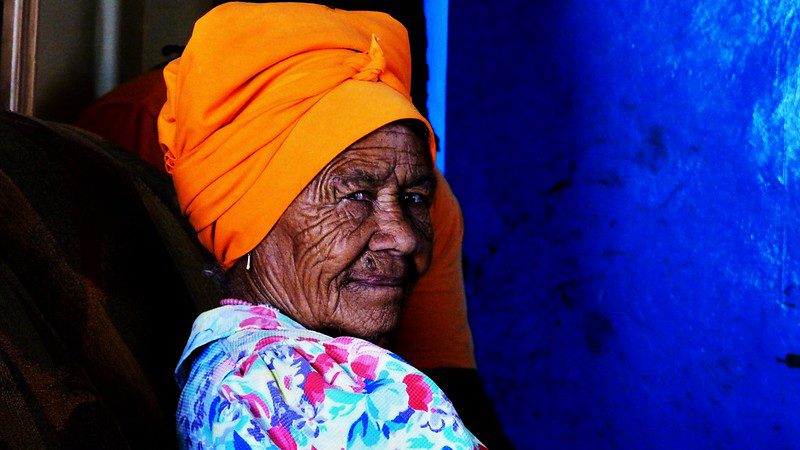
 Although Namibia is an upper-middle-income country, it still struggles with a high rate of poverty and undernourishment. According to the World Food Program, 26.9% of the country’s population lives in poverty. In addition, according to the U.N., 430,000 people are in desperate need of food. Namibia, since its independence, has seen good economic growth. The country’s GDP grew from $3.8 billion in 2000 to $12.3 billion in 2019. However, hunger in Namibia remains a growing issue.
Over the past years, the agriculture economy in Namibia has suffered from droughts. The reduction of produce from the food industry is causing hunger in Namibia as families struggle to grow enough food to feed their families. Hunger in Namibia is leaving many children and families malnourished which significantly affects the progress of the nation. Still, both the government and its partners are working to address hunger in Namibia.
Who Is Affected?
Over the past decade, Namibia has faced a lot of droughts leaving low-income-earners struggling to make a living. With a population of approximately 2.4 million people in 2018, 18% (430,000) of the country’s people face severe acute food insecurity and need humanitarian aid.
According to a government report, the country’s agriculture sector, which is partially powered by smallholder farmers, provides for most of the country’s population. Many families who are low income find it difficult to buy food because of increasing food prices.
Malnutrition in Namibia is also affecting children. According to the World Food Program, approximately 23% of children in Namibia are stunted in their growth because they do not eat enough nutritious food. Stunting can have a dangerous effect on the development of children and can even influence their behaviors as they grow older.
Causes of Hunger in Namibia.
In 2019, because of the lack of rain, Namibia food production, both its crops and livestock, fell. Namibia lost 60,000 tons of crops and 60,000 livestock. The two main crops that are planted are maize, which declined in production by 26% between 2018 and 2019, and millet, which declined by 89%. The lack of rain in Namibia hit cereal production the hardest.
The most affected regions of the country are Northwestern parts and the Southern provinces. Due to losses in sales from their livestock, some farmer’s households are finding it difficult to purchase food from markets. Currently, families in 14 regions in Namibia spend more than 50% of their income on food. The cause of drought in Namibia has been attributed to climate change, which is said to be only getting worse.
What Is Being Done?
To help fight against the hunger crisis, the government incorporated the Hunger Initiative in the Harambee Prosperity Plan in August 2016, a plan which is in action through 2020. The plan focuses on 5 different pillars: Effective governance, economic advancement, social progression, infrastructure development, international relations and cooperation. The fight against hunger falls into the Social Progression sector. According to a government report in 2019, Namibia’s government is addressing the country’s hunger crisis by making food banks available in 7 different regions in the country. These food banks reach 17,260 food-insecure households. To deliver food the government relies on unemployed youth who are part of Street Committees.
Government aid provided to people who are food-insecure varies. For example, between 2016 and 2017 the government spent $304 million on its drought program but only $5 million in 2017-2018 because the impact of the drought was lower. To provide malnourished children with food, the government uses a program called the School Feeding Programme. In 2017 they fed 377,521 students. According to the government, providing students with food helps limit the school dropout rate among students who live in poverty. The World Food Program is also helping the government fight malnutrition in children by providing Namibia with technical assistance; the group also helps the country with both policy and strategic guidance.
Furthermore, to help farmers, the government work also extends to provide them with 162 tractors to aid in the cost of plowing for communal farmers.
Although Namibia faces the constant threat of drought, the government and its partners are dedicated to providing nutritious food to many families in need.
– Joshua Meribole
Photo: Flickr

8 Facts About the Fight Against HIV in Eswatini
Swaziland or Eswatini, as it was officially renamed in 2018 by King Mswati III, is a tiny landlocked country in Southern Africa. It has the highest prevalence of HIV in the world, with the disease infecting about 31% of its sexually-active population. In 2018, HIV infected about 8,000 new adults and caused approximately 3,000 new fatalities. However, recent data suggests that the country has found ways to slash the new rate of infections by almost 45%. Here are eight facts about the fight against HIV in Eswatini.
8 Facts About Eswatini’s Fight Against HIV
It is clear that Eswatini has made great strides in the fight against HIV in recent years. However, the high HIV prevalence indicates the government needs to address significant problems such as poverty, gender inequality and risky cultural practices, which contribute to a high risk of HIV infection. Moving forward, a greater focus must be placed on combatting HIV in Eswatini.
Humanitarian Aid for the Rohingya Refugee Crisis
Many organizations and international agencies are providing aid and support to the Rohingya refugee crisis. In addition to improving access to basic needs such as food, water, and shelter, UNICEF and the UNHCR have recognized access to education as a top priority.
The UNHCR
The United Nations High Commissioner for Refugees (UNHCR) is supporting the refugee population with basic needs such as food, water, shelter, and health services, including mental health resources. One of the largest challenges that the refugee camps face is flooding from annual monsoons in the Cox Bazar region. The UNHCR was able to relocate over 24,000 Rohingya and provide more than 150,000 monsoon preparation kits in anticipation of the monsoon season. These efforts continued through 2019 with the additional construction of 50 miles of infrastructure including bridges and roads and the distribution of post-disaster kits.
The UNHCR also provides first aid training for refugees and has trained more than 1,200 individuals. They also lead sessions to raise awareness about emergency preparedness within communities and have reached more than 80,000 Rohingya through these programs. Providing the Rohingya with access to education is one of the main goals for the UNHCR. Many children were not receiving any formal education in Myanmar due to discriminatory policies. The UNHCR has reached 502,000 refugee children with some form of education by building 1,602 learning areas and bringing 1,251 teachers to the area.
UNICEF
In collaboration with the government of Bangladesh, UNICEF has recently launched a plan to increase access to education for Rohingya refugee children in the Cox Bazar region. The curriculum will be tested on 10,000 children in grades six through nine during the first half of 2020. From there, it will expand for all ages. Education is a key factor to help the integration of the Rohingya people into society in Myanmar. Refugees are already at a significant disadvantage as a result of discrimination and consequential displacement. They lack basic resources such as nutritious food, proper housing and medical services. Access to education can help Rohingya refugees to reintegrate into society instead of further exacerbating disparities. It can increase their chances of finding employment and decrease poverty rates.
UNICEF has also been running informal education programs that have reached 315,000 refugee children in 3,200 learning centers. Subjects studied include English and Burmese language, Math and life skills or science depending on the level. The majority of children are still at levels one and two which are comparable to pre-primary to second-grade level. UNICEF has programs in place for adolescent education as well which include vocational and life skills. Education can tackle the Rohingya refugee crisis by reducing the chances of children being exposed to trafficking, child marriage and abuse as well as empowering refugee children.
Southeast Asian Governments
Two boats carrying hundreds of Rohingya refugees set out in February 2020 but were stuck at sea for months after setting out to find refuge. Many countries have denied them entry, leaving the refugees stranded without sufficient supplies of food or water. Bangladesh has taken in over one million Rohingya refugees since the violence and persecution began in Myanmar. However, in April 2020 the Foreign Minister Abdul Momen stated that Bangladesh would not allow any more Rohingya into the country. Momen cited the COVID-19 pandemic, as well as the numerous refugees already in Bangladesh, as reasons for this decision.
Other Southeast Asian governments such as Malaysia and Thailand have also failed to assist the refugees. The Malaysian officials who initially found one of the boats attempted to bring it back to international waters but about 50 refugees were able to swim to shore and are currently detained in Malaysia. The UNHCR has requested access in order to support these refugees with humanitarian aid with no response from Malaysia.
Nearby governments should cooperate to provide assistance to Rohingya refugees in their own countries. They need to provide resources such as health services and basic needs, especially during a global pandemic. These governments should be cooperating with international agencies to address the Rohingya refugee crisis in Myanmar.
– Maia Cullen
Photo: Human Rights Watch
5 Technologies Improving Healthcare in Rural Areas
5 Technologies Improving Healthcare in Rural Areas
Because rural areas are difficult to reach, healthcare is often less accessible. Travel costs are a barrier to healthcare, particularly for people in poverty. However, innovative technological advancements like these continue to improve the quality, cost, and accessibility of healthcare in rural areas.
– Karina Wong
Photo: Flickr
International Response to COVID-19 in Belize
While the global community has certainly experienced unprecedented hardship in the wake of COVID-19, many organizations worldwide have stepped up to offer help where it is needed. Belize has been a recipient of such aid, having recently experienced a medical supply shortage in all geographic regions. In response to these limitations, as well as shortages of trained response teams, donations of medical equipment, testing kits and training programs have been offered by various countries and international groups. Below are four ways the international community has responded to COVID-19 in Belize.
4 Ways the International Community Has Responded to COVID-19 in Belize
Efforts such as these are making progress against the spread of COVID-19 in Belize, and demonstrate the benefits of global cooperation amid a devastating pandemic.
– Jazmin Johnson
Photo: Unsplash
The Role of Women During COVID-19
Women at Home
Worldwide, almost 22% of women care for their families through unpaid labor, while only about 2% of men provide this kind of care. As caregivers at home, women play a crucial role in maintaining the safety of their families and communities. This task goes well beyond managing others’ physical health; women cook, clean, supervise children and elders and gather resources like water and wood. In addition, with lockdown measures, kids and other family members are home more often, increasing demands on these women.
Women in Healthcare
During the COVID-19 pandemic, women have taken the lead in providing medical care for patients. Because women make up 70% of the global healthcare and social services industries, many women have now become essential workers and hold the huge task of caring for patients, often at the expense of their own safety.
Healthcare workers like Dr. Entela Kolovani of Albania have been treating patients day and night since the pandemic hit in March. Women in healthcare are juggling several roles as they take care of those who are sick while trying to avoid endangering their families. Women are working longer hours and facing new challenges every day. In describing her nurses, Dr. Kolovani said, “Their work never ends, from making up the beds of patients, to performing therapies, taking tests and filling in documents. I am so deeply grateful to them.”
Women in Agriculture
The role of women during COVID-19 is not just limited to the healthcare field. Globally, nearly one out of every three women are employed in the agricultural industry; women in rural settings have inspired their communities to take safety precautions and earn income through farming. For example, in northwestern China, women in rural villages are ensuring compliance with social distancing practices are met and learning the trade of pig farming to earn extra income for their families. One such woman, Yan Shenglian, is training other women in this trade and teaching them the importance of women in the agricultural sector during COVID-19.
In addition, women in Cote d’Ivoire worked with UNICEF and the World Food Programme to spread health and sanitation measures to other women farmers. Along with the work already being done to encourage efficient farming practices, women in these rural villages are prioritizing food security and safety during COVID-19.
Women as Refugees
Of those affected by the pandemic, refugees have been disproportionately impacted. Nearly 80% of refugees are concentrated in low-income countries, where access to proper sanitation and basic resources is limited. As nearly half of all refugees are girls and women, the effect of COVID-19 on women refugees is especially high. However, these individuals have also stepped up to fight the pandemic. In partnership with the U.N., Rohingya women in the world’s largest refugee camp have made more than 50,000 masks for distribution. This initiative involved almost 50 families with female breadwinners, allowing these women to bring additional income to their families and teaching lasting leadership skills.
Looking Forward
Women have stepped up to lead the fight against the pandemic in a plethora of ways. They are keeping communities safe while generating income. These are just a few examples of the many critical roles adopted by women during COVID-19; there is no doubt that their presence will continue to be instrumental throughout the pandemic and beyond.
– Anita Durairaj
Photo: Unsplash
5 Ways Let Us Learn is Improving Girls’ Education in Madagascar
UNICEF has been working on an initiative in partnership with Zonta International called Let Us Learn. The purpose of Let Us Learn is to improve girls’ education in Madagascar by combatting poverty and violence. According to the World Bank, Madagascar has one of the highest rates of gender-based violence for women between the ages of 15 and 49. About one-third of women in that age group experience gender-based violence. In 2005, the Japan International Cooperation Agency reported that women in Madagascar are statistically more likely to be unemployed than men, Furthermore, illiterate women living in rural areas are the most impacted by poverty.
Let Us Learn has been working to fight gender-based violence and increase girls’ access to education. The integrated school program, which is just one part of the continuing project, will wrap up in 2020. Here are five ways Let us Learn is accomplishing its goals.
5 Ways Let Us Learn Is Improving Girls’ Education in Madagascar
Madagascar has one of the highest rates of gender-based violence. Women, especially those in rural areas, are also more impacted by poverty than other groups. Through the Let Us Learn project, UNICEF and Zonta International are making tangible strides to address barriers to girls’ education in Madagascar. As a result of these initiatives, thousands of girls in Madagascar can hope for a brighter future.
– Melody Kazel
Photo: Flickr
Hunger in Namibia: What You Need to Know
Over the past years, the agriculture economy in Namibia has suffered from droughts. The reduction of produce from the food industry is causing hunger in Namibia as families struggle to grow enough food to feed their families. Hunger in Namibia is leaving many children and families malnourished which significantly affects the progress of the nation. Still, both the government and its partners are working to address hunger in Namibia.
Who Is Affected?
Over the past decade, Namibia has faced a lot of droughts leaving low-income-earners struggling to make a living. With a population of approximately 2.4 million people in 2018, 18% (430,000) of the country’s people face severe acute food insecurity and need humanitarian aid.
According to a government report, the country’s agriculture sector, which is partially powered by smallholder farmers, provides for most of the country’s population. Many families who are low income find it difficult to buy food because of increasing food prices.
Malnutrition in Namibia is also affecting children. According to the World Food Program, approximately 23% of children in Namibia are stunted in their growth because they do not eat enough nutritious food. Stunting can have a dangerous effect on the development of children and can even influence their behaviors as they grow older.
Causes of Hunger in Namibia.
In 2019, because of the lack of rain, Namibia food production, both its crops and livestock, fell. Namibia lost 60,000 tons of crops and 60,000 livestock. The two main crops that are planted are maize, which declined in production by 26% between 2018 and 2019, and millet, which declined by 89%. The lack of rain in Namibia hit cereal production the hardest.
The most affected regions of the country are Northwestern parts and the Southern provinces. Due to losses in sales from their livestock, some farmer’s households are finding it difficult to purchase food from markets. Currently, families in 14 regions in Namibia spend more than 50% of their income on food. The cause of drought in Namibia has been attributed to climate change, which is said to be only getting worse.
What Is Being Done?
To help fight against the hunger crisis, the government incorporated the Hunger Initiative in the Harambee Prosperity Plan in August 2016, a plan which is in action through 2020. The plan focuses on 5 different pillars: Effective governance, economic advancement, social progression, infrastructure development, international relations and cooperation. The fight against hunger falls into the Social Progression sector. According to a government report in 2019, Namibia’s government is addressing the country’s hunger crisis by making food banks available in 7 different regions in the country. These food banks reach 17,260 food-insecure households. To deliver food the government relies on unemployed youth who are part of Street Committees.
Government aid provided to people who are food-insecure varies. For example, between 2016 and 2017 the government spent $304 million on its drought program but only $5 million in 2017-2018 because the impact of the drought was lower. To provide malnourished children with food, the government uses a program called the School Feeding Programme. In 2017 they fed 377,521 students. According to the government, providing students with food helps limit the school dropout rate among students who live in poverty. The World Food Program is also helping the government fight malnutrition in children by providing Namibia with technical assistance; the group also helps the country with both policy and strategic guidance.
Furthermore, to help farmers, the government work also extends to provide them with 162 tractors to aid in the cost of plowing for communal farmers.
Although Namibia faces the constant threat of drought, the government and its partners are dedicated to providing nutritious food to many families in need.
– Joshua Meribole
Photo: Flickr
End Dog Rabies Worldwide
Global Impacts of Rabies
The World Health Organization (WHO) has reported that dog bites cause 99% of rabies cases in humans. According to the WHO, about 59,000 people die yearly from rabies, and approximately 40% of those deaths are children. Many of these children live in poor, rural areas in Asia and Africa. The WHO wrote that the vaccination of dogs combined with dog-bite prevention could eliminate rabies in dogs worldwide.
A 2018 study examined the connections between poverty, rabies knowledge, healthcare and dog ownership. The study looked at data from two specific countries: Uganda and Cameroon. Overall, the study showed a correlation between communities in poverty and fewer dogs being owned. In Uganda, results showed that poorer communities had lower vaccination coverage rates for dogs, meaning fewer dogs were vaccinated. Communities in Cameroon showed a cost-barrier to accessing post-bite care, revealing that poverty can be a roadblock to receiving treatment for dog bites.
Low dog vaccination rates in poorer communities and poverty as a barrier to treatment are not issues unique to Uganda and Cameroon. The GARC reported that poorer communities in general, mostly in Africa and Asia, tend to have less effective programs for controlling rabies.
Solutions
The GARC has been working to end dog rabies worldwide for many years. Recently, they have made steps towards eliminating rabies in dogs and, thereby, the transfer of rabies from dogs to humans.
According to the GARC and independent studies, rabies has been shown to have a greater impact on those in poor communities. The vast majority of rabies transmission to humans comes from dogs, and the WHO has determined vaccination and the prevention of bites as a potential strategy to eradicating the disease. The GARC has been working to end dog rabies worldwide through awareness, education, studies and strategic plans. While thousands of people contract rabies yearly, the GARC, along with other agencies, are hard at work to decrease the impact of this disease.
– Melody Kazel
Photo: Flickr
Improving Healthcare in Myanmar
Myanmar, also known as the Union of Burma, is a parliamentary republic in Southeast Asia. Once a formal colony of the British Empire, Myanmar gained its independence from the British Commonwealth in 1948. Shortly after, the Burmese government became a military dictatorship. Composed of multiple ethnic groups, independence has given rise to some armed conflicts in the mountainous border regions. These racial tensions have also led to ongoing accusations against the Burmese government for the ethnic cleansing of the Rohingya people, the Muslim ethnic minority of Myanmar.
Healthcare in Myanmar demands the attention of the Myanmar government. One of the worst healthcare systems throughout the world, the need for improvement in the system is paramount. This article will discuss the current state of healthcare, as well as the steps the government has taken to improve its healthcare system.
The Current State of Healthcare
The World Health Organization’s 2000 report “Measuring Overall Health System Performance for 191 Countries” ranked 191 countries’ health system performance by the health systems performance index. In the report, Myanmar received 0.138/1, which ranked it the second-worst performing healthcare system in the world, only exceeded by Sierra Leone. Many who criticize the poor state of healthcare in Myanmar hold Myanmar’s government responsible. In 2012, for example, the government spent $2.97 billion, 3.71% of the country’s GDP, in military spending, while only 2.32% of the country’s GDP was allocated to healthcare for its citizens.
This low spending on healthcare means that getting necessary medical treatment is a challenge for many people in Myanmar. For those who seek medical attention, the majority of the incurred medical fees are out-of-pocket expenses. Although the Myanmar government implemented an equal-opportunity healthcare scheme, the limitation of medical coverage is apparent. In 2012, for example, 92.7% of total healthcare expenditures in Myanmar were out-of-pocket expenses. The financial burden of medical treatment can be a significant barrier for the impoverished.
Furthermore, Myanmar is facing a shortage of medical professionals. A 2019 study found that 13 out of 15 Myanmar regions were below the WHO recommended ratio of 1 doctor per 1,000 citizens. While the number of health workers has been increasing, the number of medical doctors has gradually declined since 2006. This disparity widened when researchers compared the state of healthcare between rural areas and urban areas.
Recent Improvements
There are signs of improvement in Myanmar’s healthcare, however. The overall life expectancy in Myanmar is increasing at a steady rate. Life expectancy in Myanmar, which was 60 in 2000, increased to 66.8 years old in 2018. The Myanmar government’s increased healthcare spending may have contributed to this increase, as the government’s healthcare expenditure rose from 2.321% in 2012 to 4.659% in 2017. Myanmar’s Ministry of Health’s Vision 2030 aims to further improve funding, facilities, medical supplies, health personnel and service capacity by 2030.
Healthcare in Myanmar is characterized by a lack of government funding and unequal distribution of health workers among Myanmar’s populace. These persistent issues significantly impact the impoverished, who are less likely to be able to afford out-of-pocket medical expenses. Fortunately, the reformed Myanmar government is aware of the issues and has committed to improving the country’s healthcare system.
– YongJin Yi
Photo: Flickr
Getting To The Root Of Poverty: The Relationship Between Poverty and Discrimination
Researchers, nonprofits and governmental organizations have put much time and effort into understanding the circumstances that lead to poverty. These causes of global poverty include lack of education, inadequate healthcare, climate issues, inequality, poor sanitation, lack of government infrastructure and several others. Despite the various individual causes that lead to poverty, the European Anti-Poverty Network summarizes these causes in its outline defining poverty and its roots. The European Anti-Poverty Network states that “poverty is a consequence of the way a society is organized.” This statement suggests that poverty is not predestined, coincidental or a result of individual lazinesses. Instead, poverty is the direct result of errors in the systems that govern people.
If we look closely at the specific root causes of poverty, it becomes evident that a common factor among these causes is inequality, marginalization and discrimination. Inequality does not happen accidentally but becomes the norm in society after a culture of discrimination has been reinforced over long periods of time.
Discrimination is One of The Primary Causes of Poverty
Many researchers directly cite discrimination, marginalization and inequality as root causes of poverty. More specifically, racial discrimination, xenophobia and gender-based discrimination have been named as individual contributors to poverty. However, various forms of discrimination also feed into other causes of poverty. For example, lack of education is a commonly cited cause of poverty. Marginalized people in particular are the ones who primarily lack access to an adequate education. There are 625 million children around the world that are of age to attend school; however, 110 million do not attend school. Of the 110 million children worldwide that do not attend school, two-thirds are girls – a highly discriminated demographic.
Additionally, researchers found that Black Americans from high-income backgrounds still did not perform as well as their white counterparts in school because of the negative impacts that legacies of racial inequality have on self-esteem. These results were not only seen in the USA but also in Black students in Israel and the United Kingdom. Similar disparities exist in healthcare systems and government institutions. Thus, to begin to address global poverty effectively, it is necessary to address discrimination. Here are four nonprofit organizations that are fighting global poverty by addressing social inequalities and marginalization.
Four Organizations Fighting Poverty By Addressing Inequality
As advocates, humanitarians and governments around the globe actively strive to end poverty, it is imperative to address the root causes of poverty. Although there are a variety of factors perpetuating poverty, many of these factors share the common denominator of discrimination. In order to fight poverty around the world, individuals and organizations must be willing to address discrimination. These four organizations are examples of nonprofits doing precisely that.
– Tiara Wilson
Photo: Pixabay