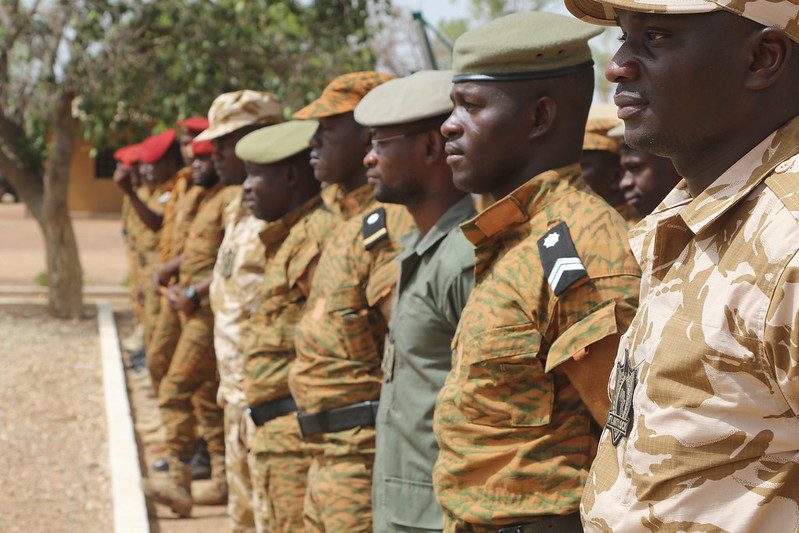
Over the last couple of years, the crisis of displacement in Burkina Faso, a small country in western Africa, has become the most pressing refugee situation on Earth. Violence and lack of resources have forced many into displacement and extreme poverty.
Astronomical Growth of the Crisis
The Displacement in Burkina Faso has been called the current fastest growing crisis of its kind—for the last two years, attacks carried out by armed groups have ravaged villages, causing hundreds of thousands of people to flee their homes. Since January of 2019, the number of people displaced in Burkina Faso, which has a total population of 18.6 million, has risen from 50,000 to around 920,000 as of July 2020. The United Nations has recognized that this is the fastest growing population of displaced people on the planet and that activists need to put their resources to work in Burkina Faso as quickly as possible.
Stable But Struggling Economy
Burkina Faso’s people do not benefit from its relatively stable macroeconomic status—Burkina Faso’s economy relies primarily upon agriculture, and though this sector has seen a decline, the rising service sector has allowed the country’s GDP growth to remain 6% in 2019. Yet, Burkina Faso’s people remain largely impoverished: over 40% of its population lives below the poverty line.
The displacement crisis, of course, has not helped the matter. It has caused over 2,000 schools to close, among other major losses in massive fields like medicine. 11,000 teachers felt the impact of this mass closing, and around 300,000 students found themselves without an education.
Lack of Governmental Regulation
Authorities do not know the extent of the situation—the armed groups terrorizing Burkina Faso, some linked with the Islamic State and al-Qaeda, have caused the administrative presence in the northern and eastern regions of the country to virtually disappear. Official regulation throughout the nation has deteriorated as a result. Police and other representatives of the state have fled these areas, which have unofficially fallen to terrorist control.
Moreover, the administration of Burkina Faso has resorted to execution without trial; 60 such executions occurred in 2019 alone. These circumstances make it difficult to say exactly how many lives have been affected by this crisis.
Humanitarian Organizations Strain to Help
The International Organization for Migration (IOM) and other humanitarian organizations need major funding to solve this issue: In response to the massive spread of displacement in Burkina Faso, IOM has begun a project to provide shelter and other resources to displaced people. Through their efforts, IOM delivered on its promise to more than 3,000 people in Burkina Faso. IOM also managed to provide psychological care for over 5,000 displaced people.
However, most of all, IOM needs outside funding to expand the scope of its aid. In June of 2020, IOM appealed for $37.8 million, hoping to extend aid to 460,000 displaced people in Burkina Faso and other neighboring countries.
Displacement and COVID-19
Burkina Faso needs aid for its COVID-19 response as well. The pandemic and displacement in Burkina Faso have created a dual-threat situation for the nation’s people. However, officials at IMO warn that both issues require the world’s attention. Neither of the relief efforts should suffer for the other’s sake—the rise of one issue inevitably worsens the other.
IMO has dedicated itself to solving both problems. They have provided medical supplies and raised awareness, helping over 3,282 displaced people become more aware of the pandemic situation.
Burkina Faso faces an issue that perhaps lies outside the bounds of what its government can overcome alone. Humanitarian agents around the globe need to immediately provide resources in order to alleviate the suffering in this once prosperous nation by helping it fight COVID-19 and its growing displacement crisis.
– Will Sikich
Photo: Flickr

Off-Grid Solar Technology Reduces Energy Poverty
Off-Grid Solar Technology
Currently, there are 840 million people who lack access to electricity and 573 million of those people reside in Sub-Saharan Africa. While 153 million people a year have been gaining electricity, remote areas have proven to be especially hard to reach. In areas such as Sub-Saharan Africa that are far from cities, off-grid solar technology is being used to generate electricity where it was previously unobtainable. Additionally, off-grid solar technology is now also being used to power water pumps, irrigation systems and refrigeration, making off-grid technology more promising than ever to solve energy poverty.
Bboxx
One company that has made extraordinary strides in increasing energy access is Bboxx. Bboxx’s mission is to aid developing countries through their decentralized solar-powered systems. To do so, they design, create, distribute and manage this off-grid solar technology. So far, Bboxx has positively impacted over one million people. It has allowed 350,000 solar home systems to be installed.
The technologies Bboxx creates are safer and cheaper than the kerosene-powered systems traditionally used in homes without electricity. Bboxx estimates the switch to using their clean, solar energy saves customers $200 a year. Additionally, it allows customers to pay for only what they actually consume, which is a cost-effective system that is monetarily achievable for its targeted customers.
To make their company as accessible and effective as possible, they created a system called Bboxx Pulse. This platform makes it easy for a utility company to monitor and serve all Bboxx customers. This even applies to the customers who live in rural areas that were previously hard to communicate with. To implement this and all of their other technology, Bboxx has formed partnerships with some of the countries’ governments it operates in. Doing this ensures that its technology is stable and supported.
Solar Electric Light Fund
Another organization dedicated to providing energy to communities in need is the Solar Electric Light Fund (SELF). It uses solar projects to increase healthcare, education, water and food security and economic development in under-resourced areas globally.
One of SELF’s programs is installing solar-pump water stations to areas that contain heavily contaminated water. It is currently working to install 24 of these stations in the Kalalé District of Benin in West Africa. This will provide clean water to 82,000 people. This is a life-changing development for this community, as 19% of deaths in this area are due to contaminated water. Access to clean water will drastically improve overall health in the area. It will also increase the safety of girls and women who usually had to travel long distances to obtain water for their families.
Additionally, SELF has extensively worked on installing solar-powered technologies in Haiti to improve public health and energy access. However, these systems are unsustainable unless they can be maintained by trained workers. To solve this issue, SELF formed Haiti’s National Solar Training Center (NSTC). This program trains students to become solar technicians, which in turn provides well-paying jobs to Haitians while making their solar infrastructures sustainable. Overall, organizations such as Bboxx and SELF are increasing the safety and health of thousands of communities around the world by providing them with off-grid solar technology.
– Hannah Allbery
Photo: Flickr
Hunger in the Syrian Arab Republic
The Syrian Arab Republic is a country in the Middle East that has a rich and unique history going as far back as 10,000 years ago. More recently, political instability led to the Syrian civil war which has created a humanitarian crisis that extends far beyond its borders. It has been nearly a decade since the Syrian civil war first began in 2011. The U.N. approximated that over 13 million people in Syria were in need of some type of humanitarian assistance. Over 5 million people seek asylum in the surrounding countries of Egypt, Iraq, Jordan, Lebanon and Turkey. In the wake of the COVID-19 pandemic, hunger in the Syrian Arab Republic soared to the forefront of the humanitarian crisis.
Nearly one-third of Syria’s population is dealing with food insecurity partly due to an increase in food prices. The COVID-19 lockdown measures and the collapse of the Lebanese economy have caused food prices to increase by 200%. This makes them 20 times higher than they were before the civil war. Additionally, Syria’s local currency has been devalued by two-thirds. Consequently, people cannot afford to buy available food.
Efforts to Alleviate Hunger in the Syrian Arab Republic
It is evident that hunger in the Syrian Arab Republic is the result of a combination of factors following the eruption of the civil war. International organizations and NGOs dedicated their resources to help the Syrian people, especially as COVID-19 threatens much of the progress that the country has previously made.
– Camryn Anthony
Photo: Flickr
Homelessness in the Central African Republic: Causes and Impacts
Causes of Homelessness
The causes of homelessness in the Central African Republic are poverty, a devastating Civil War and recent floods. In 2018, around 70% of the Central Africans lived in extreme poverty on less than $1.90 a day. Poverty makes it even more challenging to escape homelessness in a country full of conflict. Also, Over one million people are homeless in the Central African Republic as a result of their Civil War. Currently, more than 643,000 people are internally displaced in the Central African Republic while 500,000 people have become refugees in Chad, the Democratic Republic of Congo, the Republic of Congo and Cameroon. On top of that, recent 2019 floods have destroyed more than 10,000 homes. Of the 44,918 people affected 20,000 of those people were displaced from the capital city of Bangui. Homes and livelihoods were defenseless as major flooding occurred in over 16 cities.
Impacts of Homelessness
Homelessness has contributed to the fragility of the nation and child soldiers, and it has negatively affected certain religious groups as well. The Central African Republic is the 6th most fragile country in the world. A fragile nation is measured by the indicators of instability like homelessness, for example, in a country. The high numbers of refugees and displaced people without a home are examples of social indicators of the fragility of the Central African Republic. Political indicators include the amount of humanitarian aid needed and the violent conflicts civilians face.
Homelessness has also contributed to war resulting in child soldiers and the destruction of communities. The exploitation of homeless children occurred as 10,000 children were forced into joining army groups in the civil war. Additionally, the number of people who fall under displacement and homelessness is still on the rise. Expected attacks by armed groups force residents to find safety in other towns or in displacement camps with poor living conditions. Most recently, around 5,000 people became homeless from May 18 to May 20 of this year as a result of violence between army groups and government forces.
Muslims living in Bangui had to flee the city due to violence against them. Most of their empty homes were illegally sold and are now occupied. There is a complicated process when it comes to returning homes to owners since few people have title deeds; therefore, the number of cases that have been solved is only 18 out of 475. Muslims are afraid to return, and those who do return find other people living in their homes. The Norwegian Refugee Council in Bangui and local mayors are working to solve housing disputes and return stolen land to end homelessness.
The Future of the Central African Republic
The Central African Republic needs humanitarian aid more than ever. In 2018, there were 396 attacks against humanitarian workers. As fighting ensues, violence against humanitarian aid groups is causing them to leave areas that need their support the most. This places strains on the amount of help that Central Africans receive. Over 50% of the population needed humanitarian aid in 2019, but less than 30% of people received support.
The government of the Central African Republic has been successful in its creation and implementation of the Humanitarian Response Plan, which provides more aid to ensure internal security. In 2019, donors raised 300.3 million dollars to improve the living conditions of citizens and prevent conflict. This Humanitarian Response Plan supported 1.1 million people, including those facing homelessness in the Central African Republic.
– Hannah Nelson
Photo: Wikimedia Commons
Five Facts About the Work of the United Nations Population Fund
The United Nations Population Fund is a U.N. agency that works to promote gender equity and respond to gender-based violence around the world. It provides care and resources to underprivileged people in order to reduce maternal and childhood mortality. The work of the United Nations Population Fund has made a difference for millions of families. Here are five facts about this important organization:
Five Facts About the Work of the United Nations Population Fund
Mothers and children experience some of the worst effects of global poverty. A lack of access to vital healthcare infrastructure can lead to women having limited reproductive rights, and to children not getting the care they need. The work of the United Nations Population Fund has improved the lives of millions of underprivileged people around the world by giving them the resources they need to plan their families and care for their children. It is among the most imperative apparatuses of the United Nations.
– Gabriel Guerin
Photo: Wikimedia
The Crisis of Displacement in Burkina Faso
Over the last couple of years, the crisis of displacement in Burkina Faso, a small country in western Africa, has become the most pressing refugee situation on Earth. Violence and lack of resources have forced many into displacement and extreme poverty.
Astronomical Growth of the Crisis
The Displacement in Burkina Faso has been called the current fastest growing crisis of its kind—for the last two years, attacks carried out by armed groups have ravaged villages, causing hundreds of thousands of people to flee their homes. Since January of 2019, the number of people displaced in Burkina Faso, which has a total population of 18.6 million, has risen from 50,000 to around 920,000 as of July 2020. The United Nations has recognized that this is the fastest growing population of displaced people on the planet and that activists need to put their resources to work in Burkina Faso as quickly as possible.
Stable But Struggling Economy
Burkina Faso’s people do not benefit from its relatively stable macroeconomic status—Burkina Faso’s economy relies primarily upon agriculture, and though this sector has seen a decline, the rising service sector has allowed the country’s GDP growth to remain 6% in 2019. Yet, Burkina Faso’s people remain largely impoverished: over 40% of its population lives below the poverty line.
The displacement crisis, of course, has not helped the matter. It has caused over 2,000 schools to close, among other major losses in massive fields like medicine. 11,000 teachers felt the impact of this mass closing, and around 300,000 students found themselves without an education.
Lack of Governmental Regulation
Authorities do not know the extent of the situation—the armed groups terrorizing Burkina Faso, some linked with the Islamic State and al-Qaeda, have caused the administrative presence in the northern and eastern regions of the country to virtually disappear. Official regulation throughout the nation has deteriorated as a result. Police and other representatives of the state have fled these areas, which have unofficially fallen to terrorist control.
Moreover, the administration of Burkina Faso has resorted to execution without trial; 60 such executions occurred in 2019 alone. These circumstances make it difficult to say exactly how many lives have been affected by this crisis.
Humanitarian Organizations Strain to Help
The International Organization for Migration (IOM) and other humanitarian organizations need major funding to solve this issue: In response to the massive spread of displacement in Burkina Faso, IOM has begun a project to provide shelter and other resources to displaced people. Through their efforts, IOM delivered on its promise to more than 3,000 people in Burkina Faso. IOM also managed to provide psychological care for over 5,000 displaced people.
However, most of all, IOM needs outside funding to expand the scope of its aid. In June of 2020, IOM appealed for $37.8 million, hoping to extend aid to 460,000 displaced people in Burkina Faso and other neighboring countries.
Displacement and COVID-19
Burkina Faso needs aid for its COVID-19 response as well. The pandemic and displacement in Burkina Faso have created a dual-threat situation for the nation’s people. However, officials at IMO warn that both issues require the world’s attention. Neither of the relief efforts should suffer for the other’s sake—the rise of one issue inevitably worsens the other.
IMO has dedicated itself to solving both problems. They have provided medical supplies and raised awareness, helping over 3,282 displaced people become more aware of the pandemic situation.
Burkina Faso faces an issue that perhaps lies outside the bounds of what its government can overcome alone. Humanitarian agents around the globe need to immediately provide resources in order to alleviate the suffering in this once prosperous nation by helping it fight COVID-19 and its growing displacement crisis.
– Will Sikich
Photo: Flickr
The Process of Alleviating Poverty in Albania
After the fall of its communist government in 1991, significant political, social and economic challenges confronted Albania. Albania is a country that lies on the Mediterranean Sea and borders Greece. The fall of the Communist Party left the country with high levels of extreme poverty that it needed to address quickly. As the government has transitioned to a constitutional republic and the centrally-planned economy has shifted to an open-market structure, it has also implemented considerable economic plans and reforms. These reforms partially alleviated the severity of the poverty much of the population faced before 1992, but poverty in Albania continued to be a challenge as the country moved forward.
Understanding Poverty in Albania
Efforts to Alleviate Poverty in Albania
Albania’s Partnership with International Organizations
Although not yet a member, Albania received EU candidacy status in June 2014 and officially adopted the Sustainable Development Goals (SDGs) in 2015. Furthermore, Albania’s government released its National Strategy for Development and (European) Integration 2015-2020 in 2016. It also partnered with the U.N. in Albania to release the Programme of Cooperation for Sustainable Development 2017-2021, a comprehensive plan for sustainable development and alleviation of poverty.
The U.N.’s work in alleviating poverty in Albania and its partnership with Albania’s government has proven to be successful as it has helped achieve sustainable economic development through various reforms. The poverty rate in Albania has shown steady signs of decrease since its peak in 2014. The international community is also supporting the government’s steps to combat poverty in Albania. After a devastating earthquake in November 2019 hindered ongoing efforts for infrastructure improvement and other reforms, Albania’s government received €1 billion in assistance from several international donors during a conference in February 2020.
The U.N. in Albania is just one of the organizations working to fight poverty in Albania through collaboration with the government and other civil society and private sector organizations. Among its goals are Albania’s integration into the EU and the achievement of the U.N.’s Sustainable Development Goals (SDGs), which should stabilize the country’s economy and ultimately lower the poverty rate.
Looking to the Future
The onset of COVID-19 could strain the government’s resources and ability to continue with these reforms to alleviate poverty in the immediate future. However, the U.N.’s work in Albania, support from international donors and stronger commitments from the government to lower the poverty rate point to an optimistic future of long-term development. This should subsequently lead to economic growth and a steady decrease in the rate of poverty.
– Isabel Serrano
Photo: Flickr
Battling Poverty in Sierra Leone
Since establishing independence in 1961, Sierra Leone, a country located in West Africa, has suffered from various conflicts and injustices including a civil war that lasted from 1991 to 2002. As a result, Sierra Leone lacks significant development as a country, ranking 181 out of 189 on the 2019 Human Development Index. The nation remains impoverished. In fact, according to the United Nations Development Programme, approximately 60% of people live in poverty in Sierra Leone.
Factors Contributing to Poverty
Experts believe that four primary factors contribute to Sierra Leone’s overwhelming levels of poverty: government corruption, a lack of an established education system, absence of civil rights and poor infrastructure. These factors make poverty difficult to beat. With the unestablished infrastructure for roads and electricity, high transportation costs pose barriers to trade and limit economic growth.
Additionally, an absence of funding for educational programs leaves Sierra Leone behind in terms of gaining knowledge about civil rights or responsibilities. This contributes to gender inequality and the marginalization of women. The effects of gender inequality include women’s inability to join the workforce and a cultural view of women as servants for men. These ideas inhibit Sierra Leone’s development in a world that values education and women’s rights.
Reducing Poverty in Sierra Leone
Despite these ongoing issues, there have been various efforts to reduce poverty in Sierra Leone. The Free Healthcare Initiative (FHCI) launched in 2010 in Sierra Leone. This initiative provides pregnant women, new mothers and young children with access to basic healthcare in order to reduce infant mortality rates. Although the FHCI is not a solution to poverty in Sierra Leone, it led to several healthcare reforms, including adequate pay for healthcare workers. Robert B. Zoellick, former president of The World Bank Group, expressed his support for such efforts in a press release in 2010, explaining that addressing poverty in Sierra Leone would help lead to peace.
The Work of Oxfam
Various organizations from the United States have also made efforts to reduce poverty in Sierra Leone. One such organization is Oxfam, which has headquarters in Boston. This global organization aims to provide assistance to people experiencing injustices related to poverty. In Sierra Leone, Oxfam focuses on solving infrastructure-related problems, such as access to water, sanitation and hygiene. Additionally, the organization holds the government and other powerful beings in the country accountable by advocating for gender equality and food security. Oxfam also provides assistance in times of emergency, including during past outbreaks of cholera and Ebola in Sierra Leone.
The Tiger Worms Toilet Project is one of Oxfam’s notable successes in Sierra Leone. This project helped prevent communicable diseases by addressing sewage concerns through enhanced sanitation practices. It also helped prevent diseases by educating those in Sierra Leone about their spread. These actions enable Oxfam to make strides toward accomplishing its vision for Sierra Leone: “A just, inclusive and resilient Sierra Leone without poverty, in which citizens, particularly women and youth demand and acquire access to their rights and live a life of dignity.”
Although poverty remains a persistent problem in this West African country, aid from U.S.-based organizations like Oxfam is a small step toward eliminating poverty in Sierra Leone.
– Hannah Carroll
Photo: Flickr
4 Socially Responsible Companies During COVID-19
Allbirds Shoe Company
A socially responsible shoe company always committed to the environment, Allbirds had already committed to going carbon neutral in 2019. The company makes a pointed effort to use low carbon materials to lessen its carbon footprint. Allbirds’ shoes are created with a natural design that completely outshines the synthetic, cheaper options. Allbirds is a certified B Corp company. It uses 90% “post-consumer recycled cardboard” for its shoeboxes. It works with Soles4Souls to donate all lightly used products to those most in need around the world.
In the era of COVID-19, Allbirds has “donated $500,000 worth of shoes” to first responders and is continuing to do so as consumers purchase products. Consumers can also buy a pair of shoes as a donation to send to a first responder.
Cotopaxi Adventure Brand
An adventure brand, this certified B Corp company is socially responsible in every step of production. Products are made from recycled materials. Additionally, Cotopaxi dedicates 1% of its revenue towards the Cotopaxi grant program, which are awarded to non-profits focusing on addressing poverty. So far, it has awarded 42 grants spread across six countries. In 2019, the Cotopaxi Foundation donated more than $300,000 to partners focused on reducing poverty and provided Latin American and Ecuador with more than 5,000 malaria-preventing bed nets. Furthermore, it distributed 200 emergency kits to families along the American-Mexican border and provided digital literacy education to around 80 refugee families.
During the pandemic, the company had to close all its stores, and consequently, saw online sales drop significantly. In order to revive sales within the company, Cotopaxi gave back to its local community. It began by partnering with an emergency and survival kit vendor, Uncharted Supply. Cotopaxi had surplus resources without high demand, and Uncharted Supply had a high demand without the resources to fill orders. The partnership was able to fulfill the needs of both companies. Cotopaxi also began producing apparel with the phrase “#OneUtah,” a rallying cry on social media in the state. The profits went towards Utah’s COVID-19 relief efforts. Cotopaxi’s response to COVID-19, while different from its main mission, helped the company to restore the brand and regain sales. As a result, it was able to continue its mission of alleviating the effects of global poverty.
Alex and Ani
Lifestyle and jewelry brand Alex and Ani works to leave a positive mark on the planet. The brand accomplishes this through its Charity By Design division. It partnered with UNICEF USA to donate 20% of its profits from the Charity by Design collection to children in need. This a collection of charms, bracelets and necklaces represents UNICEF’s work. The company’s philanthropic mission has continued during the COVID-19 pandemic. Alex and Ani are donating 10% of the Frontline Collection profits to all frontline workers between June 12 and August 12, 2020.
Warby Parker
A popular eyewear company, Warby Parker is known for leading the way for socially responsible companies with its “Buy a Pair, Give a Pair” program. The mission focuses on providing eyewear to those around the world who “need glasses but have no access to them.” The company estimates that there are around 2.5 billion people in need of eyewear. Of that number, difficulties with their vision set back at least 624 million people in their education and work. Warby Parker partners with groups across the globe, distributing a pair of glasses in need for every pair purchased. Warby Parker has donated more than four million pairs of glasses to date.
Unfortunately, COVID-19 has forced Warby Parker to adapt and change its program as its partners across the world are unable to safely deliver during the pandemic. In place of the “Buy a Pair, Give a Pair” program, Warby Parker has donated personal protective equipment “to the Mayor’s Fund to Advance New York City, Johns Hopkins Hospital, NYU Langone Health and the National Association of Free and Charitable Clinics.” Shifting its efforts to help public health has helped Warby Parker to continue charitable efforts without compromising the safety of its global partners.
Shopping at socially responsible companies is a simple way to give back. Doing so at such a challenging time in the world makes it especially important. Finding companies that are not only socially responsible in normal circumstances but that have adapted in the face of COVID-19 to help are the best places to shop right now. Shopping at these companies is one of the best ways to give back in a safe yet impactful way.
– Olivia Fish
Photo: Flickr
How Chinese Herbal Medicine Helps Poor Farmers
What is Chinese Herbal Medicine?
Huanglian, also known as Chinese goldthread, is a bitter Chinese herbal medicine. Its uses include treating ailments such as vomiting, jaundice and eczema. It is one of many herbs used in Traditional Chinese medicine (TCM), a natural method of healing that has changed little in the thousands of years it has been practiced.
TCM is based on restoring the vital life force, called Qi, in the body. Imbalances between the yin and yang that make up Qi are purported to cause diseases and illnesses. Herbal medicine is just one aspect of TCM. Other practices that have made their way into the Western world include acupuncture, fire cupping and massage.
Controversy Around TCM
Many people regard TCM as a pseudoscience because it hasn’t undergone as much scientific testing as Western medicine. However, many people experience benefits from using alternative therapies alongside Western medicine. Organizations like the Accreditation Commission for Acupuncture and Oriental Medicine and the National Certification Commission for Acupuncture and Oriental Medicine regulate and certify practitioners of TCM in the U.S. While not understood to the degree that prescription drugs are, TCM works for many people as complementary therapy or treatment for lesser ailments.
Identifying the Problem
Southwest China’s mountainous regions are some of the poorest in the country. Since China started its fight against poverty, one of the big questions was how to reach and help remote villages like Zhongyuan and Huangshan. These small mountain villages have barren soil, few industries and little access to the outside world. Their populations are small, with only a few hundred residents. Most are very poor.
Jun Wu is an associate professor from the Jiangxi University of Traditional Chinese Medicine. Wu was appointed as a poverty-alleviation Party official for the Zhongyuan Village in 2018. He and his team encouraged the villagers to grow white lotus and gualou, crops used in TCM to treat various health issues.
Herbal Medicine Provides Industry
Zhongyuan Village’s white lotus plantation reached nearly one million yuan — or around $150,000 — in revenue in 2019. Gualou is grown by individual farmers rather than in a plantation. The plant also brings in about 30,000 yuan or around $5,000 per hectare each year. Per capita disposable income for villagers in Zhongyuan grew 21.3% over the past year as a result of the Chinese herbal medicine industry.
Huangshuan has also seen similar economic growth to Zhongyuan, growing herbs like lily bulb, turmeric and hogfennel root. The TCM industry has also created jobs for villagers in related work such as washing harvested herbs, weeding farmland and keeping away insects and other pests. Households are expected to have their income increased by at least 5,000 yuan or $700 this year.
The Chinese herbal medicine industry promises a brighter future for everyone involved. Unused land is given a purpose, household income increases and more job opportunities emerge. The village as a whole becomes more prosperous. Growing crops for TCM is an innovative and effective way to help China’s most impoverished and isolated citizens become economically self-sufficient.
– Kathy Wei
Photo: Pixabay
Bathrooms and Girls’ Education in Africa
What is Social Infrastructure and Why Is It Important?
Social infrastructure refers to facilities that include education, health and youth services that promote a high quality lifestyle. It is created with the public good in mind, and the intent to provide better outcomes for peoples’ livelihoods. It impacts the connection between bathrooms and girls’ education in Africa directly. Buildings with a socially-minded design make children, and especially girls, feel safe, included and acknowledged. It will keep them coming back to those places.
Research explains the positive impact of infrastructure on communities in Africa to the intersectional issue of girls’ education. It shows how infrastructure is more than just buildings and highways. Creating a physical space where girls feel safe is crucial to their personal and educational development. Focusing on infrastructure has been proven to create a more equitable society, especially within rural communities. This is due to the lack of accessibility to resources that are more likely present within urban areas.
The Link Between Menstrual Stigma and Girls’ Education
Girls’ education in Africa faces many obstacles. This is largely due to gender stereotypes that are at the root of unsafe learning environments. Twenty-three percent of girls of primary school age are not in school, and that number jumps to 36% as they get older and enter secondary school. Menstruation is a factor in the connection between bathrooms and girls’ education in Africa. When girls begin to menstruate, they are faced with many barriers. These may include temporary social ostracization, missed school days and sexual violence by peers.
One in ten girls misses 20% of school days because they cannot attend during their menstrual cycle. This largely due to the fact that – if they have access to sanitary products – they do not have a place to change them once at school. This discourages many girls from attending in the first place, and too many missed days ultimately leads to higher drop out rates because they cannot end up falling behind.
Why Toilets?
Only 57% of primary schools within the world’s least developed countries have single-sex bathrooms. The good news is that countries such as Djibouti, Gambia, Ghana, Morocco and Mozambique have single-sex bathrooms in 80% of their primary schools. However, the work is far from complete given that some countries such as Eritrea only have these facilities in 27% of schools, and the lowest being only 9% in Senegal.
The majority of sexual assault and rape incidents happen in school bathrooms because there is only one facility for all students with very little to no privacy. So along with embarrassment regarding using the restroom and changing their sanitary pads in front of male students, they feel incredibly unsafe walking into the bathroom. When girls do not have to worry about their hygiene and safety at school, they will be more likely to continue attending. Creating a safe environment is key to ensuring girls attend and stay in school. This can help break the cycle of gender disparity in education.
Organizations Doing the Work
The state of girls’ education in Africa is being greatly improved by organizations that are funding initiatives and creating them. Taking notice of the connection between bathrooms and girls’ education in Africa can greatly aid these girls’ futures. The Global Partnership for Education partners with national governments to create “girl-friendly” sanitation facilities in order to improve girls’ education in Africa. Its grants to countries like Guinea and Cameroon enabled the building of separate bathrooms and water stations within schools.
Programs like FRESH and WaterAid are coming together to ensure the creation of safe and healthy physical spaces for girls to learn. They are developing infrastructure plans that follow UNICEF and WHO guidelines. WaterAid established a list of components that should be a part of girl-friendly infrastructure. These include single-sex bathrooms with locks and privacy walls and any mechanism that can work as a disposal place for sanitary products. The availability of clean water within the bathroom is included in order to clean reusable sanitary napkins. It also includes a mirror (even if it is broken) so girls are able to check for any spots or stains before returning to the classroom.
Why Should We Care?
The connection between bathrooms and girls’ education in Africa is a topic that deserves abundant attention. Everyone benefits from educated girls. When half of the world’s population is being excluded from equal educational opportunities it creates a greater human capital issue. The skills and talents of these girls might never be seen simply because they are unable to gain any upward mobility due to a lack of education. So on the next World Toilet Day, November 19, remember how something as simple as a private bathroom stall can make a huge difference in the life of a young, African girl.
– Stephanie Russo
Photo: Flickr