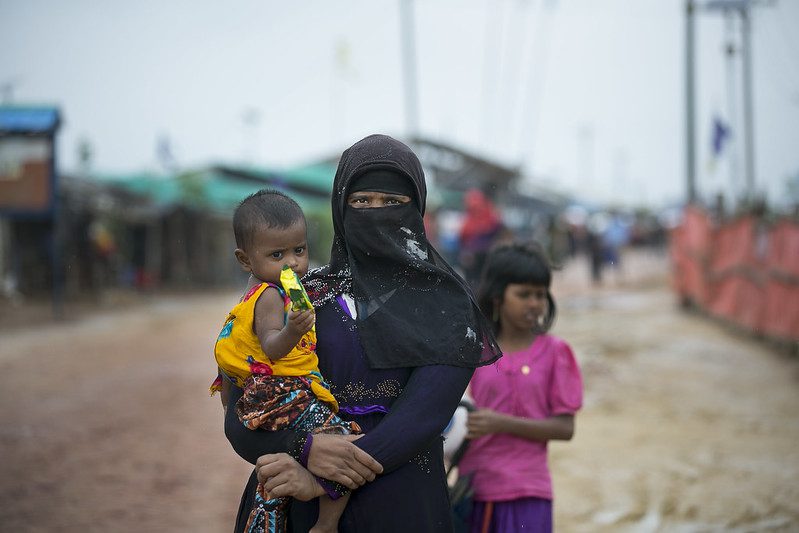
For decades, Myanmar’s Rohingya minority has suffered from discrimination; in 2017, an ethnic cleansing began. Three years later, with more than a million Rohingya refugees forced from their homes, the International Court of Justice declared a way forward for Myanmar — Will there be justice for this Rohingya crisis?
The Persecution of the Rohingya
Forced from their homes, thousands of Rohingya, a Muslim minority in Myanmar, fled to Bangladesh. In 2017, Myanmar’s security forces attacked the ethnic minority in the western state of Rakhine, triggering the Rohingya crisis. Myanmar’s armed forces, otherwise known as the Tatmadaw, participated in abuses against the Rohingya, inciting massacres, gang rape, burning and looting. More than 700,000 Rohingya refugees fled to Bangladesh, while other Rohingya were internally displaced in Myanmar. Most fled without any belongings, so the refugees rely on Bangladesh’s refugee camps in Cox’s Bazar to provide life-saving assistance: food, water, healthcare, shelter and proper sanitation.
The U.N. considers this conflict to be an ethnic cleansing with “genocidal intent.” Yet the Rohingya had endured ethnic persecution for decades. In 1982, while Myanmar was governed by a military junta, the government passed a Citizenship Law stating that citizens in Myanmar could only be from certain ethnic groups — the Rohingya did not make this list. With their citizenship rights taken away, institutionalized discrimination began as the Rohingya were labeled as foreigners, illegal immigrants from Bangladesh. Because of this, the Rohingya were often denied access to healthcare and education; permission was also needed before marrying or traveling to a different village. Now, for the thousands of refugees, returning to their country seems impossible. For the half-million Rohingya that remain in Myanmar, targets of laws and practices that overlook their abuse, the threat of genocide persists.
Will Myanmar be Held Accountable?
While Myanmar’s civilian government and its leader, Aung San Suu Kyi, adamantly deny any ethnic persecution or cleansing, in January 2020 the International Court of Justice ruled that Myanmar must protect the Rohingya from persecution and prevent the destruction of any evidence related to the genocide allegations. The case was brought to the ICJ by The Gambia on behalf of the Organization of Islamic Cooperation to advocate for the Rohingya Muslims, as Myanmar ignored previous international calls to investigate human rights violations.
With this ruling, Myanmar’s government is required to do everything possible to prevent the persecution, killing and any other bodily or mental harm of the Rohingya by the military or any other civilian group. For further accountability, Myanmar must submit a report to update the ICJ on its proceedings, and then send in additional reports every six months until the court is satisfied that the Rohingya crisis has ended. It will take several more years before the ICJ can determine whether Myanmar committed genocide.
However, the ICJ does not have enforcement power, which means that Myanmar faces a choice: to comply with the ICJ rulings or ignore them and continue the current treatment of the Rohingya. Aung San Suu Kyi believes that the case presented before the court showed “an incomplete and misleading factual picture” of the Rohingya crisis in Rakhine. She assured the ICJ that military leaders would be put on trial if found guilty; however, the court’s ruling suggests that the case was not misrepresented and that Suu Kyi’s assurances may not be fulfilled. Therefore, the future remains uncertain for the Rohingya.
Looking Forward
While it is up to Myanmar alone to comply with the ICJ, the international community can still pressure Myanmar to follow the court’s ruling. In 2019, Senator Benjamin Cardin introduced the Burma Human Rights and Freedom Act (S.1186) which aims to address the Rohignya’s humanitarian crisis. If passed, it will provide needed aid and help with resettlement. This aid will only be given once Myanmar and its military can prove they have made progress in keeping to international human rights standards. Showing support for this bill is key to get it through Congress, so contacting local representatives by calling or emailing is imperative.
The Special Rapporteur for Myanmar, Yanghee Lee, stated “it is not too late for the country to change course and reorient itself to transform into a democracy that embraces human rights for all.” They believe that by addressing issues of discrimination, implementing victim-centered justice mechanisms, rewriting laws and holding those who have violated human rights accountable, Myanmar can build a new future where the Rohingya are welcome, and the refugees, like Aziza, can return home without fear of persecution.
– Zoe Padelopoulos
Photo: Flickr

Understanding Economic Institutions in Yemen
The lack of formal economic institutions in Yemen solidifies the nation’s position as one of the poorest countries in the Middle East and in the world. Its violent civil war largely prevents the development of economic structures and impedes infrastructure improvement. Furthermore, conflict with Houthi rebels, the insurgency group opposing the Yemeni military, destabilized Yemen’s crucial hydrocarbon exports. This has significantly damaged government revenue and forced a broad suspension of fundamental public services. Consequently, the economic structures that are present in Yemen remain informal and underdeveloped.
Politics, War and the Economy
Since March of 2015, 100,000 Yemenis have died, and indiscriminate Saudi aerial bombing caused most of the civilian deaths. Interference from the U.S. and the U.K. by supplying weapons to Saudi Arabia exacerbates the poor economic circumstances. Mass causalities and civil unrest have run rampant.
During the civil war, the Houthis seized the opportunity for profit maximization through illegal methods to solidify their regional occupation. Opportunities arose in the most informal economic institution: the black market. Arms manufacturing, food smuggling, consumer goods and drugs, human trafficking and military leaders pocketing troops’ salaries and food allowances all contribute to Yemen’s economic instability.
Future economic prospects depend on the political situation in Yemen. While the past few years have shown some optimistic growth, a recent surge of violence by the Houthis in the temporary capital of Aden puts further stress on the fragile macroeconomic circumstances. Predictions for the next two years determine that the economy will grow between 2% to 2.5% annually, yet these rates are far below what is necessary for the reconstruction and human development.
A Resource Crisis
The domestic turmoil that the Houthi insurrection propagated prevents Yemen from gaining control over its own resource sector. Prior to the civil conflict’s escalation in 2014, 25% of Yemen’s GDP and 65% of government revenue came from oil and gas. On the other hand, Yemenis rely heavily on foreign trade; approximately 90% of the population’s food is imported. However, the Central Bank of Yemen (CBY), one of the many fragmented state institutions, had to disrupt foreign exchange for necessary imports and public sector salaries. This has led to high inflation and has worsened the humanitarian crisis, both of which facilitate the deterioration of robust economic institutions in Yemen.
Economic instability causes the nation to rely on financial assistance from neighboring Saudi Arabia. Furthermore, its resource bank of oil and gas production nearly stopped at the outbreak of civil war in 2015. In late 2018, Yemen’s economy gave an indication of stabilization as the GDP growth neared positive, a stark contrast from the economic loss of 40% that occurred between 2014 and 2017. While the oil and gas industry has seen production increases, the destruction since the conflict began continues to leave many Yemenis without a stable income. The U.N. estimates that 55% of the entire Yemeni workforce has lost employment since the beginning of the civil war.
Aid and Hope for Yemen
Yemen depends on the United States, specifically USAID, to work with local and international partners to reconstruct social and economic institutions. However, providing humanitarian assistance is simply not enough to propel Yemen’s development. To address the nation’s structural macroeconomic issues, USAID created the Yemen Economic Stabilization and Support (YESS) program in July 2019. The technical assistance that it provides to the CBY-Aden is to better manage the financial sector and assist cash-flow conditions by fortifying the bank’s critical functions, such as managing currency and foreign exchange operations.
One can find a glimmer of hope for Yemen in YESS’s success in streamlining customs and commercial trade. Between October 2018 and March 2019, shipment inspections fell from 100% to 70%, and customs processing reduced from five to two days. The Trusted Trader Program at the Yemen Customs Authority further enriched this progress. The inspection rate may be a critical indicator for development, as it implicates fewer barriers to citizens receiving humanitarian aid.
Today, economic instability remains a defining factor in Yemen’s overall underdevelopment. Widespread damage to infrastructure due to the war stresses the currency exchange rate, accelerates inflation and limits food and fuel imports. Most of the labor force works in agriculture and herding – a key indicator of an underdeveloped economy – while construction, commerce and other industries make up less than 25% of total employment. To avoid remaining economically underdeveloped and escape poverty, it is essential that Yemen strengthen its central bank, reclaim resource control and address its liquidity crisis.
– Frankie Gaynor
Photo: Flickr
5 Athletes Making a Difference On and Off the Court
People cheer for athletes when they score touchdowns or goals, but there is much more to cheer for. Athletes are some of the most charitable individuals in the world. Many athletes are using their money, time and influence to impact communities in need both locally and globally. Here are five athletes making a difference around the world.
5 Athletes Making a Difference
Athletes are well known for more than just their abilities on the court, in the field or on the ice. Many athletes use their money to help people in need around the world. When it comes to these athletes, there is more to cheer for than the points they score.
– Kira Lucas
Photo: Flickr
New Zealand’s Solution to Period Poverty
New Zealand, a Pacific island country known for its beautiful waters and unique wildlife, is more than just a tropical paradise. By a recent estimate, New Zealand has the 48th highest GDP per capita in the world. Plus, the average New Zealander leaves school when they are between 18 and 19 years old, whereas in many other countries children leave school before they reach the age of 12. New Zealand also puts a relatively high proportion (9%) of the overall government budget toward healthcare.
Though New Zealand is by no means an impoverished country, thousands of women still suffer from a lack of access to sanitary products. An estimated 95,000 young girls in New Zealand don’t go to school during their period because they don’t have access to the necessary sanitary products. However, the government is currently working to move closer toward New Zealand’s solution to period poverty.
New Zealand’s Sanitary Product Problem
A lack of access to safe sanitary products during menstruation is defined as period poverty. Studies have shown that across the globe, one in four women struggle to purchase the products necessary to deal with their menstruation. When women don’t have access to tampons and pads, it can lead to devastating situations. Some women are unable to work or leave the house, or are even shamed for what their bodies are going through. This makes education, employment and other aspects of life very difficult for women — for about a week every month.
In New Zealand, close to 12% of school-age girls between the ages of 12 and 18 have difficulty or are unable to purchase sanitary products. More than that, close to 10% of girls reported that they had skipped school because they didn’t have access to tampons or pads.
The Plan
The number of school-age girls who were missing out on educational opportunities due to their menstrual cycle led New Zealand’s prime minister to take steps towards eradicating period poverty. Prime Minister Jacinda Ardern declared that period products were not a luxury but in fact a necessity for female students. In light of this, New Zealand’s government is using NZ$2.6 million to help relieve period poverty. Eventually, New Zealand hopes to eradicate period poverty, but funds will first go toward making sanitary products free for girls in 15 New Zealand schools.
New Zealand’s Future
The hope for this government initiative is that it will lead to having free sanitary products in all state schools by 2021. While this would be a huge step toward New Zealand’s solution to period poverty, there is still a long way to go. Dignity, a local organization that focuses on women’s rights and access to sanitary products, has voiced its appreciation and support for the government’s efforts to support women’s access to menstrual products.
However, Dignity also pointed out that there is still work to be done. Women throughout the country need access to sanitary products, not just girls in primary and secondary schools. Moreover, Arden’s period poverty initiative is just one part of a plan that aims to halve childhood poverty in the next 10 years. While it may not address every aspect of period poverty or childhood poverty, New Zealand’s plan is moving the country one step closer toward eliminating period poverty.
– Lucia Kenig-Ziesler
Photo: Flickr
Myanmar’s Forgotten People: The Rohingya Crisis
For decades, Myanmar’s Rohingya minority has suffered from discrimination; in 2017, an ethnic cleansing began. Three years later, with more than a million Rohingya refugees forced from their homes, the International Court of Justice declared a way forward for Myanmar — Will there be justice for this Rohingya crisis?
The Persecution of the Rohingya
Forced from their homes, thousands of Rohingya, a Muslim minority in Myanmar, fled to Bangladesh. In 2017, Myanmar’s security forces attacked the ethnic minority in the western state of Rakhine, triggering the Rohingya crisis. Myanmar’s armed forces, otherwise known as the Tatmadaw, participated in abuses against the Rohingya, inciting massacres, gang rape, burning and looting. More than 700,000 Rohingya refugees fled to Bangladesh, while other Rohingya were internally displaced in Myanmar. Most fled without any belongings, so the refugees rely on Bangladesh’s refugee camps in Cox’s Bazar to provide life-saving assistance: food, water, healthcare, shelter and proper sanitation.
The U.N. considers this conflict to be an ethnic cleansing with “genocidal intent.” Yet the Rohingya had endured ethnic persecution for decades. In 1982, while Myanmar was governed by a military junta, the government passed a Citizenship Law stating that citizens in Myanmar could only be from certain ethnic groups — the Rohingya did not make this list. With their citizenship rights taken away, institutionalized discrimination began as the Rohingya were labeled as foreigners, illegal immigrants from Bangladesh. Because of this, the Rohingya were often denied access to healthcare and education; permission was also needed before marrying or traveling to a different village. Now, for the thousands of refugees, returning to their country seems impossible. For the half-million Rohingya that remain in Myanmar, targets of laws and practices that overlook their abuse, the threat of genocide persists.
Will Myanmar be Held Accountable?
While Myanmar’s civilian government and its leader, Aung San Suu Kyi, adamantly deny any ethnic persecution or cleansing, in January 2020 the International Court of Justice ruled that Myanmar must protect the Rohingya from persecution and prevent the destruction of any evidence related to the genocide allegations. The case was brought to the ICJ by The Gambia on behalf of the Organization of Islamic Cooperation to advocate for the Rohingya Muslims, as Myanmar ignored previous international calls to investigate human rights violations.
With this ruling, Myanmar’s government is required to do everything possible to prevent the persecution, killing and any other bodily or mental harm of the Rohingya by the military or any other civilian group. For further accountability, Myanmar must submit a report to update the ICJ on its proceedings, and then send in additional reports every six months until the court is satisfied that the Rohingya crisis has ended. It will take several more years before the ICJ can determine whether Myanmar committed genocide.
However, the ICJ does not have enforcement power, which means that Myanmar faces a choice: to comply with the ICJ rulings or ignore them and continue the current treatment of the Rohingya. Aung San Suu Kyi believes that the case presented before the court showed “an incomplete and misleading factual picture” of the Rohingya crisis in Rakhine. She assured the ICJ that military leaders would be put on trial if found guilty; however, the court’s ruling suggests that the case was not misrepresented and that Suu Kyi’s assurances may not be fulfilled. Therefore, the future remains uncertain for the Rohingya.
Looking Forward
While it is up to Myanmar alone to comply with the ICJ, the international community can still pressure Myanmar to follow the court’s ruling. In 2019, Senator Benjamin Cardin introduced the Burma Human Rights and Freedom Act (S.1186) which aims to address the Rohignya’s humanitarian crisis. If passed, it will provide needed aid and help with resettlement. This aid will only be given once Myanmar and its military can prove they have made progress in keeping to international human rights standards. Showing support for this bill is key to get it through Congress, so contacting local representatives by calling or emailing is imperative.
The Special Rapporteur for Myanmar, Yanghee Lee, stated “it is not too late for the country to change course and reorient itself to transform into a democracy that embraces human rights for all.” They believe that by addressing issues of discrimination, implementing victim-centered justice mechanisms, rewriting laws and holding those who have violated human rights accountable, Myanmar can build a new future where the Rohingya are welcome, and the refugees, like Aziza, can return home without fear of persecution.
– Zoe Padelopoulos
Photo: Flickr
5 Chocolate Companies Fighting Child Labor in the Cocoa Industry
Chocolate is a staple dessert in many American households. However, journalists have recently helped expose the reality of the chocolate industry, revealing how most chocolate companies, including Hershey, Lindt, Mars and Nestle take advantage of child labor in the cocoa industry to increase profits. The cocoa that chocolate companies use to produce their products grows in the tropical climates of West Africa, Asia and Latin America, with West Africa producing 70% of the world’s cocoa. On average, the income of cocoa farmers is less than $2 a day. This income, which is below the poverty line, causes farmers to seek out cheap labor. Many children in West Africa live in poverty, so some children looking for work turn to cocoa farms, while others are sold into labor. Children as young as five work on these farms, enduring physical abuse and hazardous working conditions. One recently freed child slave said, “When people eat chocolate, they are eating my flesh.”
While child workers continue to be exploited, here are five chocolate companies that do not support child labor in the cocoa industry.
5 Chocolate Companies That Fight Child Labor in the Cocoa Industry
In recent years, journalists have exposed the child labor that occurs in the cocoa industry. Children living in poverty sometimes turn to this industry for work and are subject to hazardous working conditions and abuses. While child labor is still used by some companies, through things like fair trade, these five companies fight child labor in the cocoa industry.
– Natascha Holenstein
Photo: Pixabay
10 Apps That Aid Healthcare in Developing Countries
10 Apps That Aid Healthcare in Developing Countries
Bridging healthcare accessibility with smartphone apps isn’t a perfect solution, as it comes with accessibility issues of its own. However, these healthcare aid apps can help people without insurance, or who are physically unable to visit a physician, access health consultations. As a result, more people are provided access to healthcare, empowering a healthier (and more health-conscious) population.
– Catherine Lin
Photo: Flickr
Hunger in The Gambia: A Continuous Fight
The Gambia is a country located in Western Africa near the country of Senegal. Over the past 5 years, The Gambia has been dealing with an increase in food insecurity. This increase is largely due to the 2018 drought which caused a decrease in food production. In 2019, The Gambia only produced 50% of the food supply needed, leaving many to go hungry. As food insecurity continues to rise, from 5% to 8% in recent years, many organizations are stepping in to help decrease hunger in The Gambia.
The Fight Against Hunger in The Gambia
The World Food Programme (WFP) is an organization that has been committed to helping individuals in The Gambia since 1970. WFP has created a campaign designed to bringing food to households and schools in The Gambia. It is estimated that 10,000 households have been affected by hunger. The main focus is to send money and food to certain areas in The Gambia, specifically households that may need more support during the food crisis. More vulnerable populations include women, persons with disabilities and people suffering from diseases such as HIV. Through the WFP’s school program, the organization has helped 115,000 children throughout primary and pre-schools.
UNICEF, WFP, and the Food and Agriculture Organization of the United Nations (FAO) worked with The Gambia’s government in 2017 to launch the ‘Post-Crisis Response to Food and Nutrition Insecurity in The Gambia.’ The program aims to help decrease hunger in The Gambia. Not only will it help to fund and bring food to the country, but it also aims to help farmers produce sustainable agriculture.
Malnutrition in The Gambia
Malnutrition largely affects individuals in rural areas of The Gambia. Underfunding, lack of resources, such as foods high in vitamins, and limited knowledge of nutrition are all factors in the problem of malnutrition. Though malnutrition in children has decreased from 23% in 2010 to 19% in 2018, there is still more work to be done. In 2016 UNICEF worked closely with The Gambia’s government to help address malnutrition. UNICEF is urging the officials to have better funding within the healthcare system in regard to nutrition.
Small Victories
The ‘Post-Crisis Response to Food and Nutrition Insecurity in The Gambia’ was also able to donate nearly 3,000 metric tons of nutritious foods, in the hopes of bringing down malnutrition rates. The European Commission has also funded additional programs that not only help supply nutritional food resources, but also educational promotions about nutrition as it relates to infant and child feeding. These programs help to bring resources to rural areas of The Gambia while also informing youth about how to address the issues of hunger and malnutrition.
Over the past few years, The Gambia has been facing increased food insecurity. Providing resources to the public on malnutrition and hunger is more important than ever, as 48% of Gambians are still living in poverty. Programs such as the ones organized by UNICEF and WFP are working to decrease hunger in the coming years.
– Olivia Eaker
Photo: Flickr
Herbal Medicines in Africa: Contributions and Concerns
The continent of Africa — especially Sub-Saharan Africa — is abundant with rich vegetation. Among the plants that naturally grow on the continent, there are many of them that are used to treat a variety of diseases. Herbal medicines are one of the oldest methods used for healing in Africa, even before the European invasion. According to the World Health Organization, 70-80% of the population uses some form of traditional medicine, with herbal medicines standing out in particular. The knowledge regarding which plants are safe to be used for healing has been orally transmitted from the elders. Currently, most regions combine herbal and modern medicines according to the kind of disease or symptoms a patient has. The following are the contributions and concerns of herbal medicines in Africa in relation to modern medicines.
Contributions
Concerns
African countries are encouraging cooperation between herbalists and doctors. This collaboration will help doctors understand their patients who have been using herbal medicines. Additionally, herbalists will know when patients should go to the hospital in case herbs do not work or if they cause some problems to the patients.
– Renova Uwingabire
Photo: Flickr
5 Facts about Poverty in Myanmar
Myanmar is a country in Southeast Asia and is one of many developing countries facing the same issues as those on other continents. Poverty in Myanmar could resolve through greater access and investment in resources such as food and safe drinking water. Here are five facts about poverty in Myanmar.
5 Facts About Poverty in Myanmar
Reducing poverty in Myanmar through actions such as improving access to proper sewage treatment is a manageable goal. All it takes is the improvement of existing infrastructure to make measurable and positive impacts on the world.
– Michael Straus
Photo: Flickr
A Solution for Affordable Housing in Australia
For the past 30 years, Australia has experienced a housing crisis that has increasingly left more of its citizens displaced from homes. While further government initiatives are needed to resolve this issue, innovative solutions from tiny house developers could improve overall access to affordable housing in Australia.
Over 116,000 of Australia’s citizens suffer from homelessness, according to the most recent census. The United Nations reports that Australia ranks fourth globally for the highest percentage of citizens experiencing homelessness in a developed economy. Between the 2011 and 2016 Australian Bureau of Statistics census, rates of homelessness increased by 13.7%. This sharp increase in homelessness is attributed to spikes in housing prices and the overall decrease in income within the country. In addition, housing affordability, the cost of housing in comparison to median household income, has declined significantly since 1980. All of these factors have resulted in severe rates of homelessness across the country. According to the most recent census, just 18% of the homeless population in Australia is currently residing in government-provided accommodations. The remaining 82% settle for other accommodations, most notably including overcrowded dwellings. While mayors of heavily impacted cities like Sydney, Adelaide and Melbourne confronted state-level governments over declining affordability of housing in 2019, high rates of homelessness persist within the country.
Tiny houses have been utilized across the globe as a sustainable and affordable alternative to pricy, fixed property. Tiny homes can be purchased pre-built, in a kit for self-assembly or built entirely from scratch. The tiny house trend allows for flexibility in terms of living location, material pricing, and requires minimal upkeep. Prices for tiny homes can average $65,000 if built from a kit but can cost as low as $20,000.
Nonprofit Response
While the governmental response to Australia’s housing crisis has been lacking, multiple nonprofit organizations have formed to offer innovative solutions for individuals experiencing homelessness. One organization, called Transition Village Wallan, has built ten tiny homes, partnered with 12 organizations and raised over $219,000 for those experiencing homelessness in Australia. Transition Village Wallan’s headquarters are in the state of Victoria– which identifies over 22,000 of its residents to be homeless– just outside the city of Melbourne. With the strategic placement of its headquarters and its passion for providing ample housing in Australia, Transition Village Wallan has proven to be a significant ally for action against homelessness in the country.
Looking Forward
With proper support, tiny houses could be a solution to the housing crisis ablaze throughout Australia. This option is particularly suitable for outer-city environments, of which the country is dense. Through the efforts of organizations such as Transition Village Wallan, the imbalance of housing affordability across the country is beginning to be addressed. Creating affordable, sustainable and portable homes across Australia’s city suburbs could advance not only the living quality of its citizens, but also nation-wide economic, health and security standards.
– Lilia Wilson
Photo: Pixabay