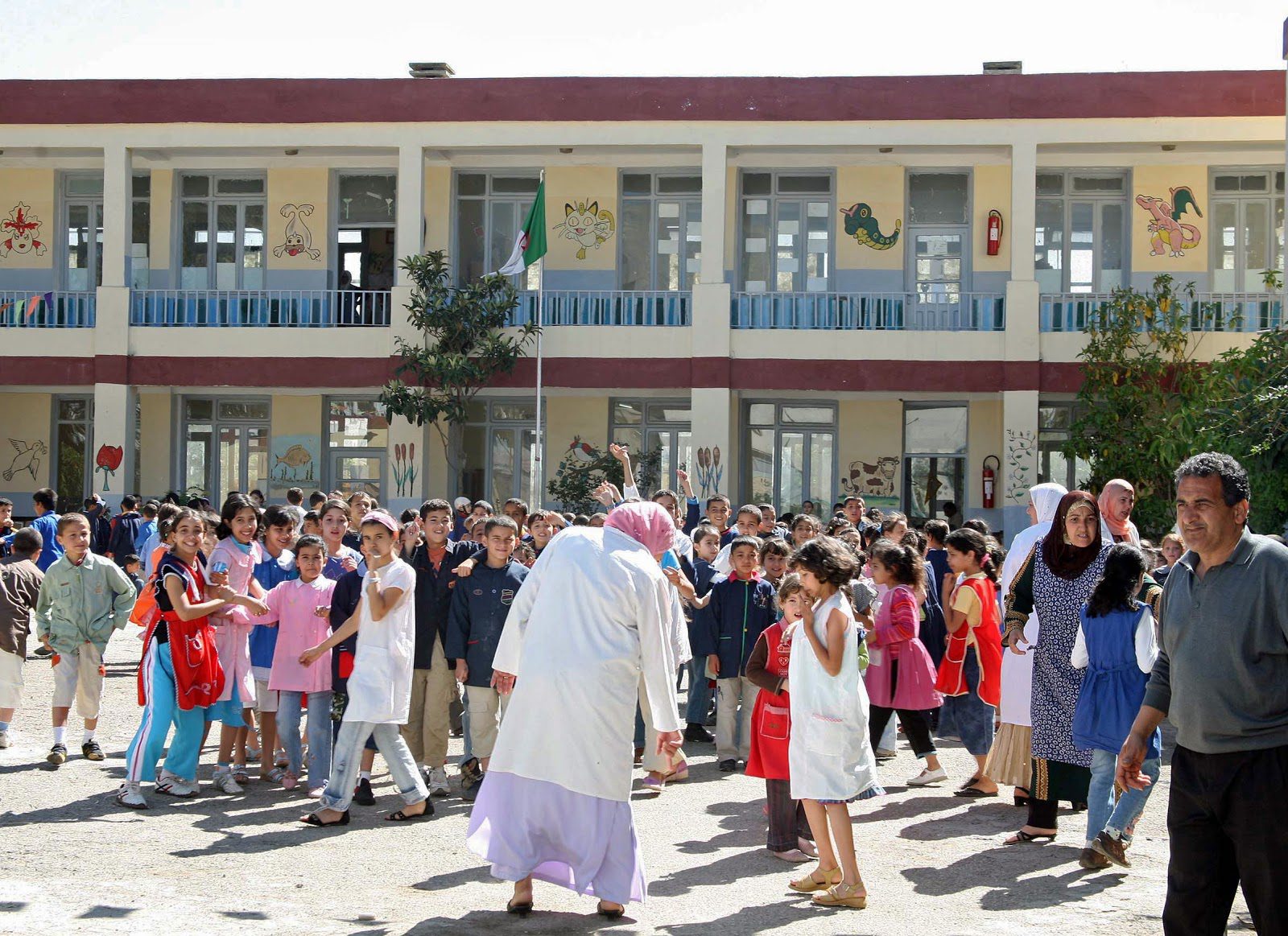
 Algeria is a country in North Africa with Mediterranean coastline and an interior of the Saharan desert. Over the years, the education quality in Algeria has been improving and statistics show more girls are graduating with university diplomas. While the recent reforms have been an improvement, more work is needed to improve girls’ education in Algeria.
The Algerian Education System
The education system is divided into a nine-year primary foundation school, followed by a three-year secondary and then university level. Algerian education is still focused on the French philosophy of fact-acquisition, and instruction is almost entirely in the form of lecture and memorization. As of 2015, there are 92 post-secondary institutions in Algeria including 48 universities.
Past Statistics of Algerian Students
Back in 1996, the ministry reported 15,426 state primary schools with 4,674,947 students, 46% of which were girls. There were 3,038 middle schools, which were for children 7 to 9 years of age, with 1,762,761 students, only 38% of whom were girls. This led to less than 50% of female citizens getting university degrees during the time. According to CountryMeters, in 2016, the literacy rate for the adult male population is 87.17%, or 14,318,494 men; literacy rate for the adult female population is 73.13%, or 11,949,007 women. Literate females made up around 14% less than the literate male population.
Recent Statistics of Algerian Students
Statistics of graduate Algerian women have been more than men since the late 2000’s. In 2011 and 2012, around 60% of the 1,090,592 students on track to graduate from Algerian universities were females. Ever since then, recorded data shows a positive trend of girls obtaining their university degrees. In 2018, Algeria reported that 64.46% female residents have graduated from universities in the country. There are currently no recent updates on the literacy levels of Algerians.
Education Reforms
Recently, Algeria has made education mandatory and free of charge for all children from age 6 to 15. Also, the British Council works in collaboration with the Algerian Ministry of National Education (MoNE) to support their joint focus on improving education. This is a continuous project that began in 2016. As a result, 40,000 teachers have been recruited each year for Algeria schools. In addition, the project focuses on addressing leadership and ensures the quality of the education system.
Due to this project, in 2018, approximately 596,000 students took the BEM, or the intermediate school certificate examination. The average score was 56.9 percent, which was up from 56.3 percent in 2017. The positive statistics ultimately led to the increased percentage of female university graduates in 2018.
The amount of females graduating and obtaining a university degree are gradually increasing each year. Since 1996, there has been more than a 10% increase in the amount of females graduating from a college. On top of that, the quality of the Algerian education system is slowly improving each year, and the government is encouraging all young girls to attend primary school.
– Megan Ha
Photo: LH4

Homelessness in South Sudan
The Effect of the Civil War
Rampaged by civil war and the aftermath of independence, 20% of South Sudan has been homeless since 2013. After the falling out between President Salva Kiir of the Dinka ethnic group and former Vice president Machar of the Nuer ethnic group, violence exploded throughout the newly founded country.
The conflict created 2.2 million displaced people within the country and forced one million people to become refugees. Because of the eviction from homes, people lacked access to their fields, starting a severe famine. Many homeless people reside in camps because they have a bit of food. Although the civil war ceased in 2018 with a mutual peace agreement, there are 1.76 million displaced people in the country.
Children in Need
4.2 million children need immediate assistance due to homelessness in South Sudan. Many children live on the streets after losing their families in the war, being forced into the workforce to sustain themselves. Due to the chaos, the education rate rests at 28%. Education provides students the ability to become professionals in their chosen route of study. It also starts a “brain gain” effect within the country. Students could earn money for their household and start building homes for their families.
Famine and Healthcare
As a result of the war, six million people lack proper water and meals. The United Nations estimated that around 12 million people are hungry every second in South Sudan. Without nourishment, there isn’t enough energy to suffice labor-heavy work. This makes them unable to sustain their household.
According to WHO, South Sudan has one of the world’s weakest healthcare systems. It also has the weakest poor quality treatment and limited resources. Along with malaria and other common diseases, the country reported over 2,000 cases of COVID-19. This puts a toll on the healthcare system, lacking both facilities and skilled healthcare workers. Homeless people live shorter lives when stripped from proper healthcare. With the body prepared and treated to bounce back from viruses, homeless people have the energy to make a living.
Change in Action
Despite the dire situation of the country, many organizations have volunteered their efforts to rehabilitate this promising country. For example, the International Rescue Committee provides over 1.1 million people in South Sudan with medical treatments and healthcare facilities. The organization has been at the country’s aid for over two decades, rehabilitating sanitation systems and giving out food. World Concern has set out to rebuild villages by providing people with food, shelter and clean water. It does this in hopes of creating a sustainable way of life. In 2018, World Vision sponsored 700 children to return to education, reuniting them with their families along the way. With help like this, homelessness amongst children can be reduced drastically and prevented in the future.
It may seem pessimistic at times for these communities, but homelessness is close to disintegration. Helping people gain access to their basic needs supplies them with the foundation to rise above homelessness and poverty. The country is full of potential; once chaos runs through homelessness in South Sudan, their light will shine.
– Zoe Chao
Photo: Flickr
Organizations Reducing Violence in Colombia
Links Between Violence and Poverty
Violence in Colombia sustains the country’s extreme poverty. A study conducted in rural Colombia found that those who experience violence are more likely to remain in a cycle of poverty as a result of economic loss, trauma and fear. The country’s unparalleled amount of internally displaced people also contributes to poverty. 139,000 people were displaced within Colombia due to violence in 2019 alone. Most of the people displaced come from rural areas where 70% of the population lives in poverty. This makes them particularly susceptible to violence. Violence prevails in the nation and continues to keep people in poverty. However, nonprofits are committed to reducing violence by promoting a culture of peace. These 3 organizations are working to reduce violence in Colombia.
Global Partnership for the Prevention of Armed Conflict (GPPAC)
GPPAC aims to motivate Colombian youth as changemakers by promoting dialogue between different generations. The organization addresses the lack of youth community and political engagement in Colombia. GPPAC recognizes that young people’s faith in their country’s social fabric is essential to promoting peace over violence. By inspiring a new generation of peacemakers that learn from the past and are excited about the future, GPPAC quells violence in Colombia.
The organization’s Intergenerational Project in Colombia in 2017 and 2018 resulted in dialogues in 15 regions most affected by violence. GPPAC organized conversations that took place in schools and included the participation of teachers, parents, students and members of several social organizations. The diversity of people participating built trust between different generations and social groups. This empowers young people to continue fostering a culture of peace in their communities.
Mercy Corps
Mercy Corps aims to address violence in Colombia through prevention and intervention. The organization strengthens networks between teachers and parents to keep children in school since parents often take their children out of school to work. However, children who do not attend school are more likely to experience violence. Mercy Corps tends to students’ individual needs and equipping schools with the tools to address students subjected to violence. By doing this, it puts an end to the cycle of violence that is correlated to a lack of education. The organization also tends to former child soldiers by teaching them how to generate income. It also empowers them with leadership skills. Since its founding, Mercy Corps has served more than 62,000 children in areas most affected by violence in Colombia.
Interpeace
Interpeace builds a culture of peace in Colombia through the Peacebuilding Model of National Police, a program that began in 2017. In partnership with nonprofit Alianza para la Paz, Interpeace works with the Colombian National Police to promote peacebuilding responses to violence and conflict.
One Interpeace program focuses on violence prevention and management in 5 regions that are particularly prone to violence. Police are encouraged to resolve conflict in socially violent situations rather than exacerbating the situation with an aggressive response. Another program aims to improve police response to gender-based violence in areas most affected by armed conflict in Colombia. Interpeace strives to improve the government’s preparation and response to these types of violence. Ultimately, these programs will improve the local trust of police and other government figures. At the same time, they will reduce violence in Colombia’s most vulnerable communities.
Overall, the 2016 peace agreement provided a foundation for a hopeful future. However, the Colombian government needs to address violence in the country’s most vulnerable rural areas more effectively. The Colombian government could reduce poverty in Colombia’s rural areas to bridge the urban-rural gap. By doing so, it could more successfully quell violence in the nation. This renewed government response is integral to strengthening Colombia by reducing violence. By following the lead of GPPAC, Mercy Corps and Interpeace, the government can successfully move Colombia forward. These 3 organizations are instrumental in fostering a culture of nonviolence in Colombia.
– Melina Stavropoulos
Photo: Flickr
The Hidden Issue of Homelessness in Bhutan
The Hidden Issue
There is another side to the topic of homelessness in Bhutan though. Kuensel is the national newspaper of Bhutan and has published multiple articles covering cases of homelessness within the country. The newspaper has continuously attempted to source the reasons behind why some people in a country so focused on happiness find themselves on the streets. Kuensel uses its inside perspective to try to shift focus away from shining solely on Bhutan’s successful numbers. Instead, he shifts it toward what still needs to be done.
Environmental Disasters and Accidents
One reason that Kuensel found has to do with environmental disasters and accidents. In 2013, a landslide destroyed the home of a family of five and subsequently forced them to live in a small shed. Three years following the incident, the family claimed that Bhutan’s Department of Roads helped to restore some of their land. However, it did not restore their home despite contacting them multiple times. Their story highlighted the lack of congruence between the disenfranchised population and the government’s actions.
Some do not own any land though and find themselves unable to acquire any. Elderly residents that did not inherit land from their parents work trying to scrape by enough money for rations. Often times, they have to beg when they aren’t able to make enough. A 70-year-old man reported to Kuensel that his parents died when he was young with no land to pass down to him. He lives in a rundown makeshift hut, scrounging up firewood and doing what he can to make money for food. He worries that one day, he will lose the few resources he has and have nothing left.
Mental Illness and Unemployment
Mental illness has also become an issue regarding homelessness in Bhutan. Many of the homeless people in Thimphu, the capital of Bhutan, are mentally ill. Abandoned by their families, they subsequently end up in the streets. One case details the suffering of a woman with schizophrenia. Her family supported her as she was a child, but could no longer care for her as an adult. As a result, she ended up living in an abandoned hut in dismal conditions with little to no food. With few mental health resources in the country, mentally ill homeless people often end up neglected and alienated by society.
There is also an issue with rising unemployment rates, particularly among the female population of Bhutan. The overall rate is approximately 2.7% but rises to 7.3% when specifically looking at youths and women. Only 55% of women are literate. When paired with the unemployment numbers, the women of Bhutan are forced to face the threat of poverty and potential homelessness.
Bringing Awareness
There are groups that aim to bring awareness to homelessness in Bhutan though. All for One and One for All (A11A) is a group that assists those who find themselves on the streets by linking them with healthcare workers. Lhak-Sam, an organization originally meant to aid those with HIV in Bhutan, has also opened a care house for the homeless population. It hopes to develop the center so that it can provide mental, physical and emotional aid to those who rely on its services.
However, these efforts are not sustainable in the long-run without assistance. Bhutan may not have a large homeless population, but the suffering of those who find themselves with nowhere to go is generally unheard. With more international awareness, groups such as A11A and Lhak-sam may be able to receive the aid from both the Bhutanese government that they need.
– Nicolette Schneiderman
Photo: Pixabay
K-9s Sniff Out COVID-19 in Chile
Poverty & COVID-19 in Chile
Confirmed cases in Chile have steadily risen since May, beginning in high-income neighborhoods and slowly infiltrating low-income communities where the virus has caused the most damage. The country has remained under a national state of emergency since mid-March and is now experiencing Phase 4 of the outbreak, which includes “uncontrolled and widespread community transmission,” forced quarantine in some areas and even a nationwide curfew. The Chilean government closed the country’s borders on 18 March 2020 to all tourists, cruise ships and other unnecessary traffic, excluding citizens and permanent residents who must be quarantined for 14 days upon re-entrance.
Tourism prevention has been particularly harmful to Chile’s economy since the country shut down in March. The country was named the 2017 Best Destination for Adventure Tourism in the World with more than 5.6 million people visiting each year, a group that has consistently stimulated the economy by nearly 13% annually. Jorge Rodriguez, Chile’s Minister of Economy, Development and Tourism stresses that tourism “is strategic for the growth of Chile,” but COVID-19 is decelerating the progress tourism has made in the last decade.
The World Bank identifies Chile as one of Latin America’s “most unequal countries” because there are two socioeconomic extremes: incredibly impoverished or wonderfully wealthy. There is no middle class, forcing socioeconomic status to determine whether a person hopelessly struggles under government dependence or flourishes in their own monetary independence. Because people living in poverty must rely on assistance from the government, poor Chileans are suffering now more than ever as COVID-19 devastates the economy.
Retrievers to the Rescue
Luckily, the Chilean government, in partnership with the Catholic University of Chile, has constructed a strategic recovery plan that relies on retrievers. Chile’s National Police has embarked on a journey to teach K-9s to find COVID-19 in crowds. Three highly trained pups, with experience in drug and bomb detection, are learning to sniff out human odors specifically emitted by prospective patients. COVID-19 itself does not have an odor, but minor metabolic changes can be detected as well as “volatile organic compounds” according to Fernando Mardones, professor and epidemiologist at the Catholic University of Chile. Those distinct markers enable the K-9s to intelligently track and discover people who are either asymptomatic or just entering the earliest stages of infection. Once a target is located, the “bio-detector dogs” do not scratch or use their killer bites. They simply sit by the COVID-19 carrier for discrete identification that prevents panic.
K-9s to Conquer COVID-19
The program currently remains in pilot stages but should be fully implemented by mid-September where the K-9s will be immediately deployed to high population centers. By the end of the training, one K-9 will be able to search more than 250 people in one hour with more than 95% accuracy. After the K-9s successfully memorize how to detect the virus in humans and remove COVID-19 patients from densely populated areas, confirmed case numbers in Chile should steadily decline. The country will then be able to reopen its ports and borders. Reestablishing its rightful place as one of the world’s most sought after tourism destinations will allow the economy to heal as travelers renew their plans to enjoy Chile’s beautiful scenery and exhilarating adventure sites.
Economic stability boosted by tourism revitalization will ease the concerns of people in poverty because the government will return to adequately assisting low-income regions as it did before COVID-19. Hopefully, extinguishing the virus in Chile will begin to bridge the gap between the country’s seemingly untouchable upper class and its disadvantaged lower class, giving impoverished people a chance to thrive.
-Natalie Clark
Photo: Unsplash
3 Groups Combining Conservation and Poverty Alleviation
Aid for Africa
Aid for Africa is a network of many poverty organizations working to improve the communities in Africa. This alliance work aims to make a difference in every area of life in Africa, including fighting against environmental issues in the continent.
In its mission, the organization stresses the importance of finding solar solutions to fix environmental issues to ensure it will not hinder the economic development of the continent. Combining its efforts in conservation and poverty alleviation allows Aid for Africa to simultaneously take multiple approaches towards helping communities in need. It focuses on fixing environmental problems on a broad scale through community-based programs to protect the rich biodiversity on the continent.
Children in the Wilderness
Children in the Wilderness focuses its efforts on conservation and protecting wildlife in multiple African nations; however, it is more specific in its cause than the previous organization. The non-profit centers around preserving the environment in Africa by educating young children, promoting leadership positions, and training programs. These opportunities help African children economically as it could connect them to job options and provides assistance programs and scholarships to those participating in the organization.
The organization shows success in uniting conservation and poverty relief as it changes the trajectory of many youths’ lives through scholarships and leadership positions. For instance, in 2018, Child in Wilderness awarded 602 scholarships to children at different education levels. Its leadership program also shows its success as the non-profit trained 249 individuals to become Eco-Mentor leaders within Children in Wilderness.
Solar Sister
Solar Sister is an organization that brings together conservation and poverty eradication by empowering women. It focuses on rural African communities and provides women entrepreneurs with education on clean energy. The organization encourages community-based leadership as the entrepreneurs go back to their communities to share solar technology with others in their towns.
The organization’s work creates a cycle of poverty alleviation. When the organization teaches individuals to run businesses in their communities, it increases women’s economic independence, allowing them to escape poverty. As a result, their rural communities benefit as clean energy gives them a safer power with helping the environment. For example, 90% of those who received solar power felt safer after buying it and the equipment reduced their cookstove fuel usage by over 50%. It also allows customers to become entrepreneurs themselves. For instance, 14,000 of those who bought solar products became Solar Sister entrepreneurs.
Although the organizations have different plans of approach, all are making a difference in the fight for conservation and poverty alleviation. Thus, revealing how fighting two distinct issues can be solved together in a mutually beneficial way.
– Erica Burns
Photo: Flickr
Recent Reforms in Girls’ Education in Algeria
The Algerian Education System
The education system is divided into a nine-year primary foundation school, followed by a three-year secondary and then university level. Algerian education is still focused on the French philosophy of fact-acquisition, and instruction is almost entirely in the form of lecture and memorization. As of 2015, there are 92 post-secondary institutions in Algeria including 48 universities.
Past Statistics of Algerian Students
Back in 1996, the ministry reported 15,426 state primary schools with 4,674,947 students, 46% of which were girls. There were 3,038 middle schools, which were for children 7 to 9 years of age, with 1,762,761 students, only 38% of whom were girls. This led to less than 50% of female citizens getting university degrees during the time. According to CountryMeters, in 2016, the literacy rate for the adult male population is 87.17%, or 14,318,494 men; literacy rate for the adult female population is 73.13%, or 11,949,007 women. Literate females made up around 14% less than the literate male population.
Recent Statistics of Algerian Students
Statistics of graduate Algerian women have been more than men since the late 2000’s. In 2011 and 2012, around 60% of the 1,090,592 students on track to graduate from Algerian universities were females. Ever since then, recorded data shows a positive trend of girls obtaining their university degrees. In 2018, Algeria reported that 64.46% female residents have graduated from universities in the country. There are currently no recent updates on the literacy levels of Algerians.
Education Reforms
Recently, Algeria has made education mandatory and free of charge for all children from age 6 to 15. Also, the British Council works in collaboration with the Algerian Ministry of National Education (MoNE) to support their joint focus on improving education. This is a continuous project that began in 2016. As a result, 40,000 teachers have been recruited each year for Algeria schools. In addition, the project focuses on addressing leadership and ensures the quality of the education system.
Due to this project, in 2018, approximately 596,000 students took the BEM, or the intermediate school certificate examination. The average score was 56.9 percent, which was up from 56.3 percent in 2017. The positive statistics ultimately led to the increased percentage of female university graduates in 2018.
The amount of females graduating and obtaining a university degree are gradually increasing each year. Since 1996, there has been more than a 10% increase in the amount of females graduating from a college. On top of that, the quality of the Algerian education system is slowly improving each year, and the government is encouraging all young girls to attend primary school.
– Megan Ha
Photo: LH4
Eradicating Poverty in Mauritius
Home to approximately 1.2 million people, the Republic of Mauritius is an island located off of the southeastern coast of Africa in the Indian Ocean. Mauritius has a complicated history of Dutch, French and British colonization, though it gained independence in 1968. Previously, the economy of Mauritius emerged solely from sugar production. However, exports, tourism, agriculture and financial services are key pillars of today’s economy as the successful efforts to diversify since 1980. With a successful economy, less than 1% of the population of Mauritius was living on less than $1.25 per day in 2012. This means extreme poverty in Mauritius is rare.
Poverty Rate
The middle class is shrinking as relative poverty rates have been steadily increasing over time from 8.5% in 2007 to 9.8% in 2012. Additionally, it is important to note that within the Republic, Rodrigues Island has high rates of poverty. About 40% of the inhabitants live in poverty. This is due to its lack of exportable resources as well as the fact that it is not able to participate in the tourist industry.
Plans to Eradicate Poverty in Mauritius
The Social Integration and Empowerment Bill is in place in an effort to eradicate social exclusion and poverty. From 2017 to 2020 the Mauritian government has allocated $63 million to implement the plan from which the bill originated.
The three features of the Social Integration and Empowerment Bill are as follows:
Other features of the Marshall Plan include the empowerment of women and youth. This will increase the human capital of the Republic and environmental protections which benefit the poor. The government’s commitment to ending poverty in Mauritius through policy and reforms reflects the resilience and spirit of the beautiful. With continued reforms and expansion of policies, poverty in Mauritius will likely continue to decrease.
– Meg Sinnott
Photo: Flickr
5 Ways Australia Supports Aboriginal Businesses
5 Ways Australia Supports Aboriginal Businesses
With multiple organizations dedicated to integrating indigenous people into the economy, the prominence of aboriginal companies will continue to rise. As a result, indigenous people will start seeing an increase in income and hopefully cross over the poverty line.
– Zoe Chao
Photo: Pixabay
What to Know about Tuberculosis in South Africa
Tuberculosis (TB), a bacterial disease, is contracted through airborne respiratory droplets from an infected individual. TB is also contractible from unpasteurized milk containing Mycobacterium Bovis, or Bovine Tuberculosis. Pulmonary TB primarily affects the lungs, but more than 90% of individuals with TB have a latent form known as drug-resistant TB (DR-TB). With tuberculosis as the leading cause of death in South Africa, the government and other organizations are working to help those with the illness. The South African government, with aid from the international community, is slowing the spread of TB through treatment, premature diagnosing, proper medical training and accessible testing. Here is what you need to know about tuberculosis in South Africa.
Tuberculosis: the Leading Cause of Death in South Africa
Tuberculosis is a major public health threat in South Africa, causing more than 89,000 deaths annually. Even so, the government is making strides toward eradicating TB in South Africa. Medical professionals in South Africa encourage early intensive action by screening all patients attending a primary medical provider. While premature screening is an important measure, it is also critical that the South African government encourages and helps individuals receive testing and remain on the treatment.
Treatment Availability and Effectiveness
Most individuals with TB are curable with a series of medicines. There are currently four recognized medicines that can treat TB: Isoniazid (INH), Rifampin (RMP), Pyrazinamide (PZA) and Ethambutol (EMB). After patients take the drugs for three to nine months and depending on the dosage, their bodies can successfully be rid of the bacteria. However, there is a handful of cases that are multi-drug resistant (MDR-TB). Around 1.8% of the new cases in South Africa are MDR.
For those with DR-TB, the efforts of medical professionals and the government are poor. Treatments become inaccessible for many South Africans. Many local clinics run out of medication for MDR patients, or the wait times to receive prescriptions are several hours long. As a result, patients must go to hospitals also with long wait times and crowded waiting rooms. For individuals who lack the time, money and resources to wait, there are few alternatives. This discourages those with an MDR-TB diagnosis from finishing their treatment plans. If a patient skips one dose of the six-month long medication regime, TB can resurface in the individual and come back much stronger. It is crucial that the government of South Africa, with help from other countries and organizations, provide better accessibility to testing, medicine and capable medical staff to its citizens.
Other Obstacles to Overcome
Much of the spread of TB is the result of unknowingly transmitting the disease or total neglect to seek testing because of inaccessibility or social stigmas. The stigma surrounding a TB diagnosis is a real problem. In 2014, the South African Stigma Survey reported that teasing and mockery affect more than a third of individuals who have TB.
Poverty is also an important dimension. On average, treating a regular case of TB would cost 2,500 rand (about $144.05), which is a steep cost for families in a country with a poverty rate of nearly 50%. To reduce TB deaths in South Africa by 90% would cost the government five billion rand per year, or more than $288 million. However, with help from other countries and organizations, eradicating tuberculosis is possible.
HIV, COVID-19 and TB
HIV comorbidity with tuberculosis has been a fatal combination for decades. More than 6 million South Africans live with HIV, yet only one million were screened for TB in 2013. In 2014, only 34,000 of the millions of people eligible for testing received a test.
Now, according to studies from June 2020, researchers believe citizens with active TB are 2.58 times more likely to die after contracting the coronavirus. Still, TB and HIV pale in comparison to other major risk factors for COVID-19 like diabetes or old age.
The skills medical professionals have gained from treating patients with HIV and TB will hopefully help in handling the novel virus. Being familiar with protective gear, tracking diseases and reducing the spread of illness are all important ways in which TB has prepared South Africa for the pandemic.
Organizations in the Fight against Tuberculosis
The South African government could take several actions to mitigate cases of tuberculosis in South Africa. One potential preventative action is active case finding, where health professionals search communities for individuals with TB. Another action is contact tracing, the method of finding patients who have TB and testing those with whom they have been in contact. Many NGOs and campaigns are stepping up to help the government fight TB.
In 2015, the World Health Organization (WHO) adopted a new plan to tackle the epidemic of tuberculosis in South Africa entitled the End TB Strategy. In collaboration with the National TB Programme, the WHO encourages South Africa to research, use new innovative medicines and tools, collaborate across all sectors of government and properly assess the threat of TB in influenced areas. In addition, The TB Alliance helps to end the spread of tuberculosis by funding clinical drug trials for MDR-TB in South Africa.
When considering what the “ideal clinic” is, only 10% of the clinics in South Africa make the cut. These clinics have ample supplies, educated staff and fair policies. It is critical that the South African government receives enough funding to help more clinics reach this status and stay on track to significantly diminish TB by 2035.
– Danielle Kuzel
Photo: Flickr
Preventing Hearing Loss in Developing Countries
Causes of Hearing Loss in Developing Countries
The two primary kinds of hearing loss in developing countries are congenital and acquired. Congenital causes can come from a family history of hearing loss, prenatal factors or complications during childbirth. Severe infection during pregnancy often passes onto the baby. Low birth weight, a lack of oxygen during birth, premature birth or preeclampsia are all contributors to hearing loss in newborns.
Effects on Children
Unlike further developed countries, mothers and families are unable to screen their newborns during and after pregnancy. Approximately 34 million children have disabling hearing loss, and the majority of these children suffer socially and emotionally. Without the ability to communicate effectively, these children end up isolated within their homes. They can not receive an education, so in their adult life, they remain illiterate. A lack of education means higher unemployment rates throughout the country.
Organizations and Advocacy
Children must be immunized against severe diseases to aid hearing loss in developing countries. Mothers must be encouraged to take medications needed during their pregnancies properly, and earlier screenings on newborns need to be readily available. World Wide Hearing provides affordable hearing aids to countries lacking hearing clinics. With less than 10% of hearing aid distribution worldwide, World Wide Hearing ensures the deaf’s social inclusivity.
By preventing disease and providing needed resources, these organizations can limit the detriment of hearing loss in developing countries. Starting with the youth will benefit the economy as more children go to school and have jobs readily available. Age-related hearing loss must be managed through implementing active communication catered towards the deaf. Young or old, the deaf community will attain a better quality of life and socioeconomic confidence with accessible programs.
– Sydney Stokes
Photo: Wikimedia Commons