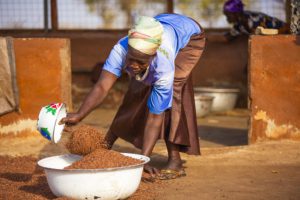
 Ghana, a small country located in West Africa, has dealt with tremendous economic struggles since the 1990s. The good news is that the United Nations Development Programme (UNDP) recently shared new data that confirms that positive strides have been made to improve multiple dimensions of poverty in health, education and living standards. The report confirms that between 2011 and 2017, poverty in Ghana decreased by nine percent. In addition, its GDP almost doubled from 2011 to 2019.
Ghana made significant changes to facilitate this progress. First, the nation diversified its economy to create more products and services in different sectors. This led to increased greater consumerism and higher employment, which allowed Ghana’s economy to flourish. However, with increased consumerism also came disparity. Because that disparity increased, poverty in Ghana continues to be a challenge.
Ghana’s Disparities in Consumption, Health and Regions
Wealth disparity in Ghana is extreme. The top 10% of Ghanaians consume more than the bottom 60%, and the lowest 10% only consume only 2%. Health disparities include the fact that only 2% of those in poverty are covered by the National Health Insurance Scheme and that wealthy children are three times more likely to live past age five than poor children. Further, there is a disparity in poverty rates between regions and also between urban and rural Ghanaians. The Northern Region has the highest multidimensional poverty with eight out of 10 people being multidimensionally poor. The Upper East Region is close behind with seven out of 10 people multidimensionally poor. People in rural Ghana are twice as likely to be poor than people in urban areas.
Change to Eliminate Disparity and Continue to Improve the Economy
The UNDP is championing specific tactics to eliminate disparity and to continue to improve the Ghanaian economy. First, it suggests investment in better healthcare in all regions and an emphasis on getting all Ghanaians national health insurance. Second, it advocates for a focus on enhanced school enrollment and completion in some regions and better nutrition for children in others. Third, it calls for a poverty reduction strategy for those regions where poverty is extremely high.
Other organizations are joining the UNDP to improve conditions in Ghana. These include The Hunger Project, in working toward alleviating poverty in Ghana. Since 1995, The Hunger Project has aided over 300,000 people by focusing on improving infrastructure, education reform and sanitation. The project focuses on building community centers, or “epicenters”, in order to collectively unify communities within Ghana and provide resources, such as electricity and clean water. As of now, over 40 epicenters receive clean water and sanitation, and almost all of them have health committees and clinics.
Finally, many families in both the Upper West and Upper East Regions have found creative means of accumulating extra income, such as the production of Shea butter. Some businesses, like Star Shea, provide loans for women as a means of starting production and accommodating transportation costs.
Many women believe these loans were advantageous in pursuing more educational opportunities. For example, Mrs. Atorneygene, a local resident in Ghana, utilized the proceeds from her Shea butter production to provide educational tools for her granddaughter. Changes being made on a local level, such as the production of Shea butter, have proved to be beneficial in providing opportunities to marginalized regions.
Outlook for Ghana
Even with the problems that Ghana has faced in the past, the nation has reached tremendous milestones and has made effective improvements within the last decade. With the help of the government, the UNDP, The Hunger Project and people in the community, Ghana has been able to make positive changes relating to its economy and wealth disparities. Now, Ghana has set a precedent regarding the instrumental changes needed to alleviate poverty.
– Aishwarya Thiyagarajan
Photo: Flickr

A Look at Homelessness in Zimbabwe
Caroline Richards first saw homelessness in Zimbabwe in the nation’s capital, Harare. As a 19-year-old girl from the western United States, she had never witnessed anything like it before. “Some people had large tumors on their legs, or others were blind,” she said. “I was shocked when I first saw a tumor on someone’s leg that was around the size of a cantaloupe. I had never seen [anything] like that.” Richards left her home state of Utah in March 2016 to spend 18 months in Zimbabwe as a missionary for The Church of Jesus Christ of Latter-day Saints. While there, she often interacted with the locals, entered their homes and saw how they lived.
Zimbabwe is a nation in sub-Saharan Africa with a population of over 14.8 million people, located south of Zambia and Malawi. More than 72% of the population lives below the poverty line, a rate that has unfortunately worsened over the years. Homelessness in Zimbabwe is an ongoing crisis, with the national housing shortage estimated at more than 1 million and over 1.2 million people on the government’s national housing waiting list. From Richards’ perspective, homelessness in Zimbabwe is often caused by a physical inability, unlike homelessness in the United States. “Most of the homelessness I saw was because of physical ailment or impairment,” she said. “There are some people who just haven’t been able to make it in the economy because every odd is against them.”
Unemployment and Homelessness
It is reported that the unemployment rate in Zimbabwe is as high as 90%. Richards said she thinks this is a major contributor to homelessness in Zimbabwe. “The government doesn’t take as good of care of the Zimbabwean people as they should. The economy is in disarray all of the time which makes it difficult for the people to make ends meet,” she said. For example, in 2005, the government of Zimbabwe started a campaign, “Operation Restore Order,” to destroy slums across the country, leaving 700,000 people homeless. Former President Robert Mugabe and his government officials claimed the operation was a crackdown against illegal housing. The campaign was met with strong condemnation from several groups and organizations, including the United Nations.
A Dense Population
Richards added that the housing shortage is also due to Zimbabwe being densely populated. “There are a lot of people in small quarters,” she said. “Because of the poor economy, it’s not uncommon for families to rent one room from a house with a communal bathroom shared with 4-6 families because that’s all they can afford.”
Richards described the Zimbabwean homes she entered as “made of concrete” and “well-kept.” Since many houses throughout the country don’t have electricity, they leave their windows open to let in natural light. Throughout her time in Zimbabwe, Richards lived in some of the smaller rural areas and shared homes with local Zimbabweans. Though she often witnessed the negative impact of homelessness on these citizens, she also learned from how they lived. “Living in Zimbabwe taught me that it’s possible to live comfortably in the most humble of circumstances,” she reflected. “Zimbabweans have very impressive hygiene, and even if a whole family of 6 was living in one little room, it would be perfectly clean, all their clothes would be ironed, and the children bathed. They made the most out of what they had and are creative in the things they do to make ends meet.”
Help for the Homeless
Though housing shortages and homelessness in Zimbabwe are still very prevalent, some organizations are striving to eliminate them. Homeless International, The Zimbabwe Homeless People’s Federation and the Dialogue on Shelter for the Homeless in Zimbabwe Trust are working together to address issues of homelessness in Zimbabwe, particularly low-income housing. In partnership with the city of Harare, the Zimbabwe Homeless People’s Federation and the Dialogue on Shelter, which acts as the technical partner for the Federation, are working on the Harare Slum Upgrading Project. Funded by the Bill & Melinda Gates Foundation, the project began in 2010 as a pilot project to accommodate 16 families and provide infrastructural services for 480 families in a certain Zimbabwean suburb. The project is still ongoing and impacts many community members, seeking to improve their living conditions. Homelessness in Zimbabwe is still a serious problem, but these and other organizations are doing their part to conquer it.
– Emma Benson
Photo: Flickr
Poverty in Sweden
When discussing global poverty, most tend to think of cases of extreme poverty. However, poverty exists everywhere, even in prosperous countries. Sweden, a Nordic country in Northern Europe known for its progressive politics, is home to a population of about 10 million. Although Sweden is a relatively wealthy country, 16.2% of its people are at risk of falling into poverty. Here are the top 10 facts about poverty in Sweden.
Top 10 Facts About Poverty in Sweden
As the Swedish government focuses on opportunities for its citizens, aiming for equality across genders, age and socioeconomic status, the country offers hope to its citizens that they will continue to reduce their poverty statistics.
– Kacie Fredrick
Photo: Flickr
How Lab-Grown Diamonds Are Reducing Poverty
The Rise of the Lab-Grown Diamond
Lab-grown diamonds are synthesized in laboratories with industrial processes that mimic how diamonds form inside the Earth or in outer space. In recent years, scientists have greatly improved the techniques needed to synthetically manufacture diamonds. As recently as the early 2000s, the only lab-grown diamonds available were either very small or tinted with impurities. In the last five years, however, the diamond industry has perfected the synthetic fabrication of diamonds. These technological advancements allow for the production of large, clear stones that bear no significant difference from natural diamonds.
This technological advancement has taken off quickly. In 2016, around a dozen lab diamond growers and sellers formed a trade group called the International Grown Diamond Association (IGDA). The IGDA now has around 50 members. Lab-grown diamonds now account for around 2-3% of the $14 billion diamond market. Some analysts predict that lab-grown diamonds will occupy up to 10% of the market by 2030.
Growing Acceptance of Lab-Grown Diamonds
Large corporations and organizations have made adjustments to welcome the lab-grown diamond into the diamond industry. The Federal Trade Commission has expanded the definition of a diamond to include lab-grown gems. In addition, the FTC has dropped “synthetic” as a recommended descriptor for lab-grown diamonds. The success of lab-grown diamonds has even pushed De Beers Group, the global diamond monopoly which once vowed never to sell man-made diamonds, to create a lab-grown diamond line known as Lightbox Jewelry.
Consumers have also demonstrated their interest in the lab-grown diamond. Primarily, lab-grown diamonds are often cheaper than mined diamonds. This allows consumers to purchase a larger diamond ring than they otherwise would be able to afford. In a 2018 consumer research survey conducted by MVI Marketing, around 66% of millennials said they would consider a lab-grown diamond and 23% said they would definitely buy a lab-grown diamond ring.
Merging Lab-Grown Diamonds and Activism
Several smaller companies that offer lab-grown diamonds have formed as well. These companies utilize their diamonds’ ethical sourcing and sustainability as a major selling point. Additionally, these companies are engaging in many forms of activism. Many of these companies divert a percentage of their profits to poverty reduction and humanitarian efforts around the world.
Collectively, the efforts of these companies will bring more awareness to issues in the diamond industry as well as aid the communities that were directly exploited by unethical mining practices. As technological and industrial capabilities increase, it is hoped that the diamond industry will take advantage and slowly transition away from its dependence on hazardous mines and labor practices.
Lab-Grown Diamond Companies Funding Humanitarian Projects:
– Antoinette Fang
Photo: Flickr
Hunger in Nigeria: A Crisis Impacted by COVID-19
The Boko Haram Insurgency and Crisis in the Northeast
In northeastern Nigeria, Boko Haram insurgency attacks and other conflicts have displaced two million people. With assistance from Benin, Chad, Niger and Cameroon, the Nigerian military has expelled the group from several northeastern provinces. Boko Haram still holds control over villages and other small territories. It continues to launch deadly attacks, often against women and children.
These attacks have contributed to a decline in agricultural production through the destruction of productive equipment and the displacement of farmers. In 2017, two senior politicians in Nigeria’s Borno state, which is the epicenter of the insurgency, sent a message to Boko Haram. Kashim Shettima and Olusegun Obasanjo donated 36 metric tons of maize, cowpea and rice seed and hundreds of new tractors to farmers. The officials saw an opportunity for the region to move forward in agriculture despite the conflict.
The northeast region of the country has a history of chronic food insecurity. Unfortunately, it is now in what the Famine Early Warning System Network describes as the crisis or emergency stages of acute food insecurity. Almost three million people in the region are food insecure, according to the WFP.
In November 2019, Cadre Harmonisé, a regional group that aims to diminish hunger in Nigeria, released a monthly report. It estimated that 2.6 million people in the Adamawa, Borno and Yobe states were severely food insecure. Without continued humanitarian support, the report projected the number would rise to 3.6 million by mid-2020.
COVID-19 Impact
There have been 35,454 confirmed cases of COVID-19 in Nigeria and 772 deaths, according to Johns Hopkins University. The pandemic is affecting every aspect of Nigeria’s economy.
“Countries like Nigeria are large food importers but are now being doubly hit – by COVID-19 and by plunging oil prices, the country’s main source of revenue, decimating the government’s budget and making food and other imports even more expensive,” said Julie Howard, a senior adviser on global food security at the Center for Strategic and International Studies (CSIS).
COVID-19 is threatening the already fragile state of hunger in Nigeria. Citizens across the country are going against pandemic regulations to sell small items or beg for food on the streets. In Lagos, Nigeria’s commercial capital, the federal government and humanitarian organizations distribute free food to people whose food supply has been cut off by pandemic safety measures. However, many risk stampedes to get the food and some leave empty-handed.
“We were scrambling for food when my sister with a young baby on her back was pushed away, and she had to give up,” said Folashade Samuel, a resident of the Lagos slums. “The situation is very, very tough. It is very dangerous to scramble for food because you can fall and get trampled on.”
Additionally, lockdowns and border closures within the nation pose a danger to the agricultural sector, which forms the base of the Nigerian economy. For most Nigerians, agriculture serves as the primary source of livelihood, with the sector employing 36.5% of the entire labor force. More than 30 million naira (about $77,500) had been lost as of May 2020 in the yam markets alone because of the pandemic lockdowns.
In order to combat the pandemic’s adverse effects on agriculture, the Nigerian government created a task force. This task force is creating ID cards to allow agricultural workers to move freely. The agriculture ministry and central bank are working to provide support through locally produced fertilizers and financial expansion for farmers.
What is Being Done?
This June, the Nigerian government launched a seed support initiative in partnership with a group of agricultural research institutes and programs. The initiative worked to deliver improved seeds to farmers in 13 states in order to lessen the harmful impact of the pandemic on hunger in Nigeria.
In Adam’s home city, Maiduguri, the United Nations Humanitarian Air Service (UNHAS) received presidential clearance to continue emergency operations, which include delivering food. The WFP manages the UNHAS. While its operations are limited, this humanitarian aid provides support similar to the $47 Adam carried that day in the market.
Along with managing UNHAS, the WFP distributed food and cash assistance to 1.2 million Nigerians in 2017 and 2018. During the pandemic, the WFP has continued its outreach and efforts to curb hunger in Nigeria, assisting 632,500 people with food and nutritional needs. Because schools often provide a much-needed source of food for children, the WFP is also supporting the government in adjusting the national home-grown school feeding programme to reach nine million children while schools are closed.
Many people in Nigeria face hunger and are in need of help. The Boko Haram Insurgency and the COVID-19 pandemic have exacerbated the problem of food insecurity in the country. As a result, the government and outside organizations are stepping in to help those in need and work to decrease hunger in Nigeria.
– Olivia du Bois
Photo: Flickr
Hunger in Eswatini Remains Severe
The Kingdom of Eswatini (referred to as Swaziland until 2019) is a small country in the southern tip of Africa, bordering South Africa and Mozambique. The country has a dense population of around 1.14 million, and it is estimated that 63% live below the poverty line. Eswatini is currently ranked 74 out of 117 countries on the Global Hunger Index and received a GHI score of 20.9, putting them at a “serious” hunger level. The 2019 Eswatini Vulnerability Assessment and Analysis (VAA) estimated that as much as 25% of the rural population — around 232,000 people — experience severe hunger and food insecurity during the lean season.
Little to no rain across Eswatini poses a huge threat for the harvest season. Many farmers choose not to plant their usual amount of crops in anticipation of severe drought, and crop production is projected to decrease by 30% in the coming years. Labor opportunities on farms also decrease, as a result depriving some people of their source of income for the season. Decreased crop yield leads to a huge spike in prices, which limits food access for those already living in poverty.
Hunger Leads to Increased Sickness and Disease
Sickness and disease are typically more prevalent in tight-knit communities that face hunger and poverty daily. Often, sickness in impoverished countries is a direct result of prolonged deficiencies of essential nutrients and inadequate caloric intake. Eswatini has a high prevalence of HIV/AIDS, with an estimated 25% of the population being infected. HIV is a disease that harms the immune system, meaning many Swazi citizens experiencing HIV are at a heightened risk for other infections.
The under-five mortality rate for children in Eswatini is 54 out of 1,000 live births, the lowest value on record as of 2018. In terms of maternal health in Swazi women, there is not enough data on their specific nutrition and diet habits. However, it is important to note that approximately one-third of women of childbearing age experience HIV, compared to only 19% of men. The high prevalence of HIV in pregnant and nursing mothers increases the likelihood that their children will experience nutrient deficiencies as a result. Fortunately, HIV can be prevented with proper sexual practices and an increase in condom usage.
Factors Increasing Hunger in Eswatini
Citizens have attempted to import maize from the neighboring country of South Africa, but much of it is confiscated by border control due to strict limitations on the amount of foreign products allowed into the country. Government officials claim that these regulations help protect domestic vendors and farmers, but many citizens are unable to afford the local prices. With limited access to imported goods and steep domestic rates, many Eswatini people are left helpless and hungry.
Since the onset of the COVID-19 pandemic, nearly all the residents of the Kwaluseni township have lost their jobs, forcing people to stay home and avoid going to their place of work. Already impoverished citizens, now with no source of income, have resorted to scavenging for food. Some have even been sighted consuming weeds for sustenance. Local soup kitchens and schools were also forced to shut their doors due to coronavirus concerns, leaving more than 11,000 children without daily access to meals. Before, children received two meals a day provided by the government and various international donors. Now, the Swazi government has offered little to no aid to combat the exacerbated hunger crisis, especially in its larger cities.
Foreign Assistance Has Begun, But It’s Not Enough
Many foreign aid organizations have helped fund the World Food Programme (WFP) in Eswatini, reaching over 55,000 people in vulnerable areas this past year. WFP also provides support to many orphans and vulnerable children by establishing Neighbourhood Care Points for food and social services across the country. While much is being done to help the people of Eswatini, more resources are needed to cover a growing funding gap.
The hunger crisis in the Kingdom of Eswatini is an immense threat to the livelihoods and wellbeing of Swazi people. As a result, organizations such as the WFP are stepping in to help those in need. Along with the help of outside organizations, understanding hunger in Eswatini is an important step toward finding a long-lasting, successful solution.
– Mya Longacre
Photo: Flickr
Look to Join These College Organizations Fighting Global Poverty
Habitat for Humanity
Habitat for Humanity is a well-known nonprofit which focuses on the idea that everyone deserves proper shelter. Campus chapters are student-led college organizations that primarily engage with local poverty-stricken areas. The four functions of direct service, fundraising, advocating and educating guide nearly 500 campus chapters. Each chapter must partner with a local Habitat organization and be charted by Habitat for Humanity International to be officially recognized. The chapters also offer a Collegiate Challenge. In this volunteer program, a group of five or more selects a location and builds a home over the course of a week.
UNICEF
The United Nations Children’s Fund works in over 190 countries to continuously improve the lives of children in impoverished areas. Specifically, UNICEF Clubs is a grassroots movement that believes the U.S. must play a vital role in children’s rights advocacy. These clubs aim to train students to think and act as global citizens, crafting the skills necessary to support the most vulnerable groups.
American Red Cross
The American Red Cross has a number of opportunities for students. One example is the Red Cross Clubs, which hold regular service projects and leadership training to benefit members and their communities. Internationally, Red Cross and Red Crescent teams respond to natural disasters such as earthquakes, droughts and health epidemics. On top of this, they also preemptively prepare communities for future disasters and perform health-related services in remote areas. Other opportunities include 10-week internship programs for undergraduate and graduate students.
ONE Campus
ONE Campus is an action-focused college organization designed specifically for college students. It mobilizes students around the nation to fight extreme global poverty. Additionally, it strives to combine the crucial elements of advocacy campaigns with the energy and activism unique to the college experience. Unlike other college organizations, it exclusively targets advocacy and campaigning strategies to help polish skills for those interested in government relations and funding. Working closely with African activists, ONE Campus brings a community of young activists together to fight corruption and prioritize global poverty relief funding.
Human Rights Brigades
For those interested in law, the Human Rights Brigades is an international legal empowerment team with campus chapters. It helps families in rural areas that may not have access to the resources available in more populated areas. Specifically, it provides financial resources and legal education for remote and vulnerable communities in Panama and Honduras.
Internship Opportunities
Students often find that doing meaningful work at a nonprofit educates them about advocacy and sharpens their awareness. The Borgen Project offers part-time, three-month internships year-round for students in a number of categories, from Political Affairs to Journalism Internships. More information can be found here.
Joining any of these college organizations fighting global poverty can bring students closer together and implement positive global change at the same time.
– Elizabeth Qiao
Photo: Unsplash
Brazilian Initiatives that Support Favela Children
Brazil has experienced urbanization and subsequent economic growth in recent decades, as suggested by its annual GDP growth. However, residents of Brazilian slums, located in the outskirts of urban hotspots, are continuously marginalized. These slums are known as favelas, with impoverished populations passing 1.5 million in the greater São Paulo and Rio de Janeiro areas. Characterized by high drug-related violence rates, poor infrastructure and lack of opportunities for socio-economic mobility, children of favelas are especially vulnerable to dire living conditions. In particular, favelas struggle to offer quality public education that allows children the opportunity to break away from the poverty cycle. Recent civil society initiatives that support favela children work to combat the root causes of persistent poverty by offering safe spaces and incentivizing further education.
Favela Children and Education
In comparison to students from wealthier communities, most of whom are able to access the country’s superior private system, favela children experience failure rates by third grade over seven times higher than their wealthier peers. Moreover, lack of incentives to pursue education contributes to higher dropout rates. Rather than graduate high school and settle for an average weekly salary of 950 BRL ($177 USD), some favela children end up joining drug gangs in the pursuit of making a sufficient income.
For the many children in favelas who do wish to attend school, violence on the streets between drug factions and police has proven to be a disruptive barrier. When crime makes it too dangerous for children to go to class, school is canceled. Moreover, trauma due to widespread armed violence negatively affects children’s abilities to effectively learn.
Two Brazilian Initiatives That Support Favela Children
EduMais is a Rio de Janeiro-based NGO offering a variety of free after-school educational programs, ranging from English to web and game design. The diverse subjects offered, allow children to engage in extracurricular classes relevant to their interests, and each program incorporates favela-specific methodologies to best ensure enthusiasm and commitment. For example, “positive discipline” avoids punishment and instead adapts children to a classroom by having them help create rules at the beginning of the year. A trauma-sensitive approach ensures that lesson plans are catered toward children’s cognitive abilities. In addition, children enrolled in after-school programs remain in a healthy environment off the streets, and are therefore less likely to use drugs or fail out of school. EduMais encourages its students to value education as an important curiosity that remains useful beyond the classroom setting, and into adulthood.
Favela INC teaches English and business courses to adolescents living in the favela of Vidigal, located in southern Rio de Janeiro. Recognizing the region’s lack of entrepreneurial education opportunities, which contributes to residents’ limited abilities to achieve socio-economic mobility, the organization offers young residents free teaching and mentorship programs. The programs seek to foster well-rounded students ready to face the business world by focusing on four core areas: project planning, financial literacy, digital marketing and personal development. These programs offer students the tools, resources and newfound entrepreneurial spirit to transform their favelas’ economic and cultural ecosystems. Additionally, Favela INC aims to incentivize its students to pursue higher education after schooling, as only 1-3% of favela residents currently hold a university degree. Students are also connected to networks that they would not have been able to attain without the program, leading to a greater number of job opportunities moving forward.
Looking Forward
The historical exclusion of favela residents, as evidenced by the slums’ lack of quality education and widespread drug violence, has prevented many individuals from being able to escape from impoverished conditions. The grassroots initiatives of Favela INC and EduMais in Brazil’s favelas support favela children by providing educational opportunities, incentivizing and inspiring a passion for learning and offering the learned tools to succeed in the 21st-century job market. Through the power of education, community-based teaching aims to alleviate economic insecurity for the next generation of favela adults and tackle Brazil’s root causes of widespread poverty.
– Breana Stanski
Photo: Flickr
Tusome: Powering Childhood Learning in Kenya
Kenya, a country in East Africa, has made strides in battling poverty by reforming childhood education. In 2003 Kenya established a free primary school education program meant to ensure that young children receive a basic education. However, the Kenyan school system still has challenges to overcome. Teachers often lack proper training and support, and students often do not have enough school supplies. These obstacles ultimately contribute to low learning outcomes for students. Tusome, which means “let’s read” in Kiswahili, is a national literacy program powering childhood learning in Kenya that attempts to address these education shortfalls.
Origins of The Tusome National Literacy Program
Despite previous efforts to improve childhood learning outcomes by the Kenyan government, assessments from the years 2010-2014 showed no significant change in literacy and 40% of primary grade students could not understand their reading material. Tusome was built on this prior research and “was one of the first experiences of taking a piloted literacy program to national scale through government systems.” Tusome is funded by both the Kenyan government’s Ministry of Education and the USAID organization. The program was implemented in January of 2015 and will run until 2020 with a goal of improving reading for 6.7 million students.
Training and Support of Faculty
Two of Tusome’s key goals are to address the need for faculty training and support in the Kenyan school system. Tusome educates teachers, administrators, coaches, and support staff on the Ministry of Education’s expected learning outcomes. The program also provides Curriculum Support Officers that regularly visit schools to coach and monitor teachers in learning outcomes, though these are not professionals trained in general classroom instruction. Youth associations are also working to help to tutor children and develop a reading culture in their area.
School Supplies and Integration of Technology
One of the Tusome program’s notable achievements is that is has provided 26 million textbooks and supplementary materials for primary school students, ensuring that each student has a textbook of their own. Tusome also offers its students tablets with digitized learning materials, which can also provide feedback and progress monitoring for teachers. The performance of each student is uploaded to a cloud-based network system which is meant to promote greater responsibility within the school system.
Conclusion
Tusome has been able to improve teacher support, training and availability of school materials in Kenyan primary schools. This is, in part, due to the integration of technology in the form of digital materials, tablets and cloud-based technology. Learning outcomes have been promising, even in the early pilot phase. In 1,384 schools, children who reached the Tusome standard for an understanding of the English language increased from 8.6% to 43.7%. Overall, Tusome is considered a successful example of large-scale governmental implementation of a national program that can power childhood learning in Kenya, and serve as a model to education systems around the world.
– Joseph Maria
Photo: Flickr
Poverty in Ghana From Wealth Disparity
Ghana made significant changes to facilitate this progress. First, the nation diversified its economy to create more products and services in different sectors. This led to increased greater consumerism and higher employment, which allowed Ghana’s economy to flourish. However, with increased consumerism also came disparity. Because that disparity increased, poverty in Ghana continues to be a challenge.
Ghana’s Disparities in Consumption, Health and Regions
Wealth disparity in Ghana is extreme. The top 10% of Ghanaians consume more than the bottom 60%, and the lowest 10% only consume only 2%. Health disparities include the fact that only 2% of those in poverty are covered by the National Health Insurance Scheme and that wealthy children are three times more likely to live past age five than poor children. Further, there is a disparity in poverty rates between regions and also between urban and rural Ghanaians. The Northern Region has the highest multidimensional poverty with eight out of 10 people being multidimensionally poor. The Upper East Region is close behind with seven out of 10 people multidimensionally poor. People in rural Ghana are twice as likely to be poor than people in urban areas.
Change to Eliminate Disparity and Continue to Improve the Economy
The UNDP is championing specific tactics to eliminate disparity and to continue to improve the Ghanaian economy. First, it suggests investment in better healthcare in all regions and an emphasis on getting all Ghanaians national health insurance. Second, it advocates for a focus on enhanced school enrollment and completion in some regions and better nutrition for children in others. Third, it calls for a poverty reduction strategy for those regions where poverty is extremely high.
Other organizations are joining the UNDP to improve conditions in Ghana. These include The Hunger Project, in working toward alleviating poverty in Ghana. Since 1995, The Hunger Project has aided over 300,000 people by focusing on improving infrastructure, education reform and sanitation. The project focuses on building community centers, or “epicenters”, in order to collectively unify communities within Ghana and provide resources, such as electricity and clean water. As of now, over 40 epicenters receive clean water and sanitation, and almost all of them have health committees and clinics.
Finally, many families in both the Upper West and Upper East Regions have found creative means of accumulating extra income, such as the production of Shea butter. Some businesses, like Star Shea, provide loans for women as a means of starting production and accommodating transportation costs.
Many women believe these loans were advantageous in pursuing more educational opportunities. For example, Mrs. Atorneygene, a local resident in Ghana, utilized the proceeds from her Shea butter production to provide educational tools for her granddaughter. Changes being made on a local level, such as the production of Shea butter, have proved to be beneficial in providing opportunities to marginalized regions.
Outlook for Ghana
Even with the problems that Ghana has faced in the past, the nation has reached tremendous milestones and has made effective improvements within the last decade. With the help of the government, the UNDP, The Hunger Project and people in the community, Ghana has been able to make positive changes relating to its economy and wealth disparities. Now, Ghana has set a precedent regarding the instrumental changes needed to alleviate poverty.
– Aishwarya Thiyagarajan
Photo: Flickr
5 Ways to Fight Hunger in Nicaragua
5 Initiatives to Fight Hunger in Nicaragua
Nicaragua has made progress in recent years. However, vulnerable groups still need assistance with fighting hunger, a direct result of poverty in the country. In order to address this, many organizations are working to foster the idea of food sovereignty and fight hunger in Nicaragua.
–Melanie McCrackin
Photo: Flickr