• Link to X
  • Link to Facebook
  • Link to Instagram
  • Link to TikTok
  • Link to Youtube
  • About
    • About Us
      • President
      • Board of Directors
      • Board of Advisors
      • Financials
      • Our Methodology
      • Success Tracker
      • Contact
  • Act Now
    • 30 Ways to Help
      • Email Congress
      • Call Congress
      • Volunteer
      • Courses & Certificates
      • Be a Donor
    • Internships
      • In-Office Internships
      • Remote Internships
    • Legislation
      • Politics 101
  • The Blog
  • The Podcast
  • Magazine
  • Donate
  • Click to open the search input field Click to open the search input field Search
  • Menu Menu

Tag Archive for: USAID

Information and news about mobile technology

Posts

Global Poverty

Eliminating Hepatitis C in Ukraine

Hepatitis C in UkraineHepatitis C is an infection transmitted by contact with infected blood or other body fluids that can result in fatal liver disease. The World Health Organization (WHO) reports that Hepatitis C infects more than 185 million people around the world, and 350,000 people die from the infection every year. In Ukraine, more than two million of its 45.2 million population are infected with Hepatitis C.

Seventy to 80 percent of those with an acute Hepatitis C infection do not show symptoms, which can prove dangerous when trying to prevent the spread of Hepatitis C. The annual mortality rate from Hepatitis C in Ukraine has increased by 141.7 percent since 1990 (an average 6.2 percent per year).

Hepatitis C treatment can be prohibitively expensive for the world’s poor. In 2015, the lowest cost for the 12-week treatment course of Sofosbuvir, an antiviral used to treat Hepatitis C, was $900, a price not suitable for low-income Ukrainians suffering from the infection.

In 2013, the Ukrainian government approved the first National Targeted Program of HCV Prevention, Diagnosis and Treatment. The state budget only funds the treatment component of the program, and this funding accounts for a mere 20 percent of the existing need.

U.S. organizations are doing their part as well. The United States Agency for International Development (USAID) launched the EQUIP project to fight HIV and AIDS, but EQUIP and USAID recently partnered with the Ukrainian government to fight Hepatitis C in Ukraine. EQUIP provides a simplified system with two stages of testing and treatment for 4,000 patients with Hepatitis C. In the first stage, 800 people with serious cases of double and triple pathology – a combination of HIV, Hepatitis C and Tuberculosis — will be treated; in the second, 3,200 individuals will receive treatment. Patients will be given a fixed dose of Ledipasvir and Sofosbuvir.

EQUIP is aimed at developing new treatment protocols and calculating its cost for Ukrainian patients. As well as giving doctors the experience they need with the medication to effectively treat patients and consult with the Ukrainian Government to create programs to increase access to those who need treatment. EQUIP is determined to eliminate viral Hepatitis by 2030.

With a combination of national and international efforts, we can end the spread of Hepatitis C in Ukraine.

– Tiffany Santos

Photo: Google

August 23, 2017
https://borgenproject.org/wp-content/uploads/borgen-project-logo.svg 0 0 Borgen Project https://borgenproject.org/wp-content/uploads/borgen-project-logo.svg Borgen Project2017-08-23 07:30:292024-06-05 04:52:30Eliminating Hepatitis C in Ukraine
Global Poverty, Human Rights

Strengthening Communities to Curb Gang Violence in Honduras

Gang Violence in HondurasSan Pedro Sula, Honduras is one of the most dangerous cities in the world. Thus, organizations and local leaders are combating gang violence in Honduras by helping young people find and make their own families.One teenager skateboards with friends he considers brothers. Another works on diagramming a family tree. Others join in soccer

One teenager skateboards with friends he considers brothers. Another works on diagramming a family tree. Others join in soccer games, or hang out at recreation centers. These activities have the same goal: to prevent gang violence from becoming a way of life for the next generation.

In a country where the maras, or gangs, recruit kids as young as 12, it becomes of vital importance that teens and youth find love and support elsewhere.  They want these kids to find support in their friends, families, and neighborhoods.

In the interest of halting gang violence in Honduras, USAID has partnered with local citizens to open nearly 50 outreach centers. Teens can go there to learn computer skills, play musical instruments, and participate in sports. Some outreach centers, like Casa de la Esperanza (House of Hope), organize movie nights and other events. The U.S. has also supported the clearing and revitalizing of 10 abandoned soccer fields to prevent gang violence in Honduras.

Fun activities, when combined with a confident leader, can form stable, even familial, bonds. The best example of this may be Jesse Recinos, who founded the club Skate Brothers. Recinos was nearly killed at the age of 16 after being wrongly accused of stealing from a member of a rival gang. In the aftermath of the experience, he decided to change his own life, and the lives of others, by bringing at-risk youth together to do skateboarding, BMX, rollerblading and breakdancing.

The club is about more than just busting tricks, and Recinos is more than just an instructor. He invites the kids to his house for meals and meets with their school teachers. Recinos is intent on keeping “his guys” away from gang violence and crime. He is at once a teacher, parent, and big brother.

Some programs focus on strengthening trust and communication inside the home, such as Proponte Mas, which offers counseling sessions to teens and young adults who are at risk for joining gangs.

Over the course of a year, the counselors work to reconnect the youth with separated family members. The separations typically occur either because violence has ruptured lines of communication or because relatives have migrated elsewhere.  Extended families draw closer together, offering the youth a strong support system to fall back on.

Being part of a family, the teens learn, also means being accountable. They are encouraged to do their schoolwork and to ask permission before leaving the house. Activities like the family tree diagram help spark an interest in family history. They learn to identify themselves as part of their family before any other group.

Sometimes, accountability to a family goes hand-in-hand with being able to provide for a spouse and children. Proyecto METAS, a program sponsored by the Education Development Center, was founded to provide unemployed young people, particularly at-risk youth or those who had left gangs, with skills they can use in the workforce. By March of 2017, the program had reached 56,000 youth and created 4,000 jobs and internships.

Tragedy still strikes frequently. Children die. Families flee. Moreover, the killers continue to walk away with impunity.  Honduras has one of the highest murder rates in the world: 60 out of 100,000 residents become homicide victims. Rampant corruption among the police and the government means that only 4 percent of these crimes result in convictions.

The American Justice Society (AJS), a Christian nonprofit association, is committed to halting gang violence in Honduras by putting these murderers behind bars. Its teams consist of a lawyer, an investigator and a psychologist, and they assist the government in building homicide and sexual abuse cases. AJS connects victims and witnesses to officials who are trustworthy.

One of the biggest challenges in prosecuting homicides is getting witnesses to appear in court. Witnesses who speak out, particularly against gang members, risk becoming murder victims themselves. The organization says that it can take anywhere from four to 15 visits to convince a witness to testify.

Psychologists provide emotional support for the victims and witnesses and their families. They go over testimony with the witnesses and give them exercises to calm their fears. In cases of sexual abuse, the psychologists continue to work with victims and their families even after the trial is over.

As criminals are put behind bars, halting gang violence in Honduras is, even more, dependent on the country’s youth. For things to truly improve, programs must expand their scope and work with youth who are already gang members.

Those who fight for the protection of human rights must also be kept safe. The U.N. has recently opened a new human rights office in Honduras, and is working to improve relations between human rights workers and the government.

Journalist Sonia Nazario, in a Sunday opinion column for the New York Times, urged the U.S. to put pressure on Honduras to spend more of its budget on violence prevention. She also brought up the problem that much of the aid that the U.S. sets aside for Honduras becomes caught up in U.S. bureaucracy and does not reach the nonprofits and local citizens who need it. There is still work to do. However, at least for now, progress has been made.

– Emilia Otte
Photo: Flickr
August 21, 2017
https://borgenproject.org/wp-content/uploads/borgen-project-logo.svg 0 0 Kim Thelwell https://borgenproject.org/wp-content/uploads/borgen-project-logo.svg Kim Thelwell2017-08-21 07:30:082024-05-24 23:47:16Strengthening Communities to Curb Gang Violence in Honduras
Advocacy, Global Poverty

How to Help the Extreme Poor in India

How to Help the Extreme Poor in IndiaIndia is the second most populous country in the world and hosts one-third of the world’s extreme poor. It has the third highest number of people living with and dying from HIV/AIDS, and 60.4 percent of its population lives with unimproved sanitation facility access, mostly affecting Indians living in rural communities. Here are four ways to help the extreme poor in India.
Donate
According to the United Nations International Children’s Emergency Fund (UNICEF), 47 percent of Indian girls are married by the age of 18. While it is illegal for girls in India to marry before the age of 18, many still do because their families live in poverty.

One method to combat child marriage is education. The non-profit Girls Not Brides, for example, is currently fundraising for Shadhika, an organization that pays tuition for at-risk Indian girls. Right now, they are $8,568 away from a $30,000 goal.

Donations to this cause enable more Indian girls living in extreme poverty to attend school and avoid underage marriage. By donating to this and other similar organizations, those who are not currently in India can still assist those in poverty.

Contact Congress
For 2017, the U.S. government plans to spend $49.5 million of foreign aid on health in India.  Half of this aid will be allocated for HIV/AIDS. To ensure the effectiveness of this aid, Congress is currently in the process of potentially passing the Global Health Innovation Act (H.R. 1660).

This act requires the United States Agency for International Development (USAID) to give an annual report to Congress describing the “development and use of global health innovations” in their work.

Emailing or calling elected representatives will support this bill on top of promoting the use of health innovation to achieve an HIV/AIDS-free generation. Representatives need to know that their constituents are interested in a goal in order for it to get the attention it deserves.

Shop
Shopping is another way to help the extreme poor in India. Currently, about ten million Indian women are commercial sex workers–the Anchal Project wants to change that.

The Anchal Project employs Indian women, 85 percent of whom were once in the sex trade, to create and make original designs for ecologically sound clothing and fabrics (mainly scarves).

Shopping here will support women in their goal of earning full-time employment and leading change in their families and communities, in effect supporting the extreme poor in working their way out of poverty.

Stay Informed
As most of the world’s poor live in India, the country is a great focus for The Borgen Project and other organizations working to fight poverty. Read up on current struggles and efforts to improve conditions for the poor in India to better learn how you can keep helping in the future.

While people are often told that they as an individual can change the world, it often seems that the change desired is too arduous to achieve. Nevertheless, a community of people can come together to end global poverty and help the extreme poor in India.

– Sean Newhouse

Photo: Flickr

August 19, 2017
https://borgenproject.org/wp-content/uploads/borgen-project-logo.svg 0 0 Borgen Project https://borgenproject.org/wp-content/uploads/borgen-project-logo.svg Borgen Project2017-08-19 01:30:002024-05-28 00:15:53How to Help the Extreme Poor in India
Global Poverty, Nonprofit Organizations and NGOs

How to Help People in Central African Republic

How to Help People in Central African RepublicThe Central African Republic (CAR) is ranked 188 out of 188 countries in the 2016 United Nation’s Human Development Index. Its ranking is determined by markers of income inequality and life expectancy. Its rank speaks largely to the estimated 2.7 million citizens in need of immediate humanitarian assistance, its half a million citizens internally and externally displaced resulting from years of civil conflict and violence and the absence of basic infrastructure.

Bearing in mind CAR’s long road towards social, political and economic recovery, many ask the question: how to help people in Central African Republic? Three agencies worth considering are the United Nations World Food Programme (WFP), United States Agency for International Development (USAID) and International Rescue Committee (IRC).

  1. U.N. World Food Programme
    The WFP strives to strengthen communities within CAR with short-term and long-term approaches. In the short-term, the WFP distributes food for the internally displaced in shelter communities and local populations. In the long-term, the WFP has a quid pro quo approach in that the organization will supply food for the participation of local populations in rebuilding and repairing community infrastructure. It is estimated that through food, cash and vouchers the WFP has reached up to 305,000 people in the CAR, with plans to reach at least 700,000 by the end of this year. Specialized nutrition packages for pregnant women, nursing mothers and young children, as well as management of the U.N. Humanitarian Air Service (UNHAS), also fall under the scope of the WFP.
  2. United States Agency for International Aid
    Earlier in July it was announced that the World Food Programme received a $11 million donation from the USAID in assisting the growing hunger issue in Central African Republic. Reportedly, this aid will help bring food supplies to approximately 550,000 people through CAR. Importantly, the U.S. Fiscal Year 2017 published that in response to CAR a total of $57,580,923 would be made available.
  3. International Rescue Committee
    Since 2006, the IRC has been assisting in Central African Republic by providing emergency funds, rebuilding educational infrastructure for children and working to recover clean water sources for communities. Amongst many other forms of assistance, the IRC has outlined its priorities until 2020 to achieve its short-term and long-term goals in CAR. Currently, its primary goals are to achieve widespread health, safety, education, economic sustainability and helping the displaced regain their decision-making agency. Moreover, its gendered approach to its solutions sets the IRC apart from many agencies, as the IRC has a special focus on underscoring its dedication to gender equality in its relief programs.

These three standout organizations have made great efforts to mitigate the humanitarian crisis in Central African Republic. In asking how to help people in Central African Republic, civil society members can volunteer their time, donate money or help connect businesses that are willing to help with these international agencies. Undoubtedly, pulling CAR out of its long plight is no easy feat, one that requires the attention of the public and private sector. Yet, with these agencies and the CAR’s problems gaining international traction, there shows to be steady progression being made. How to help people in Central African Republic largely relies on a steady influx of international aid and successful mechanism of peacebuilding.

– Sydney Nam

August 15, 2017
https://borgenproject.org/wp-content/uploads/borgen-project-logo.svg 0 0 Borgen Project https://borgenproject.org/wp-content/uploads/borgen-project-logo.svg Borgen Project2017-08-15 07:30:412020-06-12 08:33:58How to Help People in Central African Republic
Global Poverty, USAID

Working to End Neglected Tropical Diseases

End Neglected Tropical DiseasesPrevalent in more than 149 countries, Neglected Tropical Diseases (NTDs) are a range of parasitic and bacterial diseases that affect more than a billion people across the world. Neglected Tropical Diseases disproportionately target poor and vulnerable populations in tropical areas, and if not treated, can often lead to physical and intellectual impairments. Fortunately, humanitarian organizations such as USAID are working alongside U.S. Congress in order to end Neglected Tropical Diseases.
Typically caused by inadequate sanitation and lack of clean drinking water, NTDs vary in their effect but can prove detrimental, especially in children. These diseases can impair intellectual development in children as well as cause blindness and other physical disabilities. The health costs are not the problem caused by NTDs, as they also reduce school enrollment and prevent economic progress because infected individuals are limited in ability. This is why it is critical to end Neglected Tropical Diseases.

USAID is leading the global fight against NTDs. It implemented large-scale treatment programs and research for the affected countries. In the past 10 years, the U.S. made great progress in this fight, giving more than $11.1 billion in donated medicines. This contribution provided more than 1.6 billion treatments to approximately 743 million individuals.

The U.S. impact does not end there. In addition to the treatment programs and research implemented by USAID, Congress also prioritized this issue by introducing the End Neglected Tropical Diseases Act (H.R. 1415).

H.R. 1415, sponsored by Representative Christopher Smith (D-NJ), advances the current program working against NTDs. This act prioritizes improving the current program by monitoring funding, including morbidity management in treatment plans and expanding research development. So far, this act has five cosponsors and was referred to three House sub-committees.

Although USAID led a strong battle against NTDs, there is still much work to be done for the one billion people affected by this problem. As NTDs are slowly eradicated, the livelihoods of the world’s poor will begin to improve as children can return to school and adults are able to achieve financial stability.

– Kelly Hayes

Photo: Flickr

August 13, 2017
https://borgenproject.org/wp-content/uploads/borgen-project-logo.svg 0 0 Borgen Project https://borgenproject.org/wp-content/uploads/borgen-project-logo.svg Borgen Project2017-08-13 01:30:382024-05-28 00:15:24Working to End Neglected Tropical Diseases
Aid, Global Poverty, USAID

USAID Totals $265.3 Million to UNDP for Stability in Iraq

Stability in IraqAs fighting continues in cities like Mosul, which formerly served as a strong base for the so-called Islamic State (ISIS), there is a growing need to rebuild newly liberated areas and infrastructure for stability in Iraq. In an effort to address this, recent pledges were declared by the United States Agency for International Development (USAID) for an additional $150 million in funds to go to the United Nations Development Program (UNDP). This brings the total U.S. contribution to stability in Iraq to $265.3 million.

The UNDP manages to work with the Iraqi government, with backing from the prime minister and members of the Coalition to Degrade and Defeat ISIS, to assist retaken areas with the creation and subsidy of the Funding Facility for Stabilization (FFS). The FFS provides essential services like water and electricity, plus temporary employment opportunities and support for small businesses to help spur economic growth in the region.

Its approach is calculated, with teams dispatched into cities within days of them being approved as safe to consider damages and plans of action together with local authorities. They work to quickly repair water systems, electricity grids and other public infrastructure, employ youth in work brigades to remove rubble and clear transport routes, support businesses with cash grants and restore education, health and municipal centers.

The FFS grew to work in 28 areas cleared by the Stabilization Committee, with more than 1,100 projects in Nineveh, Anbar, Salah al-Din, Diyala, Kirkuk and Mosul, Iraq — the largest project yet. In Mosul, close to 300 schemes are being executed to fix central water treatment plants, electrical substations, schools and health facilities.

The program was initially capitalized at $7 million from the USAID and is now supported by around 23 donors and $420 million in funding. The United States was joined by the United Kingdom government, which contributed an additional $5.2 million to the Funding Facility for Stabilization, bringing the total U.K. contribution toward stability in Iraq to $15 million.

With the funding of the FFS, two million or so displaced Iraqis were returned home and cities are once again flourishing as hubs of development since the conflict started in 2014.

– Zar-Tashiya Khan

Photo: Flickr

August 12, 2017
https://borgenproject.org/wp-content/uploads/borgen-project-logo.svg 0 0 Borgen Project https://borgenproject.org/wp-content/uploads/borgen-project-logo.svg Borgen Project2017-08-12 01:30:572024-05-28 00:15:19USAID Totals $265.3 Million to UNDP for Stability in Iraq
Government

Achieving Sustainable Peace After Colombia’s Class War

Colombia's Class War
In 2016, Senators Ben Cardin, Bob Corker and 14 co-sponsoring senators of the Senate Foreign Relations Committee passed a resolution to help Colombia end its armed conflict of about 50 years. The violence of Colombia’s class war between the rebel militias Revolutionary Armed Forces of Colombia (FARC) and the National Liberation Army (ELN) and right-wing paramilitaries has resulted in the displacement of three million people and the harming of more than eight million people.

The resolution reaffirms its commitment to the continued partnership between the United States and Colombia on issues of mutual security. These include counternarcotics cooperation, combating transnational organized crime and ensuring justice for those who caused indelible harm to our populations. In addition, it commands effort to end Colombia’s armed conflict and encourages informed public debate about the details of potential peace in advance of voter verification.

After deliberation, the United States Agency for International Development commenced the resolution called Justice for a Sustainable Peace (JSP). Responding to Colombia’s class war, JSP is a four-year commitment to expand Colombia’s justice institutions in order to serve justice at the local level. Therefore, it strengthens local civil society organizations that will increase citizen participation and support. The resolution is implemented in 45 municipalities in Cauca, Choco, Narino, Norte de Santander and Putumayo.

USAID explains that JSP promotes the rule of law in targeted areas by:

  • increasing citizen awareness of justice sector institutions and services
  • strengthening civil society engagement with government on justice issues
  • increasing citizen use of formal and informal justice services
  • strengthening ethnic justice and community conflict resolution mechanisms
  • developing effective judicial services and remedies
  • improving the effectiveness and transparency of land restitution judicial processes
  • addressing impunity for crimes such as gender-based violence, forced displacement, enforced disappearance, child recruitment, kidnapping and homicide.

Rebels and the government have been speaking on many topics, such as rural development, guaranteeing the exercise of political opposition and citizen participation, the end of armed conflict, drug trafficking and the rights of the conflict victims. Amplified communication between the people of Colombia and their government will surely produce mutuality. The methods of JSP will allow the resolution of abuses caused by Colombia’s class war and unify the people.

– Tiffany Santos

Photo: Flickr

August 10, 2017
https://borgenproject.org/wp-content/uploads/borgen-project-logo.svg 0 0 Borgen Project https://borgenproject.org/wp-content/uploads/borgen-project-logo.svg Borgen Project2017-08-10 01:30:262024-05-28 00:15:17Achieving Sustainable Peace After Colombia’s Class War
Global Poverty

The Rehabilitation of Jamaica’s Farmland

Jamaica's Farmland
To relieve the repercussions of climate change, the Agricultural Cooperative Development International and Volunteers in Overseas Cooperative Assistance (ACDI/Voca) and the United States Agency for International Development (USAID) are active in Jamaica’s farmland, implementing Jamaica Rural Economy and Ecosystems Adapting to Climate Change (Ja REEACH).

Phase one of Ja REEACH introduced agroforestry: agriculture incorporating the cultivation and conservation of trees. The Farmer Field School provided farmers equipped with the latest climate change-smart agriculture techniques. ACDI/Voca determined the local contributors to climate change, affecting the quality and quantity of produce in Jamaica’s farmland, to further develop an appropriate reduction action plan. Jamaican youth between the ages of 14 to 28 were educated on present and future impacts of climate change, the expectations of adaption and mitigation and the importance of their decisions in conjunction with ACDI/Voca programs.

Because of Ja REEACH’s first phase, 395,035 timber and fruit seedlings were provided to support reforestation, 300 farmers graduated from 17 climate change-smart agriculture schools in agroforestry and horticulture and 100 youth graduated from five climate change agent training groups. There was also an 83 percent increase in climate change awareness and 147,542 trees were planted in a forest reserve.

Phase two of Ja REEACH organized agroforestry systems that conserve the ecosystem and natural resources. Farmers created a riparian buffer strip to control and regulate the river bank to prevent overflowing and reduce the likelihood of flooding in the Ballard River of Jamaica’s Clarendon parish. Its forestry department provided more timber seedlings to expand the riparian buffer strip.

Clarendon’s James Hill Farming Group has group members that are trained by Home Economics Specialists from the Rural Agricultural Development Authority to learn how to adapt to and utilize Jamaica’s farmland. Using guava from recently matured guava trees, members are producing jams, jellies and purées. In Eastern Jamaica, the Golden Valley Apiculture Group has multiplied their initial 13 hives and tree seedlings into shipments of honey to a community of about 100 households in St. Thomas.

On July 14, two Memoranda of Understanding (MOU) were signed. The first between USAID and ACDI/Voca’s Ja REEACH with Red Stripe/Project Grow to overcome the challenges of commercially grown cassava, thus advancing food security in local space and economy, meeting the demands of Jamaican marketplaces. Red Stripe’s Project Grow is working on replacing imported high maltose corn syrup with locally grown cassava in their beer products. This change brings a consistent and secure market to farmers and expanding Red Stripe’s 1,000-acre farm. Red Stripe aims to substitute 40 percent of high-maltose corn syrup with cassava by 2020.

The second MOU creates a relationship between ACDI/Voca’s Ja REEACH with Delaware State University, University of Maryland Eastern Shore and Tuskegee University. These universities are providing archives of data, studied and collected over decades, training students and participating stakeholders. Both MOUs create networks harnessing the resources and knowledge of all parties to enhance Jamaica’s farmland as a collective response to climate change.

– Tiffany Santos

Photo: Flickr

August 9, 2017
https://borgenproject.org/wp-content/uploads/borgen-project-logo.svg 0 0 Borgen Project https://borgenproject.org/wp-content/uploads/borgen-project-logo.svg Borgen Project2017-08-09 07:30:222020-07-21 07:56:07The Rehabilitation of Jamaica’s Farmland
Education, Global Poverty, USAID

5 Facts About Education in Morocco

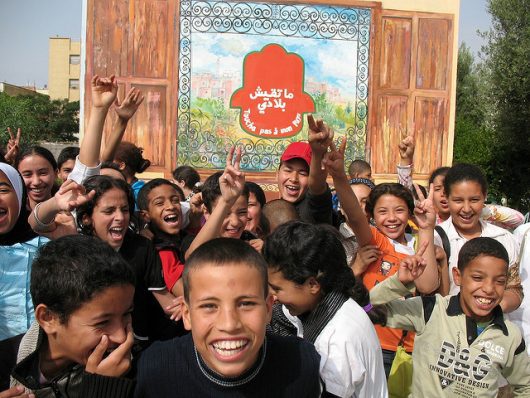
Education in Morocco
Since Morocco’s independence in 1956, its education system has typically been described as frustrating and disappointing. In recent years, Morocco has made numerous improvements and committed to solidifying the quality of its education system. Here are five facts about education in Morocco.

  1. The academic year begins in September and ends in June. The school system is structured into three separate parts. Primary takes students starting at the age of 6 and educates them until the age of 12. Secondary and tertiary last another three years each. Morocco also offers educational options beyond public schooling with higher learning institutions.
  2. Learning and knowledge are typically measured through literacy, the ability to read and write. Reading and writing are essential to reaching higher levels of education and scoring well on national performance tests. Morocco’s youth have made tremendous strides in increasing their literacy rates. The World Bank reports 95% of youth ages 15-24 years old can effectively read and write. This is an increase from 81.5% in 2011.
  3. Men in Morocco currently dominate the gross enrollment ratio for primary, secondary and tertiary education systems. The UNESCO chart for secondary education shows that male enrollment exceeded female enrollment by 10.8% in 2012. However, tables for 2015 show a decreased gap in admission ratio for primary and tertiary education.
  4. Public spending on education has been significantly rising in Morocco. According to the OCP Policy Center, government spending on education in 2014 was about 5.9% of GDP and 21.3% of total government spending. Since 2002, payments have been increasing by more than 5% per year almost every year. One analysis from the International Monetary Fund confirms a more organized use of this money has the potential to lead standardized test scores to increase by 53 points.
  5. Morocco suffers from low-quality education as reflected in performance indicators. In a 2014 update completed by the UNESCO Institute for Statistics, Morocco ranks in the thirtieth percentile for learning compared to other countries. The most recent PIRLS and TIMSS assessment results for 2011 showcase just how poor Morocco’s performance is. Test results reveal Morocco ranks second to last in math and last in reading compared to the 36 countries participating.

The good news is that experts and policymakers have fully recognized the remaining barriers for education in Morocco. A way forward has also been identified through their 2015-2030 Vision for Education in Morocco. The plan will address previous failures by targeting four specific areas including the priority for quality education. The country has already partnered with the USAID to make some of these goals a reality. So far 12,000 students have been reached with a new reading method and over 340 teachers have been trained on new reading instruction.

– Emilee Wessel

Photo: Flickr

August 8, 2017
https://borgenproject.org/wp-content/uploads/borgen-project-logo.svg 0 0 Kim Thelwell https://borgenproject.org/wp-content/uploads/borgen-project-logo.svg Kim Thelwell2017-08-08 01:30:492024-05-28 00:15:115 Facts About Education in Morocco
Children, Global Poverty

Suffering Children in Bangladesh

Children in Bangladesh
More than 60 million children currently call Bangladesh their home; nearly half of these children live in deep poverty. Many families don’t have the means to support themselves, which contributes to the country’s high rate of malnutrition.

Severe weather conditions make food security non-existent. Even something as essential as water can be a rarity for some civilians. In addition, medical help is a challenge to receive among the impoverished. Vaccines are not a commonality, and mothers receive minimal to no information on childbearing.

This disconnection from medical assistance causes many children in Bangladesh to be undocumented. Consequently, Bangladesh does not recognize them as citizens. They are thus unable to protect them from abuse, forced labor, prostitution, early marriage or child trafficking.

Education is free and mandatory for all children in Bangladesh ages six to eight; however, laborers and the disabled hardly obtain an education. The impoverished youth who do have the ability to attend school may have to abandon their education early in order to support their families.

The legal working age is 14, but children as young as six are working 100-hour workweeks and making an average of less than $2 a day.

What is being done to eliminate this issue?

World Child Cancer estimates that nearly two million children in Bangladesh need medical care, but only 1% obtain it. They are working to train healthcare professionals to give children crucial care and provide a consistent supply of medication.

The ‘Bangladesh MaMoni Health System Strength Project’ is a 4-year USAID and MCHIP funded program. The Project works to supply health care, family welfare and reduce maternal, newborn and child mortality. Through this organization, anyone can sponsor a child from early childhood to early adulthood. This will provide a healthy and safe place for them to live while supplying educational resources.

Bangladesh has begun to enforce major reforms in hopes to make their nation a middle-income country by 2021 to celebrate their 50th anniversary of independence. Bangladesh’s Vision 2021 and the associated Perspective Plan from 2010 to 2021 lays out the steps Bangladesh is planning to take. Bangladesh is working to lower the poverty rate to 15%; this will lift millions of people from poverty in the next eight years. In order for this goal to be met, income must be maintained, public investment must increase agricultural productivity and industries and services need to promote growth in high salaries. The nation’s goal may appear far-fetched, but from 2000 to 2010, the poverty level has lowered from 63 million to 47 million people, a 23% decrease. These new policies, combined with the financial help of civilians, are allowing more children to rise above poverty.

– Nicole Hentzell

Photo: Flickr

July 24, 2017
https://borgenproject.org/wp-content/uploads/borgen-project-logo.svg 0 0 Borgen Project https://borgenproject.org/wp-content/uploads/borgen-project-logo.svg Borgen Project2017-07-24 01:30:272024-05-28 00:03:16Suffering Children in Bangladesh
Page 69 of 92«‹6768697071›»

Get Smarter

  • Global Poverty 101
  • Global Poverty… The Good News
  • Global Poverty & U.S. Jobs
  • Global Poverty and National Security
  • Innovative Solutions to Poverty
  • Global Poverty & Aid FAQ’s
Search Search

Take Action

  • Call Congress
  • Email Congress
  • Donate
  • 30 Ways to Help
  • Volunteer Ops
  • Internships
  • Courses & Certificates
  • The Podcast
Borgen Project

“The Borgen Project is an incredible nonprofit organization that is addressing poverty and hunger and working towards ending them.”

-The Huffington Post

Inside The Borgen Project

  • Contact
  • About
  • Financials
  • President
  • Board of Directors
  • Board of Advisors

International Links

  • UK Email Parliament
  • UK Donate
  • Canada Email Parliament

Get Smarter

  • Global Poverty 101
  • Global Poverty… The Good News
  • Global Poverty & U.S. Jobs
  • Global Poverty and National Security
  • Innovative Solutions to Poverty
  • Global Poverty & Aid FAQ’s

Ways to Help

  • Call Congress
  • Email Congress
  • Donate
  • 30 Ways to Help
  • Volunteer Ops
  • Internships
  • Courses & Certificates
  • The Podcast
Scroll to top Scroll to top Scroll to top