• Link to X
  • Link to Facebook
  • Link to Instagram
  • Link to TikTok
  • Link to Youtube
  • About
    • About Us
      • President
      • Board of Directors
      • Board of Advisors
      • Financials
      • Our Methodology
      • Success Tracker
      • Contact
  • Act Now
    • 30 Ways to Help
      • Email Congress
      • Call Congress
      • Volunteer
      • Courses & Certificates
      • Be a Donor
    • Internships
      • In-Office Internships
      • Remote Internships
    • Legislation
      • Politics 101
  • The Blog
  • The Podcast
  • Magazine
  • Donate
  • Click to open the search input field Click to open the search input field Search
  • Menu Menu

Tag Archive for: Refugees

Posts

Global Poverty, Refugees

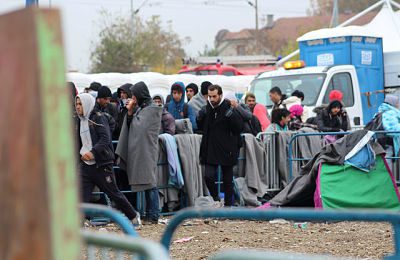
10 Important Facts About Refugees in Slovenia

Slovenia Refugees
Although small in size and population, Slovenia is a gateway to Central Europe for millions of migrants. Slovenia borders the countries of Croatia, Austria, Hungary and Italy, making it an ideal stomping ground for millions of refugees traveling north. Slovenia is also a member of the European Union (EU), which is idyllic for migrants seeking freedom and access to the western world. These 10 facts about refugees in Slovenia show how dire the situation has become.

10 Facts About Refugees in Slovenia

  1. The years 2015 and 2016 saw a sizable increase in refugees traveling through Slovenia to reach other countries in the European Union. The total number of immigrants who traveled to Slovenia in 2015 was 15,420. This was an 11 percent increase from the previous year.
  2. Slovenia is a country with moderate poverty rates for the region. Overall, 13.9 percent of citizens live at or below the poverty line. As you move closer to the various border countries, this percentage increases. The shared border with Croatia has a 17.3 percent poverty rate, representing the thousands of refugees crossing over into Slovenia.
  3. October of 2015 saw the largest peak in refugees entering the country, with 66,353 entering the country in that month alone.
  4. As a member of the European Union and the Schengen Area, Slovenia is an ideal state for refugees. Individuals are able to move freely between countries in the Schengen Area.
  5. Syria has consistently been the country represented most with refugees in Slovenia. Forty-five percent of refugees in Slovenia immigrated from Syria.
  6. To date, twelve other countries have contributed police force officials to assist with the refugee crisis in Slovenia.
  7. Medical care is offered at reception and accommodation centers across Slovenia. Refugees are offered preventative physical exams and urgent care. This is all included in the federal budget of Slovenia.
  8. The European Commission provided Slovenia 10.17 million euros to help supply more officials on the border with Croatia and to improve reception centers for refugees.
  9. Every day, there are more than 400 volunteers from nonprofits, humanitarian organizations and other assistance agencies who work at various refugee camps across Slovenia to provide food and care.
  10. By simply stating that they are seeking asylum, refugees are immediately taken care of by government officials and a set of procedures is followed. This includes fingerprinting the individual to deduce whether or not they have requested asylum in a country before. This procedure is internationally known as the Dublin procedure.

A small Balkan country with various minorities, Slovenia is doing all they can to help traveling refugees. These facts about refugees in Slovenia show the lengths that the Slovenian government is going to in order to assist refugees seeking security and freedom. Although the number of migrants has declined with the closure of borders, the Slovenians are still willing to help those seeking a brighter future.

– Sophie Casimes

Photo: Flickr
July 8, 2017
https://borgenproject.org/wp-content/uploads/borgen-project-logo.svg 0 0 Borgen Project https://borgenproject.org/wp-content/uploads/borgen-project-logo.svg Borgen Project2017-07-08 01:30:462024-06-04 01:17:4610 Important Facts About Refugees in Slovenia
Global Poverty, Refugees

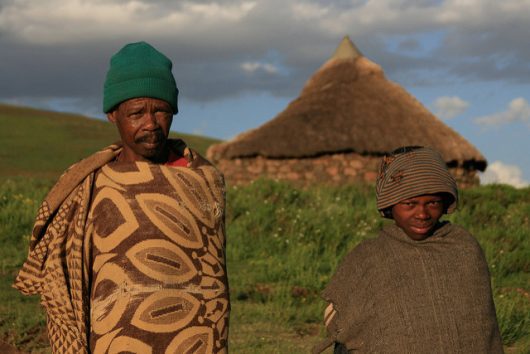
10 Important Facts About Refugees in Lesotho


In response to apartheid in South Africa, refugees emerged in Lesotho in the 1960s. These refugees—the majority of whom were South African and children or teenagers—play a crucial role in defining Lesotho’s vibrant society. Here are 10 facts about refugees in Lesotho.

10 Facts About Refugees in Lesotho

  1. Home to fewer than 10,000 refugees, Lesotho began implementing projects to help grant loans and business training to refugees in 1983. Of the 17 businesses which ultimately emerged, only one was run by a woman.
  2. Lesotho has been incredibly welcoming to refugees, ensuring their integration into local Basotho communities and serving as a global paradigm of refugee inclusivity and acceptance.
  3. In 2005, in an attempt to solidify its commitment to refugee protection, Limakatso Ntlhoki of Lesotho held a four-day workshop intended to help people develop the skills for working with refugees and guaranteeing their protection.
  4. Lesotho has been deemed a “South African Development Community” (SADC) alongside fifteen other countries such as Botswana, Mozambique, Malawi and Zimbabwe. Recent statistics indicate that SADC countries are home to approximately 68 percent of international migrants living in South Africa.
  5. In June 2017, the Vodafone Foundation put forward a system for young refugees living in nations, including Lesotho, to gain free and unlimited access to online education using tablets.
  6. During apartheid, Lesotho’s rural regions served as a safe haven for a number of political refugees escaping the wrath of a government who rejected their ideas. However, when the country was threatened by South Africa, they helped a significant number of refugees flee and obtain safety.
  7. The 1983 Lesotho Refugee Act guarantees that the country will provide refugees with the rights laid out by the United Nations Convention and the 1967 Protocol relating to the Status of Refugees. They also incorporated the criterion outlined by the OAU Convention Governing the Specific Aspects of Refugee Problems in Africa, which rendered their definition amongst the most inclusive in terms of explicating the legal status of refugees in the world.
  8. The former Prime Minister of Lesotho, Chief Leabua Jonathan, attested to the United Nations General Assembly that Lesotho maintained full respect for human dignity, would not use violence towards refugees, and recognized their moral responsibility to help solve their problems through support and openness.
  9. In response to Lesotho’s refugee policies, nations such as India and Thailand praised the nation for its willingness to welcome individuals despite South African threats.
  10. In 2002, the United Nations Refugee Agency (UNHCR) returned 48 brick homes originally used to house refugees in Lesotho to the country’s government, thereby indicating the true end of apartheid and highlighting the ways in which the nation could be entrusted to maintain respectful living conditions for refugees without external intervention.

These 10 facts about refugees in Lesotho illuminate how the country has, since the 1960s, experienced tremendous success in its relationship with refugees. Ultimately, this undeniable altruism indicates that Lesotho ought to be lauded as an example of how to positively incorporate refugees into societies throughout the world.

– Emily Chazen

Photo: Flickr

July 7, 2017
https://borgenproject.org/wp-content/uploads/borgen-project-logo.svg 0 0 Borgen Project https://borgenproject.org/wp-content/uploads/borgen-project-logo.svg Borgen Project2017-07-07 07:30:332024-05-28 00:02:4110 Important Facts About Refugees in Lesotho
Global Poverty, Refugees

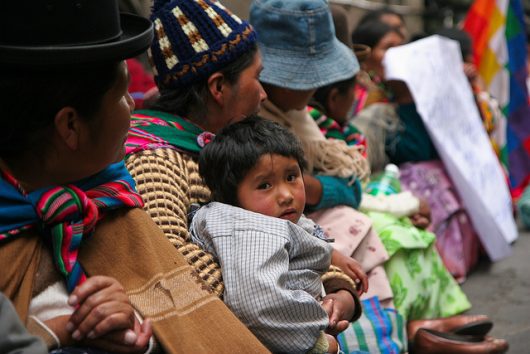
10 Facts About Refugees in Bolivia


Bolivia is a mountainous landlocked country in the heart of South America. With 36 languages and 51 indigenous groups, it is a mosaic of the diversity in the Andes. Since establishing independence in 1825, the country has experienced serious political turmoil, with the total number of revolutions and coups around 190. With so much chaotic political history, the incredible story of refugees in Bolivia is often forgotten. Here are 10 facts about refugees in Bolivia.

10 Facts About Refugees in Bolivia

  1. As the Holocaust intensified, so did measures across the world to prohibit Jewish refugees from immigrating into safer countries. In the famous case of transatlantic liner St. Louis where nearly 1,000 German Jews aboard were denied entry to Cuba, then the United States and finally Canada showed the shameful policy of turning people back to the countries they were fleeing to face certain death. While most countries were closing their borders, Bolivia opened its immigration policies, welcoming 30,000 Jewish refugees from 1938 to 1941.
  2. Bolivian consulates in capitals across Europe provided visas. The refugees then flew to Chile where they boarded a train to La Paz. Due to the large amount of Jewish refugees on this train route, it became known as El Expres Judio (the Jewish Express).
  3. Tin mining tycoon Mauricio Hochschild has been referred to as the “Bolivian Schindler” because he orchestrated the escape of between 3,000 and 9,000 Jews. He then put the men to work running the mines and created charities such as daycares for the children. This incredible effort was even larger than Oskar Schindler’s plan, which saved around 1,000 Jews.
  4. Uruguayan rock star Jorge Drexler is the grandson of German refugees escaping Nazi persecution, who were welcomed to Bolivia under the open door policy. He recently composed a song called “Bolivia” to commemorate this event.
  5. Bolivian President Evo Morales recently held the World Without Walls Conference on World Refugee Day, where he used very radical language for a head of state, saying that we should work towards “universal citizenship” and that is impossible for a person to be “illegal.”
  6. Bolivia is currently facing a crisis of climate refugees. When Lake Poopo dried up, it was the death of a cultural resource so important that locals referred to it as “mother” and “father.” It has led to nearly a thousand refugees coming down the mountain and forming shanty towns outside of La Paz. It is one of the most catastrophic events for refugees in Bolivia.
  7. Bolivia has also produced political refugees such as former consul general in Washington, D.C., Carlos Hugo Jiminez. He fled to Canada after becoming the target of death threats due to his political affiliation. As of 2016, he had been waiting for four years to receive his asylum status.
  8. The Bolivian government is a vocal advocate for statehood for refugees across the world. It is one of the countries to formally recognize Palestine as independent and is a vocal advocate for a Polisario-based state in the Western Sahara.
  9. Lack of economic opportunity and changing climate conditions are creating large flows of migrants from Bolivia across the Argentine border. The Argentine government has responded by calling for a special border police force and some right-wing lawmakers calling for a wall.
  10. Water access and extreme poverty are driving factors for immigration and refugees in Bolivia today. The glaciers of the Andes are melting at an extreme rate and, by most estimates, all of them will be gone by the end of the century. Thirty percent of the 2.3 million people from El Alto and La Paz depend on these glaciers for water.

Water protests have shut down entire cities in Bolivia, especially in the Cochabamba Water Wars of 2000. The melting of glaciers, drought and changing climate conditions could be a huge source of instability, refugees and immigration in the future. Bolivian President Morales shows commitment to the environment going as far as to legislate granting rights to the land and Earth itself. Regional and international partners will be necessary to tackle the climate challenges that will otherwise be left unaddressed and create more refugees in the future.

– Jared Gilbert

Photo: Flickr

July 7, 2017
https://borgenproject.org/wp-content/uploads/borgen-project-logo.svg 0 0 Borgen Project https://borgenproject.org/wp-content/uploads/borgen-project-logo.svg Borgen Project2017-07-07 07:30:172024-12-13 17:58:1810 Facts About Refugees in Bolivia
Developing Countries, Education, Global Poverty, Refugees

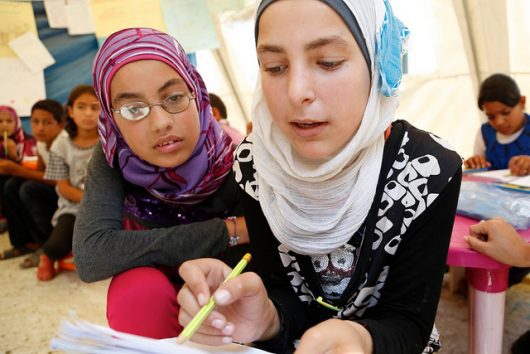
10 Facts About the Education of Refugees


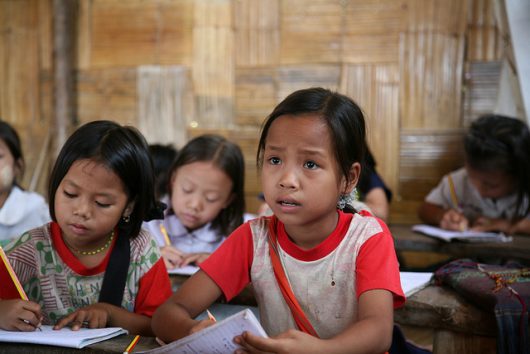
According to the Office of the U.N. High Commissioner for Refugees (UNHCR), more than half of reported refugees, 6.1 million people, are under the age of 18. Given this large youth population, the lack of education of refugees has become a significant roadblock for these children and adolescents’ future successes. Here are 10 facts about the education of refugees at present.

10 Facts About the Education of Refugees

  1. The UNHCR reported in 2016 that of the 6.1 million school-aged refugees, 3.7 million had no access to education. 1.75 million of these had not received a primary education, and 1.95 million had not received a secondary education.
  2. Comparing the education of refugees to the global average, refugees are reportedly five times less likely to attend school.
  3. The global average of children attending primary school is 91 percent, while the average for refugee children is 50 percent. Secondary school is even less likely for refugees, with an average of 22 percent attending, where the global average is 84 percent. Only one percent of refugees receive a college- or university-level education. This global average is 34 percent.
  4. The education of refugees became more difficult when the refugee population grew by 30 percent in 2014 and is predicted to continue growing. The UNHCR predicts the need for 12,000 additional classrooms and 20,000 additional teachers annually.
  5. Refugees are displaced from their home country for an average 20 years. Because this exceeds school-age and because the education of refugees is difficult, the potential for refugee children and adolescents to access education is minimal.
  6. Of the 3.7 million out-of-school refugees, more than half come from Chad, Jordan, Turkey, Ethiopia, Kenya, the Democratic Republic of the Congo and Lebanon.
  7. Long-term conflict tends to reverse positive trends in education. For example, 94 percent of Syrian children in 2009 received an education, but this number dropped to 60 percent in 2016.
  8. Progress has been made towards the education of refugees in Lebanon, Jordan, Egypt, Iraq and Turkey through an increase in encouraging school enrollment and reinforcing the “double-shift system.” This means that two groups of students receive schooling at different times with the same faculty. A lack of funding threatens this system’s future as the uneducated refugee population increases.
  9. The education of refugees is primarily covered by emergency funds rather than long-term programs. Given the current refugee crisis, sustainable funding is crucial for the education of refugees.
  10. There are a number of potential solutions to the refugee education crisis. The main three proposed solutions are accelerated education programs, online courses and expanding vocational training. Each of these is promising because they offer the flexibility that makes school attendance a realistic option.

Education has the potential to provide a safe haven for refugees and may even prevent future conflict, but the education of refugees will require systematic changes to become sustainably successful.

– Haley Hurtt

Photo: Flickr

July 7, 2017
https://borgenproject.org/wp-content/uploads/borgen-project-logo.svg 0 0 Borgen Project https://borgenproject.org/wp-content/uploads/borgen-project-logo.svg Borgen Project2017-07-07 01:30:412020-05-15 20:35:1010 Facts About the Education of Refugees
Global Poverty

How Can I Help Refugees?

How Can I Help Refugees
From well-known conflicts in Syria to less commonly discussed issues in Afghanistan and South Sudan, the global refugee crisis seems to be getting worse every day. The United Nations High Commissioner for Refugees (UNHCR) records that an average of 28,300 people are forced from their homes every day.

Overall, 65.6 million people have been forced from their homes, 22.5 million of which are refugees, and over half of these refugees are younger than 18. Only 189,300 of these 22.5 million people have been resettled. These figures may feel overwhelming and disheartening, but this situation is not hopeless. As the refugee crisis gains more and more attention, many people find themselves asking a similar question: How can I help refugees?

Though it is a complicated issue, there are many ways that individuals can help and make a difference in the lives of refugees.

Donate

Donating money—as well as time and skills—is an effective, simple way to help. There are various good charities and organizations to look into when considering donations. A few include The White Helmets, UNICEF, Save the Children, Doctors Without Borders, Kiva.org and the International Rescue Committee. Each of these organizations addresses a different facet of the refugee crisis, and they can always use financial support.

If donating money is not a financial possibility, consider donating time or individual skills. Refugee resettlement offices function across the globe, and these offices can usually use a new volunteer or intern. Another way to offer personal skills is to work as an English tutor to help refugees learn English. This can help increase refugees’ chances of employment, and it will also facilitate their adjustment to a new country. Those who have proficient legal knowledge can offer assistance with legal documents and provide other legal services. These are just a few of the ways to give time and skills to aid refugees’ transitions.

Be Welcoming and Kind

You may be asking, “But how can I help refugees if I cannot provide skills or money?” Simply be kind and welcoming. Violence or natural disasters have forced refugees from their homes, and many of them report feeling lonely and isolated when they move to another country. If you have refugees in your neighborhood, make them feel welcome by introducing yourself or even getting them a housewarming gift. Host a dinner party or barbecue and make them feel part of the neighborhood. Introduce your new neighbors to people in the community so that they can begin to develop their own place within the existing social structure. It’s difficult being the new person, and kindness can go a long way.

Support Them

You can also go out of your way to support refugees and their businesses. If possible, employ them and make them an active part of your company. If you are not in the position to hire people, patronize businesses that do employee refugees. Better yet, patronize refugee-run establishments. This supports their livelihood and increases their financial stability.

Educate Yourself

At first, this may seem like a strange response to the question, “How can I help refugees?” However, knowing the complexities of the refugee crisis can help one better address the struggles that refugees are enduring. Instead of spreading what friends or family say, do your own research. Learn about the different causes of displacement. Refugees can help dispel ignorant, and possibly harmful myths, about the crisis. Once people know more about refugees, they are able to better educate others as well.

Don’t Stay Silent

No one is entirely sure who once said that “the only thing necessary for the triumph of evil is for good men to do nothing.” Regardless of whoever first said it, the meaning remains true. In times of crisis and peace alike, it is important for people to take action and speak out. Make calls and send emails to congressional representatives and senators urging them to support refugees. Additionally, speak up if you witness an act of ignorance or hatred. Finally, use social media to spread your newfound knowledge, share refugee stories and struggles and gather support for others to speak out. Even just talking about these issues among friends and family makes a difference. Be an ally and an advocate, and make it known that refugees are not alone.

“How can I help refugees?” At first, this question can feel impossible, but individual actions do make a difference. Though these five methods above may seem small, what you do to help others makes a meaningful and lasting impact.

– Rachael Lind

Photo: Flickr

July 5, 2017
https://borgenproject.org/wp-content/uploads/borgen-project-logo.svg 0 0 Borgen Project https://borgenproject.org/wp-content/uploads/borgen-project-logo.svg Borgen Project2017-07-05 07:30:522024-12-13 17:58:16How Can I Help Refugees?
Global Poverty, Refugees

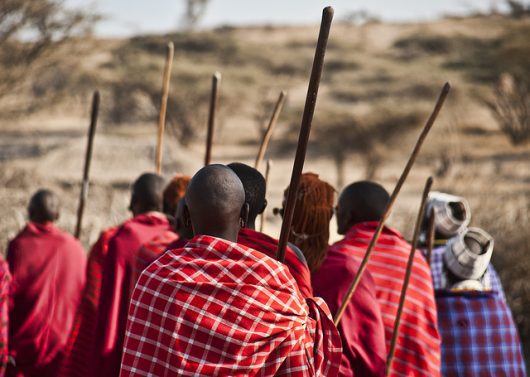
10 Facts About Refugees in Tanzania


Since attaining its independence in 1961, Tanzania has historically been a steady and nonviolent nation. However, Tanzania’s stability has led it to become a sanctuary for refugees fleeing neighboring conflict-ridden countries. Despite the challenge of hosting so many refugees, Tanzania’s borders remain open and welcoming. Here are 10 facts about refugees in Tanzania:

  1. There are currently about 290,000 refugees in Tanzania, with the majority coming from Burundi and the remainder from the Democratic Republic of the Congo.
  2. An average of 700 refugees continues to arrive daily, straining the resources of the already overcrowded refugee camps.
  3. Burundian refugees arrive in Tanzania on the shore of Kakunga Beach. From there, they are carried by a series of boats to Kigoma Port, where they are bused to registration and granted asylum.
  4. Of the Burundian refugees taking shelter in Tanzania, about 78 percent are women and children.
  5. Tanzania is home to the world’s third largest refugee camp, Nyarugusu. Nyarugusu earned this status after it doubled in size due to the influx of Burundian refugees in April 2015.
  6. There are three primary refugee camps in Tanzania: Nyarugusu, Mtendeli and Nduta. All of these camps are at full capacity but continue to accept refugees.
  7. The camps, unprepared for the overflowing volume of refugees, have had to expand to nearby schools and churches for temporary shelters.
  8. Malaria is one of the biggest health risks to refugees in Tanzania, especially during the rainy season. Diarrhea, respiratory tract infections, and skin conditions are also very common.
  9. More than 100,000 refugees were vaccinated against cholera after an outbreak that killed 31 people. Since cholera is caused by unsanitary conditions and contaminated water, the camps have taken preventative measures by installing more sanitary regulations.
  10. In addition to creating sanitation standards, volunteers are providing hygiene education. These are both essential to prevent another outbreak as well as providing the refugees with knowledge they can employ once outside of the camps.

These 10 facts about refugees in Tanzania demonstrate the importance of aid and unity among borders. The dedication Tanzania has to help its neighbors is remarkable, and its effort to ensure that no individual is left behind is clear. Even as the camps begin to overflow, Tanzania continues to strive to give every refugee a fair chance.

– Kelly Hayes

Photo: Flickr

July 4, 2017
https://borgenproject.org/wp-content/uploads/borgen-project-logo.svg 0 0 Borgen Project https://borgenproject.org/wp-content/uploads/borgen-project-logo.svg Borgen Project2017-07-04 01:30:162024-12-13 17:58:1610 Facts About Refugees in Tanzania
Global Poverty, Refugees

Climate Refugees: Now Necessary for Island Nations to Find New Homes

Climate Refugees: Island Nations to Find New Home

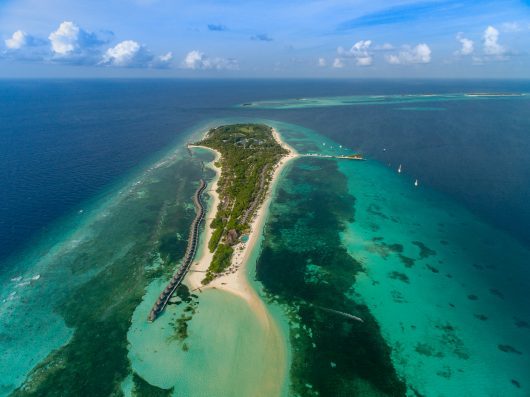
The Maldivian people could soon be forced into refugee status, not by an oppressive government or violence, but by such strong climate change that in its power, will create climate refugees.

The Asian Development Bank reported that the Maldives is “hardest hit by climate change,” even though it is one of the lowest CO2 emitting nations in the world.

At this moment, less ice covers the Arctic than at any other time in history and sea levels are rising at a steady rate. The UN Intergovernmental Panel on Climate Change assessed that the world is approaching 10-13 feet of sea level rise by the end of the century. At that kind of level, the Maldives would essentially disappear.

Sea level rise is not unforeseen. Since 1992 the world has seen an average increase of three inches in sea levels, with some areas experiencing up to nine inches. Those responsible have no excuse not to act.

Residents of the Maldive islands have started informal talks of mass migration of climate refugees to Australia, Sri Lanka and India. Additionally, the Maldives established a relocation fund to help its citizens buy land overseas as the government realized that the need to relocate will occur sooner rather than later.

The Maldives is not the only country seeking refuge in Australia. Tuvalu, located in Oceania, requested that Australia prepare for the arrival of 12,000 climate refugees from the island in the near future.

Some of Tuvalu’s people have already left the islands to seek stability elsewhere, making them climate refugees. The Maldives prepare to face this same future.

Already, many villages in the islands of Oceania have been destroyed by natural disasters, displacing communities and halting, sometimes ending, people’s lives.

Those forced to relocate are in danger of losing their national and cultural identities, and many of the Maldivian people want to stay. If those in power do nothing, many will lose their homes and be forced to relocate.

– Ayah Alkhars

Photo: Flickr

July 2, 2017
https://borgenproject.org/wp-content/uploads/borgen-project-logo.svg 0 0 Borgen Project https://borgenproject.org/wp-content/uploads/borgen-project-logo.svg Borgen Project2017-07-02 01:30:532024-12-13 17:58:13Climate Refugees: Now Necessary for Island Nations to Find New Homes
Global Poverty, Human Rights, Refugees

3 Organizations That Support North Korean Refugees

Support North Korean Refugees
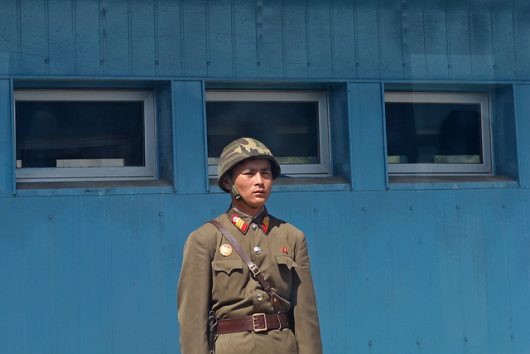
North Korea’s government is one of the most restrictive in the world. Unpaid labor is forced upon North Korean civilians, independent press and media are banned and the borders are guarded and monitored closely by both North Korean and Chinese guards. Human Rights Watch reports that North Korea contains prison camps holding hundreds of thousands of North Korean citizens of all ages. Conditions there include torture, sexual abuse and, for those accused of serious crimes, public execution. Discussed below are organizations that support North Korean refugees.

Liberty in North Korea

This organization helps North Koreans escape using calculated courses through China and Southeast Asia. To accomplish this, Liberty in North Korea leverages on-ground relationships and donor funding. The organization also has very systematic resettlement programs available to support North Korean refugees including translation, healthcare, integration and counseling services. Additionally, Liberty in North Korea educates, mobilizes and encourages others to support North Korean refugees via events and fundraisers. The organization has a thorough breakdown of how funds are distributed throughout the escape and resettlement process, and it claims that $3,000 will save and resettle one North Korean refugee.

North Korean Freedom Coalition

This organization partners with political leaders to support North Korean victims of human rights violations. It also hosts the annual North Korean Freedom Week, which raises awareness of the North Korean atrocities and gains support for the freedom of North Korean prisoners being unjustly held. This is a collaboration of several public and private members, including several different independent charities.

Helping Hands Korea (HHK)

This is a non-denominational Christian organization that provides food and basic necessities to North Koreans based on the level of support each requires. HHK also assists with the transport of refugees through Asia to safety. Although the spread of Christianity is not the primary goal of HHK, the organization provides each refugee a Bible and a message of hope.

The level of human rights violations in North Korea has not received the amount of attention it deserves, and further education is necessary to address these issues in a rational and effective way. North Korea continues to develop its weapon systems and actively test nuclear weapons and missiles, in violation of U.N. agreements. The U.S. has hinted that it is willing to use force in dealing with North Korea, but a war would cause an astronomical number of casualties, especially in South Korea. While China has increased its pressure on North Korea to denuclearize, it must take a stronger role in abolishing the inhumane treatment of North Korean citizens and support North Korean refugees.

– Emma Tennyson

Photo: Flickr

July 1, 2017
https://borgenproject.org/wp-content/uploads/borgen-project-logo.svg 0 0 Borgen Project https://borgenproject.org/wp-content/uploads/borgen-project-logo.svg Borgen Project2017-07-01 07:30:282024-12-13 17:58:143 Organizations That Support North Korean Refugees
Global Poverty, Refugees

10 Facts About Refugees in Switzerland

Refugees in Switzerland
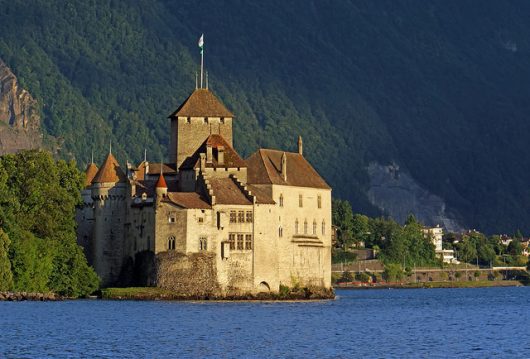
In Europe, Switzerland ranks fourth in the number of refugees they accept per capita. Given their leniency, the closure of the Balkan countries’ border has led to a rapid increase of refugees in Switzerland. The sudden rise in the refugee population has led to controversy over the Asylum Act and the Foreign Nationals Act.

Top 10 Facts About Refugees in Switzerland

  1. The closure of the popular migration route via the Balkans border on March 9, 2016, led to a rapid increase in the number of refugees in Switzerland as they immigrated to Germany. Refugees have been entering Switzerland through Ticino, and a report estimates there are 5,760 illegal residents in this region.
  2. Switzerland’s Asylum Act grants “recognized refugees” asylum, temporary protection if needed, public social assistance and the ability to become a permanent resident after having resided in the country for 10 years. Refugees in Switzerland granted the B permit are noted as “recognized refugees,” defined as people who “‘in their native country or in their country of the last residence are subject to serious disadvantages or have a well-founded fear of being exposed to such disadvantages.'”
  3. The Asylum Act imposes required social assistance. Consequently, the council of Rekingen, a municipality in the canton of Aargu, Switzerland, proposed that residents should not rent properties to refugees. The proposal stems from the fear that B permit refugees will rely on social welfare benefits and ruin Rekingen financially.
  4. Refugees in Switzerland who apply for asylum must complete processing at a reception center to be considered legal. However, 20 to 40 percent of refugees assigned to reception centers evade the monitoring system  so that they may migrate to Germany. According to Swiss legislation, they are thus illegal immigrants.
  5. Some parts of Switzerland have reported that the number of refugees who left the reception centers soon after arriving is between 50 to 90 percent. They concluded that refugees are using Switzerland for transit instead of asylum.
  6. On February 9, 2014, Switzerland adopted the Controlling Mass Immigration Initiative. The initiative introduced annual quotas for accepting refugees and amended the social security benefits of immigrants seeking employment.
  7. The annual quotas instilled by the Controlling Mass Immigration Initiative has stirred controversy in the village of Oberwil-Lieli. Oberwil-Lieli’s mayor originally rejected the quota because his residents believe assistance should be done “on the ground,” preferring to lessen the threat in the refugees’ native countries rather than make Switzerland a popular asylum. For example, residents of the village raised 370,000 francs to support Greek refugees.
  8. Eritreans make up the largest portion of refugees in Switzerland. About 34,500 Eritreans have fled their homes as a result of violent conflict with Ethiopia. Switzerland has so far accepted refugees who illegally exited Eritrea given they apply for asylum. However, reports show that many refugees use their allowed 21 days of holiday to visit Eritrea34, undermining their claim to asylum. This revelation led to a discussion about Switzerland’s lax rules for refugees. Subsequently, the appeal to strengthen the rules for Eritrean asylum seeking did not receive approval.
  9. Most refugees immigrating from Italy to Germany pass through Switzerland. However, Federal Border Guards consistently transfer migrants who did not apply for asylum to Italy. In 2016, authorities sent over a thousand refugees seeking asylum back to Italy. The deportees included several hundred unaccompanied minors and many refugees with family in Switzerland.
  10. In September 2015, an amendment to the Asylum Act granted asylum seekers free legal advice and representation in the procedure. It also made a legal duty out of caring for the needs of especially-threatened refugees.

Improvement of immigration laws in Switzerland will mitigate legal problems with refugees. However, addressing the threat and poverty of refugee countries may also make a sizeable impact.

– Haley Hurtt

Photo: Flickr

July 1, 2017
https://borgenproject.org/wp-content/uploads/borgen-project-logo.svg 0 0 Borgen Project https://borgenproject.org/wp-content/uploads/borgen-project-logo.svg Borgen Project2017-07-01 01:30:282024-12-13 17:58:1210 Facts About Refugees in Switzerland
Global Poverty, Refugees

10 Facts About Refugees in Malaysia

Refugees in Malaysia
Due to its booming economy and multi-cultural society, Malaysia is a beacon in Southeast Asia for economic migrants and refugees alike. As the refugee crisis continues, Malaysia grapples with its institutions, history and policies towards migrants. Discussed below are some basics about refugees in Malaysia.

10 Alarming Facts About Refugees in Malaysia

  1. As of the end of April 2017, there are about 150,662 refugees and asylum-seekers registered with the Office of the United Nations High Commissioner for Refugees (UNHCR) in Malaysia. Of these refugees, about 89 percent are persecuted ethnic groups from Myanmar, comprised of Rohingyas, Chins, Myanmar Muslims, Rakhines and Arakanese.
  2. About 11 percent of registered refugees are from other countries, including Pakistan, Sri Lanka, Yemen, Somalia, Syria, Iraq, Afghanistan and Palestine. About 67 percent of refugees and asylum-seekers are men, and 33 percent are women. About 36,331 refugees are children under the age of 18.
  3. In Malaysia, refugees are not distinguished from undocumented migrants and are at risk of deportation or detention. They lack access to legal employment and formal education. Refugees are able to access public and private healthcare, but this access is often hindered by the cost of treatment and language barriers.
  4. Because refugees have no access to legal employment, they tend to work difficult or dangerous jobs that the rest of the population does not wish to take. Refugee workers often face exploitation by employers who take advantage of their situation, paying them low wages or no wages at all.
  5. There are no refugee camps in Malaysia; refugees live in cities and towns across the country in low-cost apartments or houses. These accommodations are often overcrowded, and it’s not uncommon for several families or dozens of individuals to share a living space.
  6. Malaysia is neither party to the United Nations 1951 Refugee Convention nor its 1967 protocol. Malaysia is also not a party to the 1954 and 1961 U.N. Statelessness Convention. Malaysia lacks a legal framework for managing refugees, so the UNHCR conducts all activities concerning the registration, documentation and status determination of refugees. The Malaysian Government cooperates with UNHCR in addressing refugee issues.
  7. UNCHR began operations in Malaysia in 1975 when Vietnamese refugees began to arrive by boat in Malaysia and other neighboring countries. From 1975 to 1996, UNCHR assisted the Malaysian government in helping and protecting Vietnamese refugees. Over those two decades, more than 240,000 Vietnamese were resettled, and about 9,000 persons returned home to Vietnam.
  8. In the past, Malaysia has opened its doors to vulnerable populations through government programs. In 1991, Prime Minister Mahathir Mohamad championed a scholarship program for Bosnian Muslims after hearing the Serbs announce an ethnic cleansing campaign. However, they referred to participants as “guests” rather than refugees.
  9. As of 2015, the Malaysian government has pledged to shelter 3,000 Syrian refugees. Syrians will be given temporary residence passes, permission to work and permission to attend school. Though about 1,100 Syrian refugees are already in Malaysia, this program seeks to resettle more new refugees.
  10. As of March 2017, Malaysia has developed a pilot program to allow 300 Rohingya refugees to work legally within the country. Successful applicants will be placed with selected companies in manufacturing and agricultural industries. This project was instated to prevent forced labor and exploitation, as well to give refugees necessary skills and income to make a living before potential relocation.

The lives of refugees in Malaysia are often lived in the shadows, with a constant risk of deportation or detention. Refugees are most vulnerable, however, because their home country is too dangerous to return to. This is why the registration of refugees is essential to their safety, be it through UNCHR or the initiatives of the government itself.

– Hannah Seitz

Photo: Flickr

June 30, 2017
https://borgenproject.org/wp-content/uploads/borgen-project-logo.svg 0 0 Borgen Project https://borgenproject.org/wp-content/uploads/borgen-project-logo.svg Borgen Project2017-06-30 07:30:422024-12-13 17:58:1210 Facts About Refugees in Malaysia
Page 16 of 32«‹1415161718›»

Get Smarter

  • Global Poverty 101
  • Global Poverty… The Good News
  • Global Poverty & U.S. Jobs
  • Global Poverty and National Security
  • Innovative Solutions to Poverty
  • Global Poverty & Aid FAQ’s
Search Search

Take Action

  • Call Congress
  • Email Congress
  • Donate
  • 30 Ways to Help
  • Volunteer Ops
  • Internships
  • Courses & Certificates
  • The Podcast
Borgen Project

“The Borgen Project is an incredible nonprofit organization that is addressing poverty and hunger and working towards ending them.”

-The Huffington Post

Inside The Borgen Project

  • Contact
  • About
  • Financials
  • President
  • Board of Directors
  • Board of Advisors

International Links

  • UK Email Parliament
  • UK Donate
  • Canada Email Parliament

Get Smarter

  • Global Poverty 101
  • Global Poverty… The Good News
  • Global Poverty & U.S. Jobs
  • Global Poverty and National Security
  • Innovative Solutions to Poverty
  • Global Poverty & Aid FAQ’s

Ways to Help

  • Call Congress
  • Email Congress
  • Donate
  • 30 Ways to Help
  • Volunteer Ops
  • Internships
  • Courses & Certificates
  • The Podcast
Scroll to top Scroll to top Scroll to top