• Link to X
  • Link to Facebook
  • Link to Instagram
  • Link to TikTok
  • Link to Youtube
  • About
    • About Us
      • President
      • Board of Directors
      • Board of Advisors
      • Financials
      • Our Methodology
      • Success Tracker
      • Contact
  • Act Now
    • 30 Ways to Help
      • Email Congress
      • Call Congress
      • Volunteer
      • Courses & Certificates
      • Be a Donor
    • Internships
      • In-Office Internships
      • Remote Internships
    • Legislation
      • Politics 101
  • The Blog
  • The Podcast
  • Magazine
  • Donate
  • Click to open the search input field Click to open the search input field Search
  • Menu Menu

Tag Archive for: Refugees

Posts

Global Poverty, Refugees

10 Facts About Refugees in Uruguay

Refugees in Uruguay
Prompted by the Syrian refugee crisis, many countries have implemented stricter immigration policies. However, some Latin American countries, specifically those with a higher proportion of Muslims or Syrians, responded to the refugee crisis with more sympathy. Uruguay is one such country. Nestled in between Brazil and Argentina, the territory of Uruguay is roughly the size of Washington state and is home to only 3.4 million individuals. Here are some essential facts about refugees in Uruguay:

  1. Uruguay was the first country in Latin America that showed a willingness to receive refugees.
  2. According to one political analyst, Uruguay’s economy will largely be unable to assimilate refugees into their workforce.
  3. Refugees publicly lamented the country’s limited economic opportunity.
  4. According to the most recent statistics, Uruguay accepted 117 immigrants up to September 2015.
  5. Refugees now appeal to other countries and even to the United Nations to help them leave the country.
  6. Some refugees tried leaving the country, but such efforts failed because most countries do not accept their Uruguay-issued documentation and the immigrants also lack their Syrian-issued passports.
  7. Amidst such social discord, public opinion toward Syrian refugees began to sour. Many citizens felt that the refugees in Uruguay are ungrateful.
  8. Due to such public backlash, President Vasquez temporarily suspended any further allocation of Syrian refugees.
  9. The country’s first group of Syrian refugees was to take Spanish classes to help them assimilate.
  10. Uruguay hoped that, with their initial open-door policy, they would have a type of contagion effect on surrounding countries.

The following information about refugees in Uruguay reveals that countries with already suffering economies are, in many cases, unfit to offer refuge to large numbers of displaced persons. Therefore, more prosperous nations ought to show Uruguay’s initial willingness to accept refugees.

– Shannon Golden

Photo: Flickr

July 25, 2017
https://borgenproject.org/wp-content/uploads/borgen-project-logo.svg 0 0 Borgen Project https://borgenproject.org/wp-content/uploads/borgen-project-logo.svg Borgen Project2017-07-25 07:30:022024-12-13 17:58:2310 Facts About Refugees in Uruguay
Global Poverty, Refugees

10 Facts About Portugal Refugees

Portugal Refugees
Far from the refugee camps of Eastern Europe, Portugal is rarely associated with the term “refugee.” Its location presented an obstacle for refugees fleeing countries such as Syria. But the Portuguese prime minister is determined to change the idea that Portugal is not a country welcoming refugees. With the help of the European Union, Portugal is increasing refugee quotas and welcoming unprecedented numbers. These 10 facts about Portugal refugees show the newfound commitment of the Portuguese to refugees.

  1. The European Union unveiled a new plan to relocate refugees from Italy and Greece to Portugal. This made Portugal third on the list of countries for the number of refugees it will welcome under the plan.
  2. In 2015, Portugal received 872 requests for asylum. Of these requests, 19 were from Syria, five were from Iraq, and four were from Afghanistan.
  3. Portugal is undeniably prepared to handle the increase in refugees as it was ranked second, behind Sweden, for its accomplishments for assimilating refugees into society.
  4. The World Health Organization (WHO) introduced a five-day course for medical professionals to educate them on refugee health. Portugal has sent representatives to the course in order to become prepared for the increase of refugees to which it has committed. The course will cover how to assist refugees in finding healthcare, why it is economically important to focus on the health of migrants and applicable strategies that focus on refugee populations.
  5. World Refugee Day ushered in opportunities all over the world for refugees. Starbucks announced its plan to hire 2,500 refugees all over the world, including in Portugal.
  6. Prime minister António Costa increased the number of refugees from 4,000 to 10,000 in an apparent effort to boost the economy. This has led to refugee relocation across Portugal in an attempt to increase job growth.
  7. Pão a Pão, a restaurant in Lisbon, gave refugees around the city a new start. The majority of its employees are refugees, cooking bread from their place of origin.
  8. Although Portugal became a rising star in terms of their commitment to refugees, some have criticized the move as simply a way to boost the population. The economic crisis sent many Portuguese citizens abroad in search of employment.
  9. Portugal is a widely Catholic country that listens intently to the words of the Pope, and thus takes his lead on various social issues. His recent interest in the refugee crisis contributed to Portugal’s willingness to accept more migrants.
  10. Portugal continually struggled to attract refugees as the location is distant from where they begin their journey. Many refugees aim for Central Europe because of the perceived wealth, with Portugal never appearing on their radar.

The experience of Portugal refugees shows that this Western European country could soon be center stage in terms of migrant numbers. Portugal is ramping up preparations to accept thousands of more immigrants and sees the refugee crisis as an opportunity to grow its population and economy. These facts about Portugal refugees prove that Portugal is a country refugees should be seeking.

– Sophie Casimes

Photo: Google

July 24, 2017
https://borgenproject.org/wp-content/uploads/borgen-project-logo.svg 0 0 Borgen Project https://borgenproject.org/wp-content/uploads/borgen-project-logo.svg Borgen Project2017-07-24 07:30:162020-06-18 08:37:5510 Facts About Portugal Refugees
Global Poverty, Refugees

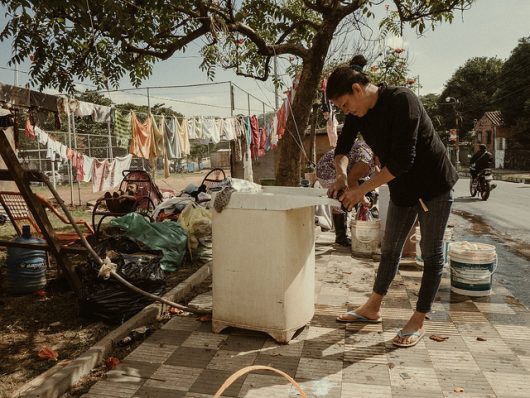
10 Facts About Refugees in Paraguay

10 Facts About Paraguay Refugees
Refugees leave their countries in order to find safety, peace and other necessities not present in their homelands. In Paraguay, incoming refugees are guided through the process of adapting to the country’s practices, lifestyle and community. Here are 10 facts about refugees in Paraguay:

  1. In 2016, 49 refugees submitted asylum applications to Paraguay. Only 27 applications were approved, mostly for Syrians and Cubans. While this does not guarantee entry for all refugees, it shows that Paraguay is very welcoming to some.
  2. Some refugees use fake passports to enter Paraguay. The country’s criminal court convicted seven Syrian refugees of this crime in March 2015. One of the convicted refugees stated that Paraguay’s police “treated them with respect.” Paraguay’s criminal court granted the refugees freedom of movement at the first hearing.
  3. Many refugees seek lost family members. Some do not know if their parents are living outside of Paraguay or are even still alive. Two such refugees, Mahed Ibrahim and his younger brother, unnamed because he is a minor, fled to Paraguay in search of their parents.
  4. Paraguay’s government plans to build 4,000 homes for refugees of flood disasters. The refugees will also be given food supplies, housing materials and medical assistance. Paraguay’s government relief agency is also preparing for mosquito-borne diseases that may affect these refugees.
  5. Refugees in Paraguay are bound to a “resettlement policy.” This policy helps refugees become self-reliant and make positive contributions to their new country. The program provides refugees with housing, medical care and employment opportunities.
  6. When moving into their new homes, refugees in Paraguay are provided with basic amenities and have no rental expenses in their first year. After the first year, they can make arrangements to buy their homes by paying a specified quota for several years. Paraguay’s various programs and requirements determine the quota amount.
  7. Refugees in Paraguay can access free healthcare through the National Public Administration’s resources and services. In the first year, some medicines and expenses are not covered under the free plan. Once the first year passes, the restriction is lifted.
  8. Refugees in Paraguay have access to the same public education system as citizens. The Office of the United Nations High Commissioner for Refugees (UNHCR) pays for refugee children’s education expenses. The payments annually cover uniforms and materials in preschool, primary and secondary schools.
  9. Refugees are guided and educated on aspects of Paraguay’s labor market, helping them find employment almost immediately. Paraguay’s government gives refugees vocational training in baking, plumbing, computers and other work skills. The training sessions are free and relieve refugees of added expenses.
  10. From their arrival date, refugees in Paraguay are given a monthly stipend for one year. If managed properly, the stipend can cover utility, food and other expenses. The stipend also has a single allocation for clothing expenses.

These 10 facts about refugees in Paraguay reveal the country’s goal to help others but also the necessity for reform. Paraguay still declines some refugees depending on their country of origin, and changes will be needed in order to grant equality for all refugees. For refugees presently in Paraguay, a better quality of life may very well be in their future.

– Rhondjé Singh Tanwar

Photo: Flickr

July 24, 2017
https://borgenproject.org/wp-content/uploads/borgen-project-logo.svg 0 0 Borgen Project https://borgenproject.org/wp-content/uploads/borgen-project-logo.svg Borgen Project2017-07-24 01:30:572024-12-13 17:58:2310 Facts About Refugees in Paraguay
Global Poverty, Refugees and Displaced Persons

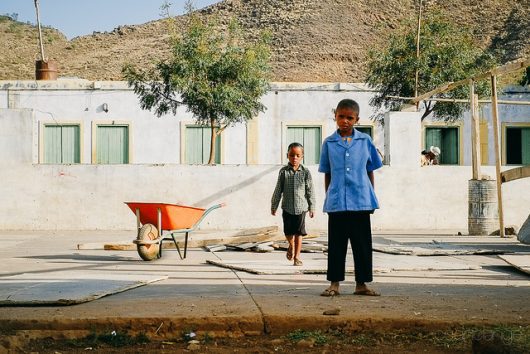
10 Facts About Cabo Verde Migrants

Cabo Verde Migrants
The Republic of Cabo Verde (or Cape Verde) consists of 10 islands and 5 islets off the west coast of Africa. Originally a colony of Portugal, Cabo Verde gained its independence in 1975. It currently runs under a multi-party system with both a prime minister and a president.

Despite the area’s lack of natural resources and droughts, the country found stability. Migration is a huge part of that. Men, in particular, emigrate to countries like the United States and Portugal in search of work so they can send money back home to their families.

Here are 10 facts about Cabo Verde migrants:

  1. There are more Cabo Verde migrants than there are residents in the Republic of Cabo Verde. The 20th century saw a huge fluctuation of emigration after droughts plagued the islands. Most migrated to the eastern coast of the United States or Portugal, but there are also Cabo Verdeans in Senegal, the Netherlands, France and Angola.
  2. Many Cabo Verde migrants are deported back home because of their involvement in drugs, crime and improper documentation. Males are most likely to return, and this caused an increase in important roles for women.
  3. Migrants that are deported back to Cabo Verde do not have access to a program to initiate them back into the society, which makes life at home difficult.
  4. Those returning from the United States have difficulty remembering the Creole language of Cabo Verde and struggle to find a job.
  5. The 2016 push for tighter immigration laws in the United States threatened to deport nearly 400 Cabo Verde migrants. Executive orders to speed up the deportation process in the United States only increased that threat.
  6. Migrating an important for many Cabo Verde people because it allows them to send money to their families. Working outside of the country brings in foreign currency that helps stabilize both family incomes and the nation’s economy.
  7. To help Cabo Verde migrants, an International Commission established the Ministry of Emigrated Communities. This institution worked to fund migration and make it easier for Cabo Verdeans to remain in countries outside of their own in order to work. The immigration policies of other countries have led to some conflict, but this representation is important for Cabo Verdeans.
  8. Some Cabo Verdean migrants want to pursue higher education. In 2009, the number of migrants from Cape Verde who had received a higher education was at 11%. At the same time, more than 54% of Cape Verde migrants held positions in health care.
  9. Most of the wealth in Cabo Verde comes from migrants who are working abroad and sending money home. This is visible on the islands by the large houses and expensive cars. It is crucial that migration remains an option for Cabo Verdeans.
  10. In 2010, the European Union worked with Cabo Verde on a project to “promote legal mobility between Cabo Verde and the EU by enhancing cooperation on migration and development issues while combating irregular migration.” The EU wanted to find a productive and agreeable use for the skills that Cabo Verde emigrants possessed when they returned home. They also wanted to find a successful way for Cabo Verdeans to continue migrating to new countries.

Migration isn’t currently popular in places like the United States. However, for those living in Cabo Verde, it is one of the best options for economic and social stability.

– Mackenzie Fielder

Photo: Flickr

July 23, 2017
https://borgenproject.org/wp-content/uploads/borgen-project-logo.svg 0 0 Borgen Project https://borgenproject.org/wp-content/uploads/borgen-project-logo.svg Borgen Project2017-07-23 07:30:362020-06-11 08:29:1010 Facts About Cabo Verde Migrants
Global Poverty, Refugees

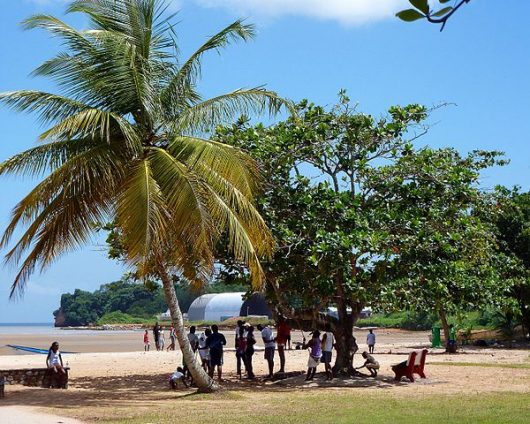
10 Facts About Refugees in Trinidad and Tobago

Refugees in Trinidad and Tobago
Due to foreign investment in tourism and an abundance of oil and natural gas resources, Trinidad and Tobago is one of the top destinations for Caribbean refugees. As a result, Trinidad and Tobago is facing a multitude of challenges. The country’s borders are vulnerable and human traffickers are active as the country struggles with being the active transit point for North American and European migration. Discussed below are leading facts about refugees in Trinidad and Tobago and the challenges they face.


Top 10 Facts about Refugees in Trinidad and Tobago


  1. Available data suggests that one-third of Caribbean refugees reside in Trinidad and Tobago.
  2. Before 2012, Trinidad and Tobago would only receive around 20 to 30 refugees from different countries annually.
  3. In January 2013, there was an easing of restrictions with Cuba and a change in migration laws, giving people more freedom of migration and movement. This is when Trinidad and Tobago began receiving an influx of Cuban refugees.
  4. By 2014, Trinidad and Tobago received 100 refugees, and, by 2016, that more than doubled to 209 refugees.
  5. In response to the growing number of asylum-seekers, the government adopted an official refugee policy in June 2014 and the U.N. Refugee Agency (UNHCR) established an office in January 2016.
  6. In 2016, about 50% of refugees in Trinidad and Tobago were from Syria, followed by Cuba with 36%.
  7. The UNHCR office in Trinidad and Tobago provides technical and capacity-building advice to authorities, supports the development of an effective asylum system that aligns with the government’s refugee policy, and provides direct assistance to refugees and asylum-seekers through and in coordination with its implementing partner Living Water Community.
  8. The adoption of specific legislation ensures that refugees enjoy all the rights given by the 1951 Refugee Convention. However, there are no current avenues for refugees to legally integrate into the country. This prevents them from positively contributing to the development and prosperity of the nation, including its ideas, culture and knowledge.
  9. In Trinidad and Tobago, more than 40% of the refugee population comes from outside the Americas.
  10. In 2017, the country expects to host more than 400 refugees from multiple countries.

These facts about refugees in Trinidad and Tobago provide awareness about their current situation. Trinidad and Tobago has gradually become a more popular destination for refugees as an active middle point between European and American migration.

– Tucker Hallowell

Photo: Google

July 21, 2017
https://borgenproject.org/wp-content/uploads/borgen-project-logo.svg 0 0 Borgen Project https://borgenproject.org/wp-content/uploads/borgen-project-logo.svg Borgen Project2017-07-21 07:30:392024-05-28 00:03:1010 Facts About Refugees in Trinidad and Tobago
Global Poverty, Refugees

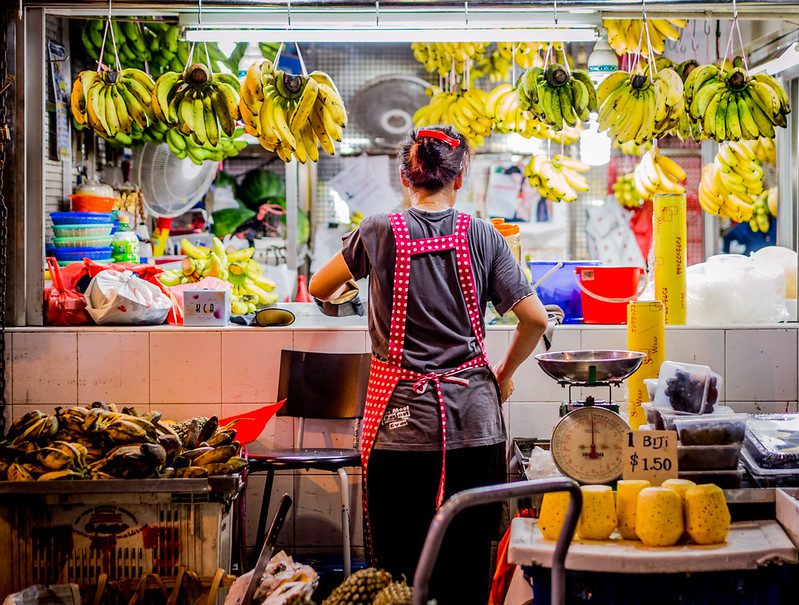
10 Facts About Refugees in Singapore

Refugees in Singapore
In recent history, Singapore has had a complicated relationship with refugees. Having been burned once before, Singapore now routinely turns away refugees with the intention of turning the responsibility over to a third party. But should they be doing more to help? Here to help you decide are ten facts about refugees in Singapore:

  1. Following the Vietnam war, refugees known as “Vietnamese boat people” came flooding out of their country to Southeast Asia looking for a safe haven. With this refugee crisis in mind, the Singapore government and the Office of the United Nations High Commissioner for Refugees (UNHCR) agreed on a policy that would provide refugees with international protection. Singapore was to be a kind of limbo by temporarily housing refugees in a transit camp while the UNHCR planned for a more permanent resettlement.
  2. However, the number of refugees continuously arriving proved to be too great, and after a 1989 conference on Indochinese refugees in which committee members decided to enact a new policy called the Comprehensive Plan of Action, Singapore’s transit camp suffered greatly. With a new refugee screening policy in place, Singapore continued to accept new entrants, but the entrants were now not guaranteed resettlement, even temporarily.
  3. Singapore’s transit camp was now a place for rejected asylum seekers to gather, many of whom refused to leave voluntarily. The threat of repatriation caused many refugees to protest the UNHCR, go on hunger strike, or even attempt suicide. Singapore government officials, feeling betrayed by resettlement countries and embittered by the whole experience, closed the camp in 1996 and promised that refugees would no longer be allowed in Singapore, even if another country pledged to take them in.
  4. For many years, Singapore held firm to this policy, stopping refugees at coastlines and, instead of taking them in, providing them with food, water and fuel before sending them away.
  5. However, Singapore’s refugee policy has been slowly softening in recent years. In 2009, Singapore’s Prime Minister, Lee Hsien Loong, addressed the problem of Rohingyas searching for, and being unable to find, a haven after fleeing from Burma. A senior minister of state for foreign affairs clarified that Singapore could not accept asylum seekers, but would offer humanitarian aid so that they could depart for another country.
  6. Apart from Singapore’s unpleasant experience with refugees in the past, the government gives one other reason for refusing to accept new entrants into the country: space. Singapore is the second smallest country in Asia and also one of the most densely populated. Refugees would certainly put an extra strain on the country’s infrastructure.
  7. A lack of space cannot be reason alone to reject refugees, as Singapore actually plans to increase its population from approximately 5.5 million to up to 6.9 million by the year 2030. In 2013, Singapore’s Population White Paper projected this growth, arguing that the country’s land area has grown by 23 percent since 1965 and that increasingly stable investments into infrastructure facilities and land capacity make this population growth sustainable.
  8. As of right now, refugees in Singapore are completely unwelcome, joining one of many Southeast Asian countries that refuse to do so.
  9. It may be, though, that Singapore is finally healing from its past experiences with refugees. In 2016, the UNCHR launched a new campaign to appeal to governments around the world to join the fight to end statelessness, with a special chapter dedicated to Advocates for Refugees in Singapore (the AFR-SG).
  10. Singapore is still a long way away from changing its policy on accepting refugees, but with the continued efforts of the UNCHR, the AFR-SG and anybody who takes the time to help, it is possible to move toward finding a home for the millions of people still left stateless.

– Audrey Palzkill

Photo: Flickr

July 20, 2017
https://borgenproject.org/wp-content/uploads/borgen-project-logo.svg 0 0 Borgen Project https://borgenproject.org/wp-content/uploads/borgen-project-logo.svg Borgen Project2017-07-20 07:30:342024-12-13 17:58:2110 Facts About Refugees in Singapore
Developing Countries, Global Poverty, Refugees

10 Facts About Refugees in Romania

Romania Refugees
On the border of the Black Sea in southeastern Europe rests Romania, a country nestled between Ukraine and Bulgaria. With a population of roughly 21.6 million and one of the fastest-growing economies in the European Union, the nation has agreed to welcome refugees. The country has been willing to help refugees but is often left without the necessary resources to do so. Here are 10 facts about refugees in Romania:

  1. In November 2015, Romania agreed to welcome 6,205 refugees over the course of two years. Over 550 had entered the country by December 2016.
  2. In Romania, the government covers the expenses of individuals granted refugee status for six months to one year. After this period of time, those individuals are expected to be employed.
  3. Despite the six to 12 month grace period, refugees are required obtain an understanding of the Romanian language as well as some formal recognition of previous experience, academic degrees or other qualifications. Rarely are such documents easily available to refugees.
  4. Civil society organizations, rather than Romanian authorities, are often left with the task of offering refugees much-needed employment assistance.
  5. The Romanian Ministry of Labor does not assist refugees with their job searches; it only registers refugees in an unemployment database.
  6. Learning Romanian has been described by refugees as being a key factor to succeeding in the country. Unfortunately, Romania’s language courses have little structure and are often of low quality.
  7. Roughly 5,000 individuals have been granted Romanian refugee protection since 1991, yet only 2,584 individuals hold residency permits. Such numbers suggest that nearly half of Romania’s refugee population no longer reside in the country.
  8. Relocated persons in Romania can benefit from the Jesuit Refugee Service, which runs a project called “A New House.” The project aids refugees in finding affordable housing.
  9. Many refugees in Romania who arrived in 2016 were relocated by the European Union from Greece and Italy.
  10. Romania lacks resources for refugees, so the country is not receiving the waves of refugees that are entering other European countries. Therefore, Romania has relatively more time to plan exactly how to address the issue of refugee protection.

These facts about refugees in Romania may appear to be disheartening, but if the Romanian government can tackle the issue of resource allocation with thorough planning, the country may soon become a stable safe haven for refugees fleeing war-torn countries.

– Shannon Golden

Photo: Google

July 18, 2017
https://borgenproject.org/wp-content/uploads/borgen-project-logo.svg 0 0 Borgen Project https://borgenproject.org/wp-content/uploads/borgen-project-logo.svg Borgen Project2017-07-18 07:30:352024-05-28 00:03:0410 Facts About Refugees in Romania
Global Poverty, Refugees

Togo Refugees: 10 Important Facts Everyone Should Know

There are ten facts about Togo refugees that are important to know. It is important to establish a timeline of events so that we can understand the Togo refugee crisis fully.

The first massive group of Togolese citizens to escape to refuge in neighboring countries were in 1993. Togo refugees relocated to Ghana and Benin because of the violent unrest in Togo. The violence that ensued during the fight for the new constitution, and its subsequent abolishment in 1993, led to enormous physical insecurities in Togo.

Here are ten facts about the conditions for Togo refugees since the flight for life in 1993:

  1. The fight between the government and opposition parties led to the displacement of over 15,000 people to neighboring countries in 1993. This number often included families that were separated, and children that were accompanied by strangers because their parents were either killed or lost during the scare to find more secure locations.
  2. The Volta region of Ghana hosts the most refugees from Togo. This region lies west of Togo’s capital Lomé. Citizens of Aflao, a district in the Volta region of Ghana, have welcomed the Togo refugees with an open embrace.
  3. The Volta region has been a major area of dispute between Togo and Ghana since British Togoland became a part of Ghana. It was a part of the split of British and French Togoland, after the defeat of Germany in 1918. After a U.N.-led referendum in 1956, British Togoland joined Ghana.
  4. The citizens of Togo who fled to Eastern Ghana are a part of the Ewe people of West Africa.
  5. Violent and indiscriminate killings after the 1998 elections caused more people to flee from Togo. Families were once again forced to run to safety in neighboring countries because of violent unrests and intimidation from supporters of both the winning and losing parties of the election.
  6. The military handed over power to Gnassingbe Eyadema’s son Faure Gnassingbe after Eyadema dies in 2005.
  7. There have been a series of violent protests and widespread killings, due to opposition to political corruption. This situation has worsened security concerns in Togo, as its citizens live in constant fear.
  8. Victims of the indiscriminate killings resulting from violent unrest are also foreign citizens accused of supporting the opposition or ruling party.
  9. Violent assaults and killings are committed by both supporters of the ruling party in efforts to suppress opposition and supporters of the opposition party in retribution to attacks from the ruling militia.
  10. In Ghana, the government made provisions by 2015 to integrate 2300 Togolese refugees into Ghanaian society. Under the Seeds for Solutions Project, efforts by the Ghanaian governments will be funded by the U.N. High Commission for Refugees (UNHCR). This provides social and economic aid to refugees for work-training and micro-finance loans to start businesses.

Togo refugees are hopeful that security conditions in Togo will improve so that they can return.

– Ebuka Okoye

Photo: Flickr

July 18, 2017
https://borgenproject.org/wp-content/uploads/borgen-project-logo.svg 0 0 Borgen Project https://borgenproject.org/wp-content/uploads/borgen-project-logo.svg Borgen Project2017-07-18 01:30:492020-06-04 09:10:52Togo Refugees: 10 Important Facts Everyone Should Know
Global Poverty, Refugees, United Nations

A Foreseeable Future: The Asylum for Andorra Refugees

Andorra Refugees
Home to roughly 79,300 people, Andorra is a tiny principality located in the mountainous region between France and Spain. Although the principality joined the Council of Europe and the United Nations, it is not an official member of the European Union. Despite this, Andorra maintains a special relationship with the European Union, and, today, supports the common policy for refugees that the European Union has established. Here are 10 facts about Andorra refugees:

  1. The principality works directly with the European Union in matters of solidarity.
  2. Andorran Foreign Minister Gilbert Saboya has stated that the principality works with representatives from the European Union to create a screening and security process which will accommodate only 40 refugees.
  3. Andorra agreed to assist refugees for strictly humanitarian reasons. However, the municipality stated that it guarantees no official protections.
  4. A political asylum plan is not a priority of the local government, and is by no mean, an “action plan.” Instead, Andorra plans to support the common policy of the European Union.
  5. Currently, an individual must reside in Andorra for 15 years before they may apply for citizenship.
  6. Current opposition parties are working on legislation which would allow an individual to apply for citizenship before a period of 15 years.
  7. In order for anyone to obtain Andorran citizenship, an exam must be taken in the national language of Catalan. Geography and history questions are included on the exam.
  8. According to the most recent World Data information, the Andorran government received zero asylum applications.
  9. The United Nations High Commissioner for Refugees recommended that Andorra “accede to the 1951 Convention relating to the status of refugees and its 1976 Protocol,” and “establish a refugee status determination procedure which is fully gender and age sensitive.”
  10. The United Nations High Commissioner for Refugees also recommends that Andorra “accede to the 1954 Convention relating to the Status of Stateless Persons and the 1961 Convention on the Reduction of Statelessness.”

Although Andorra is quite small, the reality for Andorra refugees reveals that the principality is representative of a number of countries who have yet to commit to providing asylum. Should the Andorran government continue to work directly with the European Union on this matter, refugee asylum may be in the foreseeable future.

– Shannon Golden

Photo: Pixabay

July 17, 2017
https://borgenproject.org/wp-content/uploads/borgen-project-logo.svg 0 0 Borgen Project https://borgenproject.org/wp-content/uploads/borgen-project-logo.svg Borgen Project2017-07-17 07:30:342024-05-28 00:03:02A Foreseeable Future: The Asylum for Andorra Refugees
Global Poverty, Refugees

Refugees in Norway: 10 Important Facts to Know

Norway RefugeesNorway is a country in Northern Europe that is home to about 5,196,000 people. It is not part of the European Union because of its strong economy. With the recent influx of refugees to Europe, Norway had to determine how to manage those coming into the country.

10 Facts About Refugees in Norway

  1. Out of all the countries that make up Scandinavia (Norway, Sweden, Denmark, Finland and Iceland), Norway has a stricter approach when it comes to accepting refugees. Norway attempted to pose limitations in several ways to thin the flow of refugees to the country.
  2. Some measures the government took to decrease the amount of refugees include deporting those who are deemed a threat to security, and building a steel fence to stop refugees from crossing the border.
  3. In 2015, Norway experienced a large increase in asylum-seekers. More than 30,000 refugees came to Norway, and more than half of them were Syrian. Norway refugees also consist of Iraqis, Afghans, Sudanese, Somalis and Eritreans. Currently, refugees represent 3.6 percent of the Norwegian population.
  4. Since 2016, Norway is building a steel fence at the Arctic border with Russia to keep out refugees. In 2015, 5,500 refugees used this border in order to cross over into Norway. The border fence will be 660 feet long and 11 feet high. The border fence was met with criticism from refugees’ rights groups, and it reflects the tension that exists between asylum-seekers and members of the Norwegian population.
  5. To get to Norway through the Arctic border, people seeking refuge used a legal loophole. Russian border police do not permit people to cross the border while walking, and Norwegian border police do not allow cars to come through unless the driver has proper paper identification. Therefore, refugees made the crossing by riding bicycles. Refugees who used this loophole are under threat of deportation.
  6. Norway refugees typically arrive through two methods: crossing the Mediterranean by boat or going through Russia.
  7. After the shocking amount of refugees that Norway received in 2015, it developed more stringent controls on their borders and ID checks. Norway also offered $2,300 to refugees who choose to return to their own countries. This made the number of asylum seekers in Norway drop by 95 percent.
  8. Refugees entering the country are required to take “culture coding classes.” If they do not attend these classes, their benefits are cut. These classes were set up after there were a number of rapes committed by refugees. The classes focus on topics like gender, consent, communicating with the opposite sex, boundaries, domestic violence and what to do if you witness a sexual assault. Although these classes were criticized for stigmatizing refugees, many refugees appear to react positively to the classes, seeing them as a way to ease their integration into Norwegian society and better understand the different cultural norms.
  9. Despite Norway’s restrictions on asylum seekers, the country is very generous with the aid it provides to the United Nations High Commissioner for Refugees (UNHCR). In fact, in 2016, it became the UNHCR’s largest donor per capita and the seventh largest donor among all countries. Norway also is the fourth largest donor of non-earmarked support.
  10. Norway strongly invests in UNHCR’s education programs for refugee children and in resettlement programs.

– Anna Gargiulo

Photo: Flickr

July 17, 2017
https://borgenproject.org/wp-content/uploads/borgen-project-logo.svg 0 0 Borgen Project https://borgenproject.org/wp-content/uploads/borgen-project-logo.svg Borgen Project2017-07-17 07:30:212020-06-19 10:18:58Refugees in Norway: 10 Important Facts to Know
Page 14 of 32«‹1213141516›»

Get Smarter

  • Global Poverty 101
  • Global Poverty… The Good News
  • Global Poverty & U.S. Jobs
  • Global Poverty and National Security
  • Innovative Solutions to Poverty
  • Global Poverty & Aid FAQ’s
Search Search

Take Action

  • Call Congress
  • Email Congress
  • Donate
  • 30 Ways to Help
  • Volunteer Ops
  • Internships
  • Courses & Certificates
  • The Podcast
Borgen Project

“The Borgen Project is an incredible nonprofit organization that is addressing poverty and hunger and working towards ending them.”

-The Huffington Post

Inside The Borgen Project

  • Contact
  • About
  • Financials
  • President
  • Board of Directors
  • Board of Advisors

International Links

  • UK Email Parliament
  • UK Donate
  • Canada Email Parliament

Get Smarter

  • Global Poverty 101
  • Global Poverty… The Good News
  • Global Poverty & U.S. Jobs
  • Global Poverty and National Security
  • Innovative Solutions to Poverty
  • Global Poverty & Aid FAQ’s

Ways to Help

  • Call Congress
  • Email Congress
  • Donate
  • 30 Ways to Help
  • Volunteer Ops
  • Internships
  • Courses & Certificates
  • The Podcast
Scroll to top Scroll to top Scroll to top