• Link to X
  • Link to Facebook
  • Link to Instagram
  • Link to TikTok
  • Link to Youtube
  • About
    • About Us
      • President
      • Board of Directors
      • Board of Advisors
      • Financials
      • Our Methodology
      • Success Tracker
      • Contact
  • Act Now
    • 30 Ways to Help
      • Email Congress
      • Call Congress
      • Volunteer
      • Courses & Certificates
      • Be a Donor
    • Internships
      • In-Office Internships
      • Remote Internships
    • Legislation
      • Politics 101
  • The Blog
  • The Podcast
  • Magazine
  • Donate
  • Click to open the search input field Click to open the search input field Search
  • Menu Menu

Tag Archive for: Nigeria

Posts

Global Poverty

Boko Haram Targets Schools in Northern Nigeria

boko haram
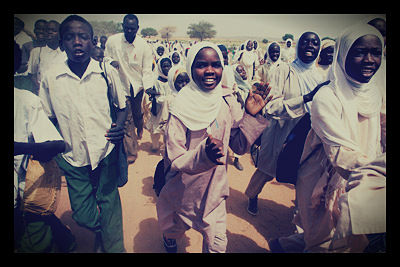
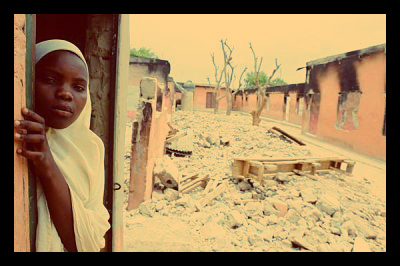
Schools in northern Nigeria are again the targets of religious tension, after a fatal attack by Boko Haram on February 24.  The militant group set fire to the dormitories of a boarding school in the town of Budi Yani, Adamawa killing 29 young boys ages 11-18.

This is one of a growing number of attacks by the organization, which is responsible for roughly 1,700 deaths since their establishment in 2009. It is eerily similar to the burning of the College of Agriculture in Yobe State last September, during which 42 students were killed and 18 injured. Again on February 12, an estimated 50-90 civilians lost their lives in the village of Izghe in Borno state.

Tension is prevalent across the northern states of Borno, Yobe, Kano, Adamawa, Kaduna and Bauchi, where Boko Haram seeks to create a separate Islamic state, under the rule of Sharia law. Their sectarian stance is adamantly opposed to Western influence and Christianity, as indicated by their name, which translates to “Western education is sinful”.

Religious conflict between the predominantly Muslim north and the mainly Christian south arose in 1914, when British colonial rule created the West African nation. Demographics were not considered when the borders were drawn, combining culturally distinct and incongruous populations.

Boko Haram’s presence has been disastrous for Nigeria’s education system. Schools across the north are closing indefinitely, and even those that remain open are seeing extremely low attendance. Previously, State Commissioner of Education Mohammed Lamin frequently claimed that the government was winning the war on terror, and urged schools to reopen. However, many frightened parents remain unconvinced.

Aside from schools, Boko Haram also targets local banks, businesses, homes, churches and public buildings. Many families have fled to nearby Chad and Cameroon, choosing refugee status over sectarian violence.

Local chairman of Izghe, Maina Ularamu, says, “there is no protection. We cannot predict where and when they are going to attack. People can’t sleep with their eyes closed.”

The boarding school assault has been interpreted as an “open declaration of war,” according to Nigeria’s Senate President David Mark, along with other government leaders. The state of emergency declared in the region last year, as an attempt to end the insurgency through formal military deployment, will continue.

International efforts continue to be implemented against Boko Haram. France and the United States recently pledged their support for the Nigerian government, and leaders of neighboring Senegal, Niger, and Cameroon promise to help fight the militants on the ground. Nigeria’s President Jonathon will also soon be attending a security conference in Europe, where he hopes to garner even more awareness of the issue.

 – Stefanie Doucette

Sources: Al Jazeera, Al Jazeera, NPR, NPR, BBC, The Guardian
Photo: LA Times

March 5, 2014
https://borgenproject.org/wp-content/uploads/borgen-project-logo.svg 0 0 Borgen Project https://borgenproject.org/wp-content/uploads/borgen-project-logo.svg Borgen Project2014-03-05 11:02:362024-06-04 01:17:35Boko Haram Targets Schools in Northern Nigeria
Aid Effectiveness & Reform, Children, Economy, Extreme Poverty, Global Poverty

Are Needy Children in Nigeria Invisible?

children_nigeria
As the most populous country in all of Africa, the Federal Republic of Nigeria is made up of over 250 ethnic groups. The following are the most populous: Fulani and Hausa, 29 percent; Yoruba, 21 percent; Igbo, 18 percent and Ijaw 10 percent.  They also have a significant split in religion, with 50 percent of the population being Muslim and 40 percent of the population being Christian.

With the largest population in Africa, Nigeria has 174,507,539 people and is ranked as having the 8th highest amount of people in the world.  Of all those people, 76,461,896 are fourteen years of age or younger, meaning 43.8 percent of Nigerians are children.  Of that 43.8 percent, about 60 percent lack birth certificates, meaning they are not permitted to use many government facilities that would normally be free with proper proof of citizenship.

Nigeria’s government is trying to reform its petroleum-based economy, but through all the corruption in that sector, it is not focusing as much on the youth in need.  On top of that, presidential elections are tarnished by substantial violence and irregularities and the country has been undergoing long-lasting religious and ethnic conflicts, which also takes focus away from the children in need.  These children need help; about 1,000,000 children die each year in Nigeria before their fifth birthday (10 percent of the global total.) What they need to save more lives is continuous investment and organized scaling up of essential newborn, maternal, and juvenile health interventions.

In Nigeria, there are numerous state hospitals that are free for children under the age of five, but the only dilemma is that the majority of these children do not have birth certificates.  This is a catch-22 because the hospitals admit patients under five for free with proof of age, but these children have never had any way to prove how old they truly are.  From there, they have no choice but to go to a private hospital for treatment where they are forced to pay $45 (a trivial amount for a life-saving medication in the United States,) but an unfathomable expense for the people living in this region, especially since most of them live on less than a dollar per day.

The number of children lacking birth certificates in Nigeria is up to about 17,000,000, a number second only to India, which has 71,000,000 unregistered children.  According to UNICEF, one out of every three children in Sub-Saharan Africa does not “officially exist,” but does that mean that they do not still need help?  The undocumented children in Nigeria are denied education and healthcare and often times have their rights abused.  Their parents often times cannot even help them because in these rural areas many are uneducated and are not aware of how important it is to register their children.

The deficiency of birth records in Nigeria also causes an error in the government’s efforts to track demographic information.  Without the proper information on how many children need hospitalization or immunization, the government cannot tell how many vaccines it needs from organizations like UNICEF, it cannot tell how many children have already died nor the cause of death.

The good news is UNICEF is trying to convince people to register their children and trying to increase the number of registration centers in Nigeria so the families can have easier access.  They plan on having 65 percent to 70 percent of children be registered with official birth certificates within the next few years.

– Kenneth W. Kliesner

Sources: CIA World Factbook, Voice of America ,UNICEF
Photo: The Guardian

February 2, 2014
https://borgenproject.org/wp-content/uploads/borgen-project-logo.svg 0 0 Borgen Project https://borgenproject.org/wp-content/uploads/borgen-project-logo.svg Borgen Project2014-02-02 04:00:382024-05-26 23:07:46Are Needy Children in Nigeria Invisible?
Activism, Developing Countries, Global Poverty

High Number of Traffic Fatalities in Third World

traffic_fatalities_third_world
Traffic accidents account for 1.24 million deaths globally every year while estimates put that number at 3.6 million by the year 2030. In developing countries, this projection would put traffic deaths ahead of HIV/AIDS, tuberculosis, malaria and many other common causes of death, according to a Global Burden of Disease study.

Those dying in road accidents are typically young, male and living in poverty.

Roughly 50% of global traffic fatalities occur in developing countries, and according to Jose Luis Irigoyen, a World Bank traffic safety expert, the costs of such a high number of road deaths are a “poverty-inducing problem.”

He estimates that low and middle income countries lose 1 to 3% of their GDP on road fatalities, which Irigoyen says could counterbalance the billions given in aid money to these developing nations.

The UN General Assembly in 2010 adopted a resolution that established a “Decade of Action for Road Safety,” its goal to stabilize the number of road fatalities and then reduce them as much as possible. The resolution estimates that 5 million lives could be saved during this time.

A Washington Post article on the topic of road fatalities highlighted four countries with particularly infamous driving records. In Indonesia, an average of 120 people die in road accidents every day. “When a jumbo jet crashes, it’s big news,” World Bank transport specialist Mustapha Benmaamar states. “But here, these people die in silence.”

Indonesian figures represent roughly two plane crashes per week.

Moreover, a surge in motorcycle use has largely contributed to a massive increase in the number of road deaths—from about 8,000 per year in 2002 to over 16,500 in 2007, and doubling once more in 2010. Motorcycles accounted for 60% of those fatalities.

Benmaamar asserts, “You reach a tipping point when these deaths are perceived not as something accidental, but as a result of a problem that has to be tackled. Only then will you see the fatalities start to drop. Indonesia has not reached that point.”

Experiencing even more road deaths per day than Indonesia is Nigeria, which has the worst driving figures in Africa. There are about 34 road-related deaths for every 100,000 people in the country, according to a 2013 World Health Organization report.

Nigeria’s Federal Road Safety Commission points to high speeds as the culprit behind so many traffic fatalities, though poorly maintained roads, loosely obeyed traffic laws and lax driver’s license requirements contribute to making the country one of the most dangerous places in the world in which to drive a vehicle.

On another note, traffic accidents cause three times more deaths in Colombia than its internal armed conflict. However, the country’s situation has improved over the years. Since the mid-1990s, road fatalities and accidents have decreased significantly, falling from 7,847 deaths in 1995 to 5,502 in 2010. Progress appears to be stalled, however, as fatalities in 2012 increased by 3% from the previous year.

With a goal of achieving better outcomes by 2016, Colombian leaders have begun to focus on addressing and rectifying the nation’s top cause of traffic-related fatalities—motorcycles and their passengers, accounting for 70% of road deaths in Colombia.

Helmet laws, strict license and road regulations, better motorcycle safety and a mental shift away from seeing road accidents as merely “accidents” could eventually curb the number of global traffic deaths.

– Kaylie Cordingley

Sources: Washington Post, Colombia Reports
Photo: The Promota

January 26, 2014
https://borgenproject.org/wp-content/uploads/borgen-project-logo.svg 0 0 Borgen Project https://borgenproject.org/wp-content/uploads/borgen-project-logo.svg Borgen Project2014-01-26 04:00:132024-12-13 17:49:56High Number of Traffic Fatalities in Third World
Activism, Global Poverty

Lauded Kenyan Author: “I Am a Homosexual, Mum”


Renowned Kenyan author Binyavanga Wainaina, a 43-year -old man, has come out stating that he is gay, becoming one of the most well-known Africans to ever do so publicly. He published a piece on the websites AfricaisaCountry.com and 
Chimurenga.co.za called “I am a homosexual, mum,” in which he imagines telling his mother on her deathbed that he is gay.

“Nobody, nobody, ever in my life has heard this. Never, mum. I did not trust you, mum. And. I. Pulled air hard and balled it down into my naval, and let it out slow and firm, clean and without bumps out of my mouth, loud and clear over a shoulder, into her ear. ‘I am a homosexual, mum,’” Wainaina writes.

Wainaina’s coming out coincides with the debate and passage of stringent anti-gay laws in Nigeria and Uganda, as well as existing laws prohibiting homosexuality in most African nations, including his native Kenya.

In fact, LGBT Kenyans can be put in jail for up to ten years if they are convicted of participating in homosexual acts, though the law is not often applied. Kenya’s culture remains conservative in regards to homosexuality.

In Nigeria, the government passed a ruling outlawing gay marriage, gay organizations and attending social or political gatherings related to gay causes. Moreover, Uganda has been mired in international controversy over its harsh anti-gay rhetoric and laws.

Not all African nations, however, forbid homosexuality. In a groundbreaking move, South Africa’s 1997 constitution legalized gay marriage.

It is within this African cultural framework that Wainaina has received criticism and praise, though he says the support has been overwhelming.

Wainaina took to Twitter, saying, “Ten million thank yous to the thousands of Africans and others who have given all kinds of public love, [and] support. We live in a beautiful continent.”

He elaborated in an interview with The Global Post, saying that, “It seems like doom and gloom, but my feeling is that the law is a reaction to a thing that they know has traction. And that’s a good thing. There’s no way to put that shit back in the box.”

Wainaina had contemplated coming out publically sooner, especially while he tried to reconcile his relatively free lifestyle in Nairobi and knowing that other LGBT Africans were being persecuted.

As a frequent traveler to Nigeria, Wainaina has sharply condemned the country’s new anti-gay marriage law, saying it “shames us all.” He also states that visiting the country now that he has come out will be an “adventure.”

To those who argue that homosexuality is “un-African,” Wainaina also has sharp words. He points to deeply entrenched puritan values stemming from Victorian era churches, as well as propaganda and fear-mongering as the culprits behind the creation of the fallacious idea that homosexuality is wrong, unnatural, and un-African.

The 2002 Caine Prize-winning author is poised to embrace his role in fighting for the rights of LGBT Africans, and he believes people are ready.

“People who live in societies where you are being lied to a lot value truth,” he states. “I’m a pan-Africanist; I belong to this continent.”

– Kaylie Cordingley

Sources: BBC, Global Post, Huffington Post, The Guardian
Photo: Internaz

January 22, 2014
https://borgenproject.org/wp-content/uploads/borgen-project-logo.svg 0 0 Borgen Project https://borgenproject.org/wp-content/uploads/borgen-project-logo.svg Borgen Project2014-01-22 01:32:192024-05-26 23:08:36Lauded Kenyan Author: “I Am a Homosexual, Mum”
Global Poverty

Toilets in Nigeria, Human Waste links to Diseases

toilets_in_nigeria_human_waste_diseases
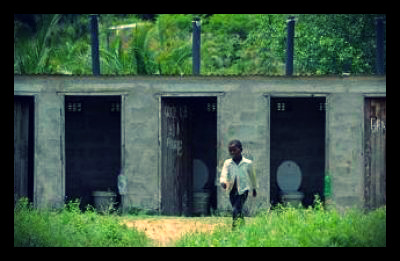
The small town of Kyuzhi in Nigeria is now giving fines to those who do not use toilets and defecate in the open, all of which is part of a water protection initiative to stop the dangers of human waste in small communities. Locals, furthermore, have the opportunity to take toilet education workshops where they learn the dangers of exposed human waste.

According to UNICEF, over 45 million Nigerians defecate in the open, an action stated as being the primary cause of high infant mortality in the country. When children are undernourished, diseases such as cholera or even parasitic infections can become deadly.

It has been over a year since members of the Kyuzhi community began to understand the problem with open defecation. By coming together and following a plan to improve community hygiene, an environmental task team was formed. They now fine 2,000 Naira or $13, to those violating the agreement and since last year only 3 have been caught defecating in the open.

Workshops in the community, moreover, allow locals to see how human waste and disease are linked.

Community leaders, women and youth take participants to an open defecation site in the forest and explain how crucial it is to stop this behavior. Mothers are now teaching their children the proper way to go to the restroom and if they see other children in non-designated sites, they seek out and speak to the children’s mothers. Several agree that this is the best way to keep the community clean and though some remain emotional about this confrontation, they are now using toilets.

More toilets and defecation sites have been set up for the locals of Kyuzhi and in due time local diseases will diminish, setting up an exemplary model for other developing communities.

– Maybelline Martez

Sources: UNICEF, DW.DE
Photo: Deutsche Welle

January 17, 2014
https://borgenproject.org/wp-content/uploads/borgen-project-logo.svg 0 0 Borgen Project https://borgenproject.org/wp-content/uploads/borgen-project-logo.svg Borgen Project2014-01-17 22:59:042024-05-26 23:04:15Toilets in Nigeria, Human Waste links to Diseases
Global Poverty

7 Facts About Boko Haram

boko_haram_kano_nigeria
1.
As of November 13, 2013, Boko Haram is now considered a terrorist group by the United States.

Boko Haram (Congregation of the People of Tradition for Proselytism and Jihad) is an Arabic term that means “Western education is sacrilege.” As a jihadist group, Boko Haram is considered to be one of the most violent movements in contemporary Islam, using aggressive brutality to achieve their end goal: to establish a “pure” Islamic state ruled by sharia law while also ending what the group considers to be westernization.

2. Boko Haram honors and promotes the concept of vengeance.

July 2009 brought Boko Haram some setbacks. A clash with Nigerian Government forces led to the deaths of hundreds of members of the jihadist group. Former leader Muhammad Yusuf, who created the group in 2001, was also captured. This capture led to Yusuf’s televised execution, as well as the deaths of his father-in-law and other sect members.

In response to this event, Boko Haram began a series of violent attacks in northeast Nigeria.

“We are responsible for the attacks in Maiduguri, Damaturu and Potiskum,” said Abul Qaqa, a supposed spokesman for Boko Haram. “We carried out the attacks to avenge the killings of our brothers by the security forces in 2009. We will continue to wage war against the Nigerian state until we abolish the secular system and establish an Islamic state.”

3. The death toll of Boko Haram is in the thousands.

Responsible for over 400 killings in 2011 alone, the group’s death toll raises daily. In fact, it said that Boko Haram is guilty of over 4,700 murders.

4. The group has strong ties to Al Qaeda and has even threatened the United States.

A January 2012 United Nations report cited regional officials as saying that “Boko Haram had established links with Al Qaeda in the Islamic Maghreb.” Apparently, some of the group’s “members from Nigeria and Chad had received training in Al Qaeda in the Islamic Maghreb camps in Mali during the summer of 2011.”

Abubakar Shekau, the current leader (also known as an “emir”) of Boko Haram, did not denounce these ties.

“Don’t think that jihad stops with the death of imams, because imams are individuals,” Shekau says. “Don’t you see and think how many sheikhs and men were martyred, like Sheikh Abdullah Azzam [the co-founder of al Qaeda], Abu Musab al Zarqawi [the leader of al Qaeda in Iraq], Abu Omar al Baghdadi [the emir of al Qaeda’s Islamic State of Iraq], Osama bin Laden, Abu Yahya al Libi [a top al Qaeda leader], Abu Yusuf Muhammad bin Yusuf al Nigiri [the former emir of Boko Haram], and others ….”

“Do not think jihad is over,” Shekau said. “Rather jihad has just begun. O America, die with your fury.”

5. Among Boko Haram’s thousands of victims are innocent civilians, including women and children.

The group set fire to a Mamudo boarding school that ended up killing 42 students and teachers. They killed 200 people in the village of Baga. Bombings of churches, schools, and various other places have earned the group their terrorist affiliation.

The fate of Alhaji Muhammadu proves the aforementioned point as well. Muhammadu was fatally shot when walking home on February 9. His son explained that his father had told the police about a booby-trapped car in the neighborhood. Boko Haram found out.

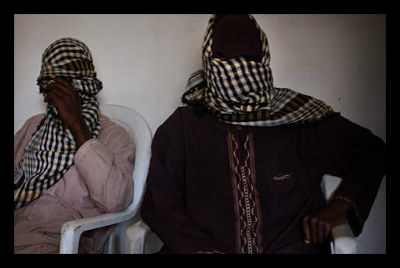
Two masked men on a motorcycle shouted: “Just try that again. Now you are dead,” recalled the son, Sudaifu Muhammadu, a 27-year-old student at Bayero University, shuddering.

“They are all around,” Mr. Muhammadu said.

6. The country’s poverty levels seem to have a negative impact on the situation overall.

The Nigerian state, the typical enemy of the jihadist group, is largely due to the nation’s enduring poverty, according to analysts. Despite Nigeria’s oil wealth, 60 percent of the population lives on less than $1 a day. Since 2004, there has been an increase in national poverty, with about 75 percent of the population considered to be poor.

Reasons for attacks seemed quite clear to the Nigerians living with the fear of impending violence: injustice and misgovernance by political officials.

“The leaders are not concerned about the common man,” said Abdullahi Dantsabe, squatting in his open-air stall where he sells cooked yams.

Ado Ibrahim, a 22-year-old sugar cane vendor, was in agreement. He stated that another flare-up was “possible, as long as injustice persists.”

7. The local police are not as helpful as they were expected to be.

 National Geographic writer James Verini recalled a woman he met at a hospital in Kano this year.

“She’d been selling water in the bus station the day of the bombing. Her young daughter had been helping her,” Verini said. “When the car exploded, the girl vanished. In the darkness the woman called out for her. When her daughter didn’t respond, she began looking for a body. When she couldn’t find a body, she looked for an arm, a leg, clothing, a shoe, anything. She found nothing. She told the police what had happened, but they didn’t care and ordered her to leave. The woman’s husband went to every hospital in Kano, to no avail.”

The woman has not seen her daughter since that day.

– Samantha Davis
Sources: Reuters, International Business Times, Aljazeera, Counsel on Foreign Relations, New York Times, National Geographic


December 8, 2013
https://borgenproject.org/wp-content/uploads/borgen-project-logo.svg 0 0 Borgen Project https://borgenproject.org/wp-content/uploads/borgen-project-logo.svg Borgen Project2013-12-08 04:00:212024-05-25 00:31:437 Facts About Boko Haram
Global Poverty

Nigeria Poverty Rising Despite Economic Growth

nigeria_oil_corruption
In the last several years, Nigeria has seen an increase in its economic state. However, Nigeria is a country that follows the profile of African countries: a land rich in natural resources, yet much of its population remains in poverty. Despite the economic growth due to its oil revenue, Nigeria has been hindered by other problems for many years. An unstable government, a lack of cultivated land and the lack of progress made in rural areas all attribute to Nigeria’s high poverty rates.

Nigeria’s government has come under heavy criticism. The country relies primarily on its oil revenue to strengthen the economy, thereby eliminating the need for taxpayers to maintain the government officials’ salaries. The salaries of these high ranking officials often exceed $100,000, while the average family survives on $1.25 per meal. The large discrepancy between the working people and the government officials is no secret; the government corruption occurring in Nigeria is one of the worst on the planet.

The agricultural sector of the country employs roughly two-thirds of the working population. Nigeria is a world leader in production of cassava, yam and cowpea. Nigeria is also a major player in the fish industry. But the country still struggles with starvation levels, and Nigeria relies on large imports of grains, livestock products and other food products.

However, Nigeria has a huge agricultural base that offers great potential for growth and improvement. The agricultural sector has shown progressive improvements over the years, growing by 7 percent from 2003 to 2007. However, the large percentage of potentially cultivated land remains untapped.

Of an estimated 71 million hectares of potentially cultivated land, only about half is under production. There is a lack of productive irrigation methods prevailing over the land. Of the potential workable land, only about 7 percent is being properly irrigated. With an enhanced emphasis on irrigation and other land cultivation techniques, the substantial natural resources of Nigeria could be put to better use.

Urban areas in Nigeria have shown an increase in well-being over the past years. However, much of the rural areas in the country are mired in extreme poverty, living on scraps and from meal to meal. The people who work the fields in the rural areas are practically living off the food they produce, then they sell anything they can to mass production.

Nigeria is a nation that has extraordinary natural resources. However, the nation is held back by its various national issues. With a significant amount of corruption running throughout the government, the head of the country is in dismay. Without a solid government, the backbone of the country is crippled. Having great natural resources is only a positive factor when they are employed to their full potential. By not cultivating the majority of the usable land, Nigeria is limiting itself. Lastly, the lack of development in rural areas hurts the economy as a whole, not only the people residing in those rural areas. Better conditions could help the food production, which in turn would help cultivate the land more effectively. Nigeria has enormous potential, yet the proper leadership and productivity is lacking.

– Zachary Wright

Sources: Punchng, Rural Poverty Portal, BBC News, Daily Mail UK

Pictures: Daily Mail UK

October 24, 2013
https://borgenproject.org/wp-content/uploads/borgen-project-logo.svg 0 0 Borgen Project https://borgenproject.org/wp-content/uploads/borgen-project-logo.svg Borgen Project2013-10-24 17:54:292016-06-15 09:15:49Nigeria Poverty Rising Despite Economic Growth
Activism, Technology

Mobile Devices in Africa Becoming a Basic Necessity

Africa Mobile Technology Essential Development
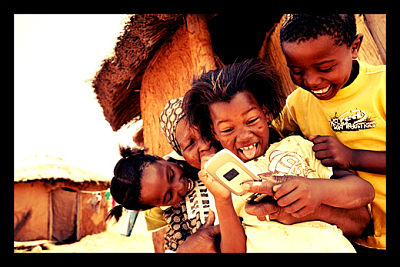
The number of wireless devices in the U.S. outnumbers the population. With a population of 315 million in 2011, there were approximately 328 million mobile devices in the U.S. Americans enjoy mobile devices, as do an increasing number of the African population. Paul Kagame, current president of Rwanda, captured the growth of mobile devices in Africa by stating, “In 10 short years, what was once an object of luxury and privilege, the mobile phone, has become a basic necessity in Africa.”

Let’s look at some examples:

  • Nigeria: A decade ago, landlines dominated in Nigeria, with about 100,000 phone lines. Today, Nigeria has close to 100 million mobile phone lines and the landline company is no longer in operation.
  • Kenya: In the last decade, mobile phone subscribers have increased 500-fold. Additionally, in 2009, mobile phone sales increased by more than 200 percent when the 16 percent general sales tax was removed. The sales continue to rise.
  • Rwanda: In 2010, mobile phone users grew by 50 percent. Doubled in one year!
  • South Africa: 72 percent of those between the ages of 15 and 24 have cell phones.
  • Africa as a whole: 650 million Africans, particularly the youth, use mobile phones for both social and functional purposes. This by far surpasses the number in the U.S. and Europe.

Although mobile phones across Africa generally consist of low-end Nokia phones used for the Short Messaging Service (SMS), smartphones with Internet capability are on the rise throughout the continent. In some African countries, mobile phones are more common than clean water, bank accounts and electricity, according to the World Bank and African Development Bank.

Why has there been an explosion in mobile phones? The main cause is the increasing reliance on mobile phones by youth. The youth, ages 15 to 24, depend on their mobile device not only for communication, but also for listening to the radio, transferring money, shopping, using social media and more. With some Africans only making $2 a day, many will occasionally skip their meals in order to pay the $5 and $8 monthly cell phone expenses.

Mobile devices are also used as a way of combating many social issues in Africa:

  • Activism: Mobile devices have offered communication, transparency, organization, openness, and empowerment to the electoral process.
  • Education: As mobile devices are more common and more affordable than PC’s, they are used as tools to deliver teaching content. As more than half of the parents in Africa are illiterate, there is hope that these teaching tools will have a positive impact on the education status of African children. In South Africa, MoMath, a mathematical teaching tool, has been launched.
  • Disaster management: With constant wars and genocide occurring throughout Africa, displaced persons are commonplace. Through mobile devices, displaced persons are able to reconnect with their families.
  • Agriculture: Agriculture is one of the largest employers throughout Africa. Through mobile phones, farmers are now able to make better decisions, resulting in more profit. Farmers use mobile phones to research weather information, market prices, and micro-insurance schemes.
  • Health: According to the World Health Organization, nearly 30 percent of drugs supplied in developing countries are fake. Through SMS, buyers can send the code found within a scratch card on the medicine packaging to find out if the drug is fake or not. This is a life saving resource, as in Nigeria, nearly 100 babies died due to ingesting a solvent usually found in antifreeze through their teething medication.

By 2016, there will be an estimated billion mobile phones on the continent of Africa. This has a huge impact for potential investors. In Kenya alone, the use of mobile devices has had a big economic impact. The mobile device industry contributed about $3.6 billion to the country’s GDP and has provided numerous employment opportunities.

– Caressa Kruth

Sources: CNN, The African Report, Washington Post
Photo: Evidence4Action

October 9, 2013
https://borgenproject.org/wp-content/uploads/borgen-project-logo.svg 0 0 Borgen Project https://borgenproject.org/wp-content/uploads/borgen-project-logo.svg Borgen Project2013-10-09 16:11:362024-12-13 17:49:42Mobile Devices in Africa Becoming a Basic Necessity
Sanitation

Sanitation Revolution In Nigeria

Sanitation_Nigeria
Betty Torkwase Ikyaator is a water and hygiene consultant for UNICEF Nigeria. Over the last few years, Ms. Torkwase Ikyaator has transformed the hygiene and sanitation standards across Nigeria. In 2008, only 15 communities were open defecation free. Now, more than 4,500 communities are open defecation free.

In a small village of 45 households, Betty Torkwase Ikyaator asks the children for a tour. Ms. Ikyaator asked them where they used the toilet. The children point to an open field, spewing with a disgusting stench, and giggle. Ms. Ikyaator and her team of eight take the children back into the village and gather a group of villagers for a simple presentation. She puts a plate of food, an open water pitcher and pile of excrement next to one another. The villagers watch as files move from the excrement to the pitcher and back again. A simple demonstration such as this makes evident the dangers of contamination, but more importantly, the importance of sanitation.

Shortly afterwards, she led a discussion with community leaders about hygiene and the importance of proper waste disposal systems. A committee of villagers is formed which commits itself to providing each household with a toilet of its own. Ms. Ikyaator leads these discussions to enlighten villagers in the most remote areas of Nigeria about the importance of sanitation. This is no easy task, but by showing villagers the dangers of improper sanitation, Ms. Ikyaator believes that she can empower these communities with the knowledge and desire to change their current living situations for the better.

According to Ms. Ikyaator, follow-up is important. “We keep coming back to the community, checking in on them, giving them encouragement and supporting the procress. But once they realize the benefit, especially in keeping their children healthy, it becomes part of their way of life.”

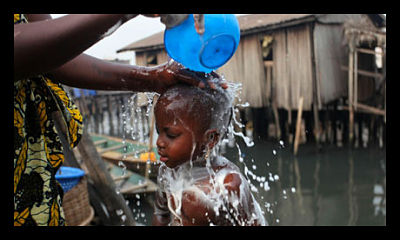
Ikyaator’s community-led program could prove beneficial to more than just Nigeria. In Africa, 62% of all people do not have access to a toilet. For every $1 spent on improvements to sanitation, $9 USD is typically yielded in reduced health costs, increasing returns on education and safeguarding water resources. Poor sanitation is linked to cholera, schistosomiasis, trachoma and diarrhea, the second largest killer of children in developing countries. Improved sanitation has a serious impact on health and social development. Conversely, sanitation is the most cost-effective major public health intervention to reduce childhood mortality. In addition, access to proper toilets creates physical environments which promote self-respect, dignity, and enhanced safety for women and children, many of whom suffer from sexual harassment and assault when defecating at night or in remote areas.

As of right now, the world is not on track to the meet MDG 10 to halve the proportion of the population without access to safe drinking water and sanitation. From 1990-2004, the WHO and UNICEF worked together to provide 1.2 billion more people with access to improved sanitation. But, the UN is 700 million people short of missing the MDG. And without proper sanitation and clean drinking water, poverty eradication and disease control are impossible.

– Kelsey Ziomek

Sources: UNICEF, Connect Nigeria, WHO, Global Poverty Project
Photo: The Guardian

August 13, 2013
https://borgenproject.org/wp-content/uploads/borgen-project-logo.svg 0 0 Borgen Project https://borgenproject.org/wp-content/uploads/borgen-project-logo.svg Borgen Project2013-08-13 05:44:362024-05-25 00:15:41Sanitation Revolution In Nigeria
Developing Countries, Development

5 Steps to Increased Economic Development in Africa

5 Steps to Increased Economic Development in Africa
Recently, Nigeria’s Finance Minister Ngozi Okonjo-Iweala gave a speech at the International Institute for Strategic Studies outlining the steps that need to be taken to improve economic development in Africa by creating jobs and reducing unemployment. Here are the five steps Okonjo-Iweala outlined for creating economic growth in Africa and developing jobs for young people across the continent.

    1. Develop a critical infrastructure. The lack of modern infrastructure in Africa costs the continent “at least 2% in GDP growth annually.” Among the systems that Africa needs to develop are an expansive electrical grid, roads, railways, and communications. These systems allow for more efficient production and transportation of goods, allowing for increased economic output. Additionally, the continent needs to work on establishing clean water and sanitation systems, which will result in improved public health.
    2. Develop human capital. Africa must invest in the skills of its people in order to advance their standard of living. Currently, “33 million primary school-aged children in Sub Saharan Africa do not go to school,” and “40% of Africans over the age of 15 and 50% of women above the age of 25 are illiterate.” Africans need improved access to education in order to work in skilled trades and earn higher wages.
    3. Build safety nets. Throughout Africa, there are few systems that are established to help citizens who are living in poverty or have been negatively impacted by natural disasters. Okonio-Iweala states that Africa must work to establish tax systems to collect revenue for providing assistance to those in need throughout the continent.
    4. Address a growing population. In 2010, Africa was home to more than 1 billion people. The population of Africa is expected to double to 2 billion people by the year 2050. In order to help alleviate poverty in the continent, a focus should be placed on family planning. By reducing the number of births per woman in Africa, the overall GDP per capita will increase, resulting in a higher standard of living for Africans.
    5. Embrace Africa’s youthful population. Africa’s youth represents the future of the continent. By establishing programs that focus on the intellectual development and health improvement of young Africans, the continent will make an investment in its future. Africa has true potential for future economic growth if the continent’s nations invest in its young population, providing them with the tools they need to be successful in a global economy.

– Jordan Kline

Sources: Visualizing, The Guardian, Achieve in Africa
Photo: UN

July 24, 2013
https://borgenproject.org/wp-content/uploads/borgen-project-logo.svg 0 0 Borgen Project https://borgenproject.org/wp-content/uploads/borgen-project-logo.svg Borgen Project2013-07-24 07:25:122020-07-19 22:05:495 Steps to Increased Economic Development in Africa
Page 11 of 13«‹910111213›»

Get Smarter

  • Global Poverty 101
  • Global Poverty… The Good News
  • Global Poverty & U.S. Jobs
  • Global Poverty and National Security
  • Innovative Solutions to Poverty
  • Global Poverty & Aid FAQ’s
Search Search

Take Action

  • Call Congress
  • Email Congress
  • Donate
  • 30 Ways to Help
  • Volunteer Ops
  • Internships
  • Courses & Certificates
  • The Podcast
Borgen Project

“The Borgen Project is an incredible nonprofit organization that is addressing poverty and hunger and working towards ending them.”

-The Huffington Post

Inside The Borgen Project

  • Contact
  • About
  • Financials
  • President
  • Board of Directors
  • Board of Advisors

International Links

  • UK Email Parliament
  • UK Donate
  • Canada Email Parliament

Get Smarter

  • Global Poverty 101
  • Global Poverty… The Good News
  • Global Poverty & U.S. Jobs
  • Global Poverty and National Security
  • Innovative Solutions to Poverty
  • Global Poverty & Aid FAQ’s

Ways to Help

  • Call Congress
  • Email Congress
  • Donate
  • 30 Ways to Help
  • Volunteer Ops
  • Internships
  • Courses & Certificates
  • The Podcast
Scroll to top Scroll to top Scroll to top