• Link to X
  • Link to Facebook
  • Link to Instagram
  • Link to TikTok
  • Link to Youtube
  • About
    • About Us
      • President
      • Board of Directors
      • Board of Advisors
      • Financials
      • Our Methodology
      • Success Tracker
      • Contact
  • Act Now
    • 30 Ways to Help
      • Email Congress
      • Call Congress
      • Volunteer
      • Courses & Certificates
      • Be a Donor
    • Internships
      • In-Office Internships
      • Remote Internships
    • Legislation
      • Politics 101
  • The Blog
  • The Podcast
  • Magazine
  • Donate
  • Click to open the search input field Click to open the search input field Search
  • Menu Menu

Tag Archive for: Global Poverty

Inflammation and stories on global poverty

Posts

Activism, Advocacy

World Vision’s 30 Hour Famine

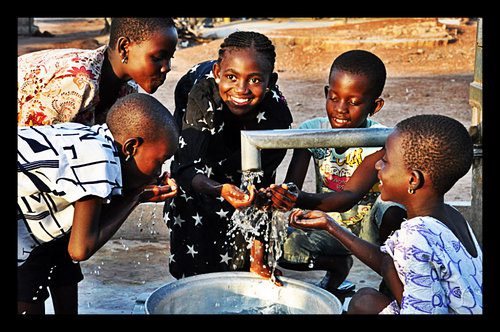
30HourFamine09-1
This April 26-27 is the 30 Hour Famine weekend, and thousands of teenagers across America will go hungry to support children across the world as part of World Vision’s fundraiser. World Vision is a leading Christian ministry serving people in nearly 100 countries, and the funds from the famine go to areas of the globe that need the money the most.

QUICK FACTS:

+ about 112,000 teenagers will choose to fast for 30 hours in the pursuit of learning about hunger and making a real-life difference in the lives of hungry children around the world.

+ Just over 3,000 Famine groups will participate.

+ Millions of dollars will be raised. Remember: $1 feeds a child for a day and $30 feeds a child for a month; compounded, $360 feeds a child for a year.

As a result of this weekend alone (not the whole year), approximately:

+ 11,667 otherwise hungry children will be fed for an entire year.

+ Or, 140,000 hungry children will be fed for a month.

Not only does the famine raise money for the poor across the globe, it teaches young adults about how those people live each and every day and raises awareness of global hunger and world poverty. By participating in the famine, teenagers learn how to advocate and make a difference in the lives of others.

– Katie Brockman

Source: World Vision

April 27, 2013
https://borgenproject.org/wp-content/uploads/borgen-project-logo.svg 0 0 Borgen Project https://borgenproject.org/wp-content/uploads/borgen-project-logo.svg Borgen Project2013-04-27 15:32:252020-05-26 07:40:32World Vision’s 30 Hour Famine
Development, Global Poverty, United Nations

Human Rights a Priority for World Bank

Human Rights a Priority for World BankIndependent United Nations experts are advising the World Bank to include human rights standards in their criteria for giving loans and all other interactions with developing countries. The World Bank will hold a review in the upcoming months to discuss its social policies and is expected to adopt international human rights standards.

When the World Bank does not consider the human rights of a specific country before investing, the organization risks unintentionally hurting the extremely poor in that country. This happens because some development ends up benefiting the wealthy people while the poor suffer. For example, poor farmers may lose their land, and therefore livelihood, in order to build new housing structures that have been sanctioned by the World Bank.

The group advocating for human rights standards in the World Bank includes representatives for the Special Rapporteur (and its sub-groups on extreme poverty and human rights, rights of indigenous peoples, and rights to food) and the Independent Expert on foreign debt and human rights.

As such, the World Bank can expect to hear arguments from this group urging them to consider issues like “disability, gender, labor, land tenure, and the rights of indigenous people” in the meeting. These suggestions will also be open for public comment. The goal of adding human rights criteria to World Bank standards is to ensure that the poor benefit development as well as wealthy people.

The World Bank will update its “safeguard policies,” its social and environmental policies, to make sure that the voices of the poor are not overpowered by the wealthy. This review, which will analyze the activities of the World Bank for the past two years, is a huge opportunity for the organization to begin to reach out to the world’s poorest.

– Mary Penn

Source: India Blooms
Photo: The Foundry

April 26, 2013
https://borgenproject.org/wp-content/uploads/borgen-project-logo.svg 0 0 Borgen Project https://borgenproject.org/wp-content/uploads/borgen-project-logo.svg Borgen Project2013-04-26 14:00:322020-06-16 01:39:20Human Rights a Priority for World Bank
Food & Hunger, Food Security, Global Poverty

Can Converting Cellulose Into Starch Solve World Hunger?

Can Converting Cellulose Into Starch Solve World Hunger?
When considering the most pressing issues confronting global poverty in the next 30 to 40 years, none are more alarming than the food shortages predicted to accompany a worldwide population of over nine billion people. In an effort to ameliorate future food insecurity, more and more research funding has been allocated towards finding sustainable, nutrient-dense complex carbohydrates capable of meeting the caloric demands of a greatly expanded populace. Quite astonishingly, in a turn of events that have even researchers optimistic about future food security challenges, scientists have recently discovered a way of converting cellulose into starch.

Researchers at Virginia Tech’s College of Agricultural and Life Sciences, along with their College of Engineering devised an ingenious method of converting cellulose into starch by utilizing a process involving cascading enzymes. Basically, enzymatic reactions transform cellulose – an abundant carbohydrate contained in the cell wall of plants – into amylose and ethanol, which means that absolutely nothing goes to waste. The potential of the cellulose to starch conversion opens up exciting new frontiers in the fight against world hunger, as humans generally derive 20 to 40 percent of their daily caloric intake from complex carbohydrates such as starch.

In regards to the process of converting cellulose into starch, Associate Professor of Biological Systems Engineering Y.H. Percival Zhang remarked that “Cellulose and starch have the same chemical formula, the difference is in their chemical linkages. Our idea is to use an enzyme cascade to break up the bonds in cellulose, enabling their reconfiguration as starch.”

Scientific breakthroughs such as converting cellulose into starch serve to unlock the potential of feeding the entire world’s population without the necessary land, water, and fertilizer usage that wreaks havoc on the earth’s delicate ecosystems. Furthermore, by harnessing the scientific technology necessary to transform something as abundant as plant cellulose into a viable human food source, future challenges such as global food security are looking much more surmountable.

– Brian Turner

Source: Science Daily
Photo: National Geographic

April 24, 2013
https://borgenproject.org/wp-content/uploads/borgen-project-logo.svg 0 0 Borgen Project https://borgenproject.org/wp-content/uploads/borgen-project-logo.svg Borgen Project2013-04-24 10:34:372020-06-12 23:11:45Can Converting Cellulose Into Starch Solve World Hunger?
Aid Effectiveness & Reform, Developing Countries, Extreme Poverty, Global Poverty, Nonprofit Organizations and NGOs, Poverty Reduction

$500 Million ‘Rescue Mission’ Initiative Launched

$500 Million 'Rescue Mission' Initiative LaunchedWith cuts to foreign aid looming and some already in place, humanitarian organizations are going to become even more important in the fight against global poverty. Evangelical organization World Vision launched a $500 million ‘Rescue Mission’ initiative to help 10 million children living in poverty.  The ‘Rescue Mission’ initiative will focus on clean water, access to health care, and child protection.

Under the budget cuts that went into effect as of January 1, 2013, non-profits are predicting that there will be 1.1 million fewer mosquito nets distributed, 300,000 fewer people with access to clean water, and 2 million people with reduced or zero access to food aid.  This is cause for serious concern as we look at being less than 1,000 from the end date for the Millenium Development Goals (MDG).

World Vision launched the $500 million ‘rescue mission’ dubbed “For Every Child” which seeks to raise $500 million by 2015.  It is the farthest-reaching endeavor World Vision has ever taken on.  The initiative will focus on clean water, fighting communicable diseases, providing small loans to families, and protecting children from human trafficking.

When the government cuts budgets, it can be difficult for non-profit organizations to get the start-up capital they need to start new ventures. This campaign is important to continue the life-saving work World Vision is already doing around the world.  It will hopefully fill the gap from government funds and continue to promote the MDGs as we near the final stretch.  We have halved poverty in the last decade and it is very possible to continue the downward trend, but it is going to take a lot of hard work.

While the needs are great and the costs seem high, the alternative to pushing forward is not an option. As Richard Sterns, Executive Director of World Vision put it, “We’ve taken a hard look at the needs that exist today. They are great, but we refuse to believe that poverty is too big, too expensive, or too difficult to overcome-because for the millions of children living in poverty, the stakes couldn’t be higher.”

– Amanda Kloeppel

Source: Christian Post

April 24, 2013
https://borgenproject.org/wp-content/uploads/borgen-project-logo.svg 0 0 Borgen Project https://borgenproject.org/wp-content/uploads/borgen-project-logo.svg Borgen Project2013-04-24 09:00:522020-06-12 23:12:22$500 Million ‘Rescue Mission’ Initiative Launched
Extreme Poverty, Global Poverty, Health

Conference Focuses on Improving Newborn Health

Conference Focuses on Improving Newborn Health
In the first newborn health conference, international healthcare organizations are pleased with advancements to improve the health of newborns in developing countries. These organizations include the United Nations Children’s Fund (UNICEF), the US Agency for International Development and the Bill & Melinda Gates Foundation. Although newborn deaths, malnutrition, and stunted development are beginning to decrease, representatives of aid organizations say that more support is needed.

Attendees of the conference are planning to release a “global action plan” in the upcoming year to present a strategy for even further reducing these newborn deaths. With this new call to action, we can hope to see the current statistics for newborn deaths and illnesses continue to decrease.

Unfortunately, newborn deaths are all too common in the developing world. In 2011, approximately 20,000 newborn babies died and, in 2009, there were over 22,600 stillbirths in South Africa. The global statistics are even more shocking. 60.9 million children died in 2011 and, of these, 43 percent of deaths occurred during the first four weeks of life, three million died within a week, and two million babies died the day they were born.

Graca Machel, the wife of Nelson Mandela, spoke urgently on the subject. She pronounced the issue of newborn health to be a top priority for UNICEF. “Too many of our newborn children here in Africa are dying too early. We are not reaching the targets we have set ourselves in the (UN) Millennium Development Goals. The issue of newborn health has long been a hidden challenge,” she said.

All organizations involved remain committed to working together to reduce newborn death rates through research and by working with the agriculture department to address malnutrition, the cause of stunted growth. The groups also plan to implement programs on training midwives and newborn healthcare education. Together, UNICEF, USAID, and the Bill & Melinda Gates Foundation hope to change the lives of millions of new babies.

– Mary Penn

Source: BDLive

April 24, 2013
https://borgenproject.org/wp-content/uploads/borgen-project-logo.svg 0 0 Borgen Project https://borgenproject.org/wp-content/uploads/borgen-project-logo.svg Borgen Project2013-04-24 08:57:242024-05-24 23:49:08Conference Focuses on Improving Newborn Health
Children, Global Poverty, Health

UNICEF Focuses on Stunted Children

UNICEF Focuses on Stunted Children
One of the many harmful consequences of malnutrition in children is permanent “stunting” of the mind or body. The United Nations Children’s Fund is addressing this issue that affects more than 25 percent of children less than five years old. The organization is particularly concerned because “stunted” kids are put in a severe disadvantage for the rest of their lives.

According to Anthony Lake, executive director of UNICEF, there are several ways to help prevent birth of stunted children. Some of these methods include advocating for breastfeeding, proper vitamin intake, and consuming clean water. Lake explains a child with access to these important elements is likely to have his or her brain and body develop normally. Children who do not receive the necessary nutrient are also put at risk for numerous other illnesses or even premature death.

The first two years of life are the most significant to a child’s health. Even in the womb, children are at risk if the mother is not dedicated to a balanced diet, drinking clean water, and consuming enough Vitamin A, iron, or folic acid. If a child does experience stunted growth or “stunting,” there is no way to reverse the damage after the age of two.

Anthony Lake describes “stunting” as “the least understood, least recognized and least acted upon crisis.” Unlike being underweight, stunted children can never be fully cured. Thus, the child must carry out his or her life with an underdeveloped brain and possible nerve and cell damage. Not only is this catastrophic for the child’s learning capacity and future career, but it is also detrimental to society as well.

Most stunted children live in Sub-Saharan Africa and South Asia. In India, 48 percent of children under five years old suffer from “stunting.” All of these children will never have the chance to live up to their full potential. When new generations are unable to contribute intellectually and financially to society, the country’s entire economic system suffers. UNICEF is tackling the issue of one child at a time.

– Mary Penn

Source: News OK
Photo: CNN

April 20, 2013
https://borgenproject.org/wp-content/uploads/borgen-project-logo.svg 0 0 Borgen Project https://borgenproject.org/wp-content/uploads/borgen-project-logo.svg Borgen Project2013-04-20 09:00:172024-05-24 23:48:23UNICEF Focuses on Stunted Children
Education

UC Berkeley & Global Poverty

UC Berkeley & Global Poverty
The Global Poverty Project was founded by Ananya Roy, a professor of city and regional planning at Berkeley, Tara Graham, an International and Area Studies lecturer and digital media expert and Abby VanMuijen, an artist with the goal of spreading the curriculum of Berkeley University’s most popular minor, Global Poverty and Practice. The three UCal alumni are utilizing digital media and twitter to create a multilayered broadly accessible curriculum that they call critical thinking + improv art + new media. This creative curriculum is being used to spread knowledge about global poverty beyond the classroom.

A project is a new approach to traditional online education that is sweeping the world. While the traditional method of online education tends to simply stick a video recorder in a classroom, the Global Poverty Project seeks to create numerous forms of media and material for students to utilize as a whole or in parts. Eventually, there will be a textbook that utilizes matrix barcode technology that will link to other related information. Each video that is posted also links to useful sites and information. By generating discussions on Twitter, Roy’s classroom, already full with 600 pupils, has expanded, potentially exponentially, and has become a place where students, people on campus and anyone in the world can exchange ideas.

More than creating a groundbreaking approach to online education, Roy, Graham, and VaMuijen are looking to create new and interesting internet videos that spark discussion and critical thinking.“Most of them, I think, are really patronizing and oversimplify the very complex aspects of poverty action. They’re a call to action, but they don’t necessarily explore all the political and ethical issues that smart young people know are at stake,” said Roy about most internet videos that attempt to address poverty.

Each video starts with a question and offers a scholarly argument for a way of thinking about it. VanMuijen then takes video to a whole other level with visual note-taking and creates the videos. Like the minor itself, the videos are framed to encourage thinking about solutions to poverty that steer clear of what Roy sees as two extremes: “The hubris of benevolence, young Americans thinking ‘I’m going to solve poverty during my alternative spring break,’ and the paralysis of cynicism, which we have a lot of at Berkeley, really smart kids who know how to critique everything in the world but they’re not really sure what to do after that critique.” Later, the project, new media, curriculum, and critical thinking about global poverty come together. While Roy lectures, the Twitter feed is projected behind her in the classroom and the videos are being played and igniting discussion all over the world.

– Kira Maixner

Source: UC Berkeley News Center

April 16, 2013
https://borgenproject.org/wp-content/uploads/borgen-project-logo.svg 0 0 Borgen Project https://borgenproject.org/wp-content/uploads/borgen-project-logo.svg Borgen Project2013-04-16 11:00:062020-06-12 01:18:55UC Berkeley & Global Poverty
Global Poverty

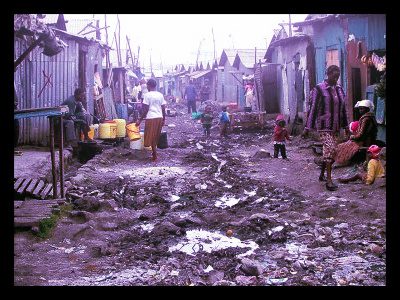
#GlobalPOV Project: Who Sees Poverty?

#GlobalPOV Project: Who Sees Poverty?An initiative called the #GlobalPOV Project is merging social theory, art, and digital media to spark discussion and critical thinking on the problem of poverty and how to deal with it.
“We are the millennials and we are on a mission to make poverty history.”

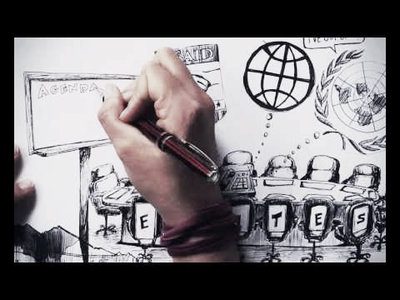
Those are the words of Ananya Roy, a professor at UC Berkeley and well-regarded as an expert on global poverty, international development, and social change. In a series of videos, Professor Roy lectures on a certain theme dealing with global poverty while Abby VanMuijen, story artist for the #GlobalPOV Project, visualizes and draws on the paper what she sees in her head in a similar fashion to the videos produced in the RSA Animated Series.

The theme of the first video released was “Who Sees Poverty?” Professor Roy discusses how poverty emerged as a priority on a global scale. She calls it the democratization of development. As organizations like USAID, the World Bank, and the United Nations make ending global poverty the main goal through initiatives such the Millennium Development Goals, so we become the generation of global citizens that will continue working to end it, the ‘generation of millennials,’ through constant mobilization and inspiration.

“The ‘we’ who sees poverty is also the ‘we’ who acts on poverty,” says Professor Roy.

The second video released by the #GlobalPOV Project discusses the effects of consumerism and consumption on poverty. With a brief introduction from story artist VanMuijen, the video discusses the need to change how the products we buy are produced, traded and consumed to reduce the impact on the global poor.

“We can solve it, but not by sheer luck or chance,” says VanMuijen in regards to the world. “We must be taught the way.”

Implemented by the Blum Center for Developing Economies at UC Berkeley, the #GlobalPOV Project imagines new ways of looking at and combating global poverty and inequality. Established in March 2006, the Blum Center for Developing Economies works to improve the lives of those living in extreme poverty through investing in technologies and systems and inspiring others to do their part.

– Rafael Panlilio

Source: GlobalPOV

April 12, 2013
https://borgenproject.org/wp-content/uploads/borgen-project-logo.svg 0 0 Borgen Project https://borgenproject.org/wp-content/uploads/borgen-project-logo.svg Borgen Project2013-04-12 09:54:392024-12-13 17:53:43#GlobalPOV Project: Who Sees Poverty?
Global Poverty

IMF Study Shows Possible Consequences of Economic Recession

IMF Study Shows Possible Consequences of Economic RecessionThe International Monetary Fund (IMF) released the results of a new study, showing that another global economic recession could throw nearly 900 million people back into poverty.

Although global poverty within the last decade has improved, over 1.2 billion people worldwide still live on $1.25 a day, and the IMF warns that the global economy that initially brought millions out of poverty is still extremely unsteady and at risk of failing.

The report cites global unemployment numbers, which are at a 20-year high, that shows unemployment around the world is now at 40 percent. The report goes on to state that an economic event, such as the recession of 2007-2009, could have significant negative effects on the world’s poorest people. Experts are alarmed with the recent economic woes in Cyprus that caused “eurozone chaos,” and also cite that the U.S. and Europe are close to another economic downturn.

Doubts in the U.S. economy have been exacerbated by the recent sequester, in which spending cuts could lead to hundreds of thousands of job furloughs and losses.

– Christina Kindlon

Source: Huffington Post

April 11, 2013
https://borgenproject.org/wp-content/uploads/borgen-project-logo.svg 0 0 Borgen Project https://borgenproject.org/wp-content/uploads/borgen-project-logo.svg Borgen Project2013-04-11 09:22:062020-06-07 21:56:34IMF Study Shows Possible Consequences of Economic Recession
Extreme Poverty

Strategies for Ending Global Poverty

Millennium Village Project
There are many ways to go about reducing and eventually ending world poverty. The Millennium Villages Project (MVP) has implemented several strategies that have proven to be effective at boosting economic independence in African villages. This is the “one village at a time” method. The pith of this method is agriculture reform.

The MVP works with African farmers to improve various aspects of agriculture techniques like what season to plant certain seeds and how to correctly use small scale irrigation, specifically a “gravity drip irrigation system” that is highly cost effective. Soil is also an important topic that farmers are educated about. They learn how to farm without stripping soil of vital nutrients, thus vastly increasing crop yields. Other aspects of soil health include organic farming, fertilizing, and soil conservation.

Education is a huge aspect of the Millennium Project. People working for the MVP train African farmers, and then these farmers can later educate other farmers about efficient agriculture methods. These farming organizations ensure that future generations will continue to produce higher crop yields. When farmers are successful, that means the entire village will flourish. The MVP encourages schools to provide locally grown, healthy foods for their students, especially young children.

Other key strategies being used around the world include: providing vaccines and building schools, shelters, wells, and medical clinics. These are some of the many approaches to help people lift themselves out of poverty. There is no one correct method; rather, it is often the combination of multiple techniques that proves to be the most effective. The Millennium Development Goals’ main objective is to end extreme global poverty by 2030 and with these many strategies will play a huge role in achieving this goal.

– Mary Penn

Source: Borgen Project
Photo: NY Times

April 9, 2013
https://borgenproject.org/wp-content/uploads/borgen-project-logo.svg 0 0 Borgen Project https://borgenproject.org/wp-content/uploads/borgen-project-logo.svg Borgen Project2013-04-09 10:00:222020-05-12 06:50:55Strategies for Ending Global Poverty
Page 38 of 40«‹3637383940›»

Get Smarter

  • Global Poverty 101
  • Global Poverty… The Good News
  • Global Poverty & U.S. Jobs
  • Global Poverty and National Security
  • Innovative Solutions to Poverty
  • Global Poverty & Aid FAQ’s
Search Search

Take Action

  • Call Congress
  • Email Congress
  • Donate
  • 30 Ways to Help
  • Volunteer Ops
  • Internships
  • Courses & Certificates
  • The Podcast
Borgen Project

“The Borgen Project is an incredible nonprofit organization that is addressing poverty and hunger and working towards ending them.”

-The Huffington Post

Inside The Borgen Project

  • Contact
  • About
  • Financials
  • President
  • Board of Directors
  • Board of Advisors

International Links

  • UK Email Parliament
  • UK Donate
  • Canada Email Parliament

Get Smarter

  • Global Poverty 101
  • Global Poverty… The Good News
  • Global Poverty & U.S. Jobs
  • Global Poverty and National Security
  • Innovative Solutions to Poverty
  • Global Poverty & Aid FAQ’s

Ways to Help

  • Call Congress
  • Email Congress
  • Donate
  • 30 Ways to Help
  • Volunteer Ops
  • Internships
  • Courses & Certificates
  • The Podcast
Scroll to top Scroll to top Scroll to top