• Link to X
  • Link to Facebook
  • Link to Instagram
  • Link to TikTok
  • Link to Youtube
  • About
    • About Us
      • President
      • Board of Directors
      • Board of Advisors
      • Financials
      • Our Methodology
      • Success Tracker
      • Contact
  • Act Now
    • 30 Ways to Help
      • Email Congress
      • Call Congress
      • Volunteer
      • Courses & Certificates
      • Be a Donor
    • Internships
      • In-Office Internships
      • Remote Internships
    • Legislation
      • Politics 101
  • The Blog
  • The Podcast
  • Magazine
  • Donate
  • Click to open the search input field Click to open the search input field Search
  • Menu Menu

Tag Archive for: Global Poverty

Inflammation and stories on global poverty

Posts

Development, Global Poverty

10 Things You Need to Know About Poverty

India_children_global_poverty_world_hunger_food_aid_international_affairs_department_of_state_foreign_economy_opt

Habitat for Humanity publishes a list of 25 things everyone should know about poverty in America and around the world. Below are 10 items from their list.

1. There are different definitions of poverty.
To define poverty, it is necessary to define what constitutes basic needs. Basic needs may be defined as narrowly as those things necessary for survival, or as broadly as the prevailing standard of living in the community. Thus, poverty in one area or part of the world may have quite a different meaning than in another area or part of the world. In the United States, poverty thresholds are determined by taking the cost of a minimum adequate diet for families of different sizes and multiplying that cost by three to allow for other expenses.

2. There is more to being poor than not having money.
“Poverty is not just about money: lack of access to essential resources goes beyond financial hardship to affect people’s health, education, security and opportunities for political participation. …While economic growth is essential to lifting people out of poverty, this alone is not enough.”—United Nations Development Programme Annual Report 2008

3. People still die from being poor.
More than 26,000 children under age 5 die each day, mostly from preventable causes. More than one-third of all child deaths occur within the first 28 days of life.—UNICEF, “State of the World’s Children,” 2008

4. Poverty directly affects many, many people every single day.
Some 1.2 billion people around the world live on less than a dollar a day, while almost 850 million people—almost three times the entire population of the United States—go hungry every night.—United Nations Development Programme Annual Report 2008

5. Women often face more challenges than men in overcoming poverty.
Women who become single heads of households, particularly in Africa, are significantly more vulnerable,because in many countries in the region they can access land only through husbands or fathers. Where women’s land ownership is relationship-based, they risk losing access to land after widowhood, divorce, desertion or male migration, which can lead to destitution.—United Nations’ Centre for Human Settlements, “State of the World’s Cities 2008/2009”

6. Yet women are an important part of the solution.
“Women have proven to be the best poverty fighters. Experience and studies have shown that they use the profits from their businesses to send their children to school, improve their families’ living conditions and nutrition, and expand their businesses.”—The Grameen Foundation

7. Poor people pay back loans.
The repayment rate for microfinance loans, a development strategy in which very poor people are loaned small amounts of money to incrementally improve their lives, is between 95 and 98 percent. In fact, it is higher than the repayment rate of student loans and credit card debts in the United States.—The Grameen Foundation

8. Defeating poverty creates dignity.
Marrie Gessesse, a mother of eight in the Amhara region of Ethiopia, used microfinance loans to buy goats and cultivate fruits and vegetables for income. Eventually, she was able to send her children to school. “No one used to consider me before,” she says. “When they saw that I was becoming autonomous, people started to respect me. Now they have elected me member of the administrative council and the women’s association.”—International Fund for Agricultural Development

9. Poverty is a moral issue.
Almost 9 million children are internally displaced because of armed conflict. Roughly 1.8 million children are trapped in the commercial sex trade, and the annual revenue generated from human trafficking is $9.5 billion.—UNICEF, 2007

10. Poverty is not inevitable.
In 1960, roughly 20 million newborns did not live to see their fifth birthday; by 2006, the most recent year for which firm estimates are available, the annual number of child deaths globally fell below 10 million, to 9.7 million, for the first time since records began.—UNICEF, “State of the World’s Children,” 2008.

– Délice Williams

Source: Habitat
Photo: Bargate

May 16, 2013
https://borgenproject.org/wp-content/uploads/borgen-project-logo.svg 0 0 Borgen Project https://borgenproject.org/wp-content/uploads/borgen-project-logo.svg Borgen Project2013-05-16 04:00:502020-05-29 21:48:0110 Things You Need to Know About Poverty
Advocacy

How to Find Your Members of Congress

How to Find Your Members of Congress
Democracy is a wonderful thing. Any U.S. citizen, no matter their level of education, age, race, or social standing can call up their members of Congress and request that they vote in favor of or against specific legislation or simply a topic they feel is important.

So why don’t more people contact their representatives? Excellent question. Skepticism? The intangibility of the benefits perhaps? Whatever the reason, it remains clear that not enough people are taking advantage of this excellent tool of democracy. We at The Borgen Project think that needs to change. And that change starts with you. So, to help you get started, here’s a breakdown of how the U.S Congress works.

So What Exactly Is Congress?

Congress is composed of two chambers, the Senate and the House of Representatives. 100 senators make up the Senate, 2 from each state. The House of Representatives currently has 435 members and the population determines the number of representatives per state. For example, Alaska has only 1 representative while the state of Texas has over 30.

This means that 3 people represent you in congress, 2 state senators and 1 representative.

And, There’s an App for That

Contacting your representatives seriously can’t get any easier if you have a smartphone. A free app is available for the iPhone called “Contact Congress”. Once you’ve downloaded the app, open it up and hit the “use my location button”. Your 3 representatives will pop up on your screen. You can call each one from the app without ever looking anything up or dialing the numbers. You can also share your activity on Facebook and Twitter so everyone will know how gosh darn cool you are for calling your reps. You know you want to.

If you don’t have an iPhone, never fear. Check out The Borgen Project website to find your representatives via your area code.

Once you’ve figured out who your reps are, Congratulations! You’ve taken the first step towards making sure those who represent you are in fact, representing how you feel about certain issues and bills.

Great, so now what?

Call them! Yes, pick up that thing that plays music and updates your twitter and….(gasp) dial some digits. (or tap on the faces if you have the app) It will feel strange to talk to a real human but don’t be dismayed. All you have to say is, “I’m a Borgen Project supporter. Please increase funding for USAID.” Or, “Please vote to increase funding for global poverty-related legislation”. That’s it. You can call anytime you want, just be sure to leave a message if it’s after business hours.

The person taking the call will make note of your call. This is the important part! The aide will tally the number of calls on certain issues and often times the representative will decide how they vote based on the calls they get from people like you and me. If constituents don’t call requesting global poverty be on their radar, it probably won’t be, particularly in our current political environment. For example, some of the issues currently listed on my representatives’ web pages include the following- jobs, fiscal responsibility, immigration reform and healthcare. Not ONE mention of global poverty from any of my 3 reps. Where my BP supporters at?

Still not convinced? It’s simple. One 30-second phone call a week is the easiest way to make a difference in fighting global poverty. It takes almost no time and costs next to nothing (much less than donating to a cause or volunteering your time).

For more detailed information regarding your leaders in Congress, this website is a pretty handy tool. You can look up your members of Congress and their voting records as well as bills that are on the docket for the coming week. Stalk your congressional leaders with ease! And don’t forget to call them.


– Erin Ponsonby

Sources: The Borgen Project, U.S. Senate,
Photo:America Bikes

May 15, 2013
https://borgenproject.org/wp-content/uploads/borgen-project-logo.svg 0 0 Borgen Project https://borgenproject.org/wp-content/uploads/borgen-project-logo.svg Borgen Project2013-05-15 10:52:272024-05-24 23:50:33How to Find Your Members of Congress
Foreign Aid

5 Global Poverty Quotes From Business Leaders

5 Global Poverty Quotes From Business Leaders
When it comes to deciding how and where to spend money, business leaders can give some of the best advice. Their experience in the business world can also help when it comes to determining if the U.S. should increase foreign aid to decrease global poverty. Here are 5 quotes and kernels of wisdom about global poverty from some of the most significant business leaders.

1. “Looking at these issues as a businessman, I believe that investing in the world’s poorest people is the smartest way our government spends money.”
– Bill Gates, Former CEO and Chairman of Microsoft, Co-Founder of the Bill & Melinda Gates Foundation

2. “…It’s nonsense to think we can balance the budget by ‘ending foreign aid.’ In fact, the International Affairs budget is just over one percent of the federal budget. The Chamber supports a robust International Affairs budget for the State Department and other agencies. It funds critical efforts to boost exports and jobs, protect our national security, and promote our humanitarian values.”
– Thomas J. Donahue, President and CEO of the U.S. Chamber of Commerce

3. “The world is getting to be a smaller place every day, and from an economic perspective, what happens in one country has ripple effects throughout the world. Funding from the International Affairs Budget, which is just 1 percent of the federal budget, helps to strengthen the economies of developing nations around the world.”
– Chris Policinski, CEO of Land O’Lakes

4. “As a business person, I understand the value of an investment – and the importance of getting a good return on your dollar. And that’s what we get when we fund our diplomatic efforts and international programs. Yes, it means needed humanitarian relief. Yes, it means more security for the American people in these troubled times. But from years of our company’s experience, it also means jobs right here at home.”
– James W. Owens, Chairman and CEO of Caterpillar

5. “Given the fact that MDBs focus more on middle- and low-income countries and not the United States, the temptation of some might be to cut back on our contributions and to refocus those resources elsewhere. And yet such a decision would be extremely short-sighted, in my judgment, because it would negatively impact job creation at the very time when we’re trying to rebuild our economy.”
– Robert Mosbacher Jr., Chairman of Mosbacher Energy Company, Past-President and CEO, Overseas Private Investment Corporation

– Katie Brockman

Source: U.S. Global Leadership Coalition
Photo: Marketplace Leaders


Read Global Poverty and Humanitarian quotes.


May 14, 2013
https://borgenproject.org/wp-content/uploads/borgen-project-logo.svg 0 0 Borgen Project https://borgenproject.org/wp-content/uploads/borgen-project-logo.svg Borgen Project2013-05-14 05:45:282024-05-24 23:40:285 Global Poverty Quotes From Business Leaders
Global Poverty

Beyoncé Takes on Global Poverty

Beyoncé Takes on Global Poverty
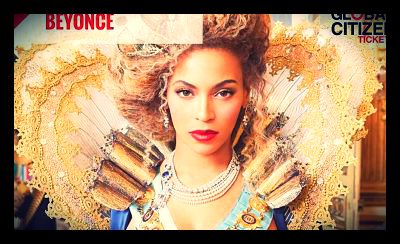
Beyoncé has joined the Global Citizen Tickets Initiative alongside artists such as Pearl Jam, Foo Fighters, Bruce Springsteen, Kanye West, Jay-Z and more. Beyoncé’s involvement comes as a part of the Global Poverty Project. Global Citizen Tickets are designed to provide incentives to concertgoers and fans to take social action to combat poverty.

The website encourages individuals to raise awareness about poverty by signing petitions and calling their representatives to discuss these issues. Pearl Jam’s manager, Kelly Curtis, started the initiative alongside Global Poverty Project CEO Hugh Evans. The organizers knew that star power like Beyoncé, Jay-Z, and other superstars would give the cause real drive, and get people involved.

The initiative works through a points system. Individuals participating in social actions will be rewarded with points which in turn can be used to win free concert tickets from the Global Citizen Tickets Initiative “pool.” The tickets have been donated by the artists for each concert throughout their concert circuit.

The project is connected with several other organizations including ONE, Malaria No More, Living on One, and The ISIS Foundation. The Global Citizen Ticket Initiative is hoping to make impacts in the areas of polio, malaria, women’s empowerment, food security, academic success, and others.

The chairwoman of the Global Citizen’s Ticket Initiative, Michele Anthony, believes the universal appeal and non-partisan nature of poverty-related issues make the attraction to these events so strong. Issues like poverty and women’s empowerment are no brainers for music stars to back.

Beyoncé has donated tickets for over twenty-five shows between now and the beginning of August.  Individuals are invited to take social action in the hopes of winning tickets to see Ms. Knowles perform songs from her recent album “4”.

– Caitlin Zusy
Source Global Citizen, Global Citizen

May 13, 2013
https://borgenproject.org/wp-content/uploads/borgen-project-logo.svg 0 0 Borgen Project https://borgenproject.org/wp-content/uploads/borgen-project-logo.svg Borgen Project2013-05-13 04:00:372020-06-19 04:11:03Beyoncé Takes on Global Poverty
Education, Global Poverty

Global Poverty Education for University Students

Global Poverty Education
On April 25 at the University of Kentucky, Habitat for Humanity and the Global Poverty Project hosted a free, educational event that was open to the public. Representatives from the Global Poverty Project made a multimedia presentation that addressed issues surrounding poverty in the world. Questions about global poverty were answered such as ‘What is extreme poverty?’, ‘What are the barriers to ending extreme poverty?’ and ‘Why should we care?’ Currently there are 1.2 billion people living in poverty and living on less than $1.50 a day. Logistics Coordinator for the Global Poverty Project Michelle Riepe said that strategies for reducing poverty are working. As announced by the World Bank, in the last 30 years, the number of people living in poverty has decreased significantly from the 1.4 billion of the past. The Global Poverty Project works around the world to educate people about extreme poverty and to mobilize supporters in taking action to end it. The organization advocates for action from government, businesses, and consumers to create important systemic change for the world’s extreme poor. This is a goal that is shared by Habitat for Humanity, the sponsor of the event at the University of Kentucky. “The Global Poverty Project shares the same vision as Habitat for Humanity- to improve the lives of people around the globe who are struggling,” said Emily Andrews, UK Habitat for Humanity president. The Global Poverty Project frequently tours the country to offer global poverty education to students and to draw support. To attend an event or to host one, visit the GPP website. – Kira Maixner Source: UK Now Photo: Gender and Poverty

May 10, 2013
https://borgenproject.org/wp-content/uploads/borgen-project-logo.svg 0 0 Borgen Project https://borgenproject.org/wp-content/uploads/borgen-project-logo.svg Borgen Project2013-05-10 04:00:032024-05-24 23:50:05Global Poverty Education for University Students
Advocacy, Foreign Aid

Where Does Foreign Aid Money Go?

Where_Does_Aid_Money_go_UN_USAID_international_aid_fund_World_Bank_business_economy_microfinance_opt

The website AidData.org is designed to make it easier for researchers, reporters, and anyone else for that matter, to answer that question for themselves. Established in 2009 through a joint partnership of the College of William & Mary, Brigham Young University, and the nonprofit organization Development Gateway, the site provides a growing searchable database of global foreign aid distribution. It is all part of an effort to make hard data on the allocation of foreign aid money easier to obtain. For example, anyone who wants to know how much money the United States invested in Bangladesh for food security in 2009 can simply use the database filters and find the answer here.

The foreign aid information collected on AidData is not limited to the United States.  The site compiles information from countries across the globe, using data going back to 1945.  Users who want to know more about where foreign aid money goes can just as easily find out how much money Norway invested in Cambodia for health-related programs in 1996. Filters allow users to search by donor country, recipient country, type of program, and date.

The site was the brainchild of an undergraduate student at the College of William & Mary in 2003.  In researching his honors thesis on the distribution of foreign aid for environmental assistance, he found it extremely difficult to find specific numbers.  He got the idea to compile all of this information in a single database.  With help from three professors, he managed to secure a series of grants and partnerships that eventually led to the establishment of the AidData organization and website. To date, the site includes information on 3,000 aid projects in 144 recipient countries, for a total of about 35,000 locations across the globe.

According to AidData founders, the goal of this innovative initiative to increase transparency and accessibility of foreign aid data is to “improve the quality of research on aid allocation and aid effectiveness.” Because of AidData’s work, reliable answers to the question “where does foreign aid money go?” are now just a few keystrokes away on the web.

– Délice Williams

Source:Aid Data
Photo:USAID

May 9, 2013
https://borgenproject.org/wp-content/uploads/borgen-project-logo.svg 0 0 Borgen Project https://borgenproject.org/wp-content/uploads/borgen-project-logo.svg Borgen Project2013-05-09 11:01:132024-06-05 01:53:29Where Does Foreign Aid Money Go?
Development

Ethical Fashion

“The fashion industry in the past several years has redefined how to market, how to brand, how to raise awareness, and how to inspire others,” said Ray Chambers, with United Nations special envoy for malaria. “I think the fashion industry will lead the emergence of so many of the developing economies.”

There are consistently more and more global campaigns supporting social and economic growth, assisting in development and lifting people out of poverty through ethical fashion. Even the United Nations has two initiatives specifically focused on employment through apparel production and trade. One is Fashion 4 Development  (F4D),  supported by the UN Educational, Scientific and Cultural Organization  (UNESCO), providing economic opportunities for women and men around the world to help lift them out of poverty.

F4D partners with organizations such as Advanced Development of Africa, Fashion Designers Without Borders, Womensphere, and with first ladies around the world to raise awareness and money to build more sustainable futures—the core principles of F4D. First founded in 1996, and then later re-launched in 2011 by former supermodel Bibi Russell, who works “to preserve the heritage of my country, foster creativity, provide employment, empower women, and contribute towards the eradication of poverty.” F4D has helped more than 100,000 people in Russell’s home country of Bangladesh through a local textile business, and has ongoing initiatives in Ghana, Nigeria and Botswana with a specific focus on promoting African designers and producers in the global market.

Another UN project, jointly run with the World Trade Organization (WTO) through the International Trade Center (ITC), is the Ethical Fashion Initiative.  First conceived of by an Italian shoemaker, Simone Cipriani, who saw no reason why Italy’s model of fashion production could not be recreated in Kenya.

Mr Cipriani sought out unemployed and underemployed women with experience in basic beadwork and tailoring, and with training he has turned his small idea into a profitable company. Ethical Fashion had sales of $900,000 in 2012, and employs 1,200 women full time. Their wages have gone from about $2 a day to nearly $8 and this income then circulates back into the community and further expands economic growth. Many other fashion houses have since started projects with the Ethical Fashion Initiative as well.

Regionally, many designers have started programs in the same vain. Tete (Maria Teresa) Leal, an Ashoka Fellow, started her mission in the ’80s to help women use high fashion to tackle poverty in Rio de Janeiro, Brazil. Her cooperative, COOPA-ROCA, was started in Rio’s most populated slum, first training women in manufacturing and business skills. She then started receiving high-quality fabric donations and was then able to create a full collection, eventually selling it all over the world. In America designer Tory Burch, the second youngest self-made, female billionaire, has started a program with Accion providing microloans to small, fashion business hopefuls. She provides capital as well as mentoring and training. “It’s about investing in people who might otherwise not have the chance to pursue their goals. It’s also incredibly important to the economic recovery of our country,” Burch said. To date, the program has distributed almost 100 loans, each worth an average of $7,000.

– Mary Purcell

Source: Forbes, The Economist
Video: You Tube


May 8, 2013
https://borgenproject.org/wp-content/uploads/borgen-project-logo.svg 0 0 Borgen Project https://borgenproject.org/wp-content/uploads/borgen-project-logo.svg Borgen Project2013-05-08 10:00:332024-12-13 17:53:45Ethical Fashion
Global Poverty

Personal Banking to End Poverty

personal-banking-to-end-world-poverty
2.5 billion people around the world, many of whom live in extreme poverty, are excluded from the formal financial system. Consequently, this exclusion results in the use of risky and expensive financial alternatives that slow individual and macro-level economic development. In the past, microcredit schemes have been used to solve the problem. Recently, a more holistic understanding of financial inclusion is emerging that focuses on savings, credit, financial literacy, and access to services. However, as these new systems take root, debate can be heard in regards to how the systems should be implemented, who the stakeholders will be, and how to ensure that this new financial ecosystem will function in the long-term.

These issues were addressed in early April at a Guardian conference where Banking on Change outlined the future of the financial ecosystem in developing countries. Banking on Change is a partnership between Plan UK, CARE International UK and Barclays that hopes to help around 400,000 people in 11 countries by developing access to basic financial services. The organization has used savings-led community finance groups in poor communities to help people save, build up assets, access loans from the community “pot”, develop financial literacy and eventually link into formal services. The scheme showed that due to erratic incomes, poor people have a high demand for savings accounts and products in contrast to credit lines and accounts.

Living conditions and finances aside, Ashok Vaswani, Barclays’ CEO for retail and business banking in the UK, Europe and Africa, believes that all people are the same. “People’s hopes and aspirations don’t vary too much,” he said. “We all have them, and people who live in much worse conditions than us have hopes and aspirations that are not very different to ours. They want to send their children to school. They want more for their children, just like we do. People with limited means still have the desire to move up, to put something away.” The difference is that people living in poverty do not have sufficient means to even start a savings account. Vaswani also believes that the money that potential customers save annually, about $58 multiplied by the 2.5 billion people living in financial exclusion, could be much more powerful if linked into the formal financial system rather than stashed under people’s beds.

Aside from defining the customer’s needs, financial literacy is important to the development of the financial ecosystem as well. Governments should do more in educating citizens, especially the youth, about their finances, commented Michaela Kelly, head of Plan’s Programme Delivery Unit.

As the demand for personal banking increases, the needs of potential customers will need to be assessed accordingly. While many view various forms of credit building important, savings accounts and related programs are just as important to the beginning of a financial ecosystem in developing countries. With the implementation of a financial system, both individual and macro-level, economic development will flourish and raise billions of people out of poverty.

– Kira Maixner

Source: The Guardian
Photo: Business Fights Poverty

May 5, 2013
https://borgenproject.org/wp-content/uploads/borgen-project-logo.svg 0 0 Borgen Project https://borgenproject.org/wp-content/uploads/borgen-project-logo.svg Borgen Project2013-05-05 11:00:532024-06-04 01:03:11Personal Banking to End Poverty
Developing Countries, Development, Global Poverty, Poverty Reduction

The Open Borders Theory and Ending Global Poverty

Border_opt
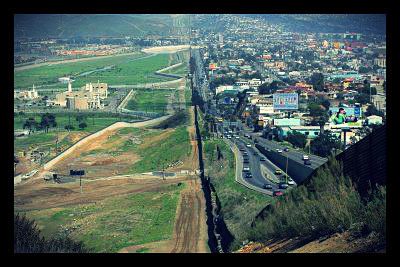
Immigration has always been a hot button issue, especially considering the comprehensive reform laws currently being debated by U.S. congressional leaders. However, what effect would the opening of the nation’s borders have on global poverty? According to several developmental thinkers, quite a bit, as adopting many of the mass migration policies called for in the open borders theory could hypothetically eliminate global poverty forever.

The researchers responsible for the open borders theory, drawn from such disparate fields as Mathematics, Economics, and Philosophy, argue that through the enforcement of a closed border policy, individuals are stripped of their basic human right of self-determination. Furthermore, by allowing migrants to move freely between nations, the net loss of labor productivity could theoretically double the world’s GDP through the mitigation of capital flow inefficiencies.

In regards to the open borders theory, developmental economist Michael Clemens noted that, “Immigration is very, very far from being a zero-sum game of their poverty or ours. Within ranges that even slightly resemble current migration levels, it is rather simply ‘their poverty or their prosperity,’ while we remain prosperous.”

Additionally, supporters of the open borders theory debunked the notion that a huge influx of migrants would depress the wages of developed countries based upon the net employment gains of the managerial sector. And by enabling efficient use of migrant skill sets underutilized by the inadequate facilities of the global south, developed economies would reap huge financial dividends.

Although the open borders theory is still in its infancy and years away from being considered as a realistic solution to global poverty, innovative ideas such as these help to encourage further debate involving current developmental policy. Michael Clemens remarked that, “Development is about people, not places.”

– Brian Turner

Source: The Atlantic
Photo: Women On The Border

May 5, 2013
https://borgenproject.org/wp-content/uploads/borgen-project-logo.svg 0 0 Borgen Project https://borgenproject.org/wp-content/uploads/borgen-project-logo.svg Borgen Project2013-05-05 01:18:512020-05-26 08:23:47The Open Borders Theory and Ending Global Poverty
Education, Global Poverty

Israel’s Early Childhood Development Education Program

Israel's Early Childhood Development Education Program
Israel’s Agency for International Development Cooperation (MASHAV) recently completed training forty Ghanaian teachers in an early childhood development course. Thanks to the Embassy of Israel, Accra Metropolitan Assembly (AMA) and the Ghana Education Service (GES), over a hundred teachers have now been trained to teach preschool and kindergarten in Ghana.

The extensive program lasted for two weeks and focused on early childhood education. Teachers left the program with a higher knowledge of children’s learning principles, the needs of young children, what curriculum to teach, and appropriate games. By giving special attention to young students, Ghana hopes to build a better foundation for its future workforce and overall societal well being.

This partnership between Israel and Ghana will likely produce hundreds more early education teachers, something for which Ghana is desperate. Not only will more teachers be trained in Israel, but those who completed the program will go on to spread their new knowledge to other teachers in Ghana, thus creating a web of well-educated preschool and kindergarten teachers throughout the country.

The Early Childhood Development Education program is now in its fourth year in Kumasi and its second year in Accra. Both countries expect to have a long relationship as they continue to see positive results in Ghana’s early education system.

– Mary Penn

Source: GBN
Photo: Flickr

May 4, 2013
https://borgenproject.org/wp-content/uploads/borgen-project-logo.svg 0 0 Borgen Project https://borgenproject.org/wp-content/uploads/borgen-project-logo.svg Borgen Project2013-05-04 08:25:222020-05-26 08:03:28Israel’s Early Childhood Development Education Program
Page 37 of 40«‹3536373839›»

Get Smarter

  • Global Poverty 101
  • Global Poverty… The Good News
  • Global Poverty & U.S. Jobs
  • Global Poverty and National Security
  • Innovative Solutions to Poverty
  • Global Poverty & Aid FAQ’s
Search Search

Take Action

  • Call Congress
  • Email Congress
  • Donate
  • 30 Ways to Help
  • Volunteer Ops
  • Internships
  • Courses & Certificates
  • The Podcast
Borgen Project

“The Borgen Project is an incredible nonprofit organization that is addressing poverty and hunger and working towards ending them.”

-The Huffington Post

Inside The Borgen Project

  • Contact
  • About
  • Financials
  • President
  • Board of Directors
  • Board of Advisors

International Links

  • UK Email Parliament
  • UK Donate
  • Canada Email Parliament

Get Smarter

  • Global Poverty 101
  • Global Poverty… The Good News
  • Global Poverty & U.S. Jobs
  • Global Poverty and National Security
  • Innovative Solutions to Poverty
  • Global Poverty & Aid FAQ’s

Ways to Help

  • Call Congress
  • Email Congress
  • Donate
  • 30 Ways to Help
  • Volunteer Ops
  • Internships
  • Courses & Certificates
  • The Podcast
Scroll to top Scroll to top Scroll to top