• Link to X
  • Link to Facebook
  • Link to Instagram
  • Link to TikTok
  • Link to Youtube
  • About
    • About Us
      • President
      • Board of Directors
      • Board of Advisors
      • Financials
      • Our Methodology
      • Success Tracker
      • Contact
  • Act Now
    • 30 Ways to Help
      • Email Congress
      • Call Congress
      • Volunteer
      • Courses & Certificates
      • Be a Donor
    • Internships
      • In-Office Internships
      • Remote Internships
    • Legislation
      • Politics 101
  • The Blog
  • The Podcast
  • Magazine
  • Donate
  • Click to open the search input field Click to open the search input field Search
  • Menu Menu

Tag Archive for: Education

Posts

Global Poverty

Dance Education Through Movement Choirs

movement_choirs
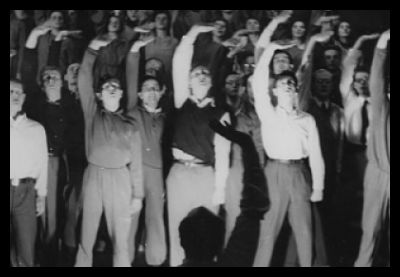
Movement is freedom, flow, connection to oneself. Dancing can be a beautiful form of self-expression and can help you in more ways than one. Studies show that any type of movement improves our creativity, fitness, mental health, relationships with others and ourselves. The Laban Dance Movement Choir is aware of this and opens up the teachings of dance and movement to any human being no matter their size, age, gender, appearance or experience level.

A movement choir’s main goal is for participants to touch and enhance their inner being. Focusing on the simplicity and beauty of the movement, as well as connecting with oneself and others. The union is formed around dance, not designed to perform to an audience but to perform for those participating. Movement choirs are very easily accessible within a community and are known to boost a sense of community morale, brightening moods, forming bonds and increasing the quality of life in an area.

In a typical movement choir, large group of people will typically meet up for a couple hours in the scheduled date and work together to create a beautiful piece of choreography called a “choir.” The idea of a movement choir originated in the 1920s by Rudolf Von Laban, who was a choreographer and performer originally based in Germany and then moved to the UK.

In these days of short conversations, electronics, and everyone in a rush, movement choirs focus on self-expression in the present moment. The connection with the music, people and movement results in a successful movement choir.

No matter the skill level, a movement choir is worth a try if you are looking for a new way to connect with people, establish relationships, do some physical fitness, or learn how to dance in general, no matter what the movement choir is always open to participants.

Currently, movement choirs are most popular in UK and Germany and are slowly but surely becoming a global trend.

– Charisma Thapa

Sources: Positive News, Movement Choir, Laban Guild
Photo: Movement Research

December 4, 2014
https://borgenproject.org/wp-content/uploads/borgen-project-logo.svg 0 0 Borgen Project https://borgenproject.org/wp-content/uploads/borgen-project-logo.svg Borgen Project2014-12-04 04:00:402024-06-05 01:58:19Dance Education Through Movement Choirs
Education

Five Countries with Increasing Youth Literacy Rates

increase youth literacyAccording to UNESCO, “Illiteracy and poverty constitute a mutually reinforcing vicious cycle that is difficult to break.” Illiteracy reinforces poverty by precluding access to information. When people do not have the ability to read labels or technical manuals, they cannot develop the skills necessary to climb the socioeconomic ladder.

For a developing nation, a low literacy rate can be a major impediment to economic progress. The lack of a skilled work force prevents the development of a thriving economy. A 2012 study by the World Literacy Foundation estimated the economic cost of illiteracy in developing countries at over five billion dollars.

As the world continues to wage war on poverty, global education initiatives are winning key battles on the youth literacy front. In 2000, the U.N. established universal primary education as a Millennium Development Goal. While this ambitious goal has not yet been achieved, primary education enrollment in developing countries rose from 82 percent to 90 percent between 1999 and 2010. The gender gap in youth literacy continues to narrow, and the world youth literacy rate has improved markedly since 1990.

While there is still a long way to go in improving youth literacy in developing countries, these five countries are making huge strides.

  1. Nepal: The youth literacy rate in Nepal — a scant 49.6 percent in 1990 — reached 83 percent in 2010 and is projected to reach 88 percent by 2015. Educational opportunities in Nepal have expanded considerably over the last two decades, and Nepal’s net enrollment rate, or NER, in primary education rose from 91.9 percent in the 2008-2009 school year to 95.1 percent in 2011. The NER at the lower secondary level is rising even faster, climbing from 57.3 percent in 2008 to 70 percent in 2013. As of 2012, Nepal ranked as the 11th largest source of international students in the U.S.
  2. Bangladesh: The youth literacy rate in Bangladesh has climbed at a similar rate to that in Nepal. Recognizing education as an important means of reducing poverty, the Government of Bangladesh passed the Primary Education Compulsory Act in 1990, making primary education free and compulsory for all children up to Grade Five. Since then, the youth literacy rate has risen from 44.7 percent to 77 percent.
  3. Senegal: The youth literacy surge in Senegal is a fairly recent phenomenon. Senegal saw little improvement in its youth literacy rate from 1990 to 2000. However, since its 2001 constitutional referendum, Senegal has recorded significant achievements in access to education. Primary school enrollment rates increased from 69.8 percent in 2000 to 92.5 percent in 2009. Increased primary school enrollment has facilitated literacy improvement. The youth literacy rate in Senegal rose from 49.1 percent in 2000 to 69 percent in 2010, and is projected to reach 73.4 by 2015.
  4. Ethiopia: Ethiopia, Africa’s fastest-growing non-energy-driven economy, has made significant strides in youth literacy since the devastating famine of 1984. Ethiopia’s youth literacy rate rose from a mere 33.6 percent in 1990 to 49.9 percent in 2000, and it is projected to reach 69.3 percent by 2015. USAID has played a key role not only in improving the managing and planning of Ethiopia’s primary education system but also in improving access to education in remote areas. USAID, in conjunction with the Ethiopian Ministry of Education, also developed Reading for Ethiopia’s Achievement Developed. READ focuses on training teachers and improving reading comprehension and writing proficiency.
  5. Mozambique: In terms of primary education, Mozambique has made enormous progress since the 1992 resolution of its long and costly civil war. Educational opportunities have expanded rapidly in Mozambique since the mid-1990s, and enrollment in primary school has risen from 69 percent in 2003 to 100 percent. Mozambique’s youth literacy was just 61.9 percent in 2000, but that number has risen steadily and is expected to reach 77.8 in 2015. While Mozambique’s progress has been remarkable, continued progress is threatened by the recent resurgence of the RENAMO insurgency.

– Parker Carroll

Sources: The Guardian, UNESCO 1, UNESCO 2, UNICEF 1, UNICEF 2, USAID
Photo: UNHCR

November 30, 2014
https://borgenproject.org/wp-content/uploads/borgen-project-logo.svg 0 0 Borgen Project https://borgenproject.org/wp-content/uploads/borgen-project-logo.svg Borgen Project2014-11-30 04:00:042024-05-27 09:23:03Five Countries with Increasing Youth Literacy Rates
Education

Education in Comoros

Read more
November 28, 2014
https://borgenproject.org/wp-content/uploads/borgen-project-logo.svg 0 0 Borgen Project https://borgenproject.org/wp-content/uploads/borgen-project-logo.svg Borgen Project2014-11-28 04:00:212025-12-21 12:13:13Education in Comoros
Children

Mpower Helps Children in South Sudan

Started in 2007, Mpower Foundation is a Dutch foundation that aims to improve the living conditions and health of children in Mundri, South Sudan. To achieve this, it works on empowering local people by organizing training programs and collaborates with the Mundri Relief and Development Association, its local partner organization. Created in 1996, MRDA focuses on finding relief and development projects and then designs a way to implement them.

South Sudan is the youngest country in the world and the site of the longest civil war on the African continent. This left the country in devastation and Mpower has begun reconstruction and development in this area.

There are a few main projects that Mpower works on; “Your body your responsibility” is one such project, which focuses on teaching health education to younger people, as well as sexual health and hygiene. Another is “Mpower! Kids,”  which focuses on preventive health care for children under five years old.

The third project that Mpower works on is Bricks & Babies. This project pays specific attention to the buildings of children’s hospitals. The goal is to build five new children’s hospitals, as that is where the need is. So far, this has proven hard to accomplish, but not impossible.

Mpower’s hope is that, through these interactive workshops, young people will have enough knowledge to volunteer for Mundri Relief and Development Association. After completing the workshops and going into MRDA, they could end up getting a contract with the organization which would mean a stable life for them.

Mpower is constantly looking for people and organizations to contribute to improving the health care for those in South Sudan. To learn more, visit its website.

– Brooke Smith

Sources: Global Hand, The Mpower Foundation
Photo: The Mpower Foundation

September 22, 2014
https://borgenproject.org/wp-content/uploads/borgen-project-logo.svg 0 0 Borgen Project https://borgenproject.org/wp-content/uploads/borgen-project-logo.svg Borgen Project2014-09-22 16:00:222024-06-05 01:58:11Mpower Helps Children in South Sudan
Developing Countries, Education, Food & Hunger, Global Poverty

Corruption Kills Millions, Steals Trillions

In a report released by ONE, an anti-poverty organization, it is estimated that corruption causes 3.6 million unnecessary deaths and costs poor countries $1 trillion each year.

Using three different methodologies to calculate the cost of corruption, all three measures indicated that the loss was either $1 trillion or $2 trillion.

In what is called a “trillion dollar scandal,” corrupt business practices, “anonymous shell companies, money laundering and illegal tax evasion” all serve to severely reduce the effectiveness of poverty relief efforts.

While extreme poverty has been reduced to half its original level over the past 20 years and has the potential to be completely eradicated by 2030, corruption is putting much of that progress at risk.

While corruption is damaging in almost all countries, it is especially dangerous in poorer and developing countries and mostly affects children. It is estimated that millions of deaths could be avoided if corruption was combated and recovered funds were reinvested in essential fields.

Furthermore, the money that is siphoned out of poor countries is not from international development aid, which has helped make a considerable improvement, but rather directly from businesses in these countries. The money is generated by domestic businesses and illegally extracted out of the country. The largest source of financial drain is the illegal manipulation of cross-border trade.

The organization found that even recovering a small amount of the money lost to corruption could dramatically affect development. In Sub-Saharan Africa, a small amount of recovered funds could provide an education to an additional 10 million children each year; pay for an additional 500,000 primary school teachers; provide antiretroviral drugs for more 11 million people with HIV/AIDS and buy nearly 165 million vaccines.

The report stresses action that serves to end the secrecy that allows corruption to thrive. If specific policies were implemented that increased transparency and combated corruption in the four areas of “natural resource deals, the use of phantom firms, tax evasion and money laundering,” developing countries could considerably stem the financial drain.

Natural resources in particular can provide a vital source of funds that could greatly increase economic growth in many developing countries. Corruption concerning natural resources is particularly bad, with approximately 20 countries in Sub-Saharan Africa rich in natural resources but receiving few benefits from these reserves.

Specifically, One calls for mandatory reporting laws for the natural resource sectors and publish open data so citizens are able to track where travels from and to, ensuring that the funds are not lost to corruption.

Published in anticipation of the G20 meeting in Brisbane, Australia in November, the organization stresses the importance for the G20 nations to address the issue. Now that the cost of corruption has been defined in real terms, the fight against corruption can become more directed and effective.

— William Ying

Sources: ONE 1, ONE 2, ONE 3, BBC, The Guardian, ABC News, Yahoo News
Photo: Blogspot

September 1, 2014
https://borgenproject.org/wp-content/uploads/borgen-project-logo.svg 0 0 Borgen Project https://borgenproject.org/wp-content/uploads/borgen-project-logo.svg Borgen Project2014-09-01 03:00:272024-05-27 09:21:45Corruption Kills Millions, Steals Trillions
Activism, Children, Food & Hunger, Food Security, Global Poverty, Health

INMED Partnerships for Children

Institute for International Medicine Partnerships for Children is an organization dedicated to preventing and combating the harm that comes to children through violence, disease, hunger and neglect.

INMED Partnerships for Children values taking a holistic approach to improve children’s health worldwide through addressing the causes of disease and hunger and attempting to remedy them from the source. INMED is dedicated in implementing long-term solutions to enhance both the quality and longevity of children’s lives.

Founded 27 years ago, INMED has stuck by its original goal of helping to improve the health and safety of children all over the globe.  Led by President and CEO Linda Pfeiffer, INMED has been targeting programs and delivering care to help children in both urban and rural areas of the world.  INMED also has offices worldwide, in places such as Virginia, Peru, Brazil, South Africa and the Caribbean.

INMED has partnered with a diverse group of companies in order to make sure they best spread their mission. They have partnered with companies such as Macy’s, the Ronald McDonald House Charities, the International Foundation, United States Agency for International Development, Kids in Distressed Situations, Johnson and Johnson and many more.

INMED maps out large areas they want to improve and then tailors specific projects to fall into those categories. These broader categories include health and nutrition, youth development, education and skill building, and adaptive agriculture and aquaponics.

One of INMEDs upcoming events will be the 2015 Harvest the Future International Conference, which is set to take place June 14-17, 2015 in Montego Bay, Jamaica.  Experts from across the globe will gather at this conference in order to discuss possible solutions to problems such as water scarcity, income generation sustainable livelihoods, nutrition and health, food security and climate change adaptation.

Conference speakers include Christopher Somerville, an Urban Agriculture Consultant at Food and Agriculture Organization of the United States, Denise A. Herbol, Mission Director at US Agency for International Development, and Thad M. Jackson, Executive Vice President of INMED Partnership.

– Jordyn Horowitz

Sources: INMED, INMED 2, INMED 3, Middleburg Women
Photo: Zimbio

August 22, 2014
https://borgenproject.org/wp-content/uploads/borgen-project-logo.svg 0 0 Borgen Project https://borgenproject.org/wp-content/uploads/borgen-project-logo.svg Borgen Project2014-08-22 12:00:532024-06-05 01:58:02INMED Partnerships for Children
Children, Education, Global Poverty, Women, Women & Children, Women and Female Empowerment

Free High School in Nicaragua

High School in Nicaragua
In order to eliminate poverty, the impoverished must be educated. This is the philosophy practiced by Margaret Gullette, co-founder of the Free High School for Adults in Nicaragua. 12 years ago, Margaret, who resides in Newton, Massachusetts and is a resident scholar at Brandeis University, was volunteering in Nicaragua through the Newton-San Juan del Sur Sister City Project when she and another woman, Rosa Elena Bello, decided they wanted to start a literacy program.

“It’s a great story,” Margaret said as she recalled the details. “Rosa was working in a clinic for women and children, and infant mortality rate was not improving.” The two women believed that it would never improve without literacy. It is not enough just to donate money; the people must be educated.

In Nicaragua, one out of 10 people are illiterate, and this figure is even higher among women. The average Nicaraguan has less than five years of schooling and only 29 percent of children complete primary school. Much of this can be attributed to the poverty cycle. Until 1979 a dictator ruled Nicaragua, and dictators rely on ignorance to control the masses.  “Poverty and ignorance should always be put together,” Margaret explained. Because many adults who lived under that dictator’s rule and did not receive an education themselves, not only do they not have enough money to pay for school supplies and uniforms, but they often do not value education.

In order to begin the literacy program, Margaret applied for funding to 25 different grants. She received 24 rejections, but the one acceptance was all the two women needed. At first it was difficult to get Nicaraguan women involved in the program because their lives revolved around housework and children, but in the first three years nearly 300 women received certificates for the completion of sixth grade.

High school in Nicaragua runs from grade 7 to 11, so after the success with the sixth grade program, the next logical step was to continue the women’s education into high school. Once again Margaret found funding in America, and the following year (2002) a free high school for adults opened. 12 people graduated that year and the number has been growing ever since. The high school currently has 800 students and 616 graduates.

Eventually the Nicaraguan government took over the building of the schools, and the 12 communities that have these high schools have better overall health and fewer unwanted pregnancies. What makes the Free High School Program unique is the teaching model adopted by Margaret and Rosa. The schools use feminist textbooks and a modified version of twentieth century educator Paolo Freire’s teaching method.

Freire believed that education was vital to the liberation of the oppressed and did not support the method of teaching in which students are simply empty vessels to be filled with knowledge. For basic literacy, Freire believed in teaching language that is meaningful to people’s lives. He did not have a program for women, so Margaret and Rosa adapted his method to teach the women in Nicaragua. The first word the women learn is “fetus,” which Margaret says is a word every woman should know.

The Free High School program has continued to grow with a technical high school that opened in 2006 in which students can specialize in one of three fields: Management of Tourist and Hotel Enterprises, Accounting and Civil Construction. A number of graduates from both the Free High School and the Technical School have gone on to receive university degrees and other accomplishments.

Margaret believes that “there is always something to do in Nicaragua,” pointing to her husband David’s bio-sand filter project for contaminated water as an example. The next steps in the Free High School project are to buy new textbooks and construct an office building for the organization in Nicaragua. Go here (https://sanjuandelsursistercityproject.wordpress.com/) to learn more about the various Newton-San Juan del Sur Sister City projects, including the Free High School.

– Taylor Lovett

Sources: San Juan del Sur Sister City Project, Bless the Children, Interview with Margaret Gullette
Photo: The Random Act

August 22, 2014
https://borgenproject.org/wp-content/uploads/borgen-project-logo.svg 0 0 Borgen Project https://borgenproject.org/wp-content/uploads/borgen-project-logo.svg Borgen Project2014-08-22 04:00:032024-05-27 09:21:19Free High School in Nicaragua
Children, Education, Global Poverty, Volunteer

Volunteer for Bangladesh

In recent years, education in Bangladesh has greatly improved. Poverty rates have decreased, and with it, hunger. But the nation faces many challenges.

Ready to meet these challenges are the members of Volunteer for Bangladesh (VBD). It is a branch of the JAAGO Foundation, a larger organization which works to provide all children in Bangladesh with access to a quality education. Both have strong ties to and receive financial support from the U.S. Embassy in Dhaka.

There is much work to be done, so the VBD mission is broad; to end poverty and hunger and to protect children’s rights, including their right to an education. The organization promotes gender equality, works to improve nutrition, educates on sustainability and aids in local development projects. Its projects are as varied as its mission tenets.

VBD awareness campaigns fall on holidays like Universal Children’s Day, when they “spread consciousness among mass people about children’s education.” On World Water Day, they raise awareness of freshwater resources, and on Income Tax Day, they speak on the importance of paying taxes.

Last year in Dhaka, Gazipur, Chittagong, Narayanganj, Khulna and Rajshahi, Universal Children’s Day VBD workers, four corporate partners and five local media groups built carnivals for underprivileged children. There were sporting events, visits to the zoo, merry-go-round rides and introductions to Mickey Mouse. For several hundred destitute children, it was a day on which they could enjoy being a child.

The theme for World Environment Day of this year was “more care for the environment, lessen the rise of the sea level.” It is a poignant message for Bangladeshi citizens, 15 million of who stand to lose their homes to rising ocean waters.

On June 5, 1,150 volunteers in bright yellow VBD t-shirts rode bicycles to 12 districts. They planted over 400 saplings to further their goal of “reversing the greenhouse effect.”

All VBD efforts are truly community endeavors. More than 12,000 people are now working in VBD projects. Volunteer for Bangladesh hopes to establish Action Groups in all of Bangladesh’s 64 districts by 2016.

– Olivia Kostreva

Sources: Volunteer for Bangladesh 1, Volunteer for Bangladesh 2, Volunteer for Bangladesh 3, JAAGO
Photo: The Daily Star

August 21, 2014
https://borgenproject.org/wp-content/uploads/borgen-project-logo.svg 0 0 Borgen Project https://borgenproject.org/wp-content/uploads/borgen-project-logo.svg Borgen Project2014-08-21 19:56:402024-05-27 09:21:30Volunteer for Bangladesh
Activism, Advocacy, Education

Education in Eritrea

Eritrea came into independence in 1993 after a long period of war and military conflict. After gaining its independence, Eritrea continued to struggle with neighboring countries Yemen and Ethiopia, and the consequences were devastating to its people. Today, the country continues to work on rebuilding its infrastructure and developing its economy. Despite the many structures the country has implemented, education still remains a top concern. Below is an exploration of education in Eritrea.


Top 6 Facts about Education in Eritrea


1. Enrollment remains one of Eritrea’s biggest issues. In 2012, data put forth by the World Bank determined that only 42 percent of elementary school-aged children were enrolled in school.

2. Eritrea’s location in the Horn of Africa is a major contributor to the country’s low enrollment rates. Eritrea is extremely susceptible to droughts, as well as floods caused by heavy and sudden rainfall, which makes attending school—and maintaining school grounds—increasingly difficult.

3. Vast disparities in development in Eritrea’s zobas, or regions, is also a significant factor that plays into the low school enrollment rates. Remote regions such as Gash Barka and the Southern Red Sea simply lack schools altogether, so children then lack any access to education opportunities in those regions.

4. Remote regions in Eritrea are also inhabited by nomadic and semi-nomadic pastoralists, for whom attending formal schools that are located at far distances is not impossible, but is in fact undesirable. Families in nomadic communities simply cannot—or don’t—send their children to school.

5. The country is working hard to address the issue of education for nomadic communities. With support from donors and the Netherlands government, 65 nomadic schools have been set up in Eritrea, a vast increase from the seven pilot nomadic schools that existed in 2007.

6. Gender disparity in education remains a top concern within the country’s education system. Though the government claims to be committed to achieving education equality, more than half of school-aged girls are not receiving an education.

Eritrea, ranked 177th out of 187 countries on the Human Development Index, struggles with severe poverty and countless other obstacles that make improving education conditions for children extremely difficult. The country’s unique climate and nomadic communities, coupled with its new independence and lofty regrowth plans, require tailored education initiatives and ample help from foreign aid programs. These programs will help the country improve its education opportunities, and therefore its economy and quality of life as well.

– Elizabeth Nutt

Sources: BBC, UNICEF
Photo: Asmera

August 19, 2014
https://borgenproject.org/wp-content/uploads/borgen-project-logo.svg 0 0 Borgen Project https://borgenproject.org/wp-content/uploads/borgen-project-logo.svg Borgen Project2014-08-19 15:59:262024-05-27 09:21:22Education in Eritrea
Activism, Education, Human Rights, United Nations

Understanding the UN: Peacekeeping

The United Nations has been deploying peacekeeping missions since the U.N. Truce and Supervision Organization mission in 1948 which monitored the Armistice Agreement between Israel and neighboring Arab countries. Since 1948, U.N. peacekeeping has evolved to better respond to the world’s ever-changing and increasingly complex conflicts. What started off as a peace monitoring mechanism has become a major international actor in stabilization and development efforts in some of the world’s most volatile and protracted conflicts.

U.N. peacekeeping is managed through the Department of Peacekeeping Operations, which was established to succeed the U.N. Office of Special Political Affairs in 1992 under Secretary General Boutros Boutros-Ghali. The DPKO may only deploy a peacekeeping mission after receiving the mandate through Security Council resolutions and missions may only be updated or changed through Security Council resolutions. There are three types of peacekeeping personnel that make up mission teams: uniformed personnel including military troops, police and military observers, civilian personnel both local and international and U.N. Volunteers.

Currently, there are 17 different peacekeeping missions around the world ranging in size depending on the nature and scale of the conflict. The largest is the U.N. Organization Stabilization Mission in the Democratic Republic of the Congo, which employs over 20,000 personnel and has been operating in various forms since 1999. The mission in Congo also represents a departure from the normal rules and procedures of peacekeeping. Due to necessity and the nature of the Congolese conflict, the first ever “offensive” peacekeeping mission called the Intervention Brigade was launched in 2013 in order to more effectively address instability in the eastern region caused by various rebel groups and militias.

There are three rules to all traditional peacekeeping missions: (1) all parties of the conflict must consent to the deployment of peacekeepers in the area, (2) peacekeepers must remain neutral at all times and take neither side in the conflict, they serve merely as a buffer zone, and (3) peacekeepers may use force only in instances of self-defense or in defense of the Security Council mandate. All uniformed personnel are affiliated with the U.N. Member States. There is no U.N. standing army, so the U.N. depends on the contributions and donations of its Member States to carry out its missions, particularly in the form of uniformed personnel.

Today, U.N. peacekeeping missions are much more than just a buffer zone between two warring parties, peacekeepers are a central part of the stabilization and early reconstruction efforts of the areas where they are deployed. Peacekeepers are actively engaged in rebuilding the rule of law, justice and corrections systems, strengthening social and civil conditions, assisting with elections, aiding security sector reforms, carrying out demining activities and education programs about the dangers of landmines, promoting gender equality and the empowerment of women, protecting civilians, protecting children in conflict areas, assisting with Disarmament, Demobilization, and Reintegration activities and fostering and maintaining respect for human rights.

Peacekeeping missions are a crucial part of the immediate post-war reconstruction phase in countries which are frequently prone to conflict. They are a valuable asset to development efforts in areas that are home to some of the most vulnerable populations on earth.

– Erin Sullivan

Sources: NY Times, United Nations, United Nations 2, United Nations 3, United Nations 4, United Nations 5, United Nations 6
Photo: NY Times

August 18, 2014
https://borgenproject.org/wp-content/uploads/borgen-project-logo.svg 0 0 Borgen Project https://borgenproject.org/wp-content/uploads/borgen-project-logo.svg Borgen Project2014-08-18 11:07:082024-05-27 09:21:10Understanding the UN: Peacekeeping
Page 51 of 67«‹4950515253›»

Get Smarter

  • Global Poverty 101
  • Global Poverty… The Good News
  • Global Poverty & U.S. Jobs
  • Global Poverty and National Security
  • Innovative Solutions to Poverty
  • Global Poverty & Aid FAQ’s
Search Search

Take Action

  • Call Congress
  • Email Congress
  • Donate
  • 30 Ways to Help
  • Volunteer Ops
  • Internships
  • Courses & Certificates
  • The Podcast
Borgen Project

“The Borgen Project is an incredible nonprofit organization that is addressing poverty and hunger and working towards ending them.”

-The Huffington Post

Inside The Borgen Project

  • Contact
  • About
  • Financials
  • President
  • Board of Directors
  • Board of Advisors

International Links

  • UK Email Parliament
  • UK Donate
  • Canada Email Parliament

Get Smarter

  • Global Poverty 101
  • Global Poverty… The Good News
  • Global Poverty & U.S. Jobs
  • Global Poverty and National Security
  • Innovative Solutions to Poverty
  • Global Poverty & Aid FAQ’s

Ways to Help

  • Call Congress
  • Email Congress
  • Donate
  • 30 Ways to Help
  • Volunteer Ops
  • Internships
  • Courses & Certificates
  • The Podcast
Scroll to top Scroll to top Scroll to top