• Link to X
  • Link to Facebook
  • Link to Instagram
  • Link to TikTok
  • Link to Youtube
  • About
    • About Us
      • President
      • Board of Directors
      • Board of Advisors
      • Financials
      • Our Methodology
      • Success Tracker
      • Contact
  • Act Now
    • 30 Ways to Help
      • Email Congress
      • Call Congress
      • Volunteer
      • Courses & Certificates
      • Be a Donor
    • Internships
      • In-Office Internships
      • Remote Internships
    • Legislation
      • Politics 101
  • The Blog
  • The Podcast
  • Magazine
  • Donate
  • Click to open the search input field Click to open the search input field Search
  • Menu Menu

Tag Archive for: Education

Posts

Global Poverty

Studio Samuel: Fighting Poverty in Ethiopia

Education_women
Education is what’s in fashion for the girls studying at Studio Samuel, a non-profit founded by New York designer, Tamara Horton. Located in Ethiopia, this organization aims to alleviate poverty and empower girls and women through training in a broad range of life skills.

According to the non-profit’s website, women in impoverished Ethiopia are living in severe health, education and career opportunity deficits. The organization notes the following:

  • Only four percent of women in these communities have received health screenings.
  • Only 16 percent of girls will advance into secondary school.
  • 64 percent of the community’s unemployed are female-identifying.
  • Trafficking and child marriage often halt young Ethiopian women’s journeys to self-reliance.

In order to combat these obstacles to gender parity and poverty alleviation, Tamara Holton founded Studio Samuel in 2012. The goal was to teach young women life skills and instill self-esteem that can help create pathways out of poverty.

The centerpiece of Studio Samuel’s work is the Training for Tomorrow program, which offers a two-year curriculum for girls, ages nine to 18, that runs in parallel to their regular schooling. The instructors pull from materials vetted by United Nations-based agencies in order to best serve the students.

According to the World Health Organization, the “Ten Core Life Skills” for success include “the abilities for adaptive and positive behavior that enable individuals to deal effectively with the demands and challenges of everyday life.” The Training for Tomorrow program teaches these abilities as a way to help girls realize their potential and avoid falling back into cycles of poverty.

The classes include everything from computer programming, a valuable job skill in the 21st century, to self-defense, a skill which Studio Samuel sees as a confidence-builder in young girls.

When founder Tamara Horton isn’t working in Ethiopia, she is thriving as a fashion designer living in New York City. She owns a shop, designs costumes for Off-Broadway shows, and is a mother to her son, Niko Samuel, for whom her non-profit was named.

She came up with the idea for Studio Samuel when she first adopted Niko from Ethiopia. In an interview with the Huffington Post, Horton said that “[t]he seed was planted the first time [she] met [Niko]. I wanted to give back in some way and after seeing the struggles that poverty places on a family, particularly the girls, it was the place to start for me.”

The organization has seen enormous success since its founding. Approximately 94 percent of students in the Training for Tomorrow program saw improvement in their academics and/or behavior within six months of enrollment. In addition, there has been a 97 percent success rate in avoiding human trafficking and child marriage amongst students.

The philosophy behind theses achievement can be described by the adage “teach a man (or woman for that matter) to fish,”. Studio Samuel believes in an “empowerment without pity” model, one that imparts skills training to women and girls, instead of offering traditional forms of charity.

As Hilawi Alemayehu, the organization’s Country Director, said in an interview with The Huffington Post, “By creating together and not giving handouts, a foundation unfolds [that] may not have existed. It builds pride and accountability and once welcomed, it is extremely impactful.”

– Jen Diamond

Photo:  Flickr

April 29, 2016
https://borgenproject.org/wp-content/uploads/borgen-project-logo.svg 0 0 Borgen Project https://borgenproject.org/wp-content/uploads/borgen-project-logo.svg Borgen Project2016-04-29 01:30:122024-12-13 17:54:20Studio Samuel: Fighting Poverty in Ethiopia
Education, Global Poverty

India Sets New, Higher Education Standards

Education Standards

On Mar. 28, 2016, figures for the New Delhi, India budget were released. They showed an increase in attention to education standards. According to the Times of India, the 2015 plan allocated 24 percent and emphasized attention to classroom infrastructure and model resources. This year, 2016, that number has increased to 25 percent, with a focus on quality education and teacher training programs.

Prioritizing the Quality of Education

Presented by the Aam Aadmi Party (AAP) government, the annual budget of Rs 46,600 will extract 95 percent of its expenses from its own resources and five percent from the central government. These figures are according to Delhi Finance Minister and Deputy Chief Minister Manish Sisodia. Other notable allowances in the plan are housing and urban development, public transportation, road infrastructure, and women’s safety and empowerment projects.

That the education standard tops the list, however, says much about the district’s plans and India’s promising development as a whole. On Mar. 31, Prime Minister Narendra Modi announced a restructuring of India’s national education system. The policy will shift from access to education to educational quality. The World Bank ranked the country’s gross enrollment ratio (GER) at a rate of 114 percent in 2012.

Sarva Shiksha Abhiyan (SSA) and Rashtriya Madhyamik Shiksha Abhiyan (RMSA), both governmental programs to enhance access and quality to primary and secondary education, will receive improvements. Evaluation will be implemented to document grade-wise learning goals, target learning weaknesses, and improve teacher accountability.

The prime minister also announced the introduction of 800 vocational schools. These will be specified secondary school training that provide students with tools to compete in a competitive global market.

Help from Outside Organizations

There are disparities between school attendance, literacy rates, and adequate educational infrastructure within rural and non-rural schools. The improved education standards will seek to improve these disparities the most. The India Education Fund (IEF) is a U.S. based foundation with the mission for providing high standard education to millions of Indian children trapped in the cycle of multi-generation poverty due to lack of privilege and marginalization. The organization is an example of an international group founded with the mission of education equality in India.

With the help of outside organizations, the provision of scholarships and resources to those unable to utilize public education, and the improvements of quality and accountability from within, the Indian government hopes to address the needs of its next generation of learners.

Better Education for Better Quality of Life

Delhi’s budget increase in public education serves as a microcosm of India’s focus as a nation. With increased enrollment, gender diverse classrooms and educational accessibility in poorer areas, the country has made significant progress as an emerging player in the international stage. Data released from the Brookings institute demonstrate direct correlation between higher education standards, clean water, functioning toilets and improved quality of life.

India’s steadfast dedication to country-wide educational improvement shows promise for its citizens.

– Nora Harless

Photo: NY Times

April 23, 2016
https://borgenproject.org/wp-content/uploads/borgen-project-logo.svg 0 0 Borgen Project https://borgenproject.org/wp-content/uploads/borgen-project-logo.svg Borgen Project2016-04-23 01:30:592024-06-05 04:10:45India Sets New, Higher Education Standards
Global Poverty

Palestinian Teacher Awarded $1 Million Global Teacher Prize

Palestinian Teacher
A Palestinian teacher who grew up in a refugee camp was awarded a $1 million global teacher prize in recognition of her dedication to helping children who had been exposed to violence.

Hanan Al Hroub accepted the Global Teacher Prize at a ceremony in Dubai on March 13. Pope Francis announced the winner to the crowd through a video conference, saying that teachers are “the builders of peace and unity.”

“I am proud to be a Palestinian female teacher standing on this stage,” she said while accepting the award, according to the BBC.

Hroub grew up witnessing acts of violence in the Palestinian refugee camp in Bethlehem and later became a teacher after her children became traumatized from being shot at while traveling home from school.

By encouraging play and rewarding positive behaviors, Hroub has facilitated a decline in violent behavior among her students.

“I tell all the teachers, whether they are Palestinian or around the world: ‘Our job is humane, its goals are noble. We must teach our children that our only weapon is knowledge and education,’” Hroub said in an interview with CNN after receiving the award.

In his speech, the Pope praised Hroub’s methods in teaching children to avoid violence, according to BuzzFeed. “A child has the right to play,” he said. “Part of the education is to teach children how to play, because you learn how to be social through the games and you learn the joy of life.”

The Global Teacher Prize is granted annually to teachers that have made outstanding contributions to the profession. The award was created by the Varkley Foundation, a non-profit organization that aims to “improve the standards of education for underprivileged children throughout the world.”

A panel of educators, entrepreneurs, public officials, scientists and others are responsible for choosing the winner.

Many celebrities, including actors Salma Hayek and Matthew McConaughey, as well as many politicians including Vice President of the United Arab Emirates, Sheikh Mohammed bin Rashid Al Maktoum and former U.K. Prime Minister Tony Blair attended the ceremony where Hroub received her award.

“I support the Global Teacher Prize. Those that teach — devoting their talents and time to nurturing the talents of others — deserve to be respected and celebrated,” Kevin Spacey said in a statement on the Global Teacher Prize website.

Violence claims the lives of nearly 1.4 million people across the globe each year, according to the World Health Organization. Formal education can help prevent violence by giving children the opportunity to develop crucial social skills, problem-solving strategies, critical-thinking and communication skills.

“Based on this truth, the role of education starts, the teacher’s responsibility starts also as an educator, an artist, creating an environment and a context that frees children from violence, frees their imagination and embodies it in forms of dialogue, love and beauty,” Hroub said.

– Lauren Lewis


April 19, 2016
https://borgenproject.org/wp-content/uploads/borgen-project-logo.svg 0 0 Borgen Project https://borgenproject.org/wp-content/uploads/borgen-project-logo.svg Borgen Project2016-04-19 01:30:322024-12-13 18:05:58Palestinian Teacher Awarded $1 Million Global Teacher Prize
Education, Gender Equality, Global Poverty, Women, Women and Female Empowerment

The UN Unites Gender Equality and Global Education

Gender Equality
International Women’s Day 2016 rekindled awareness of the progress of the Sustainable Development Goals (SDGs), particularly the fifth goal to achieve gender equality.

While the number of impoverished women has decreased by 50 percent since 1995 and 90 percent of girls attend primary school, the lack of access to secondary school and the prevailing workplace gender gap beg the question: How will gender equality be achieved by 2030?

Fast Company reported that in North Africa and the Middle East, millennial women have as few employment opportunities as did their mothers and grandmothers and they are three times less likely to run a business than their male counterparts. Ellen Johnson Sirleaf, the first female president of the Republic of Liberia, estimated that full gender equality will require a minimum of 80 years.

One of the surest catalysts to accelerate gender equality is to give women and girls better access to education. Educated women lead healthier lives, provide for their families and better contribute to society. Consequently, in order for the world to complete the fifth SDG, it must achieve worldwide quality education as well.

“Education is key to opening up so many opportunities for girls. We can’t emphasize that enough,” Terri McCullough, director of No Ceilings: The Full Participation Project, told Bustle.

On March 8, the U.N. Statistical Commission met with the Economic and Social Council and the U.N. General Assembly to discuss electing gender equality as a global education indicator.

Indicators enable world leaders to monitor the progress of the SDGs within their countries to ensure the goals remain on track. Both gender equality and global education require reaching out to the 510 million women who remain illiterate.

If approved, the official statement would read, “Extent to which (i) global citizenship education and (ii) education for sustainable development, including gender equality and human rights, are mainstreamed at all levels in (a) national education policies, (b) curricula, (c) teacher education and (d) student assessment.”

Establishing gender equality as a global education indicator will help countries analyze each factor of global education and pinpoint where progress is lacking. One major barrier between women and education is negative cultural perception of educated females.

In order to help more girls receive an education, countries must change the public opinion of girls and education. The Global Education Monitoring (GEM) Report launched an Instagram campaign to investigate the pervasiveness of gender bias in textbooks worldwide. GEM Report will also host a side-event at the May 2016 Women Deliver Conference to improve training for female teachers.

The balance of gender equality and education benefits men as well as women. Mandisa Shields of The Daily Orange pointed out that when women are not qualified to work in the fields of their choice, men are required to fill the vacant positions, weakening the labor force. As a result, countries suffer both academically and economically.

The ultimate goal of each country is absolute eradication of global poverty, a goal that depends on the full completions of the other SDGs. At the announcement of the SDGs, Irish president Michael Higgins told the U.N., “We cannot achieve the new Sustainable Development Goals if we do not achieve gender equality.”

– Sarah Prellwitz

Sources: Daily Orange, EFA Report, Bustle, Fast Company, Irish Aid

April 3, 2016
https://borgenproject.org/wp-content/uploads/borgen-project-logo.svg 0 0 Borgen Project https://borgenproject.org/wp-content/uploads/borgen-project-logo.svg Borgen Project2016-04-03 01:30:192024-12-13 18:05:51The UN Unites Gender Equality and Global Education
Global Poverty

Oxfam Fights Poverty Around the World

oxfamOxfam is an organization that aims to fight global poverty. According to the organization, “We will always act, we will speak out and we won’t live with poverty.”

Oxfam works with its local partners from about 90 countries to tackle causes of poverty. Some of these countries include Afghanistan, Kenya, Somalia, South Africa and Liberia.

Among the issues addressed are food poverty, climate change, health and education, money for aid development, women’s rights, water resources, conflict and disasters.

What makes Oxfam unique is its ability to work on a plethora of projects such as:

  • Providing low-income families with the skills to adapt to increasingly extreme weather in Bangladesh.
  • Improving the health and living conditions of the indigenous communities in Colombia.
  • Helping women farmers grow, sell more and provide a better future for their children in Ethiopia.
  • Tackling malnutrition in Niger.
  • Supporting poor urban communities to improve their health in Pakistan.

Aside working on projects at the grassroots level, Oxfam encourages ordinary citizens to donate to charity and take part in the fight against global poverty. Here, this allows for ordinary people to feel as though they are being stewards of the world.

Some of the successes of the organization include (1) a rice growing revolution in Liberia; (2) seeds of change in Nepal, which allowed vegetable seed farmer Kalpana Oli create income through smart farming and finding a gap in the market; (3) a lift-off for girls’ education in Pakistan and (4) a water project in Zimbabwe, which creates an irrigation system to provide clean water in Zimabwean communities.

Oxfam has helped improve many impoverished lives around the world and is expected to further its influence in the future.

– Vanessa Awanyo

Sources: Oxfam, Key One
Photo: Flickr

March 31, 2016
https://borgenproject.org/wp-content/uploads/borgen-project-logo.svg 0 0 Borgen Project https://borgenproject.org/wp-content/uploads/borgen-project-logo.svg Borgen Project2016-03-31 01:30:022018-01-30 13:15:56Oxfam Fights Poverty Around the World
Development, Education, Global Poverty

Opportunities Open Up for Girls in South Sudan

South Sudan
The Global Partnership for Education, an organization that builds education systems in developing and war-torn countries, is collaborating with USAID to focus on education for girls in South Sudan.

Educational opportunities are extremely limited for girls due to a combination of cultural biases and armed conflict.

“The situation is especially alarming since women and girls in South Sudan are more likely to die during childbirth than complete primary education,” according to the Education National Statistics Booklet 2012 and the South Sudan Statistical Yearbook.

The world’s newest country, South Sudan, is in a time of crisis. Not only are basic services such as education fragmented but children are at risk of forced labor, extreme poverty and are subjected to the violence around them.

A six-year program funded by the British government, Girls’ Education South Sudan (GESS), operates on the belief that educating girls is an important aspect of relieving severe poverty in communities. It began in April 2013 and will continue until September 2018 to raise awareness about the issue, provide financial support and work with policymakers.

With the support of organizations like GESS, Global Partnership seeks to build 25 girl-friendly schools in South Sudan’s neediest regions. Out of 10,000 anticipated students, 3,000 are expected to be girls.

In order to remedy the cultural aspects that serve as a barrier to girls’ education, separate wash facilities will be provided for them and teachers will receive training to foster a gender-sensitive environment. In addition, the national curriculum will be revised and new textbooks provided.

“A focus on education in these countries promotes peacebuilding and conflict mitigation, and can foster economic growth,” explained Global Partnership.

Since joining the Global Partnership in 2012, South Sudan has received a $36.1 million grant for the education program that is implemented by UNICEF South Sudan. Additionally, a $66 million grant was provided by USAID. Establishing education systems is helping to provide a sense of stability and hope for the future for South Sudan.

– Emily Ednoff

Sources: Global Partnership for Education, GESS
Photo: Flickr

March 27, 2016
https://borgenproject.org/wp-content/uploads/borgen-project-logo.svg 0 0 Borgen Project https://borgenproject.org/wp-content/uploads/borgen-project-logo.svg Borgen Project2016-03-27 01:30:442024-05-27 09:33:28Opportunities Open Up for Girls in South Sudan
Education, Global Poverty, Women, Women and Female Empowerment

Five Reasons Educating Women Fights Poverty

Educating WomenGender parity in education around the globe has not yet been achieved but great strides are being made toward that goal.

Regions such as sub-Saharan Africa and South Asia remain challenges, as boys in these regions are still more than one-and-a-half times more likely to complete their secondary education than girls. Organizations such as UNESCO, UNICEF and the World Bank keep track of statistics like these in their quest to provide education to girls and women in need.

Data from these types of organizations also illustrates the greater benefits of educating women. Here are five major reasons that educating women benefits everyone:

1. Educated women tend to have smaller, healthier families. Women who stay in school longer are likely to be older when they marry and when they have their first child. Education provides more access to information about family planning and educated women are more likely to have fewer children. Additionally, women learn about immunizations and general medical care for their children. They may also learn how to treat preventable diseases and learn hygiene practices to keep their children healthy.

2. Educated women are more likely to contribute to the economy. The more women participate in a country’s workforce, the healthier its GDP becomes — and every year of additional education increases a person’s capacity to be productive in the workforce. Families also increase their income when both parents contribute, which leads to more families rising out of poverty. UNESCO data shows that if girls enjoyed the same access to education that boys do, per capita income would increase by 23 percent over 40 years.

3. Education combats the problem of hunger. Women who receive more education are older and have more access to life-saving information by the time they begin having children. They are more likely to recognize the signs of malnutrition and to recognize proper nutrition that will prevent their children from becoming malnourished or stunted.

4. Educating women counters the threat of violence and terrorism. If lacking education, both women and men are more likely to be less tolerant of those who look different, who speak a different language or practice a different religion. Increasing tolerance in communities that were previously under-educated serves to spread that tolerance around the world and women are in a prime position to promote this in further generations as caretakers of their own children.

5. Educated women are more likely to have educated children. Once they have experienced the benefits of education for themselves, women are likely to want their children to have the same benefits. This perpetuates the trends of smaller, healthier families, healthier economies and better-informed world citizens.

Not only is educating women one of the most efficient ways for aid organizations to make an impact on gender equality, it also benefits the greater community in terms of prosperity, health and peace.

– Katie Curlee Hamblen

Sources: Bloomberg, UNGEI, UNESCO, World Bank

March 24, 2016
https://borgenproject.org/wp-content/uploads/borgen-project-logo.svg 0 0 Borgen Project https://borgenproject.org/wp-content/uploads/borgen-project-logo.svg Borgen Project2016-03-24 01:31:482024-06-04 04:33:55Five Reasons Educating Women Fights Poverty
Global Poverty, Human Rights, Refugees and Displaced Persons, Volunteer

How to Help Refugees and Displaced Populations

Help_Aid_Refugees
The surge of refugees fleeing conflict across the globe reached record numbers and drew widespread attention in 2015. The UNHCR reports that forcibly displaced populations are estimated to have reached nearly 60 million — up 15 million from 2012. Conflicts in Syria, Afghanistan and more than a dozen other regions have all contributed to the climbing numbers.

Forced displacement is rarely short-lived. In the same report, the UNHCR states that on average, refugees will remain displaced for 17 years. For some it will be shorter, others much longer, and for all it will be life-changing. Addressing what the UNHCR calls “A World At War” and what is repeatedly called a “refugee crisis” by the media will also not be short-lived.

Even as articles become dated and tales of flight and hardship are told and retold, the need for aid and compassion has not diminished. For those farther away from the conflict and displacement, here are five ways to help displaced populations and refugees:

1. Contribute to educational opportunities for refugees, displaced populations and populations affected by conflict.

  • Save the Children supports rebuilding and maintaining schools in Syria and neighboring countries. In addition to providing education and health services, the organization strives to create spaces for children to experience a sense of normalcy and achieve their full potential despite the conflict.
  • The Karam Foundation focuses on innovative education projects for Syrian children in Syria and Turkey. Dedicated to “help people help themselves,” the U.S.-based nonprofit allows donors to contribute to specific education projects through its website.

2. Support an organization that is providing aid on the ground.

  • Hand in Hand for Syria is working on the ground to provide emergency aid for Syria. The organization hopes this strategy will prevent people from fleeing and fill the void created by shattered infrastructure, especially health services.
  • The International Rescue Committee is responding to the climbing numbers of refugees on multiple fronts from the Middle East to the Mediterranean and even with resettlement programs in the United States.

3. Help to improve refugee living situations.

  • Shelter Box provides emergency shelter and essential supplies to help displaced populations. The organization is currently active in Syria, Lebanon and Iraqi Kurdistan to name a few.
  • Oxfam America provides clean water, sanitation and other vital supplies to combat poverty, hunger and social injustice. Active in Syria, Jordan and Lebanon, the organization also helps connect refugee families with medical and legal services.

4. Support medical services for displaced populations.

  • Medical Teams International sends teams of volunteer medical professionals and provides medical supplies to people in need. Long term, the organization supports health initiatives and collaborates to ensure its impact is sustainable.
  • Doctors Without Borders is a well-regarded organization that provides medical care to populations who need it most, including those fleeing their homes. Doctors Without Borders sets up hospitals for refugees and provides essential maternal and pediatric care for displaced populations.

5. Volunteer locally as part of a global effort.

  • You could become an online volunteer for UNHCR. The program connects volunteers online with organizations seeking to maximize the impact of their development work. Volunteers can connect with organizations based on their skills, preferred development topics or regions of interest.
  • Consider volunteering through an International Rescue Committee local office. The IRC operates 26 offices throughout the United States supported by volunteers who mentor refugees and assist them with their transition.

– Cara Kuhlman

Sources: Doctors Without Borders, Hand in Hand for Syria, The International Rescue Committee, Karam Foundation, Medical Teams International, NY Times 1, NY Times 2, Public Radio International (PRI), Save the Children, United Nations High Commissioner of Refugees (UNHCR), United Nations Volunteers (UNV)

Photo: Flickr

March 7, 2016
https://borgenproject.org/wp-content/uploads/borgen-project-logo.svg 0 0 Kim Thelwell https://borgenproject.org/wp-content/uploads/borgen-project-logo.svg Kim Thelwell2016-03-07 01:30:372024-12-13 18:05:41How to Help Refugees and Displaced Populations
Global Poverty

Former Australian Prime Minister Aids South Africa’s Schools

Former Australian Prime Minister Aids South Africa's SchoolsOn Feb. 8, Julia Gillard, former Prime Minister of Australia, visited several of South Africa’s schools. In addition to being the current Chair of the Board of Directors of the Global Partnership for Education, Gillard has worked numerous times with the Dūcere Foundation, an organization that works with local governments to improve education in South Africa’s schools.
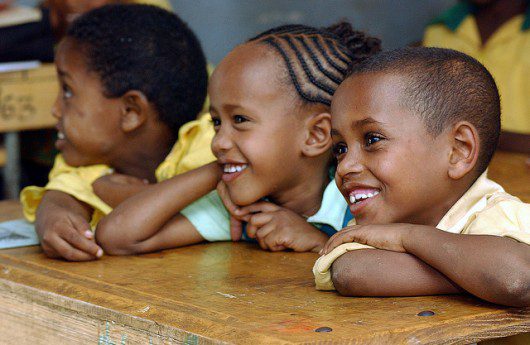

During her recent visit, Gillard sat in with classes of several primary schools in honor of the foundation’s African Children’s Stories Program initiation. The program highlights the Dūcere Foundation’s mission of improving literacy and education within South Africa, facilitating the dispersion of stories “written by African children for African children.”

The Dūcere Foundation’s collaborator, Monash South Africa (MSA), hosted much of the trip, arranging in-class visits, meetings and panel discussions, during which Gillard was able to work with South African leaders on the agenda of academic and professional opportunities for students.

The Dūcere Foundation takes business related concepts and strategies to governments to bring about change within local communities. The School Improvement Program, one of the three focuses within the organization, supports literacy and mentorship, encouraging personal literary capabilities as well as the acquisition of skills from peers and mentors. The executive method to success, they maintain, is in-classroom delivery.

In February 2015, Gillard was appointed Chancellor of the Dūcere Business School, a partnership with Australian and other international universities with online coursework for undergraduate and postgraduate degrees, focused on social consciousness and global leadership. Her experience in education policy and her vision for social and academic change made her an invaluable candidate. Her continued moves toward childhood education reform in South Africa are indicative of her plans for growth.

As Chancellor of the Dūcere Business School, Gillard guides inquiring minds toward higher education. As an activist and prominent figure with the Dūcere Foundation, she betters academic practices as early as possible. Gillard and the Dūcere Foundation are leading South Africa to the next level in education.

– Nora Harless

Sources: The Dūcere Foundation, The Dūcere Business School, Global Partnership for Education, Times Live
Photo: Flickr

March 5, 2016
https://borgenproject.org/wp-content/uploads/borgen-project-logo.svg 0 0 Borgen Project https://borgenproject.org/wp-content/uploads/borgen-project-logo.svg Borgen Project2016-03-05 01:30:372024-05-27 09:33:18Former Australian Prime Minister Aids South Africa’s Schools
Education, Global Poverty

Supplementing Educational Institutions in Nigeria

Afterschool Centre For Career Development

According to research conducted by McKinsey Global Institute, by 2040, 50 percent of the world’s youth will be African. This number reflects the urgent need for educational institutions in countries such as Nigeria to get their children into schools to learn basic academic credentials.

With this aim in mind, the Esther Eshiet’s program Afterschool Centre For Career Development (ACCD) was established. Founded in 2011, the organization is committed to inspiring, investing, engaging and facilitating growth opportunities for young people in the transitional stage of their lives. By learning creative problem-solving techniques, the children obtain innovative skills to expand on the work of educational institutions in Nigeria.

So far, the program has partnered with 30 different secondary schools and developed an online program to reach as many young people as possible. There are currently 42,000 subscribers, according to Changemakers.

Eshiet runs her organization with the idea that “children need the navigation skills to help them determine what skills and direction they need, not to learn for, but to create their own jobs and careers.” It is crucial that children understand their strengths and apply them to specific fields that will foster their full potential in future career services.

The problem ACCD seeks to address is the fact that 62 percent of people in Nigeria live in poverty. Of all those people, 60 percent are young people who find it extremely difficult to find work outside of school. Notably, most of the youths receive little to no career counseling and the transition from school to the real world comes as quite a shock.

Educational institutions in Nigeria often require a ‘transition period’ in which students spend two to four years at home between school and university due to finances and corrupt admission processes. ACCD works with kids during this critical time to actively engage them in society and the economy. That way, the kids do not have to waste time waiting for university acceptance.

Once they are accepted to university, ACCD continues to guide the youths by exposing them to apprenticeships, voluntary placements and other prospects, which continue to build their entrepreneurial experiences and skills needed to develop their individual career paths. By providing kids with the proper tools and resources, Eshiet hopes to spark passion and creativity in the lives of young Nigerians.

Eshiet obtains funds for her organization through friends, family, individuals, foundations and clients. Her goal for ACCD is to become a self-funded organization by offering direct service that is paid for and also through a pay-it-forward model.

The foundation’s growing success in supplementing educational institutions in Nigeria predicts a brighter future for Nigerian youth in years to come.

– Megan Hadley

Sources: Business Fights Poverty, McKinsey, After School Centre, Change Makers
Photo: Flickr

March 4, 2016
https://borgenproject.org/wp-content/uploads/borgen-project-logo.svg 0 0 Borgen Project https://borgenproject.org/wp-content/uploads/borgen-project-logo.svg Borgen Project2016-03-04 01:30:212024-05-27 09:33:16Supplementing Educational Institutions in Nigeria
Page 39 of 67«‹3738394041›»

Get Smarter

  • Global Poverty 101
  • Global Poverty… The Good News
  • Global Poverty & U.S. Jobs
  • Global Poverty and National Security
  • Innovative Solutions to Poverty
  • Global Poverty & Aid FAQ’s
Search Search

Take Action

  • Call Congress
  • Email Congress
  • Donate
  • 30 Ways to Help
  • Volunteer Ops
  • Internships
  • Courses & Certificates
  • The Podcast
Borgen Project

“The Borgen Project is an incredible nonprofit organization that is addressing poverty and hunger and working towards ending them.”

-The Huffington Post

Inside The Borgen Project

  • Contact
  • About
  • Financials
  • President
  • Board of Directors
  • Board of Advisors

International Links

  • UK Email Parliament
  • UK Donate
  • Canada Email Parliament

Get Smarter

  • Global Poverty 101
  • Global Poverty… The Good News
  • Global Poverty & U.S. Jobs
  • Global Poverty and National Security
  • Innovative Solutions to Poverty
  • Global Poverty & Aid FAQ’s

Ways to Help

  • Call Congress
  • Email Congress
  • Donate
  • 30 Ways to Help
  • Volunteer Ops
  • Internships
  • Courses & Certificates
  • The Podcast
Scroll to top Scroll to top Scroll to top