• Link to X
  • Link to Facebook
  • Link to Instagram
  • Link to TikTok
  • Link to Youtube
  • About
    • About Us
      • President
      • Board of Directors
      • Board of Advisors
      • Financials
      • Our Methodology
      • Success Tracker
      • Contact
  • Act Now
    • 30 Ways to Help
      • Email Congress
      • Call Congress
      • Volunteer
      • Courses & Certificates
      • Be a Donor
    • Internships
      • In-Office Internships
      • Remote Internships
    • Legislation
      • Politics 101
  • The Blog
  • The Podcast
  • Magazine
  • Donate
  • Click to open the search input field Click to open the search input field Search
  • Menu Menu

Tag Archive for: Education

Posts

Development, Education, Global Poverty

10 Inspirational Quotes On Education

Quotes On Education
The power of education is undeniable all across the world, both socially and personally, in both developing and developed countries. It has even been referred to by the U.N. as the universal “passport to human development.”

With that in mind, here are some of the most thought-provoking and inspiring quotes on education, from several well-known and important figures across time, helping to articulate the true value that can come from receiving one:

  1. “It is in fact a part of the function of education to help us escape, not from our own time — for we are bound by that — but from the intellectual and emotional limitations of our time.
”
    – T.S. Eliot
  2. “The beautiful thing about learning is that no one can take it away from you.”
    – B.B. King
  3. “It is easier to build strong children than to repair broken men.”
    – Frederick Douglas
  4. “Learning is the only thing the mind never exhausts, never fears, and never regrets.”
    – Leonardo da Vinci
  5. “It is time for parents to teach young people early on that in diversity there is beauty and there is strength.”
    – Maya Angelou
  6. “So let us wage a global struggle against illiteracy, poverty, and terrorism, and let us pick up our books and pens. They are our most powerful weapons.”
    – Malala Yousafzai
  7. “Slavery is one of the worst forms of violence – as is the denial of education. Education is key to liberating children from slavery.”
    – Kailash Satyarthi
  8. “Education is not preparation for life; education is life itself.”
    – John Dewey
  9. “The purpose of education is to replace an empty mind with an open one.”
    – Malcolm Forbes
  10. “Education is learning what you didn’t even know you didn’t know.”
    – Daniel J. Boorstin

– Mayra Vega

Sources: Better World, Brainy Quote, Good Housekeeping, Inspirational Quotes, Learning Revolution, Positivity Blog, Rasmussen College, U.N., UN Foundation Blog
Photo: Globalization 101

February 23, 2016
https://borgenproject.org/wp-content/uploads/borgen-project-logo.svg 0 0 Borgen Project https://borgenproject.org/wp-content/uploads/borgen-project-logo.svg Borgen Project2016-02-23 01:30:142024-12-13 18:05:4310 Inspirational Quotes On Education
Global Poverty

AVERT: Averting HIV and AIDS

AVERT Averting HIV & AIDsFor far too long, HIV and AIDS have been a detrimental part of our world. However, with organizations like AVERT that have been at the forefront of the HIV response, there is some hope that this epidemic can be controlled and lives can be saved.

Since 1986, AVERT’s aim has been to “share knowledge, empower people to protect themselves and others from infection, reduce stigma and improve HIV programs globally.”

What makes AVERT’s efforts deserving of recognition is that they are able to reach thousands of people across the world every day — and their partnerships work to ensure that the lives most in need are the ones changed. The organization works particularly in Sub-Saharan Africa, a region whose history shows limitations in promulgating policies, initiatives and laws.

AVERT’s most important initiative is its role in promoting education as power and using this tool as a way to reduce new infections. By working with community-based organizations, AVERT helps to build the local response to HIV and AIDS in some of the most affected countries in sub-Saharan Africa.

In tackling HIV and AIDS, some of the organizations AVERT collaborates with will include the Umunthu Foundation in Malawi, Sisonke in South Africa, Phelisanang Bophelong in Lesotho and the Bwafwano Integrated Services Organisation in Zambia. Furthermore, AVERT’s global website, AVERT.org, provides a wealth of information for people looking to protect themselves from HIV and to spread awareness of the vital work currently in progress in the field.

The website “supports the global HIV response by providing a well-researched resource on the global epidemic.” With 12 million visitors viewing their website in 2015, 69,500 people receiving HIV tests since 2010 and 20 rural communities receiving support to build networks of elderly carers, AVERT is surely making a dent in battling HIV and AIDS.

With campaigns such as Stand Up to HIV, AVERT is able to highlight the impact of the HIV stigma on one’s health and also aims to empower people to test for HIV. Their animation “Why am I so scared of HIV?” creates a platform for their messages about HIV and AIDS to be shared across the globe. This important initiative has the power to raise awareness and enlighten the masses.

The organization especially touches the lives of the illiterate in impoverished areas, by educating them on the importance of staying protected and protocols to avoid the progression from HIV to AIDS. AVERT is steadily working to ensure that HIV is no longer a death sentence.

The improvements made in battling the HIV and AIDS epidemic have increased tremendously thanks to organizations like AVERT. As the Executive Director of UNAIDS stated in 2011, “a few years ago, we could only dream of a day when there would be zero infections and deaths caused my HIV and AIDS…but today we know we can make it happen.” Today, there is hope because of organizations like AVERT.

– Vanessa Awanyo

Sources: AVERT, UN
Photo: Flickr

February 22, 2016
https://borgenproject.org/wp-content/uploads/borgen-project-logo.svg 0 0 Borgen Project https://borgenproject.org/wp-content/uploads/borgen-project-logo.svg Borgen Project2016-02-22 01:30:532020-06-23 08:28:12AVERT: Averting HIV and AIDS
Global Poverty

Holistic Approach to Educating Children in Poverty

HolisticFebruary 2016 saw the launch of two new education initiatives that emphasize a holistic approach to educating low-income children. A project from Harvard University’s Education Redesign Lab, “By All Means: Redesigning Education to Restore Opportunity,” and a project from the nonprofit Economic Policy Institute, the “Broader Bolder Approach to Education,” will address factors outside of school that influence student performance.

Harvard University’s project will use six cities as laboratories for their project: Oakland, California; Louisville, Kentucky; Providence, Rhode Island; and Salem, Somerville and Newton in Massachusetts.

Harvard’s initiative is a multi-year project funded by individual donations and foundations. The project has created a “children’s cabinet” composed of government representatives, school superintendents and community leaders in each city. They will meet several times over the course of the project to share best practices and Harvard professors will connect them with experts in the field of education.

The project will track each city’s progress and identify barriers to students’ educational attainment and achievement. Their main focus will be on external factors, such as Medicaid regulations on health clinics in low-income school districts.

The mayor of Louisville, Greg Fischer, hopes that the project will add to his ambitious education goals for the city. In an article published by the Huffington Post, Fischer states, “What we hope for is to get [other cities’ and Harvard’s] best practices, learn from that, and learn how to make it happen.”

The Economic Policy Institute’s initiative “Broader, Bolder Approach to Education” was first launched in 2008. At that time, the initiative’s focus on external factors such as health care, nutrition and afterschool and summer enrichment programs drew strong skepticism. The program’s relaunch in February 2016 marks its entrance into the mainstream, as others have now adopted its holistic approach to education.

The initiative aims to improve educational attainment and achievement by tackling issues brought about by socioeconomic inequality. It targets early childhood education, offering a system of high-quality education, health and nutrition support for children and families.

The program continues to aid students throughout their childhood, following up with comprehensive health, wellness and nutrition supported by promoting partnerships between schools and third parties to keep children healthy and in school.

The “Broader, Bolder Approach” also aims to increase children’s educational opportunities by promoting before-school and after-school programs, as well as summer enrichment programs.

To narrow the achievement gap, the initiative advocates for greater integration of low-income and minority students into higher income, homogeneous school districts. The program emphasizes the importance of engaging and consulting the community when making decisions about improving education systems.

Elain Weiss is the national coordinator of the “Broader, Bolder Approach.” In an article published in Education Week, she comments on the relaunch of the program, noting that it has shifted from a focus on the “poverty-education connection, to emphasizing […] the specific policies and practices that would help mitigate those connections.”

The launch of these two programs marks a new trend in education policy, emphasizing holistic approaches to narrowing the achievement gap. By addressing factors that affect students’ health and happiness, such as the challenges of poverty and lack of access to health care, these programs promise to help disadvantaged students reach their full potential.

–Clara Wang

Sources: Education Week, Huffington Post, The Washington Post, Education Dive , Bold Approach

February 19, 2016
https://borgenproject.org/wp-content/uploads/borgen-project-logo.svg 0 0 Kim Thelwell https://borgenproject.org/wp-content/uploads/borgen-project-logo.svg Kim Thelwell2016-02-19 01:30:592020-06-23 08:39:17Holistic Approach to Educating Children in Poverty
Education, Global Poverty

Improved Education in Mexico for the Rural and Indigenous

Education in MexicoApproximately 15 percent of the Mexican population is indigenous and more than half of the state of Oaxaca’s population identifies as indigenous, according to the U.N. But the Declaration on the Rights of Indigenous Peoples, mandating non-discrimination and the right to education in Mexico, is unfortunately not enforced in all states.

Each state has its local legislation that can overlook the national provisions. Former U.N. High Commissioner for Human Rights Navi Pillay states Mexican women suffer from discrimination not only based on their gender but also on their ethnicity.

Indigenous populations are also more likely to live in poverty and experience food insecurity.

Despite the U.N.’s claim that indigenous populations in Mexico are behind in bilingual education and administration of justice, there have been improvements.

CONAFE is an organization under the federal government of Mexico that is taking on the challenge of spreading education to various Mexican populations. Not only does the institution design education plans, it also evaluates them in order to increase education levels in Mexico. The organization is in charge of rural education in Mexico.

The organization has assisted with increasing basic educational attainment. CONAFE increased the participants of expansion of early child development services by 80 percent. Additionally, the organization expanded its services to 172 of the most marginalized areas in Mexico.

Furthermore, CONAFE has proven its progress with reports that grade three scores improved by nearly 79 points, grade six by 35 points and grade nine by nearly 70 points.

CONAFE continues to provide support in the most marginalized communities of Mexico while utilizing a community-based approach. The organization presents to parents ways to best teach their children while specifically targeting fathers who have shown low participation.

Overall, CONAFE has provided educational outreach to 48,640 parents nearly reaching their target. Aside from this program, the government of Mexico has also focused on strengthening indigenous education.

UNESCO has constructed an additional program for post-2015 in Mexico based on the Millennium Development Goals that will continue for another 36 months. The organization claims the country has already achieved a 94 percent improvement in literacy, with Mexico City at the top with a literacy rate of 99 percent.

The project hopes to construct additional sustainable schools built around the indigenous style of living. It also aims to ensure that national education policy will evolve according to education for sustainable development in the coming years.

The state of Chiapas serves as a prime example of the possibilities of success through education interventions. Many programs continue to seek progress in indigenous Mexican communities while citing Chiapas’s quick literacy improvements in the past decade.

The U.N. states that the Declaration on the Rights of Indigenous Peoples will continue to be utilized in the country for support of indigenous rights.

Once the country with the lowest education scores, according to OECD, signs of continued progress for education in Mexico persist.

– Mayra Vega

Sources: World Bank 1, OECD, United Nations, World Bank 2, World Bank 3, World Bank 4, World Bank 5
Photo: Huffington Post

February 19, 2016
https://borgenproject.org/wp-content/uploads/borgen-project-logo.svg 0 0 Borgen Project https://borgenproject.org/wp-content/uploads/borgen-project-logo.svg Borgen Project2016-02-19 01:30:452024-12-13 18:05:39Improved Education in Mexico for the Rural and Indigenous
Education, Global Poverty, Philanthropy

Major Programs That Lilly Endowment Supports

Lilly EndowmentFounded in 1937 by three members of the Lilly Family (J.K. Lilly Sr. and his two sons, Eli and J.K. Jr.), Lilly Endowment is one of the largest private philanthropic organizations in the United States. Based in Indianapolis, it derives the bulk of its funding from gifts of stock in the family pharmaceutical business, Eli Lilly and Company.

Lilly Endowment focuses its activities on education, religion and community development. The founders of the endowment had a burning desire to help the people of Indiana; thus, the bulk of charitable initiatives and grants offered by the organization are geared towards activities in Indiana.

Since its inception, various programs have been developed under each of the endowment’s principal focus areas. These are programs that the organization funds on a regular basis.

Lilly Endowment recognizes the importance of education as an instrument of change and development. The organization gives grants to educational institutions and programs that seek to improve the quality of education across Indiana. Emphasis is placed on supporting higher learning institutions in order to increase the number of people with a bachelor’s degree. This is in response to Indiana’s ranking as one of the states with the highest number of people over 25 without a bachelor’s degree.

The three major programs in the education division are the Community Scholarship Program, the Teacher Creativity Fellowship Program and the Summer Youth Program Fund.

Established in 1987, the Teacher Creativity Fellowship Program was developed with the aim of renewing the commitment of educators across Indiana to delivering quality education. During the program, school media specialists, teachers, guidance counselors and principals are given financial backing and time to tend to their personal development and growth.

The Community Scholarship Program was founded in 1998 and seeks to improve the level of higher education attainment in Indiana. The program offers four-year, full tuition scholarships with an additional 900 dollars per year for educational materials. Community foundations in Indiana play an integral role in the administration of the scholarships.

The most recent program that was added to the education section is the Summer Youth Program Fund. Through this program, Lilly Endowment provides grants to organizations that provide constructive and safe activities for children from 4-19 years of age to engage in during the summer. Organizations that receive funding include tutoring centers, churches, community and sports centers, art centers, overnight camps, parks and theaters.

Eli Lilly once mentioned in Madison Magazine that the cause closest to his heart was character education. In order to bring about the development of individuals with moral fibre and upright character, Eli Lilly supported numerous religious causes leading to the establishment of the religious arm of the endowment.

The religious branch of Lilly Endowment seeks to enrich the lives of Christians and congregations across America by improving the capacity of pastors already engaged in the work of ministry and educating a new crop of pastors. They do this through supporting theological institutions and providing opportunities for established ministers to renew their commitment to ministry.

The Indiana and National clergy renewal programs are long-standing initiatives that Lilly Endowment supports as part of its religion arm. Founded in the years 1999 and 2000, respectively, the programs seek to provide pastors with time they can use to recharge their spiritual batteries in order to better serve in ministry. Congregations also use the programs as opportunities to grow the capacities of lay pastors.

The programs both offer grants of up to $50,000 to churches for renewal of their pastors.

Community development is the third major division of Lilly Endowment. Under this section, the organization funds programs that improve the quality of life in Indiana. These are programs that create the kind of economy that can attract lucrative, developmental businesses to the state. Projects and organizations that have received funding in the past include low-income housing projects, neighborhood revitalization projects and arts and culture organizations.

An initiative under community development is the Giving Indiana Funds for Tomorrow (GIFT) program.

Established in 1990, the endowment uses GIFT to support the establishment, growth and success of community foundations in Indiana’s 92 counties. The community foundations, in turn, provide Lilly Endowment with an avenue to improve the quality of life throughout Indiana. The GIFT program has undergone five phases and is currently in its sixth phase.

The continuous growth and expansion of these programs will enable Lilly Endowment to fulfill its overall objective of creating change and fostering development in Indiana.

— June Samo

Sources: Lilly Endowment Community Development, Lilly Endowment Religion, Lilly Endowment Education, Lilly Endowment, General, Learning to Give, ISI News
Photo: TECHPOINT

February 16, 2016
https://borgenproject.org/wp-content/uploads/borgen-project-logo.svg 0 0 Borgen Project https://borgenproject.org/wp-content/uploads/borgen-project-logo.svg Borgen Project2016-02-16 01:30:152024-12-13 18:05:41Major Programs That Lilly Endowment Supports
Children, Education, Global Poverty, Government

Expanding Preschool Access for Poor Children

Preschool Access
Attending preschool can drastically improve the intellectual capacity of children. Research has demonstrated positive effects on learning and development in both the short and the long run.

A recent study from Northwestern University suggested that children from lower income families tend to perform significantly worse in the first years of elementary school. This is due to the fact that they usually did not have the opportunity to attend preschool.

Policy expert Whitmore Schanzenbach suggested that “by the time they reach kindergarten, disadvantaged children already show an achievement gap relative to their higher-income peers.”

Schanzenbach emphasized that “the poverty gap in school readiness appears to be growing as income inequality widens.”

Teachers at elementary schools have reported that children from less privileged families have more difficulty paying attention and exhibit more behavioral problems given no kind of education prior to elementary school.

This is because the state and the government usually do not focus their attention on expanding preschool access to children from marginalized sectors. They have concentrated mainly on improving education for children over five years of age.

According to Schanzenbach, a common proposal to bridge this gap is to make formal preschool accessible to poor children under the age of five. Given many ways to expand these educational programs, specialists at Northwestern designed a program that is cost-effective.

In their proposal, a well-developed framework would introduce the highest quality curriculum and nurturing assistance that would ultimately help these young children prepare themselves for further education.

It is important to emphasize that this is a project designed to be introduced in developing countries and rural sectors, where preschool access needs to be attainable.

Schanzenbach concluded that “the expansion of early education programs along these lines will lead to improved educational outcomes for disadvantaged children.” She added a list of other benefits which included lower crime rates, reduced teenage pregnancy and a decreased reliance on the social safety net.

Read Schanzenbach’s full study here.

– Isabella Rölz

Sources: Brookings, U.S. Department of Education, NYTimes
Photo: U.S. News

February 13, 2016
https://borgenproject.org/wp-content/uploads/borgen-project-logo.svg 0 0 Borgen Project https://borgenproject.org/wp-content/uploads/borgen-project-logo.svg Borgen Project2016-02-13 01:30:542024-12-13 18:05:41Expanding Preschool Access for Poor Children
Education, Global Poverty, Women, Women and Female Empowerment

Six Ways Education Empowers Women in Poverty

Education Empowers WomenEducation empowers women and girls, and investing in their education is one of the most effective ways to reduce global poverty. Still, females face many barriers to educational opportunities. According to the Global Partnership for Education, 63 million girls are not in school worldwide, and women represent almost two-thirds of the world’s illiterate.

A recent report by the World Bank found that girls who receive little to no amount of education are more likely to live in poverty, be married as children, suffer domestic abuse and lack control over their own health care decisions, which is detrimental to their families and communities.

Here are six of many ways education empowers women in poverty:

1. Education Helps Women Avoid Child Marriages

“Child marriage is an appalling violation of human rights and robs girls of their education, health and long-term prospects,” Babatunde Osotimehin, M.D., the Executive Director of the United Nations Population Fund, said to UNICEF. “A girl who is married as a child is one whose potential will not be fulfilled.”

Providing girls with access to educational can be an effective way to reduce child marriage rates worldwide. According to the United Nations Educational, Scientific and Cultural Organization (UNESCO), the rate of child marriage within sub-Sahara, South and West Africa would fall by 64 percent if every girl within the region received a secondary education level.

2. Education Empowers Women to Family Plan

The amount of education a woman receives influences a women’s choice and ability to plan family sizes. Family planning allows women to give birth to the number of children they desire and determine the spacing of their pregnancies.

In sub-Saharan Africa, women with no education have an average of 6.7 births on average, compared to 3.9 for women within the region who have obtained a secondary education level, as reported by UNESCO.

3. Education of Mothers Decreases Child Mortality

A woman’s education is integral to the health of her family. The more education a girl gains throughout her childhood, the better chance her future child has for survival.

According to the United States Agency for International Development (USAID), the probability of infant mortality decreases by five percent to 10 percent for each extra year of education a mother has.

Around four million child deaths have been prevented over the last four decades due to an increase in female education, according to a study in The Lancet journal funded by the Bill and Melinda Gates Foundation.

4. Education Increases the Likelihood of Women Surviving Pregnancy and Birth Complications

Education isn’t just integral to the health of a woman’s child; it is also important for the mother. Pregnancy and birth pose extreme health risks for women in poverty stricken areas, and education plays a significant role in helping mothers survive them. Women with higher levels of education are more likely to adopt simple and low cost hygienic practices throughout pregnancy, and react to health issues.

According to UNESCO, maternal mortality would fall by 66 percent if all women had completed primary education.

5. Education Gives Women Higher Income Earning Power

Each extra year of schooling a girl receives is incredibly valuable, raising her ability to enter the labor force. Every year of secondary school education a girl receives is directly correlated with an 18 percent increase in her future earning, according to a World Bank study.

6. Education Empowers Women to Stand Up to Domestic Violence

Gender-based violence is a global phenomenon. One-third of women who have been in a relationship have experienced physical or sexual violence, according to the World Health Organization (WHO). Low education levels are associated with an increased risk of experiencing domestic violence.

Through education, women have the opportunity to gain knowledge to stop this phenomenon. In Sierra Leonne after a large expansion of school opportunities, women’s tolerance of domestic violence dropped from 36 percent to 26 percent according to UNESCO.

“I firmly believe that when you invest in a girl’s education she will support herself and her children and contribute to her community and her nation, charting a path towards a better world in which human rights are respected and there is dignity for all,” Prime Minister of Norway and co-chair of the MDG Advocacy Group, Erna Solberg, said in an interview with Daily Development. “Education empowers women. It increases their economic contribution, strengthens their political voice and boosts their influence across the board. That is why delivering education to all girls is so vital.”

– Lauren Lewis

Sources: United Nations Development Program, UNESCO, White House, USAID, World Bank, The Lancet, Global Partnership for Education, UNICEF, World Health Organization, Daily Development
Photo: The Clinton Foundation

February 10, 2016
https://borgenproject.org/wp-content/uploads/borgen-project-logo.svg 0 0 Borgen Project https://borgenproject.org/wp-content/uploads/borgen-project-logo.svg Borgen Project2016-02-10 01:30:032024-05-27 09:28:50Six Ways Education Empowers Women in Poverty
Economy, Global Poverty

Emerge Poverty Free Enables Communities

Poverty FreeEmerge Poverty Free is a nonprofit organization whose mission is to break the cycle of poverty by enabling communities to take control of their own needs.
In partnership with a local organization, Sustainable Investments and Development Initiatives (SIDI), Emerge Poverty Free has begun a project in Mwanza, Tanzania to empower hundreds of fisher-women through economic and environmental conservation projects.

Tanzania is known as one of the world’s least developed rural countries, where 40 percent of the adult population earns less than 1.25 USD per day.

The goals of the Sustainable Fisheries in Mwanza project are to enable women to become self-sustainable while also improving the environment of Lake Victoria that is threatened by pollution and excessive fishing.

To reach these goals, 250 women from the Kabusuli village of the Sengerema District in Mwanza have been trained in fish farming and healthcare. The group hopes to plant 10,000 trees along the Lake Victoria shore at the end of the project.

These trees will eventually be used to provide local families with wood for cooking and building materials to reduce deforestation.

Though a fairly new project, Emerge Poverty Free reports that women involved in the group have already doubled their daily incomes by selling fish within their communities during the past 10 months.

According to Aneta Dodo, secretary of the Sustainable Fisheries in Mwanza, the group has planted 6,000 trees, created five fish ponds for domestic use and local sale that have brought high profits — and a portion of the money earned by these women funded school tuition for 30 local children.

“We have gained a lot of expertise in finance issues, fishing, environmental conservation and we are able to do most things by ourselves without having to depend on men,” she said.

Dodo reports that the group was able to secure low-interest rate loans after the group started a saving and credit facility in their village of Kabusuli.

Despite these successes, the women of Tanzania still face many economic challenges — girls have higher education drop-out rates than young men and have limited access to medical care and employment, according to Emerge Poverty Free.

Group member Asha Malando does not see these statistics as an end-all and believes that women are still capable of empowering themselves by becoming involved in community projects.

“The government cannot do everything for us. We just have to use some of these organizations well so we can develop ourselves.”

Coleta Masesla, a female fisher in Tanzania, is now able to run her own food kiosk that provides income for her children’s education and home essentials like food and clothing.

“These women have become great role models in their community as they have proved that everything is possible. Most of them had lost hope but right now they are the ones running their families. We at Emerge Poverty Free are pleased by the attitude they have shown toward lifting themselves out of poverty,” stated Jeremey Horner, Emerge Poverty Free CEO.

– Kelsey Lay

Sources: Emerge Poverty Free 1, Emerge Poverty Free 2, IPP Media, The Daily News
Photo: Flickr

February 4, 2016
https://borgenproject.org/wp-content/uploads/borgen-project-logo.svg 0 0 Borgen Project https://borgenproject.org/wp-content/uploads/borgen-project-logo.svg Borgen Project2016-02-04 01:30:132024-05-27 09:28:44Emerge Poverty Free Enables Communities
Education, Global Poverty

KIND Fund Exceeds Expectations

KINDMillions of children throughout Africa struggle to learn while sitting on dirt floors or the ground outside for hours at a time. In Malawi, three out of five students don’t have a desk or chair.
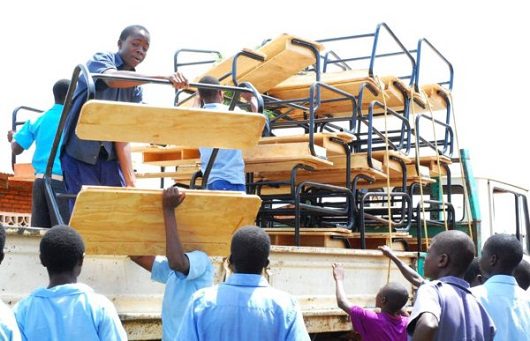
Since 2010, Kids In Need of Desks (KIND) has placed more than 148,755 desks in 575 primary schools in Malawi, providing actual workspaces to nearly half a million students who would otherwise be sitting on the floor. The fund has also provided over 718 scholarships to girls to complete all four years of high school.

KIND also benefits the Malawian community outside the classroom. Every desk made for Malawian children is manufactured locally. This has created numerous jobs for residents over the past five years.

The fund was created by MSNBC’s Lawrence O’Donnell after a 2010 service trip to the country. There, O’Donnell learned firsthand that the number one item Malawian school teachers said would best improve the lives of students was desks.

According to Malawian teacher Saulos Mzuwala, “In as far as education is concerned a learner is more comfortable sitting at desks than on floors. They use their knees as desks which leads to poor handwriting.”

Students too, complain about the difficulty of learning and practicing writing from this position. “We fold our legs when we’re sitting and when we try to write, our papers get damaged and that wastes a lot of our time. It’s distracting and makes it hard to do well in school,” says student Lajab Saidi.

On top of this, sitting on the floor makes their clothes dirty faster, says teacher Nema Samalira. “It’s hard for these kids to afford soap especially if they have to clean their clothes every day. If their clothes are dirty they don’t come to school.”

During that trip, O’Donnell connected with UNICEF and a Malawi woodworking shop. He paid for them to make 30 student desks. With three kids to every desk, that first delivery enabled 90 students to move from dirt floors to desks. This change happened within a single week. Now, five years later, the KIND fund has received more than $10.5 million in donations.

“Ten million dollars was beyond my wildest dream when I started KIND with UNICEF. I am in awe of the generosity of our audience. There are hundreds of thousands of students sitting at desks instead of on the floor today thanks entirely to our audience. There are girls in high school today thanks entirely to our audience. This is proof that small acts of kindness can make a big difference in our world,” says O’Donnell.

– Kara Buckley

Sources: MSNBC, PR News Wire, UNICEF USA, Vimeo
Photo: MSNBC

February 3, 2016
https://borgenproject.org/wp-content/uploads/borgen-project-logo.svg 0 0 Borgen Project https://borgenproject.org/wp-content/uploads/borgen-project-logo.svg Borgen Project2016-02-03 01:30:012024-12-13 18:05:33KIND Fund Exceeds Expectations
Education, Global Poverty

O’Donnell’s KIND Fund Raises $10.5 million for Malawi


KIND fundIn the 2015 holiday season, Lawrence O’Donnell’s KIND Fund (Kids in Need of Desks), which supplies desks and scholarships to students in Malawi, reached over $10.5 million in donations. The organization’s goal is to build tables for rural schools in Malawi that lack school furniture.

In 2010, Lawrence O’ Donnell saw firsthand the struggles of schoolchildren lacking essential school supplies in Malawi. Every day in rural villages, children would attend school without basic school equipment, like desks and chairs.

Most students would sit in the dirt or on hard cement floors, using their knees as makeshift tables to write notes. The lack of a physical platform would lead to poor handwriting and damaged papers. Because the students only have a single pair of clothing, their families would spend every other day washing their shirts and pants, often causing children to miss class.

Wanting to help improve the bleak situation, O’Donnell contacted UNICEF and a local woodworking shop, paying them to make 30 student desks — enough for a full classroom. Realizing how easily he could improve student education, O’ Donnell created the KIND Fund after his visit.

Since 2010, the organization has built and placed more than 148,755 desks in 575 primary schools in Malawi, creating legitimate work spaces for more than half a million students who would otherwise be sitting on the dirty floor. On his show, O’Donnell thanked his viewers for their ongoing support for the KIND Fund. To him, $10 million dollars “was beyond my wildest dreams when I started [the fund].”

The KIND Fund has also benefited the Malawian communities outside the classroom by manufacturing the desks locally, creating jobs for residents since its inception.

In addition to building desks for schools, the KIND Fund also provides scholarships to young women to complete their secondary school education. Because of their impoverished situation, families choose to not send their daughters to school.

With the scholarships that the KIND Fund offers, the girls receive an education that diminishes their chances of being exploited, making them less likely to fall victim to human trafficking. Girls who finish secondary school also marry at an older age, and their babies are more likely to survive.

Knowing this, the KIND Fund promotes its scholarships and makes sure both young men and women have a brighter future and better education.

“This is proof that small acts of kindness can make a big difference in our world,” O’Donnell said.

– John Gilmore

Sources: Look to the Stars, UNICEF USA
Photo: Flickr


Clint Borgen will be speaking at Yale on February 12th. Order tickets online.


January 31, 2016
https://borgenproject.org/wp-content/uploads/borgen-project-logo.svg 0 0 Borgen Project https://borgenproject.org/wp-content/uploads/borgen-project-logo.svg Borgen Project2016-01-31 01:30:252024-12-13 18:05:36O’Donnell’s KIND Fund Raises $10.5 million for Malawi
Page 40 of 67«‹3839404142›»

Get Smarter

  • Global Poverty 101
  • Global Poverty… The Good News
  • Global Poverty & U.S. Jobs
  • Global Poverty and National Security
  • Innovative Solutions to Poverty
  • Global Poverty & Aid FAQ’s
Search Search

Take Action

  • Call Congress
  • Email Congress
  • Donate
  • 30 Ways to Help
  • Volunteer Ops
  • Internships
  • Courses & Certificates
  • The Podcast
Borgen Project

“The Borgen Project is an incredible nonprofit organization that is addressing poverty and hunger and working towards ending them.”

-The Huffington Post

Inside The Borgen Project

  • Contact
  • About
  • Financials
  • President
  • Board of Directors
  • Board of Advisors

International Links

  • UK Email Parliament
  • UK Donate
  • Canada Email Parliament

Get Smarter

  • Global Poverty 101
  • Global Poverty… The Good News
  • Global Poverty & U.S. Jobs
  • Global Poverty and National Security
  • Innovative Solutions to Poverty
  • Global Poverty & Aid FAQ’s

Ways to Help

  • Call Congress
  • Email Congress
  • Donate
  • 30 Ways to Help
  • Volunteer Ops
  • Internships
  • Courses & Certificates
  • The Podcast
Scroll to top Scroll to top Scroll to top