• Link to X
  • Link to Facebook
  • Link to Instagram
  • Link to TikTok
  • Link to Youtube
  • About
    • About Us
      • President
      • Board of Directors
      • Board of Advisors
      • Financials
      • Our Methodology
      • Success Tracker
      • Contact
  • Act Now
    • 30 Ways to Help
      • Email Congress
      • Call Congress
      • Volunteer
      • Courses & Certificates
      • Be a Donor
    • Internships
      • In-Office Internships
      • Remote Internships
    • Legislation
      • Politics 101
  • The Blog
  • The Podcast
  • Magazine
  • Donate
  • Click to open the search input field Click to open the search input field Search
  • Menu Menu

Tag Archive for: Child Mortality

Posts

Global Poverty, Health, Malaria

Causes of Child Mortality in Developing Countries

child_mortality
According to the World Health Organization, 9.2 million children under the age of 5 die every year, many from preventable conditions that could be treated with simple healthcare interventions. The majority of these deaths occur in Sub-Saharan Africa and South Asia, where the child mortality rate is 175 per 1000 (compared to 6 per 1000 in industrialized countries).

Many of the diseases that kill children younger than 5-years-old are caused by lack of access to healthcare facilities, improper hygiene and sanitation, unclean water and not enough food, and low levels of education and information. The top three causes of child mortality are:

1. Pneumonia
About 15 percent of child mortality deaths are caused by pneumonia. In 2013, pneumonia killed an estimated 935,000 children under the age of 5. Pneumonia occurs when the air sacs in the lungs, the alveoli, are filled with pus and fluid. This makes breathing difficult, and does not allow the infected person to intake enough oxygen. Those who are malnourished have weaker immune systems and are therefore at a higher risk of dying from pneumonia. Pneumonia is also more likely to affect those who have pre-existing illnesses such as HIV, who live in an area where levels of indoor air pollution are high because of cooking with biomass fuels like wood or dung, who live in crowded homes, or those who have parents who smoke. While pneumonia can be treated with antibiotics, only one third of the children infected with pneumonia get the antibiotics necessary to cure them.

2. Diarrhoeal Disease
Each year, diarrhea kills 760,000 children under the age of 5. It is caused by unclean drinking water, contaminated food or person-to-person contact and poor hygiene. Malnourished children are more susceptible to diarrhea, and children in developing countries are likely to contract at least three cases of diarrhea each year. Since diarrhea leads to malnourishment, those who are already weakened by the disease are likely to contract it again. Diarrhea then leads to severe dehydration, which leads to death. It can be treated with rehydration zinc supplements. A good method of preventing diarrhea is decreasing levels of malnutrition, therefore making children less likely to be infected with the disease.

3. Malaria
In Africa, a child dies every minute from malaria, a disease caused by parasites. These parasites are transmitted to people from mosquito bites. The symptoms are first expressed as fever, chills and vomiting, and can then progress to severe illness and death if not treated within 24 hours. Malaria is preventable through the use of mosquito nets and levels of deaths caused by malaria are decreasing. Malaria related mortality cases in Africa have fallen 54 percent since 2000.

Child mortality is also high in countries that have a high Maternal Mortality Rate (MMR). More than a third of child mortality deaths occur in the first month of life and are related to pre-term birth, birth asphyxia (suffocation), and infections. In order to reduce Child Mortality, Maternal Mortality rates also have to decrease. This can happen with increased access to healthcare facilities and increased prenatal visits.

Child mortality rates are decreasing, but there is still work to be done. Vaccinations, adequate nutrition and increasing education will all help to decrease the levels of child mortality.

– Ashrita Rau

Sources: WHO 1, WHO 2, WHO 3, WHO 4
Photo: Flickr

July 20, 2015
https://borgenproject.org/wp-content/uploads/borgen-project-logo.svg 0 0 Borgen Project https://borgenproject.org/wp-content/uploads/borgen-project-logo.svg Borgen Project2015-07-20 15:46:202024-05-27 09:24:02Causes of Child Mortality in Developing Countries
Children, Economy, Global Poverty, Health

How Coca-Cola Is Helping Deliver Medicines

coca_cola
Coca-Cola products reach every corner of the world while essential medicines do not. ColaLife, a UK charity, noticed this and decided to make a change. ColaLife uses Coca-Cola to open up the private sector supply chain to deliver affordable and effective medicines.

ColaLife produced the Kit Yamoyo, an anti-diarrhea kit. Diarrheal diseases cause life-threatening dehydration, which is the second leading cause of death in children under the age of 5 in developing nations. Each year, it takes the lives of 760,000 children, even though it’s curable.

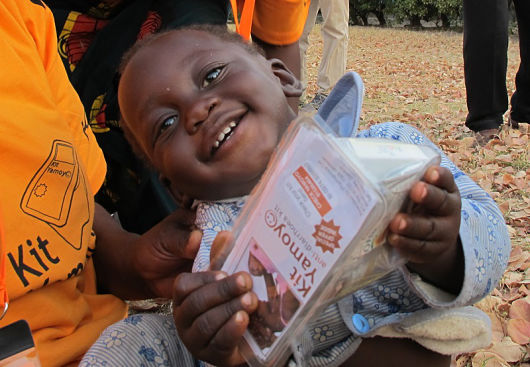
The problem is that these children do not have access to the cure, which is what ColaLife sought to solve. The Kit Yamoyo contains Oral Rehydration Salts (ORS), soap, and zinc, which act as a cure. The package itself acts as a measuring device for water needed to mix up the ORS and zinc, and can also be used as a storage device as well as a cup.

The Kit Yamoyo has a v-shaped cup to easily fit into the Coca-Cola delivery crates. As a compact, low-cost product, the Kit Yamoyo piggybacks Coca-Cola’s supply chain to reach remote areas. It is a symbiotic relationship: Coca-Cola products continue to reach and get sold in remote areas, while the consumers gain access to more medicines than ever before.

The kits themselves are sold with Coca-Cola products. As the kits make their way out to the remote areas, the demand for them becomes greater. It’s a positive situation for everyone involved: Coca-Cola products are sold, the retailer makes a profit, and the consumer gets the medicine they need to help their children.

With enough funding, the Kit Yamoyo will have a big impact. It will widen vaccine coverage in remote areas and reduce death rates caused by dehydration and malnutrition. It will also encourage an increased investment in training and help health workers reduce child mortality rates. ColaLife has proven that the supply chain is just as important as the medicine itself.

– Hannah Resnick

Sources: ColaLife, University of Delaware, WHO, Zambia Daily Mail
Photo: Just Giving

July 9, 2015
https://borgenproject.org/wp-content/uploads/borgen-project-logo.svg 0 0 Borgen Project https://borgenproject.org/wp-content/uploads/borgen-project-logo.svg Borgen Project2015-07-09 15:00:312024-05-27 09:25:48How Coca-Cola Is Helping Deliver Medicines
Global Health, Health

Health Care and Taxation in Developing Countries

Healthcare and Taxation in developing countries
One of the reasons health care in developing nations is ineffective is that governments heavily tax medicines and other health care related products. While the combination of health care and taxation in developing countries is a good revenue generator for the government, it imposes a heavy burden on those who cannot afford to carry it. Those with low incomes and who mostly need these medicines find themselves castigated by high prices that result from government tariffs and taxes.

Developing nations tend to import many, if not all, of the medicines prescribed. In addition, patients usually are the ones paying the full amount for medical services due to the unavailability of health care in their countries. For instance, the average Indian pays for about 70 percent of health care services. After taxes and tariffs, the price of medicines can go up two-thirds, making even generic drugs unaffordable to the lower class.

This story repeats itself in other emerging markets. Countries like Argentina, Russia and Brazil impose tariffs of 10 percent on medicines. Other developing nations like Algeria and Rwanda impose tariffs of 15 percent, and in places like the Republic of Djibouti tariffs can even go up to 26 percent.

In the case of medicine, tariffs are only one part of the problem. Many countries also impose heavy taxes on top of tariffs. For instance, Brazil imposes a 28 percent tax on prescribed medicines, while India levies a variety of taxes that increase the value of medicine by about 8 percent on top of the states’ taxes, which can range from five to 16 percent.

Besides the fact that they place the heaviest economic burden on the poorest sectors of the population — which also tend to have the highest levels of health problems — these tariffs and taxes are economically counterproductive. According to Rod Hunter, senior vice president at the Pharmaceutical Research and Manufacturers of America, higher prices on medicines limit people’s use of them. Illnesses go on unabated, in time leading to less productivity and a lower national GDP.

The effects of reducing or eliminating tariffs and taxes on medicines have been dramatic in places like Kenya, Colombia, Colombia, Ethiopia, Malaysia, Nicaragua, Pakistan, Tanzania and Uganda. For instance, after the Kenyan government removed tariffs and taxes on anti-malaria medicine, infant mortality and disease rates between 2005 and 2009 declined by almost 44 percent.

The initiative shown by these countries has resonated across the globe. Many African nations in 2011 pledged to lower tariffs and taxes on medicines. However, so far only a handful of nations have followed through.

It is in the best interest of countries like India and China to lower tariffs, especially considering India is the biggest exporter of finished medicines and the China produces 70-80 percent of the active ingredients contained in medicines.

The upcoming 2015 BRICS summit could be a good place to raise this issue again. These large stakeholders and developed nations alike could make it part of the agenda to change the practice of “taxing the sick.” Perhaps they could even form a coalition to press governments worldwide to change these practices and broaden access to health care in many developing nations.

– Sahar Abi Hassan

Sources: Project Syndicate, Voice of America
Photo: Huffington Post

July 28, 2014
https://borgenproject.org/wp-content/uploads/borgen-project-logo.svg 0 0 Borgen Project https://borgenproject.org/wp-content/uploads/borgen-project-logo.svg Borgen Project2014-07-28 15:37:302024-05-27 09:19:04Health Care and Taxation in Developing Countries
Global Poverty, Health

India’s Universal Immunization Program

The Universal Immunization Program incorporated four new vaccines against polio, rubella, rotavirus and Japanese encephalitis into their program on July 3. By including vaccines against these four widespread diseases, the UIP hopes to reduce the high child mortality rate found in India.

With the addition of these four vaccines, a total of 13 vaccines will now be available in India for approximately 2.7 million children every year free of charge. According to the Prime Minister Shri Narendra Modi, “The government will now ensure the benefits of vaccination reach all sections of society, regardless of social and economic status.”

Not only do these four vaccines made available through the UIP represent a noteworthy achievement in public health, but it also shows the important role programs like this play in developing countries. According to a World Bank report on poverty, approximately one-third of the world’s poor currently lives in India, and the lack of proper medications contributes to this extreme poverty rate.

Polio, rubella and rotavirus are all three well-known diseases that greatly contribute to the high child mortality rate across the world, especially in countries like India where vaccines are extremely difficult to access. According to UNICEF, India is celebrating a three-year victory over polio since no cases of polio have been reported since Jan. 13, 2011. This achievement is particularly remarkable because until 2009, India was reporting more than half of the world’s polio cases. Although India has been able to achieve this landmark success, this injectable polio vaccine provided by the UIP will continuously provide protection against this virus.

Even though rubella, which is also called German measles or 3-day measles, is generally a mild viral infection, it can have serious health consequences when a pregnant woman is infected with the virus. Congenital rubella syndrome, or CRS, can cause congenital defects, such as deafness or blindness, and even fetal death, which is why the UIP focuses on delivering those vaccines to those in need to prevent further infections.

One of the most common effects of rotavirus is diarrhea, which causes approximately 334,000 out of the 2.3 million child deaths in India every year according to the World Health Organization. Especially when compared to other diseases, rotavirus typically affects more children than adults because water makes up a greater proportion of a child’s body weight.

The UIP’s fourth new vaccine against Japanese encephalitis will be introduced to adults in a total of 179 districts in nine states where this disease has been prevalent in India. Even though the severity of symptoms widely varies and there is no specific treatment for Japanese encephalitis, vaccinations are key in preventing the spread of this infection.

The U.N.’s fourth Millennium Development Goal is to reduce the under-5 child mortality rate by two-thirds. As the deadline for this and the other seven goals quickly approaches,  programs like UIP show the amazing progress that is possible among developing countries through widespread access to vaccinations.

– Meghan Orner

Sources: The New Indian Express, WHO 1, WHO 2, CDC, Silicon India News, UNICEF
Photo: The Hindu

July 22, 2014
https://borgenproject.org/wp-content/uploads/borgen-project-logo.svg 0 0 Borgen Project https://borgenproject.org/wp-content/uploads/borgen-project-logo.svg Borgen Project2014-07-22 16:00:562024-12-13 17:50:59India’s Universal Immunization Program
Health, Nonprofit Organizations and NGOs

Jhpiego Receives USAID Award

Jhpiego is an international nonprofit health organization and an affiliate of Johns Hopkins University. Jhpiego’s programs are primarily centered on the prevention of unnecessary deaths of women and children in developing countries. The organization works on the front lines in urban slums and rural settings to design accessible and affordable healthcare solutions. Jhpiego is currently active in 40 countries, concentrated in Africa, Asia, Latin America and the Caribbean.

The organization works with healthcare professionals, influential community members and government leaders to deliver quality healthcare for those in need. It also focuses on developing sustainable strategies for communities in developing countries to manage their own well-being. Jhpiego trains local healthcare workers, improves the quality of community health systems and makes delivery of care, services or products more efficient and dependable. It focuses on developing technologies and solutions that can be used both in hospitals or in the home. The organization’s provision of affordable healthcare for women and families ensures of level of care previously unattainable by many of the recipients.

Jhpiego began as an acronym for the Johns Hopkins Program for International Education in Gynecology and Obstetrics, yet the organization has now expanded its efforts to tackle issues such as the prevention and treatment of HIV/AIDS, infection, malaria, tuberculosis and cervical cancer. Jhpiego’s science division also researches innovative technology that has the potential to help poor and vulnerable communities. The ultimate goal is sustainability—giving poor communities the tools and education they need to build a foundation of good health and continue the cycle without outside assistance or aid.

As an affiliate of a prestigious university, Jhpiego has the advantage of being well-connected. In June 2014, the United States Agency for International Development (USAID) awarded $500 million to Jhpiego to fund a program to alleviate maternal and child mortality. Jhpiego is currently using the funds to spearhead a five-year program centered around preventing child deaths due to treatable causes like diarrhea and pneumonia. By working in conjunction with other partners and nonprofits, Jhpiego seeks to create a network of aid to mothers and children in need.

Jhpiego will use the funds to provide cost-effective vaccines and antibiotics to the 24 countries with the highest numbers of child mortality. Jhpiego will also provide other medical equipment, train community medical providers and reach out to women in slums and rural areas. The USAID funds will be used to research prevention and treatments for the leading causes of death for mothers and children. Among mothers, the leading causes of mortality include uncontrolled bleeding after birth, infections and high blood pressure during pregnancy. Among newborns, asphyxia and low birth rate. And among young children, pneumonia, malaria and diarrhea.

Since 1990, the global child mortality rate has nearly been halved. Yet Jhpiego’s efforts instill hope that the number can be further lowered. Jhpiego works with NGOs and government policymakers alike to increase accessibility to quality health services. By focusing on sustainable, cost-effective health solutions, Jhpiego can help provide care for underrepresented, vulnerable populations.

– Mari LeGagnoux 

Sources: Baltimore Sun, Jhpiego
Photo: Jhpiego

July 12, 2014
https://borgenproject.org/wp-content/uploads/borgen-project-logo.svg 0 0 Borgen Project https://borgenproject.org/wp-content/uploads/borgen-project-logo.svg Borgen Project2014-07-12 04:00:392024-05-27 09:18:04Jhpiego Receives USAID Award
Global Poverty, Health

Every Newborn Action Plan Targets Preventable Deaths

Five babies are born every second, and every day over 400,000 women around the world facilitate the miracle of life. Many of these children, however, are given poor chances of survival. 44 percent of children who die before their fifth birthday are taken from the world within their first month of life. 2.9 million babies die within the first month, and an additional 2.6 million babies are stillborn. Arguably more alarming than the statistics is that these deaths are typically preventable.

That’s where the Every Newborn Action Plan (ENAP) comes in. Endorsed in May and launched on June 30, ENAP is an initiative aimed at accelerating action to prevent the numerous newborn deaths around the world. USAID, the UN and other global organizations have banded together to support and promote this plan.

Children are at their most vulnerable during the child delivery process and the first few months of life. Prematurity, asphyxiation and infection are among the serious threats to newborn survival, but they can be minimized with the right steps. Training doctors and nurses to anticipate and prevent these possibly fatal conditions is a vital step in minimizing newborn deaths, and ENAP aims to address this.

ENAP was launched in Johannesburg, South Africa, where the UN Secretary General, Ban Ki-Moon spoke. He said, “If we increase investments, focus on equity and promote human rights, we can create a world free of preventable maternal and child deaths in just one generation.”

The plan has a timetable, hoping to reduce the neonatal mortality rate per 1000 live births from 15 to 7 by 2035, with less extreme mile markers between now and then. To achieve these goals, over 90 countries have to get behind the movement and accelerate their progress and 29 of these countries will have to “more than double current rates of progress in policy and private sector commitments to save newborn lives.” ENAP outlines how this can be achieved.

ENAP focuses on improving healthcare across myriad specialties including prenatal, pregnancy, postnatal and infant care. It emphasizes thoroughness at every stage, beginning with early pregnancy and not ending until the child and the mother are experiencing stable health. Their plan includes a checklist of criteria for improved pregnancy healthcare, including points like “early initiation of breastfeeding” and “birth companion of choice and skilled attendant at birth.” These things are often a given in the U.S., but are sometimes a luxury in impoverished countries.

Higher survival rates for newborns and mothers would mean great things for fighting global poverty. Population growth is often uncontrollable in impoverished areas because, without a guarantee that children will survive, families often have more children than they can support. This puts strain on communities and lowers quality of life standards significantly. As ENAP reduces newborn deaths, population growth can transition to a steadier rate that can be more easily supported by countries, which will lead to more stable economies and happier people.

With the backing of countries worldwide, the support of institutions such as USAID and the UN and effective implementations of the guidelines of the plan, Every Newborn Action Plan has the potential to save millions of lives in just over two decades.

– Magdalen Wagner

Sources: United Nations, World Health Organization, GhanaWeb, Huffington Post, Mail Online
Photo: IBTimes

July 5, 2014
https://borgenproject.org/wp-content/uploads/borgen-project-logo.svg 0 0 Borgen Project https://borgenproject.org/wp-content/uploads/borgen-project-logo.svg Borgen Project2014-07-05 01:57:412024-05-27 09:18:08Every Newborn Action Plan Targets Preventable Deaths
Education, Global Poverty

Crisis in Rural Sudan

Conflicts over oil in Sudan, North Africa’s largest country, caused a series of price inflations that have greatly affected the population. As Sudan’s largest natural resource is oil, the country experienced years of turmoil and conflict with bordering countries over the rights to oil fields. The increase in the price of oil is further reflected in transportation, and the isolation gap between urban and more rural areas has grown. As a result of this isolation, rural areas are unable to access necessary resources and economic growth. These areas have experienced low human development and according to the World Bank Sudan ranks 171 out of 187 countries on the human development indicator. In order to better human development the country must focus more on social and economic factors, especially in these rural communities.

Sudan is mostly made up of rural areas, which are drastically affected by drought, famine and conflict. In particular, the region of Darfur has suffered considerably and is currently the poorest area of the country. In fact, the land in Sudan is unfit to farm because of unreliable rainfall and the area faces major drought. Due to these circumstances, more than half of the population of Sudan lives in poverty and isolation.

Sudan also faces inequality and underdevelopment for most people living in these areas. For instance, access to health services is scarce, leaving more than half of the population without access to health resources. Due to the lack of resources in the health sector the child mortality rate in Sudan is extremely high, with  111 child mortality deaths per 1,000 births. In addition to a high child mortality rate, more than half of the population does not have access to safe drinking water. Instead, these communities rely on rivers, wells, and lakes as their drinking source.

In addition to these factors, there is an extreme lack of education in Sudan, especially for young girls. Even if a young girl does have the option to attend school, she becomes at risk of rape and other forms of violence.

There is an obvious need for social and economic development in rural areas to increase Sudan’s overall human development. Children in rural communities must have equal opportunity for a safe education to improve these areas. Also, while there is a substantial focus on oil, the country should instead shift to agriculture so that proper farming practice can be promoted in rural communities. This would foster economic development and lessen the isolation gap that these rural areas currently face.

– Rachel Cannon 

Sources: The Guardian, Rural Poverty Portal
Photo: Energy Forecast 

May 1, 2014
https://borgenproject.org/wp-content/uploads/borgen-project-logo.svg 0 0 Borgen Project https://borgenproject.org/wp-content/uploads/borgen-project-logo.svg Borgen Project2014-05-01 04:00:392024-05-26 23:28:43Crisis in Rural Sudan
Development, Global Poverty, Poverty Reduction, Technology

Israeli Entrepreneurs and Global Development

In recent years, Israel has often been dubbed “Startup Nation” – a hub for entrepreneurship and innovation. Tel Aviv is ranked the world’s second startup ecosystem behind California’s Silicon Valley, and Israeli entrepreneurs set up around 600 to 700 million new tech companies each year. These entrepreneurs are extraordinary when it comes to implementing creative ideas and raising early stage funding, contributing to Israel’s record of having the largest venture capital industry per capita in the world.

There are certainly explanations for the success of Israel’s startup scene; a well-educated entrepreneurial population, long work hours, strong funding and high employment for new startups can all be seen as contributing factors. But while Israeli citizens are doing an incredible job of setting up their companies, they have not yet established a history of building long-lasting ones. Instead, it is common for Israeli startups to sell out to larger firms after a few years. These larger firms are almost always foreign companies, who quickly acquire the startups and convert them into research and development centers.

Lately, however, the trend appears to be shifting. Israeli entrepreneurs are making efforts to build lasting, full-fledged businesses. Additionally, more Israeli companies are striving to go public in the United States. Around 70 companies listed on the NASDAQ are Israeli or affiliated with Israel in some way – the most out of any other country, with the exceptions of only the United States and China.

Israel is also looking to use its booming startup scene to contribute to global development. A Devex article noted that new companies should focus on pressing issues like poverty and child mortality, emphasizing the need to concentrate “not only on creating the next Waze to help people navigate around traffic, but also to find solutions for some of the world’s most pressing development challenges.”

Currently, 1.2 million people live in extreme poverty, and 19,000 children under the age of five die each day. Many of those deaths are preventable, and Israel’s track record of startup victories could be the answer. Recently, 70 young entrepreneurs, innovators and international development professionals met at the 2014 Israeli Designed International Development (ID2) to discuss entrepreneurship for global development. These 70 people are at the vanguard of social entrepreneurship – designing medical devices to fight cervical cancer, developing online platforms to address high unemployment in rural areas, providing a way for the poor to design and pursue their own community impact projects.

Helen Clark, the head of the United Nations Development Program, was reportedly “blown away” by the entrepreneurial strength of the ID2 participants. And ID2’s venue of choice – Israel – was well-chosen. Israeli entrepreneurs are already making great strides toward development challenges and social betterment. For example, the Chilean government successfully alerted millions of citizens to an approaching tsunami in early April with the help of eVigilo, an Israeli startup that serves as a mass notification and emergency communication platform. With its innovative spirit and entrepreneurial clout, Israel is capable of producing many more social enterprises like this. In time, “Startup Nation” could truly make its mark in global development.

– Kristy Liao

Sources: Devex, Forbes, Wharton, JNS
Photo: Baruch College

April 28, 2014
https://borgenproject.org/wp-content/uploads/borgen-project-logo.svg 0 0 Borgen Project https://borgenproject.org/wp-content/uploads/borgen-project-logo.svg Borgen Project2014-04-28 18:16:322024-06-05 01:57:24Israeli Entrepreneurs and Global Development
Global Health, Global Poverty

Global Health Problem We Can’t Ignore: Malnutrition

Malnutrition_children

Global Health Fact: 7 million children under 5 years of age die every year

One of the main culprits is malnutrition. When a child’s body becomes malnourished it causes the immune system to become weak. A weak immune system is not a good thing. Especially for children born in developing countries faced with poverty. The immune system cannot fend off the numerous diseases these children face, Pneumonia, Malaria, diarrhea, are just a few of the disease to combat.

Malnutrition occurs when children are deprived of their very basic nutritional needs. Calories, protein, vitamins, minerals, and healthy fats are all essential to a growing body. Food scarcity and poverty is the vital reason these children die every year. Depravation of these basic needs equals malnourishment.

Children who are born premature are at more risk of dying because they were malnourished in the womb. This means they will be born with a weak immune system and possibly become exposed to a deadly disease they cannot fight.

Carolyn Miles, President of Save the Children, stated, “Malnutrition is a largely hidden crisis, but it afflicts one in four children around the world. It wreaks lifelong damage and it is a major killer of children. Every hour of everyday, 300 children die because of malnutrition.”

Here’s a story of a baby girl from Kenya named Umi

This little girl was found at three months old extremely malnourished and on the brink of death.  Umi was quickly taken to the closest hospital for medical treatment and eventually recovered.

Months had passed and Umi continued to be nursed back to health. She was recovering from her brush with death and was a happy, healthy, baby for once. She turned two years old and was thriving as best she could.

However, because of her struggling times with malnutrition as an infant, Umi’s immune system never fully recovered and was not prepared to tackle what was waiting for her. The two year old caught pneumonia and diarrhea, the most common killers among children in developing countries. Tragically Umi died.

Umi died — to put it simply — because of poverty. If it wasn’t for her exposure to malnourishment as an infant she might be with the world today. Her fragile immune system might have been able to fight those horrible illnesses. In addition to these factors Umi did not live close enough to medical help. Her family lived in rural Africa without the ability to travel far. This all stems from poverty.

All of these things together stacked the odds against this child to ever survive.

Many children die every year in developing countries because of these reasons.  Mothers and babies need to remain top priority for organizations fighting to end these preventable deaths. If solutions to these problems can be made quickly then another child like Umi may be able to survive.

– Amy Robinson

Sources: World Hunger, The Guardian, YouTube, Save the Children
Photo: OMI USA

February 10, 2014
https://borgenproject.org/wp-content/uploads/borgen-project-logo.svg 0 0 Borgen Project https://borgenproject.org/wp-content/uploads/borgen-project-logo.svg Borgen Project2014-02-10 21:18:152024-12-13 17:53:49Global Health Problem We Can’t Ignore: Malnutrition
Children, Disease, Global Poverty, Health, Malaria

10 Global Health Accomplishments From the Past Decade

Global Health Accomplishments WHO
Global health has a huge impact with poverty. In many poverty-stricken areas, a lack of proper health equipment and the spread of diseases is a major function in the poverty trap. These countries rarely have the bare minimum to handle widespread disease and other health complications, making it hard truly to combat a global health issue. Despite these bleak conditions, there have been impressive global health accomplishments. The work and time put in by programs such as United States Agency for International Development (USAID) and Centers for Disease Control and Prevention (CDC) have made these ten necessary improvements for impoverished areas.

Global health has improved by leaps and bounds over the past decade. Many different factors have caused this great revolution of health, but ten specific reasons can be credited with carrying the weight. Without improvement in these specific areas by programs like USAID and the CDC, many of the great advancements seen today in global health would have never had the funds to be reached.


Factors Contributing to Global Health Accomplishments


In many areas with great health risks; immunizations and vaccines are not made readily available. Without these treatments, many people are often infected by disease that could otherwise be avoided or contained with the assistance of vaccination and immunization. First, USAID immunization programs have provided the funds to treat up to three million impoverished people per year.

Many nations struggle with health issues because of water deprivation. Second, USAID introduced oral hydration therapy to these areas, in hopes it would counteract dehydration problems. As of today, the oral hydration therapy has been successful in areas all around the globe, with tens of millions of people being properly nourished through the low-cost program yearly.

Thirdly,  not only is the oral hydration therapy combatting worldwide dehydration, USAID has partnered with The United Nations Drinking Water Supply to help some 1.3 billion people receive proper water nourishment sources.

Sanitary water is a vital piece to figuring out the poverty puzzle, but the eradication of poverty begins with the young people. Fourth, the average number of children per family in impoverished nations has dropped from 6.1 in the mid-1960s to 4.2 today. In addition, infant and child deaths have decreased by 50 percent in these impoverished areas.

Fifth, USAID child survival programs have made a 10 percent child mortality rate reduction in just the past eight years. Not only has the number of children’s lives saved risen, but life expectancy has improved by 33 percent in these nations.

The decrease of major diseases worldwide is a major improvement made possible by USAID, CDC, and similar programs worldwide. Sixth, Smallpox has been eradicated, and now only exists in laboratories. Seventh, USAID has accounted for thirty-two HIV/AIDS prevention programs throughout the world.

Eighth, over 850,000 people have been reached by the HIV program, and (ninth) another 40,000 people have been trained to treat the virus. Lastly, programs like the CDC have been responsible for the diminishing malaria cases, from 2004 (2.1 million cases) to 2009 (1.8 million cases).

By combatting major poverty causing issues such as disease epidemics, unsanitary water, and child mortality rates, programs such as USAID and the CDC have been instrumental in causing the turnaround of world poverty. With the continued support from these programs, the world’s impoverished people can be assured of better conditions outside of these ten beneficial starts.


10 Key Global Health Accomplishments


1. USAID immunizations and vaccines have provided funds to treat up to three million impoverished people per year.

2. Introduction of oral hydration therapy in impoverished areas.

3. Supplied roughly 1.3 billion people proper nourishment sources.

4. Average number of children per impoverished family has dropped from 6.1 to 4.2.

5. 10 percent child mortality rate reduction.

6. Smallpox only exists in laboratories.

7. USAID has 32 HIV/AIDS programs throughout the world.

8. 850,000+ people have been reached by the HIV program.

9. 40,000 have been trained to treat HIV.

10. Diminishing malaria cases, from 2.1 million to 1.8 million over a five year period.

– Zachary Wright

Sources:  USAID, CDC

Photo: USAID

October 26, 2013
https://borgenproject.org/wp-content/uploads/borgen-project-logo.svg 0 0 Borgen Project https://borgenproject.org/wp-content/uploads/borgen-project-logo.svg Borgen Project2013-10-26 09:12:512024-05-25 00:28:4310 Global Health Accomplishments From the Past Decade
Page 4 of 512345

Get Smarter

  • Global Poverty 101
  • Global Poverty… The Good News
  • Global Poverty & U.S. Jobs
  • Global Poverty and National Security
  • Innovative Solutions to Poverty
  • Global Poverty & Aid FAQ’s
Search Search

Take Action

  • Call Congress
  • Email Congress
  • Donate
  • 30 Ways to Help
  • Volunteer Ops
  • Internships
  • Courses & Certificates
  • The Podcast
Borgen Project

“The Borgen Project is an incredible nonprofit organization that is addressing poverty and hunger and working towards ending them.”

-The Huffington Post

Inside The Borgen Project

  • Contact
  • About
  • Financials
  • President
  • Board of Directors
  • Board of Advisors

International Links

  • UK Email Parliament
  • UK Donate
  • Canada Email Parliament

Get Smarter

  • Global Poverty 101
  • Global Poverty… The Good News
  • Global Poverty & U.S. Jobs
  • Global Poverty and National Security
  • Innovative Solutions to Poverty
  • Global Poverty & Aid FAQ’s

Ways to Help

  • Call Congress
  • Email Congress
  • Donate
  • 30 Ways to Help
  • Volunteer Ops
  • Internships
  • Courses & Certificates
  • The Podcast
Scroll to top Scroll to top Scroll to top